Artwork
Poet's Abode by the Shore, with New Year's Poems
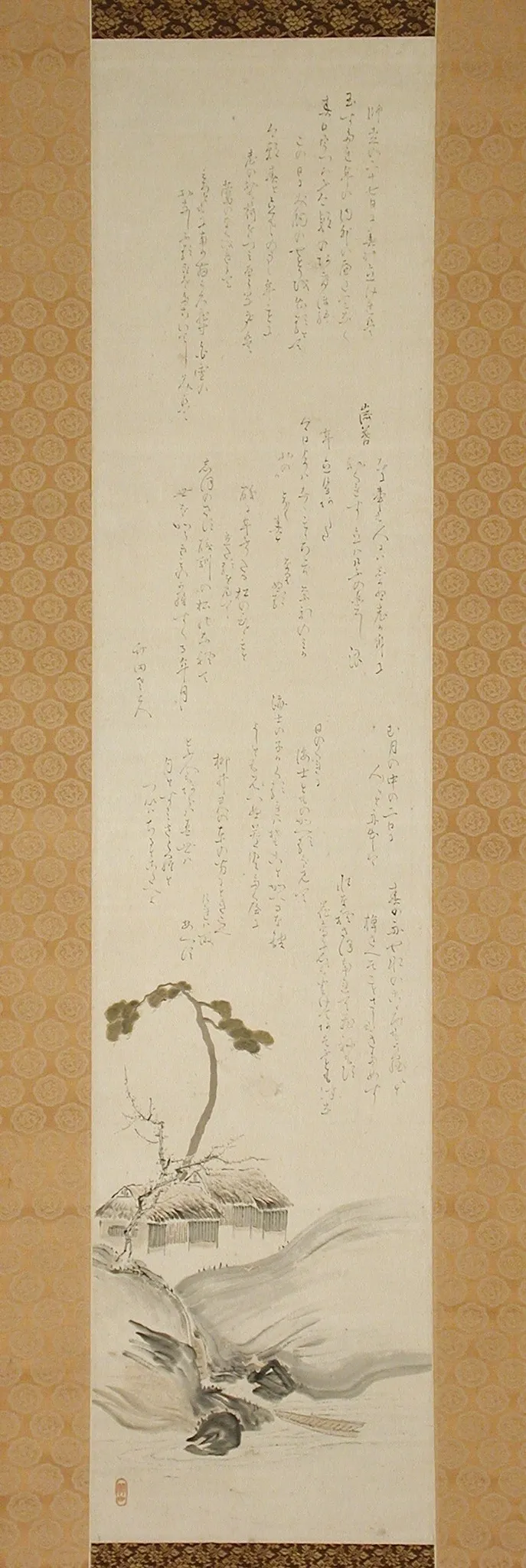
Poet's Abode by the Shore, with New Year's Poems is an unspecified painting by Unknown. It is held in the collection of the Los Angeles County Museum of Art.
About this work
Overview
The work depicts a modest dwelling perched beside a shoreline, its thatched roof and nearby barren‑leafed tree framing a tranquil coastal tableau. Small stones litter the water’s edge, while a strip of paper bearing Japanese script rests against the left side, adding a literary element to the quiet scene.
Subject & Meaning
The composition juxtaposes domestic shelter with the vastness of sea, suggesting a contemplative retreat where poetry and nature converge. The presence of the written verses implies a connection between the poet’s inner world and the external landscape, inviting viewers to consider the harmony between human expression and the environment.
Technique & Style
Executed with restrained, muted hues, the painting relies on simplified forms and generous negative space to convey stillness. Brushwork emphasizes flat planes and subtle tonal shifts, while the careful placement of the thatched roof and skeletal tree creates a balanced, minimalist aesthetic that encourages quiet reflection.
History & Provenance
Created as a visual accompaniment to a collection of New Year’s poems, the piece was likely commissioned for a private setting where literary and visual arts were intertwined. Its provenance traces through several Japanese collections before entering a museum holding of Edo‑period works.
Context
The artwork belongs to a tradition of integrating poetry and painting, common in Japanese cultural practice during the early modern period. Such pairings were intended to enhance the meditative experience of both mediums, aligning the visual serenity of the shore with the lyrical aspirations of the verses.
Legacy
While not widely reproduced, the painting exemplifies the subtle interplay of text and image that characterizes much of Japan’s literary‑artistic heritage. It continues to inform studies of cross‑disciplinary expression in East Asian art, illustrating how visual simplicity can amplify poetic resonance.
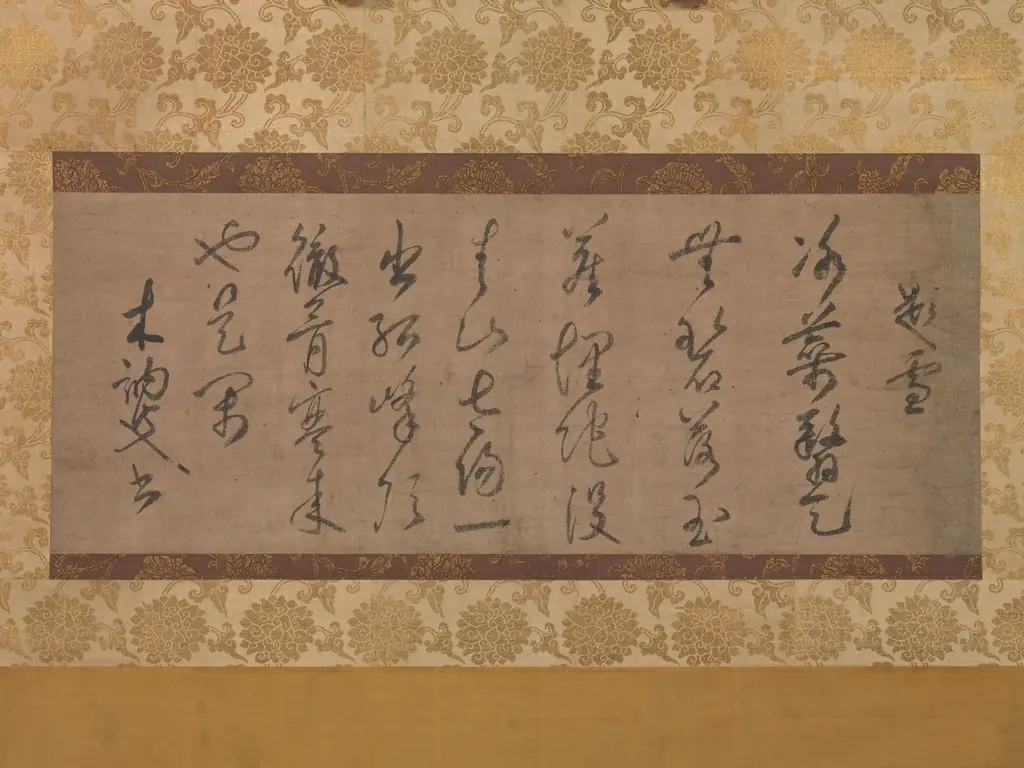
Artist & collection









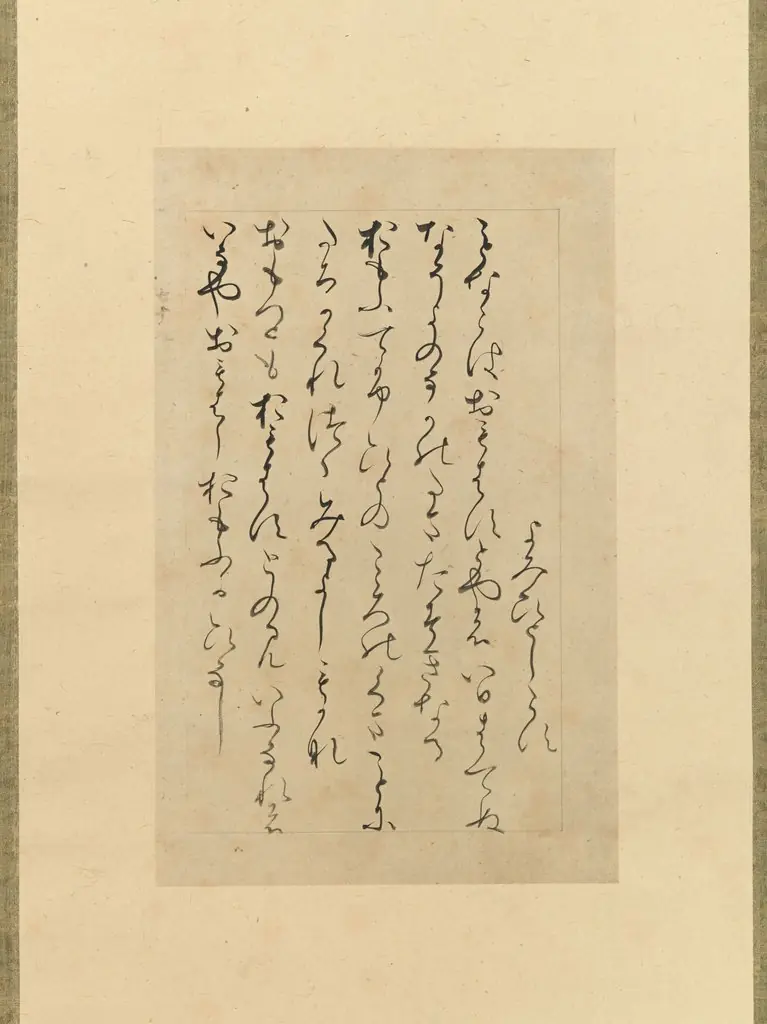 Three poems from the “Collection of Poems Ancient and Modern” (Kokin wakashū), known as the “Imaki Fragment” (Imaki-gire)
 Untitled
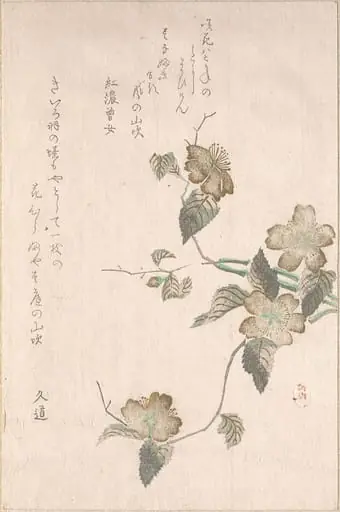 Untitled
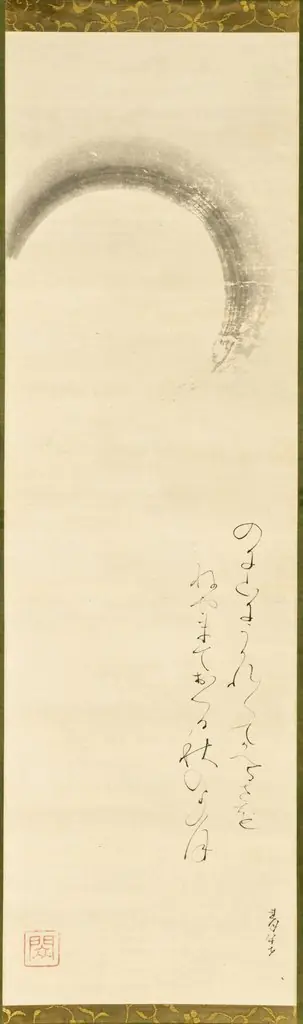 Autumn Moon
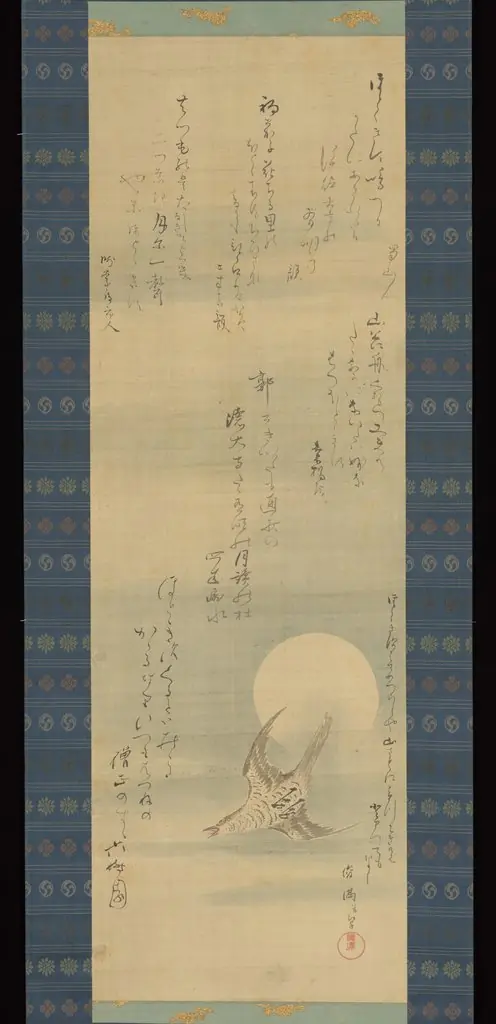 Hototogisu
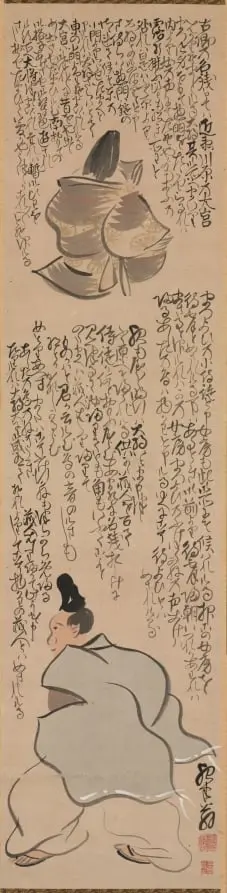 Moon Viewing, from The Tale of Heike
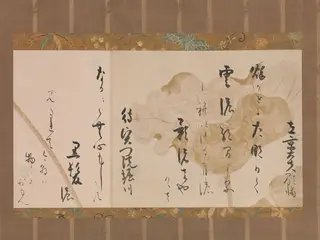 本阿弥光悦書・俵屋宗達下絵 小倉百人一首和歌巻断簡|Two Poems from One Hundred Poems by One Hundred Poets
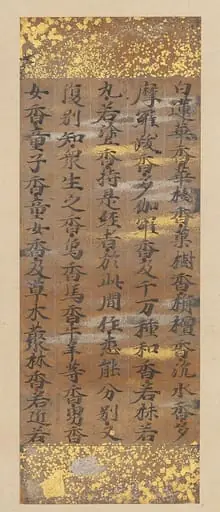 伝九条兼実書 『法華経』 の内|Segment of the Lotus Sutra (Hoke-kyō)
 Untitled
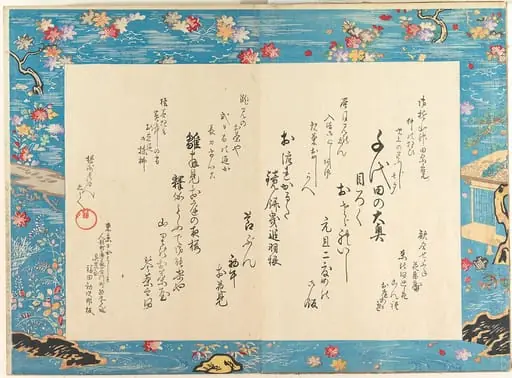 千代田の大奥|The Inner Palace of Chiyoda (Chiyoda no Ōoku)
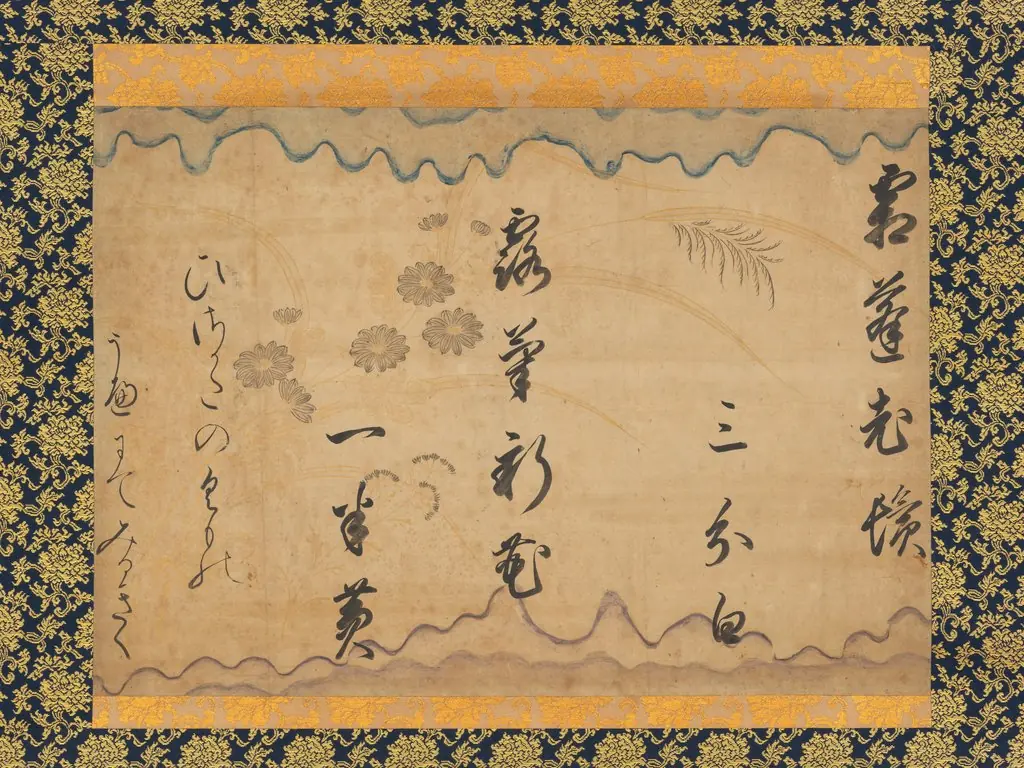 Chinese Couplet by Bai Juyi and Waka by Fujiwara no Toshiyuki (partial) from “Japanese and Chinese Poems to Sing” (Wakan rōeishū)
- Poem on the Theme of Snow