Artwork
Ragini Khambavati, Page from a Jaipur Ragamala Set
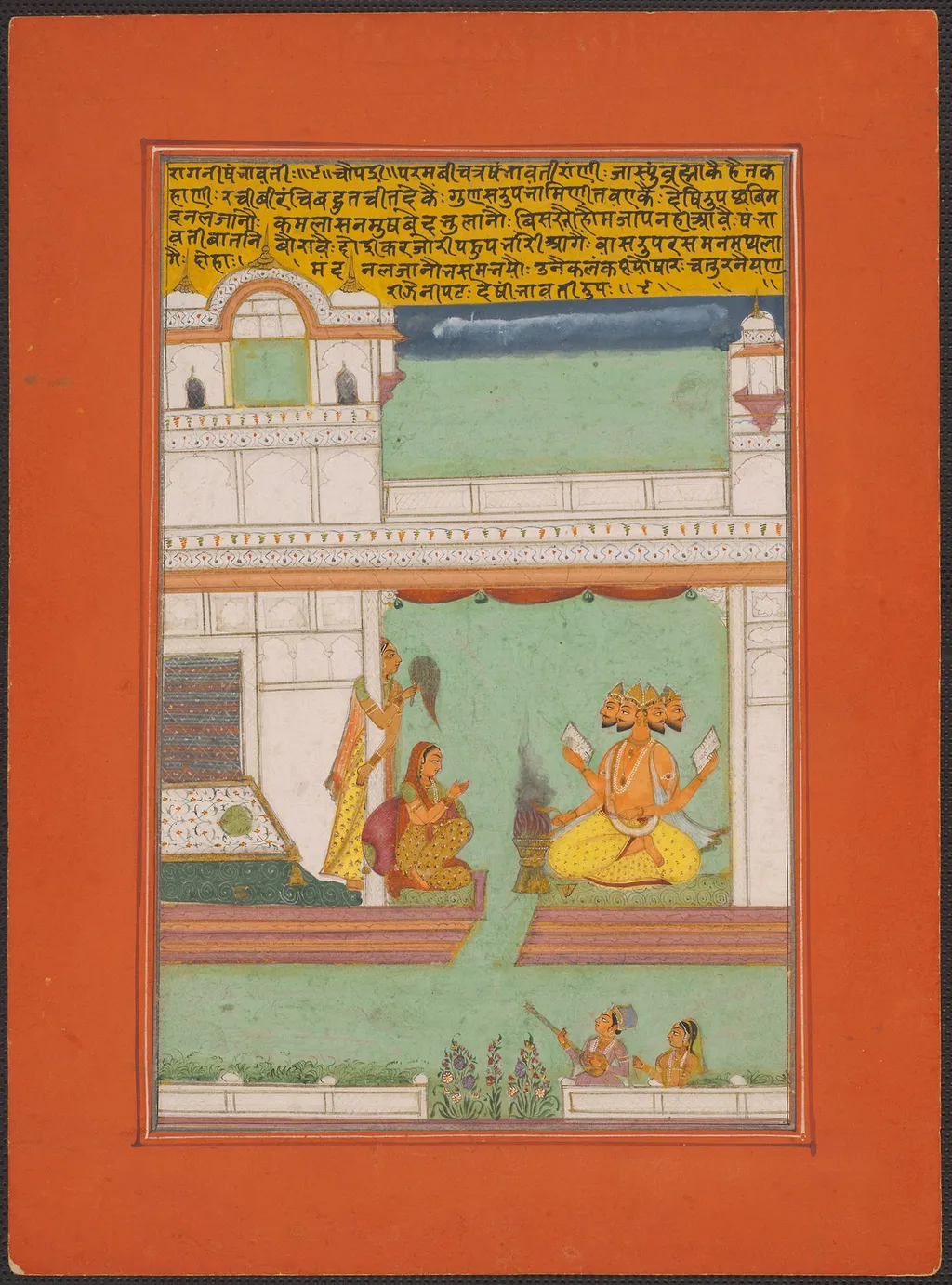
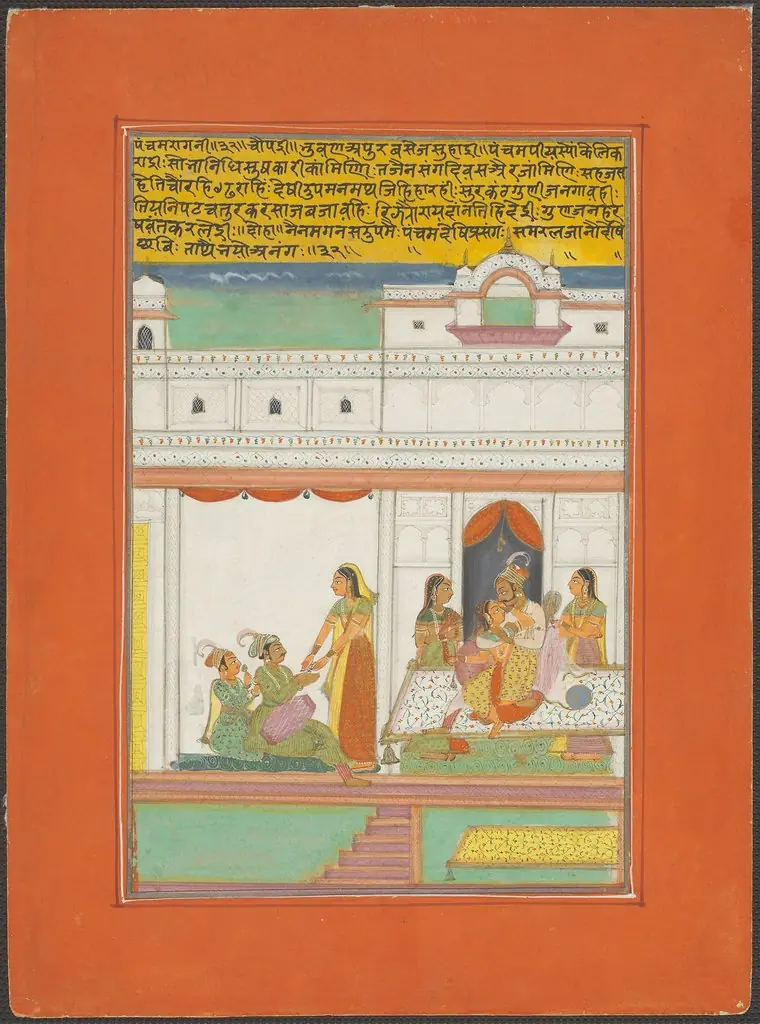
Ragini Khambavati, Page from a Jaipur Ragamala Set is an unspecified painting by the Rajput painting artist Unknown. It dates from 1757 and is held in the collection of the Art Institute of Chicago.
About this work
The Art Institute of Chicago holds this painting, titled Ragini Khambavati, Page from a Jaipur Ragamala Set, created in 1757.
This painting shows a scene with multiple figures in a room. The main figure is a man with four heads, sitting cross-legged on a platform. He wears a yellow dhoti and holds papers in his hands.
In front of him, a woman sits on a platform, playing a musical instrument. To the left, two women stand, one holding a hairbrush and the other with her hands raised.
The room has a green wall and a white balcony with arches. The sky above is dark blue with clouds. The overall atmosphere is one of serenity and focus.
The Art Institute of Chicago holds this painting, titled Ragini Khambavati, Page from a Jaipur Ragamala Set, created in 1757.
Overview
This painting is one folio from a Jaipur Ragamala series produced in 1757, illustrating a specific raga associated with feminine emotion and musical devotion. It depicts a symbolic scene centered on a four-headed figure seated in meditation, surrounded by attendants. The composition reflects the fusion of devotional imagery and musical metaphor characteristic of Rajput court painting traditions. The Art Institute of Chicago holds this work as part of its collection of Indian miniature paintings.
Subject & Meaning
The four-headed figure represents a divine or cosmic musician, embodying the raga Khambavati’s spiritual essence. His posture and scrolls suggest the transmission of sacred melody. The woman playing an instrument symbolizes the raga’s audible form, while the attendants, holding a brush and raising hands, signal ritual preparation and reverence.
The scene conveys inner stillness and the meditative power of music, aligning with North Indian devotional concepts linking sound, deity, and inner harmony.
Technique & Style
Executed in opaque watercolor on paper, the painting employs fine brushwork and delicate modeling to define forms. The figures are rendered with precise outlines and flat, saturated colors, typical of Jaipur’s court style. The green wall and white arched balcony create a structured interior space, while the dark blue, cloud-streaked sky above contrasts with the grounded scene. Spatial depth is suggested through layered platforms rather than perspective, adhering to traditional Indian pictorial conventions.
History & Provenance
Created in 1757 in the Jaipur court, this folio belonged to a larger set of Ragamala paintings commissioned by Rajput royalty to visualize musical modes as emotional and divine narratives. Such sets were used for contemplation and ceremonial purposes. The painting entered the Art Institute of Chicago’s collection through documented acquisitions in the 20th century, preserving its origin within a well-documented regional artistic tradition.
Context
Ragamala paintings emerged in 16th-century India as visual interpretations of ragas, melodic frameworks in Hindustani classical music. Each raga was personified as a figure or scene evoking a mood, season, or time of day. Jaipur artists developed a distinctive style, blending Mughal refinement with local devotional themes.
This work reflects the court’s patronage of both music and painting as intertwined spiritual practices during the 18th century.
Legacy
The Ragamala tradition influenced later Indian painting and continues to inform contemporary understandings of music as visualized spirituality. This folio remains a key example of how Rajput artists translated abstract musical concepts into symbolic imagery. Its preservation in major institutions ensures ongoing scholarly engagement with the interplay of sound, devotion, and visual form in pre-modern South Asian culture.
Artist & collection









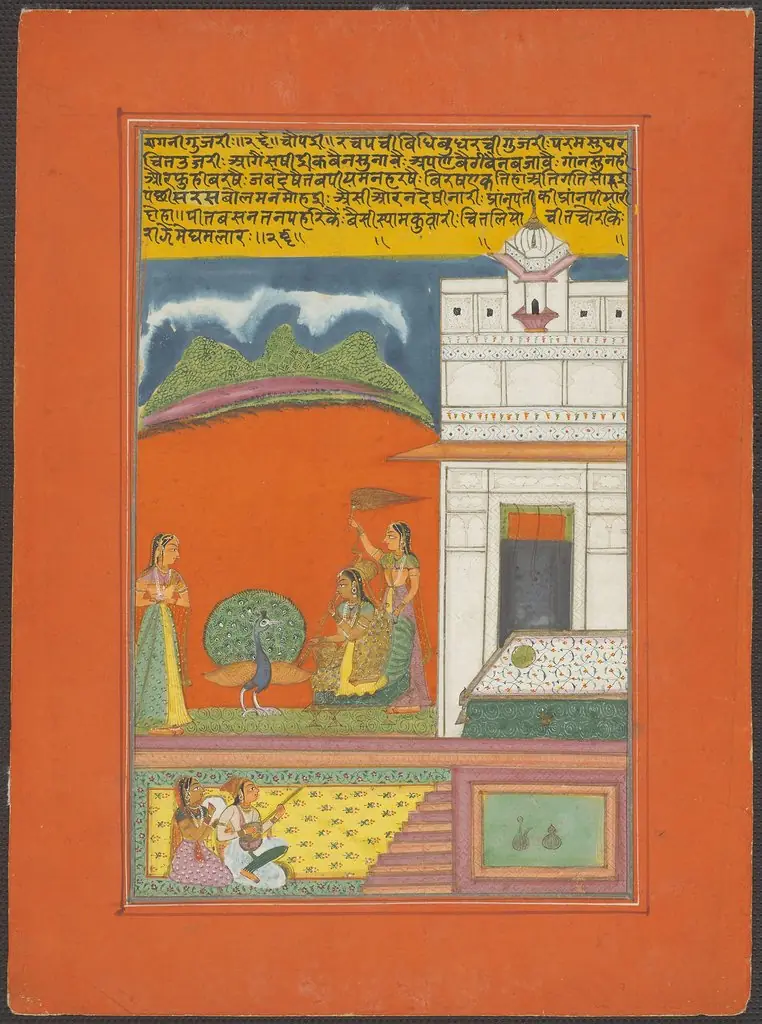
- Ragini Gujari, Page from a Jaipur Ragamala Set
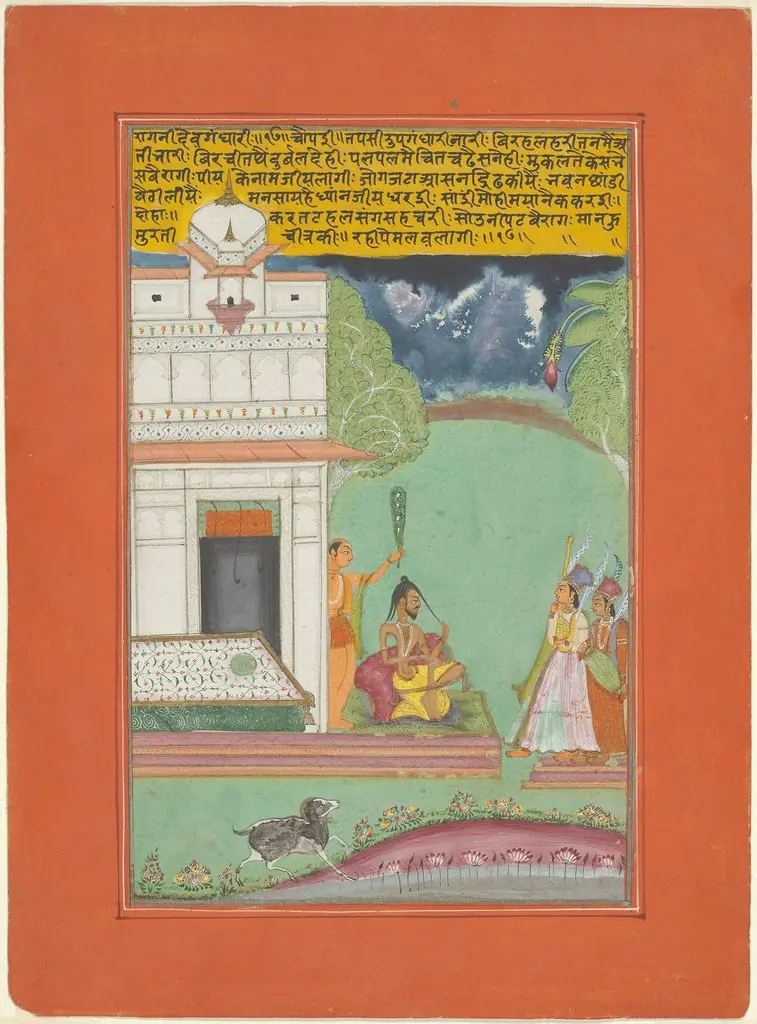 Ragini Devagandhari, Page from a Jaipur Ragamala Set
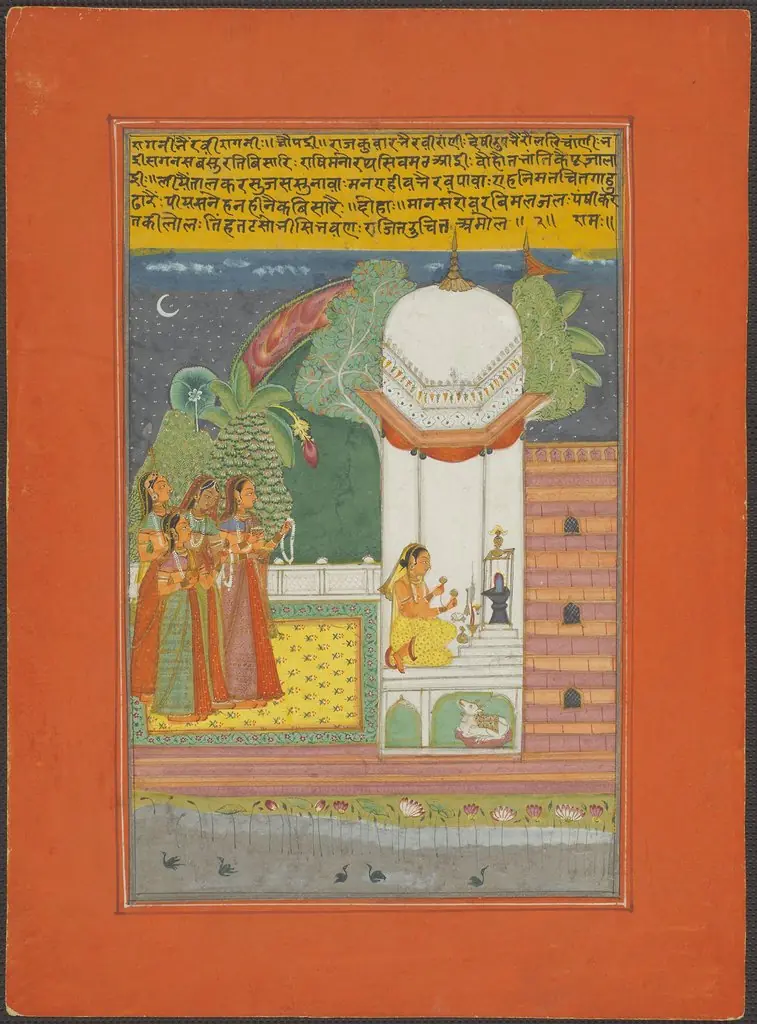 Ragini Bhairavi, Page from a Jaipur Ragamala Set
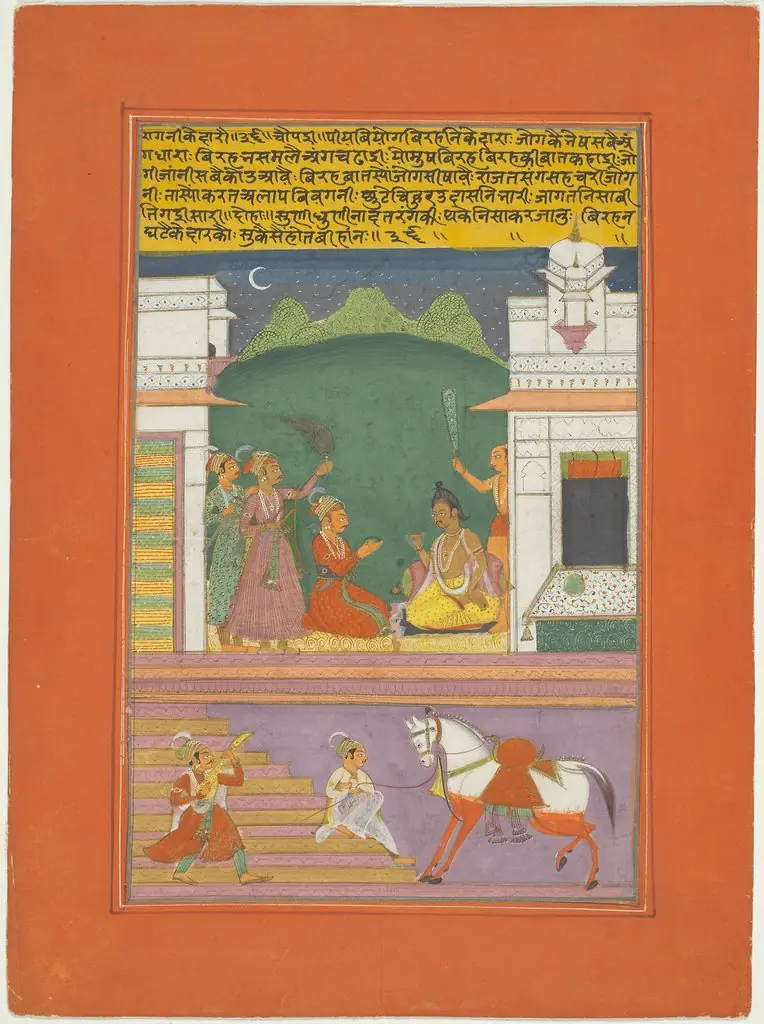 Ragini Kedara, Page from a Jaipur Ragamala Set
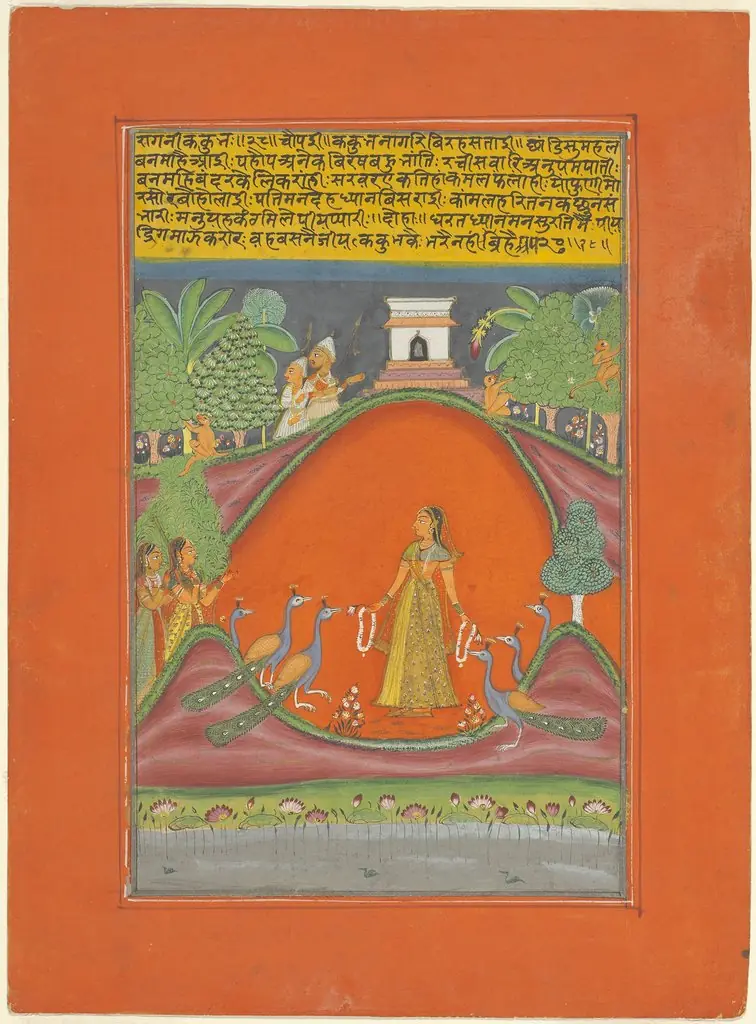 Ragini Kakubha, Page from a Jaipur Ragamala Set
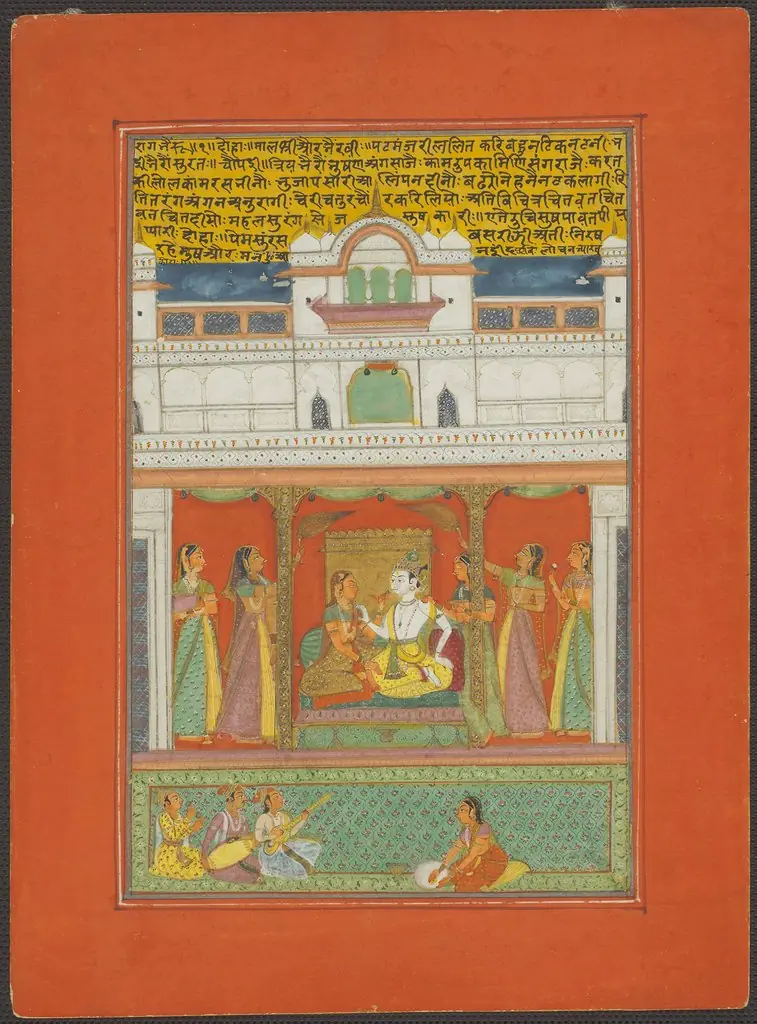 Raga Bhairaon, Page from a Jaipur Ragamala Set
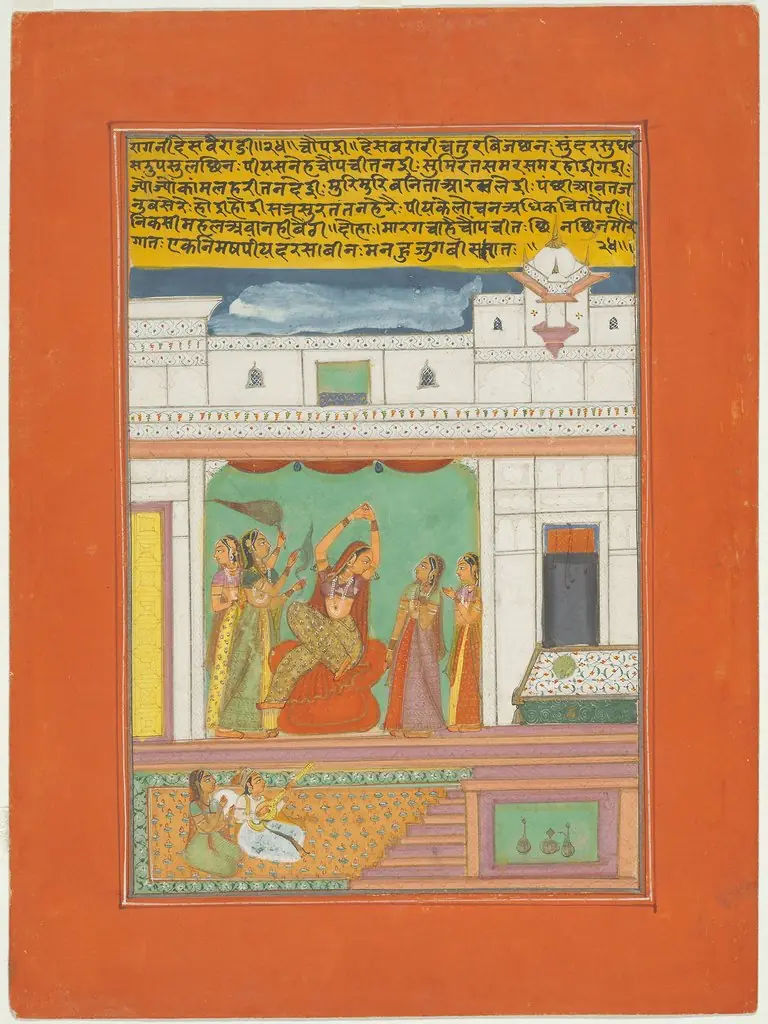 Ragini Desavaradi, Page from a Jaipur Ragamala Set
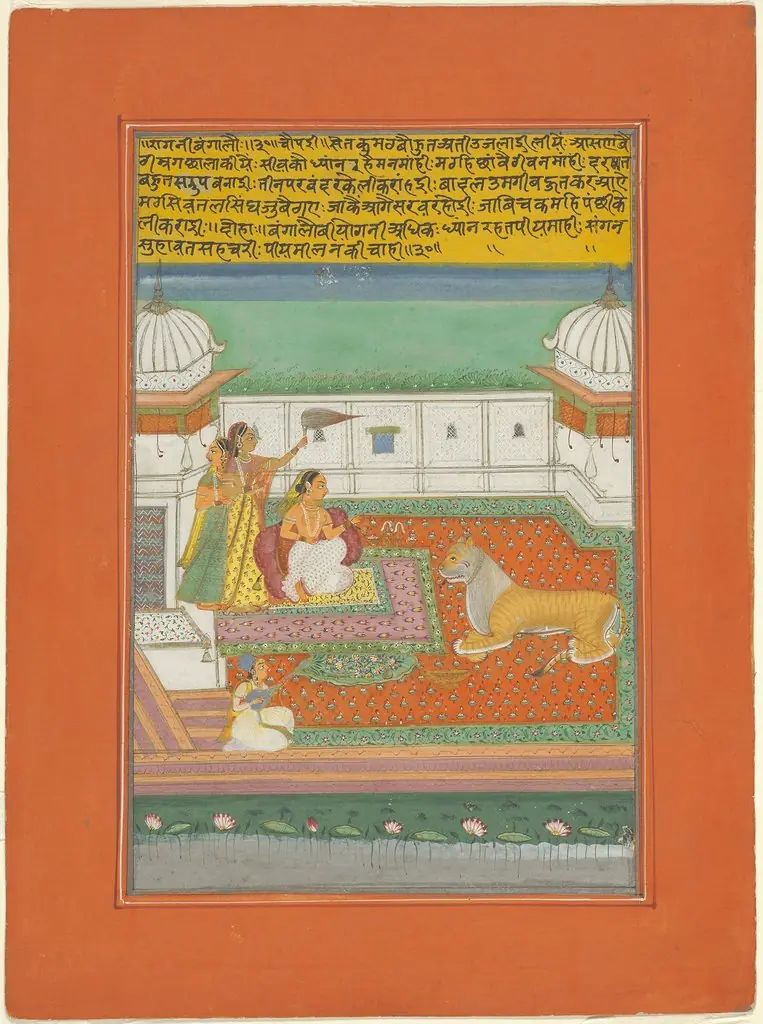 Ragini Bangali, Page from a Jaipur Ragamala Set
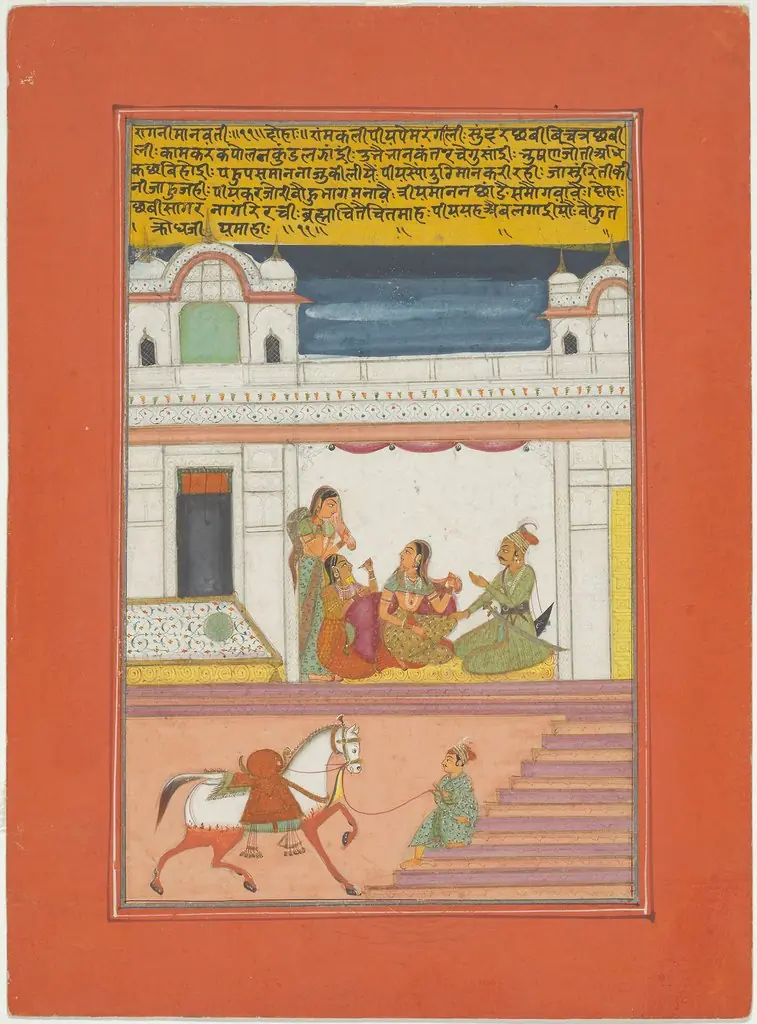 Ragini Manavati, Page from a Jaipur Ragamala Set
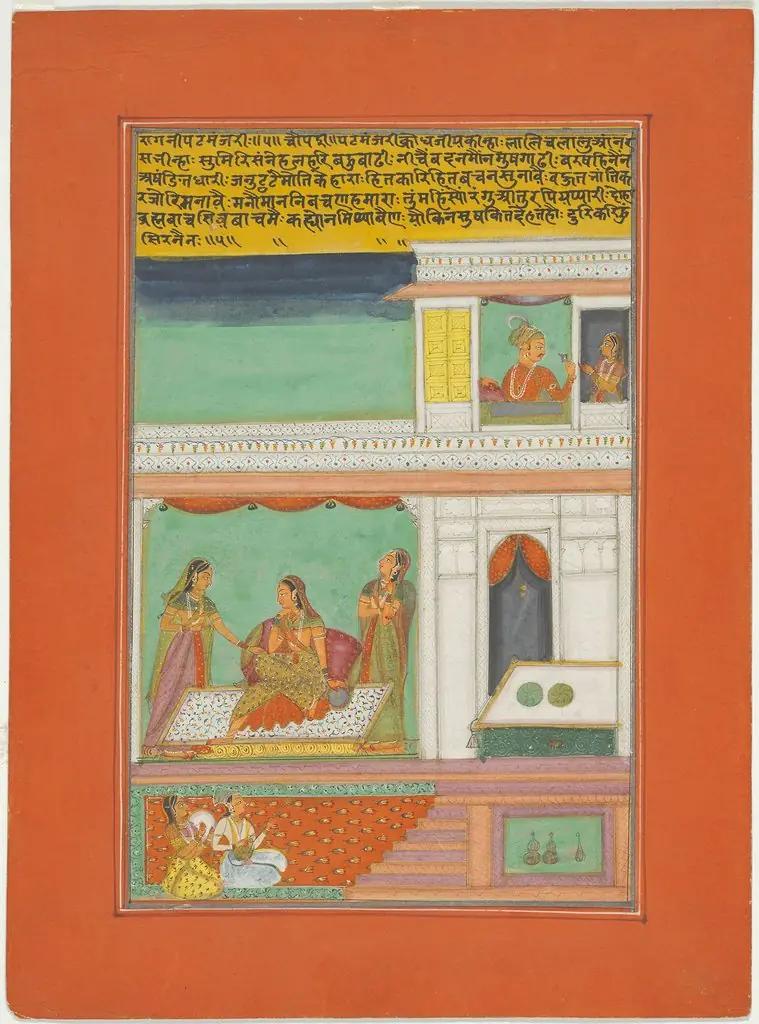 Ragini Patmanjari, Page from a Jaipur Ragamala Set
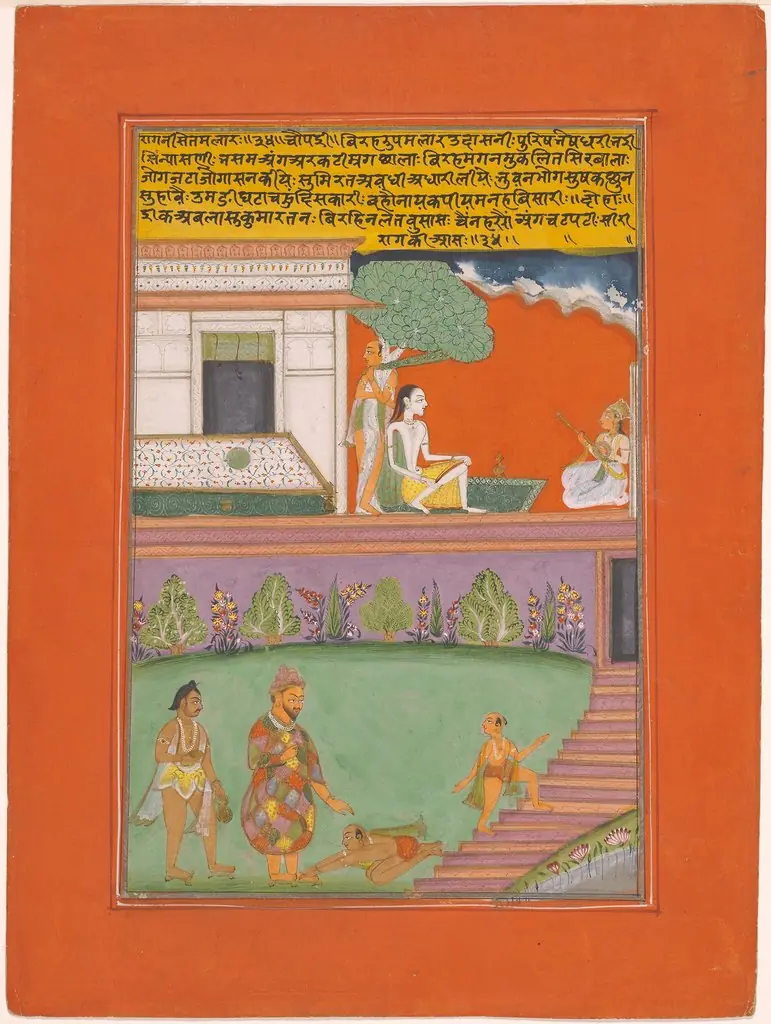 Ragini Setmalar, Page from a Jaipur Ragamala Set
 Panchama Ragini, Page from a Jaipur Ragamala Set