Artwork
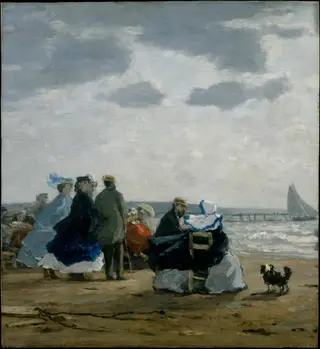
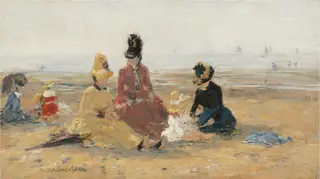
Sur la plage à Trouville
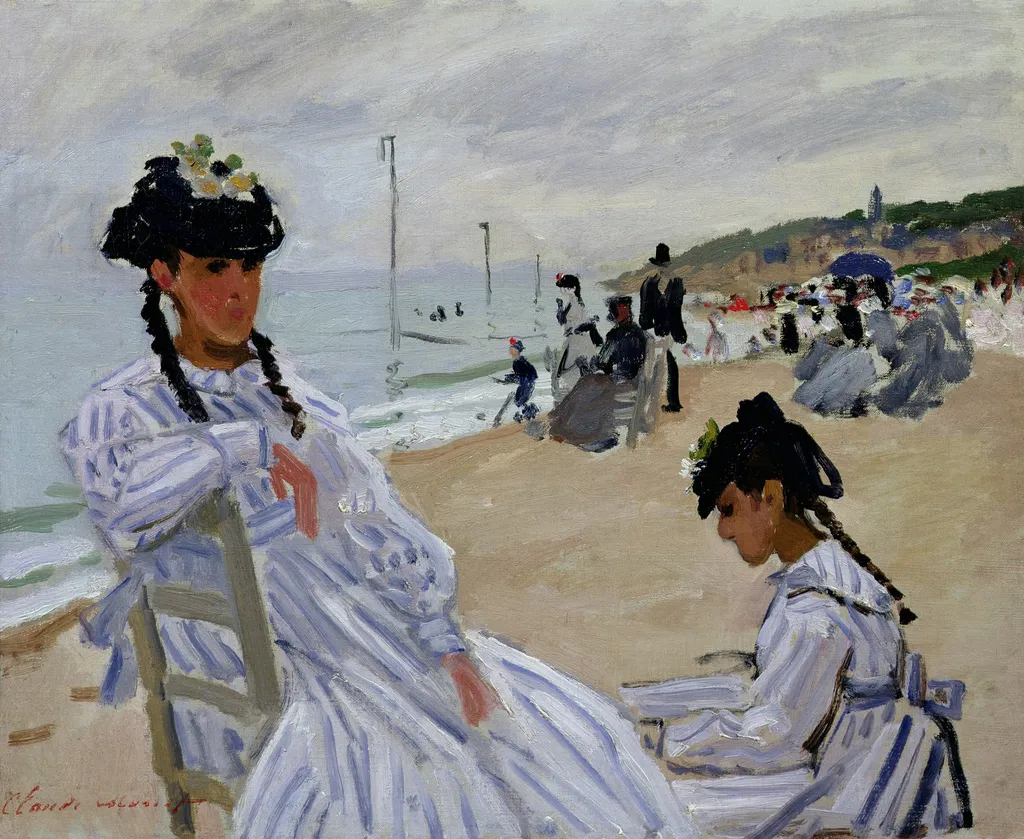
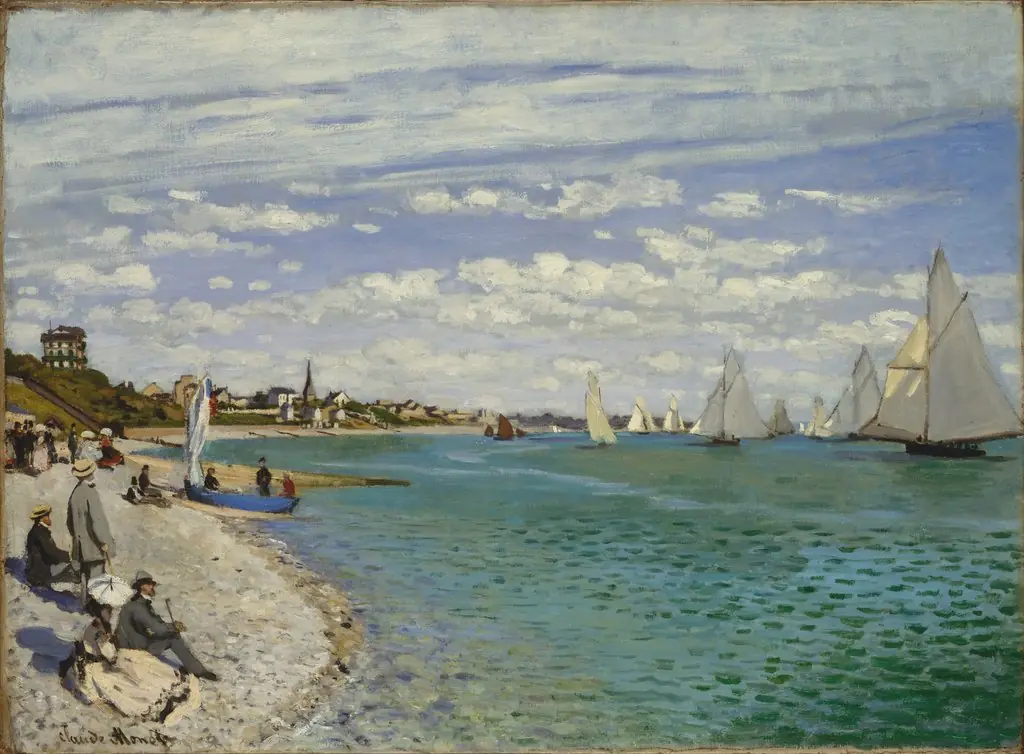
Sur la plage à Trouville is an oil painting by the Plein Air artist Claude Monet. It dates from 1870 and is held in the collection of the Musée Marmottan Monet.
About this work
Overview
Painted in 1870, Sur la plage à Trouville is an oil work by French artist Claude Monet, capturing a quiet moment on the Normandy coast. The piece is part of the Musée Marmottan Monet’s collection, where it remains today. It reflects Monet’s early interest in seaside scenes and the interplay of light and atmosphere, themes central to his developing style during this period.
Subject & Meaning
Two women sit on Trouville’s shore, one seated on a chair, the other on the sand, both dressed in similar light garments and wide-brimmed hats. Their quiet, introspective postures suggest a moment of stillness amid the coastal activity. The painting avoids narrative drama, instead emphasizing presence and the subtle rhythms of leisure in a growing seaside resort.
Technique & Style
Monet employs loose, visible brushwork to render fabric, sand, and sky, with soft transitions between tones. The gray, overcast sky and muted palette reflect the natural lighting conditions of the day. Rather than defining forms sharply, he suggests them through color and texture, anticipating the Impressionist focus on transient effects over detailed realism.
History & Provenance
Created during Monet’s stay in Trouville in the summer of 1870, the painting was likely made shortly before the outbreak of the Franco-Prussian War, which prompted his move to England. It remained in private hands until acquired by the Marmottan collection, where it has been preserved as part of the broader archive of his early coastal studies.
Context
Trouville was emerging as a fashionable destination for Parisian middle-class tourists in the 1860s and 70s. Monet’s depiction of the beach reflects this new social landscape, where leisure and nature intersected. Unlike grand historical scenes, his focus on ordinary figures in a public space aligns with broader shifts in 19th-century art toward contemporary life.
Legacy
This work stands as an early example of Monet’s commitment to painting outdoors and capturing fleeting moments of daily life. While not among his most famous seascapes, it contributes to the foundation of Impressionism by prioritizing perception over idealization, influencing later artists to observe the world with direct, unembellished attention.
Own this work as a print
Artist & collection
Artist
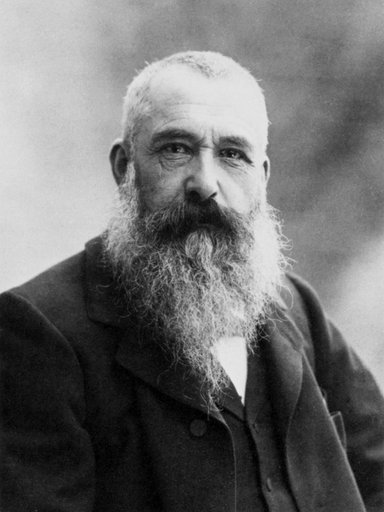
Oscar-Claude Monet was a French painter and founder of Impressionism who is seen as a key precursor to modernism, especially in his attempts to paint nature as he perceived it.