Artwork
Maruru (Thank You)
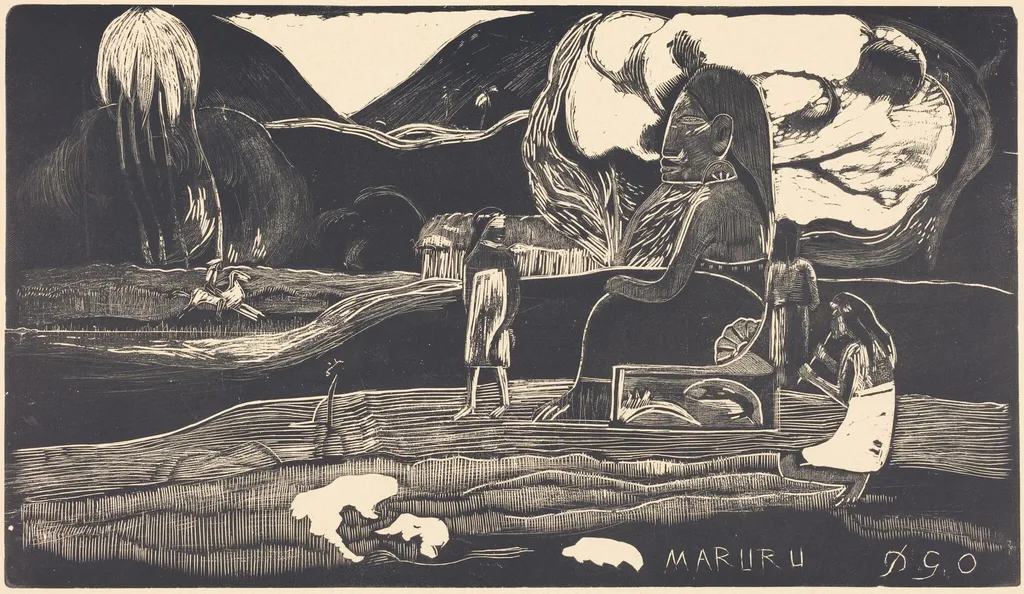
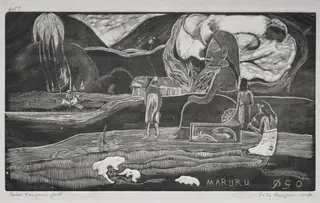
Maruru (Thank You) is an ink print by the Impressionist artist Paul Gauguin. It dates from 1894 and is held in the collection of the National Gallery of Art.
- Inscription
- Inscribed:recto: in block, at lower right: MARURU PG O; verso: none
- Markings
- Marked:verso: stamped in brown ink at center: PRINTED IN 1941 FROM THE ORIGINAL / WOODBLOCK IN THE COLLECTION OF / THE ART INSTITUTE OF CHICAGO FOR / THE PRINT AND DRAWING CLUB. [in rectangle]
About this work
Overview
Maruru (Thank You) is a 1894 woodcut on coated wove paper by Paul Gauguin, exemplifying his experimental Post-Impressionist and Symbolist style.
Subject & Meaning
The print depicts a somber scene with four figures: a seated woman with a child, a standing woman, and two smaller figures at the bottom, set against swirling, textured backgrounds evoking nature. The Tahitian title 'Maruru' (Thank You) adds a layer of enigmatic appreciation.
Technique & Style
Characterized by bold lines and minimal detail, the woodcut showcases Gauguin's innovative approach to the medium. The composition features sharp shadows cast from a left light source, with textured elements resembling woven mats on the floor.
History & Provenance
Created during Gauguin's period of artistic experimentation, Maruru (Thank You) reflects his broader practice at the time. Notably, his work, including this piece, gained widespread recognition posthumously.
Context
This work diverges from Impressionism, aligning with Gauguin's role in Post-Impressionism and Symbolism. His woodcut techniques contributed to a distinct style marked by simplicity and strength.
Legacy
Maruru (Thank You) contributes to Gauguin's legacy as a pioneering figure in Post-Impressionist and Symbolist movements, influencing future artists with his bold, expressive woodcut techniques.
Artist & collection
Artist
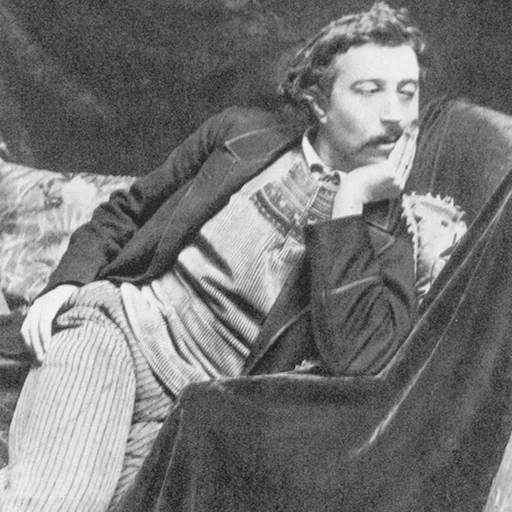
Eugène Henri Paul Gauguin (; French:; 7 June 1848 – 8 May 1903) was a French painter, sculptor, printmaker, ceramist, and writer, whose work has been primarily associated with the Post-Impressionist and Symbolist movements.

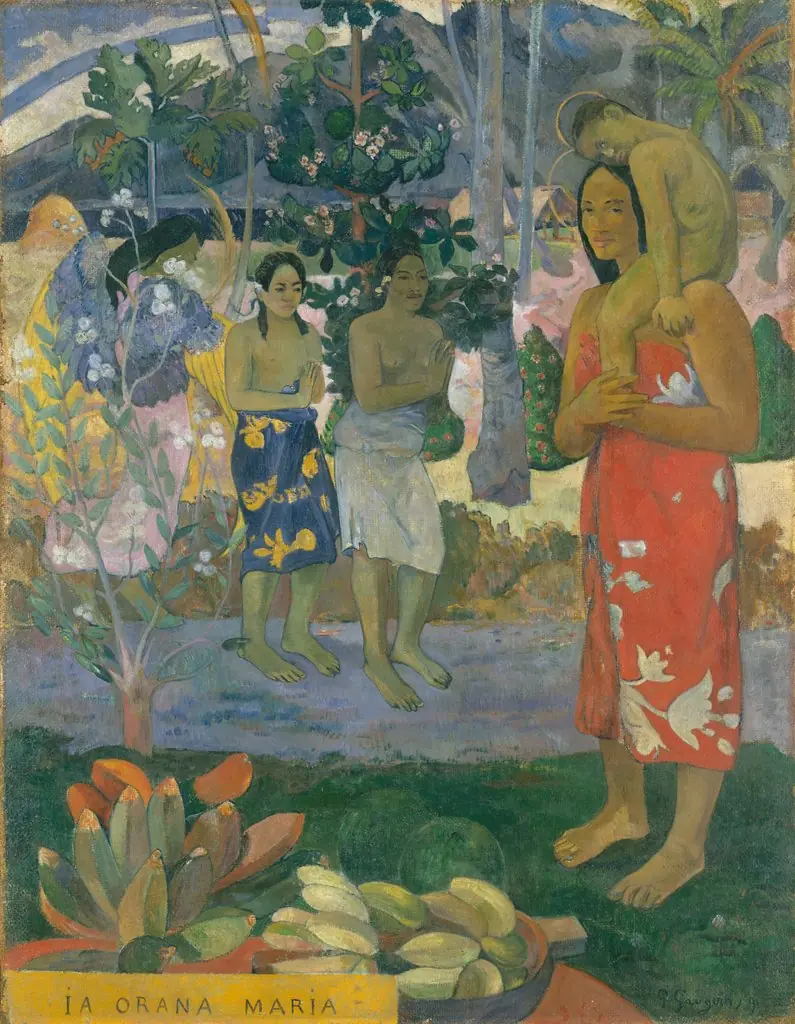
 Tahitian Series: Worship
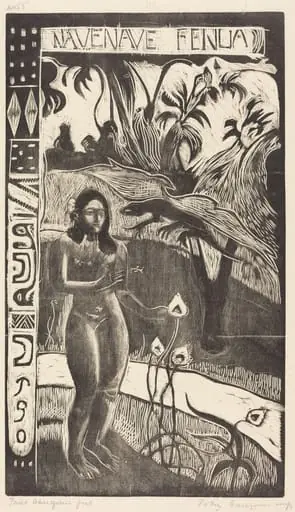 Nave Nave Fenua (Delightful Land)
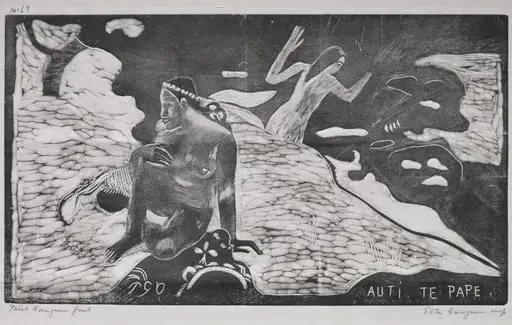 Noa Noa: Women at the River (Auti Te Pape)
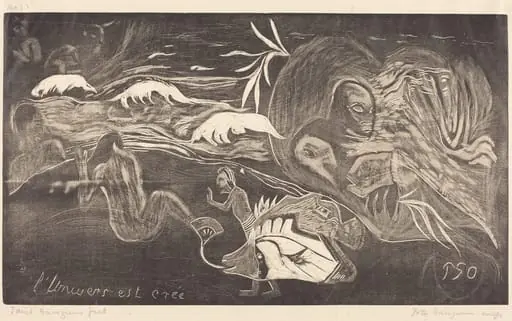 L'Univers est crée (The Creation of the Universe)
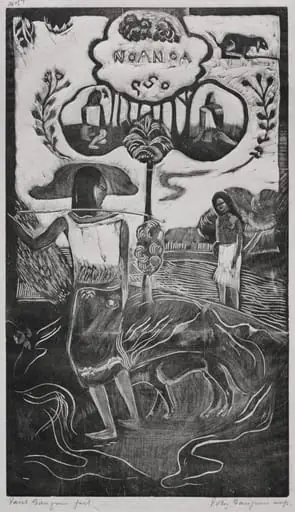 Noa Noa: Noa Noa (Fragrant Scent)
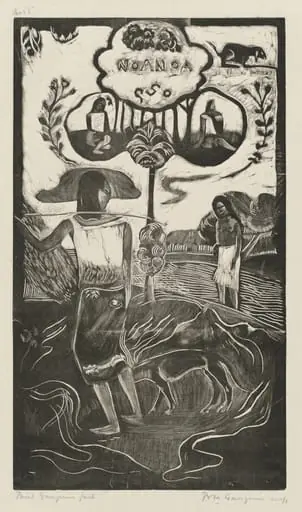 Noa Noa (Fragrant, Fragrant)
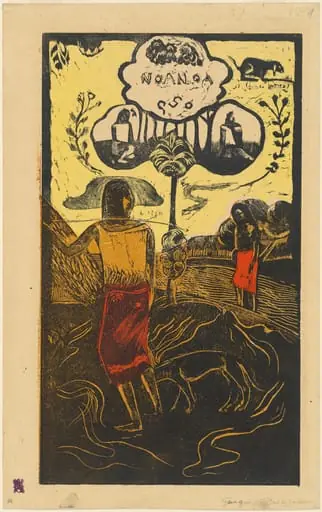 Noa Noa (Fragrant, Fragrant)
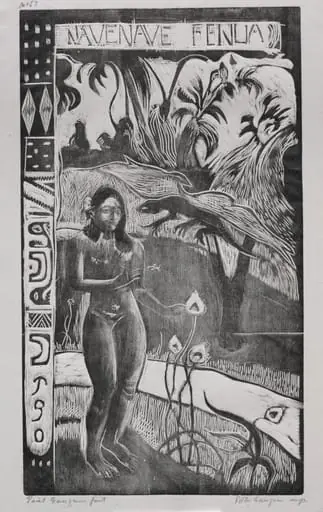 Tahitian Series: Land of Delights
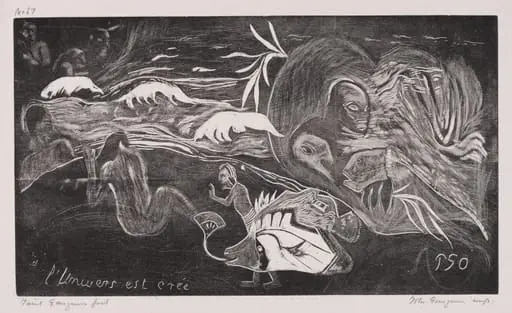 Noa Noa: L'Univers est créé (The Universe is Created)