Artwork
The Death of Lucretia
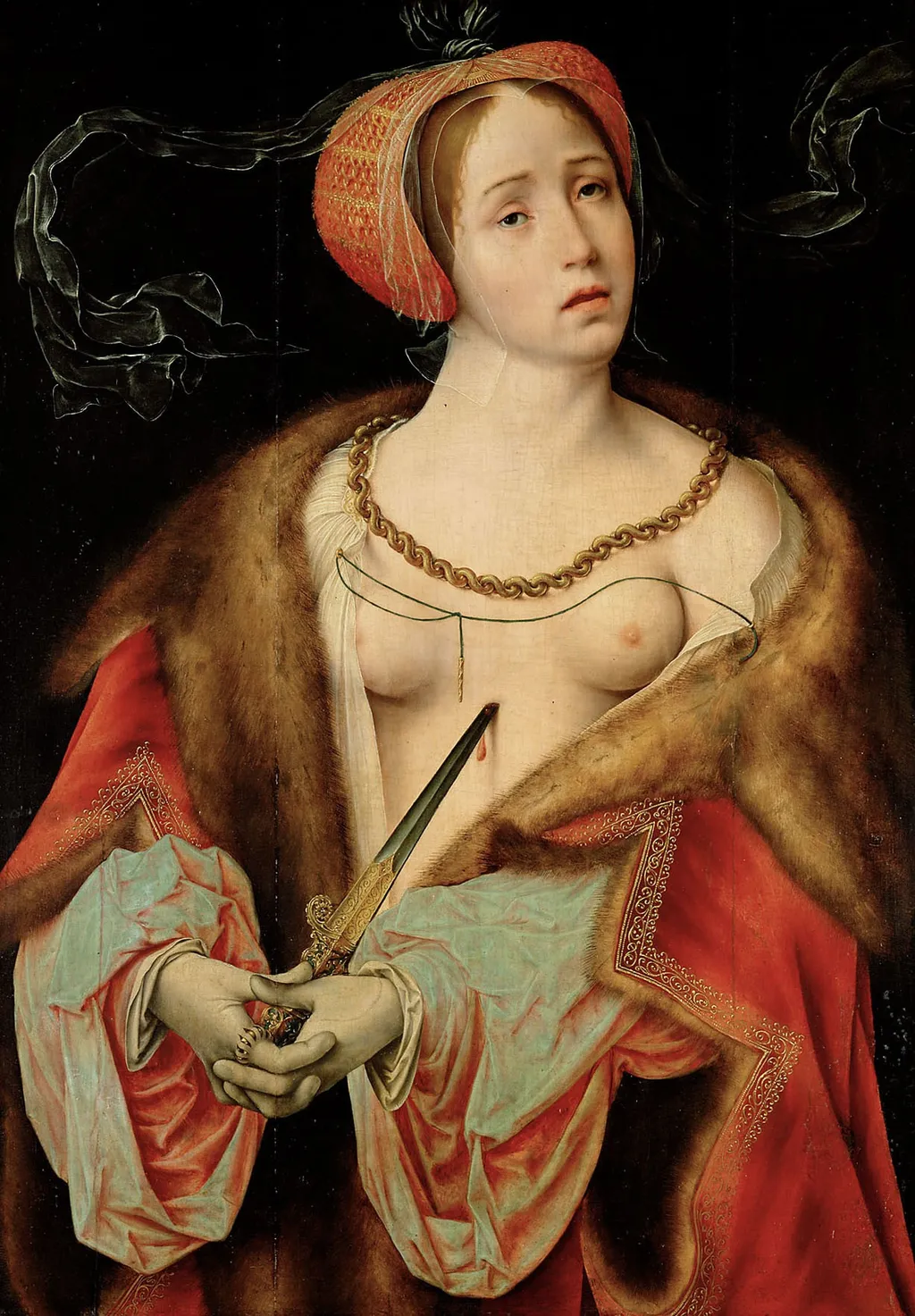
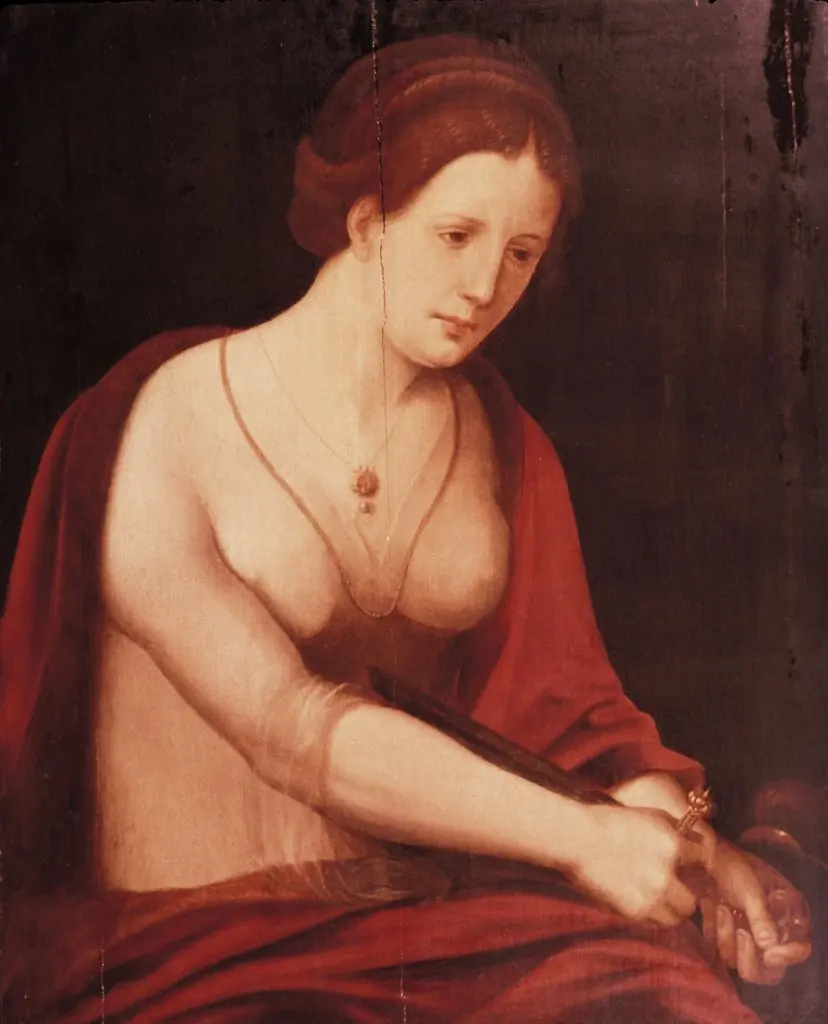
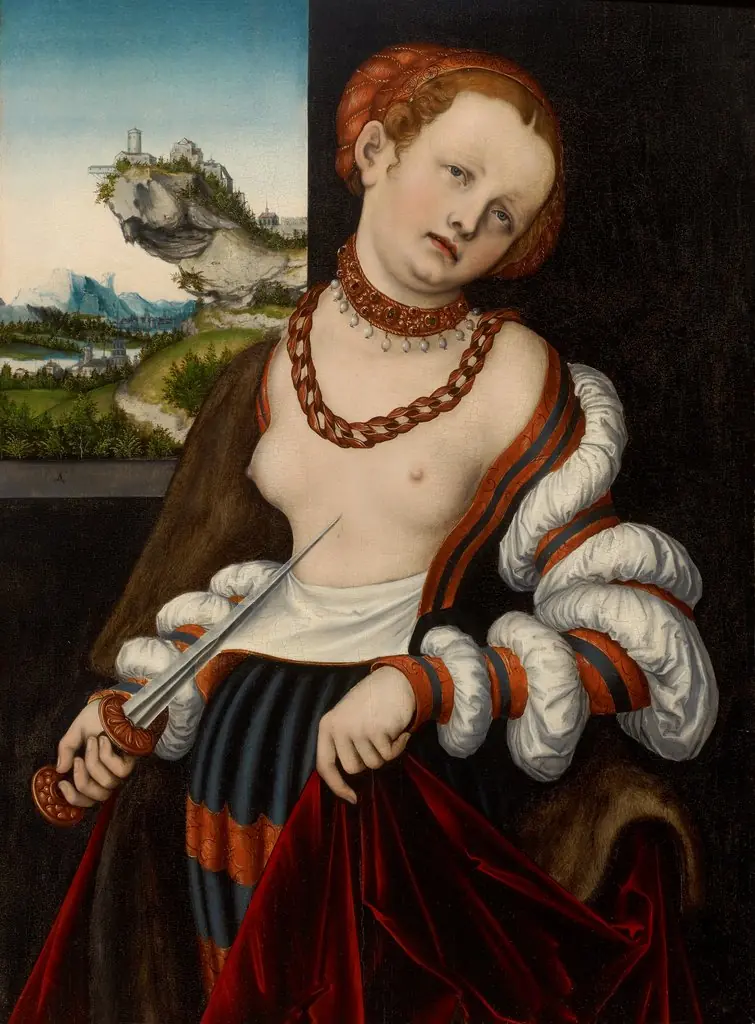
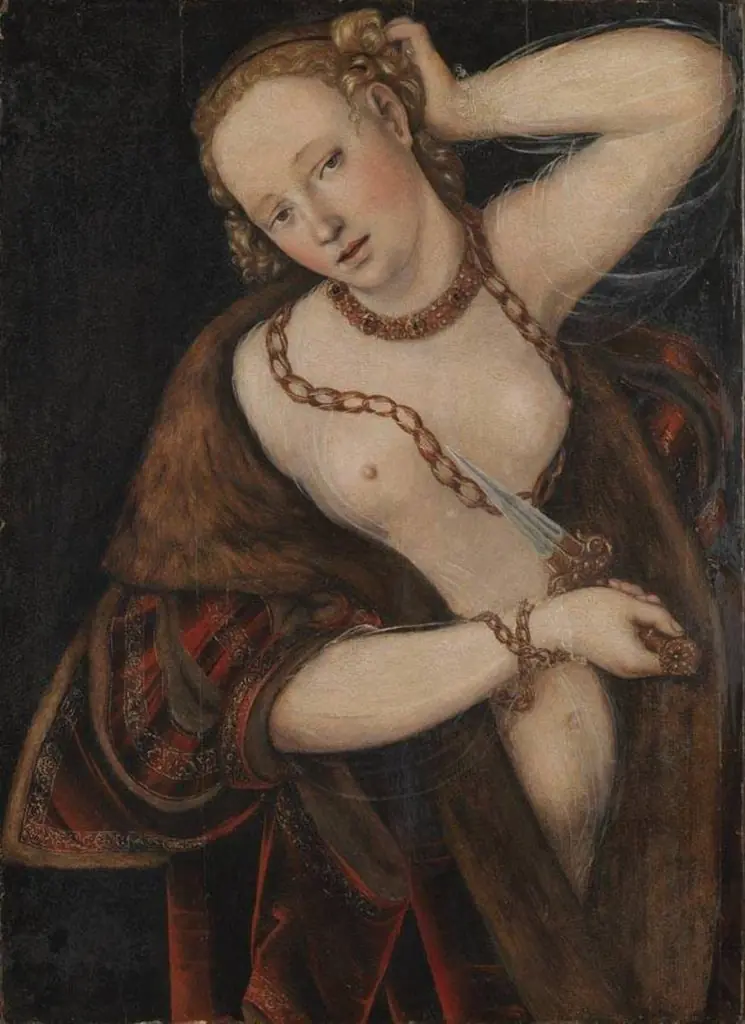
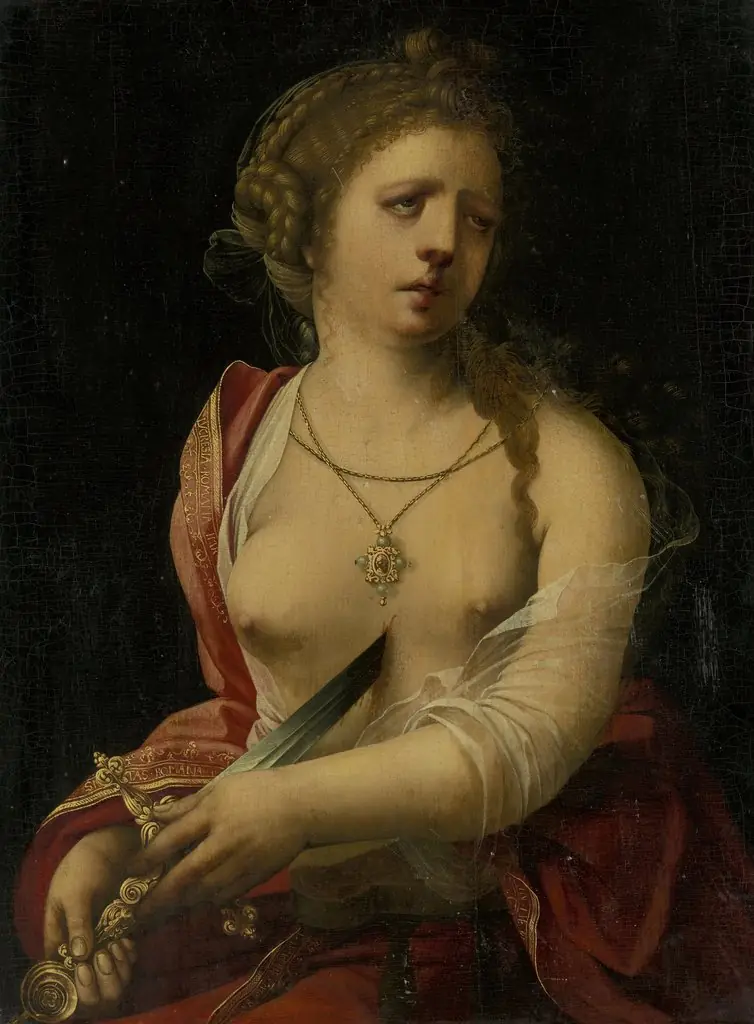
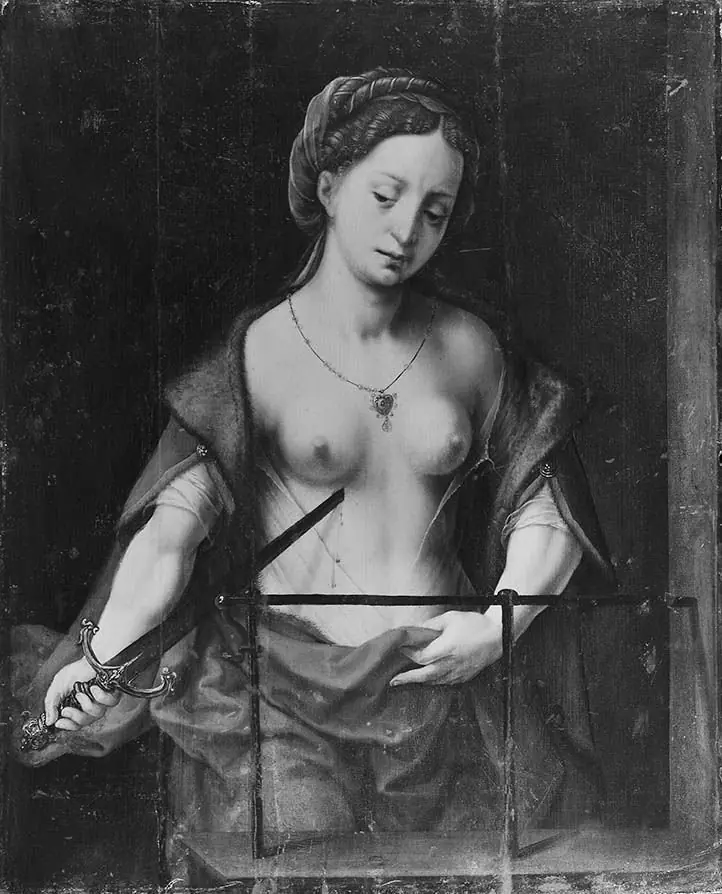
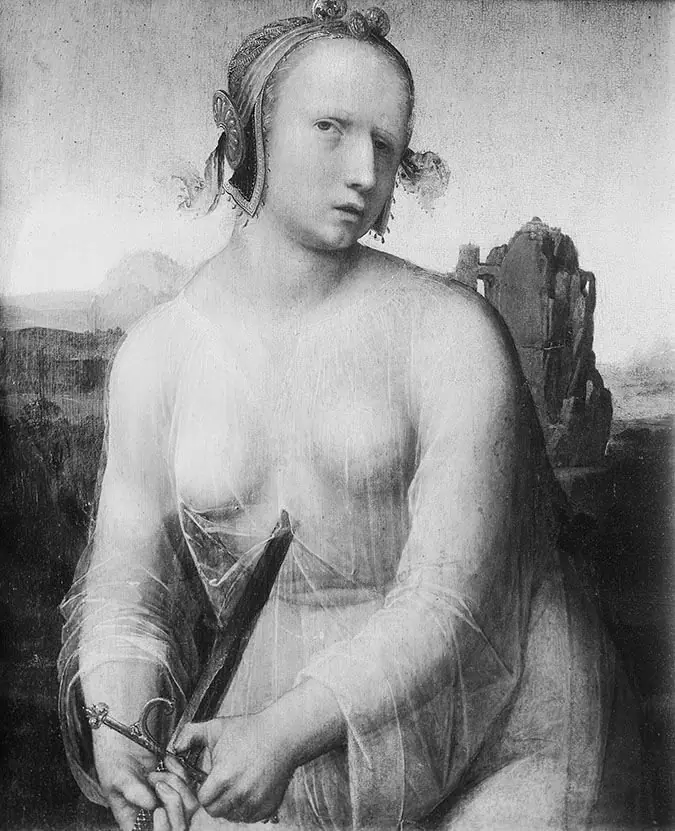
The Death of Lucretia is a wood painting by the Early Baroque Italian artist Joos van Cleve. It dates from 1522 and is held in the collection of the Kunsthistorisches Museum.
About this work
Subject & Meaning
Symbolic details such as the dagger and the folded cloth reference contemporary moral discourses on female virtue and the consequences of violated chastity.
The painting portrays Lucretia in the moment of her suicide, a narrative drawn from Roman legend that underscores themes of honor, betrayal, and tragic self‑destruction. Van Cleve emphasizes the domestic setting and the solitary figure, using the intimate interior to heighten the emotional gravity of the act. Symbolic details such as the dagger and the folded cloth reference contemporary moral discourses on female virtue and the consequences of violated chastity.
The work thus functions as a visual commentary on the interplay between personal integrity and societal expectations in the early sixteenth century.
Technique & Style
The Death of Lucretia is an oil painting executed on oak panel in 1522. The work measures 76 cm in height and 54 cm in width, reflecting the standard dimensions recorded for the piece. Its formal qualities include a restrained composition and naturalistic rendering of the figure, characteristic of Northern Renaissance history painting.
The handling of paint demonstrates a smooth surface finish typical of Joos van Cleve's workshop practice, while the stylistic treatment of drapery and facial expression conveys emotional gravity appropriate to the suicide of Lucretia.
History & Provenance
The Death of Lucretia, painted by Joos van Cleve in 1522 on oakwood panel, is classified as a history painting depicting the suicide of Lucretia. The work is housed in the Kunsthistorisches Museum, which maintains its collection and provenance. Its creation is documented in primary records as originating in 1522, with dimensions recorded as 76 cm in height and 54 cm in width.
The painting has been featured in exhibitions such as 'Francis I and the art of the Netherlands' and aligns with the broader genre of Northern Renaissance narrative painting.
Legacy
The Death of Lucretia, painted by Joos van Cleve in 1522, has been recognized for its dramatic portrayal of suicide and moral narrative within Northern Renaissance art. The work's thematic focus on Lucretia's suicide influenced later depictions of virtuous women in art, contributing to the broader discourse on female virtue and transgression in European painting. Its presence in the collection of the Kunsthistorisches Museum in Vienna has ensured continued scholarly attention to van Cleve's role in shaping history painting.
The painting was featured in the exhibition "Francis I and the art of the Netherlands," underscoring its significance in the context of Renaissance patronage and artistic exchange.
Overview
Created in 1522 on oakwood, The Death of Lucretia is a history painting by Joos van Cleve, a prominent Antwerp artist known for merging Early Netherlandish methods with Renaissance elements.
Own this work as a print
Artist & collection
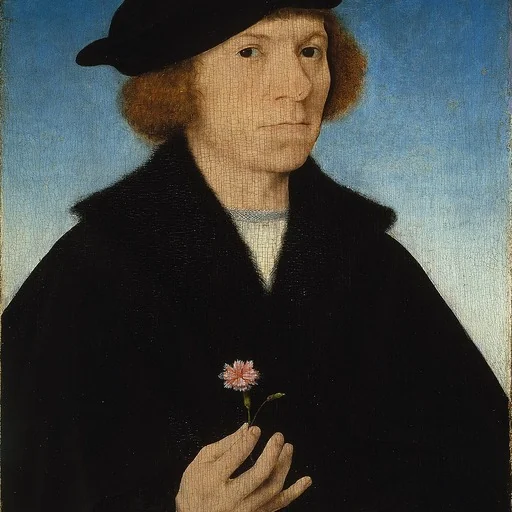
Artist
Joos van Cleve (; also Joos van der Beke; c. 1485–1490 – 1540/1541) was a leading painter active in Antwerp from his arrival there around 1511 until his death in 1540 or 1541. Within Dutch and Flemish Renaissance…