Artwork
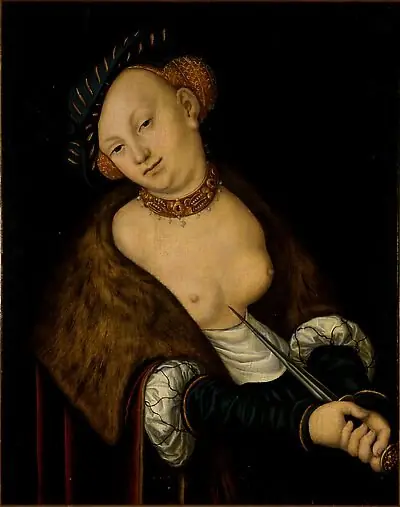
Lucretia Committing Suicide
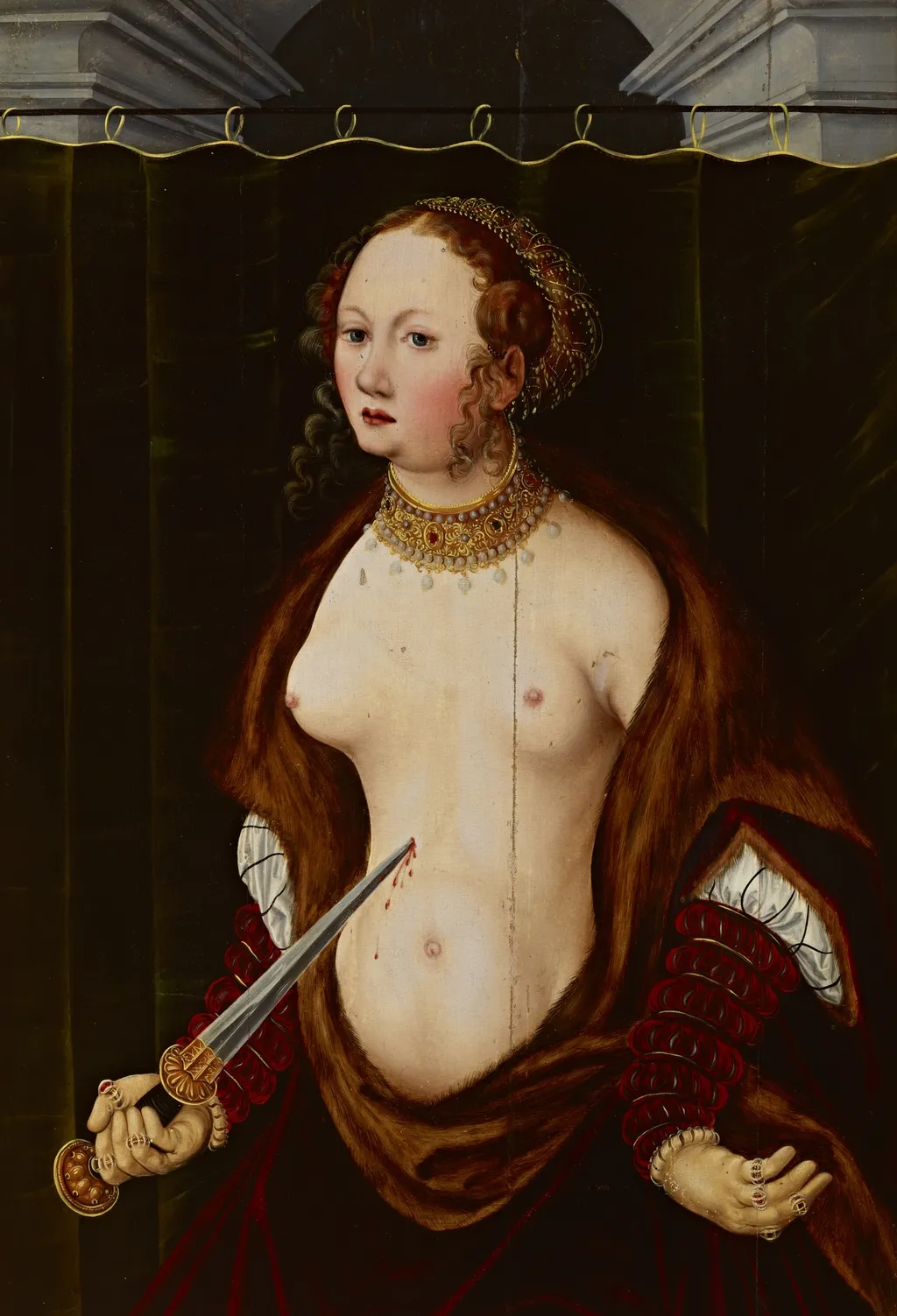
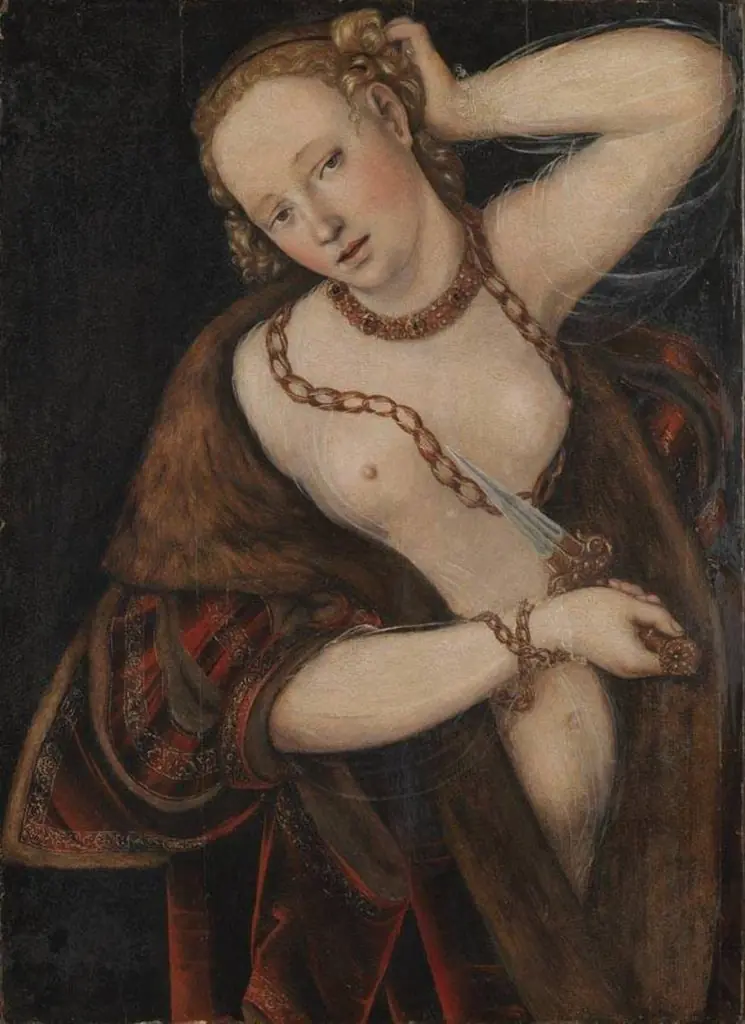
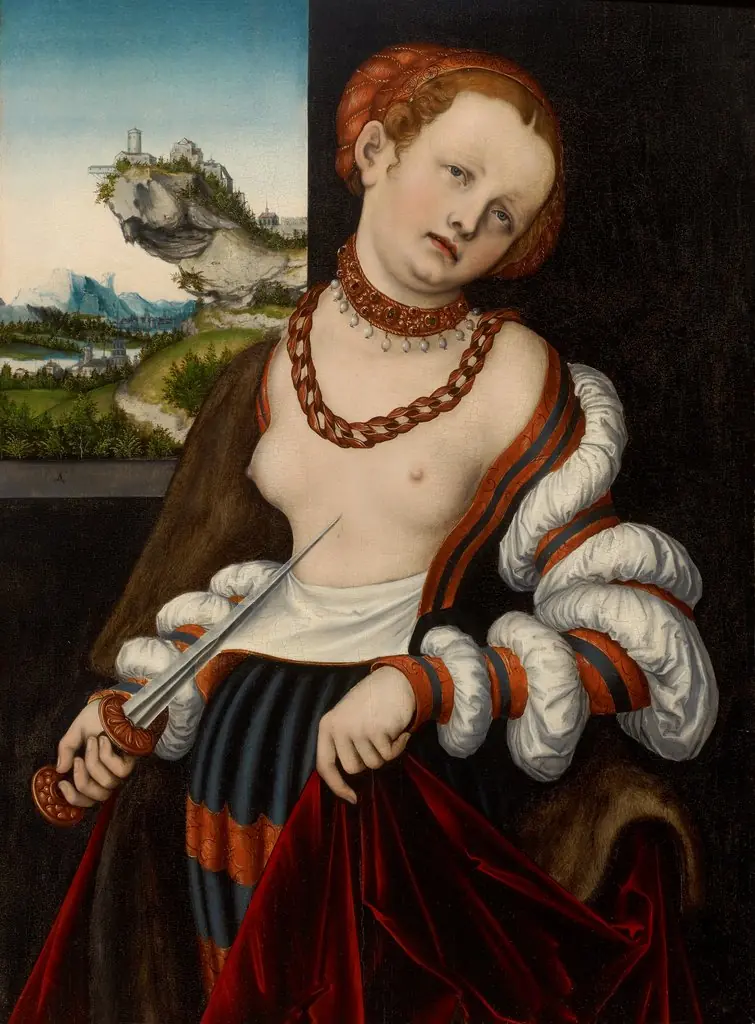
Lucretia Committing Suicide is an oil painting by the Early Baroque Italian artist Unknown. It dates from 1600 and is held in the collection of the National Museum in Kraków. The work depicts a woman with flowing red hair, cloaked in a fur‑trimmed mantle, clutching a dagger to her abdomen.
About this work
Overview
3 centimeters, the work belongs to the history painting genre and depicts the legendary Roman heroine at the moment of her self-inflicted death.
Lucretia Committing Suicide is an oil-on-panel painting dated to 1600, attributed to the school of Lucas Cranach the Elder, and held in the collection of the National Museum in Kraków, Poland, specifically at the Niepołomice Museum. Measuring 74 by 51.3 centimeters, the work belongs to the history painting genre and depicts the legendary Roman heroine at the moment of her self-inflicted death. As a product of the Cranach workshop tradition, the painting exemplifies the Northern Renaissance approach to classical subjects, blending contemporary German courtly fashion with moralizing historical narrative. Its place in the broader corpus of Cranach-related Lucretia images underscores the enduring popularity of this theme in Reformation-era art.
Subject & Meaning
The painting illustrates the suicide of Lucretia, the Roman noblewoman whose rape by Sextus Tarquinius, son of the last Roman king, and subsequent death precipitated the fall of the monarchy and the establishment of the Roman Republic. The heroine stands as a half-length figure, her body turned slightly left while her head and gaze pivot toward the viewer. She holds a dagger in her right hand, its point directed against her lower abdomen or just below her breast, where a small wound with trickling blood is visible. Her torso is exposed, though her arms remain within the sleeves of her gown, and her left hand either rests open at her side or holds a fur-trimmed cloak to cover her lower body. The iconography adheres to the Cranach workshop convention: contemporary dress rather than classical nudity, elaborate jewelry including a broad choker with pearls and colored stones, a pearl snood or gold netted headdress concealing her hair, and a dark draped curtain background with architectural elements visible above. The composed outward gaze and stoic bearing suggest resigned acceptance rather than anguish, framing her suicide as an act of virtue and political consequence rather than personal despair. The rich fabrics and jewels simultaneously convey nobility and the worldly trappings that the moral narrative transcends.
Technique & Style
Executed in oil paint on panel, the painting displays the smooth, precise brushwork characteristic of the Cranach workshop, with particular attention to the textures of fur, fabric, metal, and jewelry. The palette consists of deep greens, rich browns, dark reds, and the pale tone of the subject's skin set against a dark background. Even lighting illuminates her face and torso, creating dramatic contrast with the surroundings. The surface shows fine vertical cracks and a visible seam running down the center of the panel, indicating the wooden support structure. The work's handling reflects the standardized production methods of the Cranach atelier, where workshop assistants often executed paintings based on established compositional templates and the master's designs. The precise rendering of costume details, the formulaic pose, and the decorative treatment of surfaces all align with the late phase of Cranach production, even though the 1600 date places this work well after the Elder's death in 1553, suggesting continued workshop or familial production under the Cranach name.
History & Provenance
The painting is inventoried as part of the collection at the National Museum in Kraków, with specific display at the Niepołomice Museum, a branch location. Its accession history and prior ownership chain are not documented in the available sources. The work's attribution to the school of Lucas Cranach the Elder rather than the master's own hand reflects scholarly assessment of its style and the 1600 date, which falls decades after the Elder's death. The painting has been categorized in museum records under the inventory number XII-A-27. Exhibition history specific to this panel is not recorded in the provided sources.
Context
The Cranach workshop produced numerous depictions of Lucretia throughout the sixteenth and early seventeenth centuries, making the subject one of their most characteristic and commercially successful themes. These images circulated within a German cultural context where classical history was reinterpreted through contemporary moral and political lenses, particularly during the Reformation period when questions of virtue, honor, and resistance to tyranny held urgent relevance. The standardized composition, with its half-length format, contemporary costume, and direct engagement with the viewer, allowed for efficient production and met sustained demand from aristocratic and bourgeois collectors. Scholarly discussion of this specific painting has centered on its workshop attribution and its place within the broader typology of Cranach Lucretias, which number among the most widely distributed images of the Northern Renaissance. The work's presence in a Polish national collection reflects the historical circulation of German art into Polish territories and the collecting patterns of the region.
Artist & collection