Artwork
The Four Continents
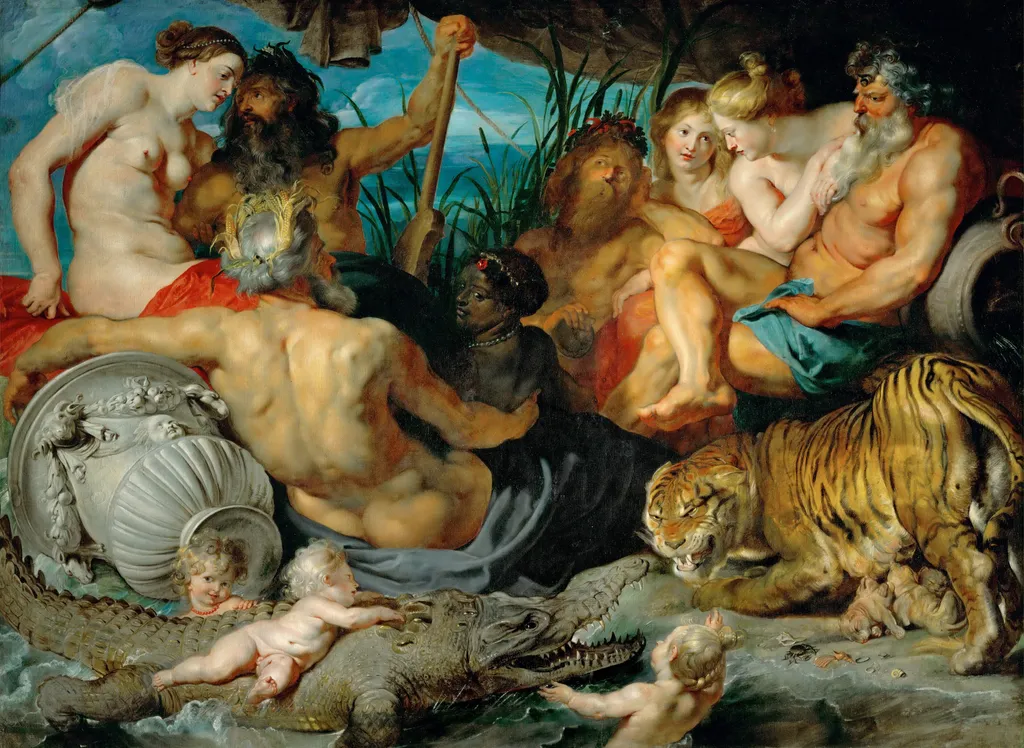
The Four Continents is an oil painting by the Flemish Baroque painting artist Peter Paul Rubens. It dates from 1615 and is held in the collection of the Kunsthistorisches Museum.
About this work
Subject & Meaning
Symbolic animals reinforce the continents: a tigress with cubs stands for Asia, a crocodile for Africa, while putti interact with the crocodile.
The painting allegorically presents the four known continents, Europe, Asia, Africa and America, each as a female personification seated with the male figure of their principal river (the Danube, the Ganges, the Nile and the Río de la Plata). Europe occupies the left foreground, Africa sits centrally as a Black woman who looks toward the viewer, Asia is on the right, and America is positioned behind Asia.
Symbolic animals reinforce the continents: a tigress with cubs stands for Asia, a crocodile for Africa, while putti interact with the crocodile. The Danube holds a rudder and the Nile leans on classical architecture, alluding to riverine power.
Executed in 1615 during Rubens’s diplomatic mission amid the Twelve Years’ Truce, the work expresses a hopeful vision of peace for Antwerp.
Technique & Style
Executed in oil paint on canvas, this large-scale allegory measures 209 cm in height and 284 cm in width. Rubens employed a realistic distribution of colors to render the varied flesh tones of the personified continents, while depicting the textures of animal fur and reptile skin with vivid realism. The composition features full-bodied figures consistent with humanist ideals derived from Greco-R Renaissance traditions, set within a marshy landscape containing mountains and water.
Specific details include classical decorative vases flanking the scene and putti interacting with a crocodile and a tigress nursing her cubs. Although Frans Snyders frequently painted animals in Rubens's works, evidence suggests the artist personally rendered the exotic fauna in this piece, drawing from his own sketches of lions and hippopotamuses. Restoration work addressing both the painting and its frame was undertaken beginning in 2015.
History & Provenance
The Four Continents was painted by Peter Paul Rubens between 1612 and 1615, during the Twelve Years' Truce that paused hostilities in the Eighty Years' War between the Dutch Republic and Spain.
The work was created in Antwerp, where Rubens had returned in 1608 after a period in Spain. It depicts female personifications of Europe, Asia, Africa, and America seated alongside male river personifications, the Danube, Ganges, Nile, and Río de la Plata, set within a lush, allegorical landscape. Since its creation, the painting has remained in the collection of the Kunsthistorisches Museum in Vienna, where it continues to be held.
The Four Continents is held in the collection of the Kunsthistorisches Museum in Vienna. Painted by Peter Paul Rubens in 1615, the oil on canvas work depicts allegorical figures representing the known continents and their major rivers. The piece was created during the Twelve Years' Truce, a period of peace between the Dutch Republic and Spain, reflecting the artist's diplomatic hopes for Antwerp.
While the painting's creation and historical context are well-documented, specific details regarding its exhibition history or inventory accession numbers are not provided in the available sources. The work remains a significant example of Rubens's engagement with global geography and political allegory during his time in Antwerp prior to his extensive diplomatic missions of the 1620s.
Context
Peter Paul Rubens executed The Four Continents in 1615, an allegorical oil painting now housed in the Kunsthistorisches Museum, Vienna. The work reflects the diplomatic climate of the Twelve Years’ Truce, a period of peace that Rubens, active as both artist and envoy for the Spanish Netherlands, hoped would restore stability to Antwerp. Iconographically it pairs female personifications of Europe, Africa, Asia and America with their principal rivers, while a black woman embodies Africa, a motif linked to contemporary discussions of the Nile’s mythic source.
Scholars such as Elizabeth McGrath and Jean Michel Massing have debated whether the figures represent continents or riverine nymphs, and recent restoration has highlighted the painting’s technical and iconographic complexity.
Legacy
Since the early seventeenth century, Rubens’s allegory has been read as a Baroque meditation on peace and abundance during the Twelve Years’ Truce, yet its later reception has been shaped by shifting interpretations of its iconography and by modern reassessments of its racial and gendered imagery. Scholars such as Elizabeth McGrath have challenged the conventional reading of the female figures as continental personifications, proposing instead that they represent water nymphs at the sources of the rivers and even suggesting alternative identifications of the rivers themselves (e.g., Tigris for Danube, Euphrates for Río de la Plata) grounded in Christian exegesis. These debates have reframed the painting’s legacy as a contested site of allegorical meaning rather than a stable emblem of geopolitical harmony.
Its continued presence in the Kunsthistorisches Museum has anchored its canonical status, while recent conservation (since 2015) has renewed scholarly attention to the handling of exotic fauna and skin tones, foregrounding Rubens’s engagement with contemporary discourses on Africa and the Nile.
Overview
Peter Paul Rubens, a Flemish artist, created the oil painting known as The Four Continents between 1612 and 1615. This large-scale work, also referred to as The Four Rivers of Paradise or The Four Corners of the World, dynamically portrays the world's major landmasses and their associated rivers. The composition is vibrant and full of life, featuring allegorical figures, playful putti, and various animals, reflecting a period of relative peace during a prolonged conflict.
Own this work as a print
Artist & collection
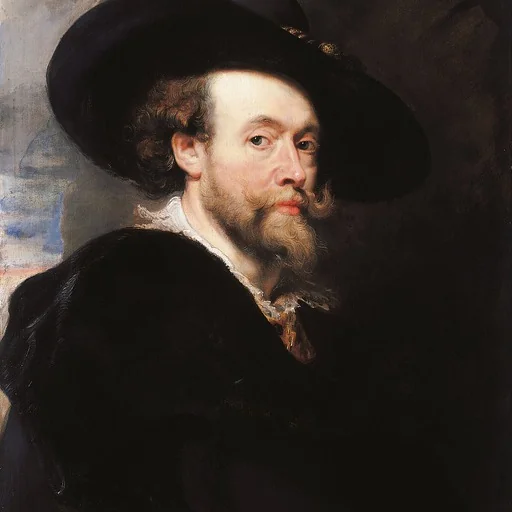
Artist
Sir Peter Paul Rubens ( ROO-bənz; Dutch:; 28 June 1577 – 30 May 1640) was a Flemish artist and diplomat.