Artwork
The Bravo
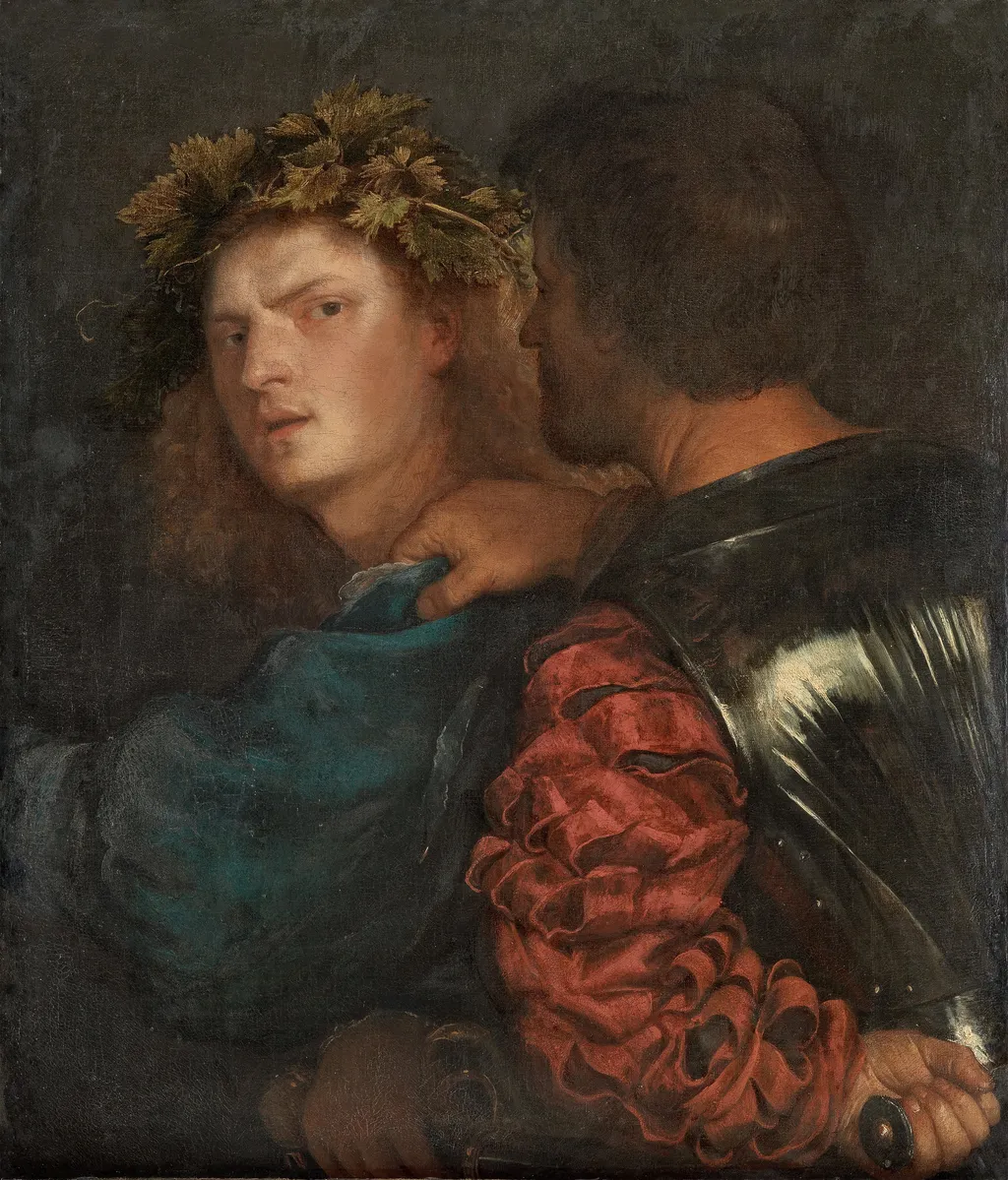
The Bravo is an oil painting by the High Renaissance artist Titian. It dates from 1520 and is held in the collection of the Kunsthistorisches Museum.
About this work
Subject & Meaning
One prominent theory identifies the scene as the arrest of Bacchus or his follower Acoetes by Pentheus, King of Thebes, an episode drawn from Ovid or Euripides.
The painting depicts a dramatic confrontation between two male figures against a dark background. A foreground figure, shown in shadow and profile, taps the shoulder of a young man with flowing blonde hair, causing him to turn sharply. The aggressor conceals a dagger or sword hilt behind his back, signaling an imminent attack, while the victim, wearing a garland of vine leaves, appears to reach for his own weapon.
The specific identity of the subjects remains debated, though the vine wreath suggests a mythological context. One prominent theory identifies the scene as the arrest of Bacchus or his follower Acoetes by Pentheus, King of Thebes, an episode drawn from Ovid or Euripides. Alternative historical interpretations propose the murder of the soldier Trebonius by the tribune Caius Lusius.
Technical analysis reveals the aggressor originally wore a crown, and the canvas was likely cut on the left, possibly removing a thyrsus held by the victim.
Technique & Style
The painting is executed in oil paint on canvas, measuring 75 cm by 67 cm, and belongs to the Venetian school of the High Renaissance. It depicts two half-length male figures in a dramatic moment of attack, with the foreground figure concealing a dagger behind his back while reaching toward the other figure's collar. The composition shows a young man with blond hair crowned by a vine-leaf garland, rendered with intense physiognomic detail, while the assailant is rendered in deep shadow with vivid red sleeve highlights and reflective armor.
Radiographic analysis reveals an earlier crown on the foreground figure's head. The work demonstrates Titian's characteristic use of chiaroscuro, dynamic movement, and vivid color contrast, with a pastose application of paint that conveys physical tension and psychological immediacy.
History & Provenance
The Bravo is dated circa 1520 and attributed to Titian. It likely originated in Venice, where it was inventoried in 1528 in the collection of Zuanantonio Venier as 'two half-figures attacking each other' by Titian. By 1636 it belonged to Bartolomeo della Nave in Venice and was sold that year to James Hamilton, 1st Duke of Hamilton, who brought it to London.
After Hamilton's execution, Archduke Leopold Wilhelm of Austria acquired it in 1659; his collection later formed part of the Habsburg imperial holdings in Vienna and entered the Kunsthistorisches Museum, where the work remains.
Historically, the painting appeared in gallery pictures by David Teniers the Younger and was etched for the Theatrum Pictorium in 1660, at which time it was attributed to Giorgione. The attribution to Titian was solidified in 1927 by scholars Wilhelm Suida and Roberto Longhi. A period copy attributed to Pietro della Vecchia is located in the Doria-Pamphilj Gallery in Rome.
Context
Scholarship on The Bravo has long debated its authorship, with past attributions ranging from Giorgione and Palma Vecchio to Giovanni Cariani and Dosso Dossi. The consensus favoring Titian was solidified in 1927 by Roberto Longhi and Suida, who dated the work to circa 1520. Art historians situate the painting within the Venetian tradition of the 1510s, characterized by enigmatic half-length figures, noting its stylistic proximity to Titian's The Tribute Money while acknowledging the lingering influence of Giorgione's sfumato.
Interpretations of the subject matter remain unresolved, though prominent hypotheses identify the scene as either the arrest of a follower of Bacchus by Pentheus or the historical assault on Trebonius by Caius Lusius. Technical analysis, including X-rays revealing a crown on the aggressor and evidence of a cropped left side, supports the mythological reading involving Bacchus. The work's dramatic tension and chiaroscuro mark it as a significant development in the genre of the action portrait.
Overview
The Bravo is an early 16th‑century oil painting, generally linked to Titian and dated to roughly 1516–1517. It resides in the Kunsthistorisches Museum in Vienna and exemplifies a Venetian trend of the 1510s that portrays small groups of half‑length figures whose expressions and relationships remain ambiguous.
Own this work as a print
Artist & collection
Artist
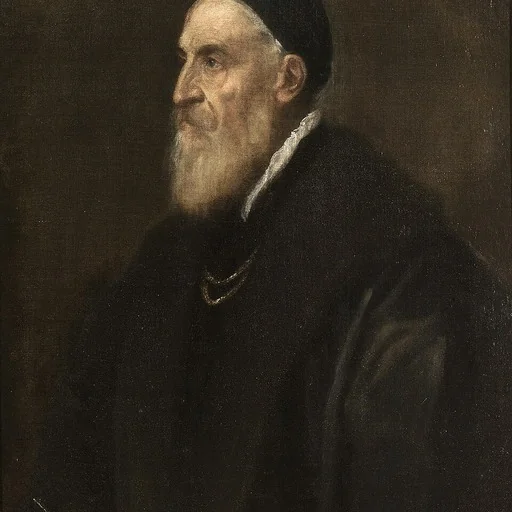
Tiziano Vecellio (Italian:; c. 1488/1490 – 27 August 1576), Latinized as Titianus, hence known in English as Titian ( TISH-ən), was an Italian Renaissance painter. The most important artist of Renaissance Venetian…

 Nymph and Hunter
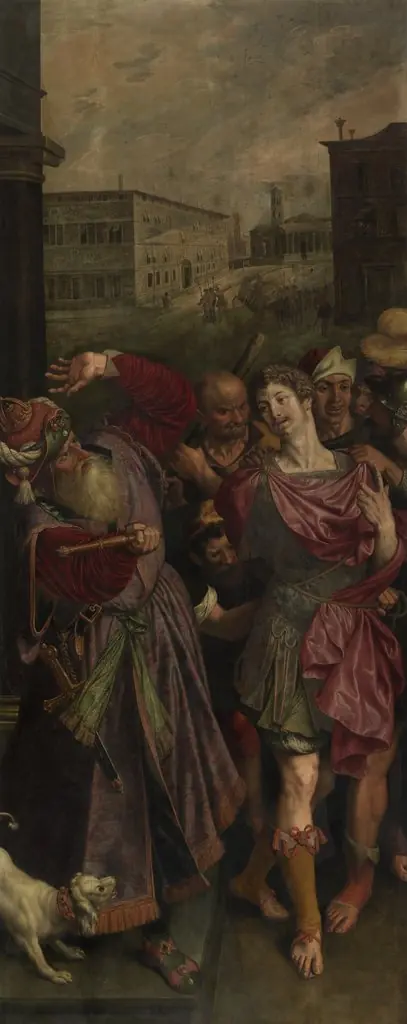 Sebastian of Rome Being Captured by Diocletian
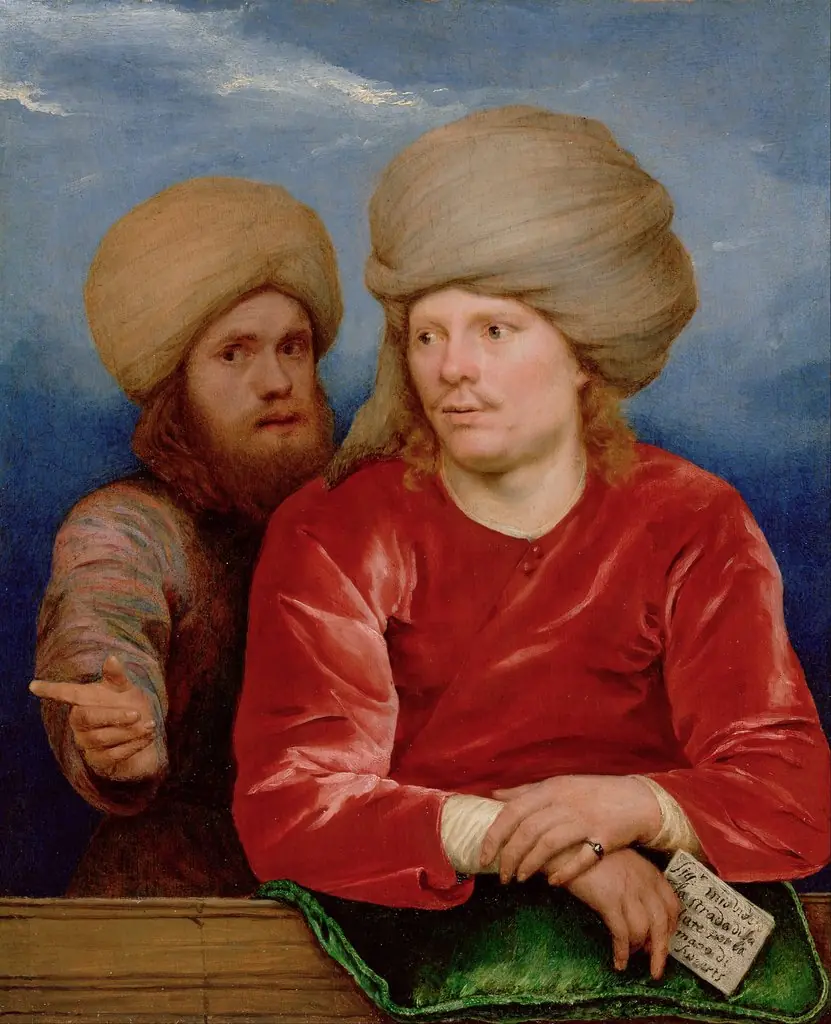 Double Portrait
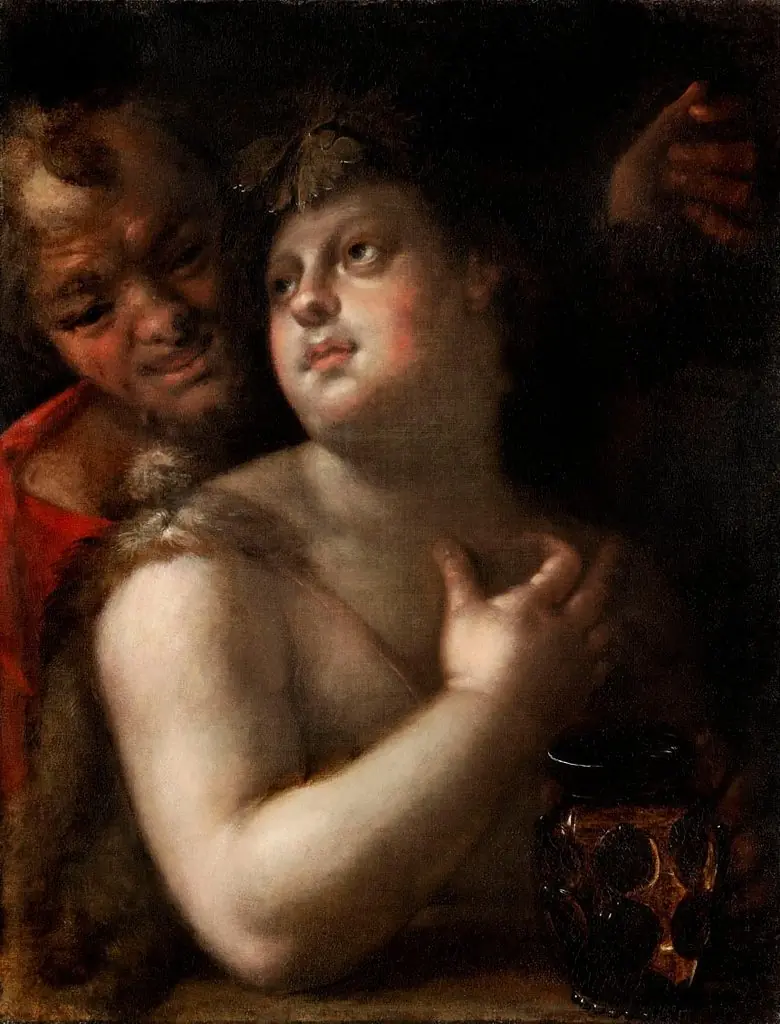 Bacchus with Silenus
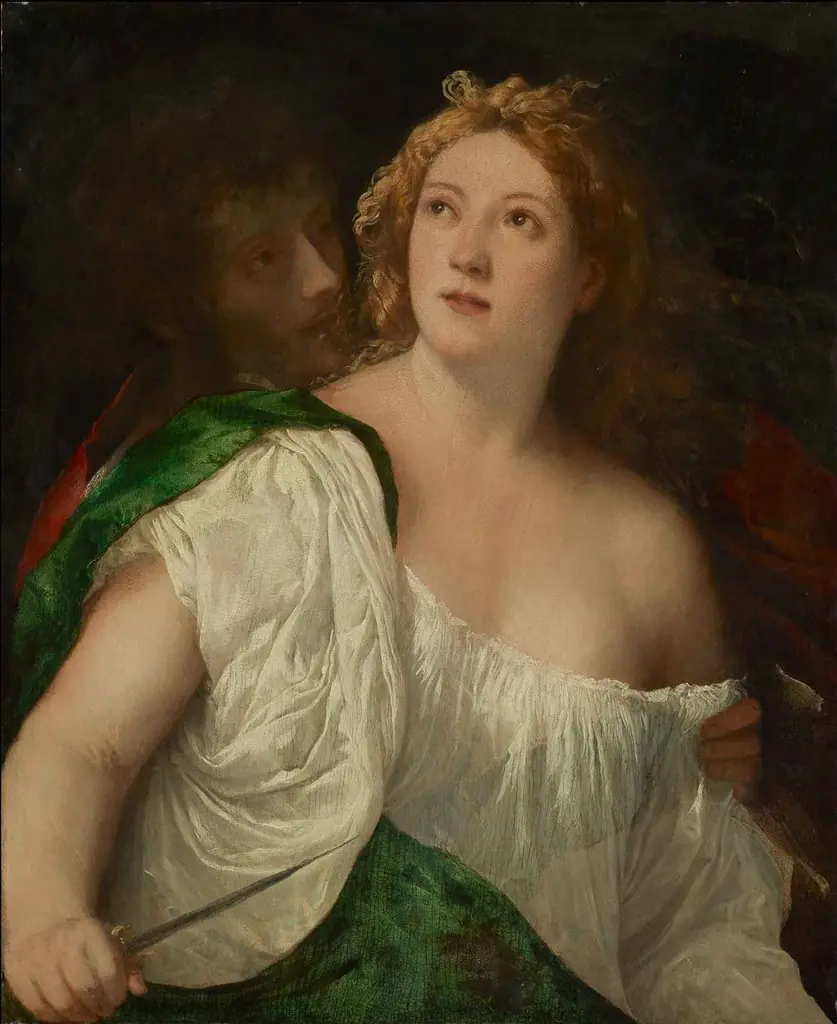 Lucretia and her Husband Lucius Tarquinius Collatinus
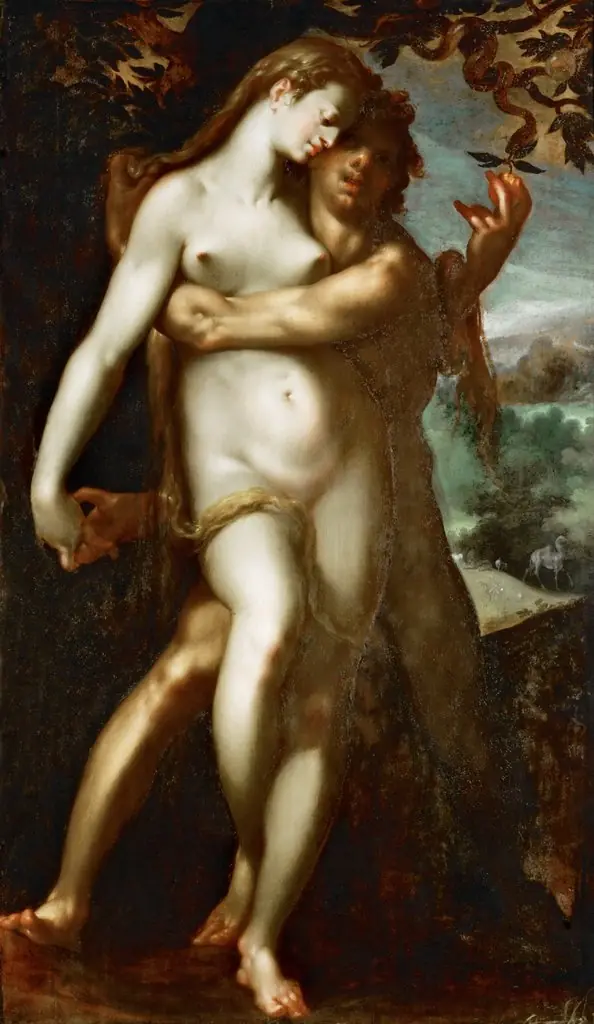 Fall of Man
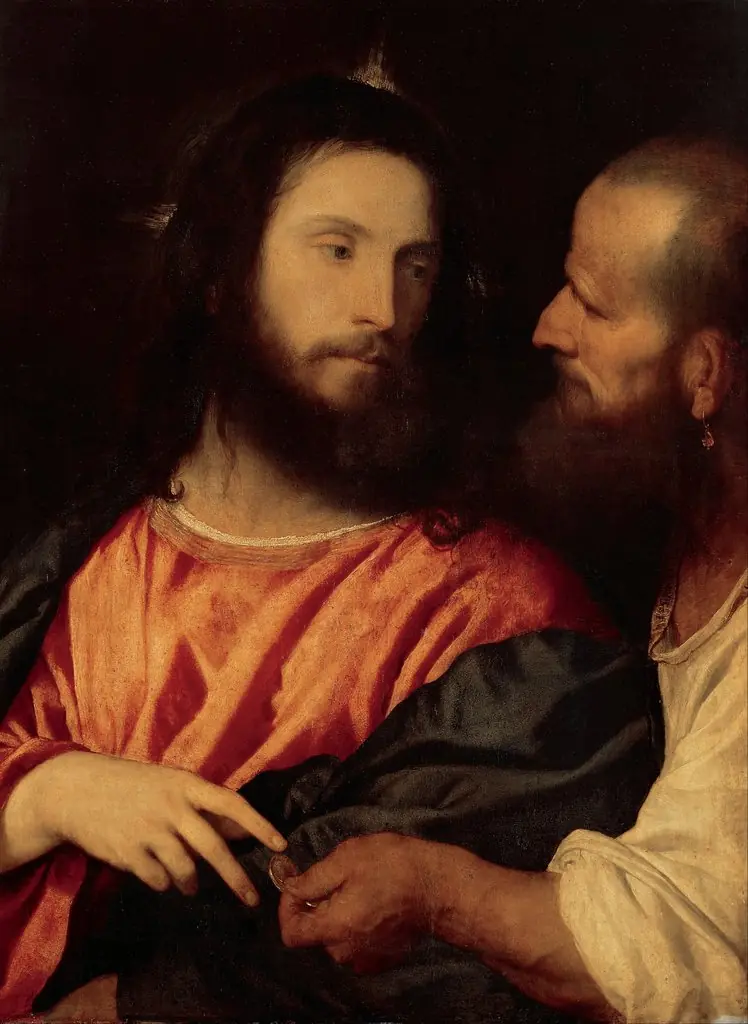 The Tribute Money
 Apolo și Daphne
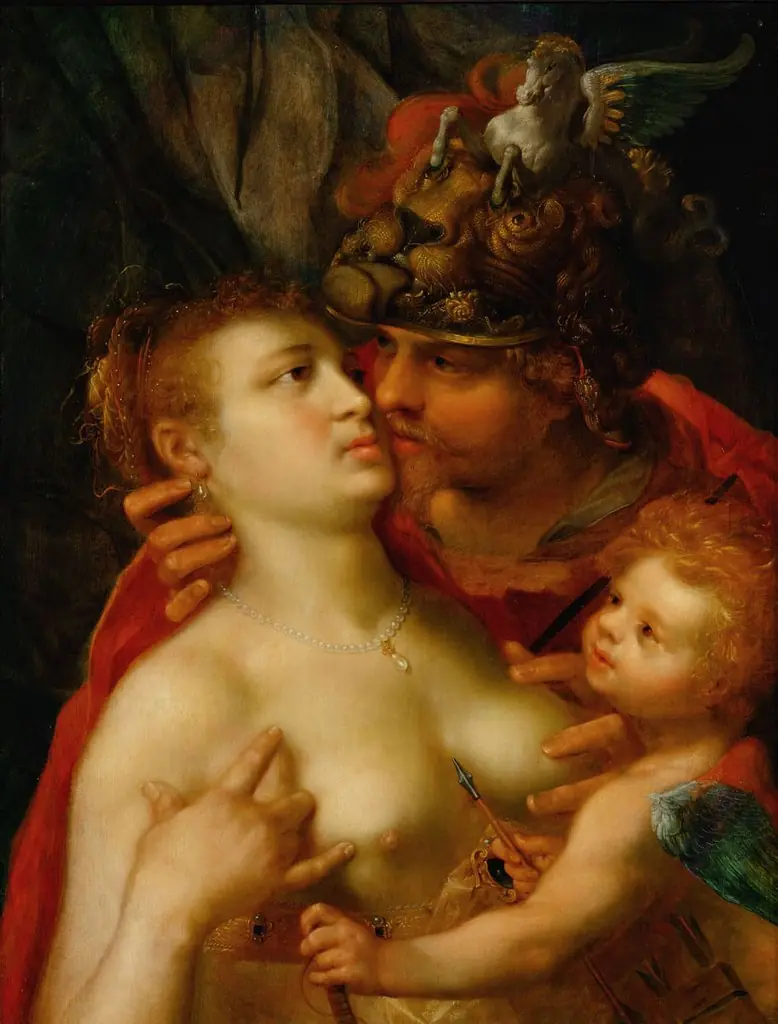 Mars, Venus and Amor
 Tarquin and Lucretia
 Rinaldo's Conquest of the Enchanted Forest
- The Bravo (The Attack on Trebonius)