Artwork
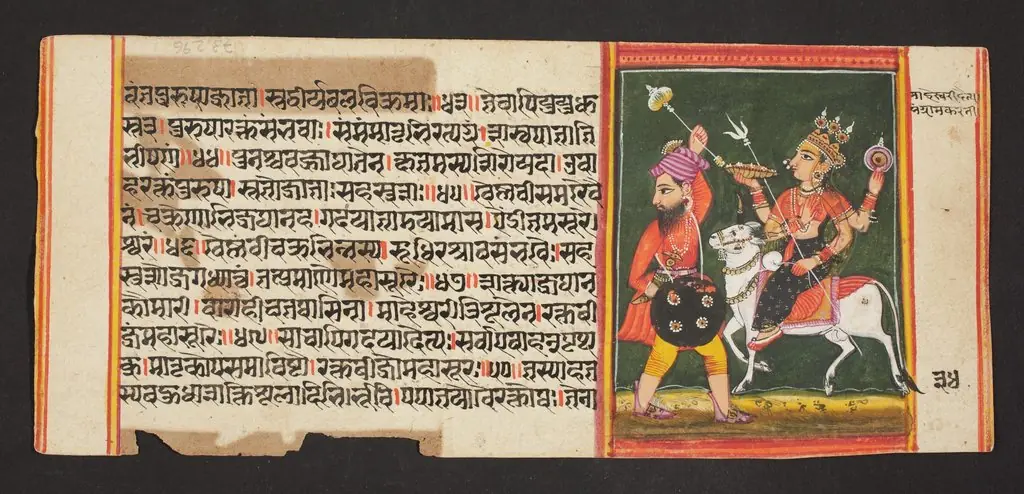
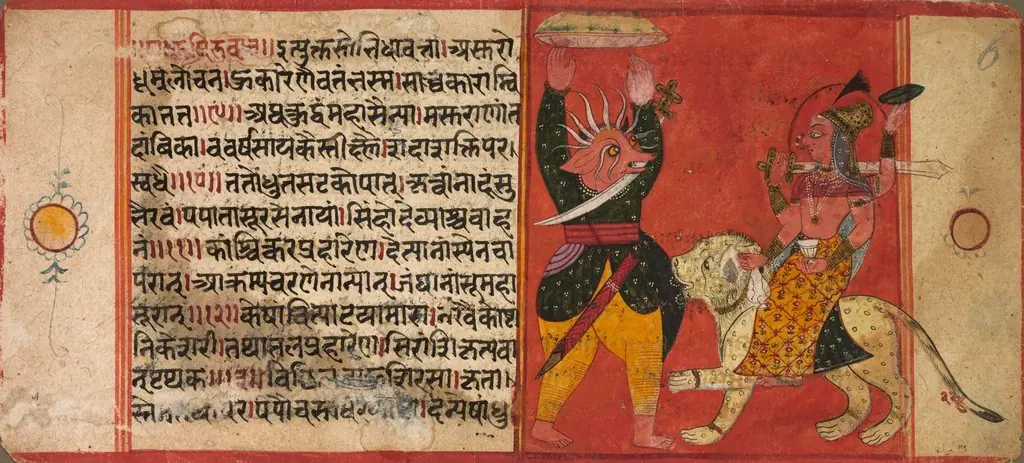
Devi Attacking a Demon
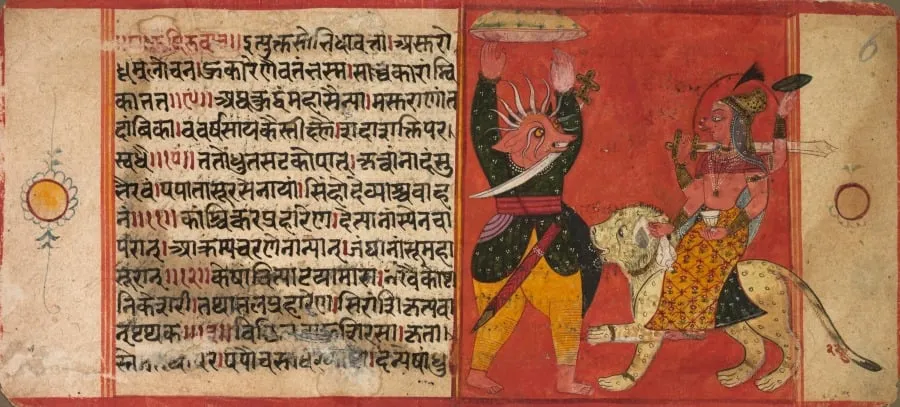
Devi Attacking a Demon is an unspecified painting by the Baroque artist Unknown. It dates from 1630 and is held in the collection of the Cleveland Museum of Art.
- Accession no.
- 1968.72
- Credit line
- Gift of George P. Bickford
About this work
Overview
This painting originates from a sacred manuscript dedicated to the goddess Devi, composed in a horizontal format reminiscent of ancient palm-leaf manuscripts.
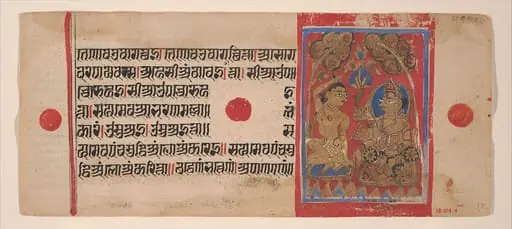
This painting originates from a sacred manuscript dedicated to the goddess Devi, composed in a horizontal format reminiscent of ancient palm-leaf manuscripts. It depicts a pivotal moment from Devi’s mythological battles, illustrating her as a warrior deity who overpowers formidable demons. The composition reflects regional artistic traditions while incorporating subtle influences from the Mughal court culture that dominated northern India during its creation.
Subject & Meaning
Devi, in her fierce incarnation, confronts a demon who wields a mountain as a weapon, symbolizing chaos and unchecked power. Her multiarmed form and lion mount signify divine authority and ferocity, surpassing even the male deities. The inclusion of liquor in her hand alludes to ritual intoxication as a conduit to transcendence.
The demon’s attire and her headdress reflect contemporary Mughal fashion, embedding political and cultural realities within a mythological narrative.
Technique & Style
The painting employs flat, unmodeled figures rendered in strict profile, set against a uniform red background, a hallmark of indigenous Indian miniature traditions. Despite the Mughal-inspired clothing and accessories, the stylistic approach remains rooted in pre-Mughal aesthetics, avoiding naturalistic shading or spatial depth. This deliberate choice reinforces the timeless, sacred nature of the scene over temporal realism.
History & Provenance
Created during the height of Mughal rule in India, the work likely emerged from a regional atelier producing devotional texts for Hindu patrons. The fusion of Mughal dress with Hindu iconography suggests a context of cultural negotiation, where artists adapted courtly elements without altering core religious symbolism. Its survival as a single folio indicates it was once part of a larger manuscript, now dispersed.
Context
In the 17th century, Hindu devotional communities coexisted with Mughal imperial culture, leading to visual exchanges that subtly influenced religious art. While Mughal courts favored Persianate styles, regional painters retained indigenous forms while adopting select courtly details. This painting exemplifies how sacred imagery absorbed external influences without surrendering its theological essence.
Legacy
The painting stands as a testament to the adaptability of Hindu iconography under foreign political dominance. Its blend of mythic narrative and contemporary dress offers insight into how religious art navigated cultural change. It remains a key example of how devotional traditions preserved identity while engaging with the aesthetics of ruling powers.
Artist & collection