Artwork
Lucretia
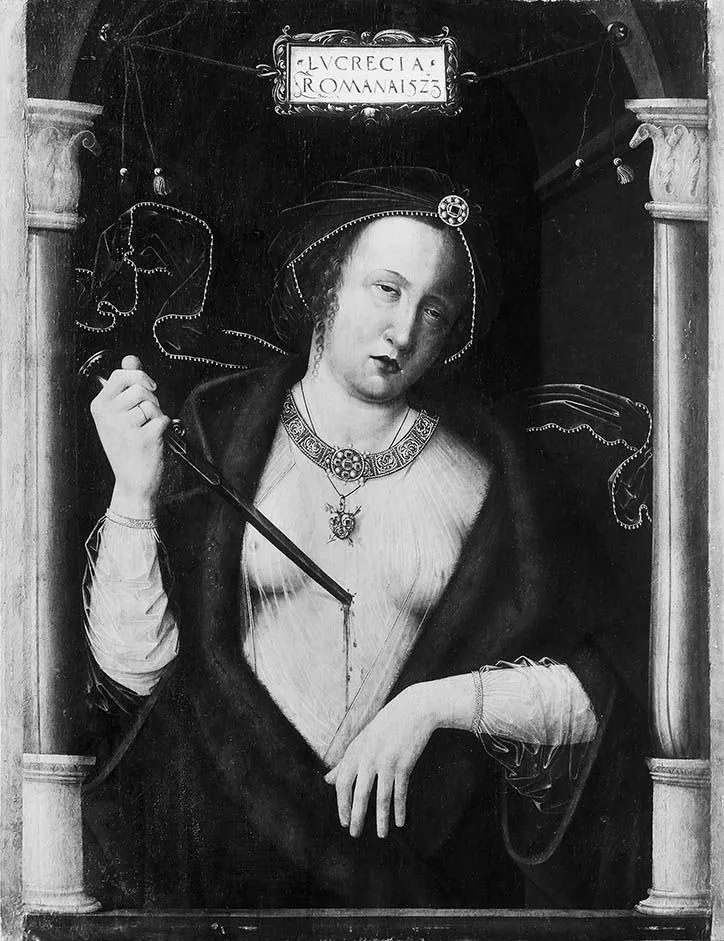
Lucretia is an unspecified painting by the Early Baroque Italian artist Unknown. It dates from 1523 and is held in the collection of the Bavarian State Painting Collections. The canvas depicts a solitary female figure positioned within a confined, dimly lit interior, flanked by two imposing columns.
About this work
Subject & Meaning
The work's primary subject is the suicide of Lucretia, a pivotal event in Roman history often associated with themes of virtue and tyranny.
Created in 1523 by the Master of the Heiligblut Chapel, this history painting depicts the Roman noblewoman Lucretia. The work's primary subject is the suicide of Lucretia, a pivotal event in Roman history often associated with themes of virtue and tyranny. As a history painting, the image serves as a visual narrative of this specific tragic moment, focusing on the figure of Lucretia herself as the central iconographic element.
Technique & Style
The work is executed in oil on wood panel, measuring 69 cm in height and 50 cm in width. It depicts the suicide of Lucretia, a subject drawn from classical antiquity and rendered with the dramatic tension characteristic of early sixteenth-century history painting. The composition shows the figure in a moment of profound despair, her pose and gesture emphasizing both physical and emotional collapse.
The handling of light and drapery reflects the stylistic conventions of the Master of the Holy Blood Chapel, whose workshop produced this piece in Munich around 1523.
History & Provenance
The painting titled Lucretia, attributed to an anonymous artist, was created in 1523. It is classified as a history painting depicting the suicide of Lucretia, a subject drawn from classical antiquity and early modern interpretations of virtue and tragedy. The work is part of the Bavarian State Painting Collections and has been housed in the Alte Pinakothek in Munich since its acquisition.
Its dimensions are 69 cm in height and 50 cm in width, and it was likely produced within the artistic circle of the Meister der Heiligblut-Kapelle, a workshop active in early 16th-century Bavaria.
The painting Lucretia, dated to 1523 and attributed to the Master of the Heiligblut Chapel, is held within the Bavarian State Painting Collections. It is currently located at the Alte Pinakothek in Munich. The work depicts the suicide of the historical figure Lucretia and measures 69 cm in height by 50 cm in width.
While its current institutional home is established, the provided records do not list specific inventory numbers or detail a history of public exhibitions.
Context
The painting Lucretia, attributed to the Meister der Heiligblut-Kapelle, depicts the suicide of the Roman noblewoman Lucretia and is classified as a history painting. Created in 1523, it is housed in the Alte Pinakothek within the Bavarian State Painting Collections, forming part of their holdings of German Renaissance works. This subject, Lucretia’s self-inflicted death following a sexual assault, was a recurring theme in Renaissance art, often used to explore ideas of honor, virtue, and political consequence.
The work’s composition and emotional intensity reflect the period’s fascination with narrative-driven religious and historical scenes, situating it within broader dialogues about gender, violence, and moral agency in early modern visual culture.
Legacy
Lucretia's legacy is anchored in her dramatic suicide, a theme that shaped the history painting genre. The work, attributed to the Meister der Heiligblut-Kapelle, entered the Bavarian State Painting Collections and has been displayed at the Alte Pinakothek since its inception in 1523. Its focus on Lucretia's self-inflicted death reinforced narrative power in Renaissance art and informed later depictions of female martyrdom.
Overview
The canvas depicts a solitary female figure positioned within a confined, dimly lit interior, flanked by two imposing columns. She is clothed in a light undergarment beneath a dark cloak trimmed with fur, and holds a black cord attached to a ring in her left hand while her right hand rests on her hip. Gold jewelry, including a necklace and bracelet, accentuates her attire, and the inscription "Lucretia Romanaisz" appears above her head.
Artist & collection









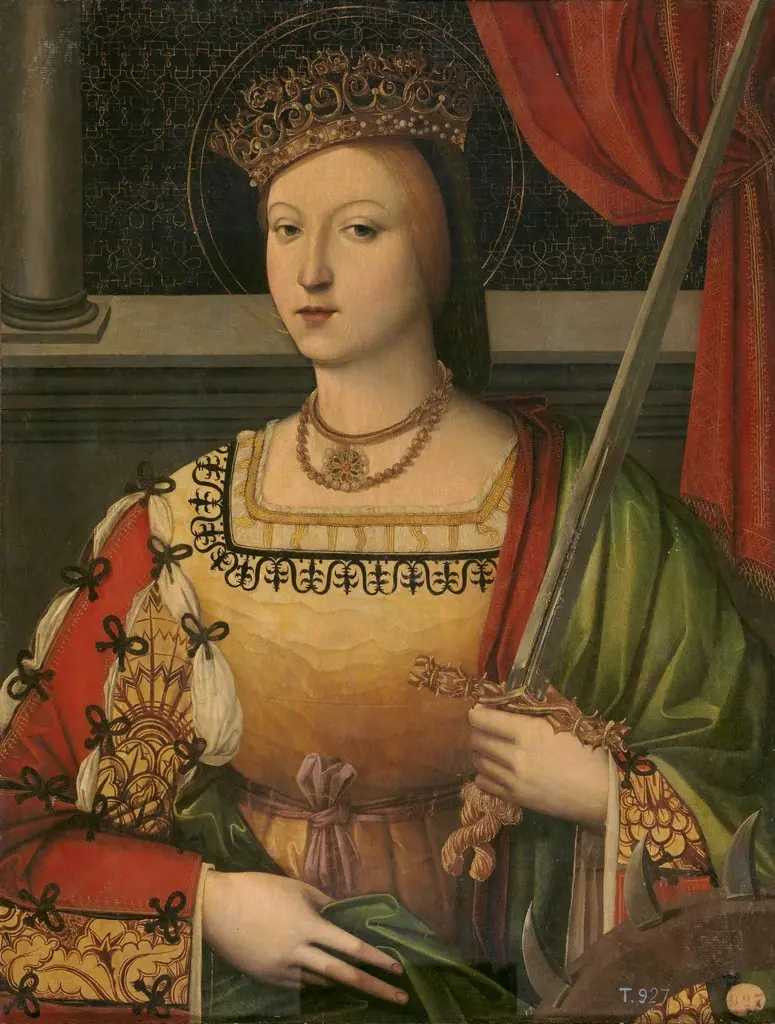 Catalina de Austria reina de Portugal como Santa Catalina
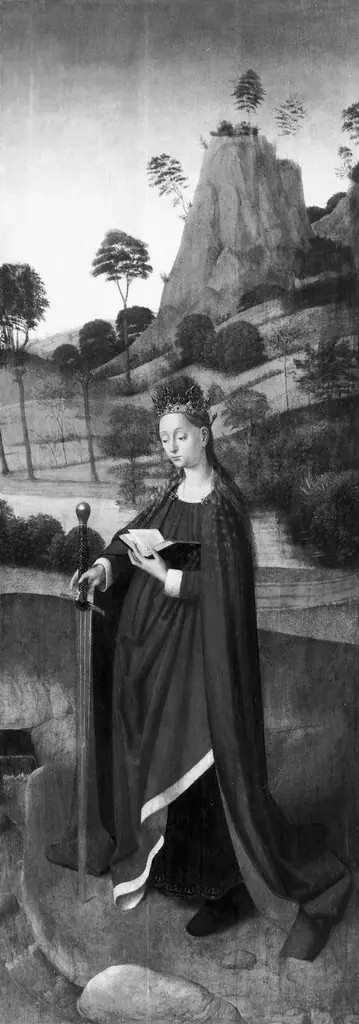 St. Catherine
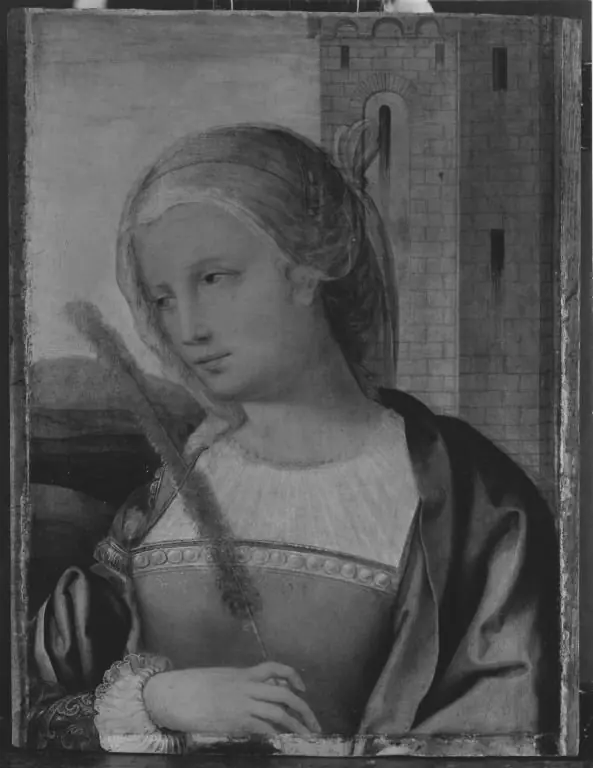 Saint Barbara (exterior: fragment of an Annunciation)
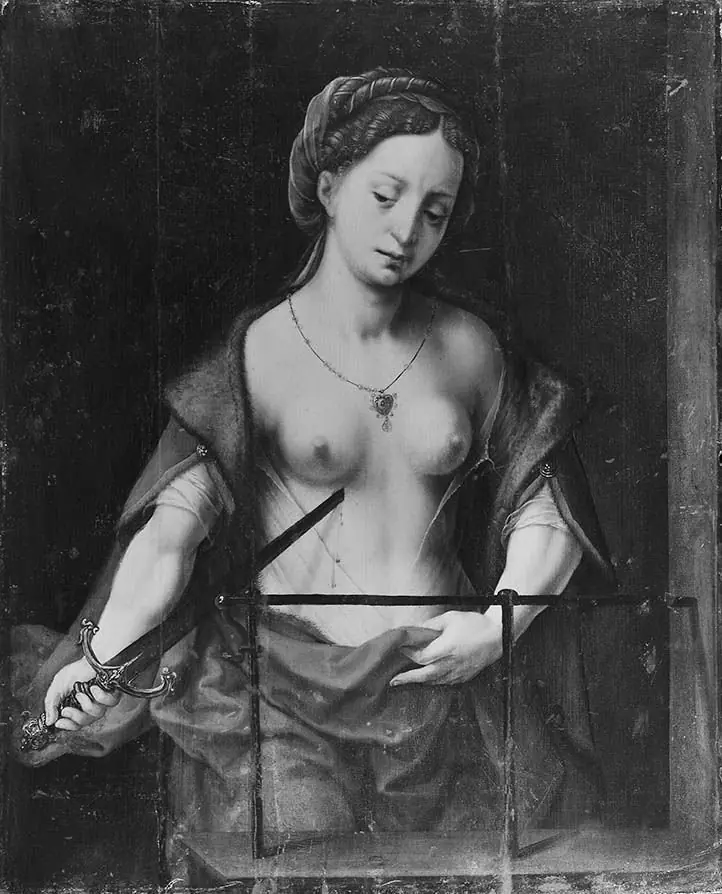 The suicide of Lucretia
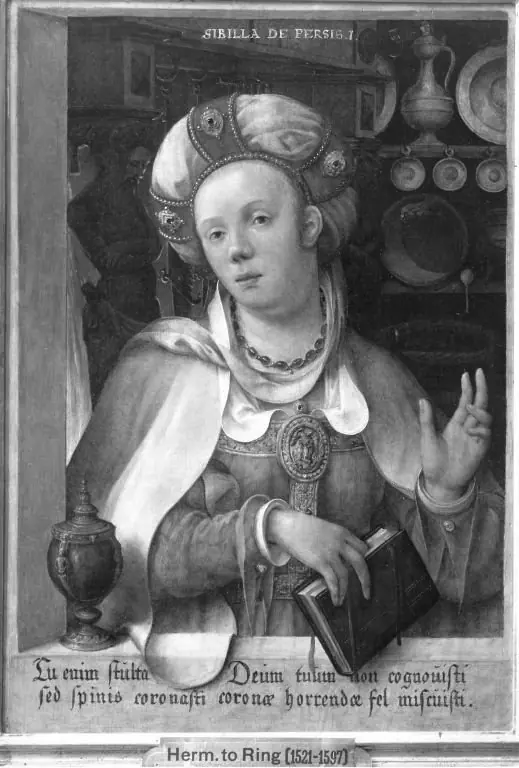 Sibylla Persica
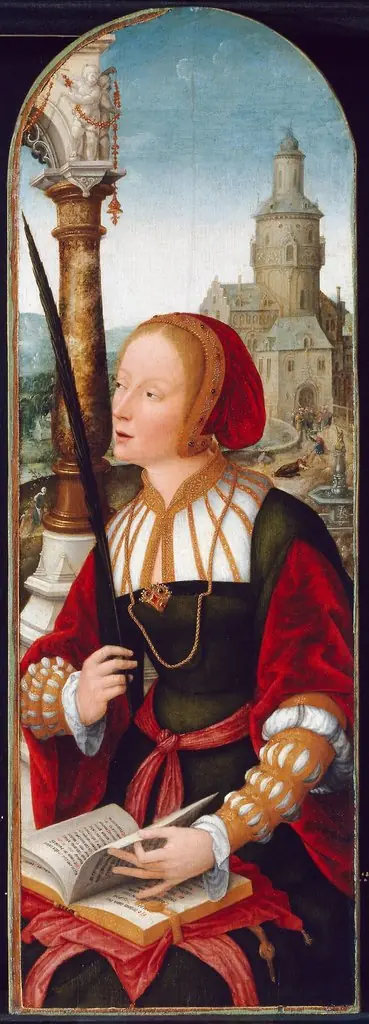 Saint Barbara
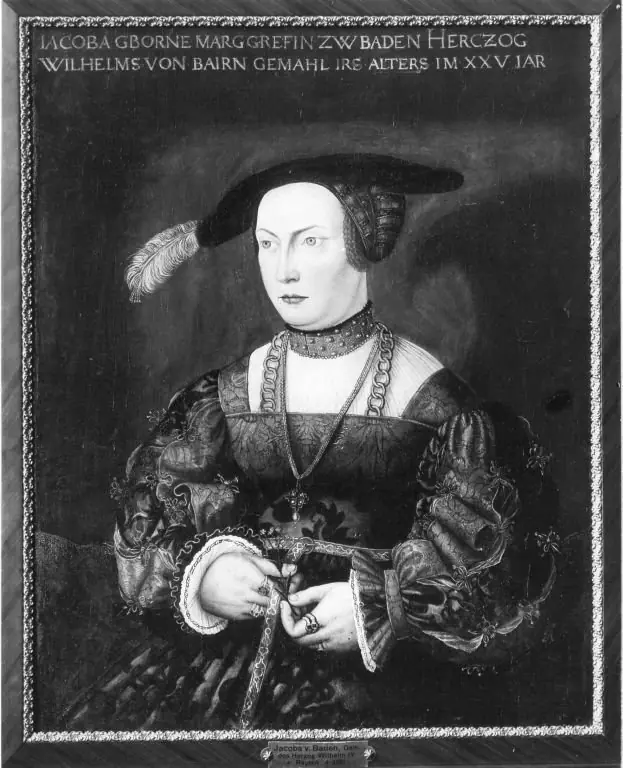 Maria Jakobäa, Gemahlin Herzog Wilhelms IV. von Bayern
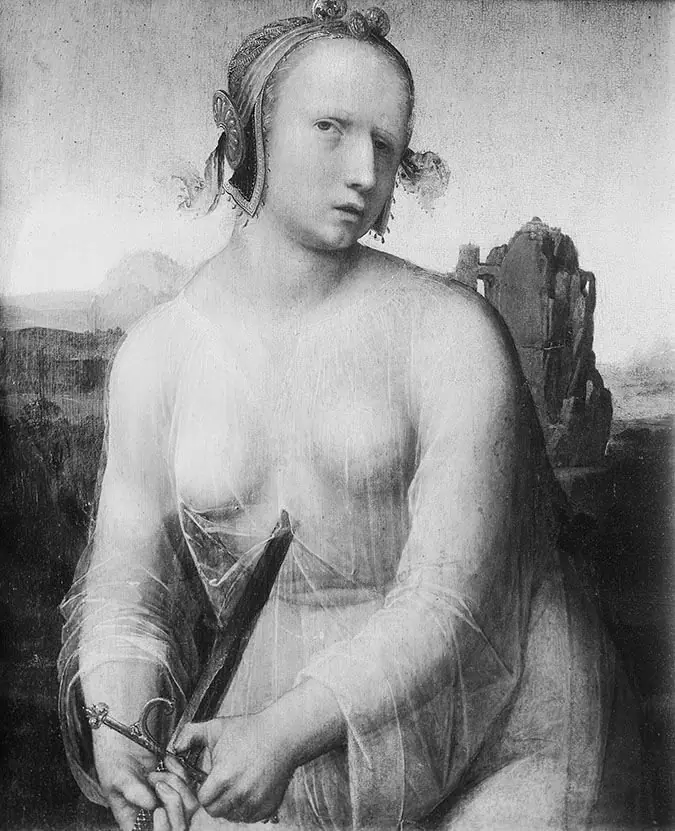 The Suicide of Lucretia
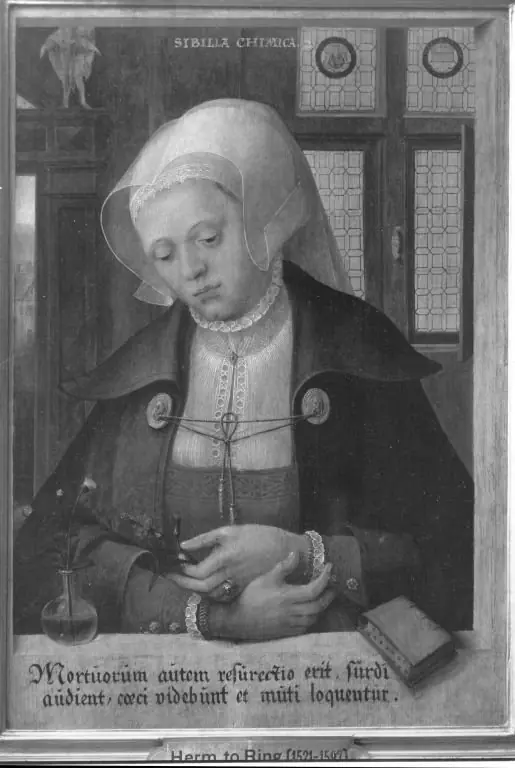 Sibylla Chimica
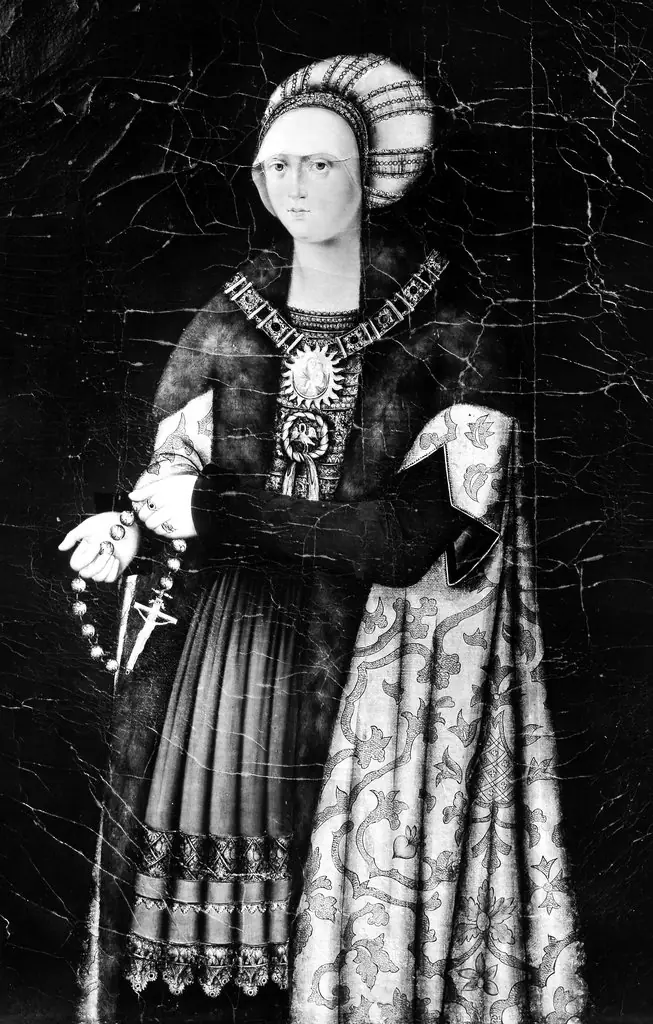 Sophia (1464–1512) of Poland
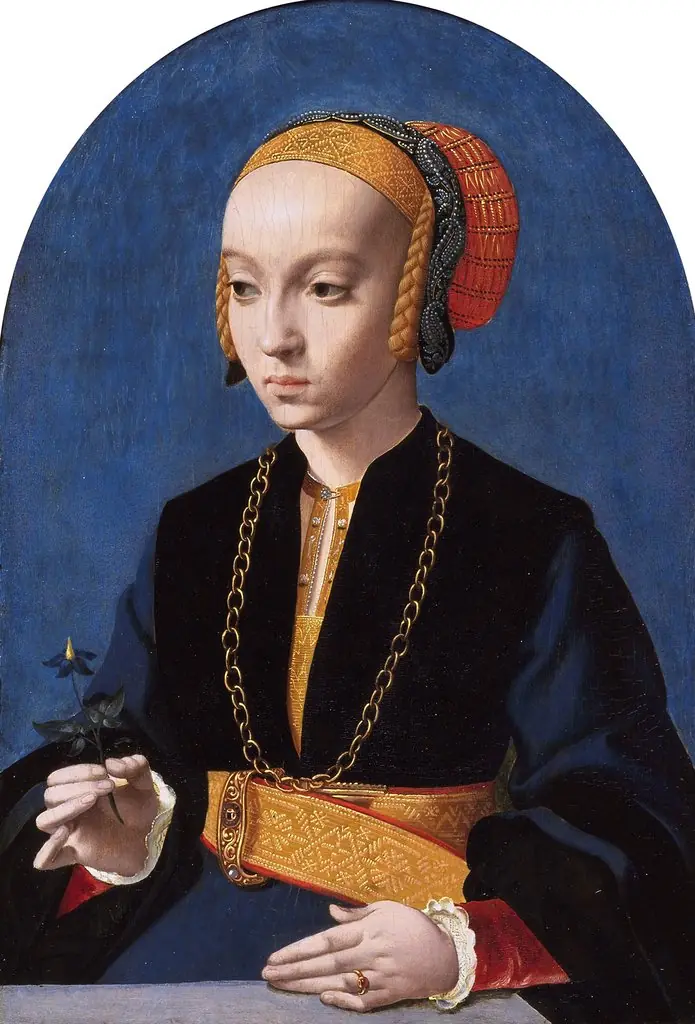 Portrait of Elisabeth Bellinghausen
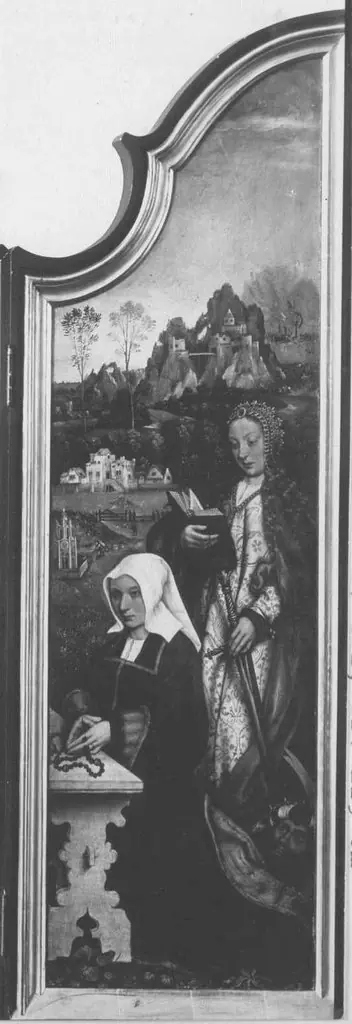
- Beweinungsaltar: Hl. Katharina mit Stifterin