Artwork
The Land of Cockaigne
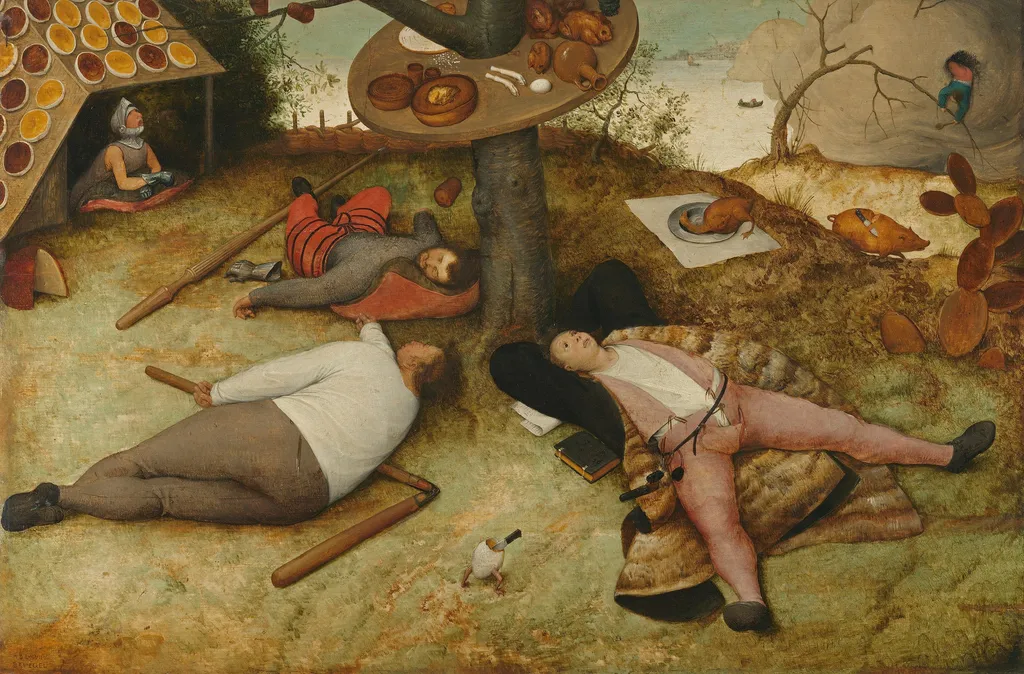
The Land of Cockaigne is an oil painting by the Northern Renaissance artist Pieter Brueghel I. It dates from 1550 and is held in the collection of the Bavarian State Painting Collections.
About this work
Subject & Meaning
The three figures represent the three estates, clergy, peasantry, and nobility, universally surrendered to base oral gratification.
The painting depicts the mythical Land of Cockaigne, a medieval utopia of effortless abundance that Bruegel transforms into a moralizing satire of gluttony and sloth. At center, a clerk, peasant, and soldier sprawl around a table-tree like spokes of a wheel, their tools and duties abandoned. The scene abounds with edible fantasies: a fence of sausages, a sea of milk with sailing ships, a self-carving pig, a roasted fowl that offers itself on a platter, and a newcomer burrowing through a mountain of porridge to enter paradise.
The three figures represent the three estates, clergy, peasantry, and nobility, universally surrendered to base oral gratification. Several Flemish proverbs are embedded: roofs covered with pies (abundance), the pig stabbed through the belly (a done deal), and grasping the hen's egg while letting the goose egg go (making the bad choice). The work has been interpreted as political satire on the Dutch Revolt, with the absent fourth spoke of the wheel suggesting the failed nobility, and more broadly as illustrating the spiritual emptiness of complacent overindulgence.
Technique & Style
Executed in 1567, this work is an oil painting on a wooden panel. The composition features a radial arrangement where a clerk, peasant, and soldier lie beneath a tree like spokes of a wheel, emphasizing the theme of sloth through their idle postures and discarded tools. Bruegel populates the scene with surreal, comic details to illustrate gluttony: a fence woven from sausages, a bush made of bread loaves, and a roasted pig running with a knife already inserted.
A half-eaten egg appears to run on legs, while a roasted bird lies ready on a platter. The artist signed the work in the lower left corner. Although a roasted pigeon flying toward a knight was originally present, it was accidentally removed during a later restoration.
History & Provenance
Pieter Bruegel the Elder completed this oil painting on panel in 1567, signing the work with the date M.DLXVII. The composition evolved from earlier treatments of the Cockaigne theme, including a 1546 text by Hans Sachs and a 1560 print by Pieter Balten, though Bruegel streamlined the central figures from six to three.
The painting entered the historical record as part of the imperial collection in Prague in 1621. It passed into Swedish possession between 1647 and 1648 before disappearing from documentation for centuries. The work resurfaced in the early 20th century at a small antiquarian shop in Vevey, Switzerland, where it was acquired for five francs in a heavily retouched state.
Following restoration, the Bavarian State Painting Collections purchased the piece for the Alte Pinakothek in Munich in 1917 for 220,000 marks.
The Land of Cockaigne is held by the Alte Pinakothek in Munich, as part of the Bavarian State Painting Collections. According to provenance records, the painting was first documented in the imperial collection in Prague in 1621. It subsequently passed into Swedish hands in 1647–48 before disappearing from the historical record for centuries.
In the early twentieth century it resurfaced, heavily retouched, in a small antiquarian shop in Vevey, Switzerland, where it had been acquired for roughly five francs. After restoration, the Alte Pinakothek purchased it in 1917 for 220,000 marks. The work's documented exhibition history includes the Exposition des primitifs flamands à Bruges, and it was formerly owned by the collector Richard von Kaufmann.
Context
The Land of Cockaigne belongs to a popular sixteenth-century theme, with antecedents including Hans Sachs's German verse Schlaraffenlandt (1530) and the Antwerp publication Van dat Luye-lecker-lant (1546), and a print by Pieter Balten (c. 1560) whose principal elements Bruegel integrated into a more unified composition. Like Jeroon Bosch, Bruegel was drawn to human folly and inverted-world imagery, and the obese figures of the clerk, peasant, and soldier represent the three estates, all equally susceptible to the temptations of gluttony and sloth. The painting is part of his wider moralizing project critiquing earthly appetites, alongside works such as The Peasant Wedding and The Magpie on the Gallows. A mirrored reproductive print attributed to Pieter van der Heyden appeared shortly after the painting.
Scholarly interpretations include Ross Frank's reading of the work as political satire aimed at participants in the early Dutch Revolt, with the roasted fowl symbolizing the failure of the nobility. The painting has also been cited in illustrating the Freudian oral stage of psychosexual development, and George Orwell remarked on the spiritual emptiness of its utopian vision.
Legacy
The Land of Cockaigne entered the modern canon as a defining critique of idleness and excess, seeding later moralizing imagery from the Dutch Revolt to Freudian theory. Nineteenth- and early twentieth-century writers repeatedly invoked Bruegel’s composition as shorthand for spiritual emptiness beneath abundance, with George Orwell singling out the sleeping figures as visual proof that perpetual leisure is ultimately hollow. The painting’s radial design and gluttonous motifs were echoed almost immediately in a mirrored engraving by Pieter van der Heyden, ensuring its visual vocabulary circulated beyond panel painting.
By the early twentieth century, the work’s rediscovery in a Swiss antiquariat and subsequent acquisition by Munich’s Alte Pinakothek for 220,000 marks (1917) cemented its status in European museum culture. Its provenance, from the imperial collection in Prague to Swedish ownership, added a layer of historical romance that amplified scholarly attention, while conservation revealed the once-missing roasted pigeon, restoring a key detail that had been lost since the seventeenth century.
Overview
The Land of Cockaigne, executed in oil in 1567, is a work by the Netherlandish painter Pieter Bruegel the Elder. The composition presents a fantastical banquet landscape that references the medieval legend of Cockaigne, a realm of endless food and leisure, yet Bruegel treats the subject with a satirical edge.
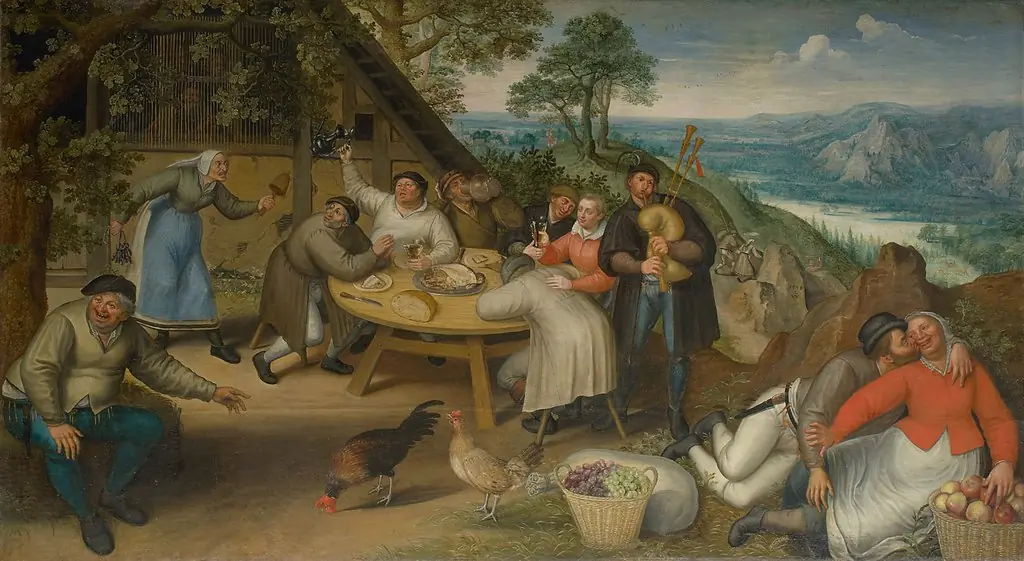
Own this work as a print
Artist & collection

Artist
Pieter Bruegel (also Brueghel or Breughel) the Elder ( BROY-gəl, US also BROO-gəl; Dutch: ; c.

- Peasant tavern
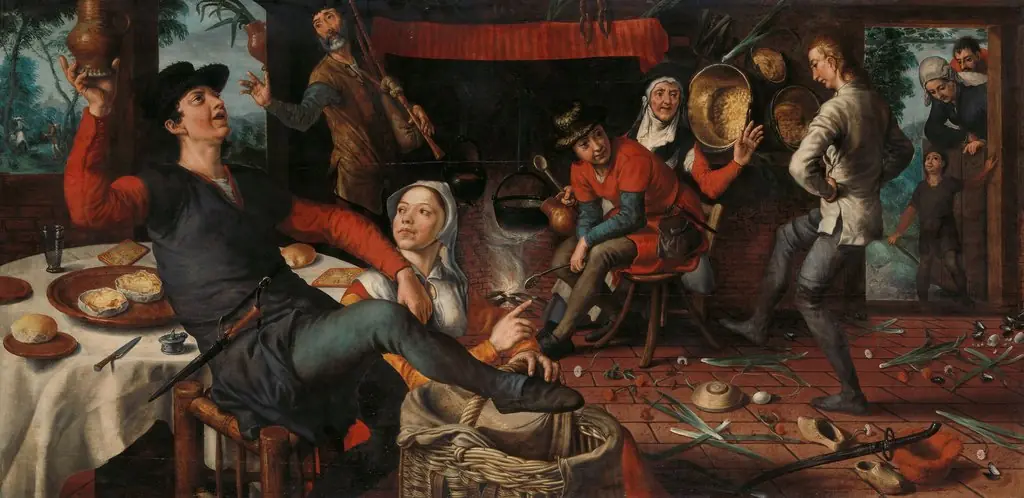 The Egg Dance
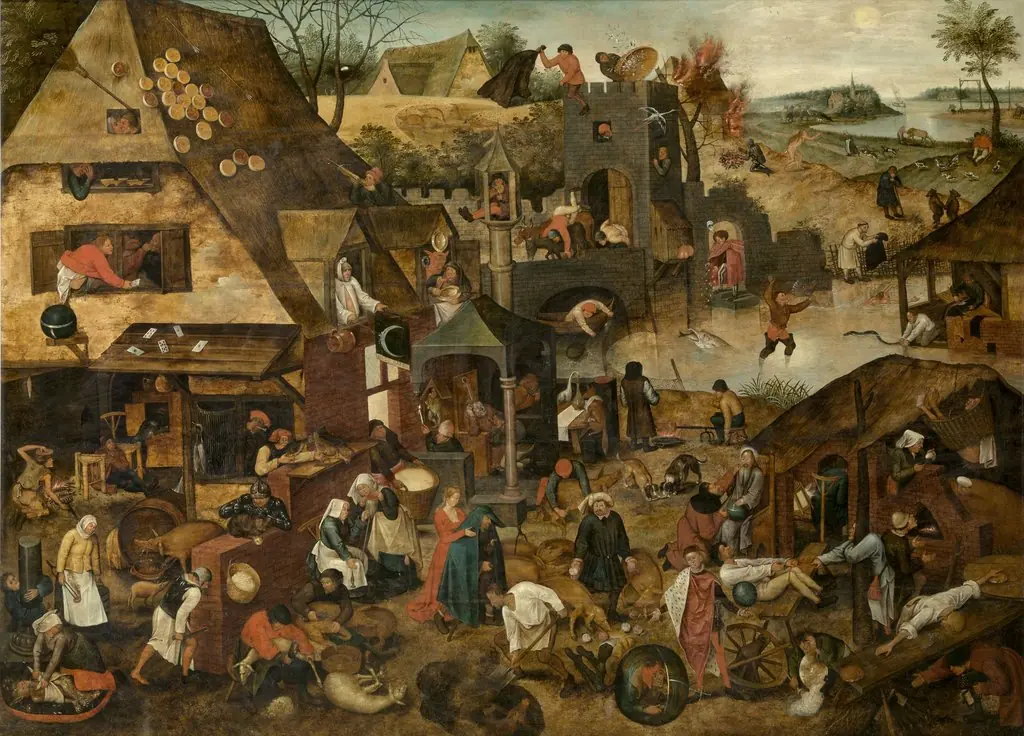 Proverbs
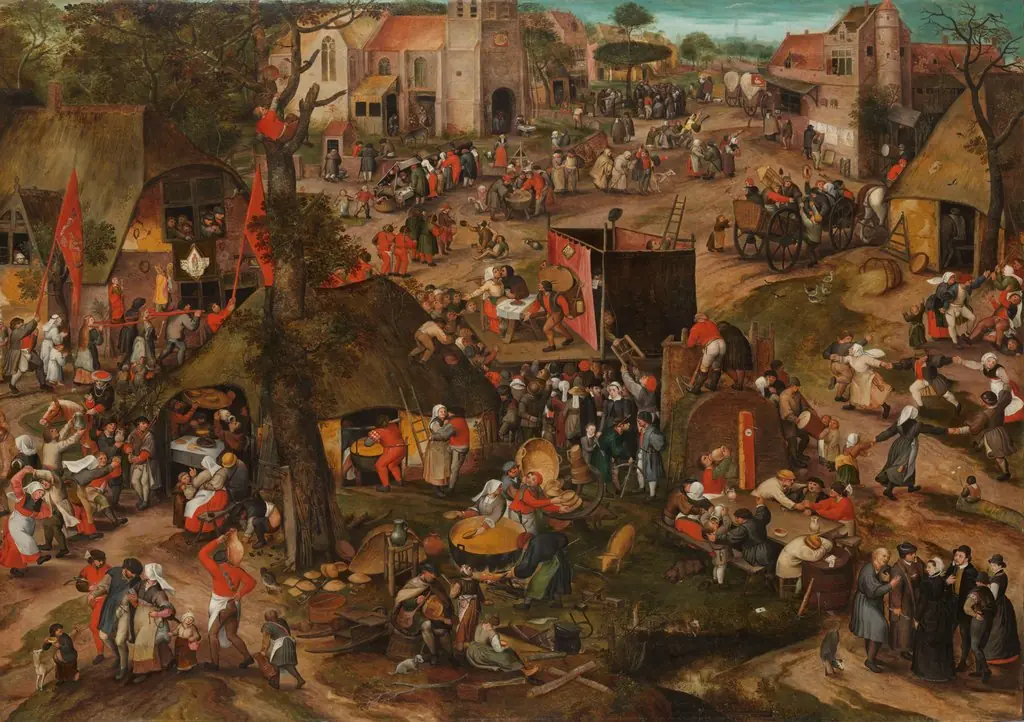 A Performance of the Farce 'Een Cluyte van Plaeyerwater' (A Clod from Plaeyerwater) at a Flemish Kermis
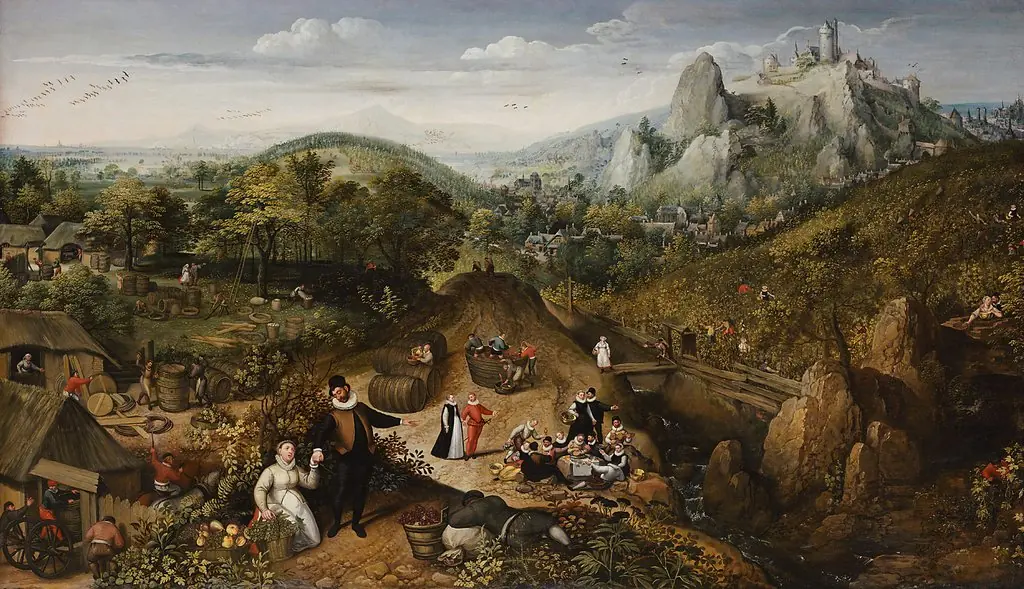 Autumn landscape (October)
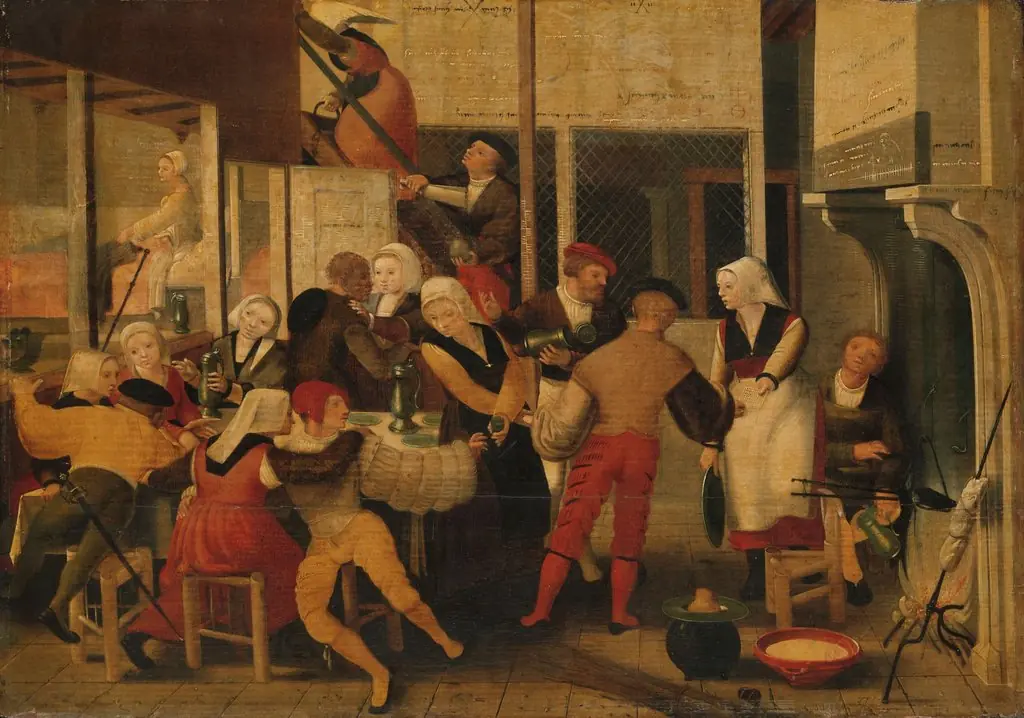 A public house
 Before Christ's Crucifixion (Christ in Misery)
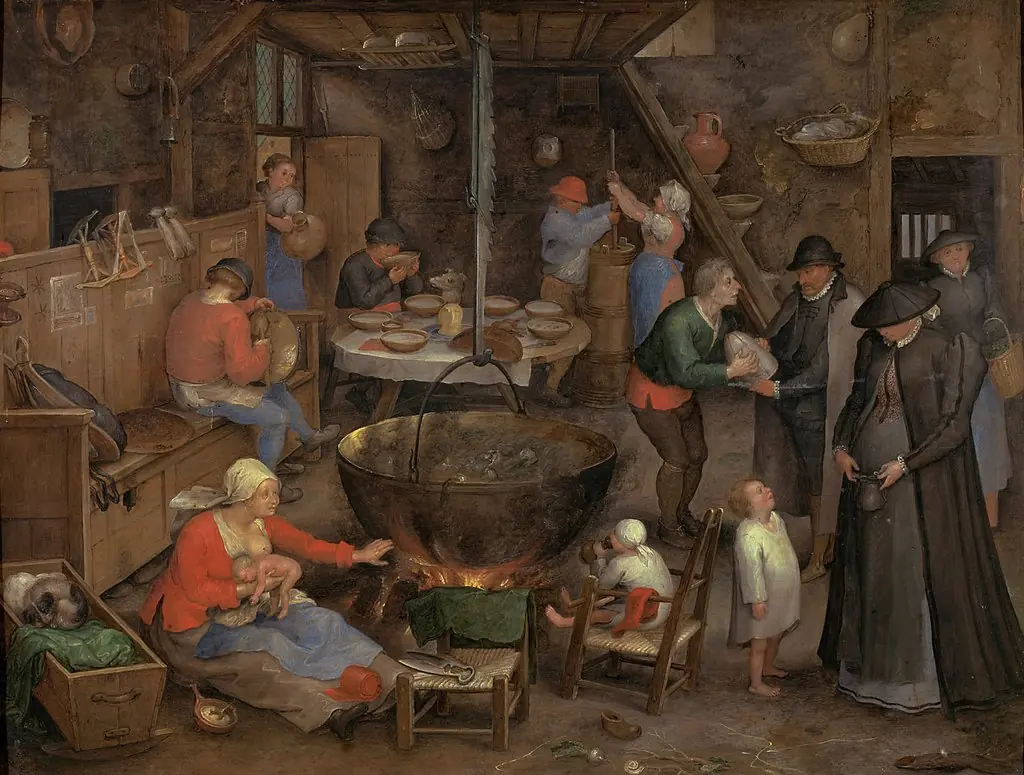 Visit to the Farm
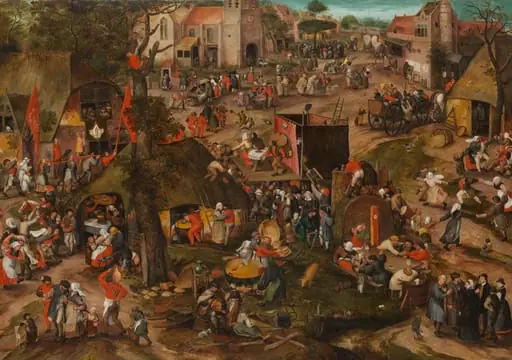 A Flemish Kermis with a Performance of the Farce ‘Een cluyte van Plaeyerwater’
 Brawl between soldiers and peasants
 The Garden of Eden