Artist
Pieter Brueghel I

Duchy of Brabant
Pieter Brueghel I is a Duchy of Brabant Mannerism artist. 72 works are cataloged here, principally at Catholic University of Leuven.
Pieter Bruegel (also Brueghel or Breughel) the Elder ( BROY-gəl, US also BROO-gəl; Dutch: ; c. 1525–1530 – 9 September 1569) was among the most significant artists of Dutch and Flemish Renaissance painting, a painter and printmaker, known for his landscapes and peasant scenes (so-called genre painting); he was a pioneer in presenting both types of subject as large paintings. He was a formative influence on Dutch Golden Age painting and later painting in general in his innovative choices of subject matter, as one of the first generation of artists to grow up when religious subjects had ceased to be the natural subject matter of painting. He also painted no portraits, the other mainstay of Netherlandish art. After his training and travels to Italy, he returned in 1555 to settle in Antwerp, where he worked mainly as a prolific designer of prints for the leading publisher of the day. At the end of the 1550s, he made painting his main medium, and all his famous paintings come from the following period of little more than a decade before his early death in 1569, when he was probably in his early forties. In the 20th and 21st centuries, Bruegel's works have inspired artists in both the literary arts and in cinema. His painting Landscape with the Fall of Icarus, now thought only to survive in copies, is the subject of the final lines of the 1938 poem "Musée des Beaux Arts" by W. H. Auden. Russian film director Andrei Tarkovsky refers to Bruegel's paintings in his films several times, including Solaris (1972) and Mirror (1975). Director Lars von Trier also uses Bruegel's paintings in his film Melancholia (2011).
Biografía y fechas
Pieter Bruegel el Viejo nació alrededor de 1525-1530, posiblemente en Breda o en una aldea cercana llamada Brueghel, aunque teorías alternativas sugieren Grote-Brogel cerca de Bree. Se formó como discípulo de Pieter Coecke van Aelst en Amberes hacia 1545 y trabajó en Malinas asistiendo a Peeter Baltens. En 1551 se convirtió en maestro en el Gremio de San Lucas de Amberes, luego viajó a Italia (1552-1554), colaborando con el miniaturista Giulio Clovio en Roma. Tras regresar a Amberes hacia 1555, diseñó grabados para Hieronymus Cock. Se trasladó a Bruselas en 1563 y se casó con Mayken Coecke; sus hijos Pieter el Joven (1564) y Jan (1568) nacieron allí. Murió en Bruselas el 9 de septiembre de 1569 y fue enterrado en la Kapellenkerk.
Estilo y movimiento
Pieter Brueghel el Viejo fue un destacado pintor del Renacimiento holandés y flamenco (Renacimiento del Norte), asociado con la Escuela de Amberes. Fue pionero en la pintura de género a gran escala y en el paisaje, alejándose de los temas religiosos para centrarse en la vida campesina, las alegorías basadas en refranes y la cultura popular. Su estilo estuvo notablemente influenciado por Hieronymus Bosch, especialmente en sus primeras obras, y se caracteriza por composiciones altamente detalladas y abarrotadas (Wimmelbilder). No pintó retratos, lo que constituía una desviación de las normas neerlandesas contemporáneas. Técnicamente, empleó el grisalla y produjo diseños para grabados. Sus paisajes integrados, ciclos estacionales y temas morales sentaron las bases de la pintura del Siglo de Oro holandés.
Obras principales
Pieter Bruegel el Viejo es reconocido por sus paisajes pioneros y escenas campesinas, que elevó a la categoría de pinturas a gran escala. Sus obras principales incluyen The Harvesters, The Hunters in the Snow, The Triumph of Death, Children's Games, The Tower of Babel, The Peasant Wedding, The Fight Between Carnival and Lent y The Land of Cockaigne. Se centró en representar la vida campesina cotidiana y los cambios estacionales, a menudo con matices morales o alegóricos. Bruegel evitó los temas religiosos y los retratos, innovando en lugar de ello en la pintura de género y el paisaje como temas independientes, influyendo en el arte posterior del Siglo de Oro holandés.
Influencias y discípulos
Pieter Brueghel el Viejo fue discípulo del maestro de Amberes Pieter Coecke van Aelst, según registró Karel van Mander (fuentes 3, 4, 6). También trabajó junto a Peeter Baltens en Malinas, pintando alas en grisalla para un retablo (fuente 6). La obra temprana de Bruegel estuvo fuertemente influenciada por Hieronymus Bosch, cuyo lenguaje visual citó frecuentemente (fuente 4). Durante su viaje a Italia (c. 1552-1554), colaboró con el miniaturista Giulio Clovio en Roma (fuentes 3, 5). En Amberes, se movió en círculos humanistas y gozó del mecenazgo de Niclaes Jonghelinck y Abraham Ortelius (fuentes 4, 5). Los hijos de Bruegel, Pieter el Joven y Jan el Viejo, se convirtieron en sus discípulos y continuaron su taller, estableciendo la dinastía Brueghel (fuente 4). Sus innovadoras pinturas de género y paisaje ejercieron posteriormente una influencia formativa en la pintura del Siglo de Oro holandés (fuentes 1, 3).
Mercado y legado
La reputación póstuma de Pieter Bruegel el Viejo se basa en su papel pionero en la pintura del Renacimiento holandés y flamenco, particularmente en sus escenas de género y paisajes. Su temática innovadora influyó profundamente en el Siglo de Oro holandés. Tras su muerte, sus hijos, Pieter Brueghel el Joven ('Hell Brueghel') y Jan Brueghel el Viejo ('Flower Brueghel'), perpetuaron la dinastía familiar; Pieter el Joven produjo numerosas copias de las composiciones de su padre, mientras que Jan desarrolló su propio estilo miniaturista. En los siglos XX y XXI, las obras de Bruegel inspiraron a figuras culturales: el poema de W. H. Auden 'Musée des Beaux Arts' hace referencia a su 'Paisaje con la caída de Ícaro', y los cineastas Andrei Tarkovsky y Lars von Trier incorporaron sus imágenes en sus películas.
Works by Pieter Brueghel I
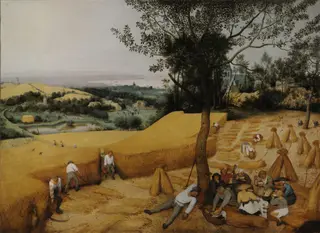 The Harvesters
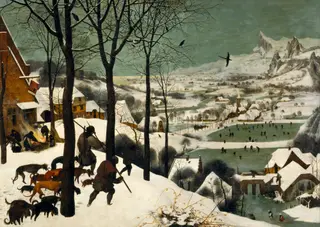 The Hunters in the Snow
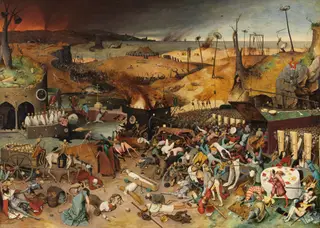 The Triumph of Death
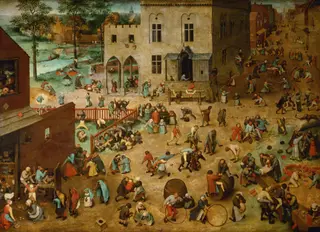 Children's Games
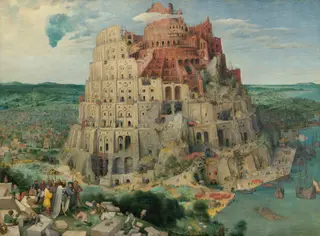 The Tower of Babel
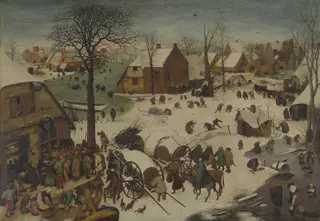 The People's Census at Bethlehem
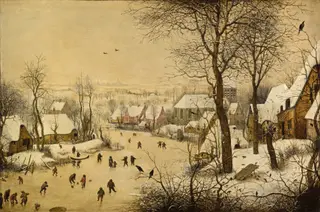 Winter Landscape with a Bird Trap
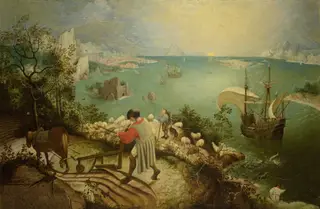 Landscape with the Fall of Icarus
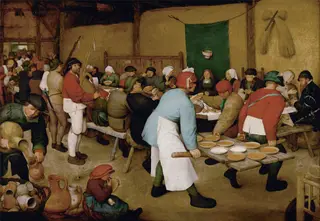 The Peasant Wedding
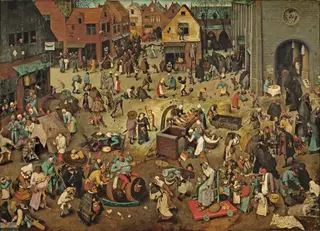 The Fight Between Carnival and Lent
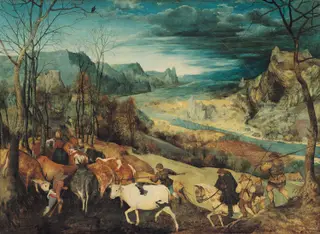 The Return of the Herd
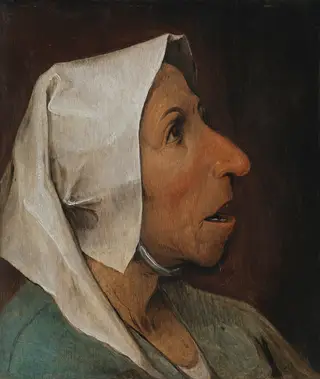 Head of Peasant
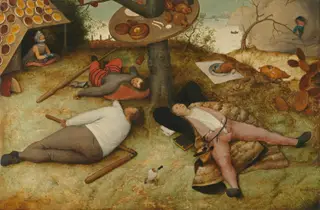 The Land of Cockaigne
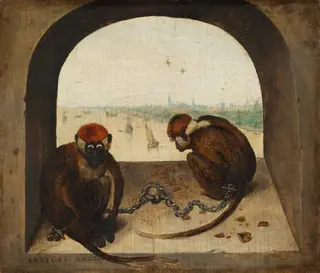 Two Chained Monkeys
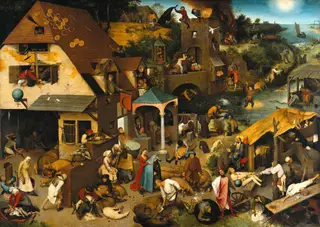 Netherlandish Proverbs
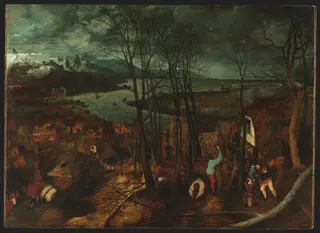 The Gloomy Day
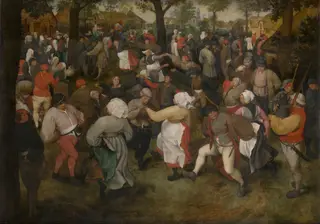 The Dance of the Bride
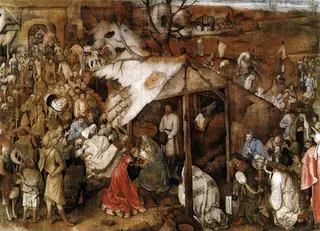 Adoration of the Magi
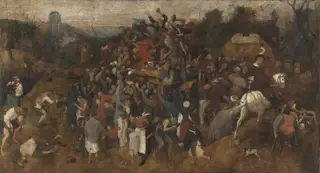 The Wine of Saint Martin's Day
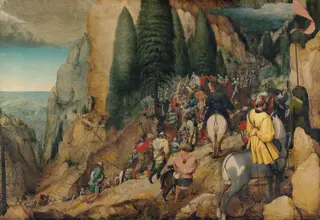 Conversion of Paul
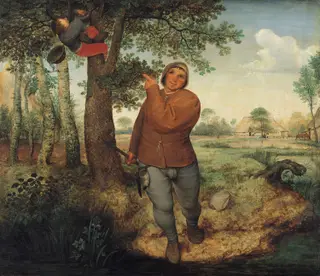 The Peasant and the Nest Robber
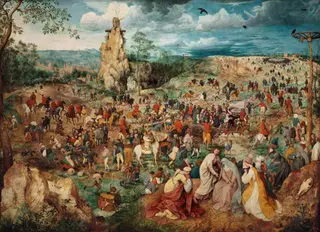 The Procession to Calvary
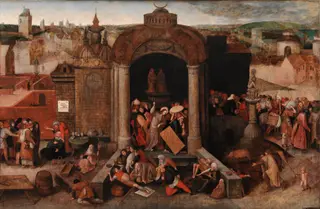 Christ Driving the Traders from the Temple
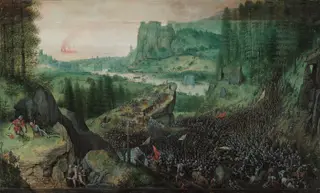 The Suicide of Saul
72 works in the catalog · 24 shown
Collections represented


Artists in a similar vein