Artist
Pieter Brueghel I

Duchy of Brabant
Pieter Brueghel I is a Duchy of Brabant Mannerism artist. 72 works are cataloged here, principally at Catholic University of Leuven.
Pieter Bruegel (also Brueghel or Breughel) the Elder ( BROY-gəl, US also BROO-gəl; Dutch: ; c. 1525–1530 – 9 September 1569) was among the most significant artists of Dutch and Flemish Renaissance painting, a painter and printmaker, known for his landscapes and peasant scenes (so-called genre painting); he was a pioneer in presenting both types of subject as large paintings. He was a formative influence on Dutch Golden Age painting and later painting in general in his innovative choices of subject matter, as one of the first generation of artists to grow up when religious subjects had ceased to be the natural subject matter of painting. He also painted no portraits, the other mainstay of Netherlandish art. After his training and travels to Italy, he returned in 1555 to settle in Antwerp, where he worked mainly as a prolific designer of prints for the leading publisher of the day. At the end of the 1550s, he made painting his main medium, and all his famous paintings come from the following period of little more than a decade before his early death in 1569, when he was probably in his early forties. In the 20th and 21st centuries, Bruegel's works have inspired artists in both the literary arts and in cinema. His painting Landscape with the Fall of Icarus, now thought only to survive in copies, is the subject of the final lines of the 1938 poem "Musée des Beaux Arts" by W. H. Auden. Russian film director Andrei Tarkovsky refers to Bruegel's paintings in his films several times, including Solaris (1972) and Mirror (1975). Director Lars von Trier also uses Bruegel's paintings in his film Melancholia (2011).
生平与年代
老彼得·勃鲁盖尔约生于1525至1530年间,出生地可能是布雷达或附近名为布鲁盖尔的小村庄,另有理论认为其出生地为比雷附近的大布罗盖尔。他于1545年左右在安特卫普师从皮特·科克·范·阿尔斯特学习,并在梅赫伦协助佩特尔·巴尔特斯工作。1551年,他成为安特卫普圣路加行会的行会大师,随后于1552至1554年间前往意大利,在罗马与细密画家朱利奥·克洛维奥合作。1555年返回安特卫普后,他为希罗尼穆斯·科克设计版画。1563年,他迁居布鲁塞尔并与梅肯·科克结婚;其子小彼得(1564年)和扬(1568年)均在此出生。他于1569年9月9日在布鲁塞尔逝世,葬于卡佩伦教堂。
风格与流派
老彼得·勃鲁盖尔是荷兰与佛兰德文艺复兴(北方文艺复兴)时期的杰出画家,与安特卫普画派密切相关。他开创了大型风俗画与风景画,将创作重心从宗教题材转向农民生活、基于谚语的象征寓意以及民间文化。其风格深受希罗尼穆斯·博斯的影响,尤其在早期作品中表现明显,以高度精细、人物繁密的构图(“万景图”)为特征。他从未绘制肖像,这与当时尼德兰艺术的常规做法相悖。在技法上,他运用灰色调画法,并为版画提供设计稿。他将风景、季节循环与道德主题融为一体的创作,为荷兰黄金时代绘画奠定了基础。
代表作品
老彼得·勃鲁盖尔以其开创性的风景画与农民场景而闻名,他将这些题材提升至大型绘画的高度。其重要作品包括《收割者》《雪中猎人》《死亡的胜利》《儿童游戏》《巴别塔》《农民婚礼》《狂欢节与四旬斋的争斗》以及《库卡涅之地》。他专注于描绘日常农民生活与季节变迁,常蕴含道德或象征寓意。勃鲁盖尔避免宗教题材与肖像画,转而创新地将风俗画与风景画作为独立主题,对后世荷兰黄金时代艺术产生了深远影响。
影响与弟子
老彼得·勃鲁盖尔是安特卫普大师皮特·科克·范·阿尔斯特的学生,这一记载见于卡雷尔·范·曼德尔(来源3、4、6)。他亦曾在梅赫伦与佩特尔·巴尔特斯合作,为祭坛画绘制灰色调翼板(来源6)。勃鲁盖尔的早期作品深受希罗尼穆斯·博斯的影响,频繁引用其视觉语言(来源4)。在意大利之旅期间(约1552至1554年),他于罗马与细密画家朱利奥·克洛维奥合作(来源3、5)。在安特卫普,他活跃于人文主义圈子,并受到尼克拉斯·容赫林克与亚伯拉罕·奥特柳斯的赞助(来源4、5)。勃鲁盖尔之子小彼得与老扬成为其弟子,继承其工作室,建立了勃鲁盖尔家族画派(来源4)。他创新的风俗画与风景画后来对荷兰黄金时代绘画产生了塑造性影响(来源1、3)。
市场与遗产
老彼得·勃鲁盖尔身后的声誉建立在荷兰与佛兰德文艺复兴绘画中的开创性地位,尤其是其风俗画与风景画。其创新题材深刻影响了荷兰黄金时代。他去世后,其子小彼得·勃鲁盖尔(“地狱勃鲁盖尔”)与老扬·勃鲁盖尔(“花卉勃鲁盖尔”)延续了家族画派;小彼得大量复制父亲的构图,而扬则发展出独特的细密画风格。在20世纪与21世纪,勃鲁盖尔的作品启发了众多文化人物:W. H. 奥登的诗歌《美术馆》引用了其作品《伊卡洛斯坠落风景》,电影导演安德烈·塔可夫斯基与拉斯·冯·提尔亦将其图像融入影片之中。
Works by Pieter Brueghel I
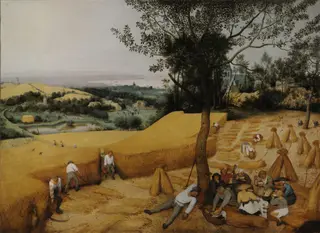 The Harvesters
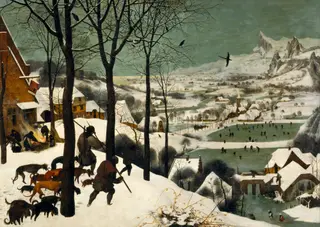 The Hunters in the Snow
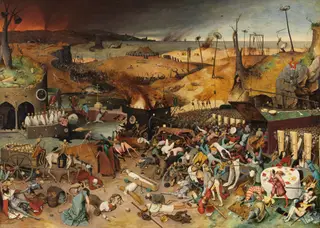 The Triumph of Death
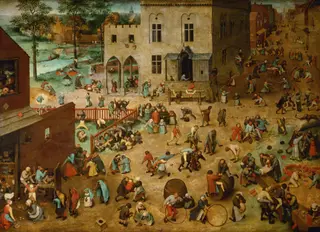 Children's Games
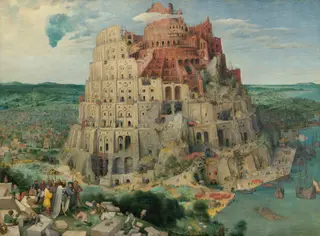 The Tower of Babel
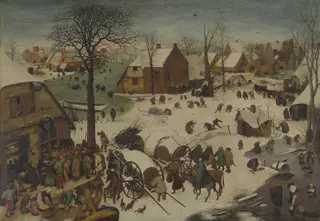 The People's Census at Bethlehem
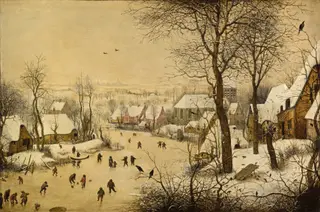 Winter Landscape with a Bird Trap
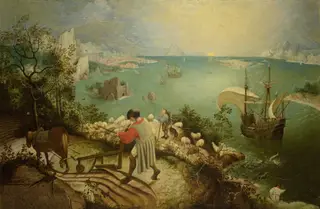 Landscape with the Fall of Icarus
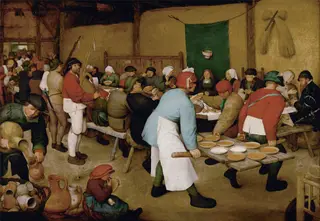 The Peasant Wedding
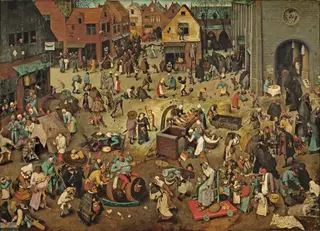 The Fight Between Carnival and Lent
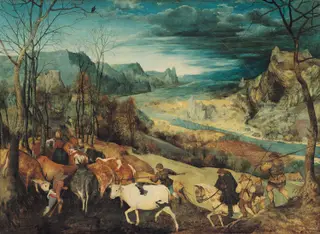 The Return of the Herd
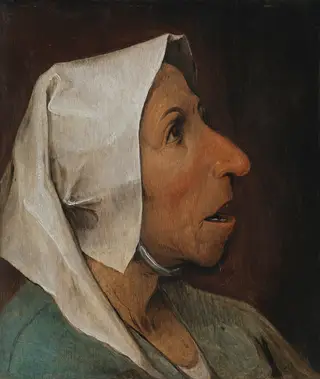 Head of Peasant
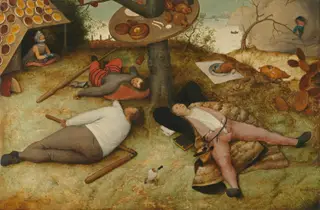 The Land of Cockaigne
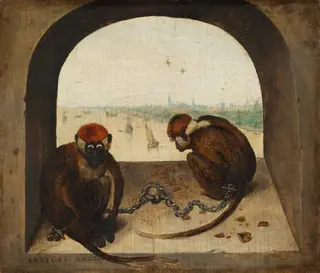 Two Chained Monkeys
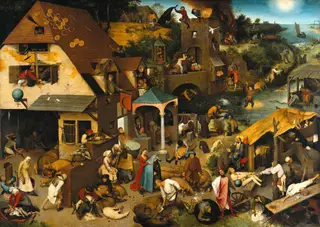 Netherlandish Proverbs
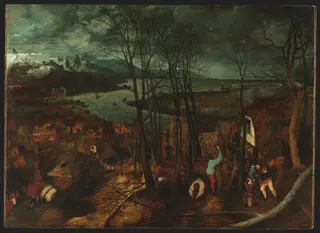 The Gloomy Day
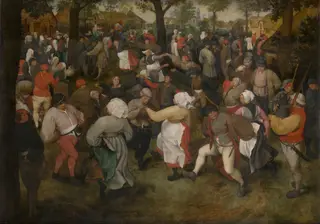 The Dance of the Bride
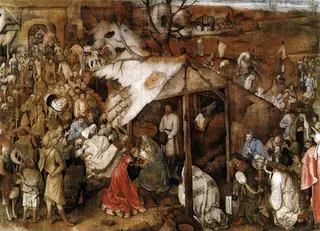 Adoration of the Magi
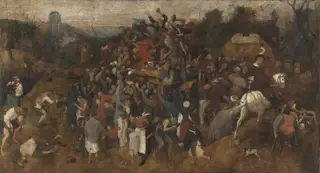 The Wine of Saint Martin's Day
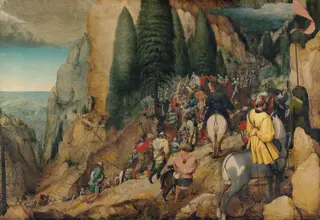 Conversion of Paul
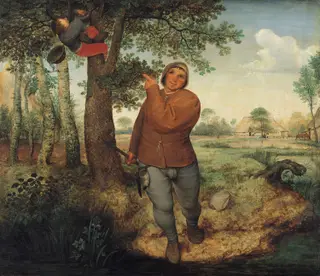 The Peasant and the Nest Robber
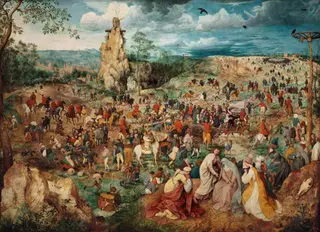 The Procession to Calvary
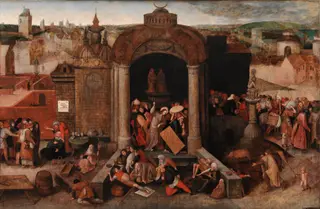 Christ Driving the Traders from the Temple
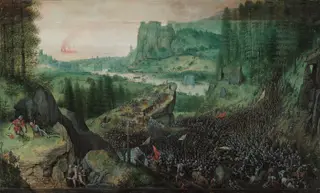 The Suicide of Saul
72 works in the catalog · 24 shown
Collections represented


Artists in a similar vein