Artist
Pieter Brueghel I

Duchy of Brabant
Pieter Brueghel I is a Duchy of Brabant Mannerism artist. 72 works are cataloged here, principally at Catholic University of Leuven.
Pieter Bruegel (also Brueghel or Breughel) the Elder ( BROY-gəl, US also BROO-gəl; Dutch: ; c. 1525–1530 – 9 September 1569) was among the most significant artists of Dutch and Flemish Renaissance painting, a painter and printmaker, known for his landscapes and peasant scenes (so-called genre painting); he was a pioneer in presenting both types of subject as large paintings. He was a formative influence on Dutch Golden Age painting and later painting in general in his innovative choices of subject matter, as one of the first generation of artists to grow up when religious subjects had ceased to be the natural subject matter of painting. He also painted no portraits, the other mainstay of Netherlandish art. After his training and travels to Italy, he returned in 1555 to settle in Antwerp, where he worked mainly as a prolific designer of prints for the leading publisher of the day. At the end of the 1550s, he made painting his main medium, and all his famous paintings come from the following period of little more than a decade before his early death in 1569, when he was probably in his early forties. In the 20th and 21st centuries, Bruegel's works have inspired artists in both the literary arts and in cinema. His painting Landscape with the Fall of Icarus, now thought only to survive in copies, is the subject of the final lines of the 1938 poem "Musée des Beaux Arts" by W. H. Auden. Russian film director Andrei Tarkovsky refers to Bruegel's paintings in his films several times, including Solaris (1972) and Mirror (1975). Director Lars von Trier also uses Bruegel's paintings in his film Melancholia (2011).
Biografia e date
Pieter Bruegel il Vecchio nacque intorno al 1525-1530, probabilmente a Breda o in un vicino villaggio chiamato Brueghel, sebbene teorie alternative suggeriscano Grote-Brogel vicino a Bree. Si formò come allievo di Pieter Coecke van Aelst ad Anversa intorno al 1545 e lavorò a Mechelen assistendo Peeter Baltens. Nel 1551 divenne maestro nella Corporazione di San Luca di Anversa, quindi viaggiò in Italia (1552-1554), collaborando con il miniaturista Giulio Clovio a Roma. Dopo essere tornato ad Anversa entro il 1555, progettò stampe per Hieronymus Cock. Si trasferì a Bruxelles nel 1563 e sposò Mayken Coecke; i suoi figli Pieter il Giovane (1564) e Jan (1568) nacquero lì. Morì a Bruxelles il 9 settembre 1569 e fu sepolto nella Kapellenkerk.
Stile e movimento
Pieter Brueghel il Vecchio fu un pittore di spicco del Rinascimento olandese e fiammingo (Rinascimento settentrionale), associato alla Scuola di Anversa. Fu pioniere della pittura di genere su larga scala e del paesaggio, allontanandosi dai soggetti religiosi per concentrarsi sulla vita contadina, sulle allegorie basate sui proverbi e sulla cultura popolare. Il suo stile fu notevolmente influenzato da Hieronymus Bosch, specialmente nelle opere giovanili, ed è caratterizzato da composizioni altamente dettagliate e affollate (Wimmelbilder). Non dipinse ritratti, una rottura rispetto alle norme olandesi dell'epoca. Tecnicamente, impiegò il grisaille e produsse disegni per stampe. I suoi paesaggi integrati, i cicli stagionali e i temi morali gettarono le basi per la pittura dell'Età dell'Oro olandese.
Opere principali
Pieter Bruegel il Vecchio è rinomato per i suoi paesaggi pionieristici e le scene contadine, che elevò a dipinti di grandi dimensioni. Le sue opere principali includono The Harvesters, The Hunters in the Snow, The Triumph of Death, Children's Games, The Tower of Babel, The Peasant Wedding, The Fight Between Carnival and Lent e The Land of Cockaigne. Si concentrò sulla rappresentazione della vita contadina quotidiana e dei cambiamenti stagionali, spesso con sottotoni morali o allegorici. Bruegel evitò i soggetti religiosi e i ritratti, innovando invece la pittura di genere e il paesaggio come soggetti indipendenti, influenzando successivamente l'arte dell'Età dell'Oro olandese.
Influenze e allievi
Pieter Brueghel il Vecchio fu allievo del maestro di Anversa Pieter Coecke van Aelst, come registrato da Karel van Mander (fonti 3, 4, 6). Lavorò anche accanto a Peeter Baltens a Mechelen, dipingendo ali in grisaille per un altare (fonte 6). Le prime opere di Bruegel furono fortemente influenzate da Hieronymus Bosch, il cui linguaggio visivo citò frequentemente (fonte 4). Durante il suo viaggio in Italia (circa 1552-1554), collaborò con il miniaturista Giulio Clovio a Roma (fonti 3, 5). Ad Anversa, frequentò circoli umanisti e godette del patronato di Niclaes Jonghelinck e Abraham Ortelius (fonti 4, 5). I figli di Bruegel, Pieter il Giovane e Jan il Vecchio, divennero suoi allievi e portarono avanti la sua bottega, stabilendo la dinastia Brueghel (fonte 4). Le sue innovative pitture di genere e paesaggistiche esercitarono successivamente un'influenza formativa sulla pittura dell'Età dell'Oro olandese (fonti 1, 3).
Mercato e eredità
La reputazione postuma di Pieter Bruegel il Vecchio si fonda sul suo ruolo pionieristico nella pittura del Rinascimento olandese e fiammingo, in particolare nelle sue scene di genere e nei paesaggi. I suoi soggetti innovativi influenzarono profondamente l'Età dell'Oro olandese. Dopo la sua morte, i suoi figli, Pieter Brueghel il Giovane ("Hell Brueghel") e Jan Brueghel il Vecchio ("Flower Brueghel"), perpetuarono la dinastia familiare; Pieter il Giovane produsse numerose copie delle composizioni del padre, mentre Jan sviluppò il proprio stile da miniaturista. Nel XX e XXI secolo, le opere di Bruegel ispirarono figure culturali: la poesia di W. H. Auden "Musée des Beaux Arts" fa riferimento al suo "Paesaggio con la caduta di Icaro", e i registi Andrei Tarkovsky e Lars von Trier incorporarono le sue immagini nei loro film.
Works by Pieter Brueghel I
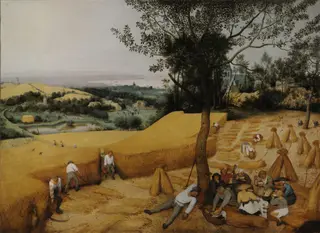 The Harvesters
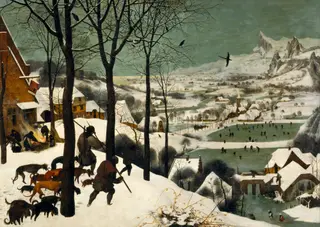 The Hunters in the Snow
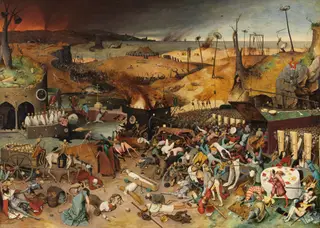 The Triumph of Death
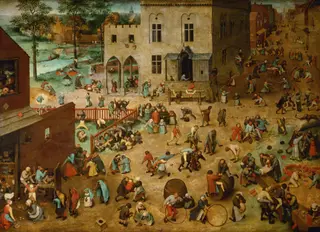 Children's Games
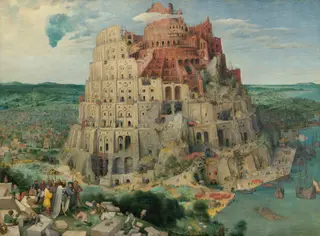 The Tower of Babel
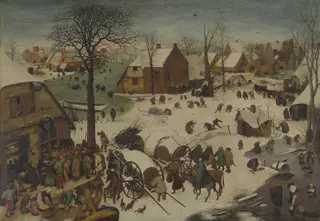 The People's Census at Bethlehem
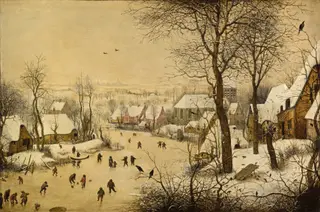 Winter Landscape with a Bird Trap
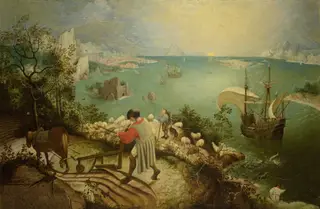 Landscape with the Fall of Icarus
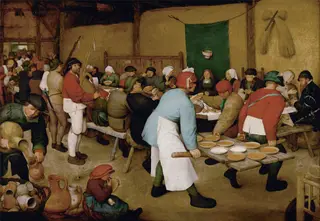 The Peasant Wedding
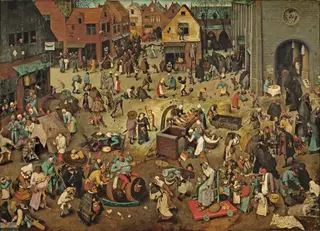 The Fight Between Carnival and Lent
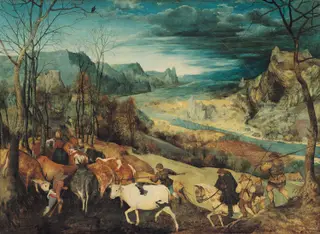 The Return of the Herd
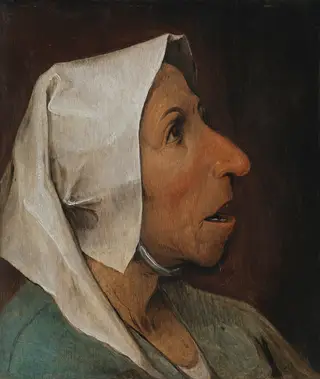 Head of Peasant
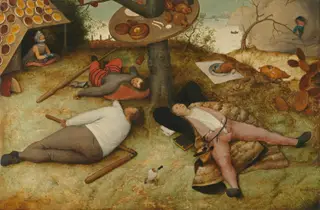 The Land of Cockaigne
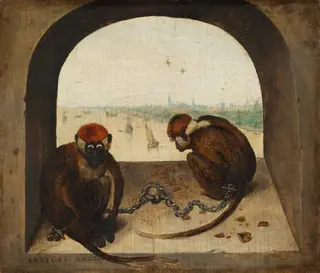 Two Chained Monkeys
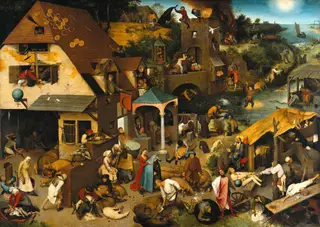 Netherlandish Proverbs
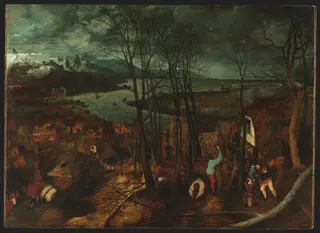 The Gloomy Day
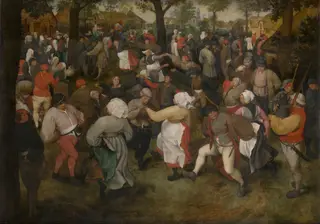 The Dance of the Bride
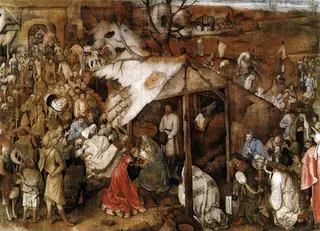 Adoration of the Magi
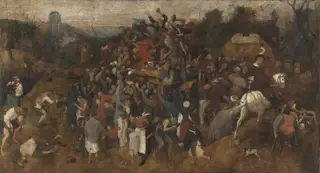 The Wine of Saint Martin's Day
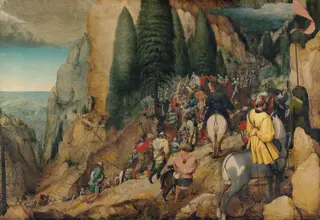 Conversion of Paul
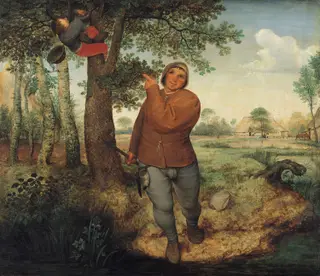 The Peasant and the Nest Robber
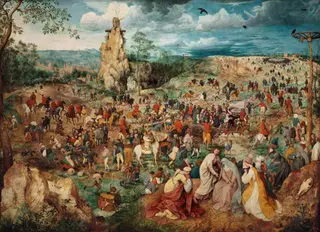 The Procession to Calvary
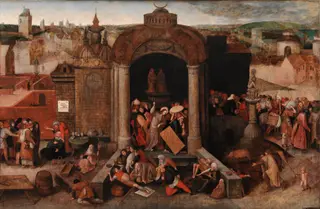 Christ Driving the Traders from the Temple
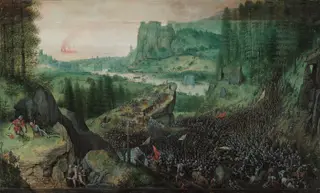 The Suicide of Saul
72 works in the catalog · 24 shown
Collections represented


Artists in a similar vein