Artist
Pieter Brueghel I

Duchy of Brabant
Pieter Brueghel I is a Duchy of Brabant Mannerism artist. 72 works are cataloged here, principally at Catholic University of Leuven.
Pieter Bruegel (also Brueghel or Breughel) the Elder ( BROY-gəl, US also BROO-gəl; Dutch: ; c. 1525–1530 – 9 September 1569) was among the most significant artists of Dutch and Flemish Renaissance painting, a painter and printmaker, known for his landscapes and peasant scenes (so-called genre painting); he was a pioneer in presenting both types of subject as large paintings. He was a formative influence on Dutch Golden Age painting and later painting in general in his innovative choices of subject matter, as one of the first generation of artists to grow up when religious subjects had ceased to be the natural subject matter of painting. He also painted no portraits, the other mainstay of Netherlandish art. After his training and travels to Italy, he returned in 1555 to settle in Antwerp, where he worked mainly as a prolific designer of prints for the leading publisher of the day. At the end of the 1550s, he made painting his main medium, and all his famous paintings come from the following period of little more than a decade before his early death in 1569, when he was probably in his early forties. In the 20th and 21st centuries, Bruegel's works have inspired artists in both the literary arts and in cinema. His painting Landscape with the Fall of Icarus, now thought only to survive in copies, is the subject of the final lines of the 1938 poem "Musée des Beaux Arts" by W. H. Auden. Russian film director Andrei Tarkovsky refers to Bruegel's paintings in his films several times, including Solaris (1972) and Mirror (1975). Director Lars von Trier also uses Bruegel's paintings in his film Melancholia (2011).
Biografia e datas
Pieter Bruegel, o Velho, nasceu por volta de 1525-1530, possivelmente em Breda ou numa aldeia próxima chamada Brueghel, com teorias alternativas sugerindo Grote-Brogel, perto de Bree. Formou-se como pupilo de Pieter Coecke van Aelst em Antuérpia por volta de 1545 e trabalhou em Mechelen, auxiliando Peeter Baltens. Em 1551, tornou-se mestre na Guilda de São Lucas de Antuérpia, viajando depois para a Itália (1552-1554), onde colaborou com o miniaturista Giulio Clovio em Roma. Após retornar a Antuérpia em 1555, projetou gravuras para Hieronymus Cock. Mudou-se para Bruxelas em 1563 e casou-se com Mayken Coecke; seus filhos Pieter, o Jovem (1564), e Jan (1568), nasceram lá. Faleceu em Bruxelas em 9 de setembro de 1569 e foi sepultado na Kapellenkerk.
Estilo e movimento
Pieter Brueghel, o Velho, foi um dos principais pintores do Renascimento holandês e flamengo (Renascimento do Norte), associado à Escola de Antuérpia. Foi pioneiro na pintura de gênero em grande escala e na paisagem, afastando-se de temas religiosos para focar na vida camponesa, alegorias baseadas em provérbios e cultura popular. Seu estilo foi notavelmente influenciado por Hieronymus Bosch, especialmente nas obras iniciais, e caracteriza-se por composições altamente detalhadas e repletas de figuras (Wimmelbilder). Não pintou retratos, uma ruptura com as normas neerlandesas da época. Tecnicamente, empregou a técnica de grisalha e produziu desenhos para gravuras. Suas paisagens integradas, ciclos sazonais e temas morais estabeleceram as bases para a pintura da Era de Ouro Holandesa.
Obras principais
Pieter Bruegel, o Velho, é renomado por suas paisagens pioneiras e cenas camponesas, que elevou à categoria de pinturas em grande escala. Suas obras principais incluem The Harvesters, The Hunters in the Snow, The Triumph of Death, Children's Games, The Tower of Babel, The Peasant Wedding, The Fight Between Carnival and Lent e The Land of Cockaigne. Focou na representação da vida camponesa cotidiana e nas mudanças sazonais, frequentemente com subtextos morais ou alegóricos. Bruegel evitou temas religiosos e retratos, inovando ao tratar a pintura de gênero e a paisagem como assuntos independentes, influenciando a arte posterior da Era de Ouro Holandesa.
Influências e alunos
Pieter Brueghel, o Velho, foi pupilo do mestre de Antuérpia Pieter Coecke van Aelst, conforme registrado por Karel van Mander (fontes 3, 4, 6). Também trabalhou ao lado de Peeter Baltens em Mechelen, pintando alas em grisalha para um retábulo (fonte 6). A obra inicial de Bruegel foi fortemente influenciada por Hieronymus Bosch, cuja linguagem visual ele frequentemente citou (fonte 4). Durante sua viagem à Itália (c. 1552-1554), colaborou com o miniaturista Giulio Clovio em Roma (fontes 3, 5). Em Antuérpia, circulou em círculos humanistas e desfrutou do patrocínio de Niclaes Jonghelinck e Abraham Ortelius (fontes 4, 5). Os filhos de Bruegel, Pieter, o Jovem, e Jan, o Velho, tornaram-se seus alunos e deram continuidade à sua oficina, estabelecendo a dinastia Brueghel (fonte 4). Suas inovadoras pinturas de gênero e paisagem exerceram posteriormente uma influência formativa sobre a pintura da Era de Ouro Holandesa (fontes 1, 3).
Mercado e legado
A reputação póstuma de Pieter Bruegel, o Velho, baseia-se em seu papel pioneiro na pintura do Renascimento holandês e flamengo, particularmente em suas cenas de gênero e paisagens. Seu tema inovador influenciou profundamente a Era de Ouro Holandesa. Após sua morte, seus filhos, Pieter Brueghel, o Jovem ('Hell Brueghel'), e Jan Brueghel, o Velho ('Flower Brueghel'), perpetuaram a dinastia familiar; Pieter, o Jovem, produziu numerosas cópias das composições de seu pai, enquanto Jan desenvolveu seu próprio estilo miniaturista. Nos séculos XX e XXI, as obras de Bruegel inspiraram figuras culturais: o poema de W. H. Auden, 'Musée des Beaux Arts', faz referência a sua obra 'Landscape with the Fall of Icarus', e os cineastas Andrei Tarkovsky e Lars von Trier incorporaram suas imagens em seus filmes.
Works by Pieter Brueghel I
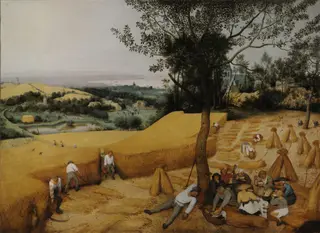 The Harvesters
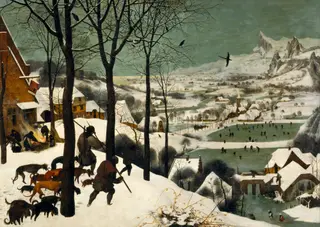 The Hunters in the Snow
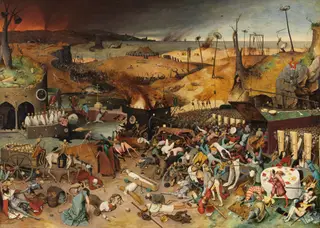 The Triumph of Death
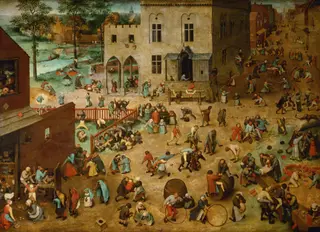 Children's Games
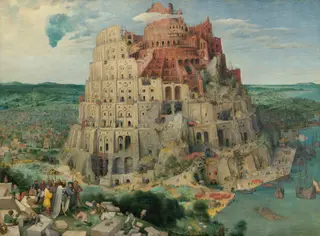 The Tower of Babel
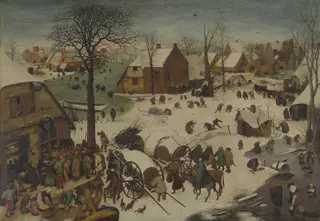 The People's Census at Bethlehem
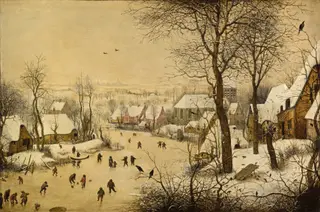 Winter Landscape with a Bird Trap
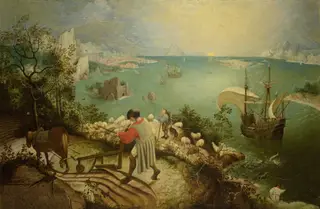 Landscape with the Fall of Icarus
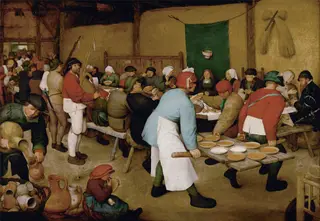 The Peasant Wedding
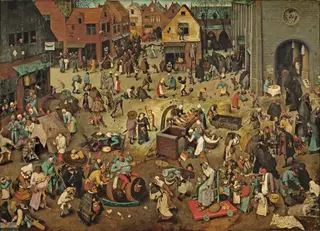 The Fight Between Carnival and Lent
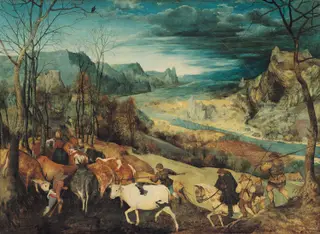 The Return of the Herd
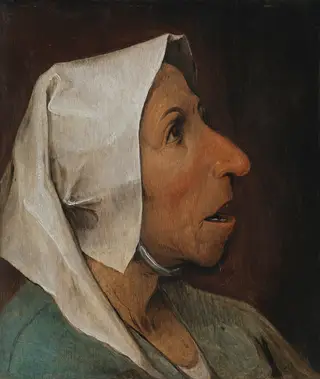 Head of Peasant
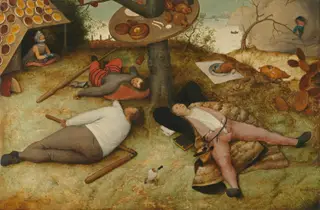 The Land of Cockaigne
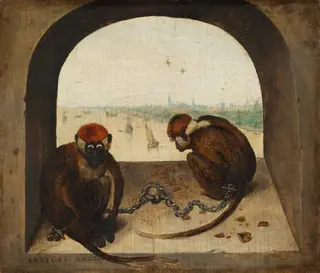 Two Chained Monkeys
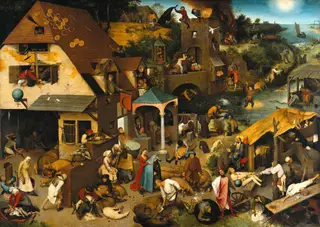 Netherlandish Proverbs
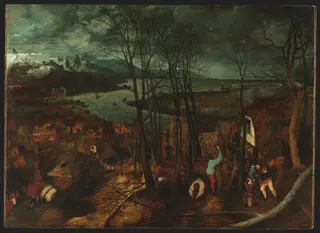 The Gloomy Day
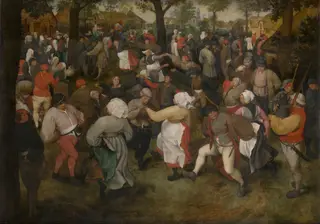 The Dance of the Bride
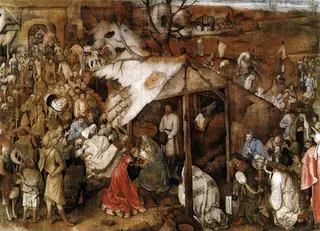 Adoration of the Magi
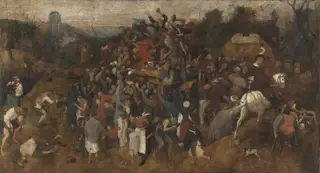 The Wine of Saint Martin's Day
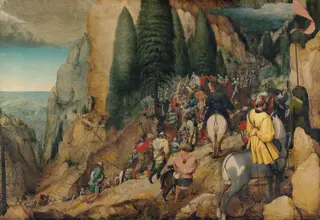 Conversion of Paul
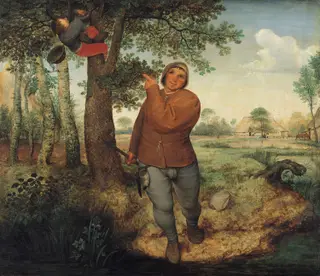 The Peasant and the Nest Robber
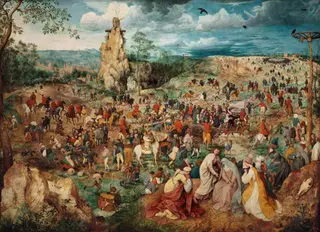 The Procession to Calvary
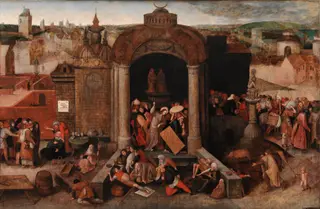 Christ Driving the Traders from the Temple
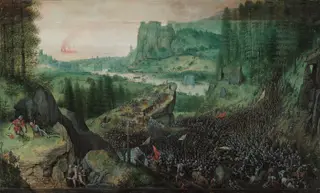 The Suicide of Saul
72 works in the catalog · 24 shown
Collections represented


Artists in a similar vein