
Subject
Peoni
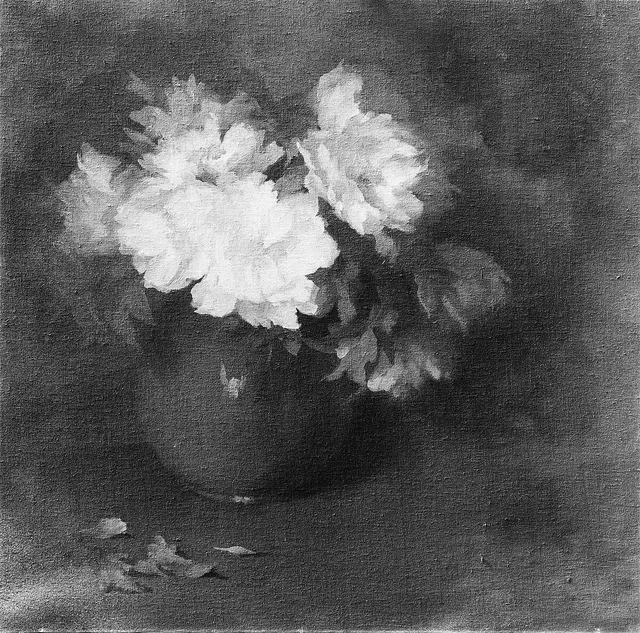
Peoni is a subject in art. The gallery holds 27 works in this subject in art, including works by Genki, Kano Chikanobu and Ike (Tokuyama) Gyokuran.
The peony or paeony () is any flowering plant in the genus Paeonia, the only genus in the family Paeoniaceae. Peonies are native to Asia, Europe, and Western North America.
Key artists


Overview
The peony, or paeony, is any flowering plant in the genus Paeonia, the sole genus in the family Paeoniaceae. Native to Asia, Europe, and Western North America, the peony has become one of the most recurrent and culturally significant floral subjects in art history, particularly within East Asian painting traditions. Its prominence stems from a convergence of botanical distinction, the large and often fragrant blossoms that range from purple, pink, and red to white and yellow, and a dense accumulation of symbolic associations across Chinese, Japanese, and Korean artistic cultures. The genus encompasses approximately 33 to 35 species, including both herbaceous perennials and woody shrubs, with cultivated varieties reaching bloom sizes exceeding 20 centimeters. The peony's relatively brief flowering season, typically lasting only 7 to 10 days, has paradoxically contributed to its artistic endurance, as its transient beauty became a subject for contemplation and symbolic elaboration.
Iconography & meaning
The peony carries layered and often contradictory meanings across different cultural contexts. In Chinese tradition, it is most prominently associated with wealth, honor, and high status, earning the designation 'king of flowers' and serving as an symbol of imperial splendor. This association with prosperity and rank made it a favored subject for courtly and celebratory imagery. The flower also acquired romantic and erotic connotations, as evidenced in the painting Lu Dongbin and the Spirit of the Peony, where the peony spirit embodies feminine allure. In Daoist and folk contexts, the peony could represent transformation and the supernatural. Japanese art inherited and transformed these meanings, with peonies frequently paired with other motifs to create compound symbolic statements. The combination with butterflies, as in the Korean work Butterfly and Peonies attributed to Nam Gye-u, suggests the fleeting nature of beauty and the transience of life. Pairings with peacocks, willows, or egrets, as seen in works such as Egrets, Peonies, and Willows by Yamamoto Baiitsu, create seasonal and poetic associations that draw upon literary traditions. The peony's medicinal associations, deriving from its Greek name connection to Paian, the divine physician, added a further dimension of healing and protection in some contexts, though this thread is less emphasized in East Asian visual traditions than the flower's associations with prosperity and beauty.
Works
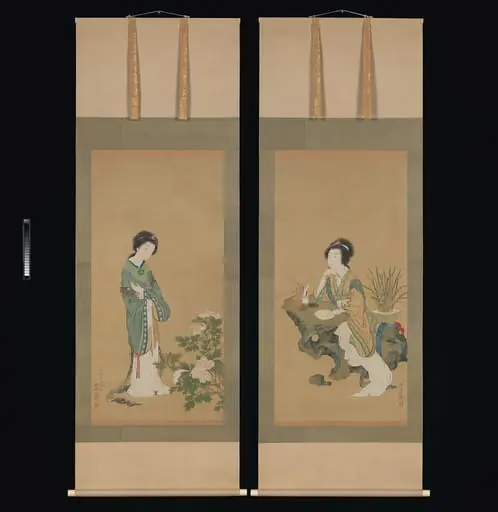 源琦筆 燕姞・楊貴妃図|Yanji with Orchids and Yang Guifei with Peonies
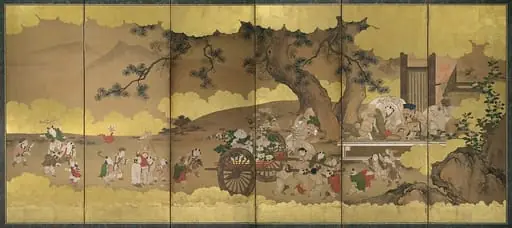 狩野周信筆 七福神唐子図屏風|Seven Gods of Good Fortune and Chinese Children
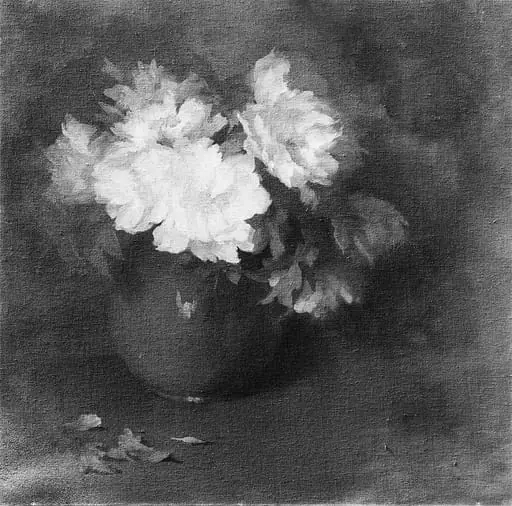 Peonies
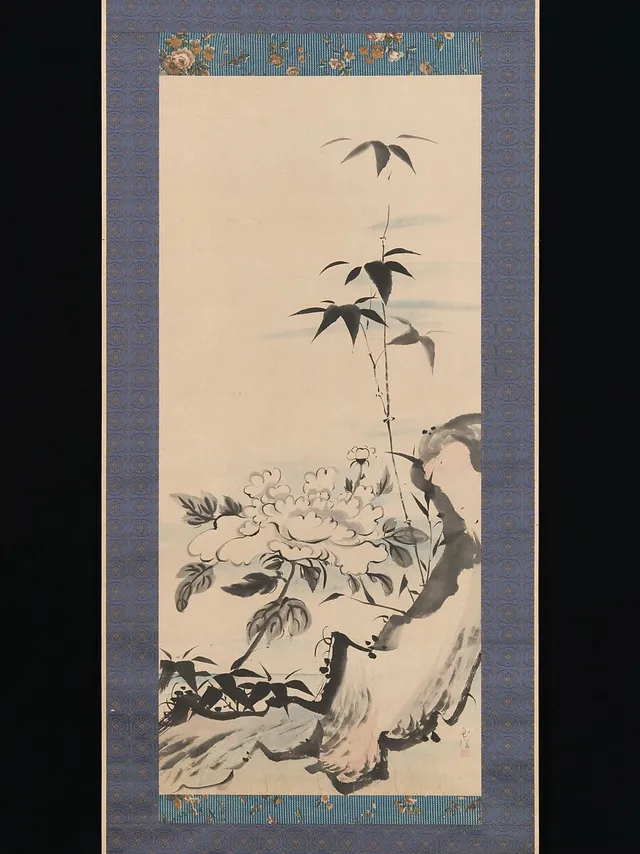
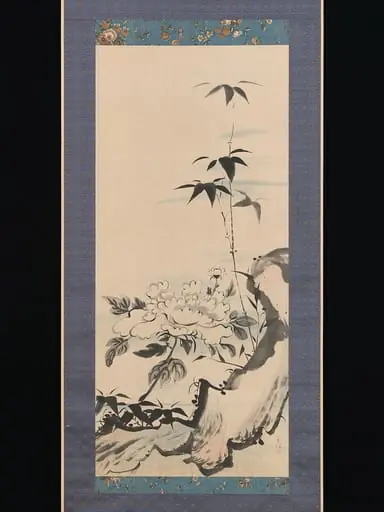 徳山玉瀾筆 牡丹に竹図|Peony and Bamboo
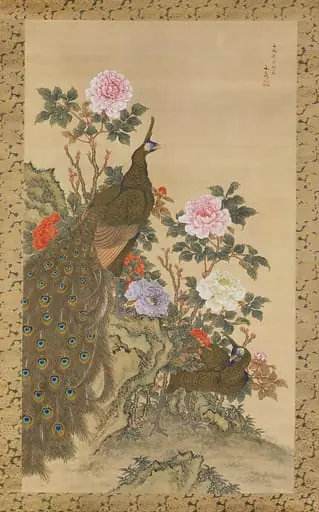 牡丹に孔雀図|Peacocks and Peonies
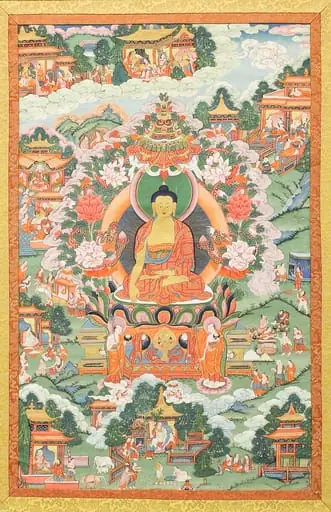 Untitled
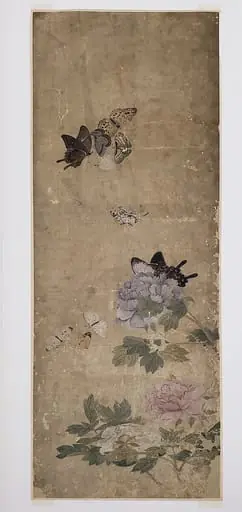 전 일호 남계우 나비와 모란 조선|傳 一濠 南啓宇 蝴蝶圖 朝鮮|Butterflies and Peonies
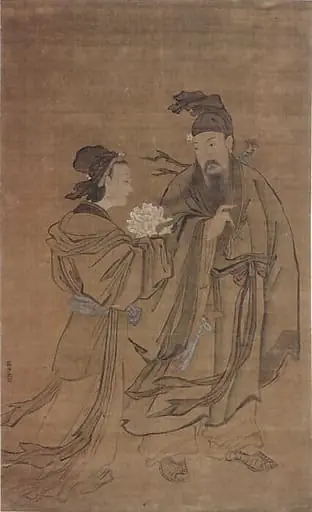 清 佚名 傳崔子忠 呂洞賓戯牡丹仙子 軸|Lȕ Dongbin and the Spirit of the Peony
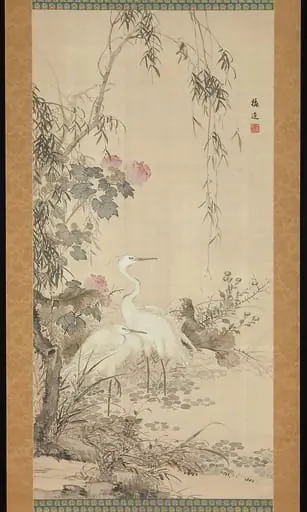 山本梅逸筆 柳鷺図|Egrets, Peonies, and Willows
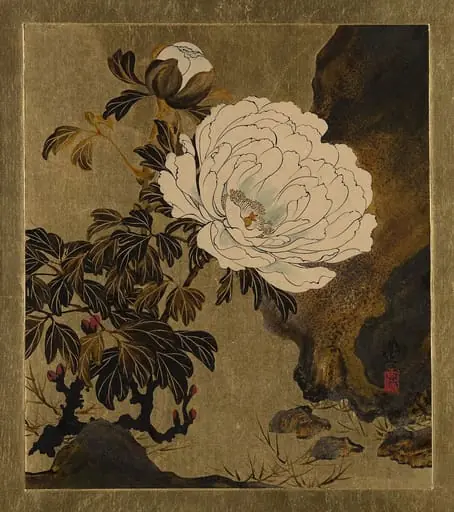 Untitled
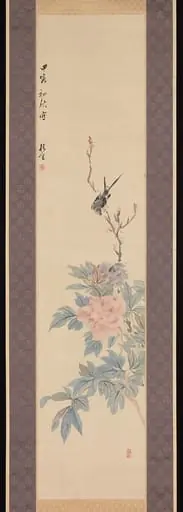 Untitled
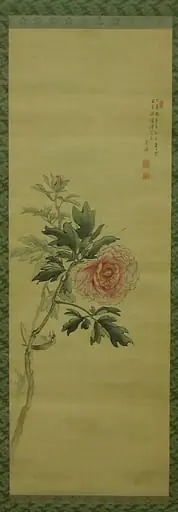 Untitled
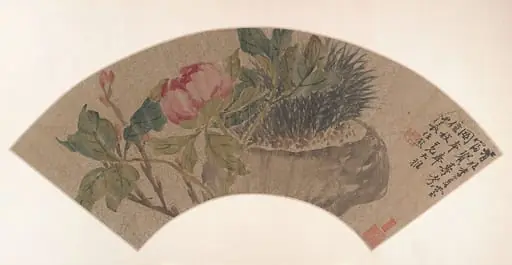 清 任熊 牡丹 扇面|Peony
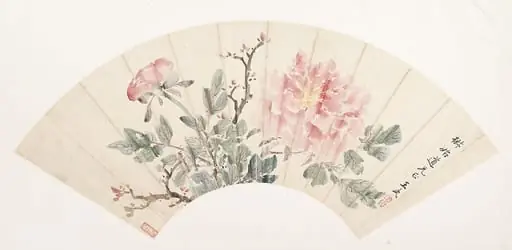 清 王武 牡丹圖 扇面|Peony
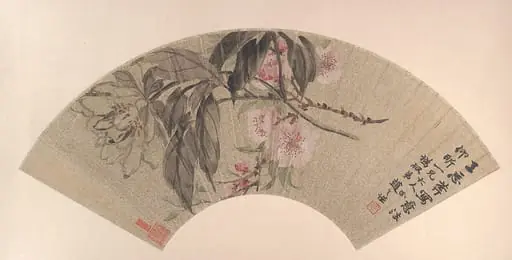 清 趙之謙 芍藥 桃花 扇面|Peach Blossoms and Peony
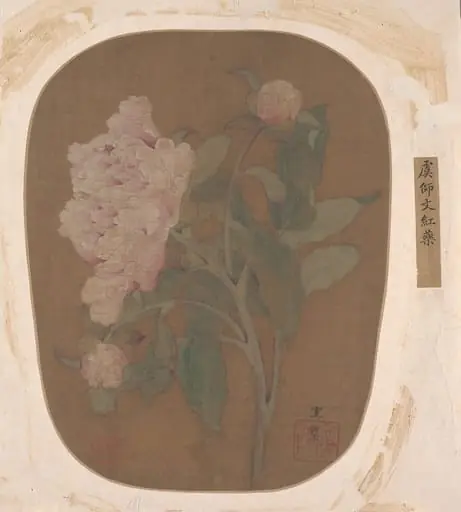 Untitled
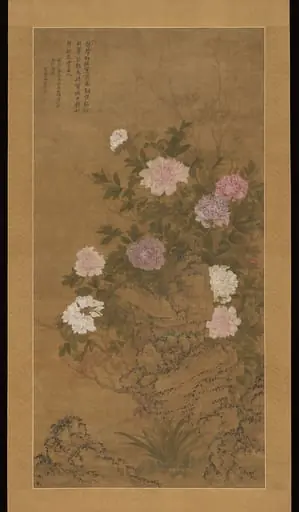 Untitled
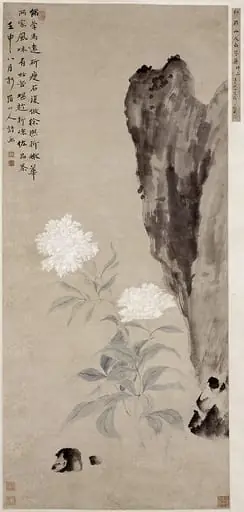 清 華喦 白芍藥圖 軸|White Peony and Rocks
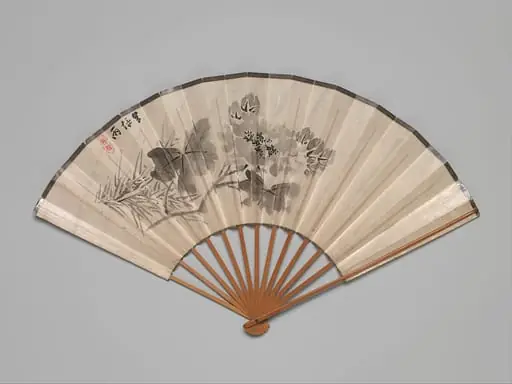 高橋草坪筆 牡丹図|Peony
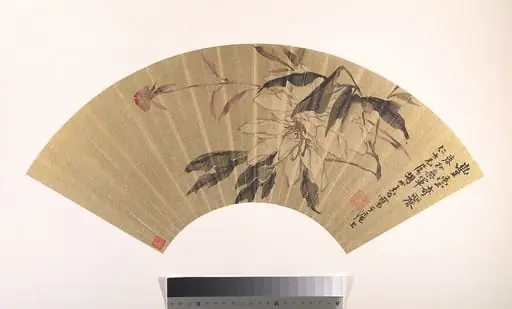 清 胡遠 芍藥 扇面|Herbaceous Peony
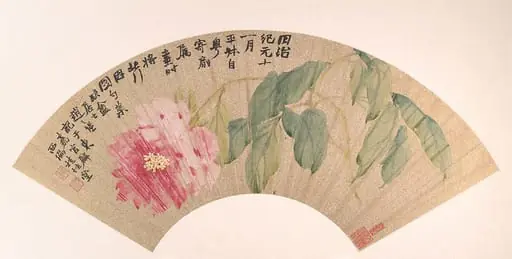 清 趙之謙 芍藥 扇面|Peony
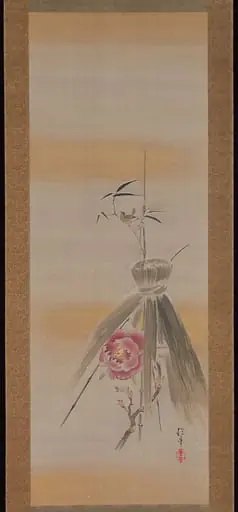 Untitled
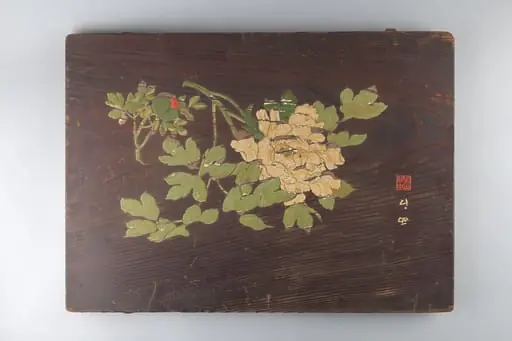 Untitled
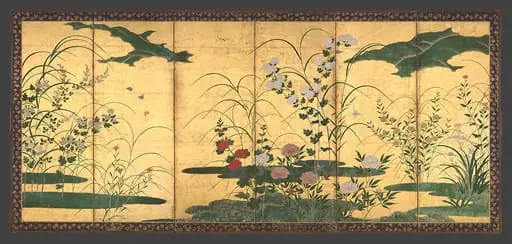 四季花草図屏風|Flowers and Grasses of the Four Seasons
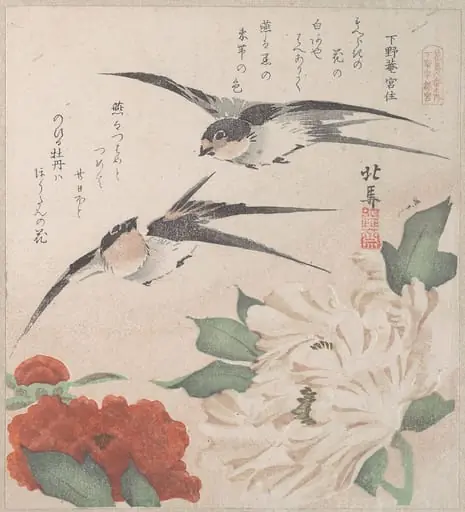 摺物帖 『春雨集』 『花鳥六番之内 下野宇都宮』 牡丹に燕|Spring Rain Collection (Harusame shū), vol. 3: Swallows and Peonies
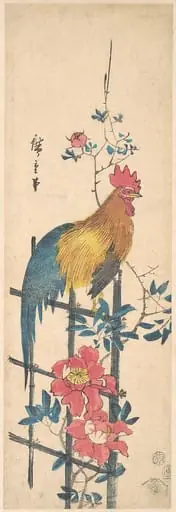 Untitled
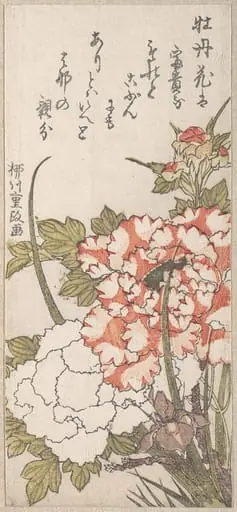 Untitled
Frequently asked questions
What is Peoni?
Peoni is a subject in art. The peony or paeony () is any flowering plant in the genus Paeonia, the only genus in the family Paeoniaceae.
How many Peoni works does Artifact World Gallery have?
Artifact World Gallery holds 27 public-domain Peoni works, all free to view and download.
Who are the key Peoni artists?
Key Peoni artists in the collection include Genki, Kano Chikanobu and Ike (Tokuyama) Gyokuran.
Where can I see Peoni works?
Peoni works in the collection are held by Metropolitan Museum of Art.