
Subject
Insect
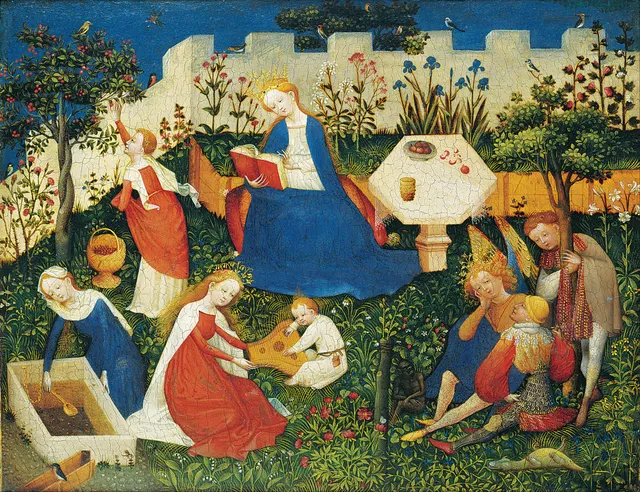
Insect is a subject in art. The gallery holds 125 works in this subject in art, including works by Peter Binoit, Osias Beert and Upper Rhenish Master.
Insects (from Latin insectum) are hexapod invertebrates of the class Insecta. They are the largest group within the arthropod phylum.
Key artists

Overview
The insect is a six-legged invertebrate of the class Insecta, the most diverse group of animals on Earth, with more than a million described species representing over half of all animal species. The term derives from Latin insectum, meaning 'cut up' or 'cut into pieces,' a calque of Aristotle's Greek term entomon, referring to the creature's tripartite body of head, thorax, and abdomen. In art, insects constitute a remarkably persistent and versatile motif, appearing in 141 works in this collection alone. Their recurrence across cultures and periods stems from their ubiquity in human experience, their ecological importance as pollinators and pests, their use in commodities such as silk and honey, and their rich symbolic potential. The insect bridges scientific observation and symbolic meaning, serving as both subject of naturalistic study and carrier of profound metaphor.
Iconography & meaning
Insect iconography in art draws upon multiple layers of meaning rooted in the creature's biological characteristics and cultural associations. The tripartite body structure, compound eyes, metamorphosis, and social organization of colonial species such as bees, ants, and termites have provided artists with potent visual and conceptual material. Metamorphosis, whether complete with a pupal stage or gradual through nymphal stages, has served as an especially powerful symbol of transformation, resurrection, and spiritual change. The ecological duality of insects, as both beneficial pollinators and destructive pests, has allowed for complex symbolic readings. Their economic significance, particularly silkworms for silk production and honey bees for honey, has linked them to wealth, industry, and divine providence. The fragility and brevity of insect life, particularly in species with adult stages of only days or weeks, has connected them to vanitas themes and memento mori traditions. Their sensory acuity, including hearing through tympanal organs and communication via pheromones, light, and sound, has suggested hidden realms of perception and knowledge beyond human access.
Legacy
The legacy of insect imagery in art extends far beyond this collection, reflecting broader cultural and ecological significance. Scientifically, insects remain the most diverse animal class, with entomologists estimating that only 10 to 20 percent of existing species have been described, and over 7,000 new species added annually. This ongoing discovery sustains interest in insect representation among artists responding to environmental consciousness. The dramatic decline of insect populations, with over 40 percent of species threatened by extinction according to a 2019 study in Biological Conservation, has given renewed urgency to artistic engagement with these creatures. The eightfold higher extinction rate of insects compared to other animals, driven by habitat destruction, pesticide use, and climate change, positions historical insect imagery as increasingly precious documentation of biodiversity. The cultural afterlife of insect motifs continues in contemporary art addressing ecological crisis, while historical works such as those in this collection preserve aesthetic and scientific records of species and relationships now under threat. The very persistence of insect imagery across 141 works in a single collection testifies to the enduring human fascination with creatures whose total biomass exceeds that of vertebrates fourfold, and whose evolutionary history spans more than 400 million years.
Works
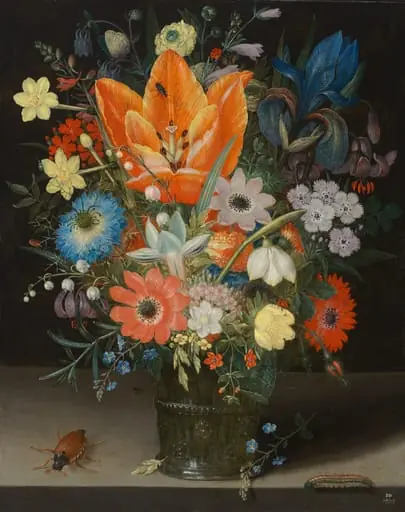 Still Life with Iris
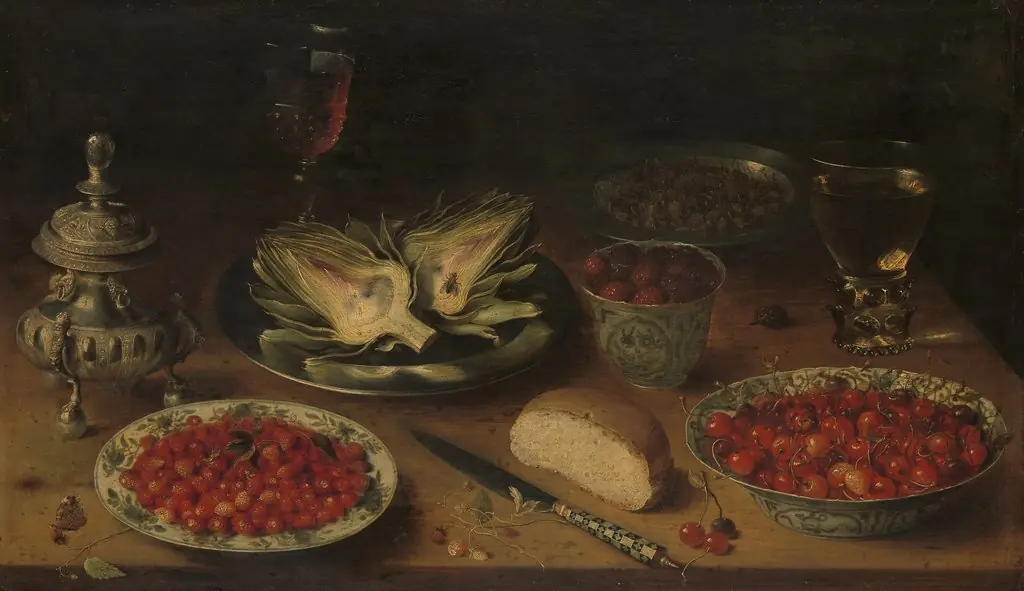 Still life with chinese porcelain, berries, and artichokes
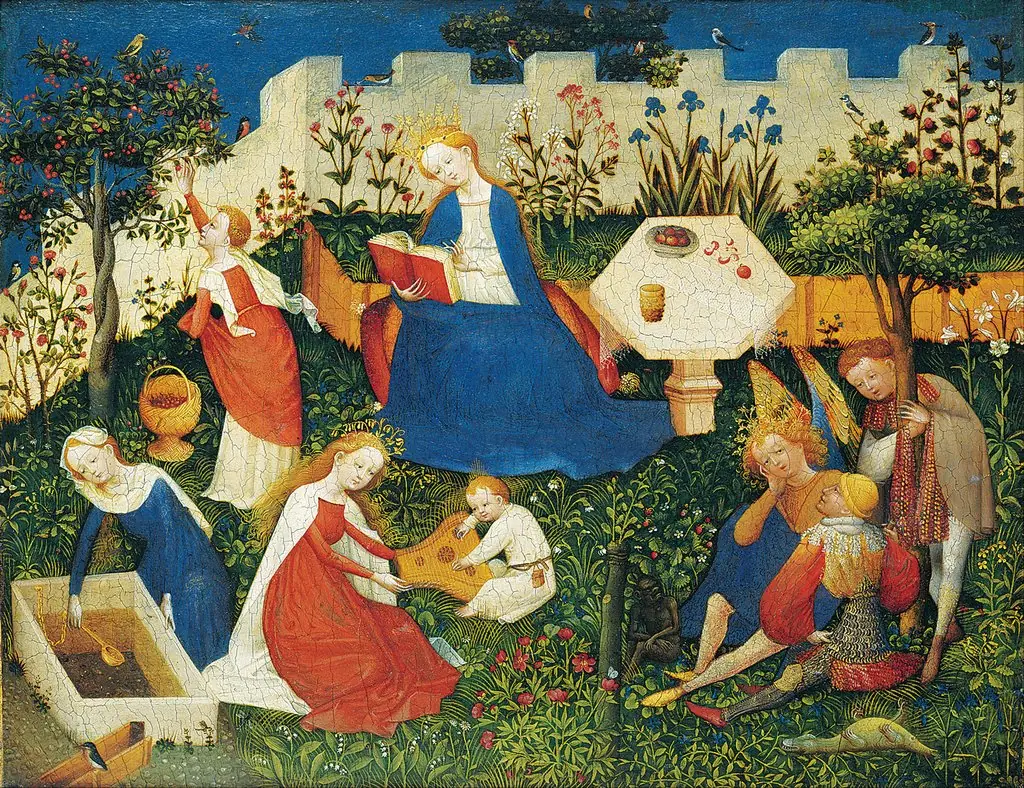 Paradiesgärtlein
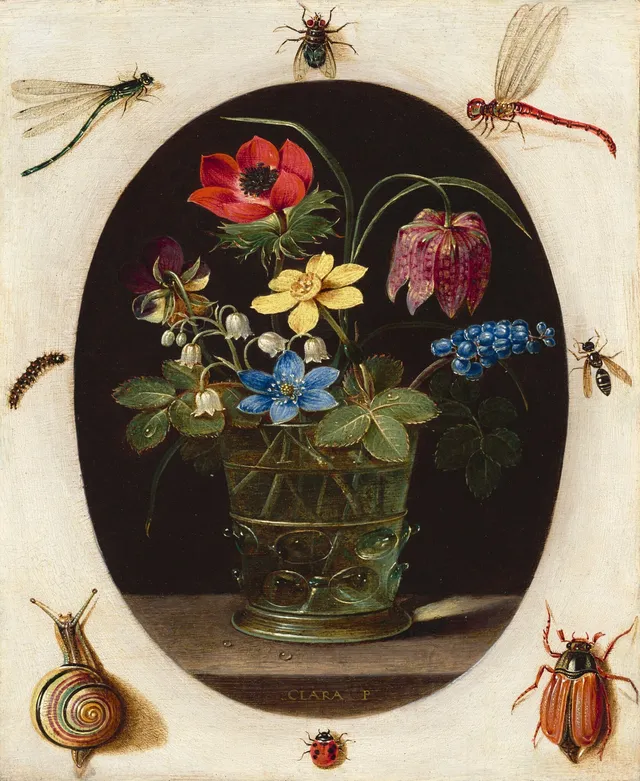
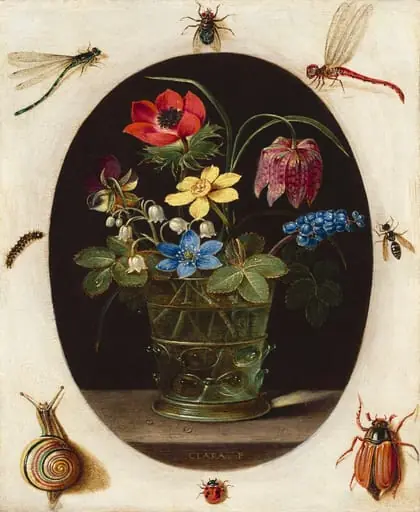 Still Life with Flowers Surrounded by Insects and a Snail
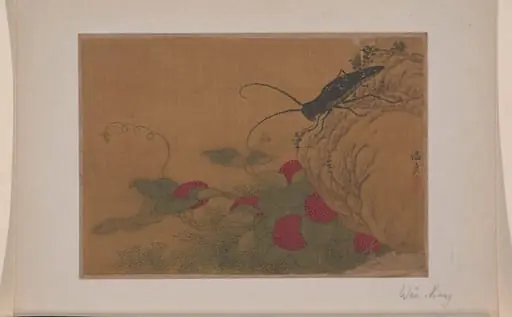 Untitled
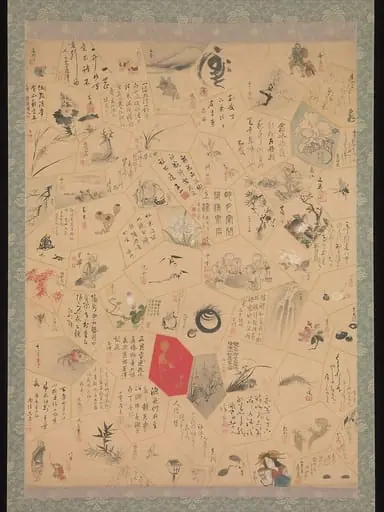 Untitled
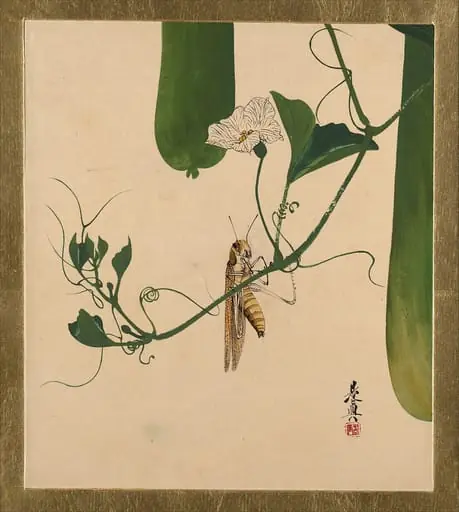 Untitled
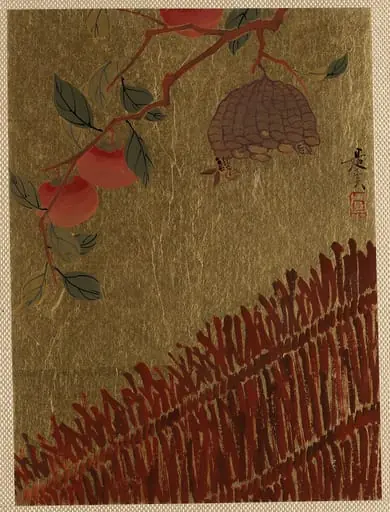 Untitled
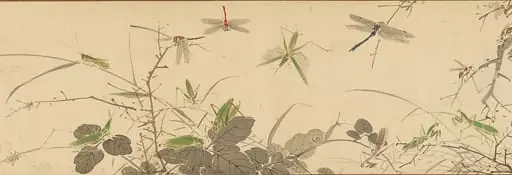 Untitled
 Untitled
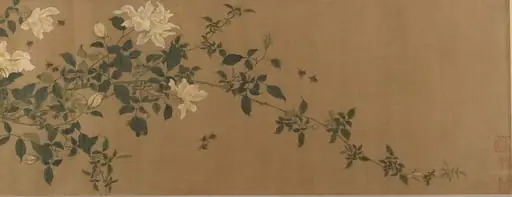 清 佚名 趙昌(僞款) 蜂王圖 卷|Yellow Roses and Bees, Pink Roses and Wasps
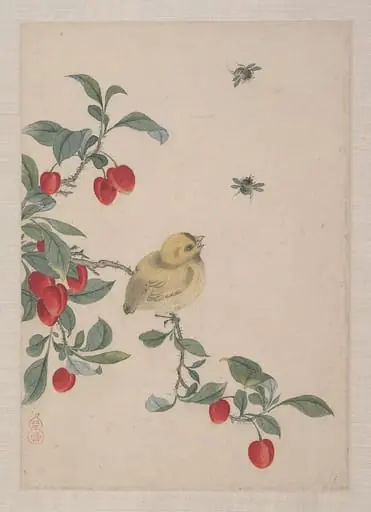 Untitled
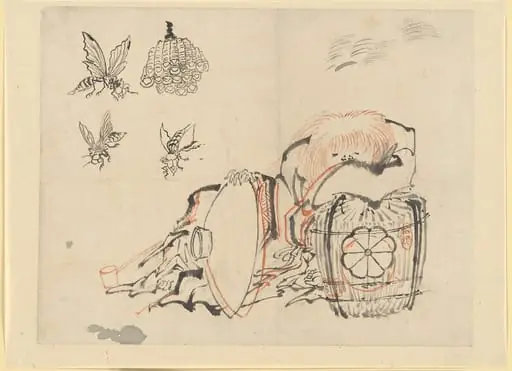 Untitled
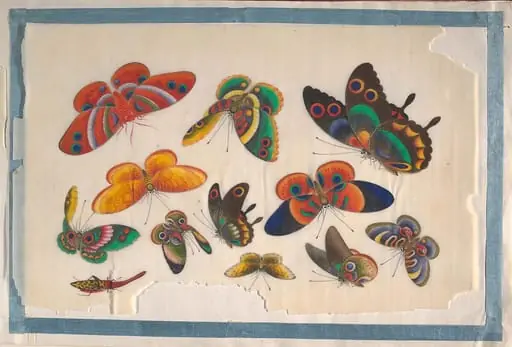 Untitled
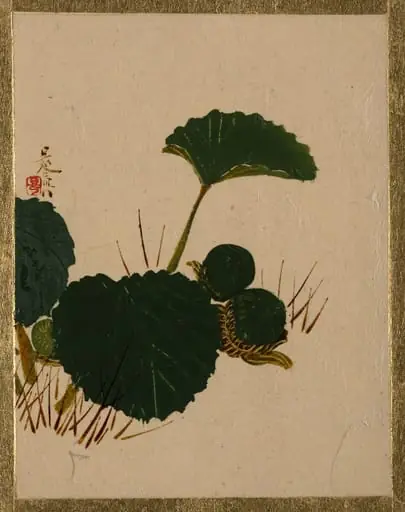 Untitled
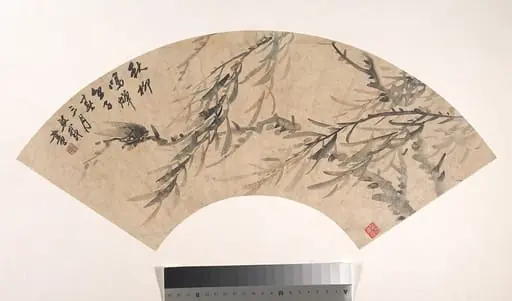 清 吳熙載 蟬柳 扇面|Cicada
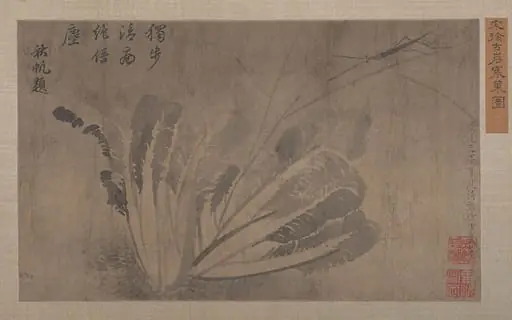 Untitled
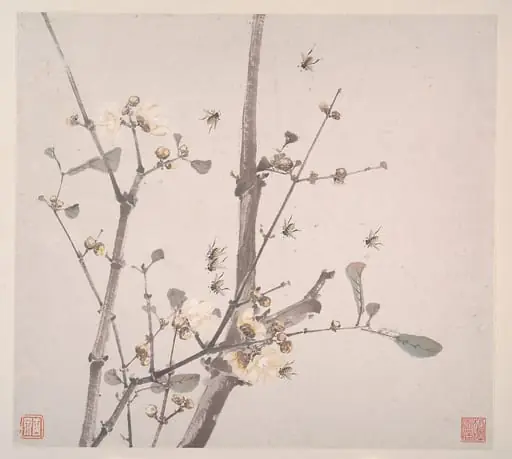 清 居廉 花卉蟲草 冊頁 八開|Insects and Flowers
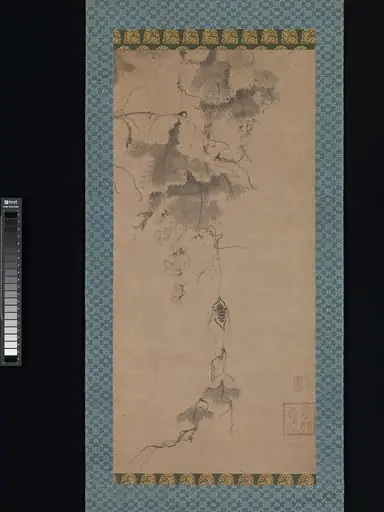 墨林愚庵筆 葡萄蝉図|Cicada on a Grapevine
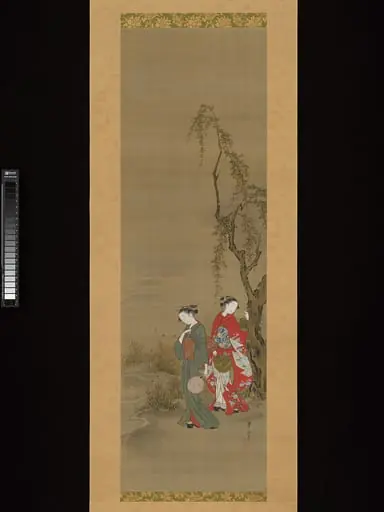 Untitled
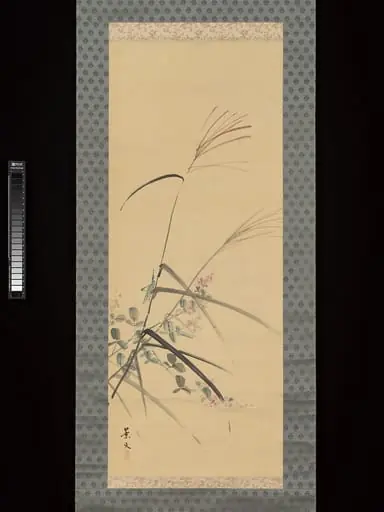 Untitled
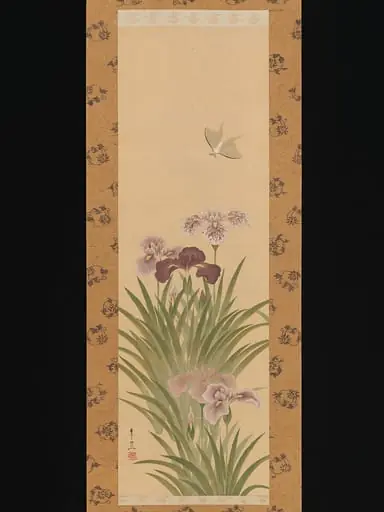 Untitled
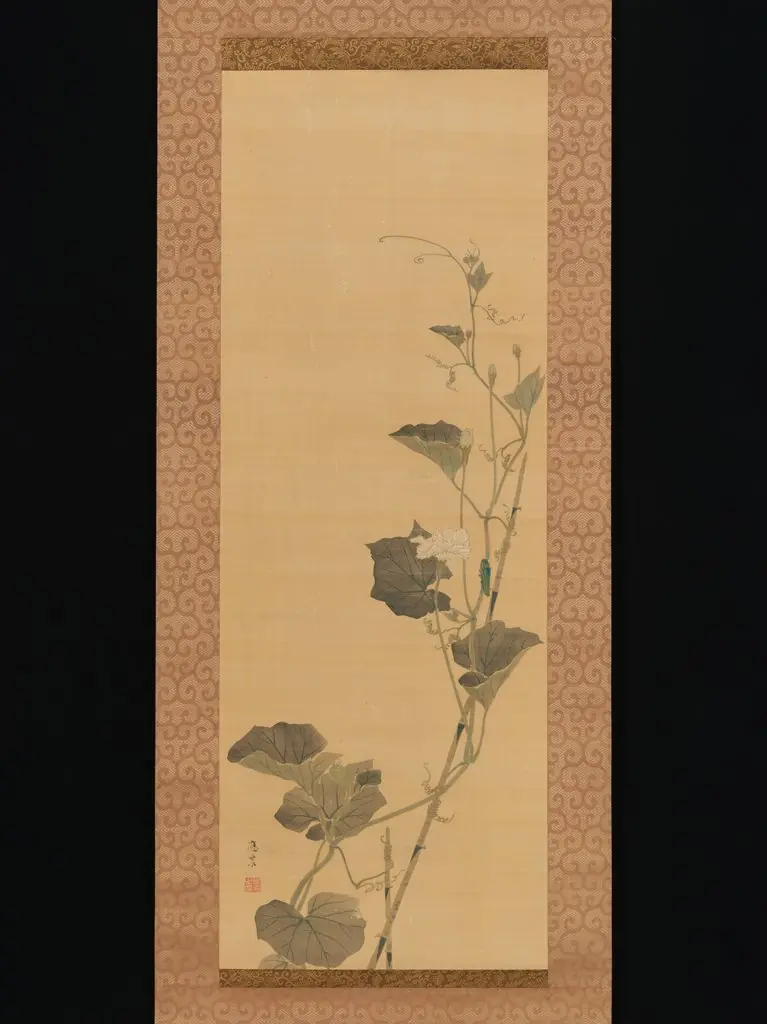 Calabash Flowers and Beetle
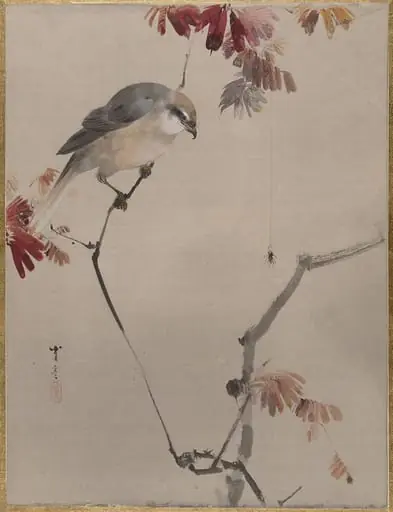 Untitled
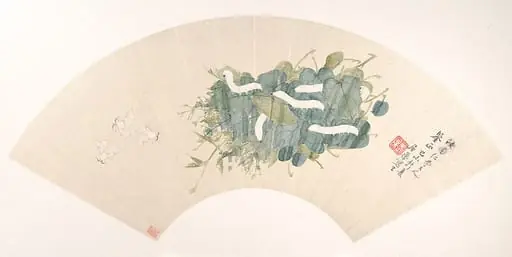 清 居巢 蠶蛾 扇面|Silkworm
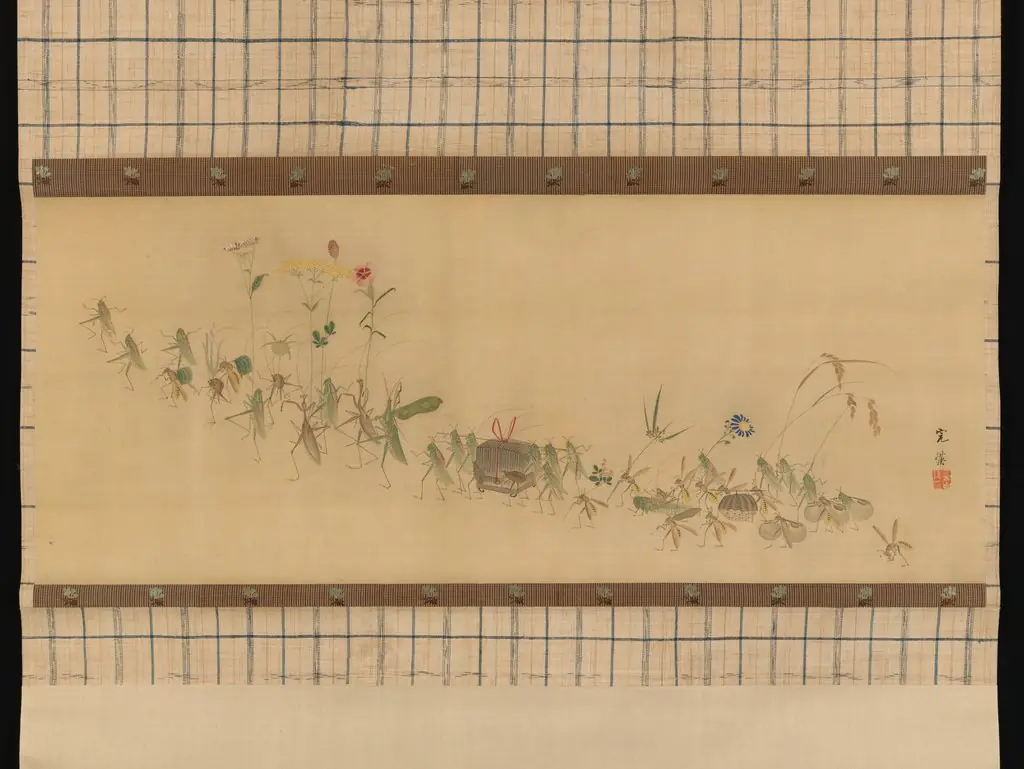 Procession of Insects
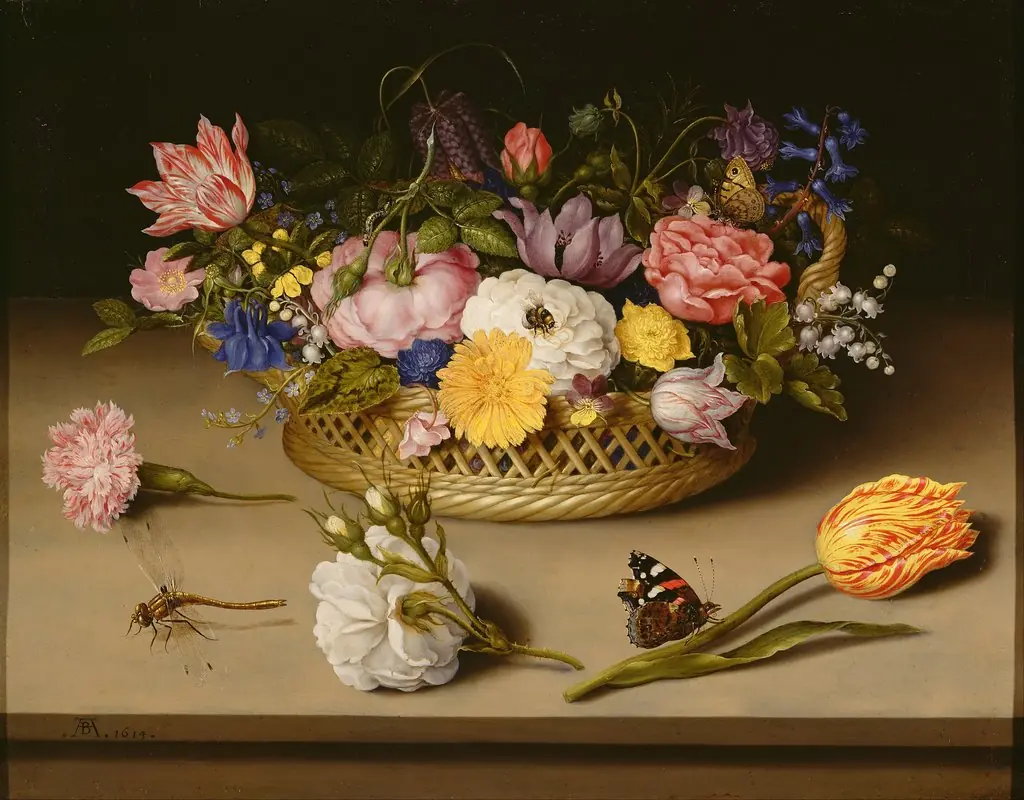 Flower Still Life
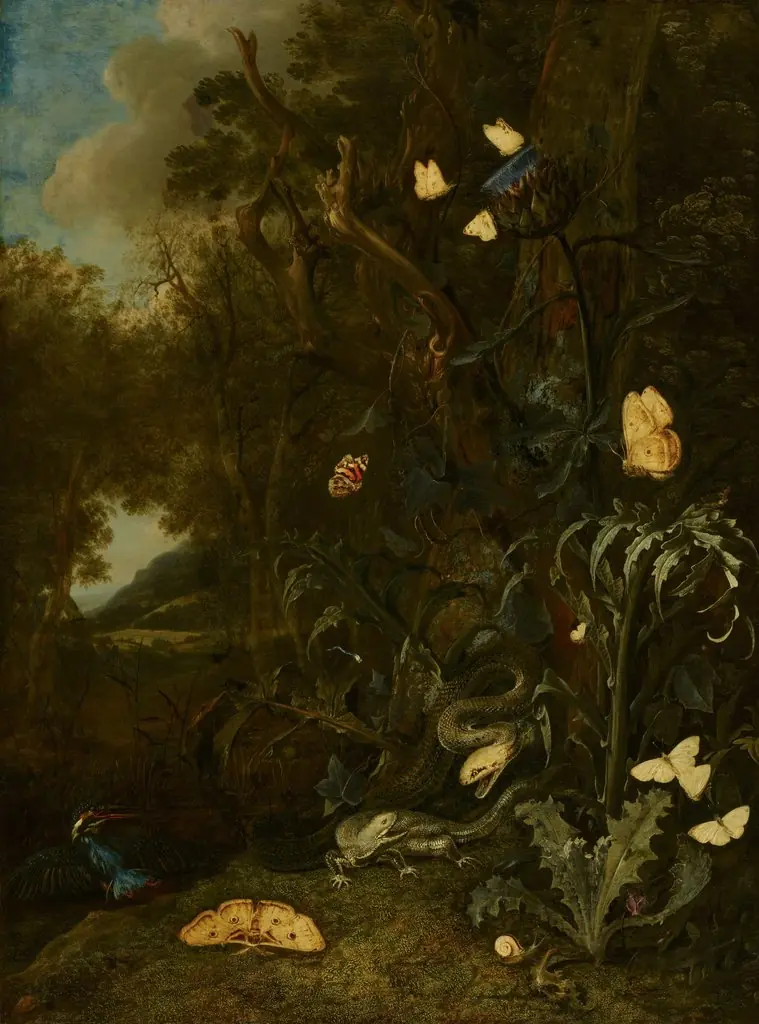 Plants and Insects
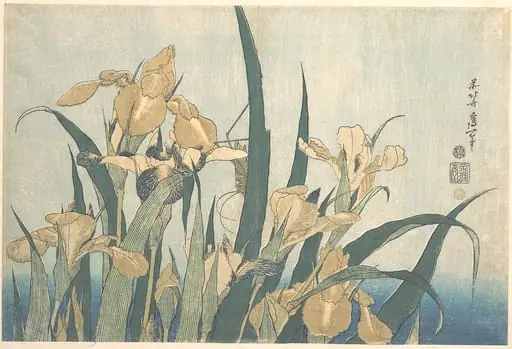 葛飾北斎画 燕子花|Grasshopper and Iris
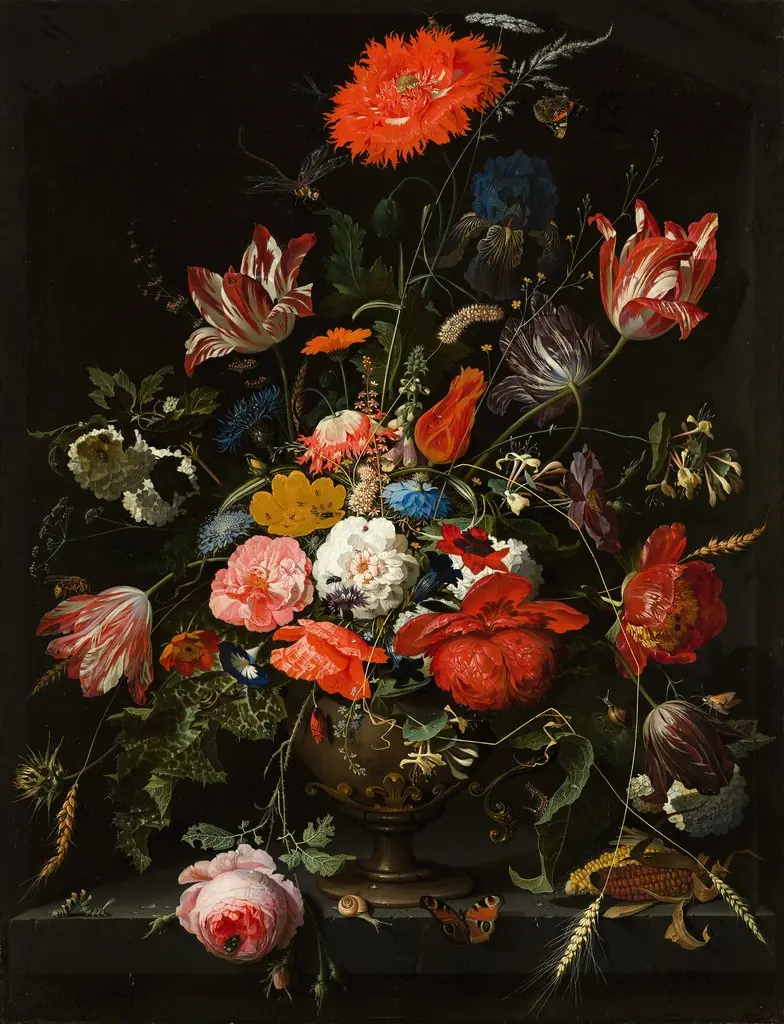 Flowers in a metal vase in a niche
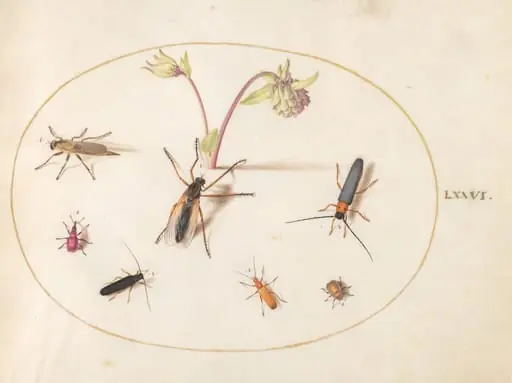 Plate 76: Insects with a Pink and Cream Columbine
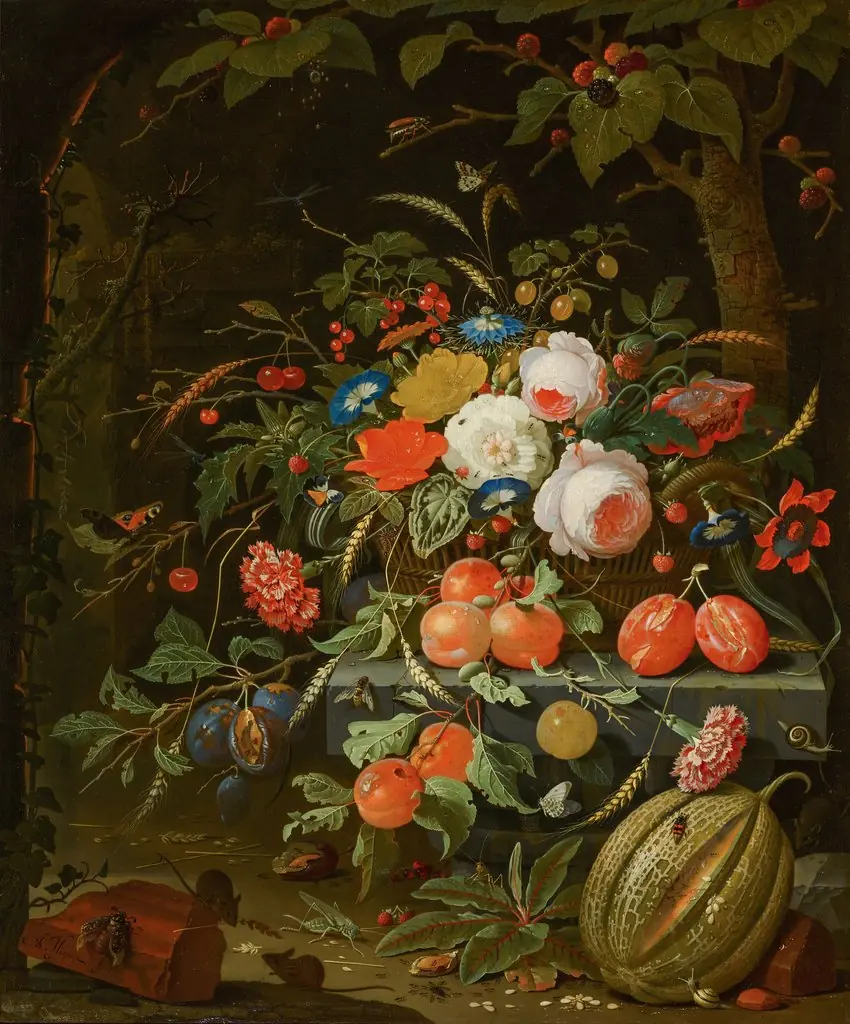 Flowers and Fruit
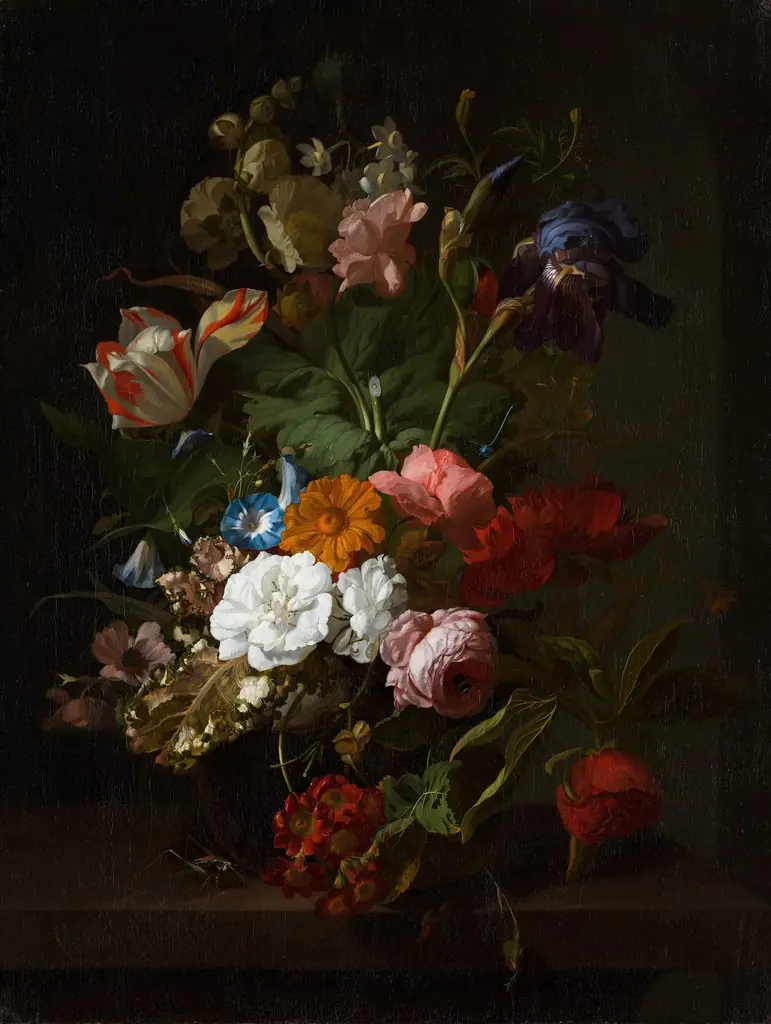 Vase of flowers
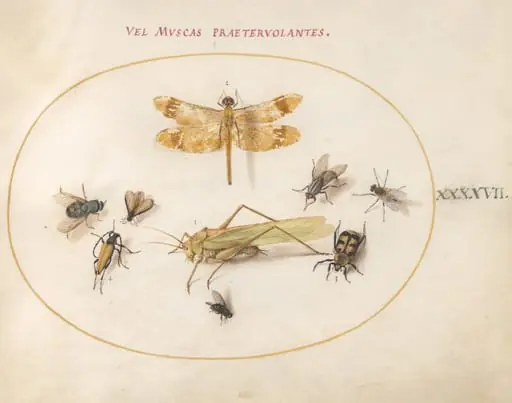 Plate 47: A Dragonfly (Banded Darter?), Grasshopper, Houseflies, a Carrion Beetle, a Flower Longhorn Beetle, and Other Insects
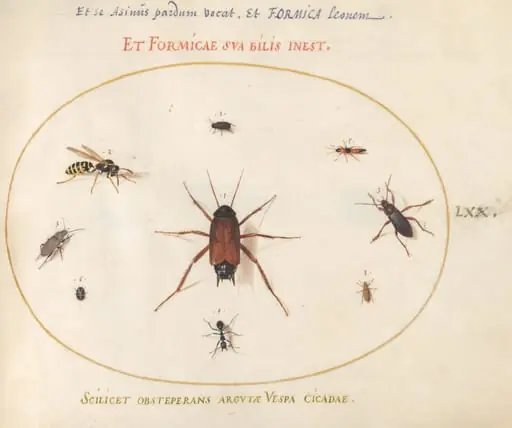 Plate 70: A Roach Surrounded by Insects
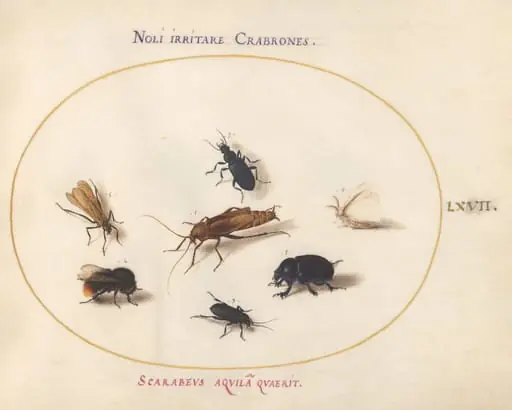 Plate 67: Seven Insects, Including a White Butterfly and a Bee
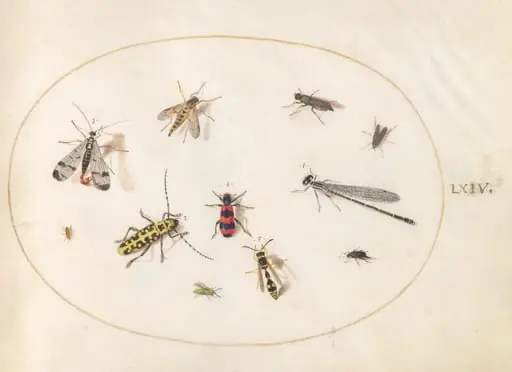 Plate 64: Eleven Insects, Including a Dragonfly and Longhorn Beetle
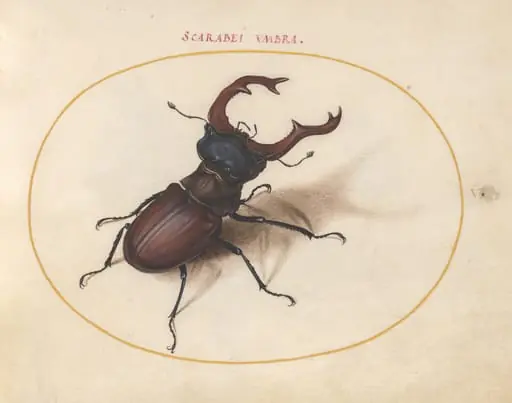 Plate 5: Stag Beetle
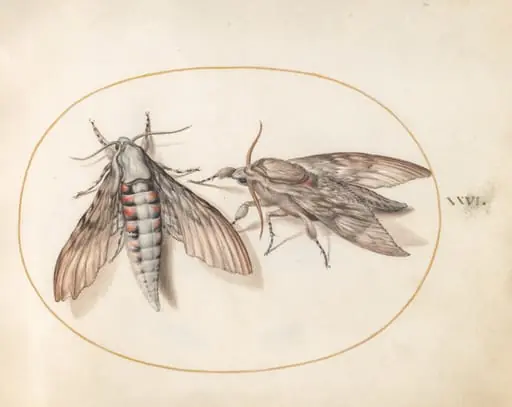 Plate 26: Two Hawk Moths
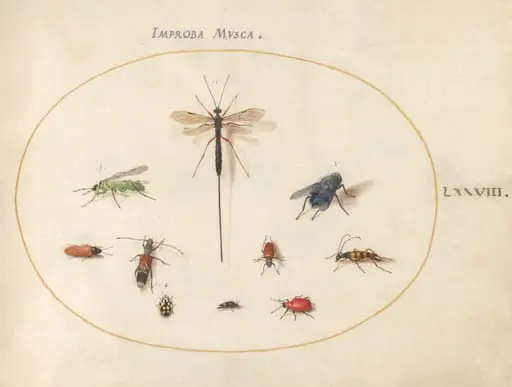 Plate 78: Ten Insects, Including a Blue Fly
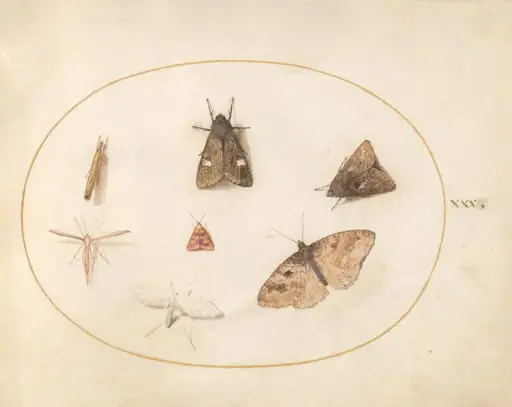 Plate 30: Seven Moths
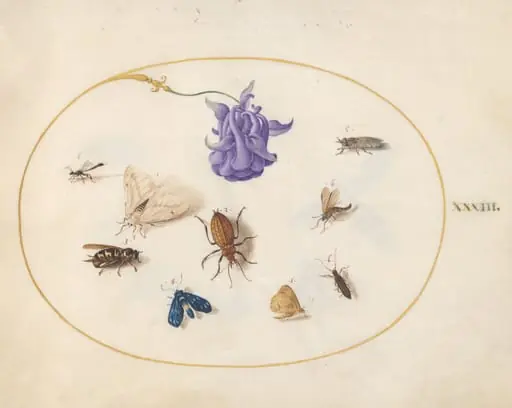 Plate 33: Moth and Butterfly with other Insects and a Columbine Flower
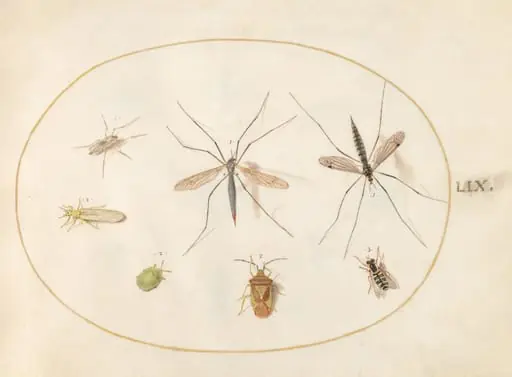 Plate 59: Seven Insects, Including a Hawthorn Shield Bug, Crane Flies, and a Hoverfly
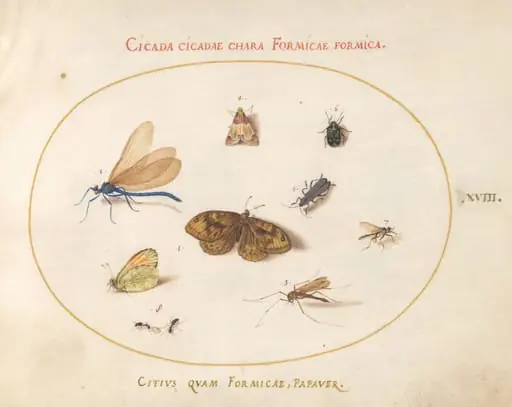 Plate 18: Two Butterflies and a Moth with a Damselfly, Two Ants, and Four Other Insects
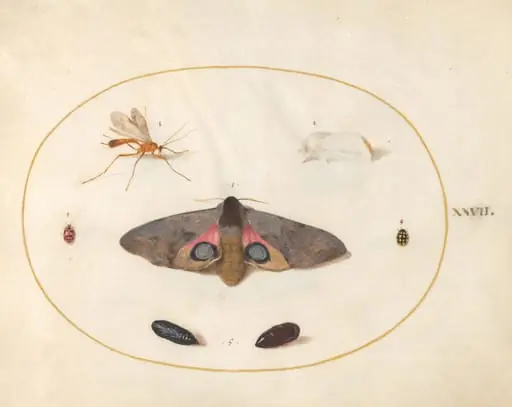 Plate 27: An Eyed Hawk-Moth, Two Chyrsalides, and Other Insects
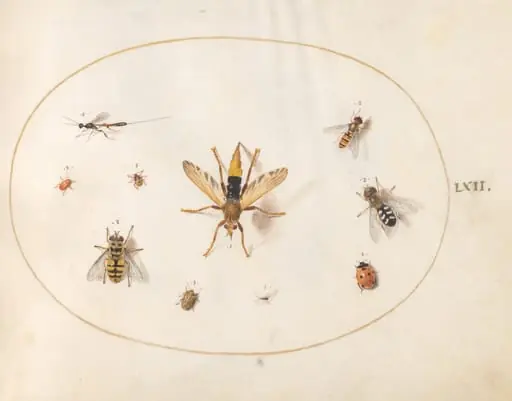 Plate 62: Ten Insects
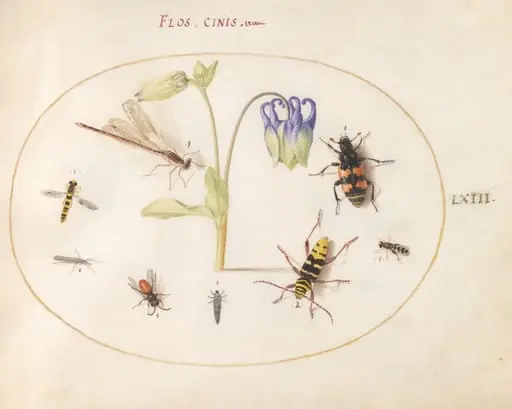 Plate 63: A Dragonfly, a Spotted Longhorn, a Sexton Beetle, and Other Insects with a Blue and White Columbine
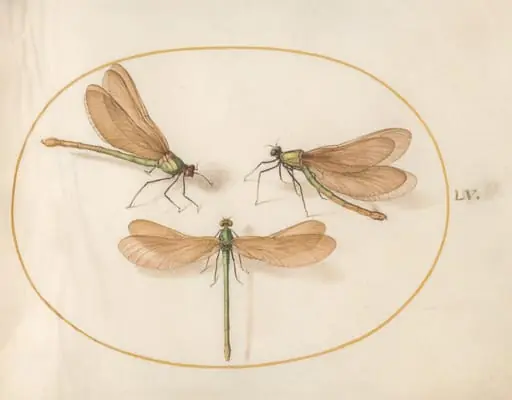 Plate 55: Three Green Damselflies with Brown Wings (Beautiful Desmoiselles?)
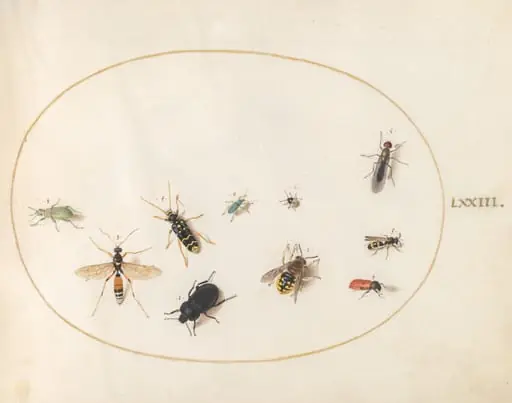 Plate 73: Ten Insects
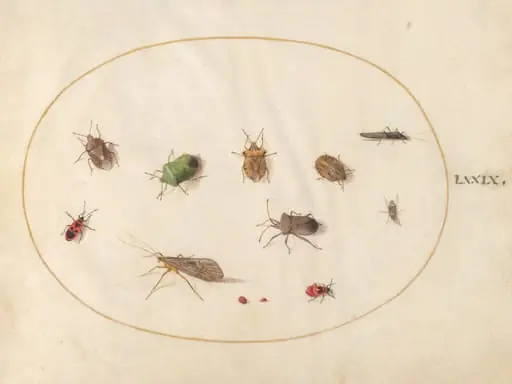 Plate 79: Twelve Insects, Including Shield Bugs
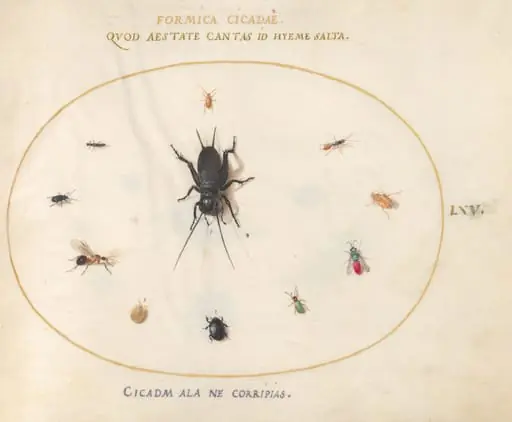 Plate 65: A Cricket Surrounded by Insects, Including a Ruby-Tailed Wasp
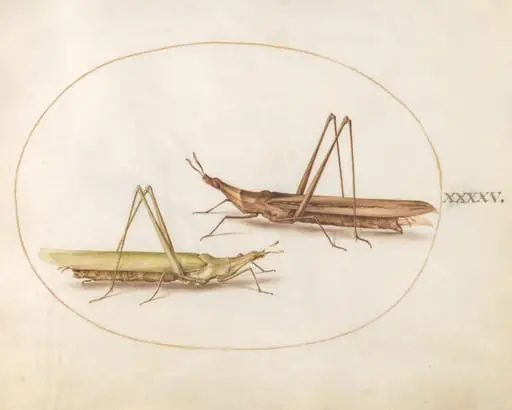 Plate 45: Two Long-Headed Grasshoppers(?)
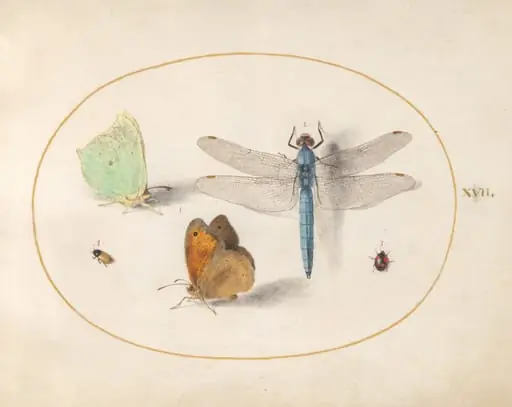 Plate 17: Brimstone and Meadow Brown(?) Butterflies, a Blue Chaser, and Two Small Insects
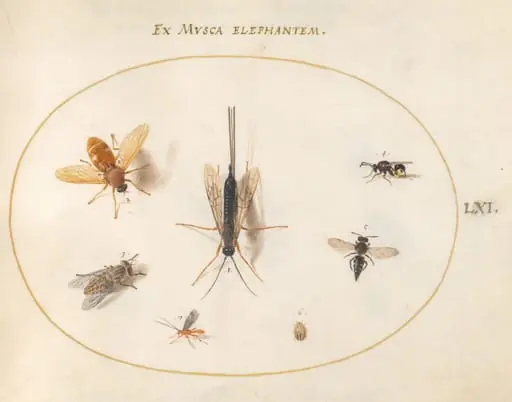 Plate 61: Seven Insects, Including Flies
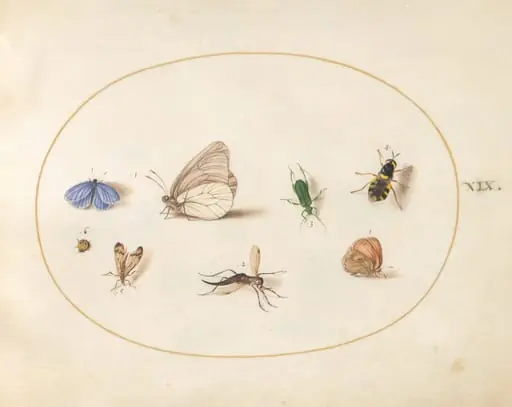 Plate 19: Two Butterflies with Five Other Insects
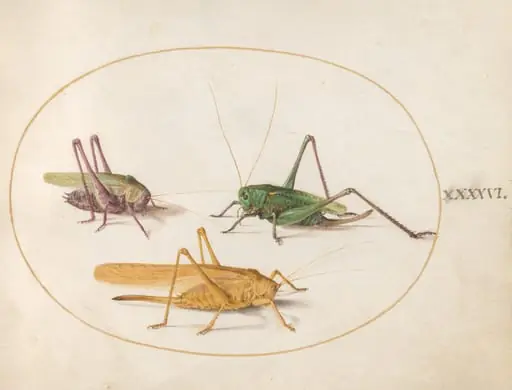 Plate 46: Three Grasshoppers
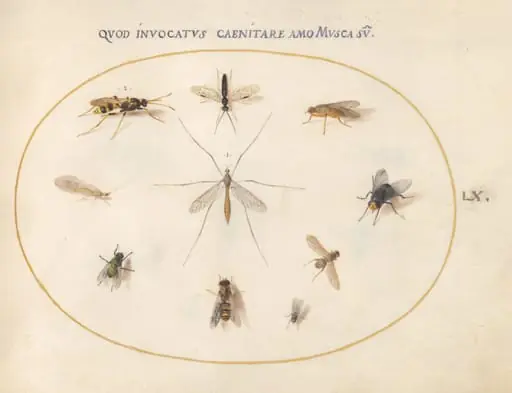 Plate 60: Flies and Other Insects
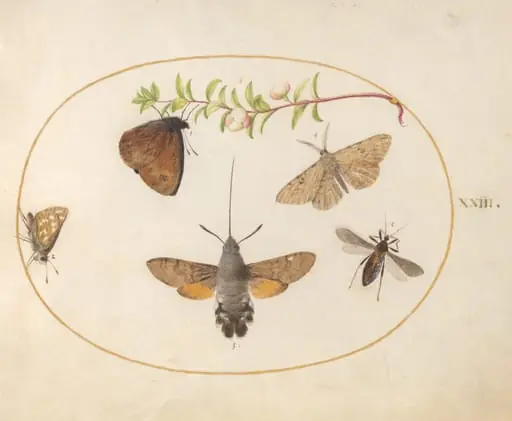 Plate 23: Hummingbird Hawk Moth, Butterflies, and Other Insects around a Snowberry Sprig
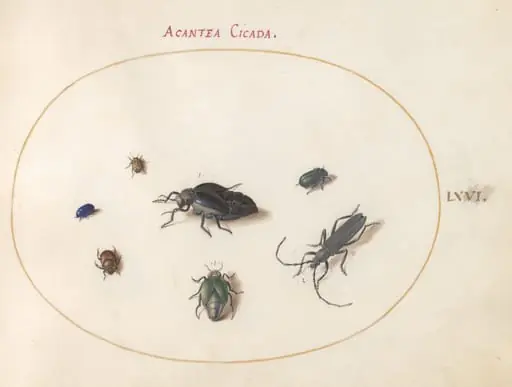 Plate 66: Two Oil Beetles, a Longhorn Beetle, and Four Other Insects
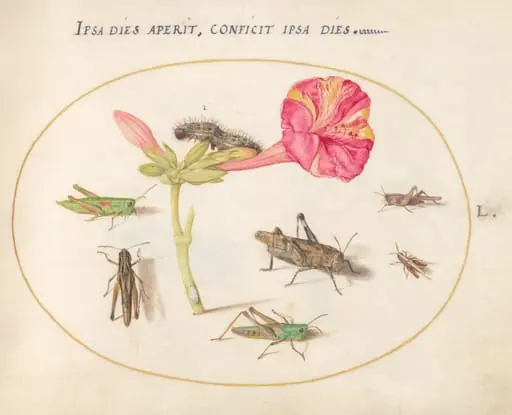 Plate 50: Grasshoppers, a Caterpillar, and a Scale Insect with a Four O'Clock Flower
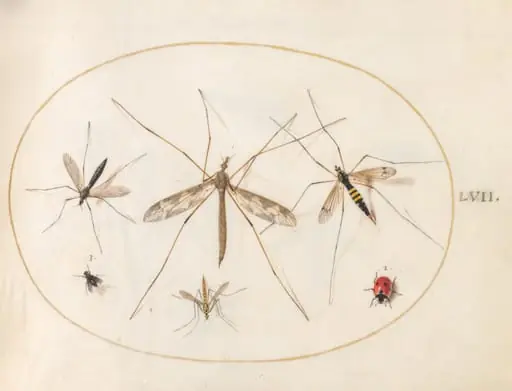 Plate 57: A Ladybug, a Fly, and Four Other Insects
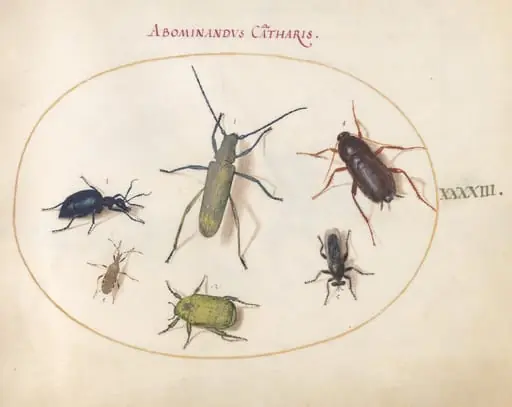 Plate 43: Musk Beetle, Oil Beetle, Tansy Beetle(?), Cockroach, Leaf-Footed Bug, and Other Insects
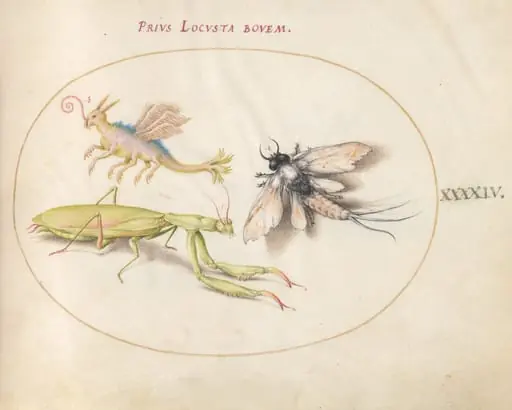 Plate 44: Mantis, Mayfly, and a Fictional Locust
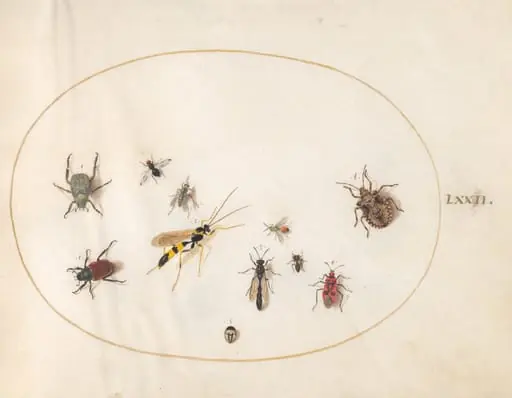 Plate 72: Shield Bug, Cinnamon Bug, Wasp, and Other Insects
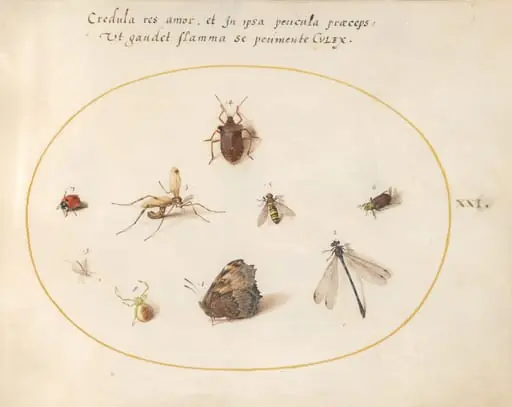 Plate 21: A Butterfly with a Dragonfly, a Ladybug, and Five other Insects
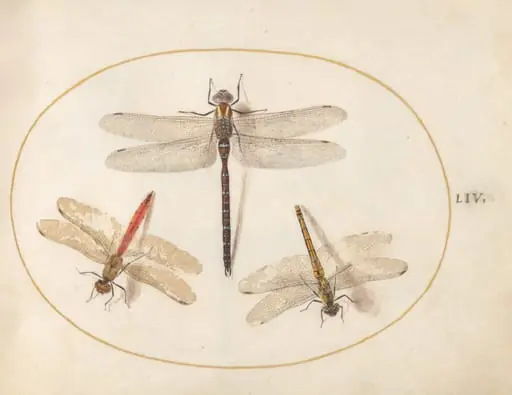 Plate 54: Hairy Dragonfly and Two Darters
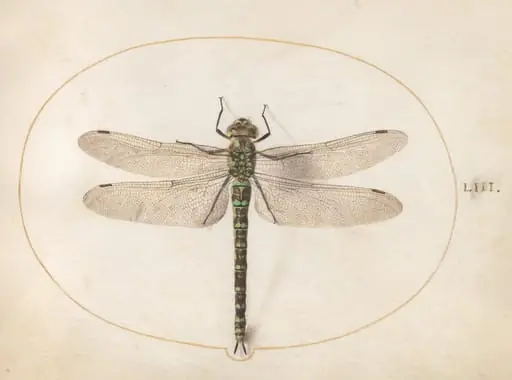 Plate 53: Southern Hawker Dragonfly
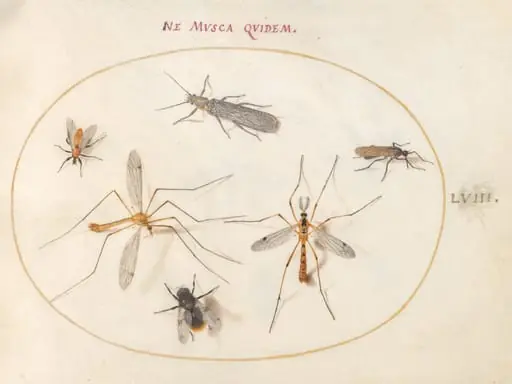 Plate 58: A Bee and Five Other Insects
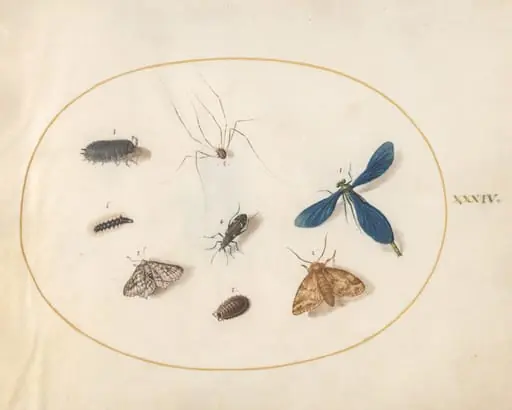 Plate 34: Two Moths with a Spider, a Caterpillar, a Damselfly, and Other Insects
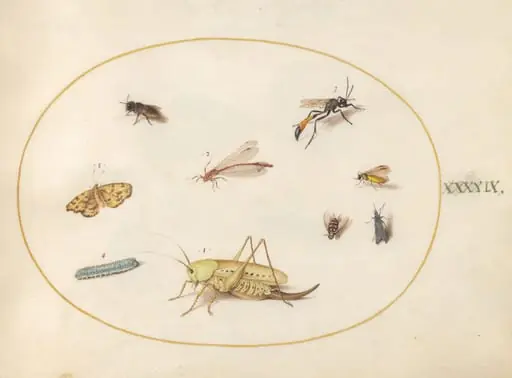 Plate 49: A Grasshopper, a Caterpillar, a Butterfly, a Moth, and Other Insects
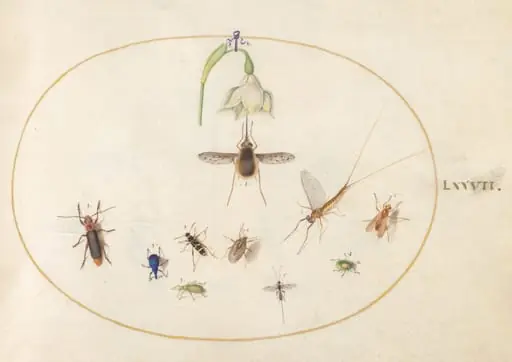 Plate 77: Dotted Bee Fly with a White Flower, a Mayfly, a Blue Weevil, and Other Insects
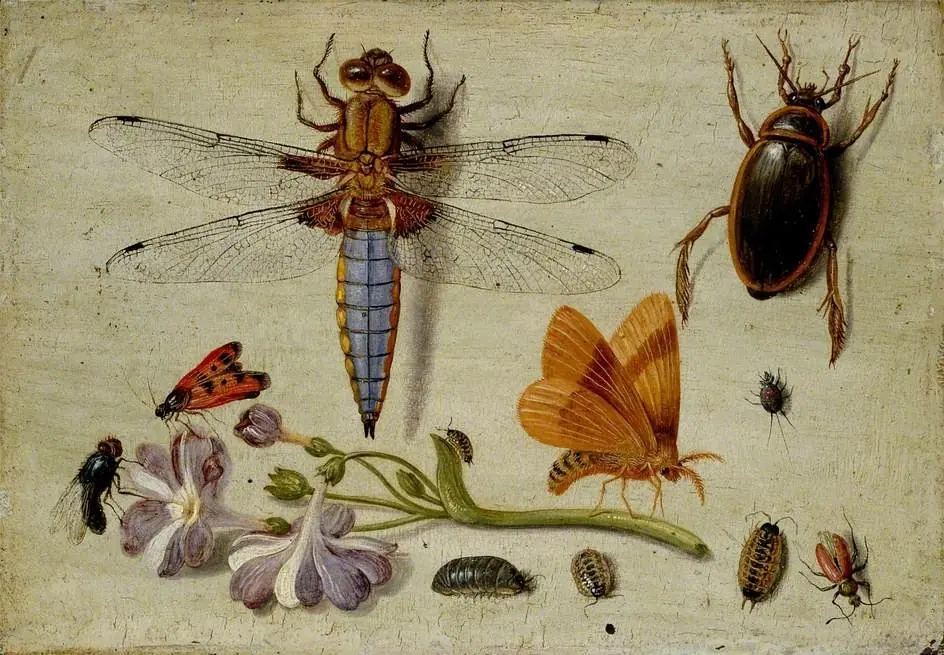 A Cockchafer, Beetle, Woodlice and other Insects, with a Sprig of Auricula
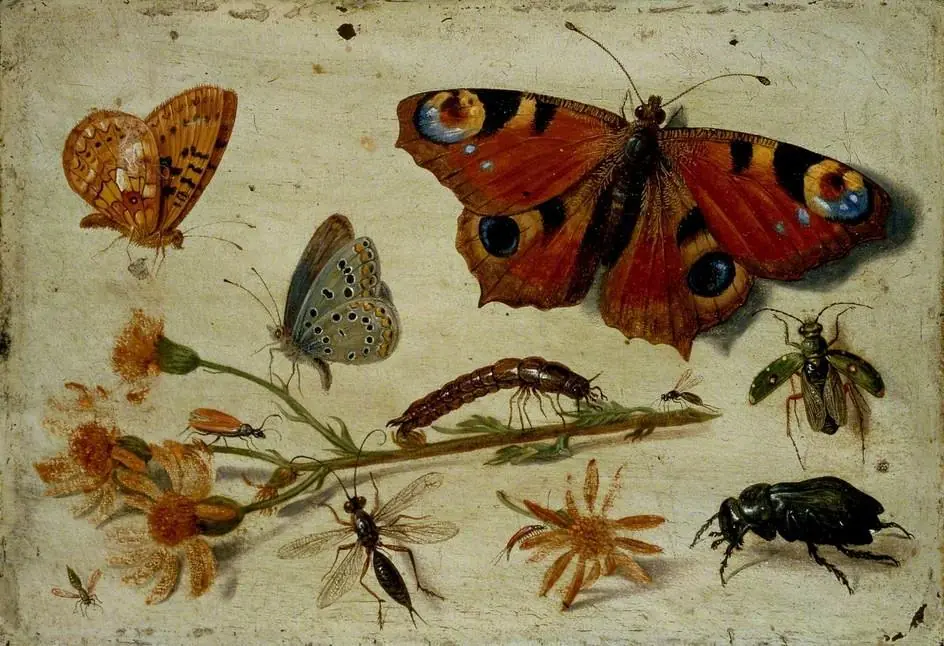 Three Butterflies, a Beetle and other Insects, with a Cutting of Ragwort
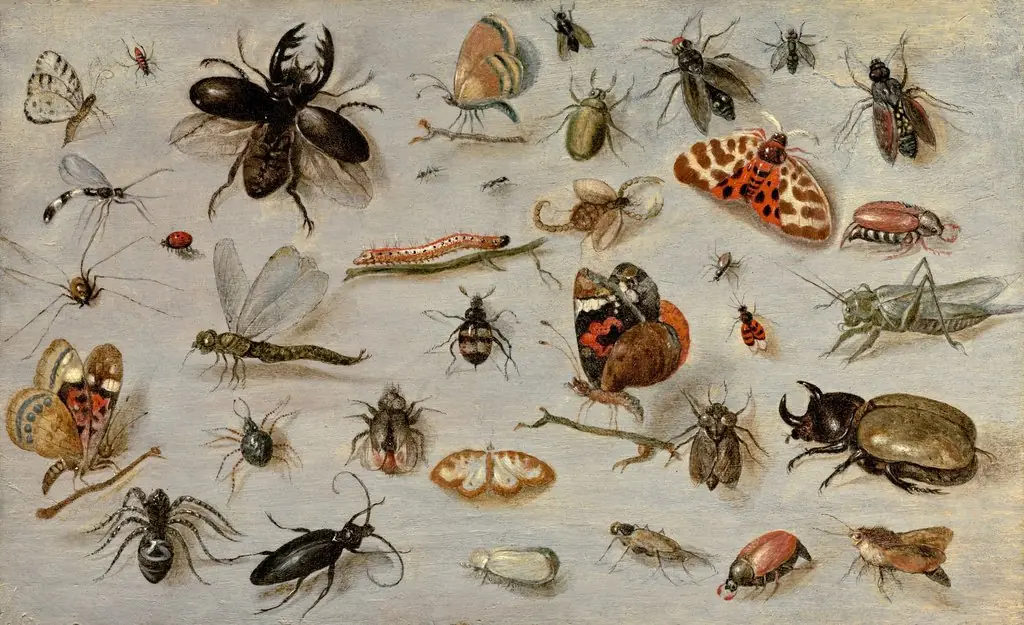 A Study of Butterflies, Moths, Spiders, and Insects
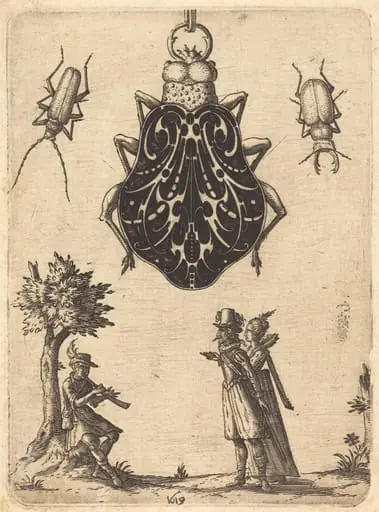 Design for a Beetle-Shaped Pendant
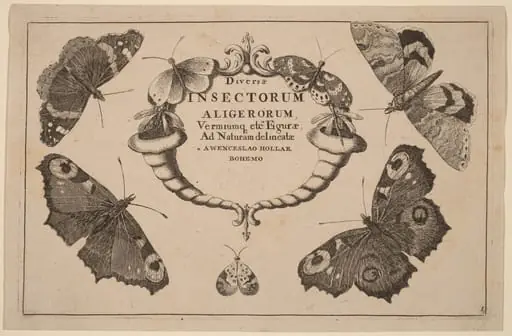 Title Page
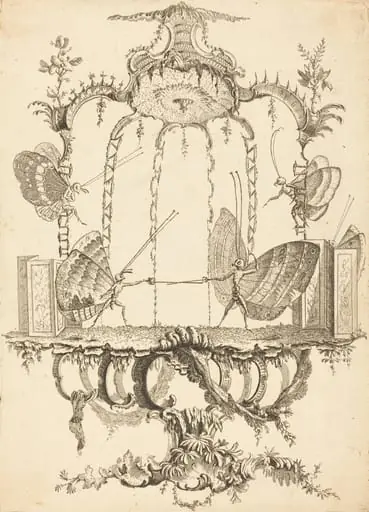 Le Duel (The Duel)
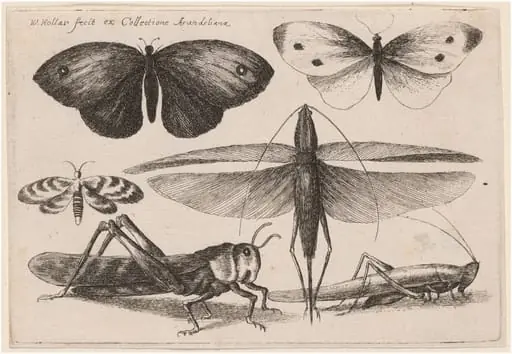 Six Insects
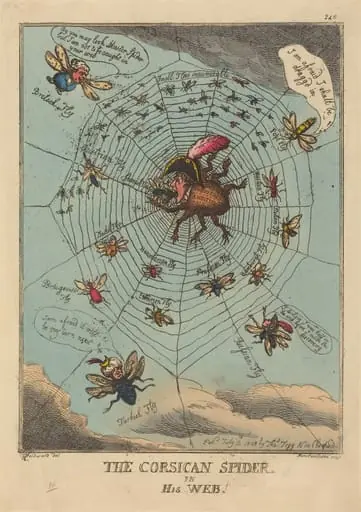 The Corsican Spider in his Web
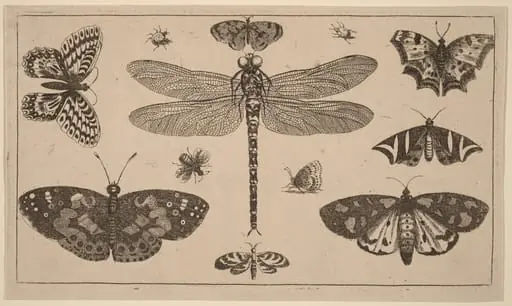 Dragonfly, Ladybirds, and Butterflies
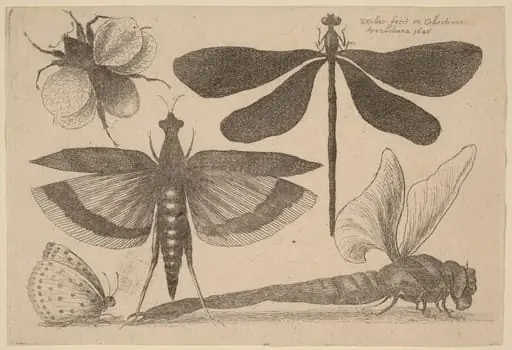 Dragonflies, a Bumble-Bee, and a Butterfly
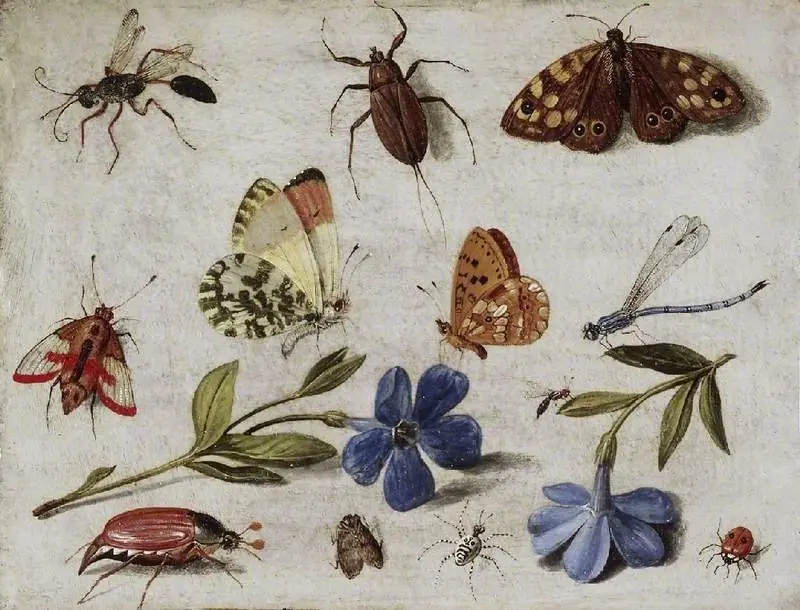 Insects
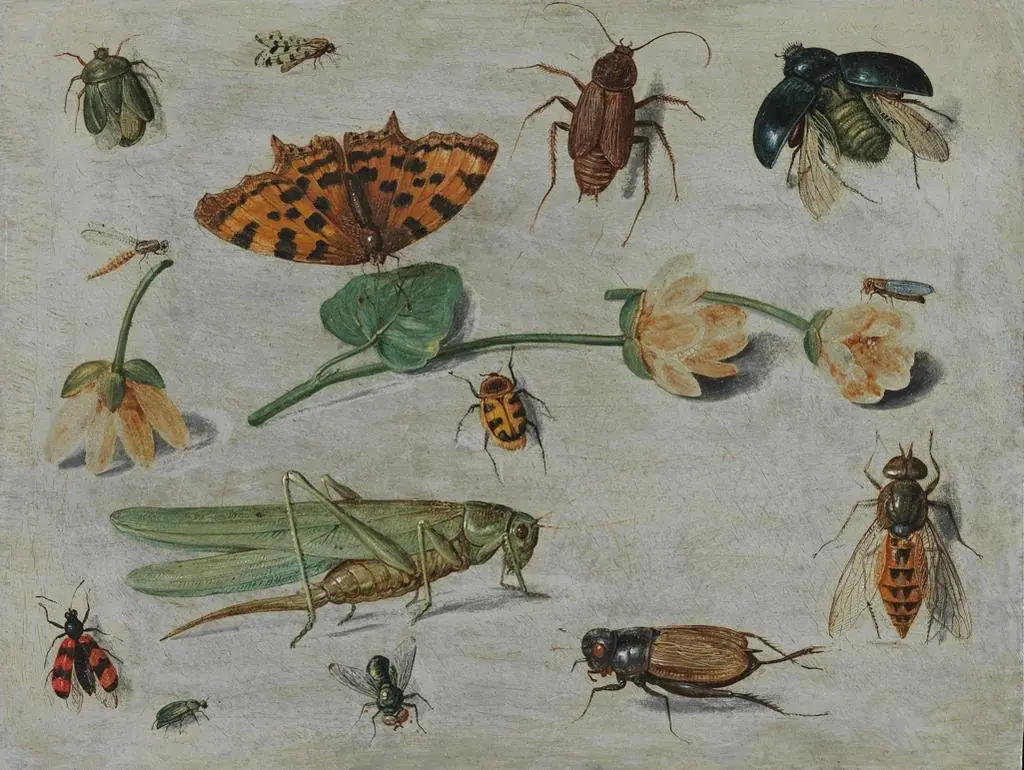 Insects
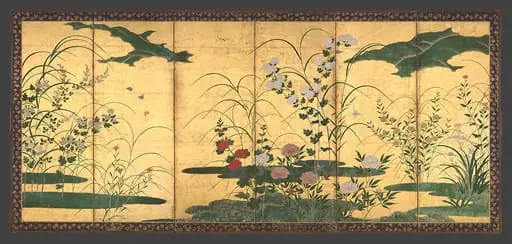 四季花草図屏風|Flowers and Grasses of the Four Seasons
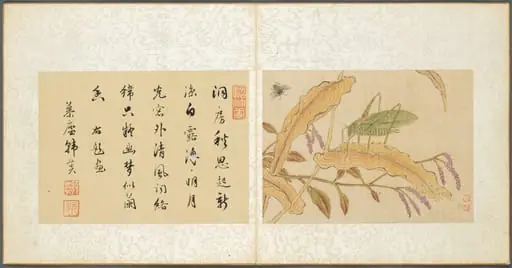 Album of Miscellaneous Subjects, Leaf 7
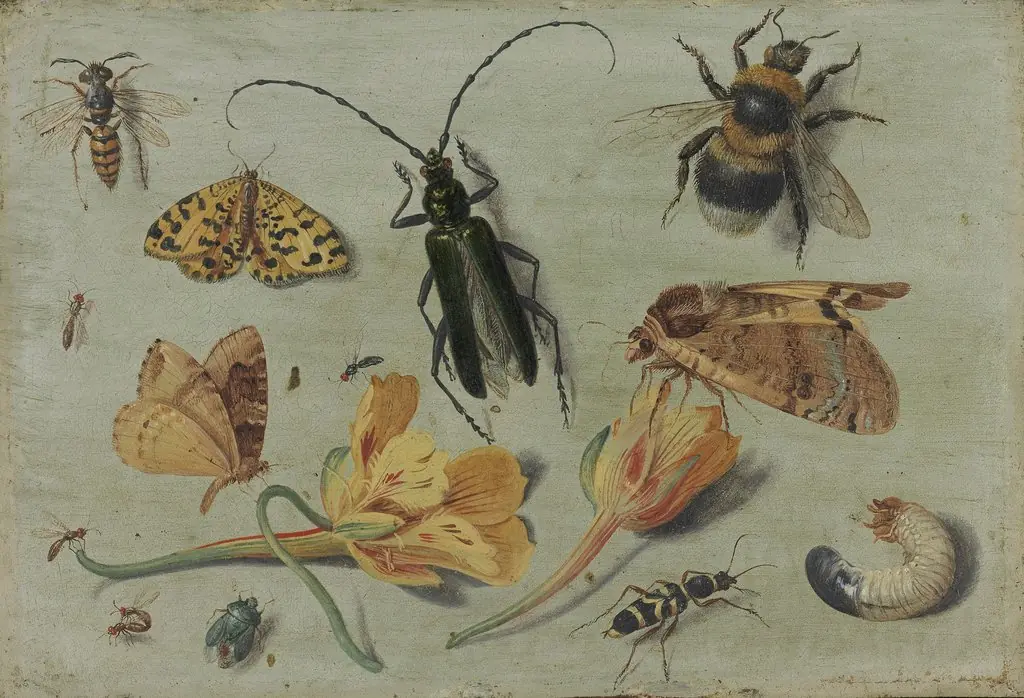 Insects
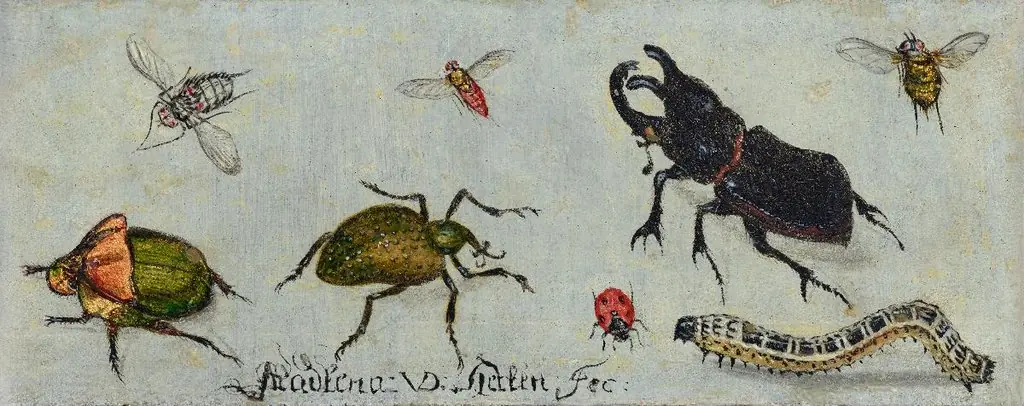 Zwei Insektenstudien. 8 Insekten
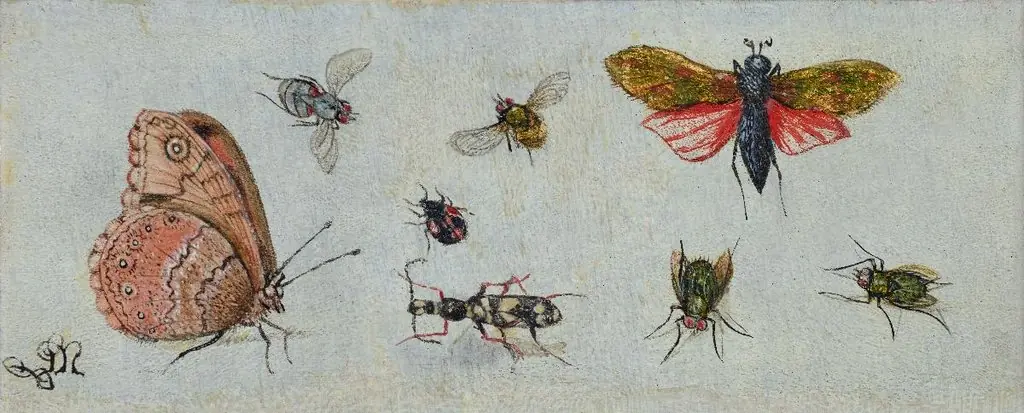 Zwei Insektenstudien. 2 Schmetterlinge und 6 Insekten
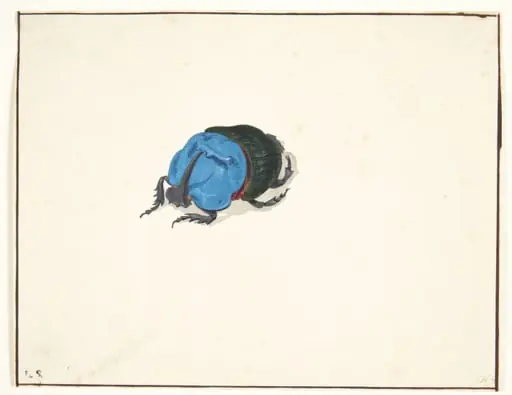 En næsehornsbille (scarabaeidae)
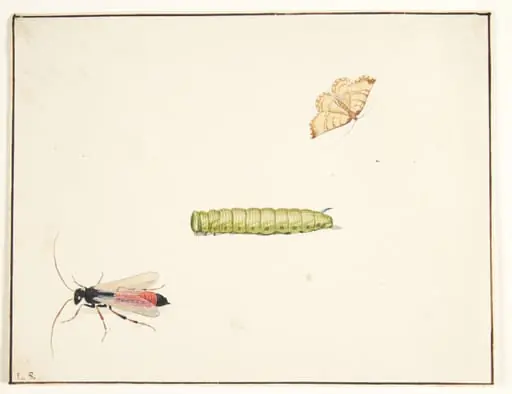 Tre insektstudier
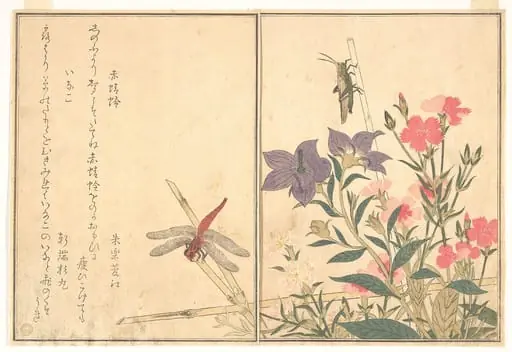 『画本虫撰』「赤蜻蛉」「いなこ」|Red Dragonfly (Akatonbo); Locust (Inago), from the Picture Book of Crawling Creatures (Ehon mushi erami)
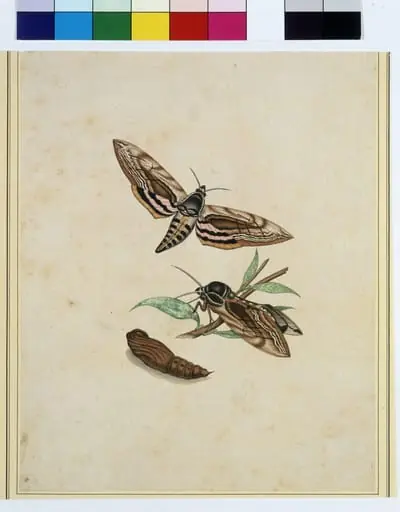 Hawkmoth
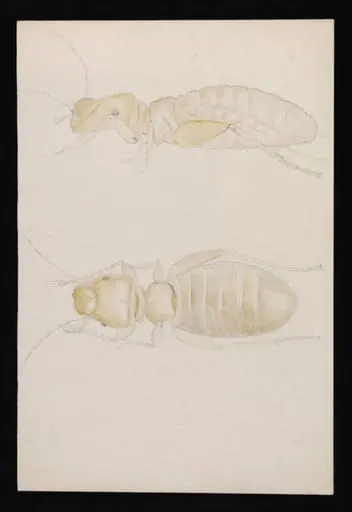 Views of an ant (highly magnified)
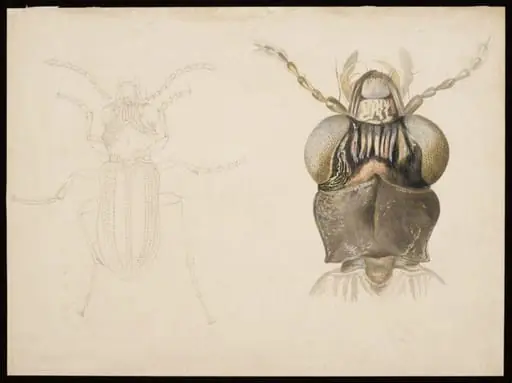 Magnified studies of a beetle (the ground beetle Notiophilus biguttatus?)
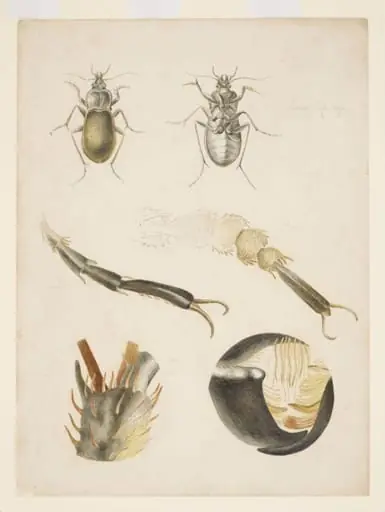 Magnified studies of a ground beetle
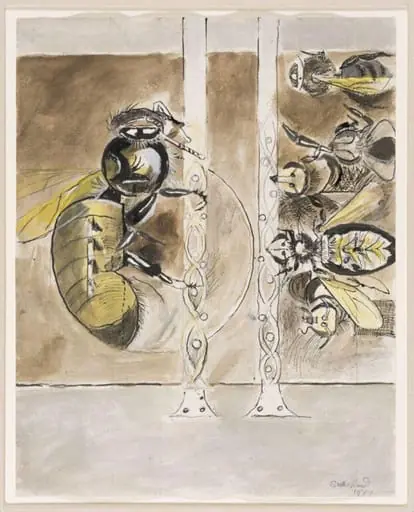 Bees: Separation of the Queen from the workers
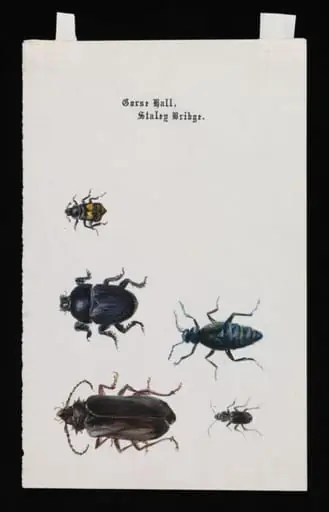 Five beetles
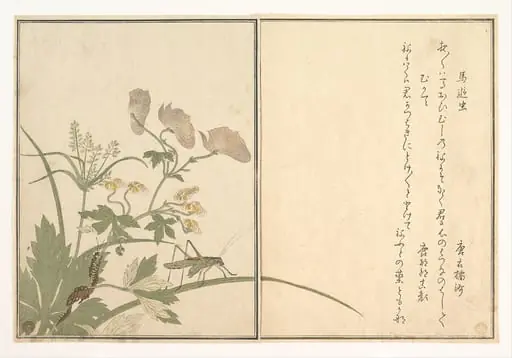 『画本虫撰』 「馬追虫」「むかて」|Katydid (Umaoi-mushi); Centipede, (Mukade), from the Picture Book of Crawling Creatures (Ehon mushi erami)
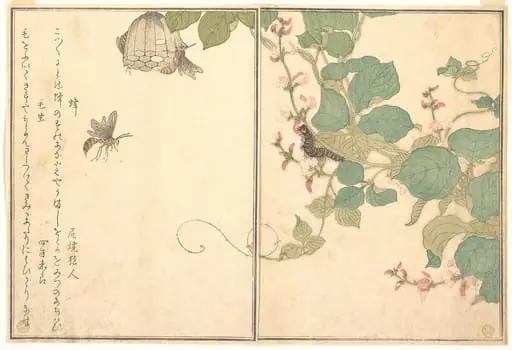 『画本虫撰』 「蜂」「毛虫」|Paper Wasp (Hachi); Hairy Caterpillar (Kemushi), from the Picture Book of Crawling Creatures (Ehon mushi erami)
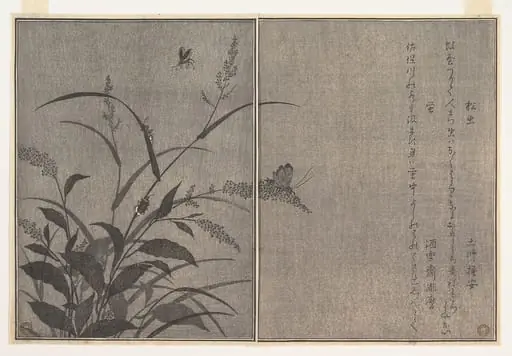 『画本虫撰』 「松虫」「虫蛍」|Tree cricket (Matsumushi); Firefly (Hotaru), from the Picture Book of Crawling Creatures (Ehon mushi erami)
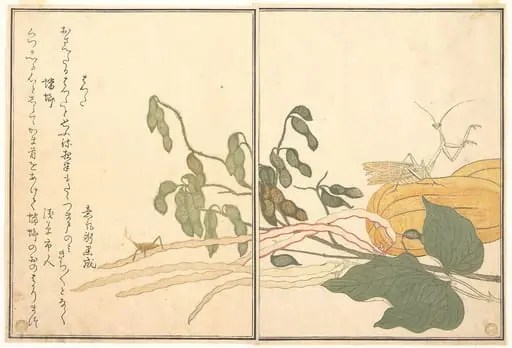 画本虫撰 バッタと蟷螂|Cone-headed Grasshopper or Locust, (batta); Praying Mantis (Tōrō or Kamakiri), from the Picture Book of Crawling Creatures (Ehon mushi erami)
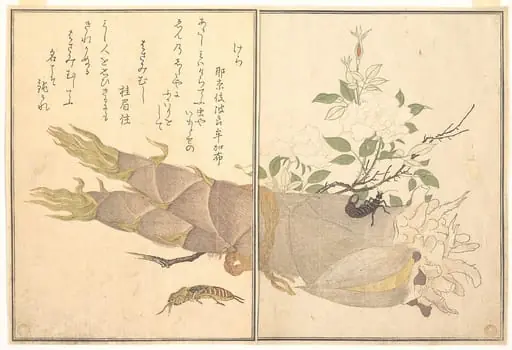 『画本虫撰』 「けら」「はさみむし」|Mole Cricket (Kera); Earwig, (Hasami-mushi), from the Picture Book of Crawling Creatures (Ehon mushi erami)
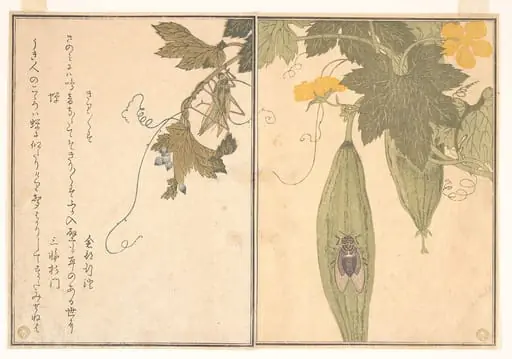 『画本虫撰』「きりきりす」「蝉」|Grasshopper (Kirigirisu); Cicada (Semi), from the Picture Book of Crawling Creatures (Ehon mushi erami)
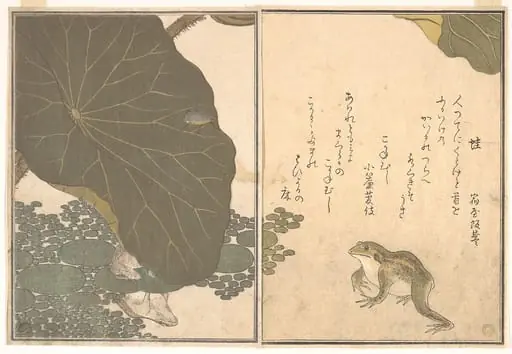 『画本虫撰』「蛙」「こかねむし」|Frog (Kaeru); Gold Beetle (Kogane mushi), from the Picture Book of Crawling Creatures (Ehon mushi erami)
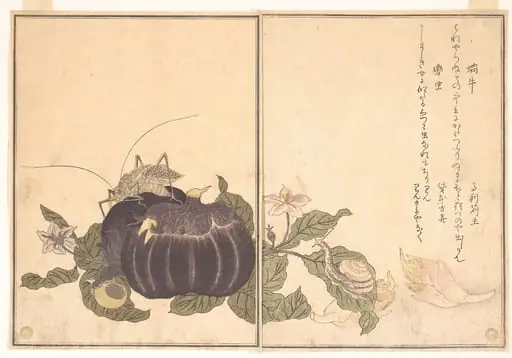 『画本虫撰』「蝸牛」「轡虫」|Land Snail (Katatsumuri); Giant Katydid (Kutsuwamushi), from the Picture Book of Crawling Creatures (Ehon mushi erami)
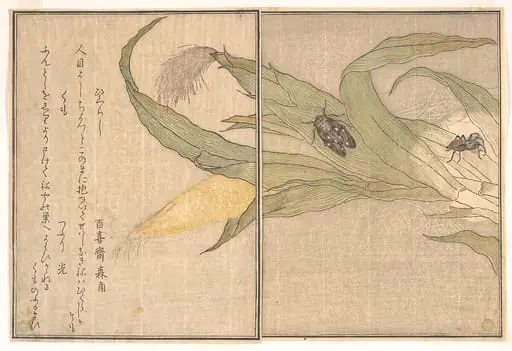 『画本虫撰』 「ひくらし」「くも」|Evening Cicada, Higurashi; Spider, Kumo, from the Picture Book of Crawling Creatures (Ehon mushi erami)
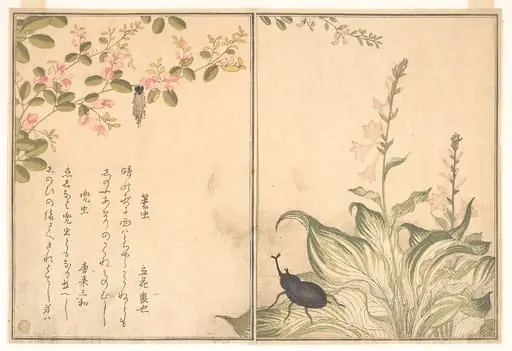 『画本虫撰』「蓑虫」「兜虫」|Bagworm (Minomushi); Horned Scarab Beetle (Kabutomushi), from the Picture Book of Crawling Creatures (Ehon mushi erami)
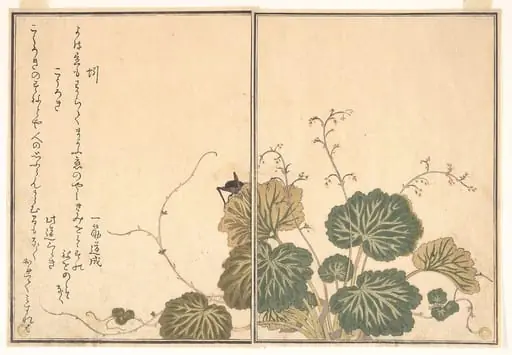 『画本虫撰』「蚓」「こうろき」|Earthworm (Mimizu); Cricket (Kōrogi), from the Picture Book of Crawling Creatures (Ehon mushi erami)
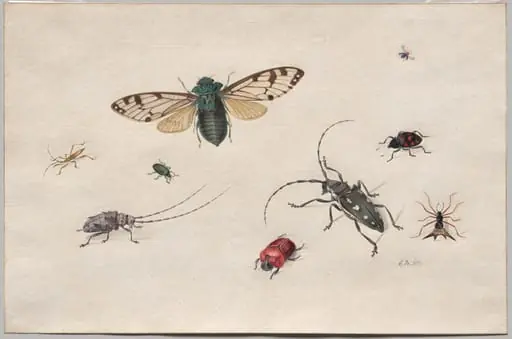 Studies of Insects
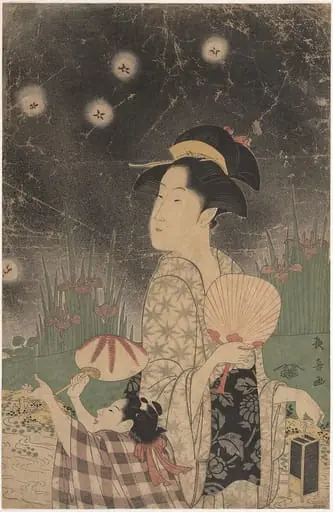 Untitled
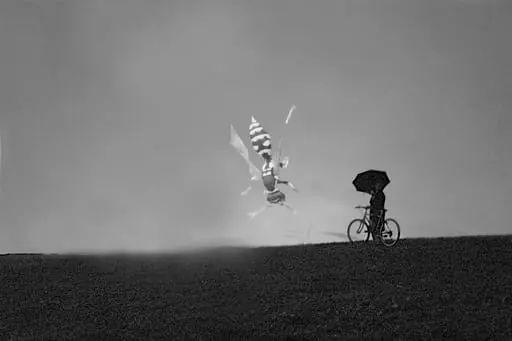 Άτιτλο
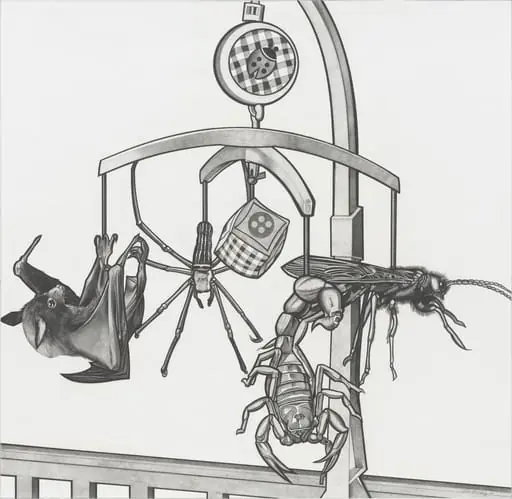 Untitled
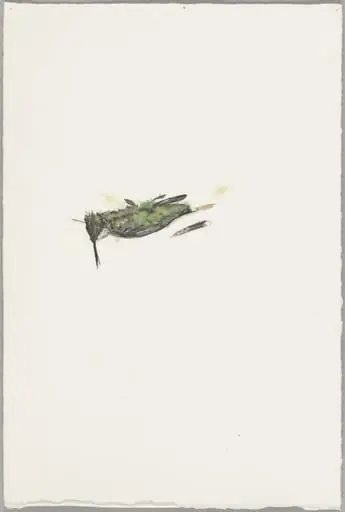 Untitled
![Archetypa studiaque patris Georgii Hoefnagelii [Part 2, Plate 3]](https://artifactworldgallery.com/img/jacob-hoefnagel--archetypa-studiaque-patris-georgii-hoefnagelii-part-2-plate--0c7044db502b4e3f-w320.webp) Archetypa studiaque patris Georgii Hoefnagelii [Part 2, Plate 3]
Archetypa studiaque patris Georgii Hoefnagelii [Part 2, Plate 3]![Archetypa studiaque patris Georgii Hoefnagelii [Part 3, Plate 6]](https://artifactworldgallery.com/img/jacob-hoefnagel--archetypa-studiaque-patris-georgii-hoefnagelii-part-3-plate--2a1dc3a37527462f-w320.webp) Archetypa studiaque patris Georgii Hoefnagelii [Part 3, Plate 6]
Archetypa studiaque patris Georgii Hoefnagelii [Part 3, Plate 6]![Archetypa studiaque patris Georgii Hoefnagelii [Part 1, Plate 12]](https://artifactworldgallery.com/img/jacob-hoefnagel--archetypa-studiaque-patris-georgii-hoefnagelii-part-1-plate--596fedde49c6143b-w320.webp) Archetypa studiaque patris Georgii Hoefnagelii [Part 1, Plate 12]
Archetypa studiaque patris Georgii Hoefnagelii [Part 1, Plate 12]![Archetypa studiaque patris Georgii Hoefnagelii [Part 2, Plate 1]](https://artifactworldgallery.com/img/jacob-hoefnagel--archetypa-studiaque-patris-georgii-hoefnagelii-part-2-plate--5b1a5bc70f5cefd1-w320.webp) Archetypa studiaque patris Georgii Hoefnagelii [Part 2, Plate 1]
Archetypa studiaque patris Georgii Hoefnagelii [Part 2, Plate 1]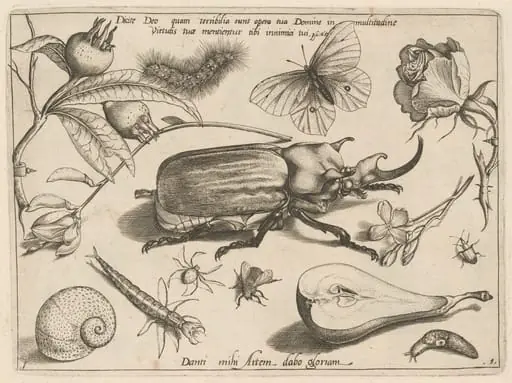 Part 1, Plate 1, from the series Archetypa studiaque (Archetypes and Studies)
![Archetypa studiaque patris Georgii Hoefnagelii [Part 2, Plate 9]](https://artifactworldgallery.com/img/jacob-hoefnagel--archetypa-studiaque-patris-georgii-hoefnagelii-part-2-plate--a2e616760d6b30f1-w320.webp) Archetypa studiaque patris Georgii Hoefnagelii [Part 2, Plate 9]
Archetypa studiaque patris Georgii Hoefnagelii [Part 2, Plate 9]![Archetypa studiaque patris Georgii Hoefnagelii [Part 1, Plate 6]](https://artifactworldgallery.com/img/jacob-hoefnagel--archetypa-studiaque-patris-georgii-hoefnagelii-part-1-plate--ae33a25cbf80b3bb-w320.webp) Archetypa studiaque patris Georgii Hoefnagelii [Part 1, Plate 6]
Archetypa studiaque patris Georgii Hoefnagelii [Part 1, Plate 6]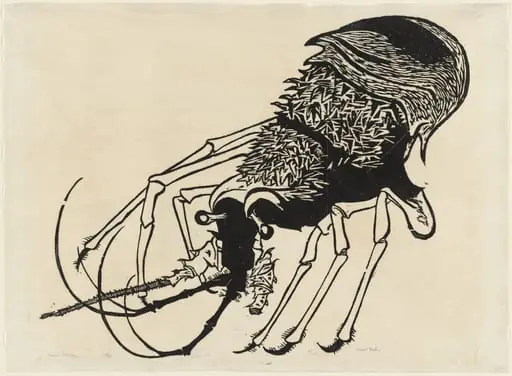 Untitled
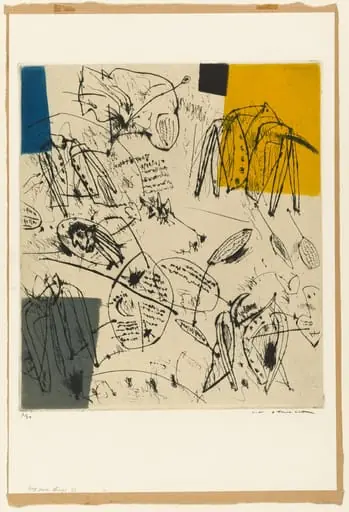 Untitled
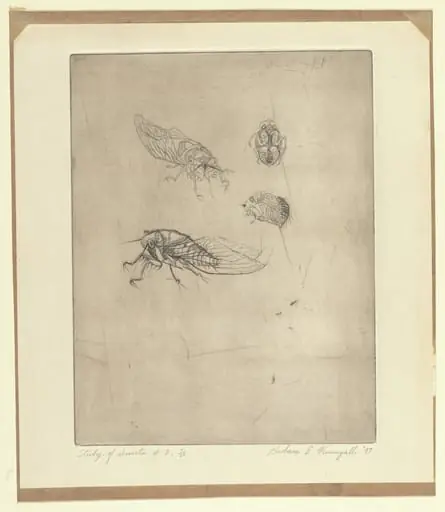 Untitled
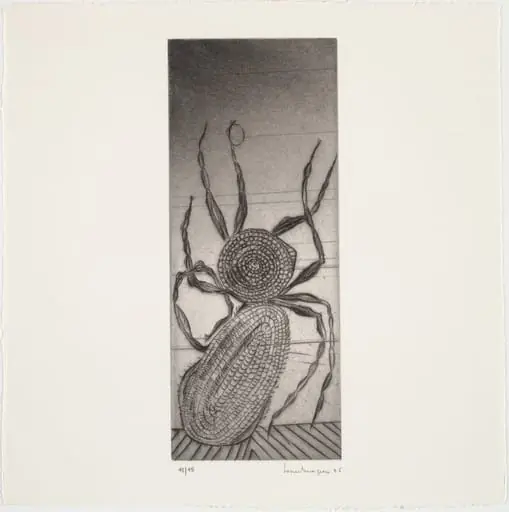 Untitled
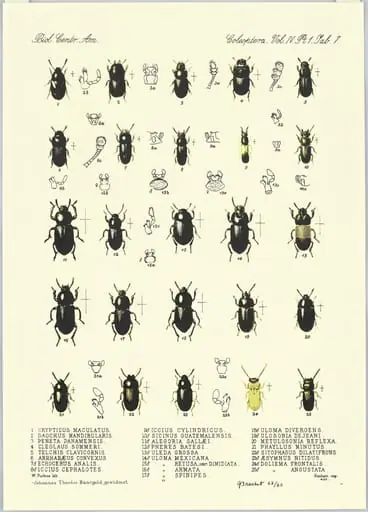 Untitled
Frequently asked questions
What is Insect?
Insects (from Latin insectum) are hexapod invertebrates of the class Insecta.
How many Insect works does Artifact World Gallery have?
Artifact World Gallery holds 125 public-domain Insect works, all free to view and download.
Who are the key Insect artists?
Key Insect artists in the collection include Peter Binoit, Osias Beert and Upper Rhenish Master.
Where can I see Insect works?
Insect works in the collection are held by National Gallery of Art, Metropolitan Museum of Art and Museum of Modern Art.