
Artist
Subject
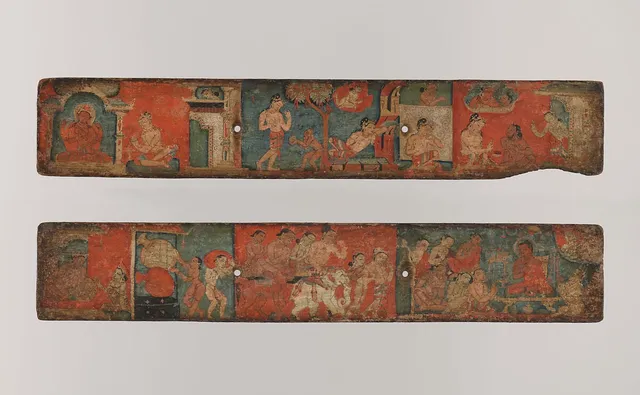
Nepal is a subject in art. The gallery holds 58 works in this subject in art, including works by Kitaharasa and Photoglob Co..
Although the term "Nepal" most often evokes the Hindu Gorkha monarchy that unified the country between 1768 and its abolition in 2008, in art history it names one of Asia's most influential sacred traditions, centred on the Kathmandu Valley and sustained for more than fifteen centuries by the Newar community. Its documented beginnings lie in the Licchavi period (c. 4th–9th century CE), the so-called golden age of classical Nepali art. The hilltop temple of Changu Narayan near Bhaktapur preserves a celebrated 5th-century stone Garuda and a pillar inscription dated 464 CE—among the oldest in the valley—while Licchavi carvers produced Hindu and Buddhist images in stone and metal that rivalled contemporary Indian work and set the iconographic standards for everything that followed.
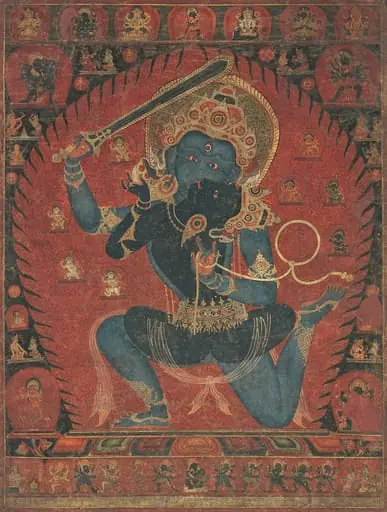
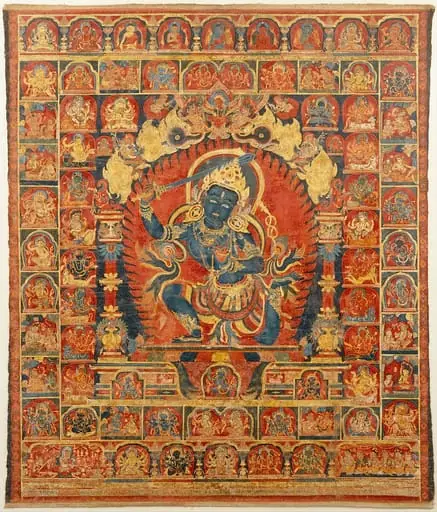
The tradition is defined by two great media. In metal, Newar artisans perfected the lost-wax (cire-perdue) casting of copper and bronze, finished with repoussé chasing, gem-set jewellery and lustrous mercury gilding; the early Malla period (c. 13th–15th century) is widely regarded as the apogee of this sensuous, technically dazzling sculpture. In paint, the cloth scrolls known as paubha—from the Sanskrit for "painting on cloth"—emerged by the 13th century, executed in hand-ground mineral pigments bound with hide glue and fusing Hindu and Vajrayana Buddhist imagery as aids to meditation. Crucially, Newar paubha predates and directly shaped the Tibetan thangka, with Nepali masters serving as teachers to Tibetan patrons for centuries.
The tradition's towering individual is Araniko (Arniko, 1245–1306), the Newar prodigy who entered Kublai Khan's Yuan court and in 1278 built the White Stupa (Dagoba) of Beijing's Miaoying Temple, carrying Nepali style into Chinese sacred architecture. Today the Metropolitan Museum of Art holds canonical Nepali gilt bronzes—a 13th-century Avalokiteshvara and 14th-century figures of Tara and Vajradhara—that exemplify the Patan workshops' refinement.
The lineage remains living rather than antiquarian. Lain Singh Bangdel (1919–2002), the first Nepali to train formally in Paris, is regarded as the father of modern Nepali art and a campaigner against the looting of sculpture, while Lok Chitrakar's Simrik Atelier has led a contemporary paubha revival, painting to exacting traditional dictates for collections and Buddhist sites worldwide.
Artist
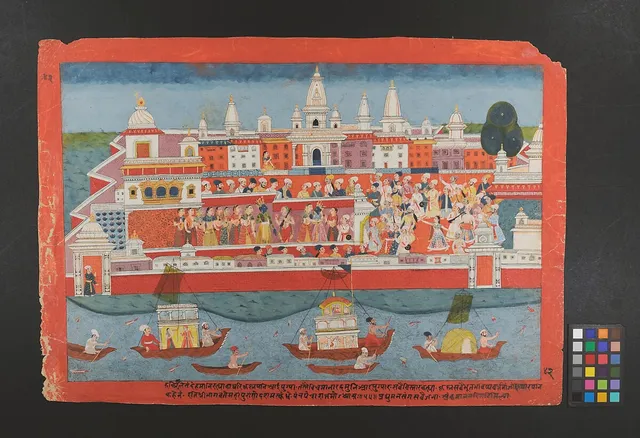
Nepal as a subject in art refers to the depiction of the Kingdom of Nepal, also known as the Gorkha Empire, a Hindu monarchy in South Asia that existed from 1768 to 2008. The kingdom was formed through the unification campaigns of King Prithvi Narayan Shah of the Shah dynasty, who expanded the Gorkha Kingdom into a sovereign state. The subject recurs in art because Nepal occupied a distinctive position at the intersection of Hindu and Buddhist cultural spheres, Himalayan geopolitics, and British colonial encounters, offering artists a rich visual repertoire of landscape, ceremony, and human drama across two and a half centuries of monarchical rule. The collection holds 130 works that depict Nepal, indicating sustained artistic interest in this Himalayan kingdom.
The iconography of Nepal in art draws upon multiple registers of meaning. As a Hindu kingdom, Nepal was represented through symbols of sacred kingship, including the Shah dynasty's claims of Rajput and Thakuri descent. The kingdom's alternative name, Asal Hindustan or True Land of the Hindus, underscores its self-presentation as a bastion of Hindu orthodoxy. The warrior identity of the Gorkhalis, with their famed battle cry invoking the goddess Kali, Gorakhnath, and Manakamana, provided martial iconography. Geographic features such as the Mechi and Sharda rivers, established as boundaries by the Treaty of Sugauli in 1816, served as cartographic markers of national territory. The Rana dynasty's hereditary prime ministership introduced imagery of courtly splendor and autocratic pageantry. Later periods brought iconography of democratic struggle, civil conflict, and republican transformation, as the monarchy was abolished on 28 May 2008.
The treatment of Nepal in art shifted considerably across movements and periods. In the late eighteenth and early nineteenth centuries, depictions emerged alongside European colonial expansion and the Anglo-Nepalese War of 1814-1816, when British artists and surveyors documented the Himalayan kingdom. The Rana period from 1843 to 1951 introduced a distinctive visual culture of court photography and architectural patronage, as the Rana dynasty modeled itself on European aristocracy while maintaining Nepalese ritual traditions. The 1950 democratic movement and King Tribhuvan's exile and return generated documentary and journalistic imagery. The 1990 constitutional monarchy and the subsequent Maoist insurgency of 1996-2006 brought representations of political conflict and social transformation. The final abolition of the monarchy in 2008 marked a definitive shift in how Nepal could be represented, from kingdom to federal republic.
The sources do not identify specific named artists or individual canonical works depicting Nepal beyond the collection's 130 untitled pieces. The historical record suggests that notable depictions would include British colonial documentation of the Gurkha War and the Treaty of Sugauli negotiations, Rana-era court photography and portraiture from the mid-nineteenth century onward, and photojournalistic coverage of the 1950 political crisis, the 1990 democracy movement, and the 2006 peace process. The massacre in the Nepalese royal palace in 2001 and the final transition to republic in 2008 would have generated significant visual documentation. However, specific artists and works are not named in the available sources.
The legacy of Nepal as an artistic subject extends beyond the 2008 abolition of the monarchy. As the only country in the world with Hinduism as a state religion until that point, Nepal's visual culture carried unique religious and political resonances that transformed with secularization. The 240-year duration of the kingdom, from 1768 to 2008, created an extensive archive of images that now serve historical and ethnographic purposes. The collection's 130 works contribute to this documentary heritage. The transition to the Federal Democratic Republic of democratized the representation of Nepal, though the earlier monarchical imagery retains significance for understanding Himalayan statecraft, British colonial encounter, and the visual cultures of South Asian modernity.
 Untitled
 Untitled
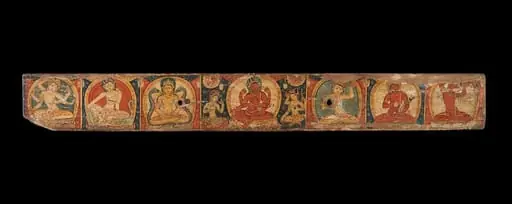 Untitled
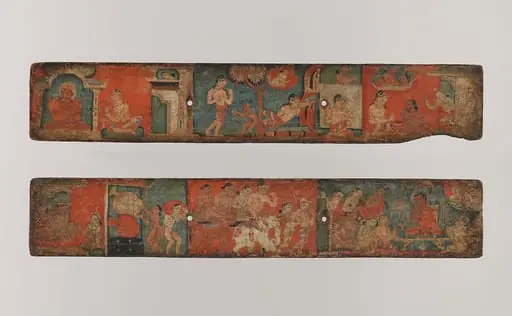 Untitled
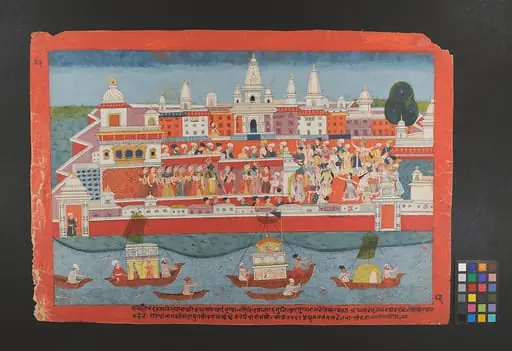 Untitled
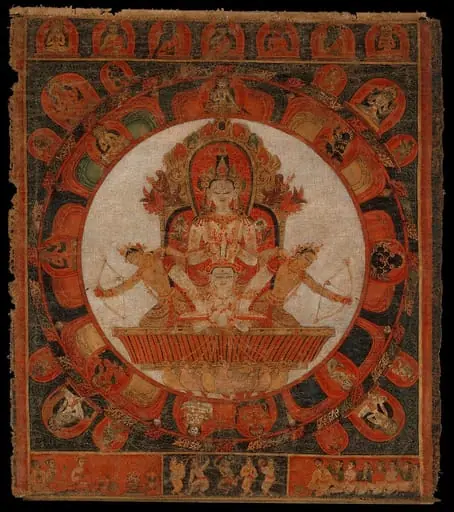 Untitled
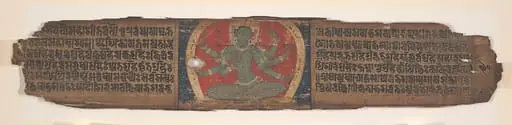 Untitled
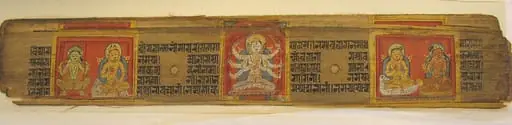 Untitled
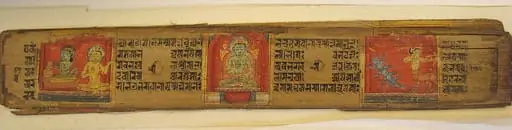 Untitled
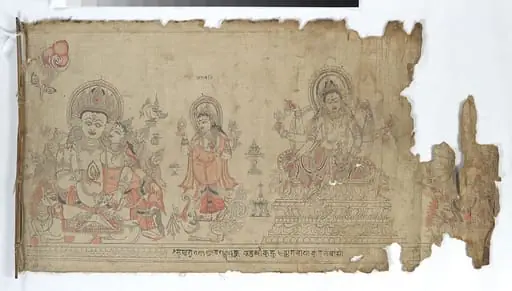 Untitled
 Untitled
 Untitled
 Untitled
 Untitled
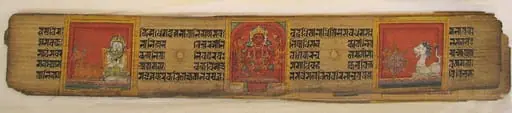 Untitled
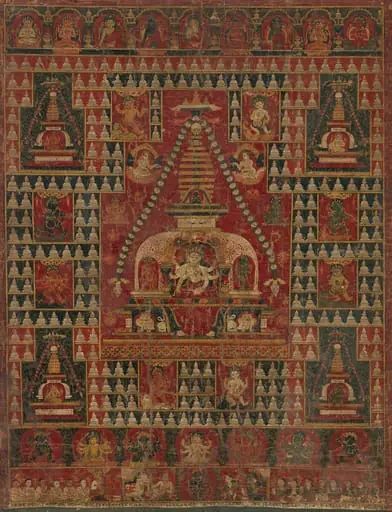 Untitled
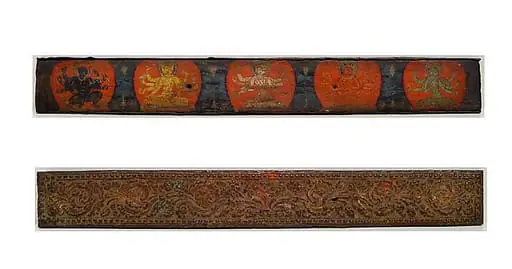 Untitled
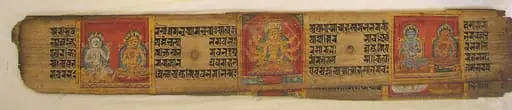 Untitled
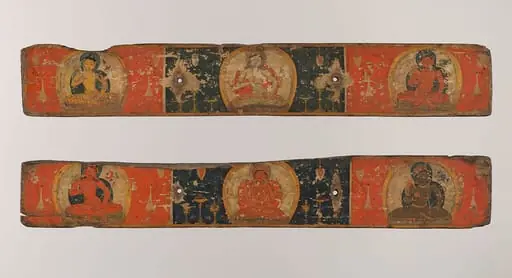 Untitled
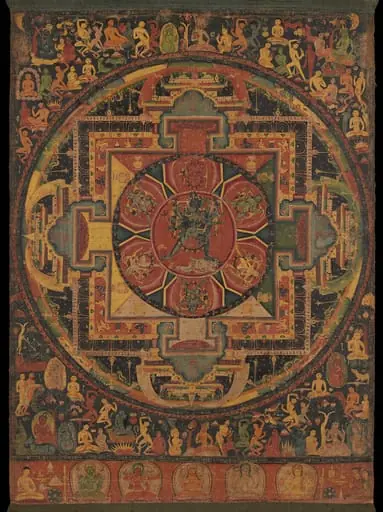 Untitled
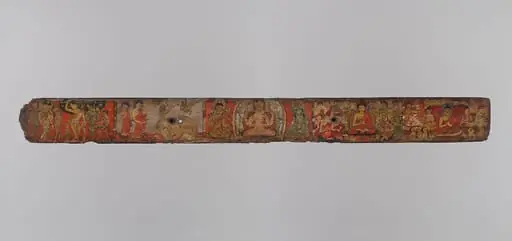 Untitled
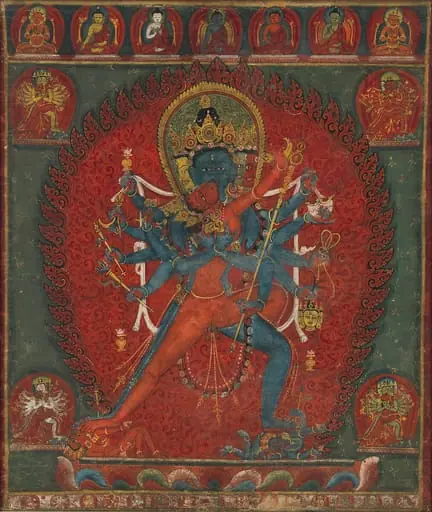 Untitled
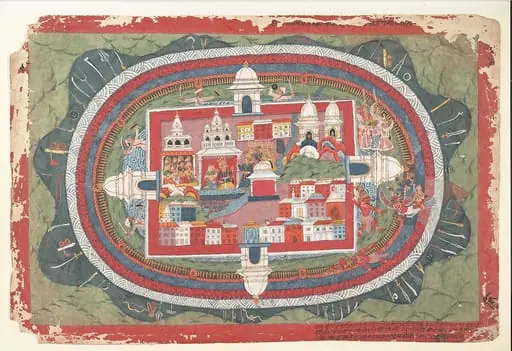 Untitled
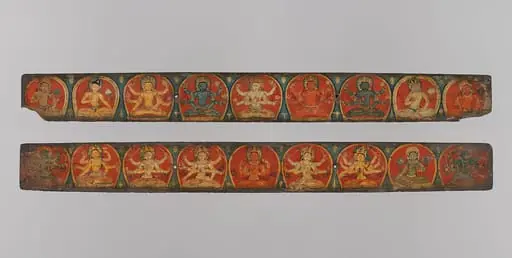 Untitled
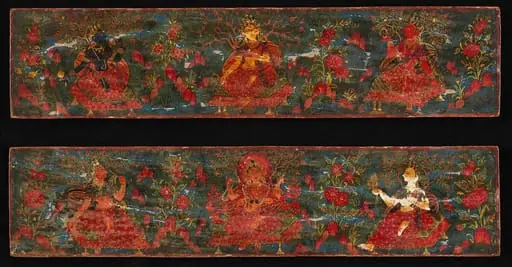 Untitled
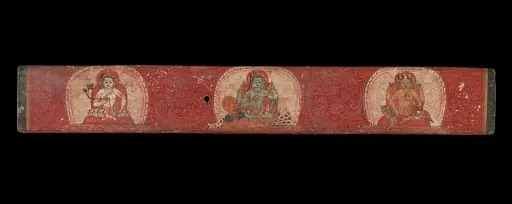 Untitled
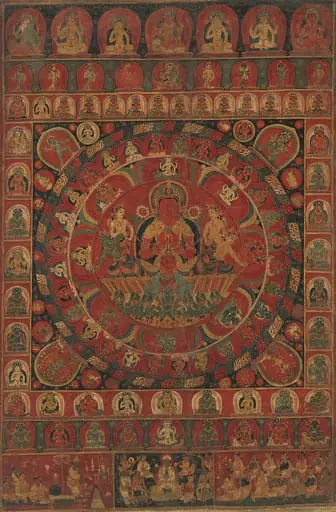 Untitled
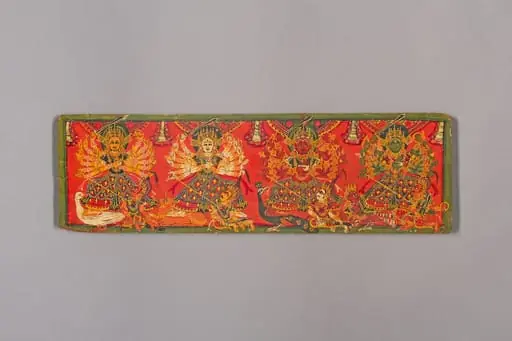 Untitled
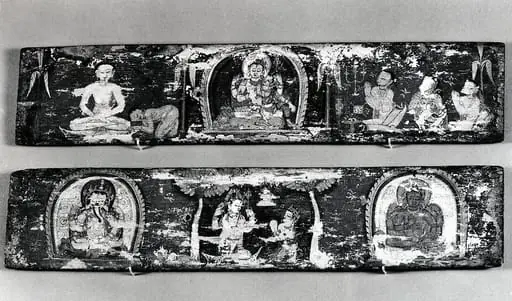 Untitled
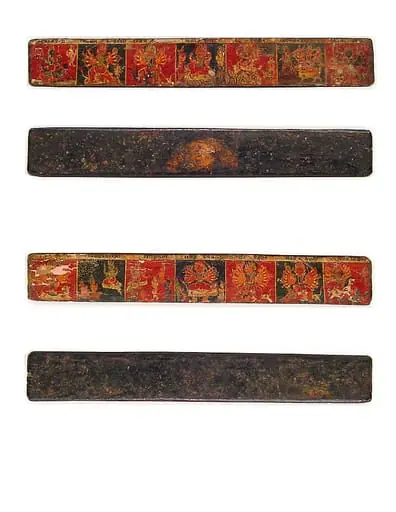 Untitled
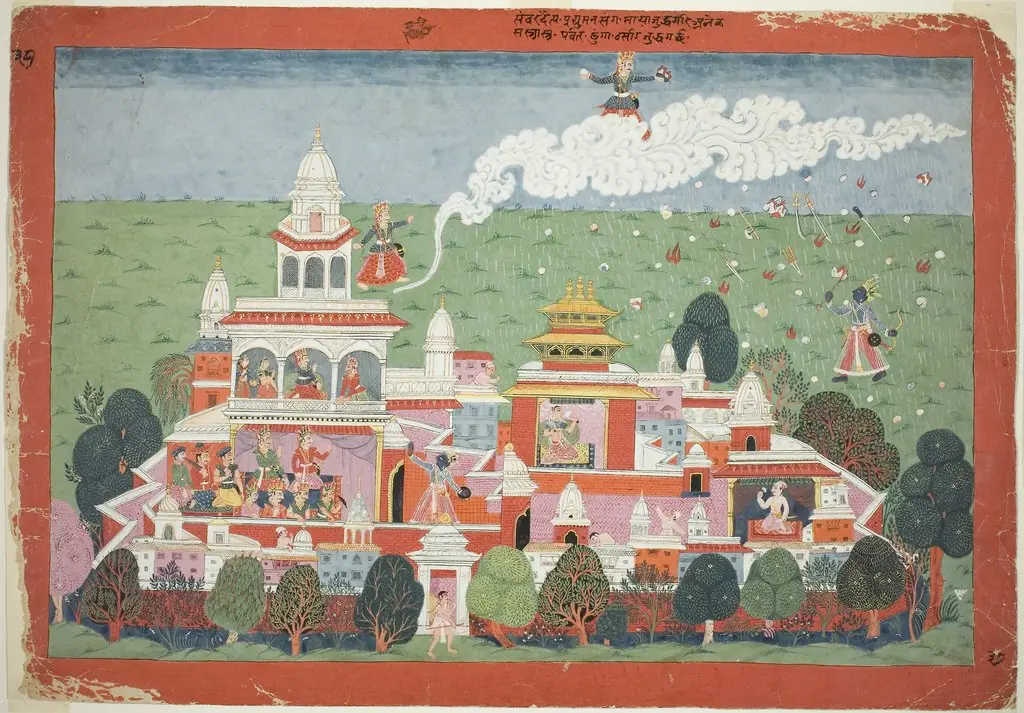 Pradyumna Enters the Palace of the Demon Sambar and Challenges him to Battle, page from a manuscript of the Bhagavata Purana
 Text, folio 115 (verso) from a Gandavyuha-sutra (Manuscript of the Supreme Array)
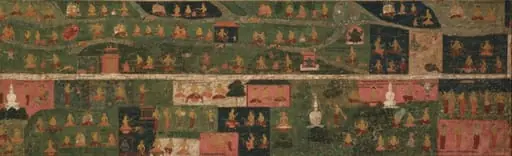 Temple Banner with pilgrimage sites and scenes from the "Svayambhu-purana" (Ancient Text of the Primordial Buddha)
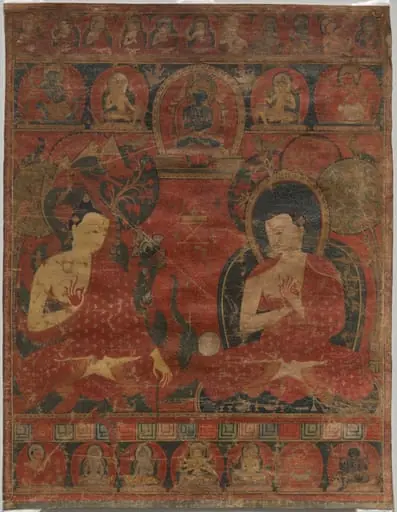 Nagarjuna (c. 150–250 CE) with a Buddhist Master
 Text, folio 22 (verso) from a Gandavyuha-sutra (Scripture of the Supreme Array)
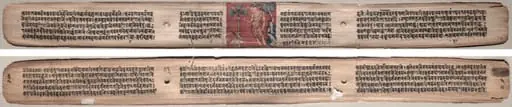 Folio 73 from a Gandavyuha-sutra (Scripture of the Supreme Array): Sudhana and an antelope (recto); text (verso)
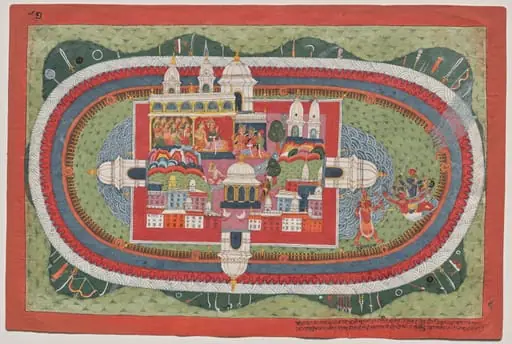 Krishna and Satyabhama Storm the Citadel of Naraka, folio 97 from a Bhagavata Purana
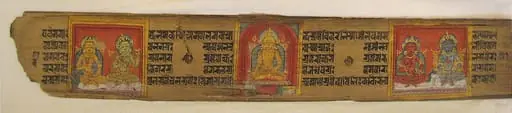
 Text, folio 37 (verso) from a Gandavyuha-sutra (Scripture of the Supreme Array)
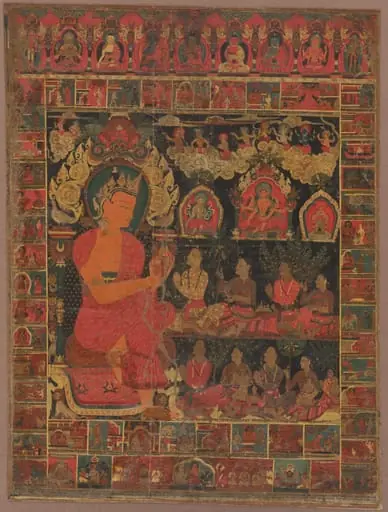 Bejeweled Buddha Preaching
 Text, folio 94 (verso) from a Gandavyuha-sutra (Scripture of the Supreme Array)
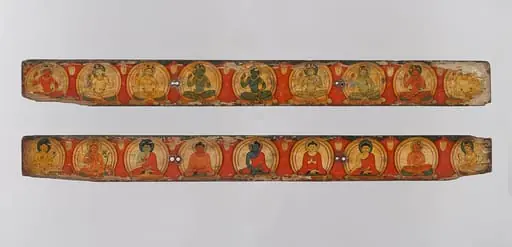
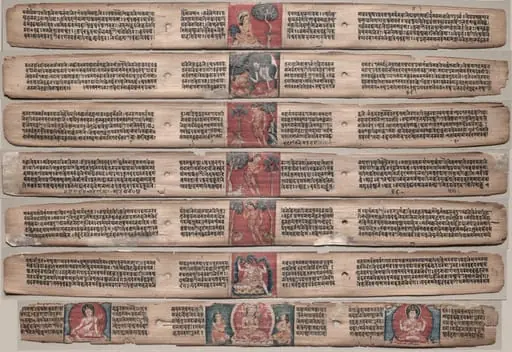 Seven Leaves from a Manuscript of the Gandavyuha-sutra (Scripture of the Supreme Array)
 Text, folio 20 (verso) from a Gandavyuha-sutra (Scripture of the Supreme Array)
 Sudhana and the rishi Bhishmottaranirgosha, folio 94 (recto) from a Gandavyuha-sutra (Scripture of the Supreme Array)
 Bodhisattva Manjushri with two forms of Avalokiteshvara, folio 348 (recto) from a Gandavyuha-sutra (Scripture of the Supreme Array)
 Text, folio 73 (verso) from a Gandavyuha-sutra (Scripture of the Supreme Array)
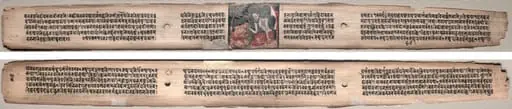 Folio 94 from a Gandavyuha-sutra (Scripture of the Supreme Array): Sudhana and the rishi Bhishmottaranirgosha (recto); text (verso)
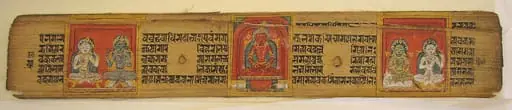
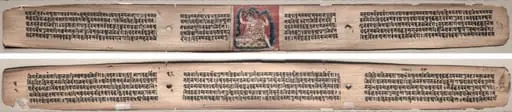 Folio 22 from a Gandavyuha-sutra (Scripture of the Supreme Array): Samantabhadra spinning clouds of things (recto); Text (verso)
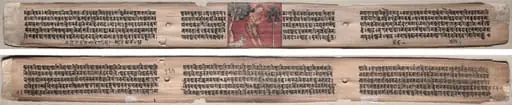 Folio 115 from a Gandavyuha-sutra (Scripture of the Supreme Array): Sudhana and a buffalo (recto); text (verso)
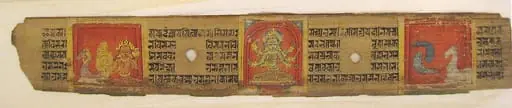
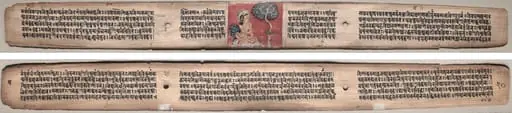 Folio 20 from a Gandavyuha-sutra (Scripture of the Supreme Array): Sudhana and a parrot (recto); Text (verso)
 Bodhisattva Samantabhadra purifies the path to enlightenment, with Manjushri, folio 348 (verso) from a Gandavyuha-sutra (Scripture of the Supreme Array)
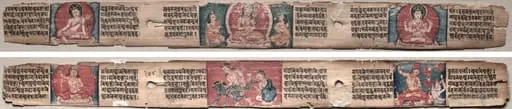 Folio 348 from a Gandavyuha-sutra (Scripture of the Supreme Array): Bodhisattva Manjushri with two forms of Avalokiteshvara (recto); Bodhisattva Samantabhadra purifies the path to enlightenment, with Manjushri (verso)
 Samantabhadra spinning clouds of things, folio 22 (recto) from a Gandavyuha-sutra (Scripture of the Supreme Array)
 Sudhana and a buffalo, folio 115 (recto) from a Gandavyuha-sutra (Scripture of the Supreme Array)
 Sudhana and an antelope, folio 73 (recto) from a Gandavyuha-sutra (Scripture of the Supreme Array)
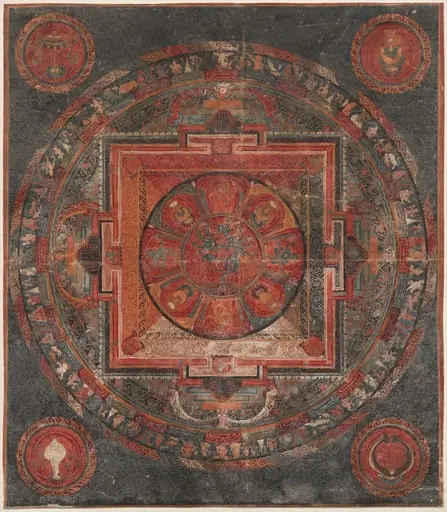 Mandala of Chakrasamvara and Vajravarahi
 Sudhana and a pair of antelopes, folio 37 (recto) from a Gandavyuha-sutra (Scripture of the Supreme Array)
 Sudhana and a parrot, folio 20 (recto) from a Gandavyuha-sutra (Scripture of the Supreme Array)
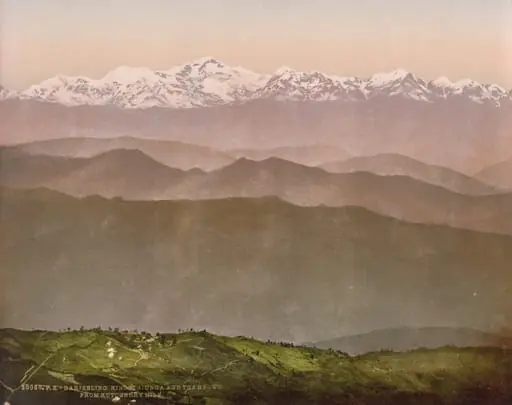 Darjeeling. Kinchinjunga and the Snows from Kutcherry Hill
Nepal is a subject in art. The Kingdom of Nepal (Nepali: नेपाल अधिराज्य), also known as the Gorkha Empire (Nepali: गोरखा अधिराज्य).
Artifact World Gallery holds 58 public-domain Nepal works, all free to view and download.
Key Nepal artists in the collection include Kitaharasa and Photoglob Co..
Nepal works in the collection are held by Metropolitan Museum of Art, Cleveland Museum of Art and Art Institute of Chicago.
Your cart is empty
Browse artworks →