Subject
Visitation
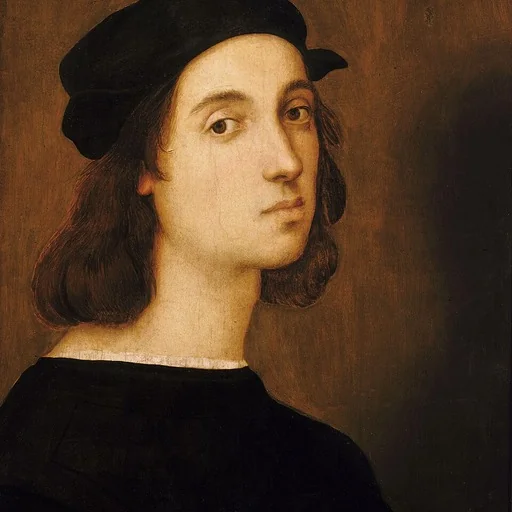
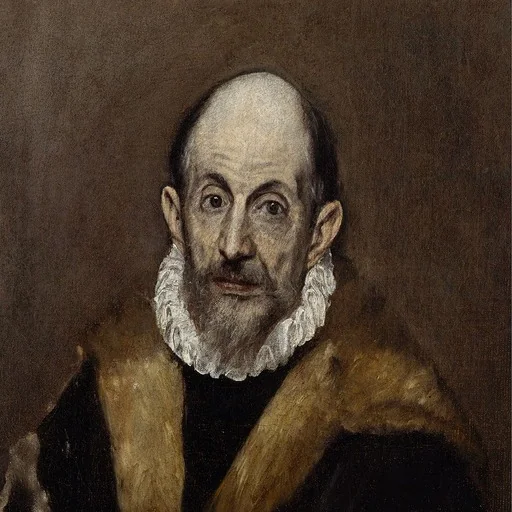
Visitation is a subject in art. The gallery holds 200 works in this subject in art, including works by Raphael, El Greco and Rembrandt van Rijn.
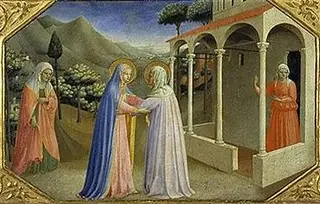
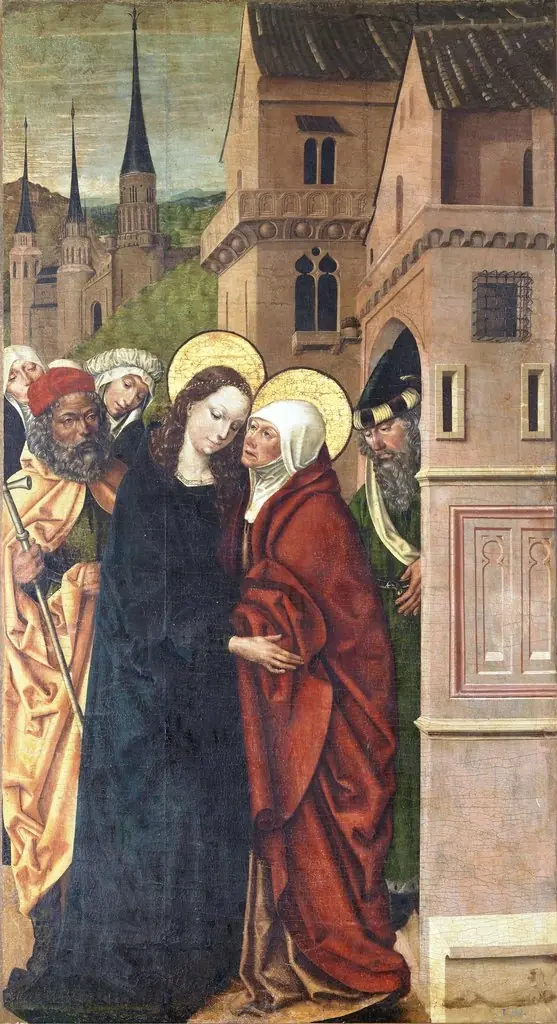
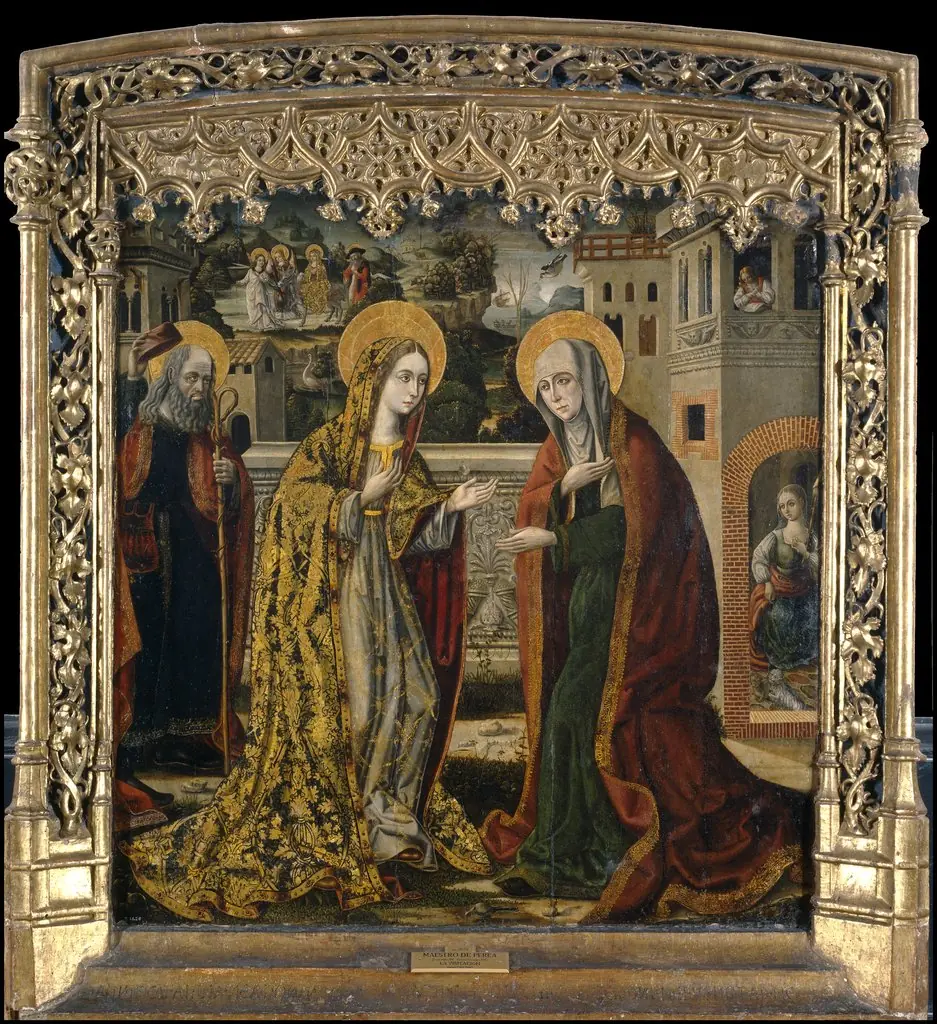
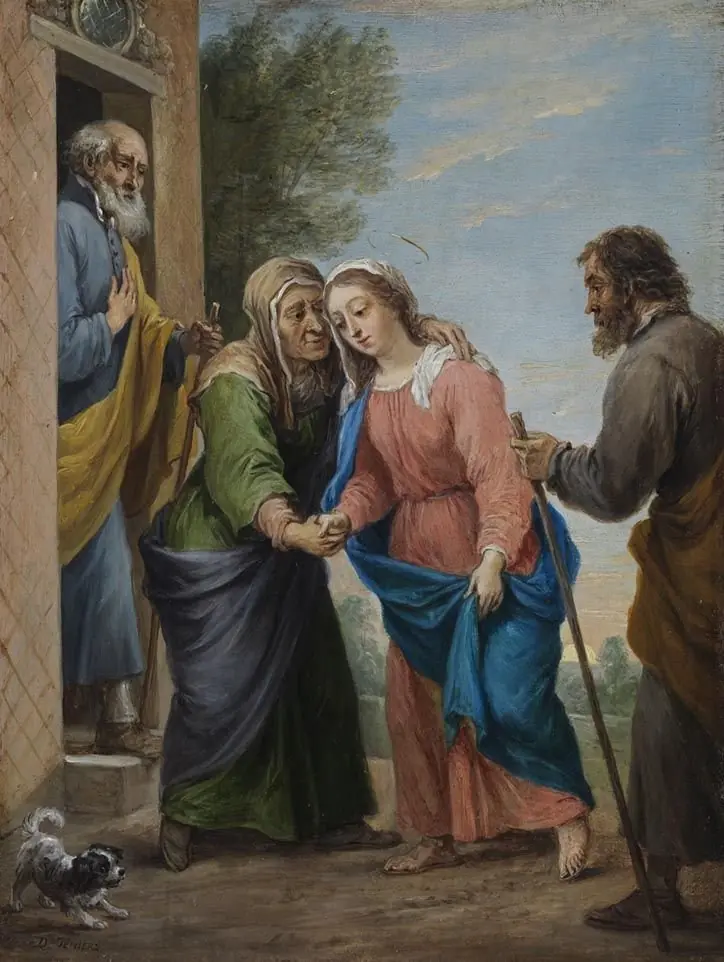
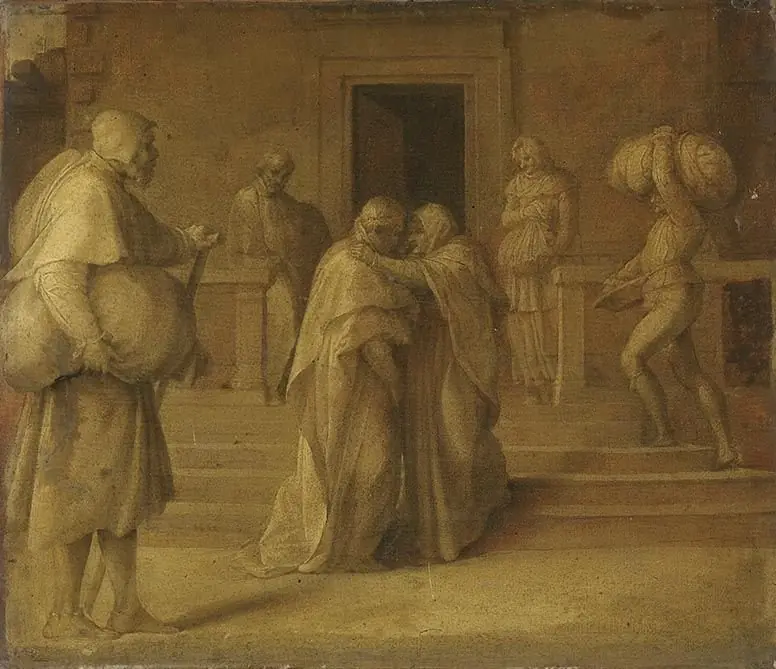
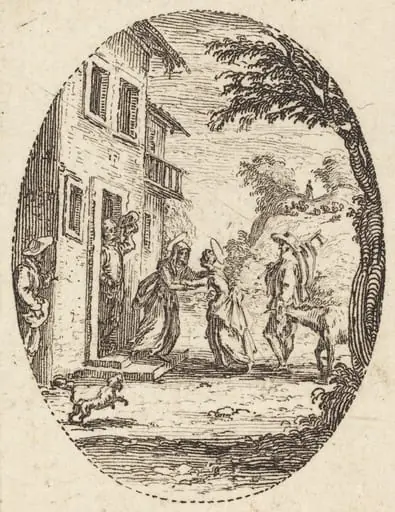
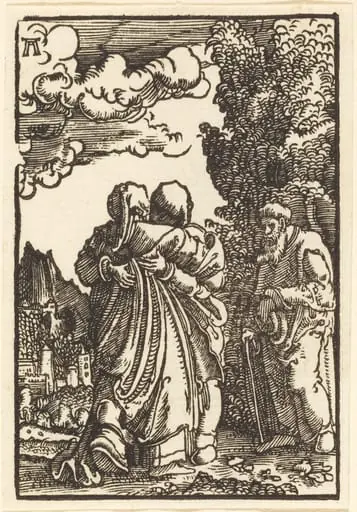
In Christianity, the Visitation, also known as the Visitation of the Blessed Virgin Mary, refers to the visit of Mary, who was pregnant with Jesus, to Elizabeth, who was pregnant with John the Baptist, in the Gospel of Luke, Luke 1:39–56. The episode is one of the standard scenes shown in cycles of the Life of the Virgin in art, and sometimes in larger cycles of the Life of Christ in art.
Key artists


Overview
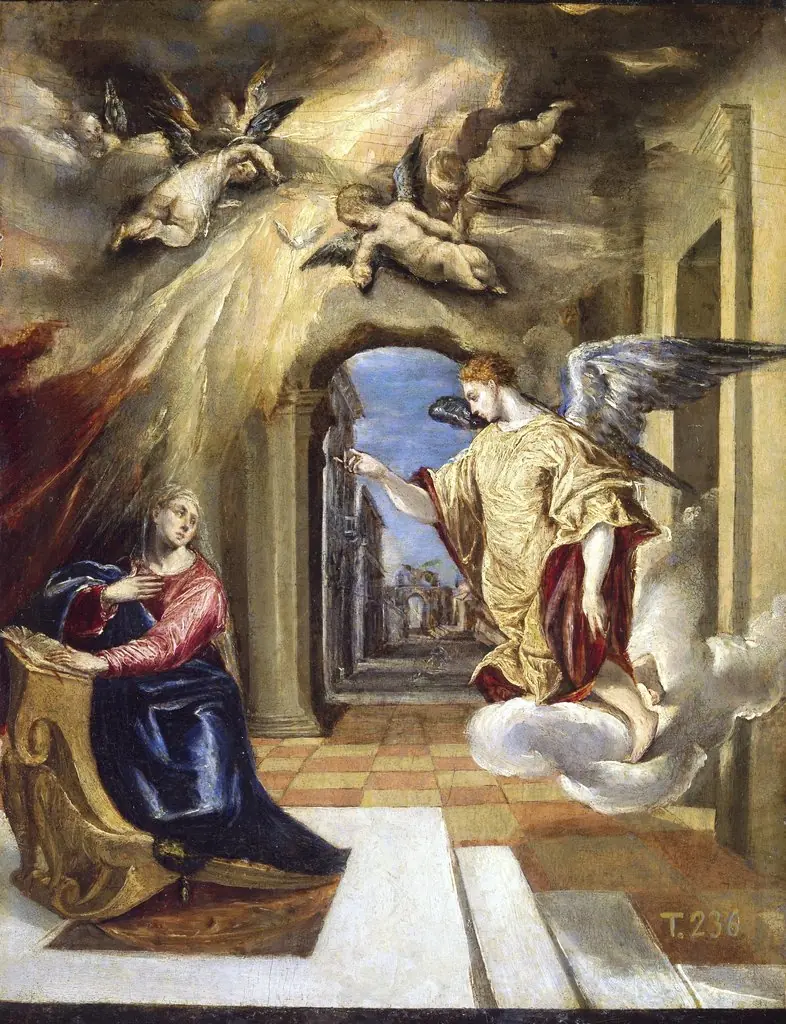
The Visitation refers to the biblical episode in which Mary, pregnant with Jesus, visits her relative Elizabeth, who is pregnant with John the Baptist. Recorded only in the Gospel of Luke (1:39-56), the event describes Mary traveling from Nazareth to a city in the hill country of Judah, possibly Hebron or Ein Karem, shortly after the Annunciation. Upon hearing Mary's greeting, Elizabeth is filled with the Holy Ghost, and the unborn John leaps in her womb. Elizabeth proclaims Mary blessed among women, and Mary responds with the Magnificat, her song of praise. Mary remains with Elizabeth for about three months. The episode is a standard scene in cycles of the Life of the Virgin and sometimes in larger cycles of the Life of Christ, depicted in 262 works in the collection.
Iconography & meaning
The iconography of the Visitation centers on the meeting of the two pregnant women, symbolizing the recognition of Jesus by John the Baptist even before their births. Elizabeth's greeting, "Blessed art thou among women, and blessed is the fruit of thy womb," forms the second part of the Hail Mary prayer, connecting the scene directly to Catholic devotional practices like the Rosary and the Angelus. The Visitation is the second Joyful Mystery of the Rosary. The scene also emphasizes Mary's proclamation of the Magnificat, which highlights the connection between faith and hope. In art, the motif is sometimes paired with the Annunciation to form a continuous narrative of Mary's early motherhood.
Across movements & periods
The feast of the Visitation provides a framework for understanding the subject's liturgical and artistic evolution. Established for the Franciscan order by Bonaventure in 1263, the feast spread rapidly through the Western Church, prompting increased artistic demand. Pope Urban VI extended it to the entire Roman Catholic Church in 1389. The Council of Basel confirmed the feast in 1441. Originally celebrated on July 2 in the West, the 1969 Roman calendar revision moved the feast to May 31 to better align with the biblical chronology between the Annunciation (March 25) and the Nativity of John the Baptist (June 24). Eastern Orthodox celebration of the feast is relatively recent, dating to the 19th century, typically observed on March 30. Regional variations persist, such as in Germany and Slovakia, where July 2 is retained due to deep local traditions.
Notable depictions
Notable depictions of the Visitation span centuries and regions. Early examples include Giotto's 1310 fresco in the Basilica of Saint Francis of Assisi. Early Netherlandish and Renaissance treatments include Jacques Daret's 1435 altarpiece with a donor portrait, the Master of Segorbe's 1460-70 retable, and works by Perugino (1472-73) and Domenico Ghirlandaio (1491). Albrecht Durer produced a woodcut of the subject in 1503, the same year Mariotto Albertinelli painted his Visitation for the Congregation of San Martino in Florence. High Renaissance interpretations include Raphael's 1517 painting and Sebastiano del Piombo's circa 1519 work. Mannerist examples include Jacopo Pontormo's circa 1528 Visitation of Carmignano and Francesco Salviati's 1538 fresco in Rome. Later depictions include Lorenzo Bregno's 1565 bas-relief in Treviso Cathedral, and 18th-century paintings by Noel Nicolas Coypel, as well as Francois-Edouard Meloche's 1881-82 work in Champlain.
Legacy
The Visitation has exerted a lasting influence beyond painting and sculpture, deeply shaping Christian liturgy, music, and religious orders. The episode gave its name to the Order of the Visitation (Ordo Visitatio Mariae), founded in 1610 by Francis de Sales and Jeanne de Chantal. In music, the feast day inspired Johann Sebastian Bach's cantatas, including Herz und Mund und Tat und Leben (BWV 147) in 1723 and Meine Seel erhebt den Herren (BWV 10) in 1724, as well as his Latin Magnificat. Johann Eccard composed a choral piece for the feast, and the folk song Maria durch ein Dornwald ging, which merges the biblical journey with a legendary motif of a blooming thorn forest, became a popular Advent hymn in the 20th century. The subject also became the patronal feast for guides in certain scouting organizations, such as the Scouts unitaires de France.
Works
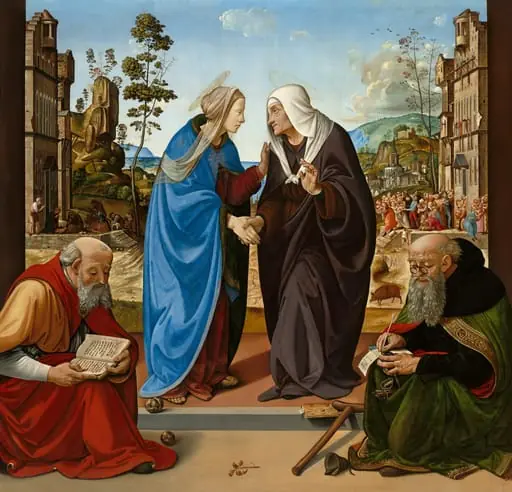 The Visitation with Saint Nicholas and Saint Anthony Abbot
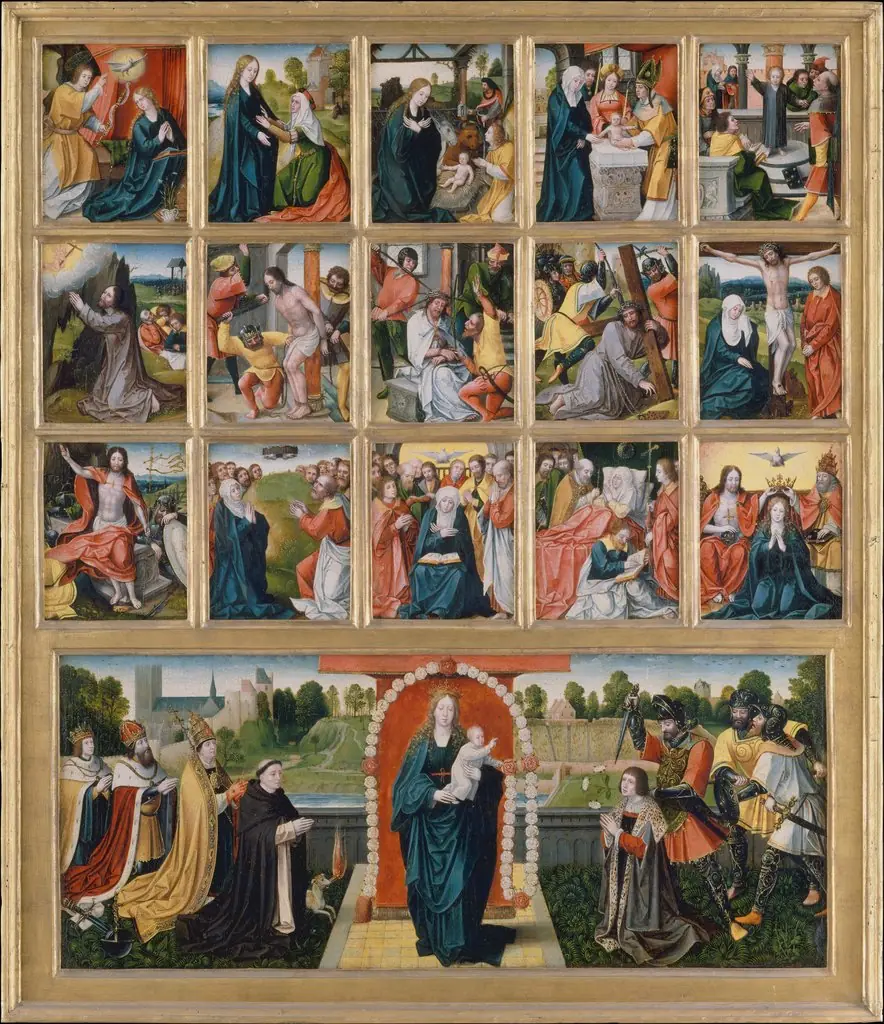 The Fifteen Mysteries and the Virgin of the Rosary
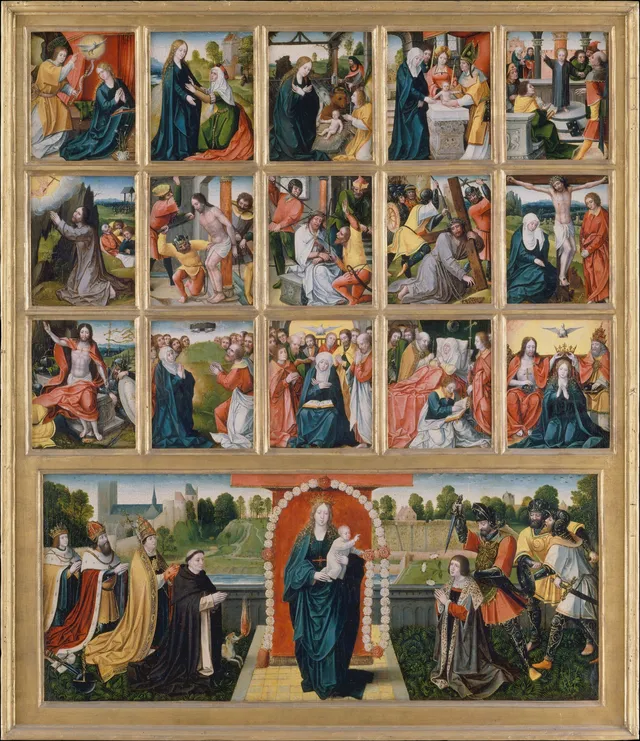
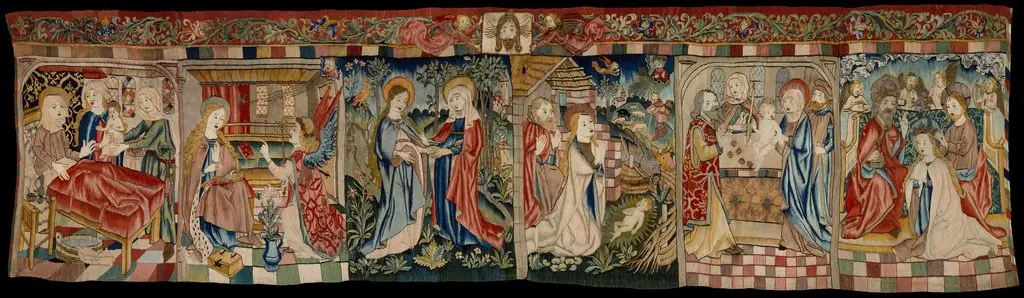 Scenes from the Life of the Virgin
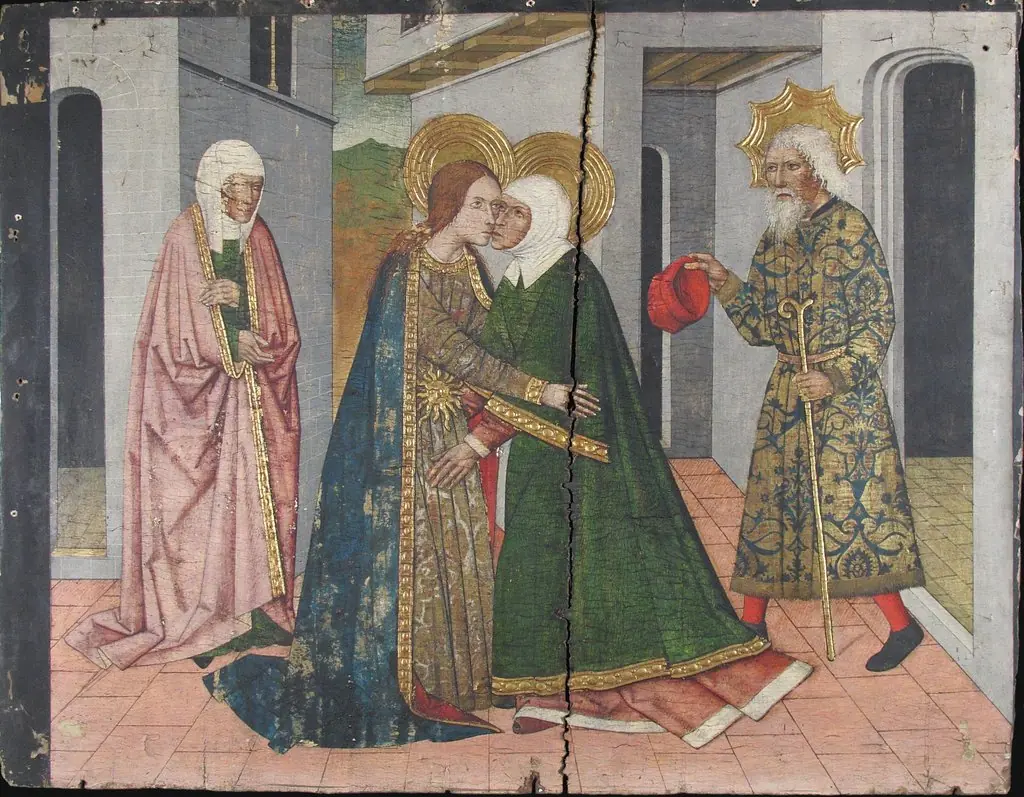 The Visitation Panel from Saint John Retable
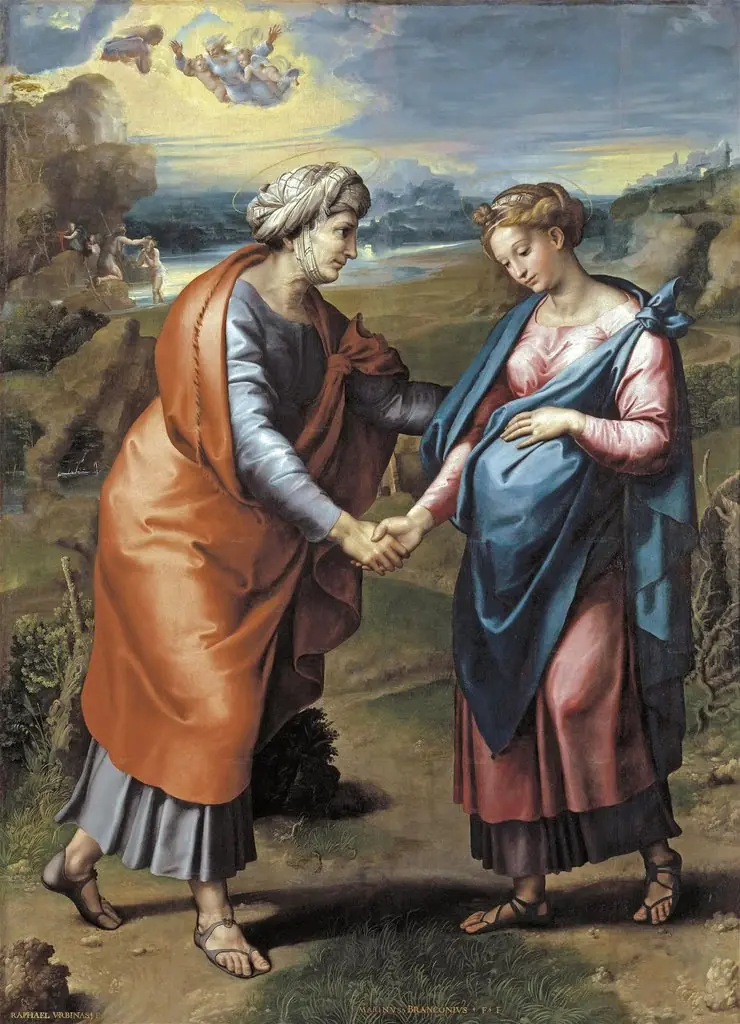 Visitation
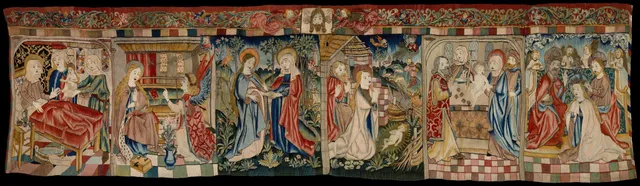
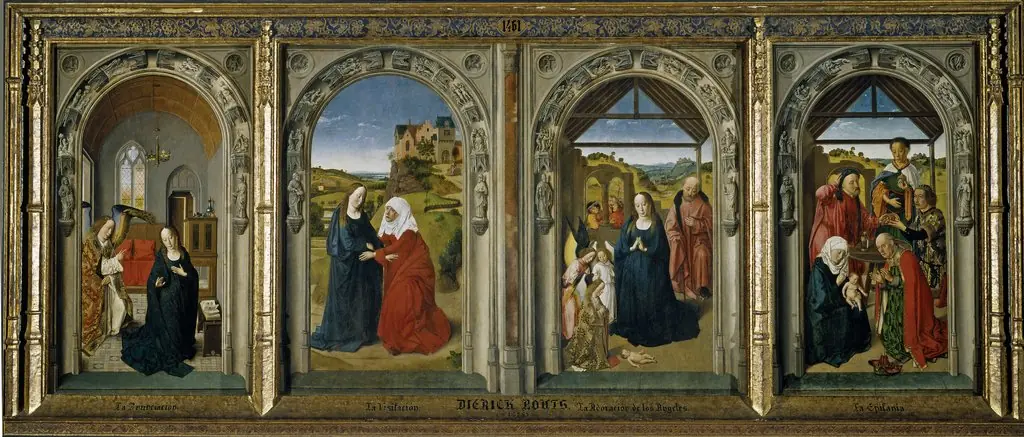 Triptych with Scenes from the Life of the Virgin
 The Presentation and Marriage of the Virgin, and the Annunciation
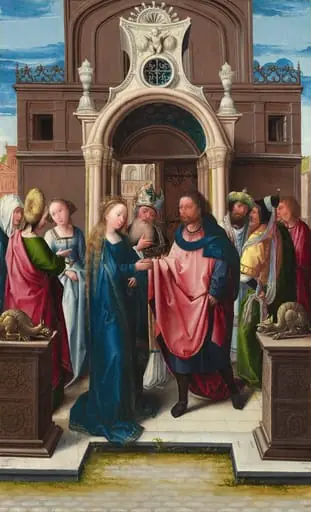 The Marriage of the Virgin
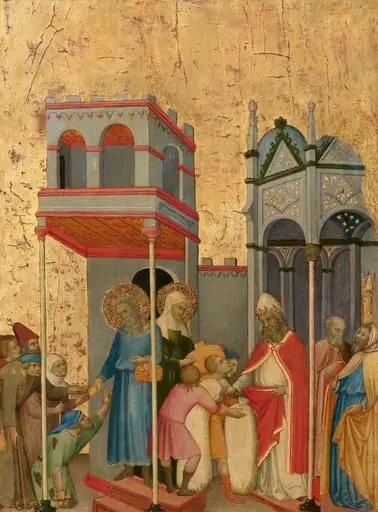 Joachim and Anna Giving Food to the Poor and Offerings to the Temple
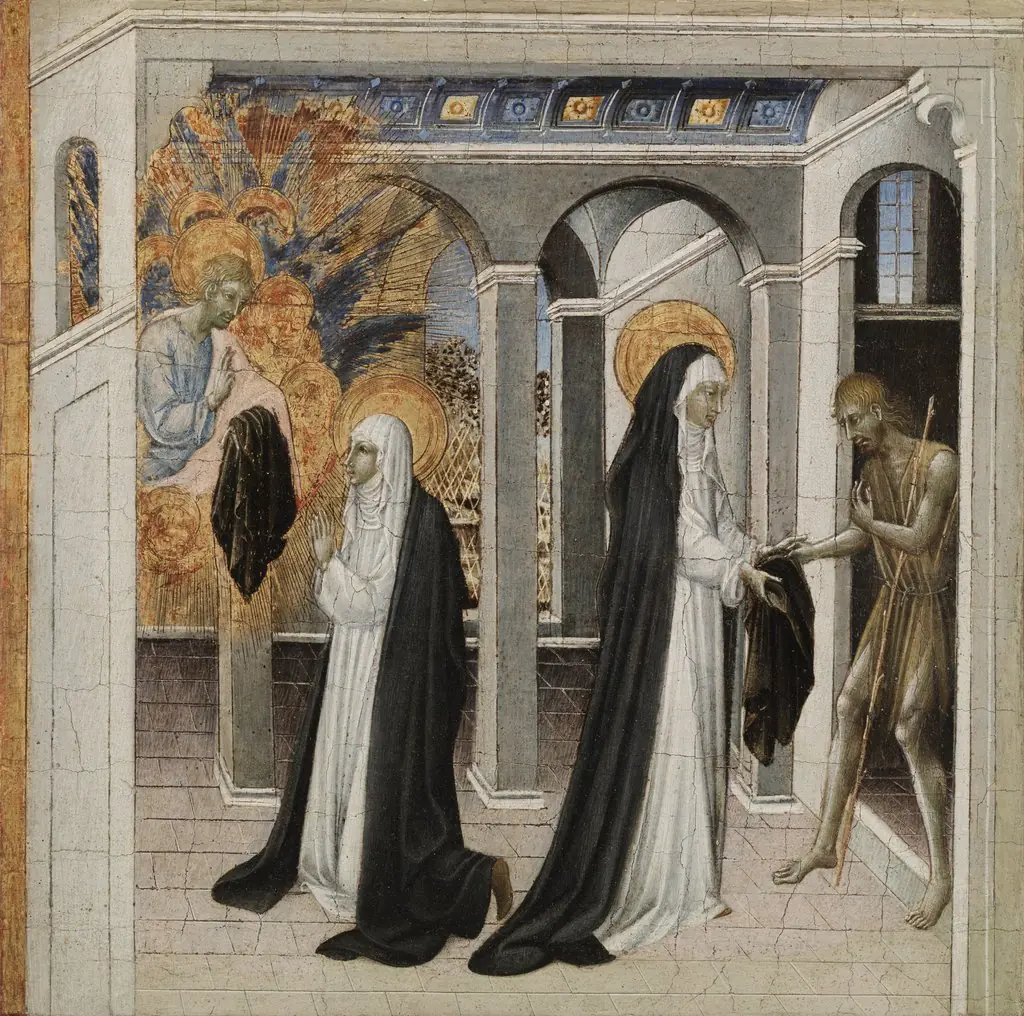 St. Catherine of Siena and the Beggar
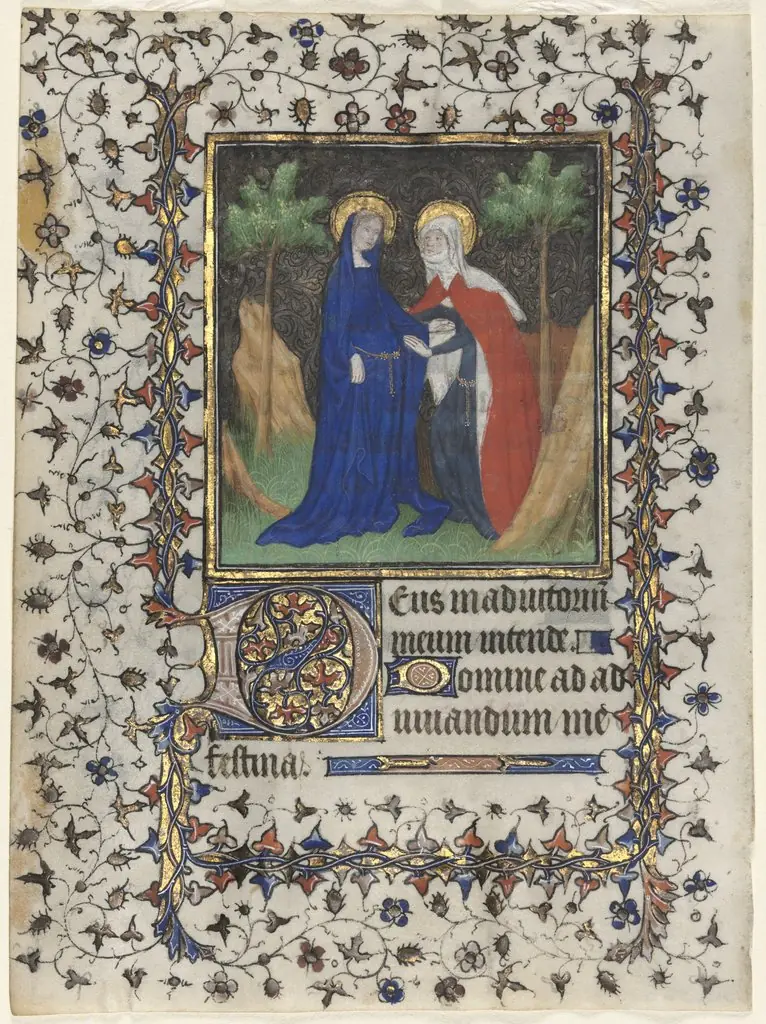 Leaf from a Book of Hours: The Visitation
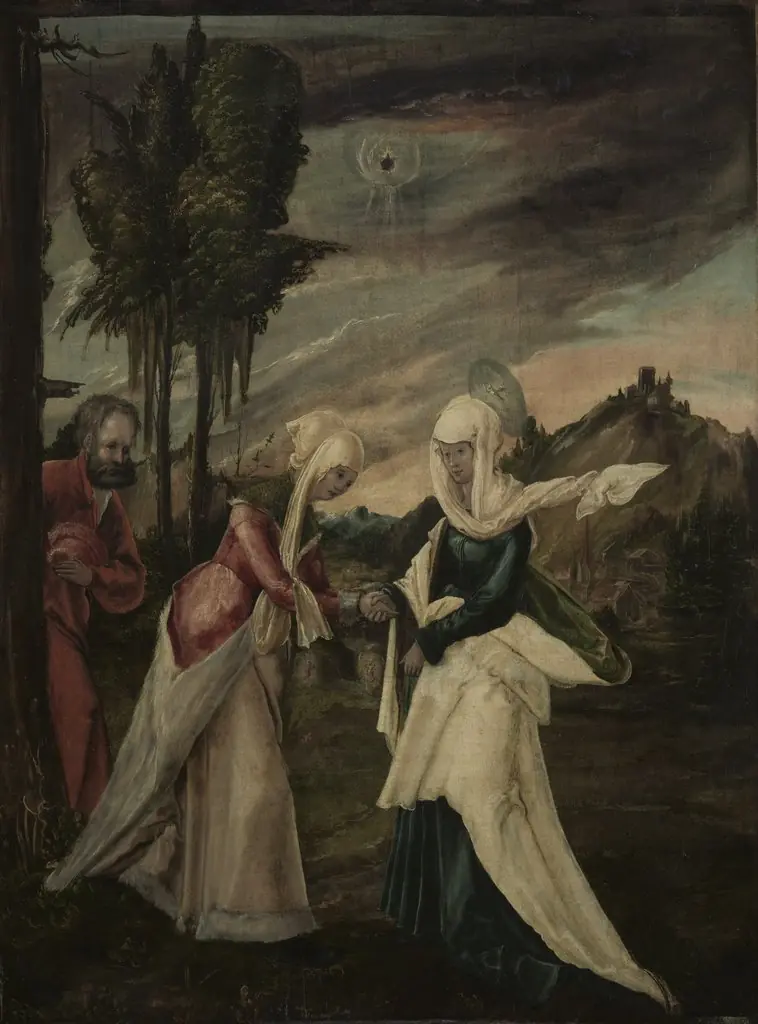 The Visitation
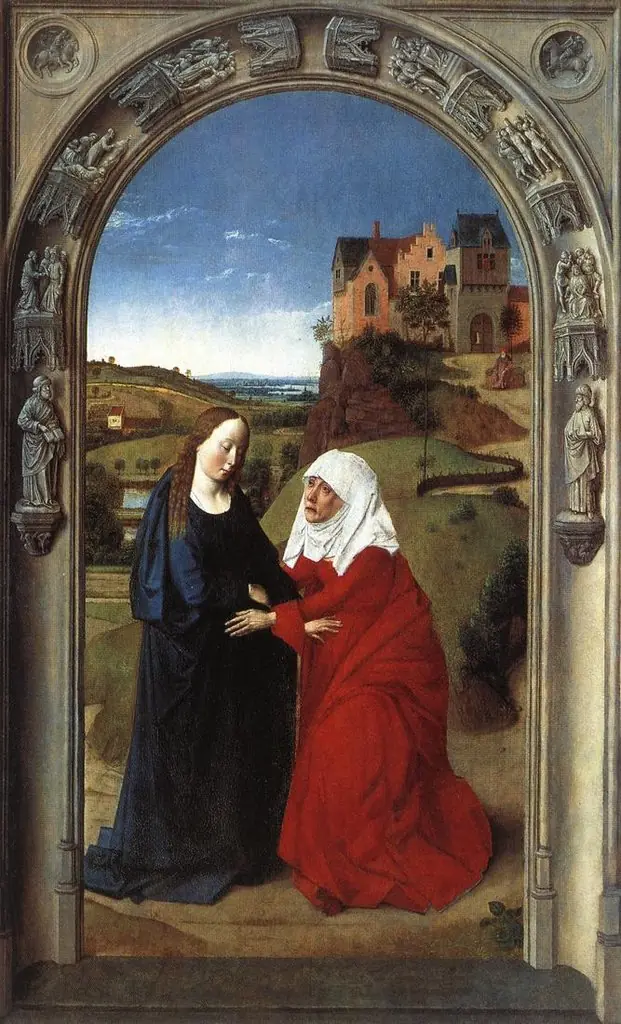 Visitation
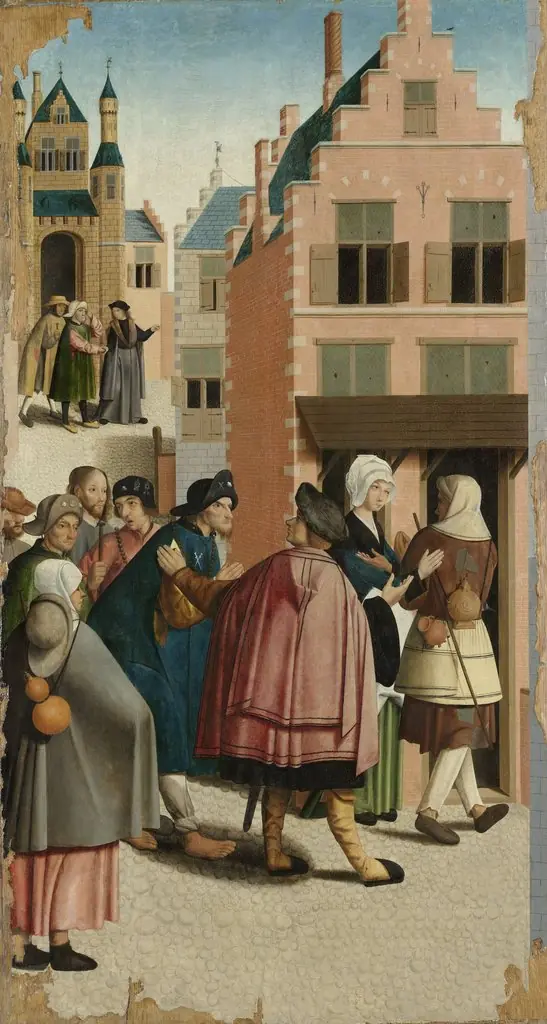 The Seven Works of Mercy
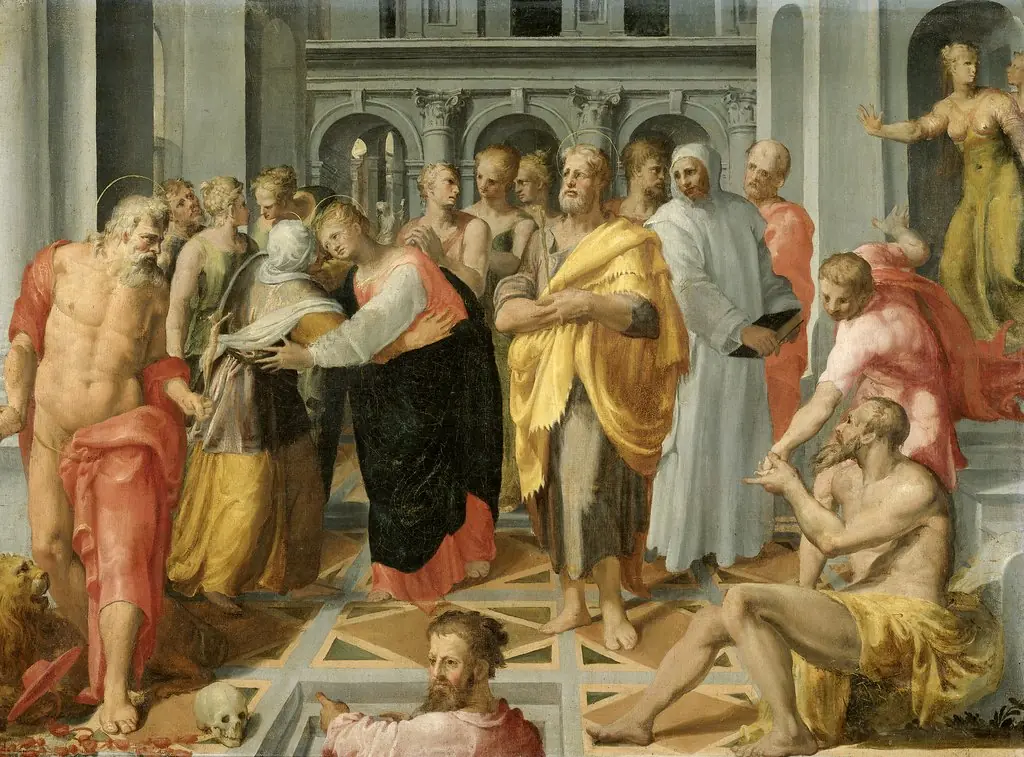 Visitation (Meeting of Mary and Elizabeth in the Presence of Saints Joseph and Jerome)
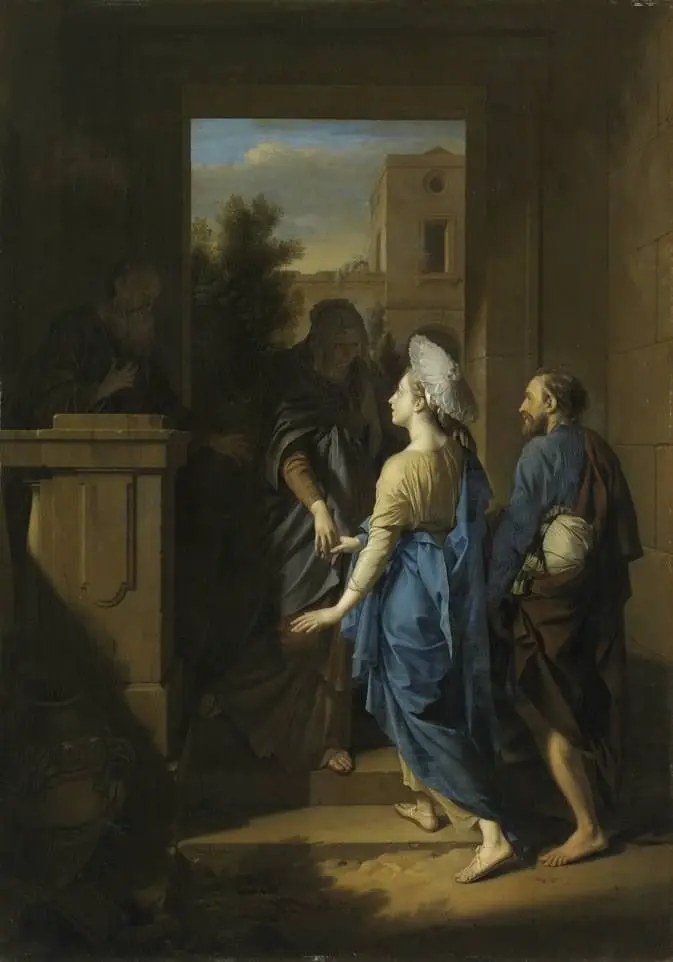 The Visitation
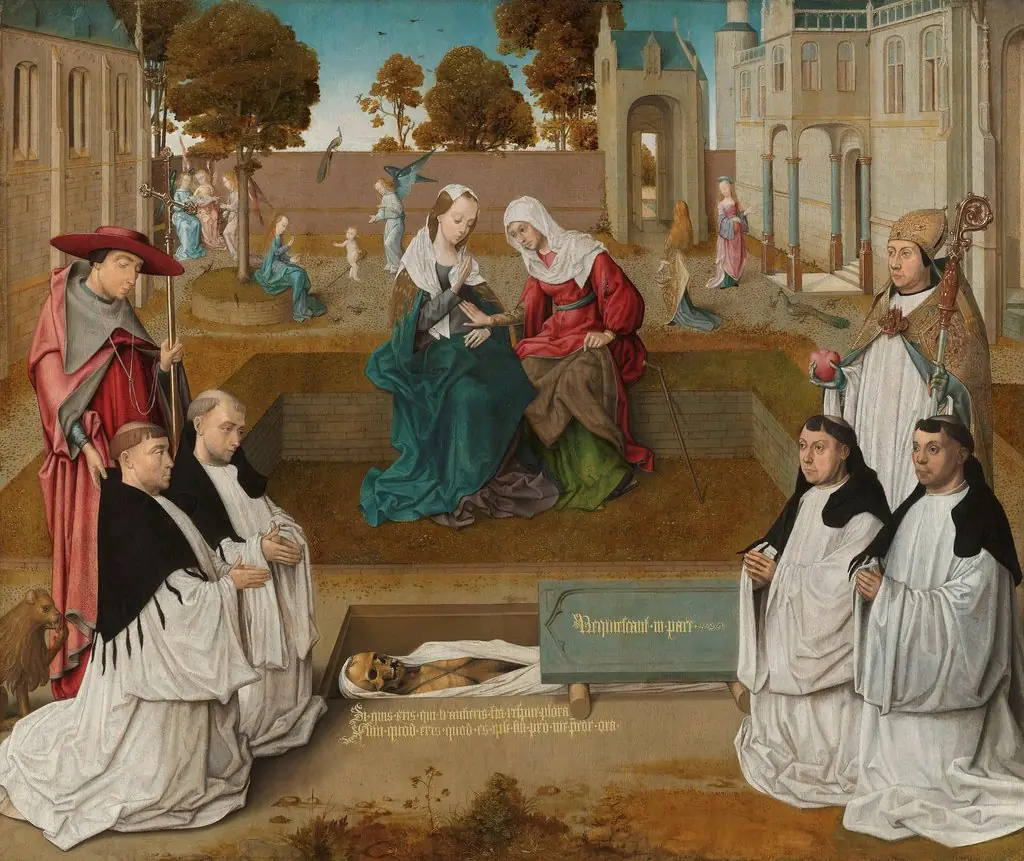 Four canons with Sts Augustine and Jerome by an open grave, with the Visitation
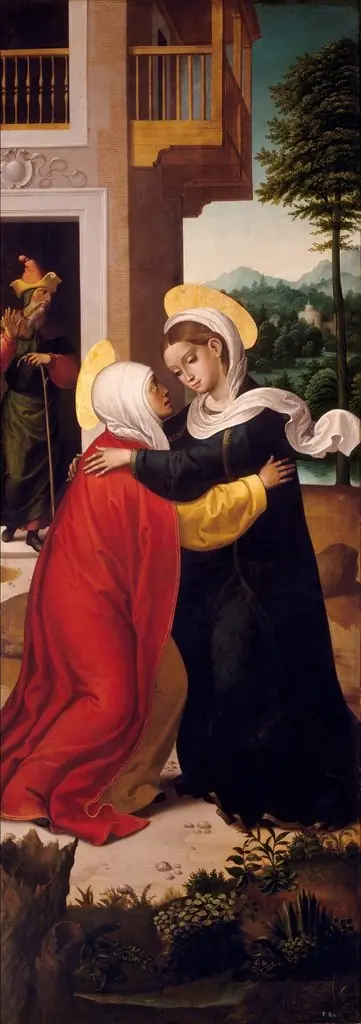 The Visitation
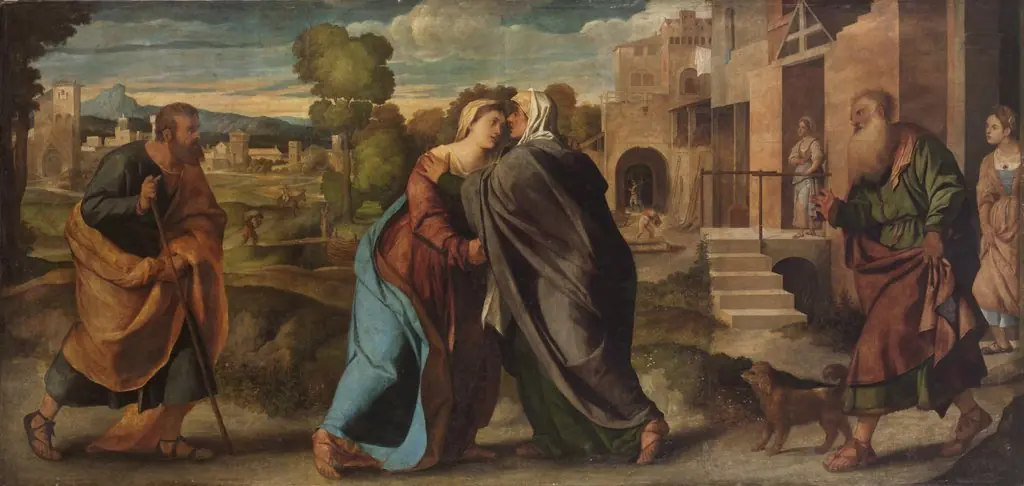 Visitation
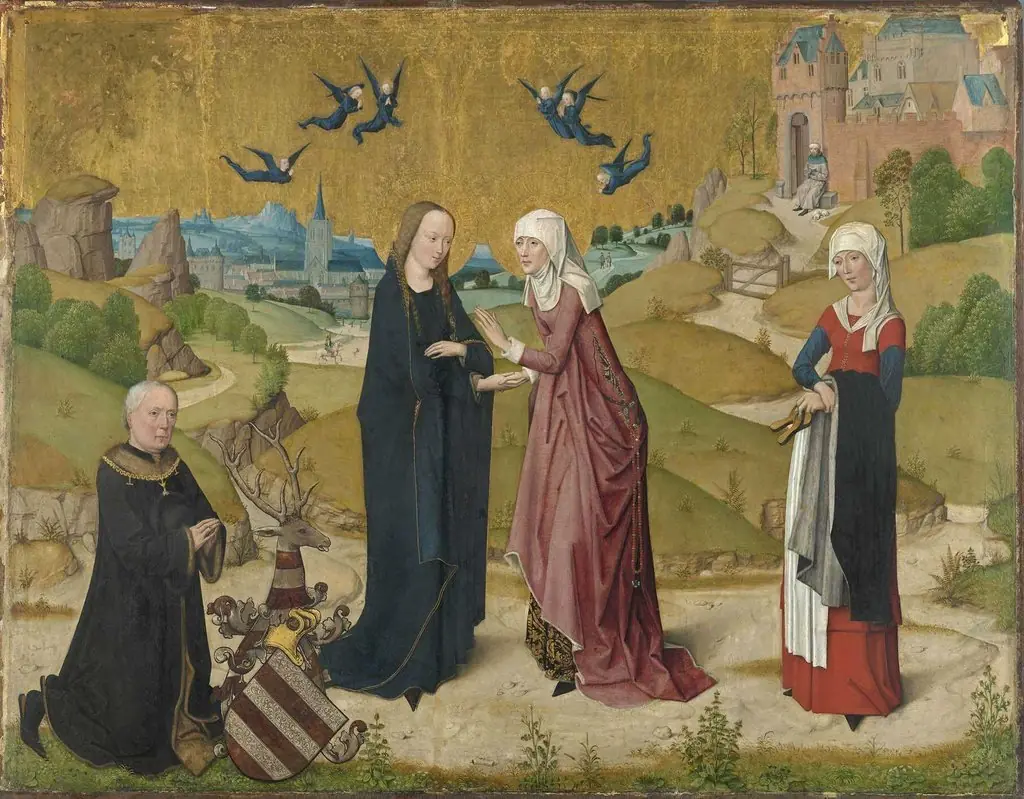 The Visitation with a portrait of donor Johann von Hirtz (?-?)
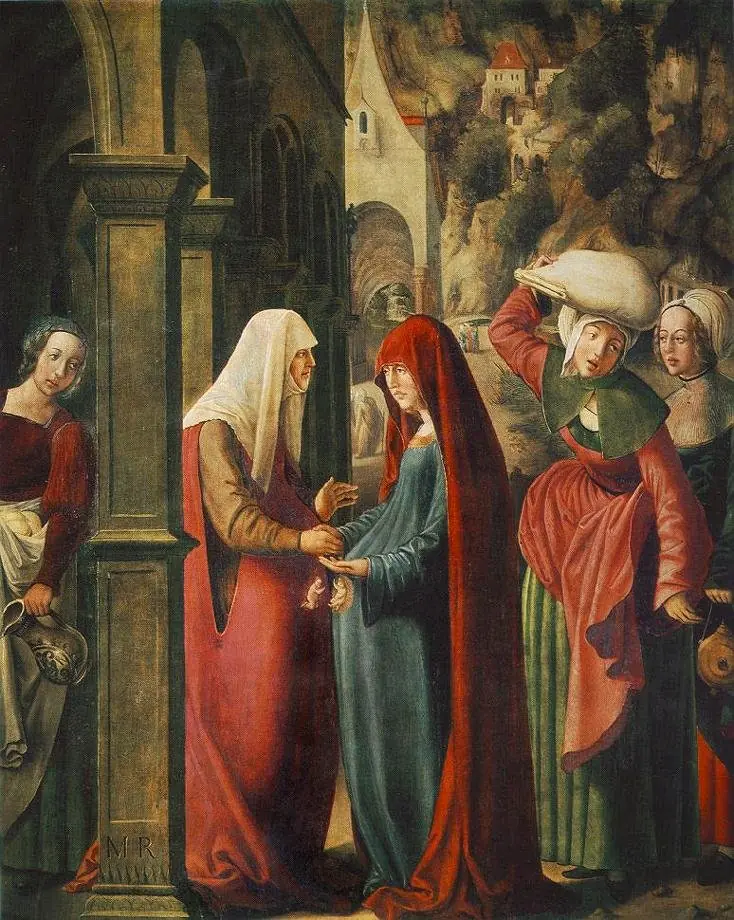 Meeting of Mary and Elisabeth
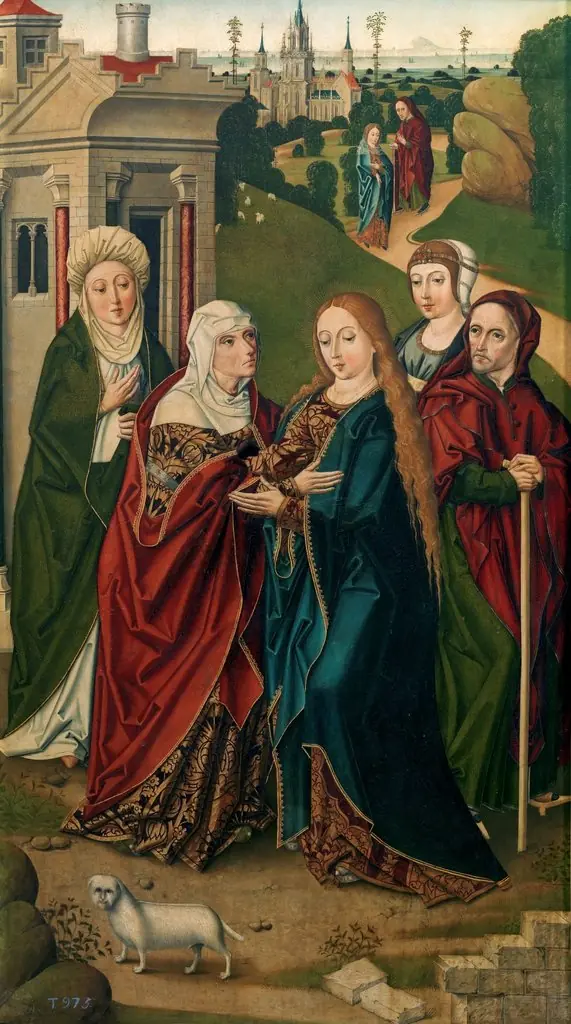 The Visitation
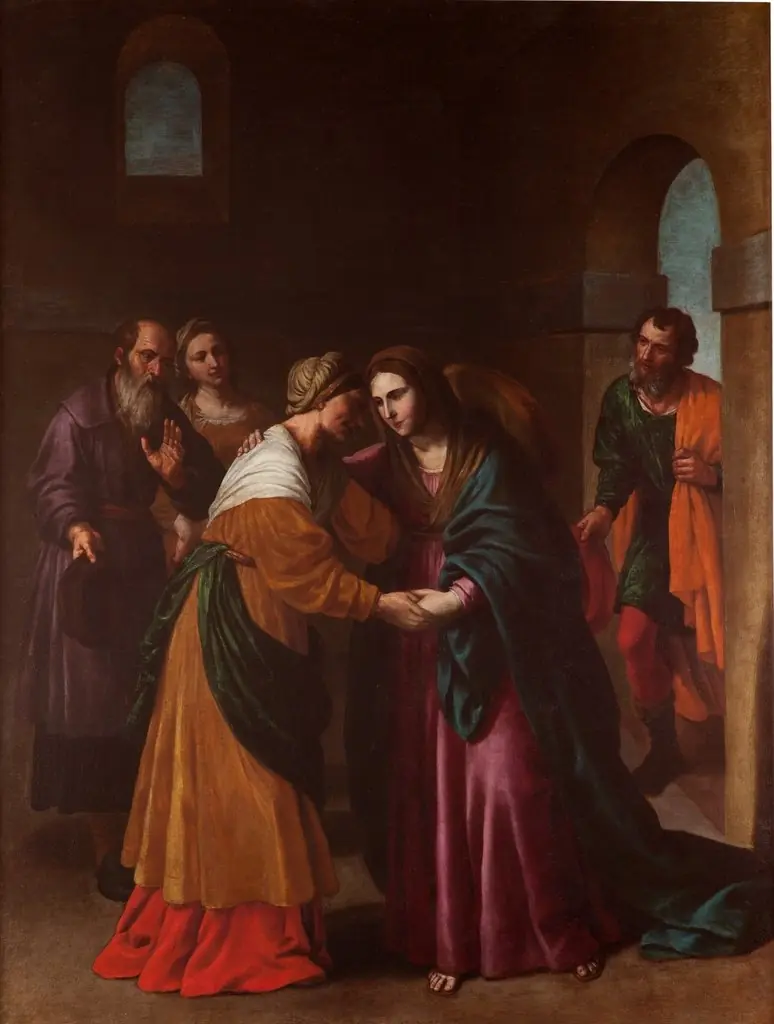 The visitation
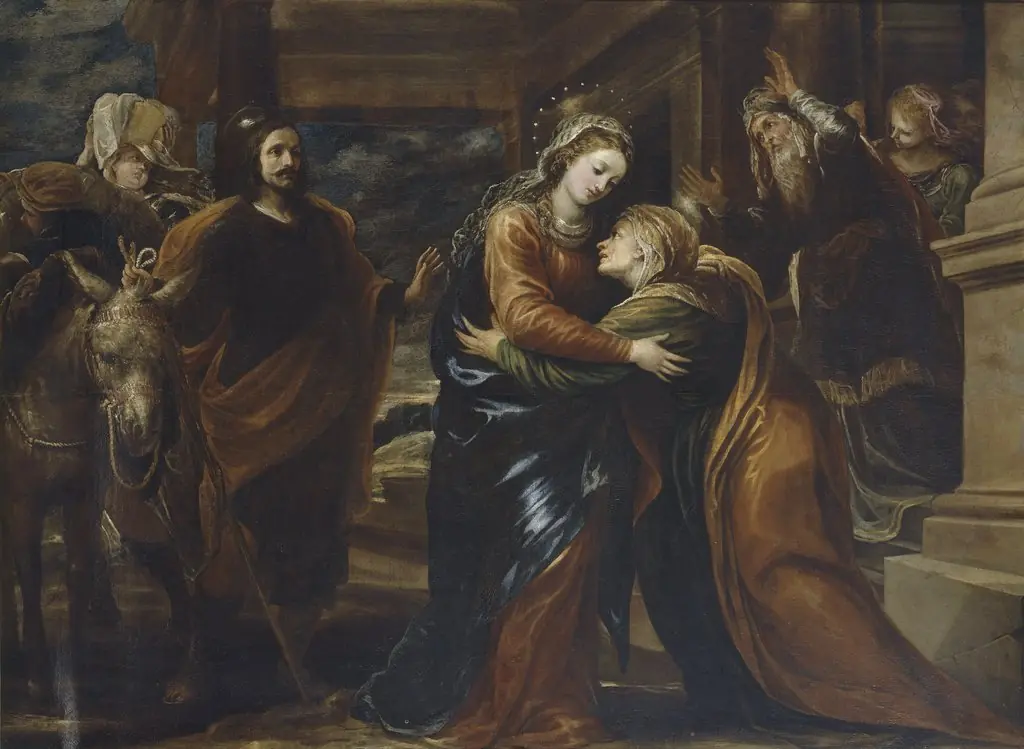 La Visitación
 Visitation
 The Visitation
 The Annunciation
 The Visitation
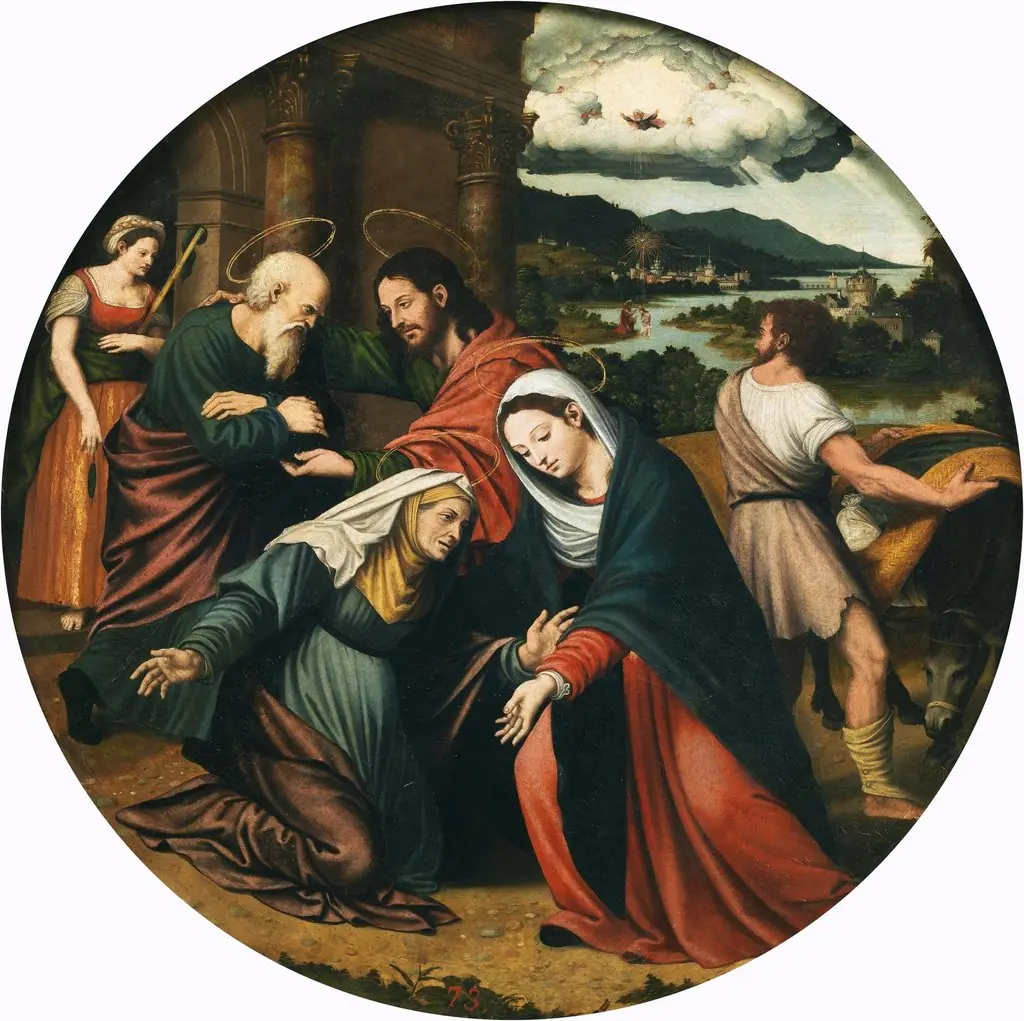 The Visitation
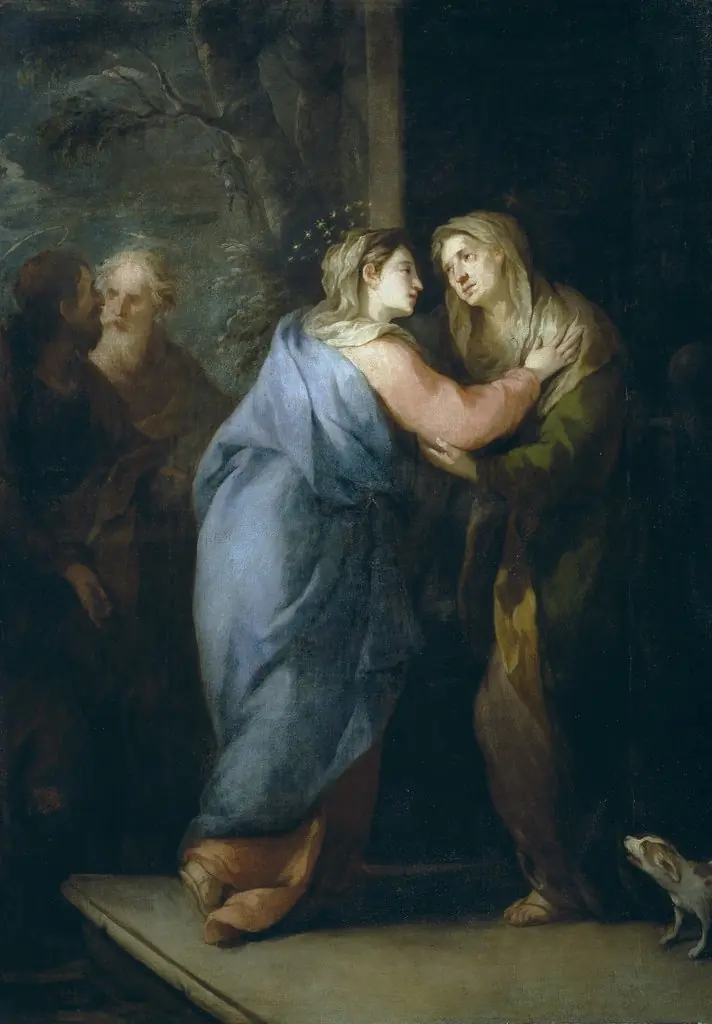 La Visitación
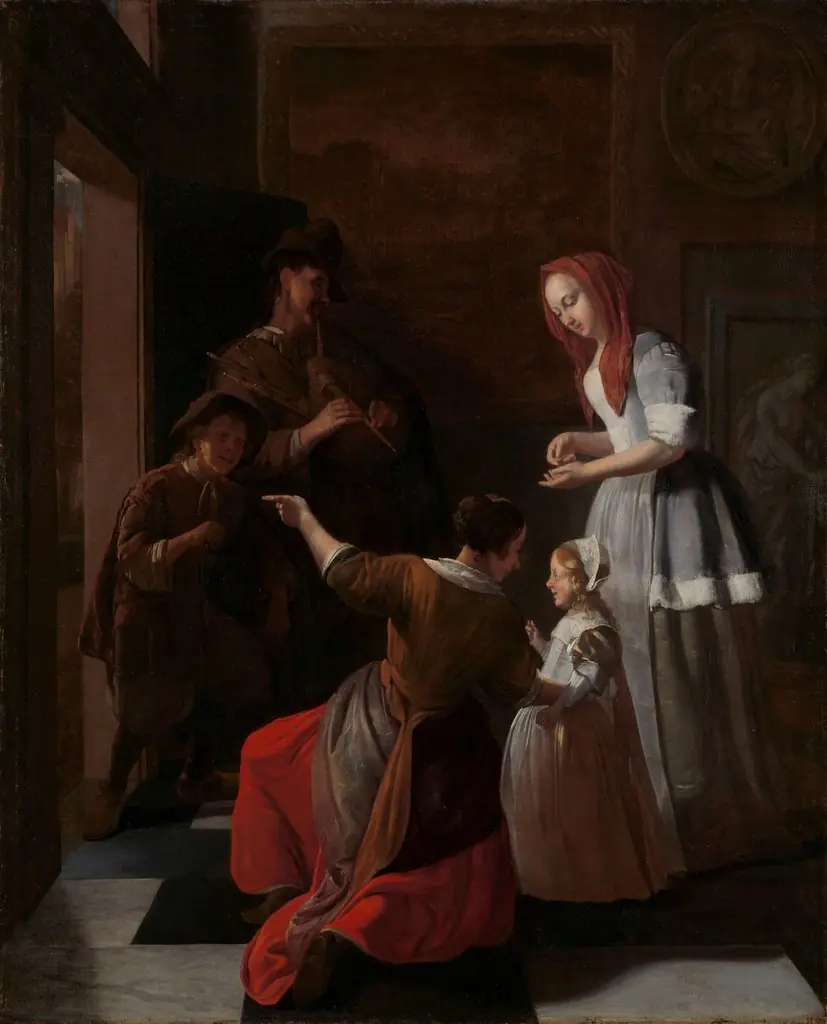 The players
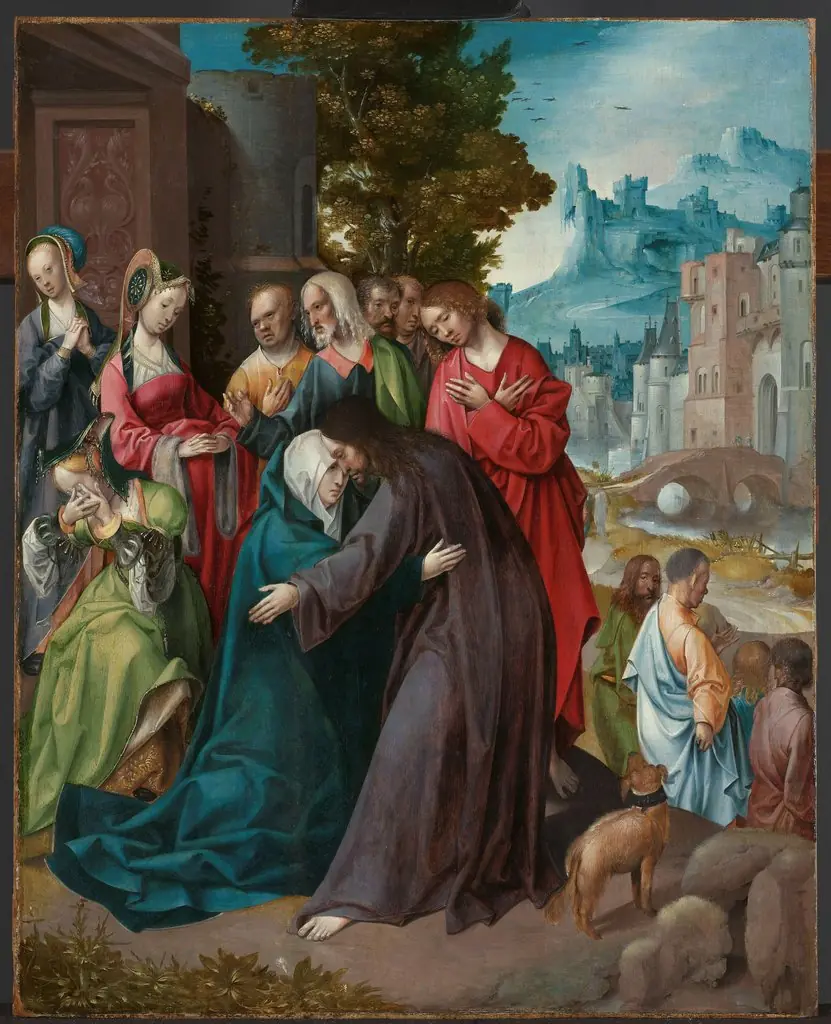 Christ Taking Leave of his Mother
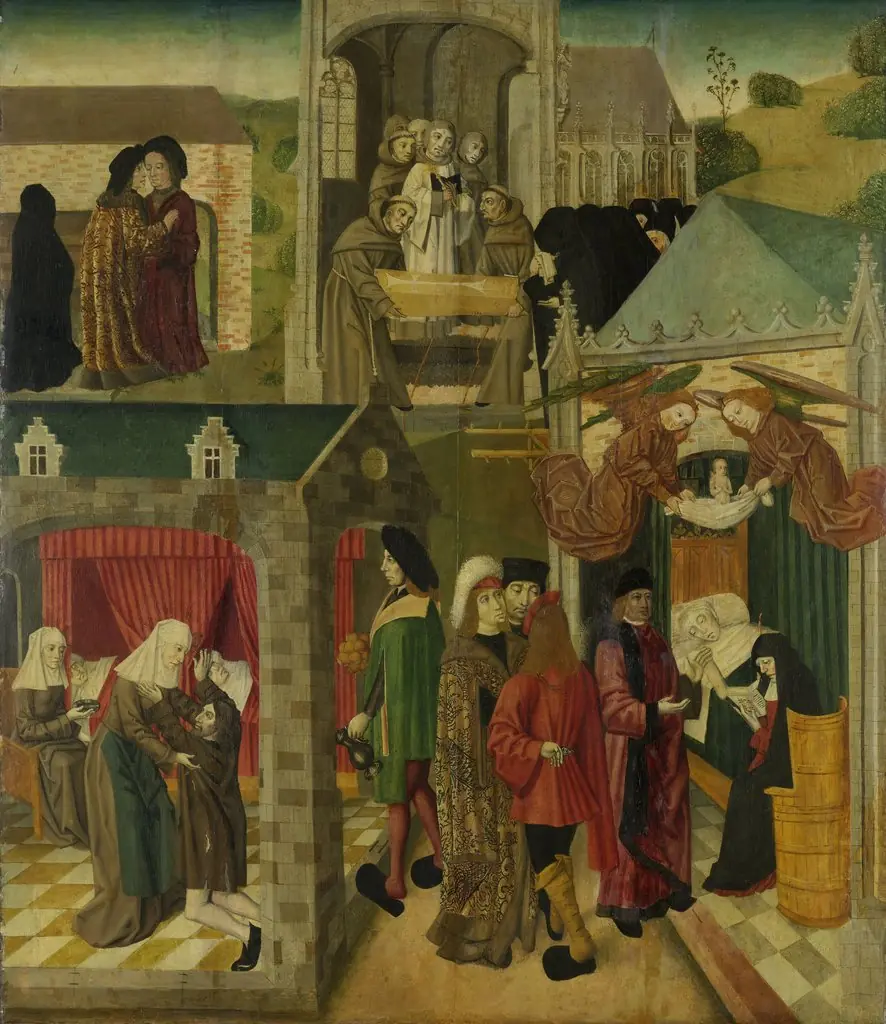 Inner right wing of an altarpiece with St Elizabeth tending the sick in Marburg and the death of St Elizabeth
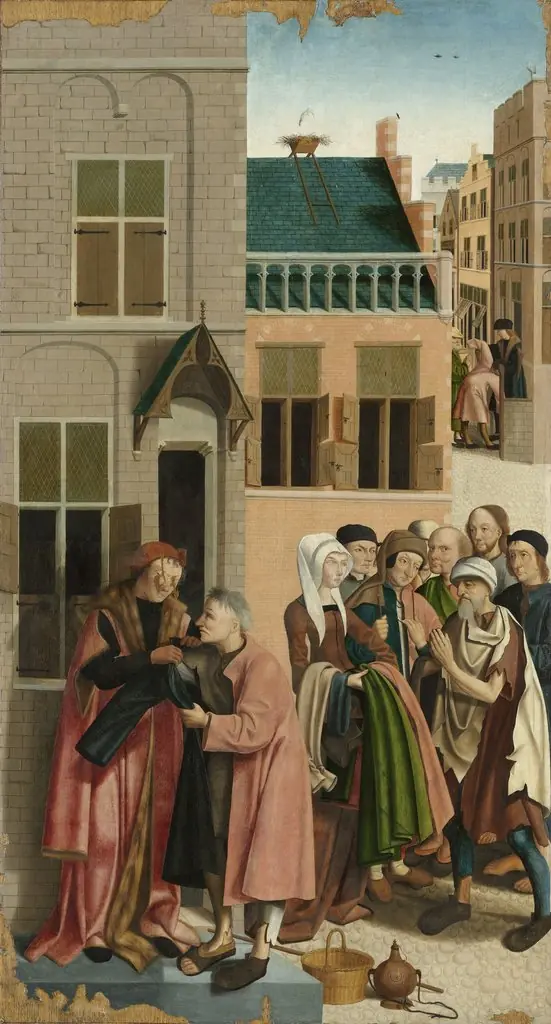 The Seven Works of Mercy
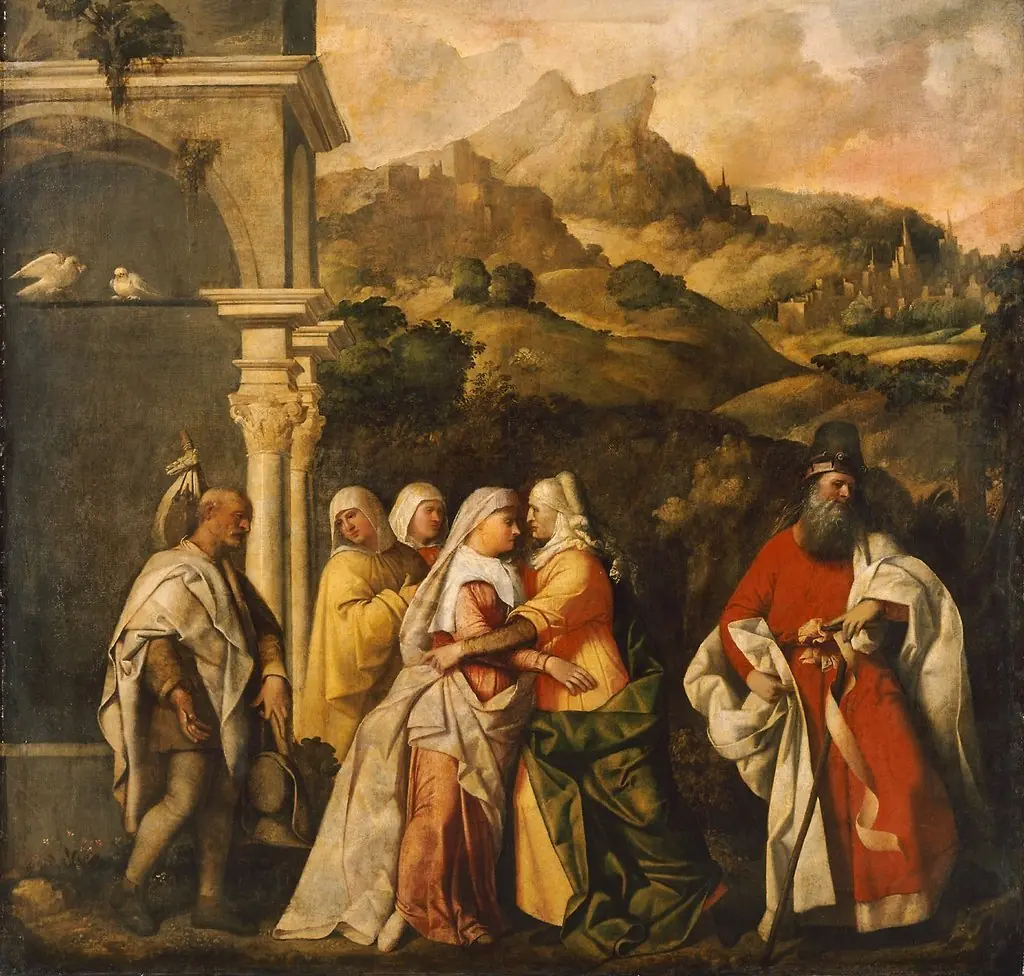 Visitation
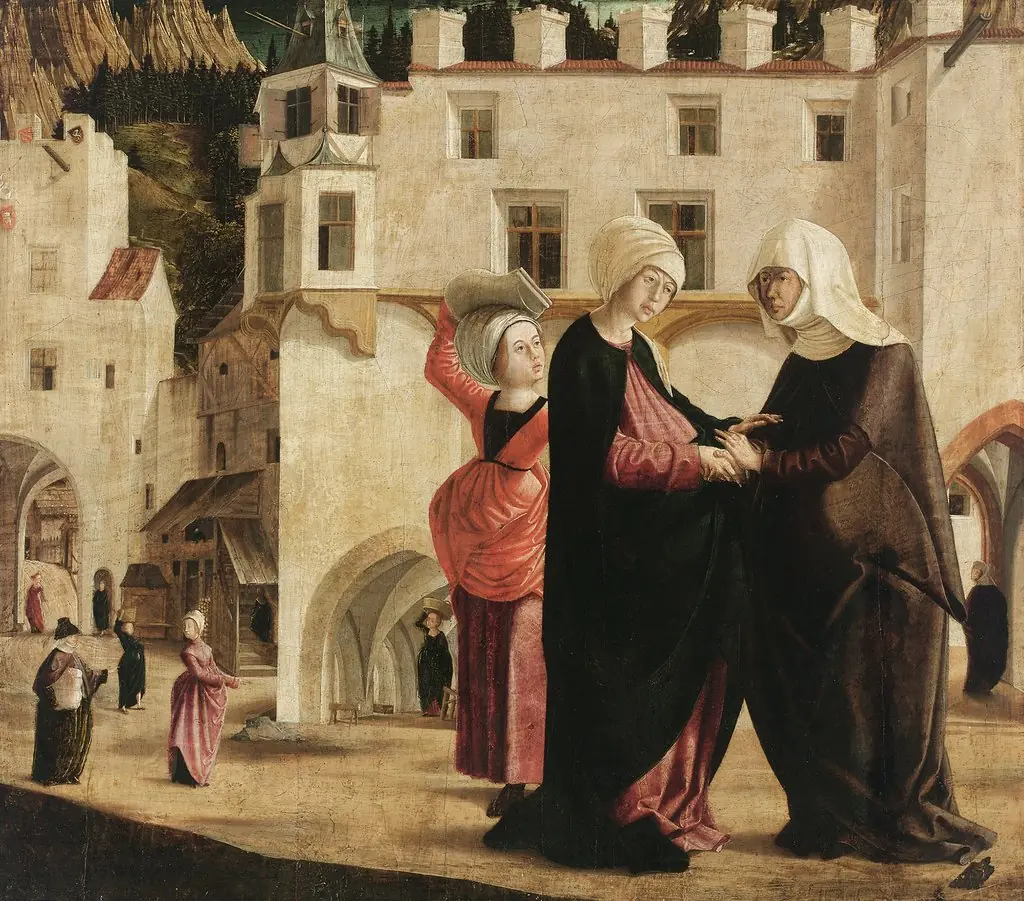 The visitation
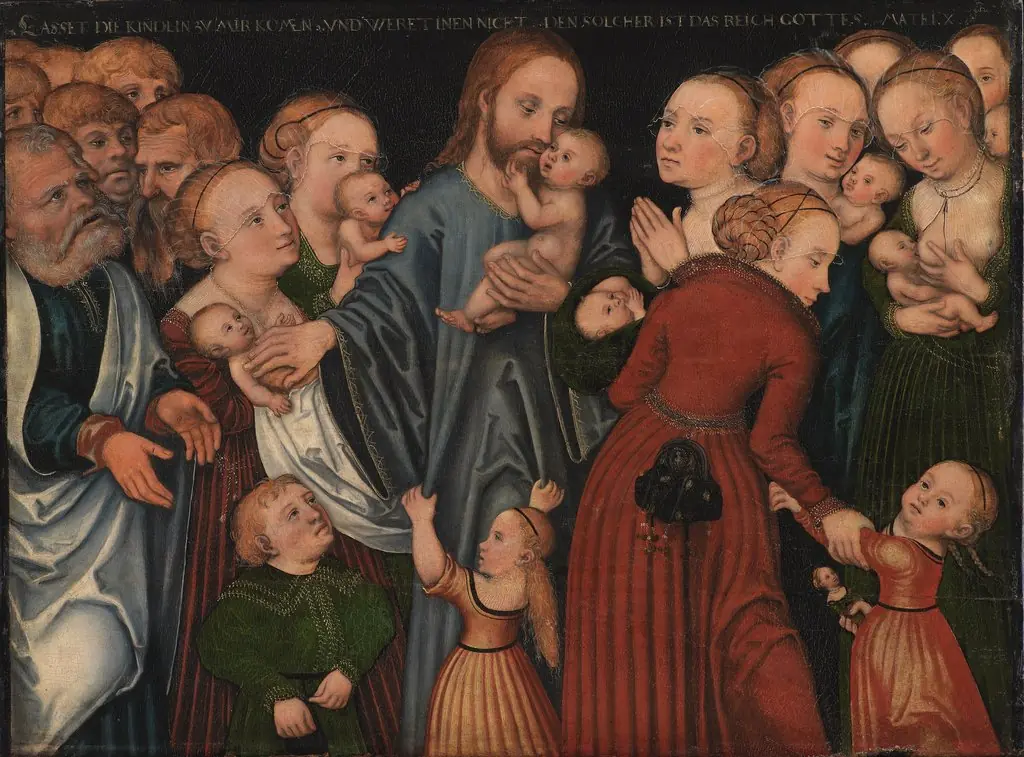 Christ Blessing the Children
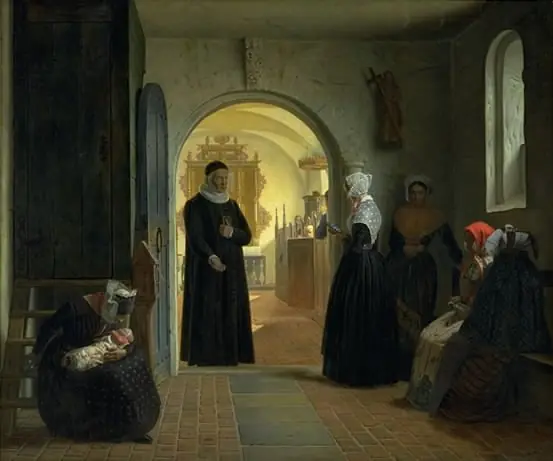 A Woman's Solemn Churching after Childbirth
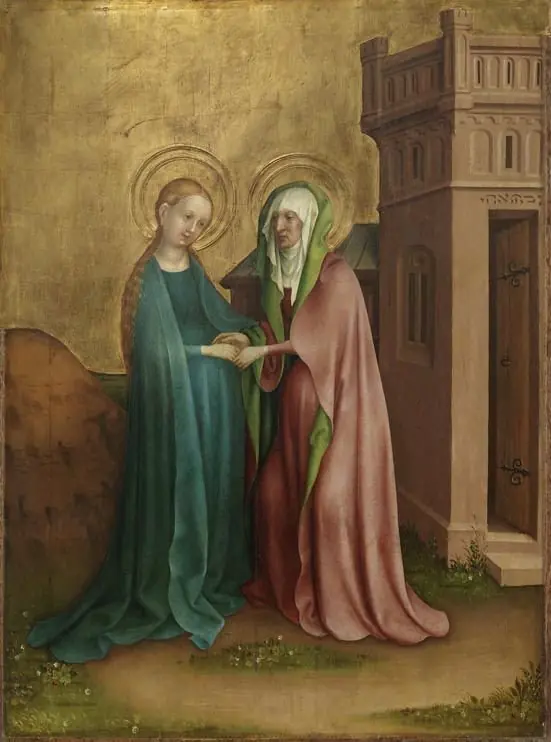 The visitation
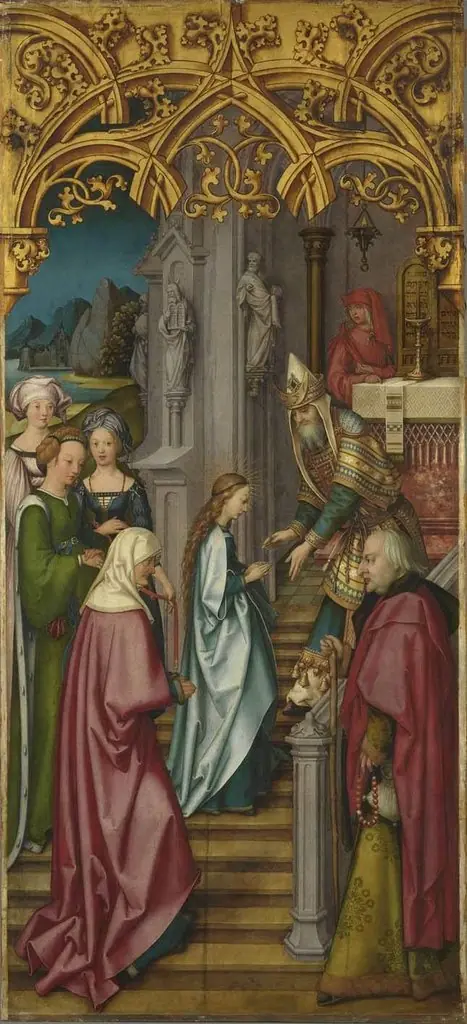 Kaisheimer Altar: Tempelgang Mariens
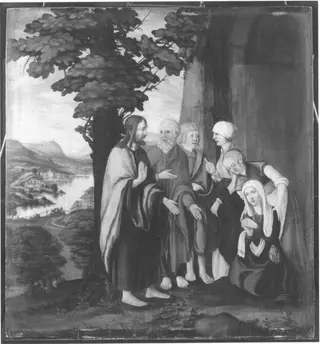 Christus und die Sünderin
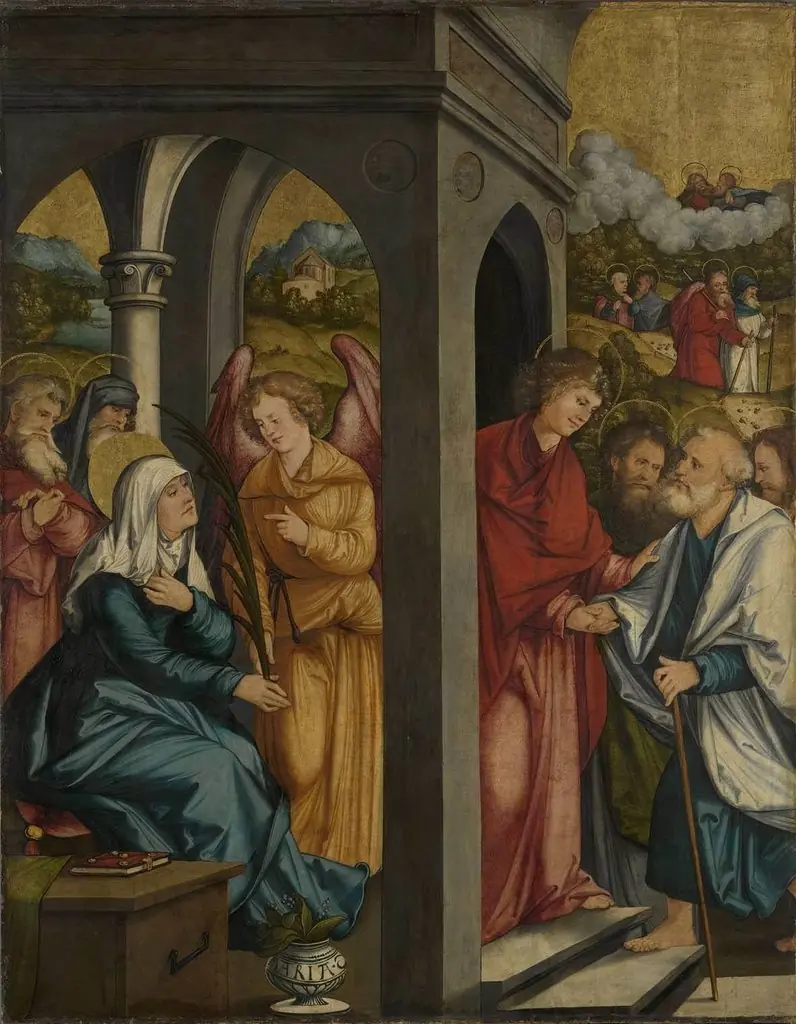 Christgartner Altar: Ein Engel reicht Maria die Palme
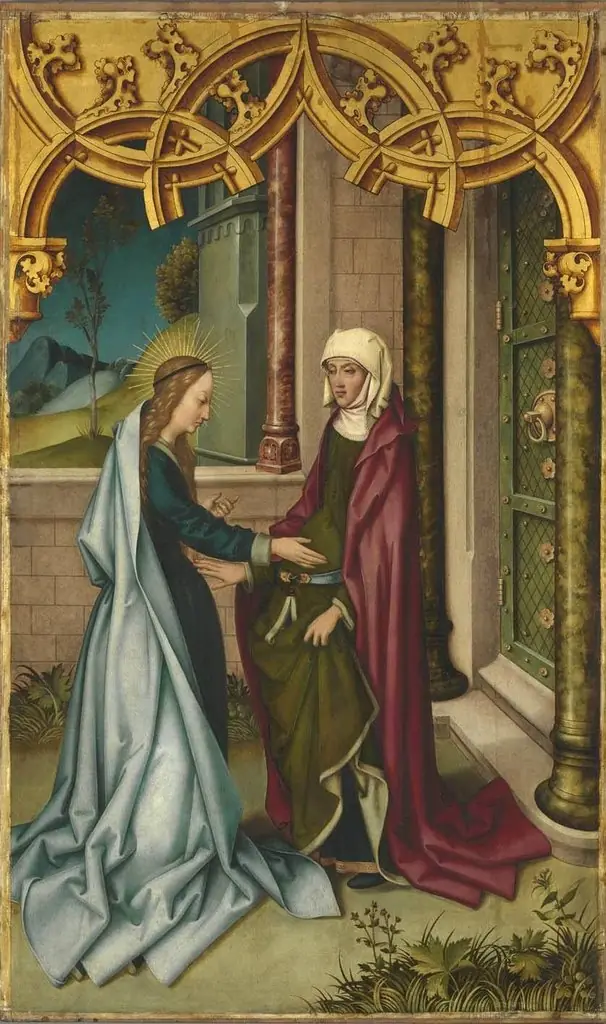 Kaisheimer Altar: Mariae Heimsuchung
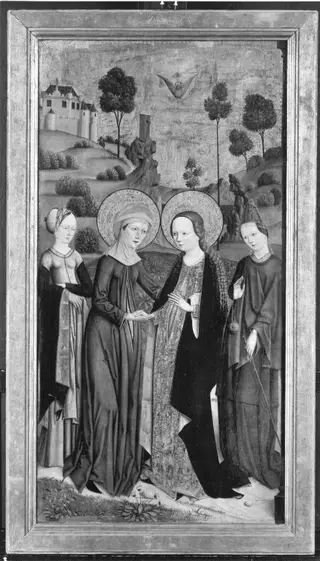 Heimsuchung Mariens Außenseite: Krönung Mariens
 The fifteen secrets of the rosary: the Visitation
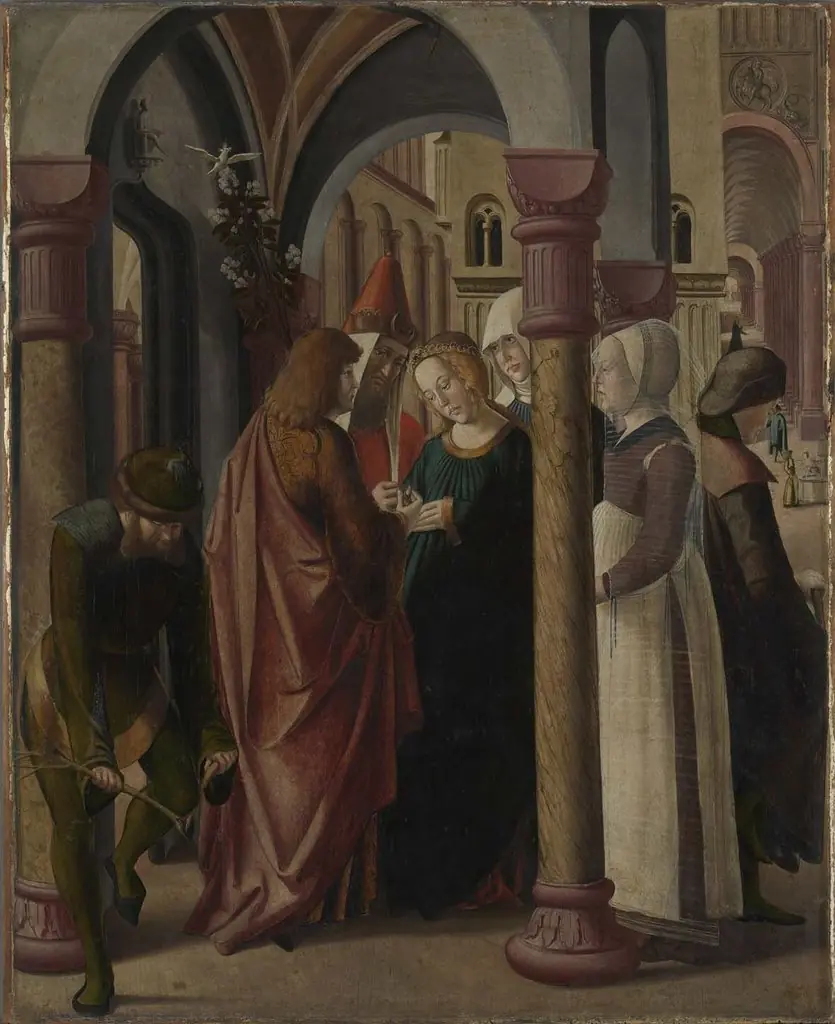 Marienaltar: Vermählung Mariae
 The visitation
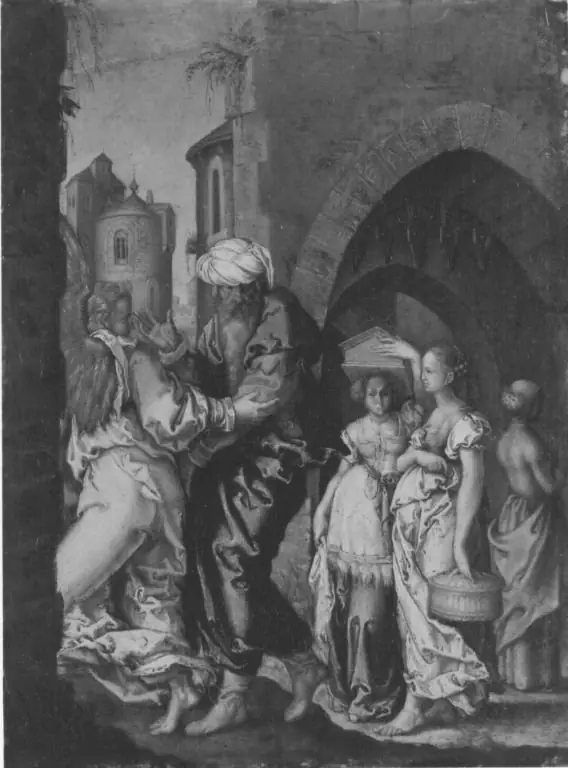 Lots Flucht (Kopie nach)
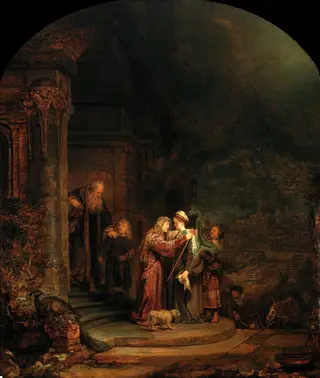 The Visitation
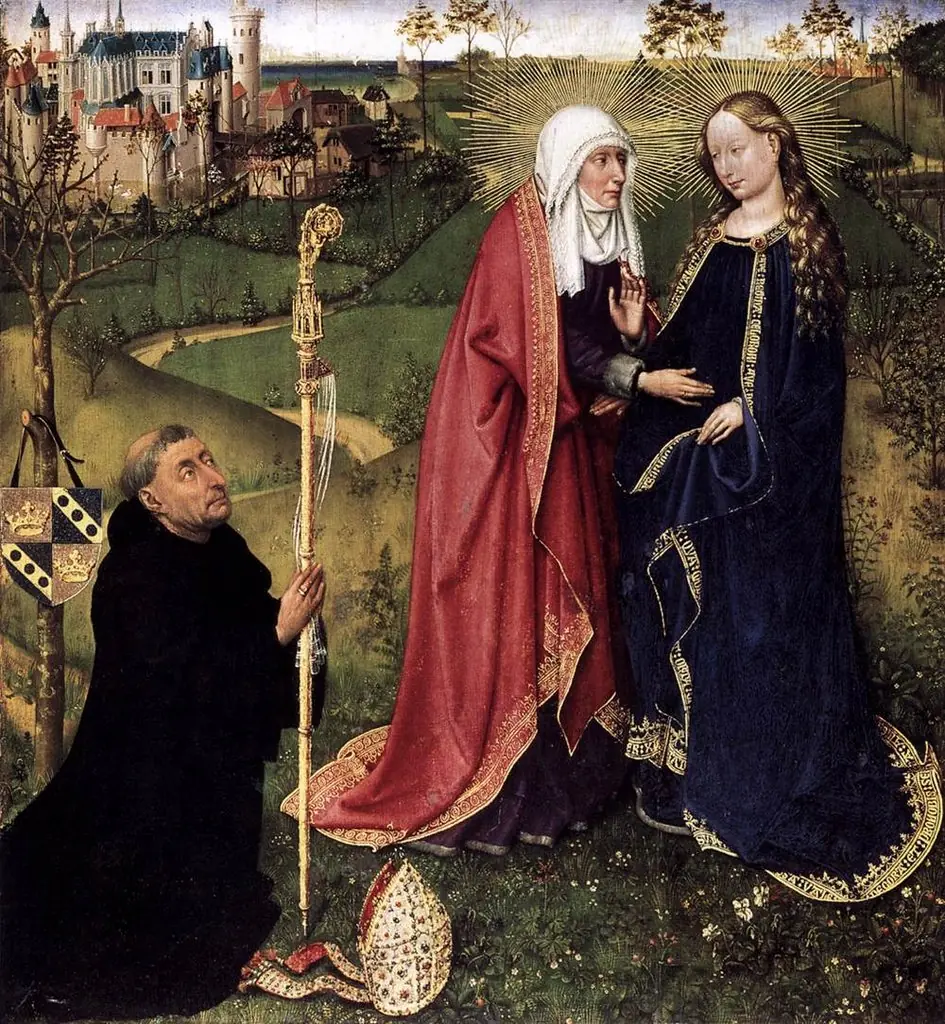 The Visitation
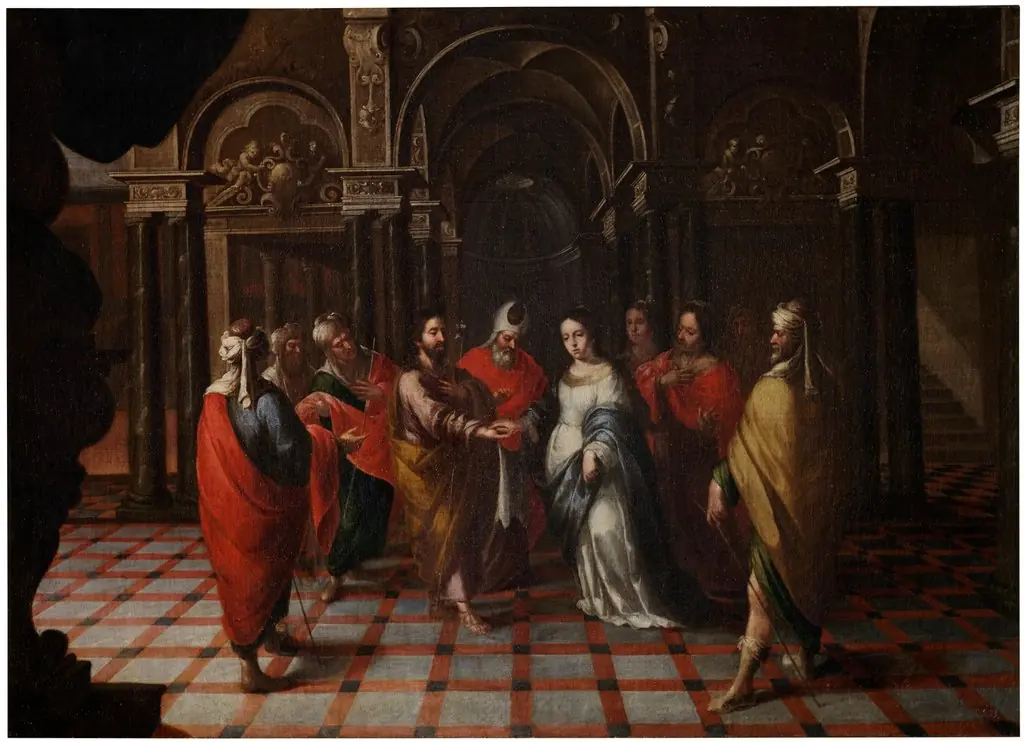 The Betrothal of the Virgin
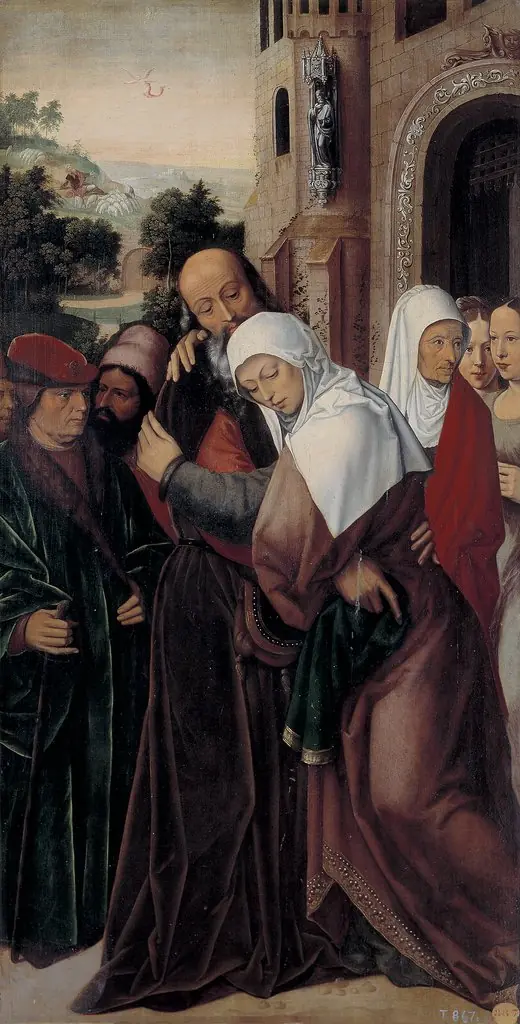 Abrazo de San Joaquín y Santa Ana ante la Puerta Dorada
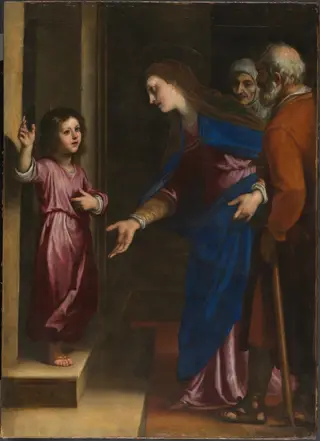 Jesús niño en la puerta del Templo
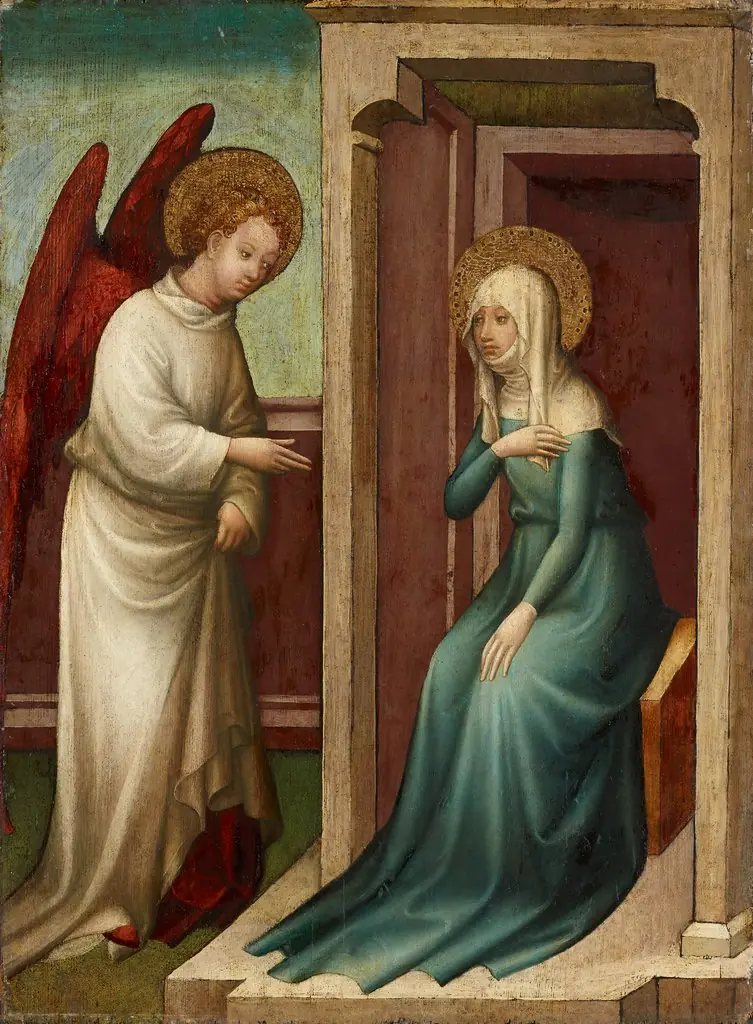 Annunciation to Saint Ann
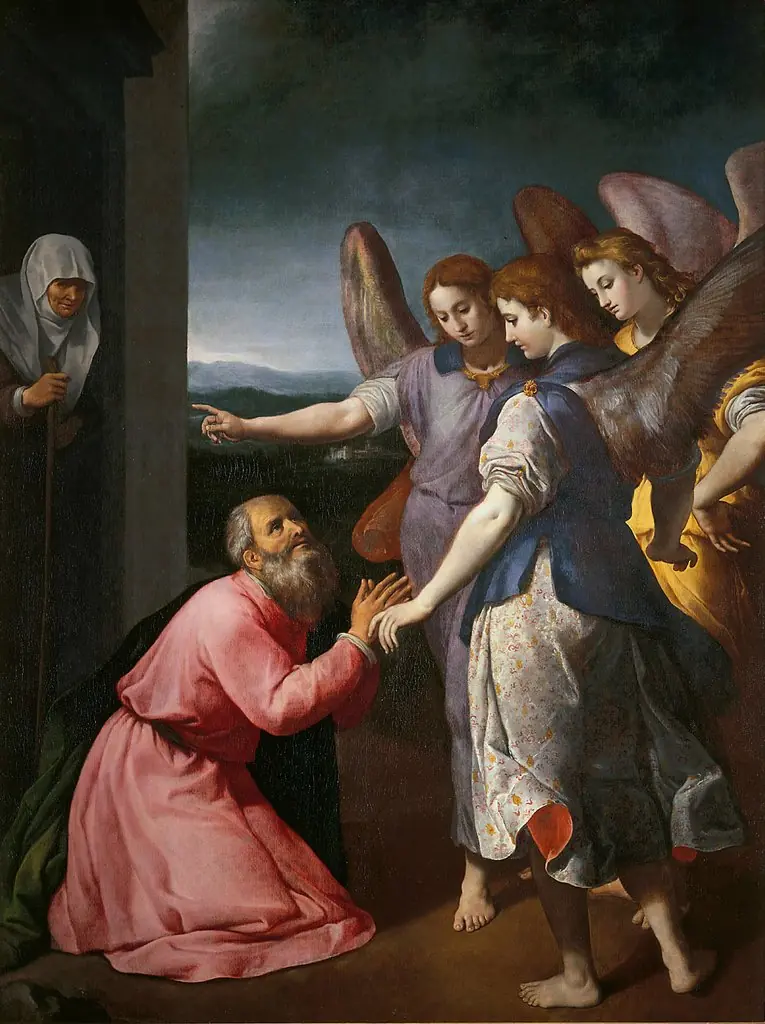 Verheissung der drei Engel an Abraham
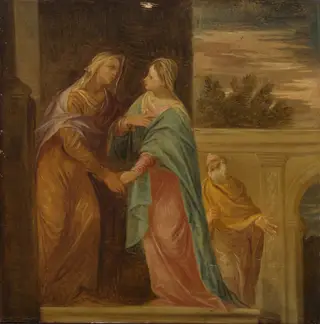 Visitation
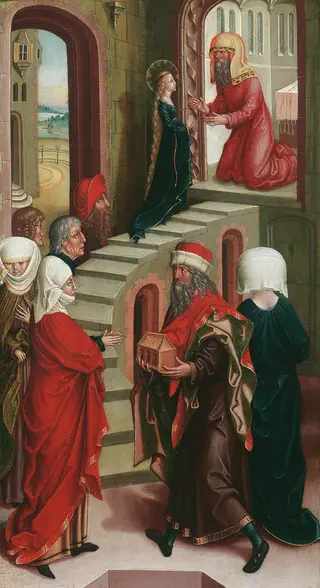 The presentation of Mary in the temple
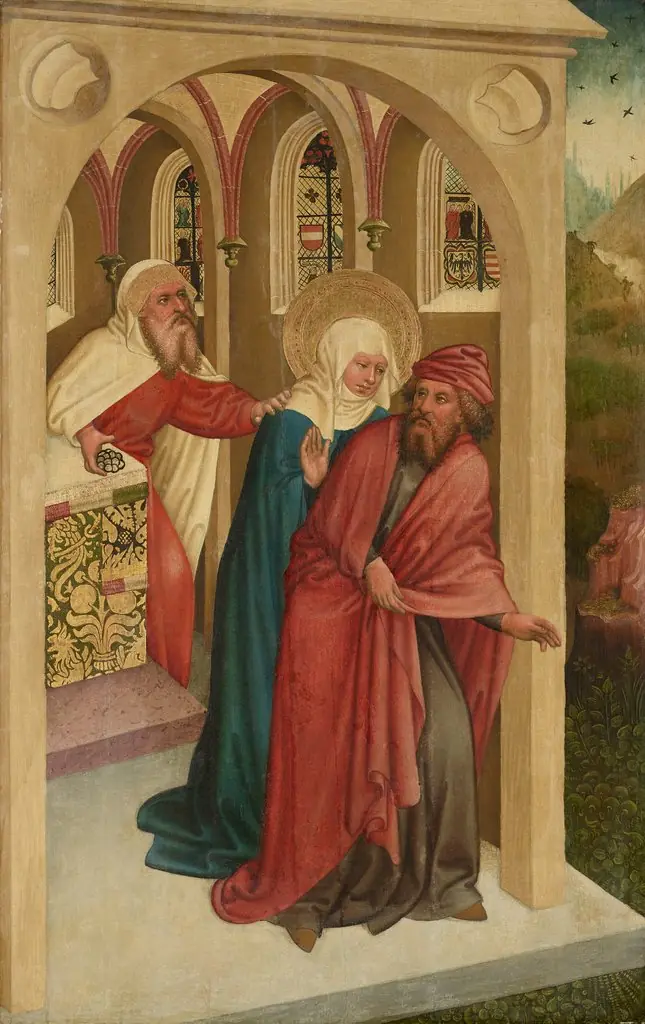 Zurückweisung des Opfers Joachims und Annas
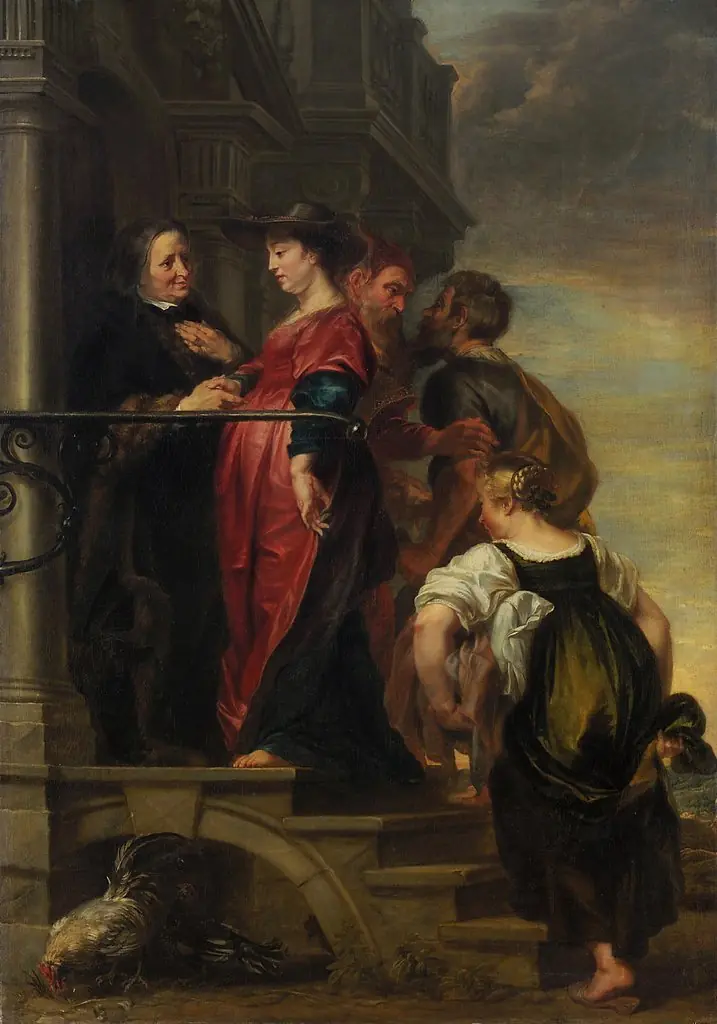 The Visitation
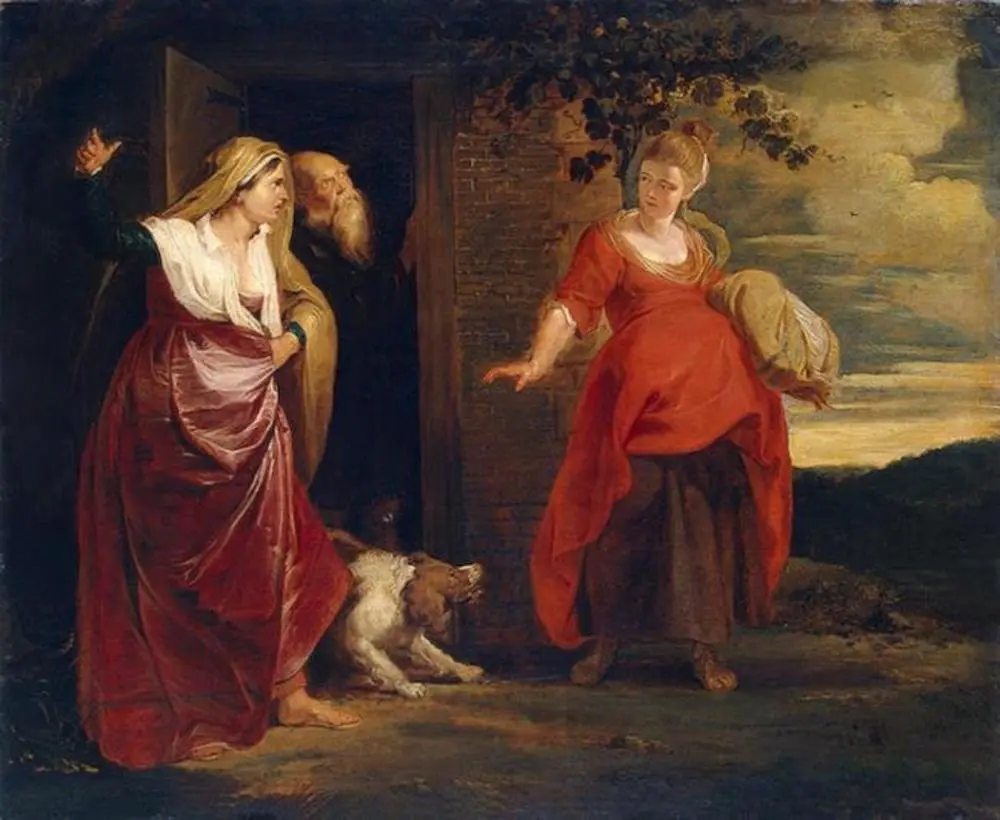 Hagar Leaves the House of Abraham
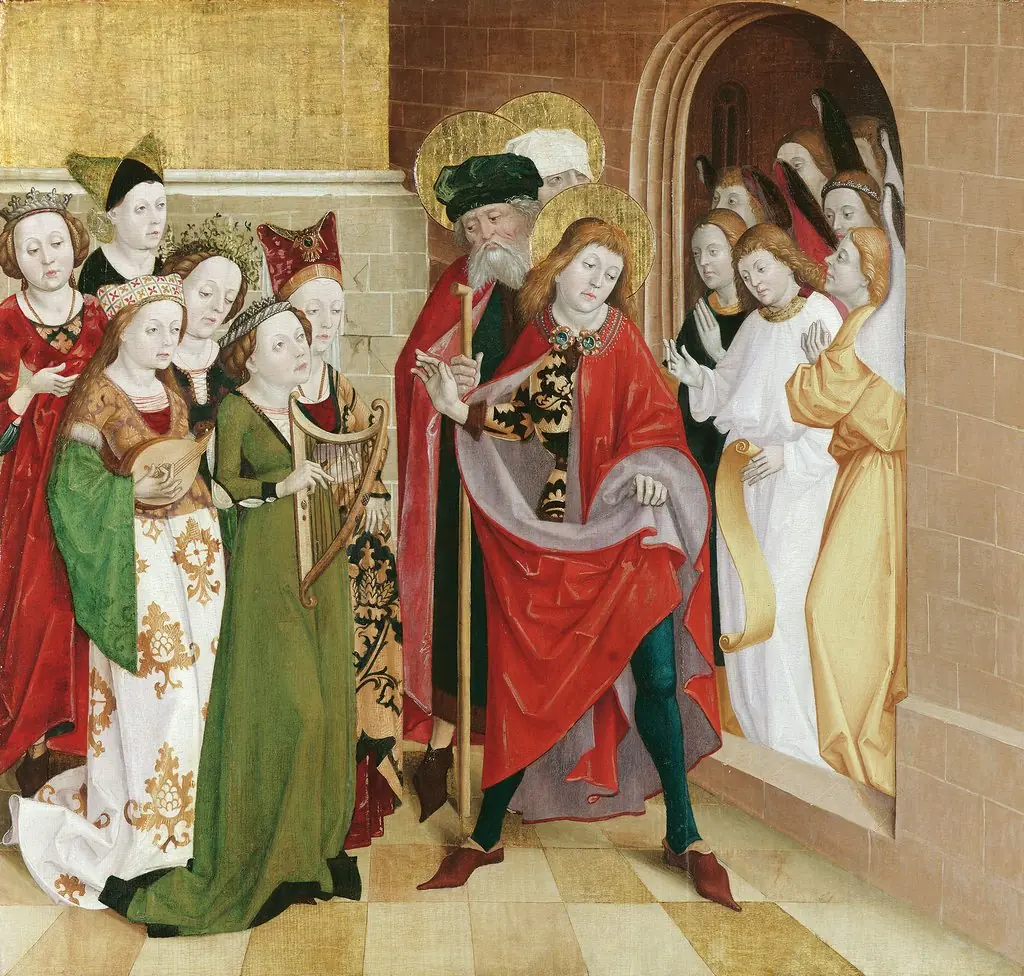 Der hl. Veit entsagt den Freuden der Welt
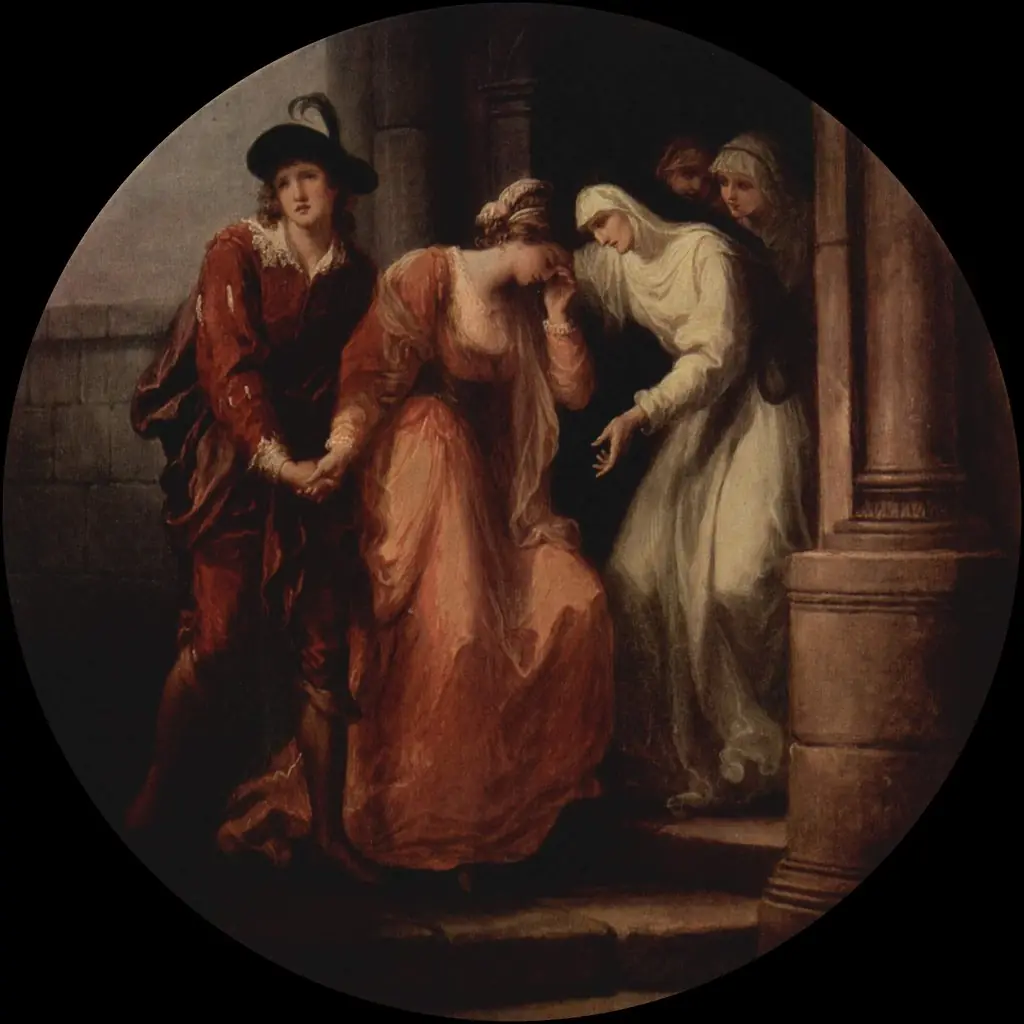 Parting of Abelard and Heloise
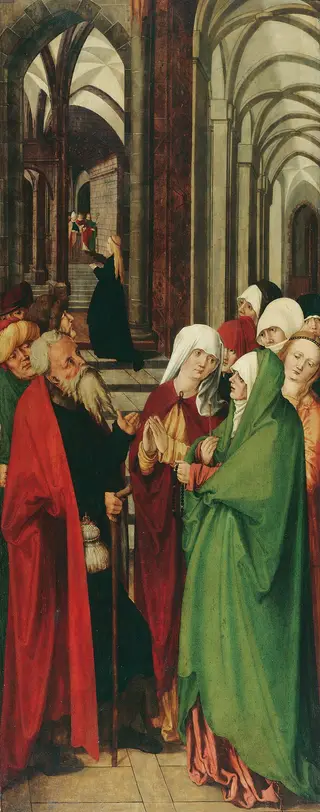 The presentation of Mary in the temple
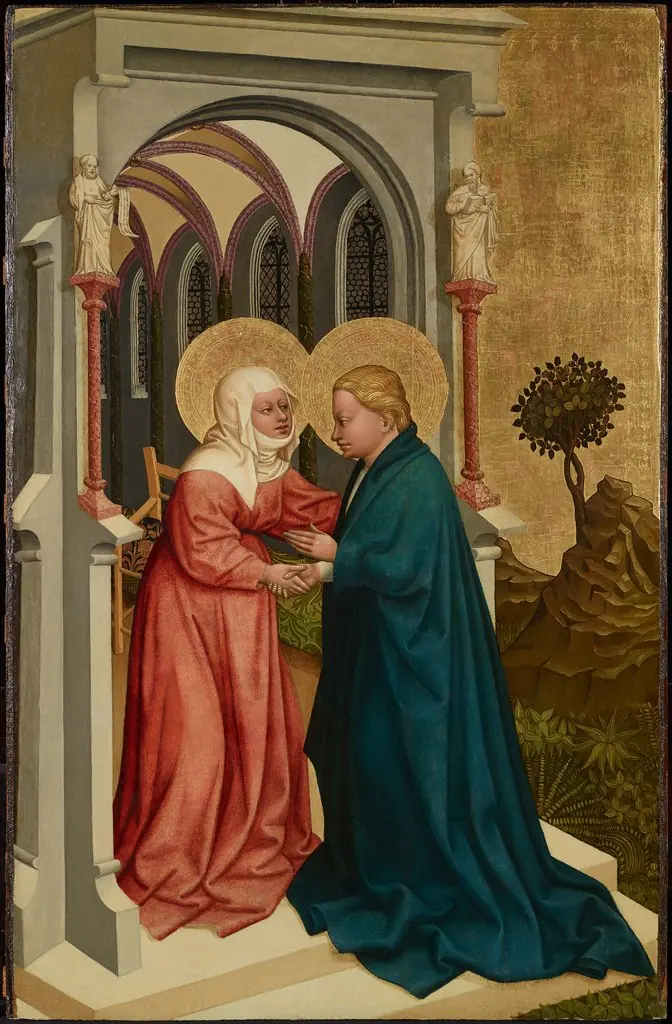 Heimsuchung Mariens
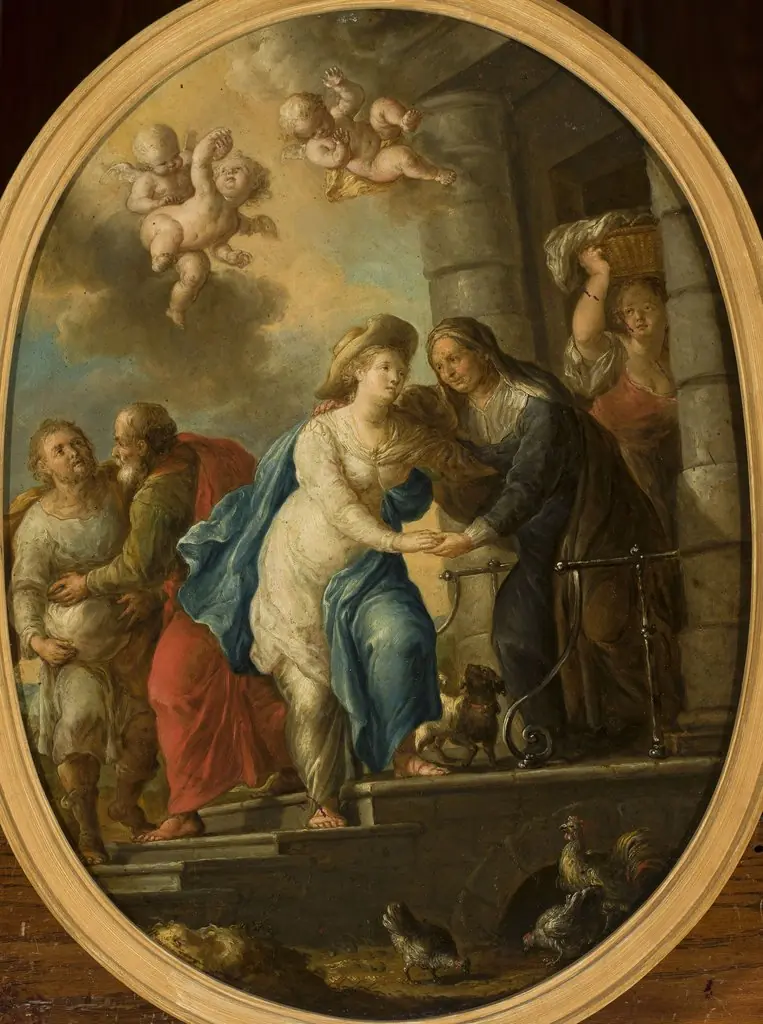 Visitation
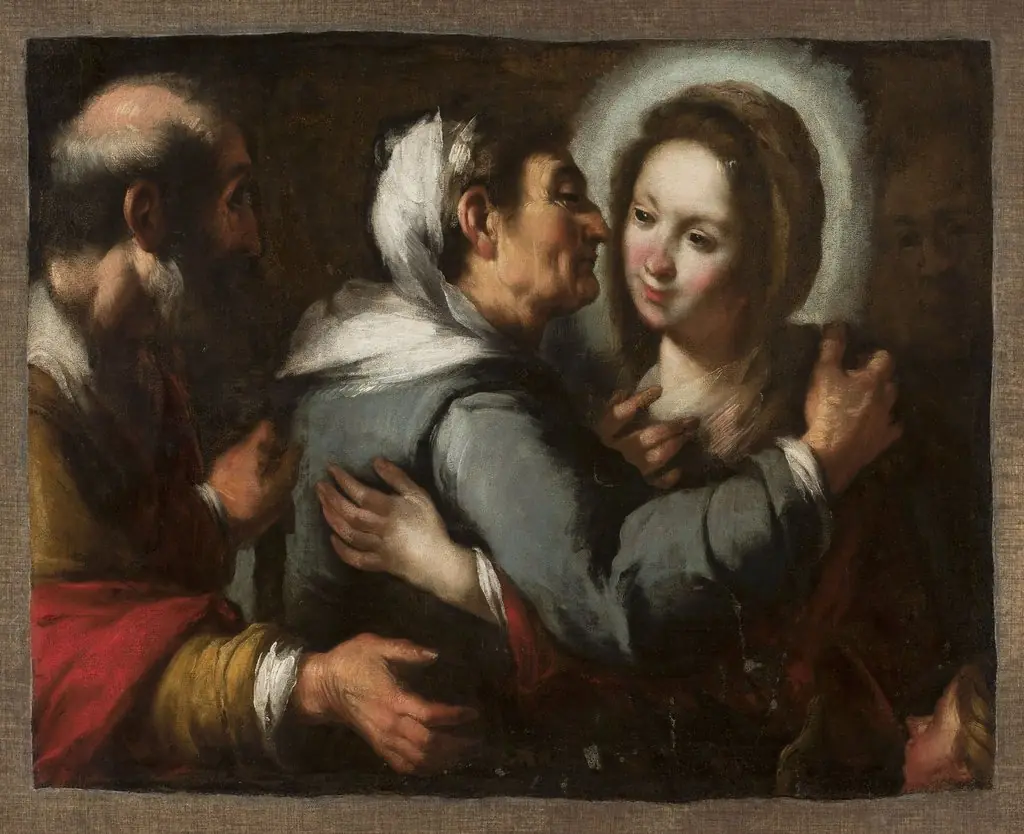 Visitation
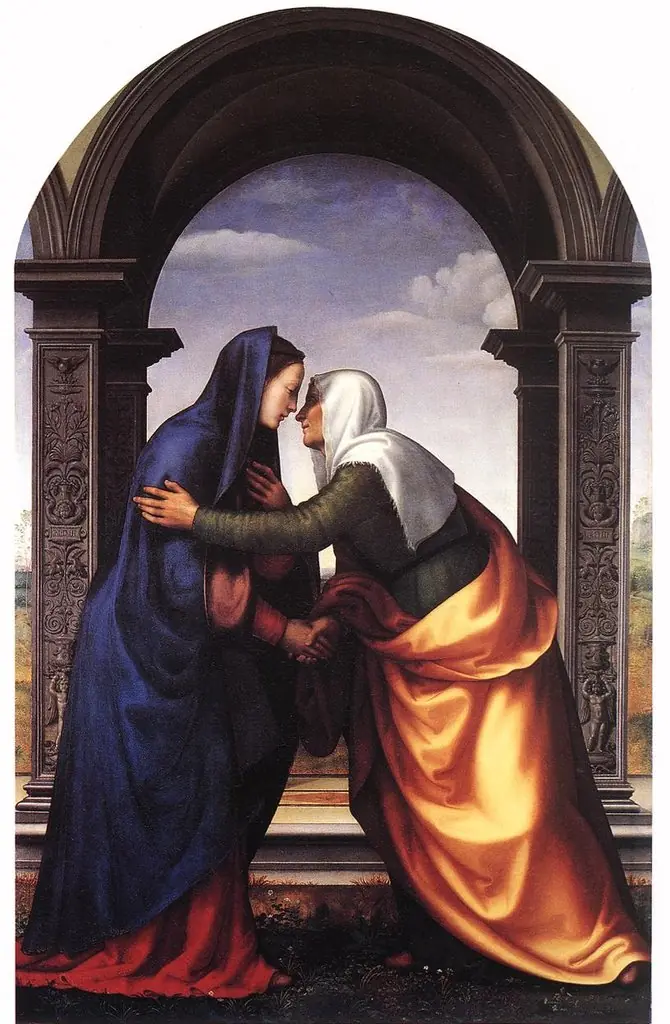 The Visitation
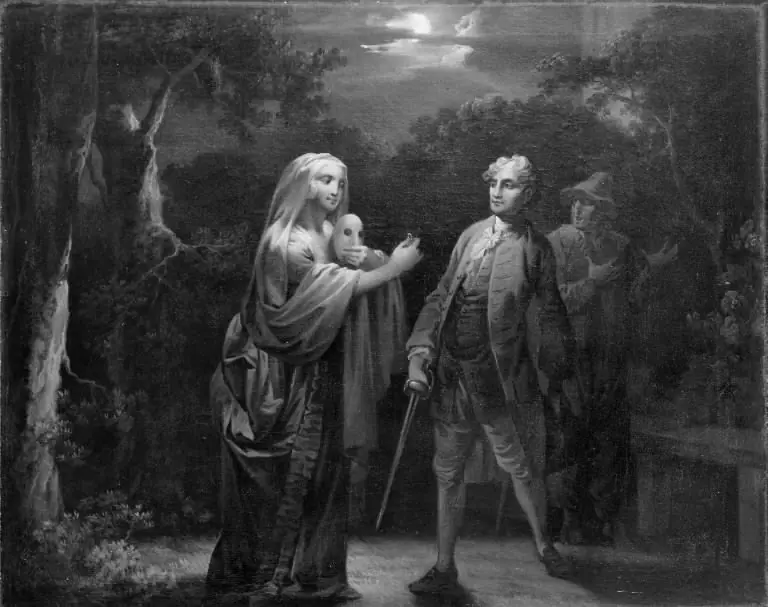 De Usynlige, III akt, 3. scene
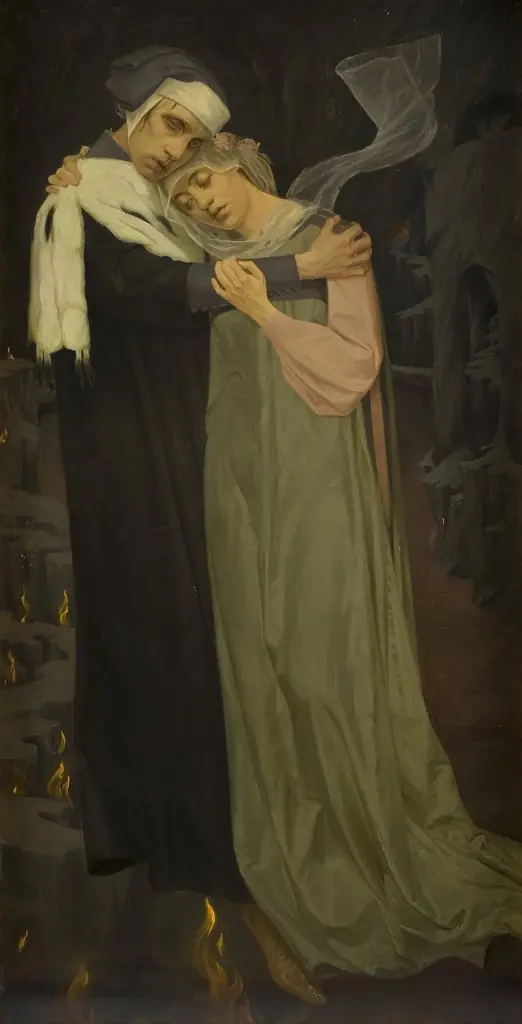 Paolo and Francesca
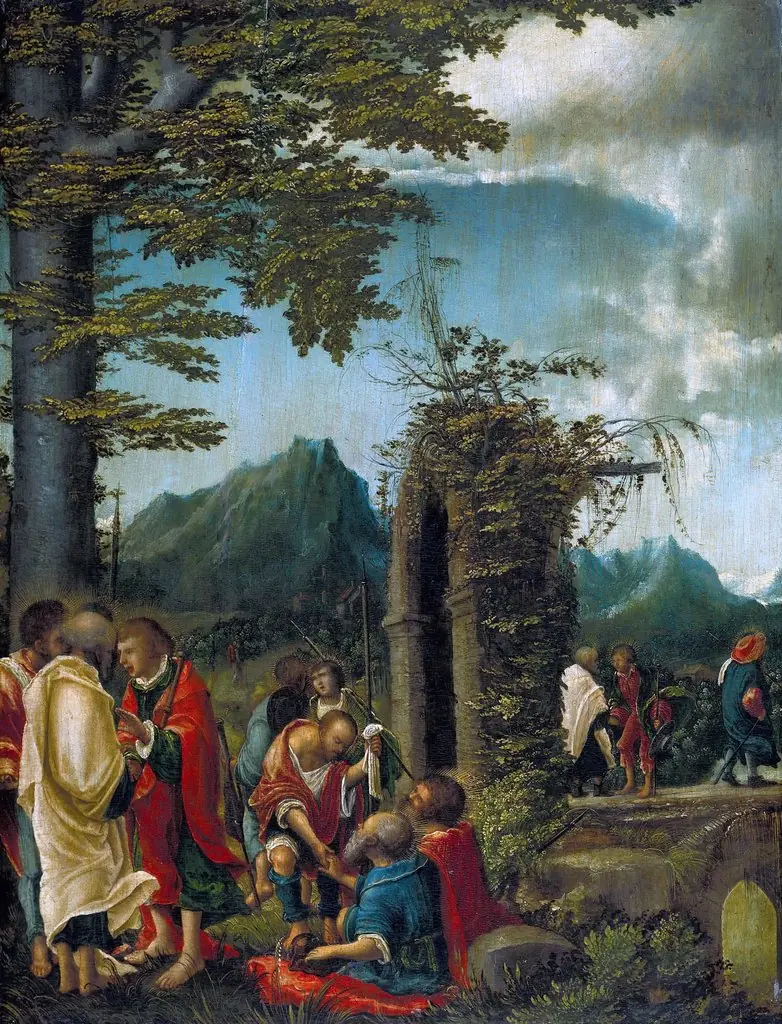 Communion of the Apostles
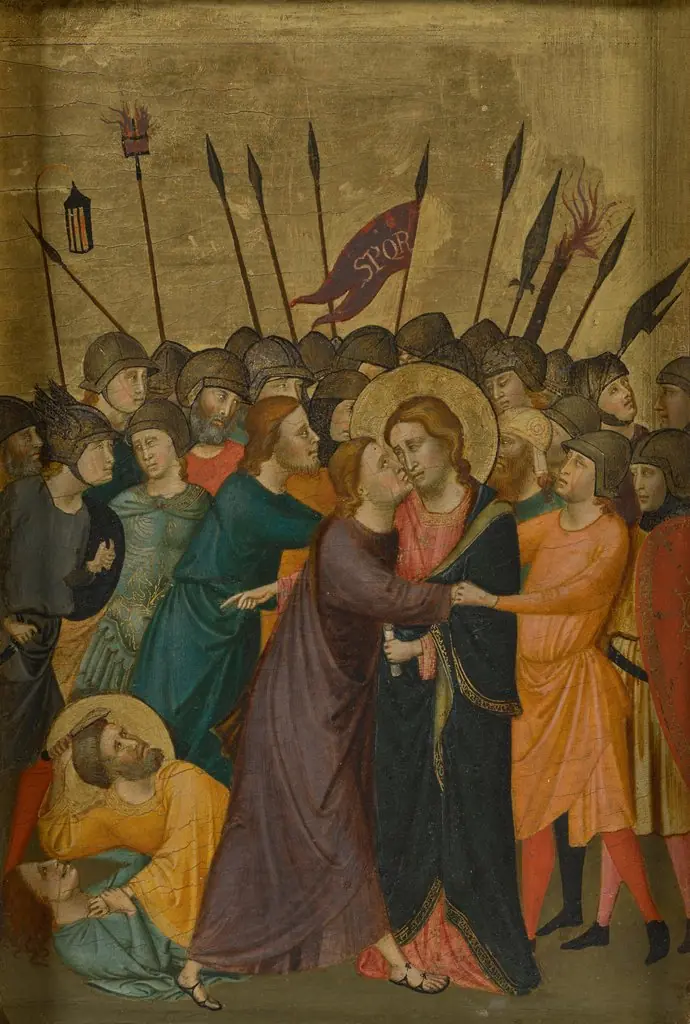 The Arrest of Jesus
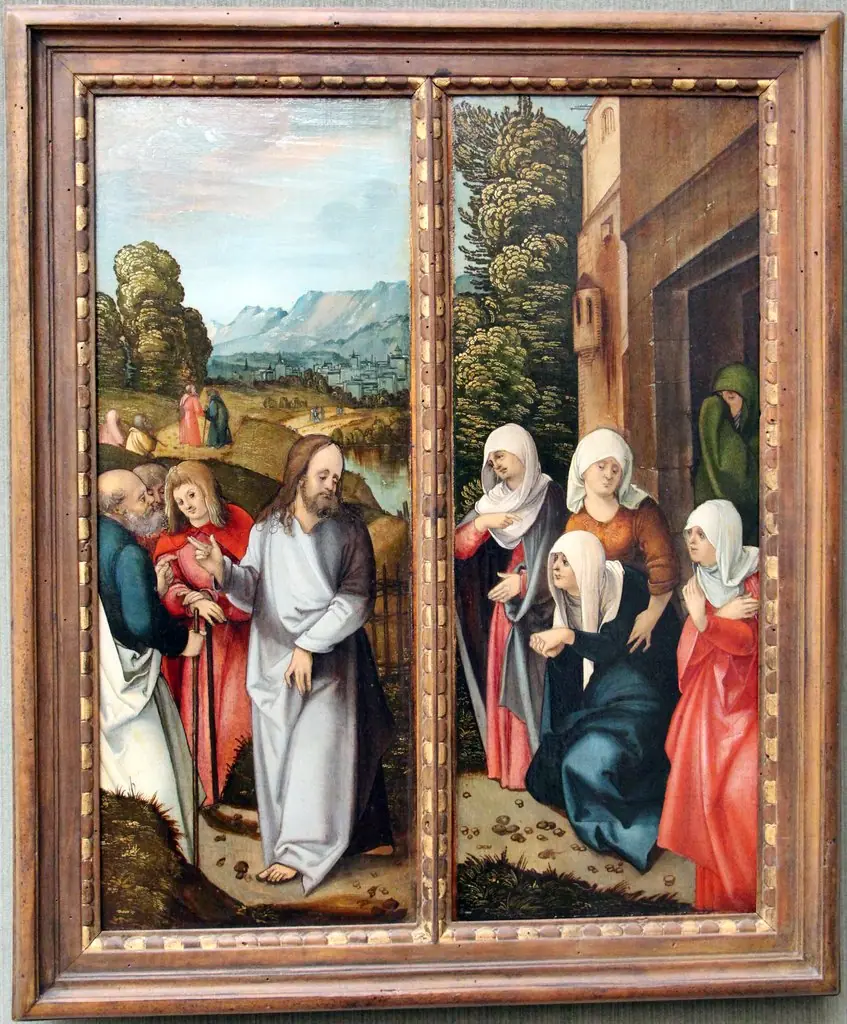 Christus nimmt Abschied von seiner Mutter
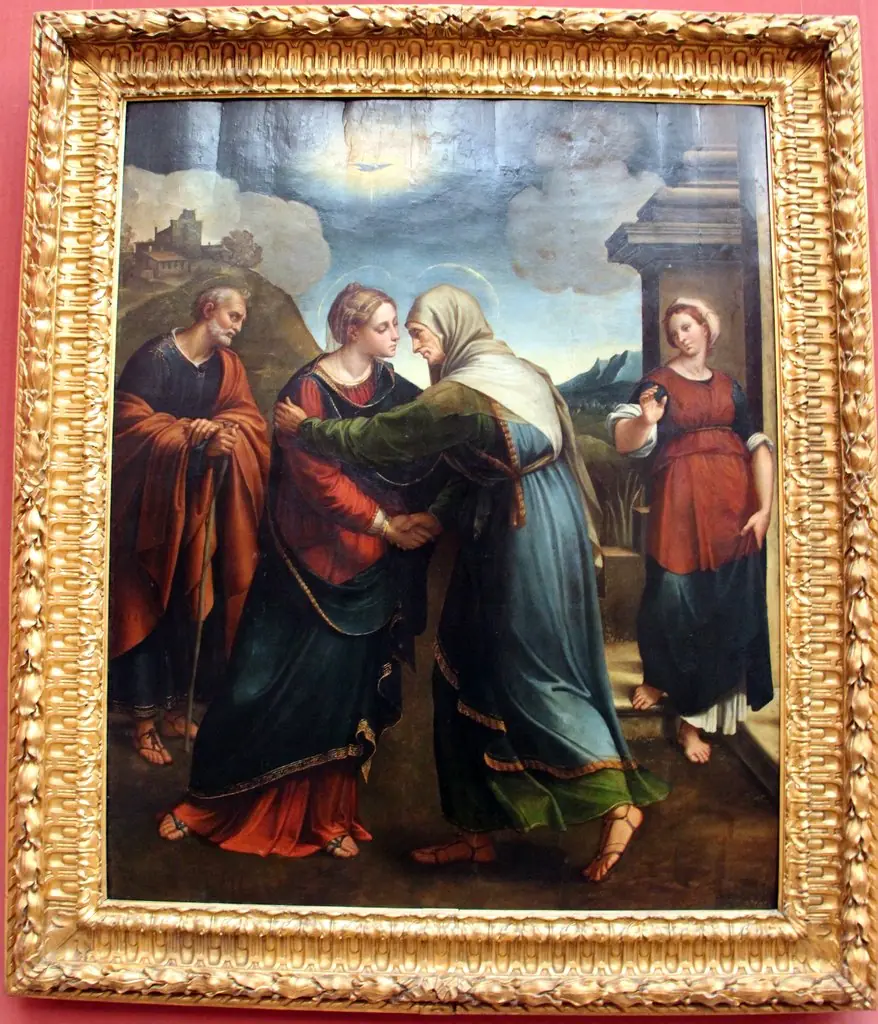 Visitation
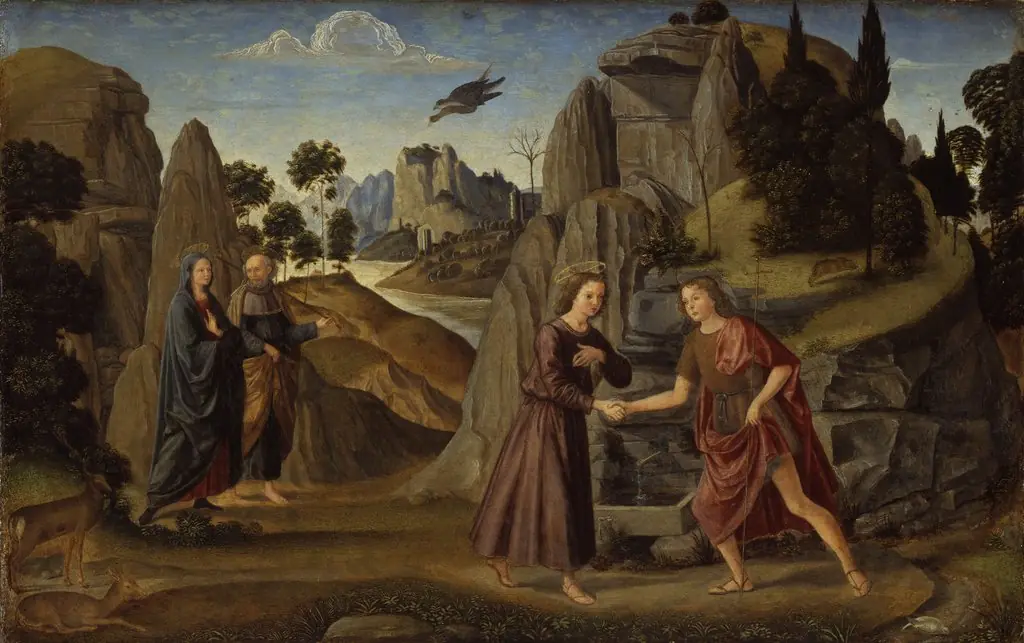 The Meeting of the Young Christ and the Young St. John
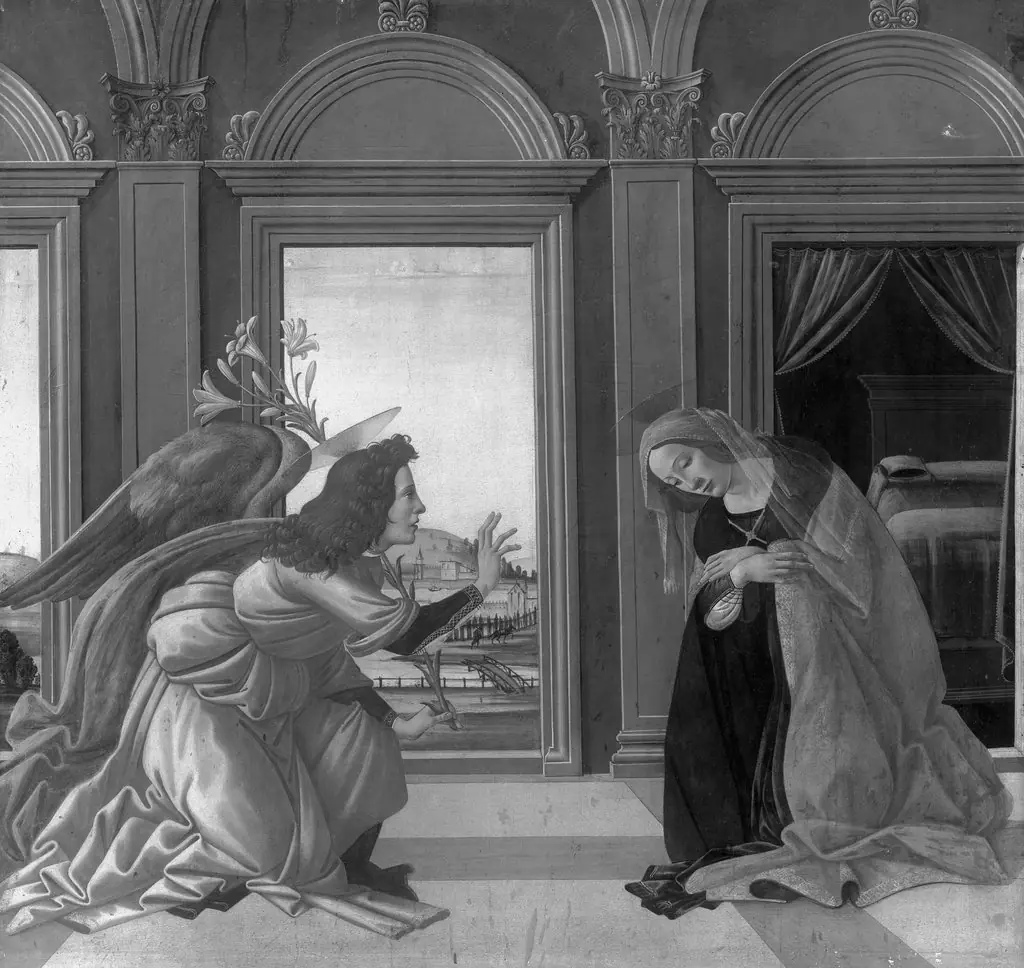 Annunciation to Mary
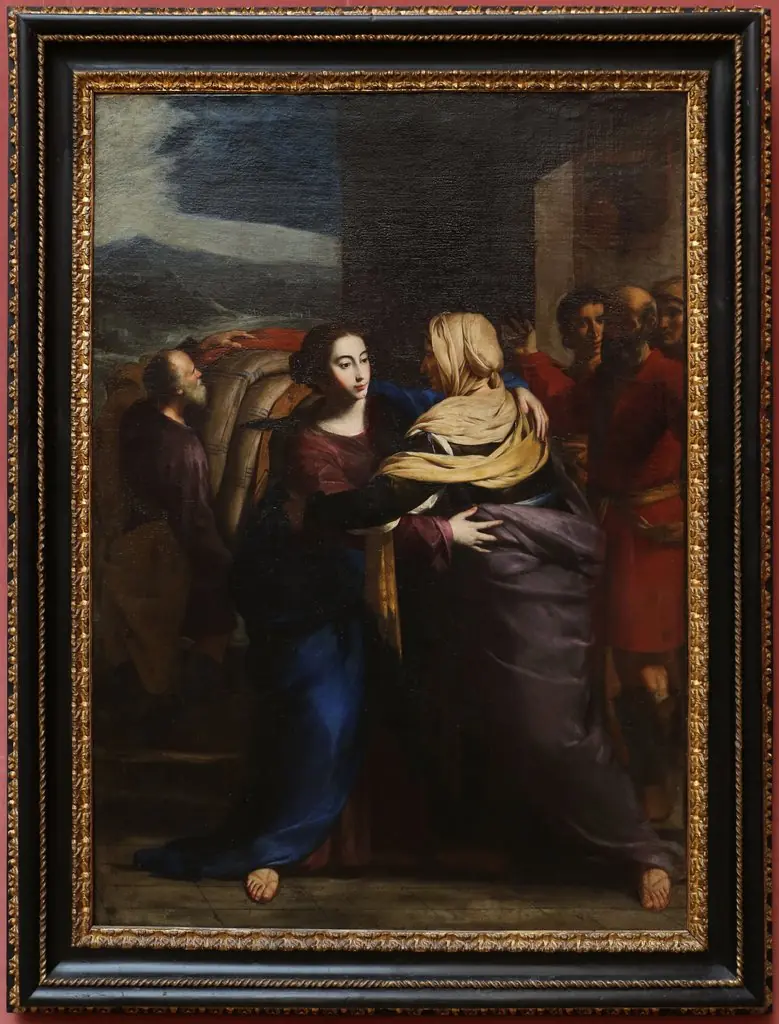 Heimsuchung
 Christ in conversation with a woman
 Landscape with Canopy and a Legionary; the Apparition of the Virgin to Saint James the Greater (on verso)
 Triumphs of Caesar IV
 Christ in the House of Martha and Mary
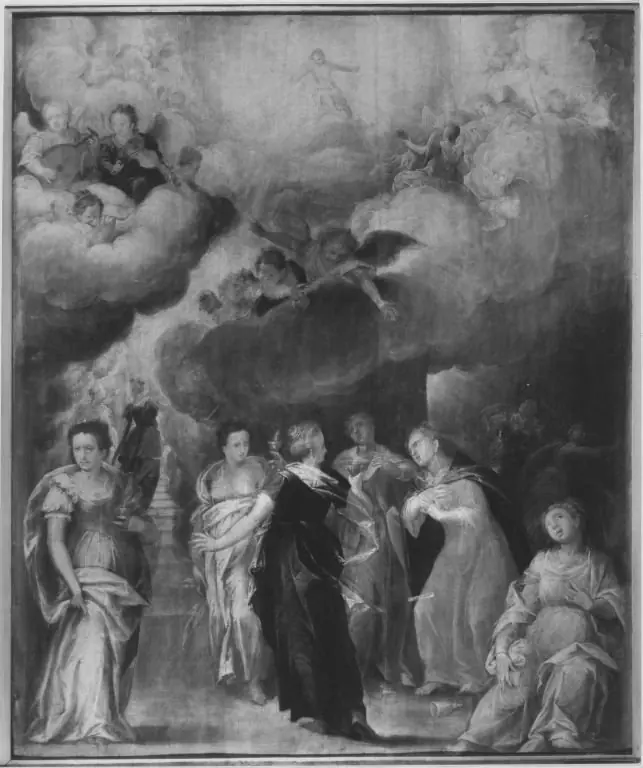 Kluge und törichte Jungfrauen
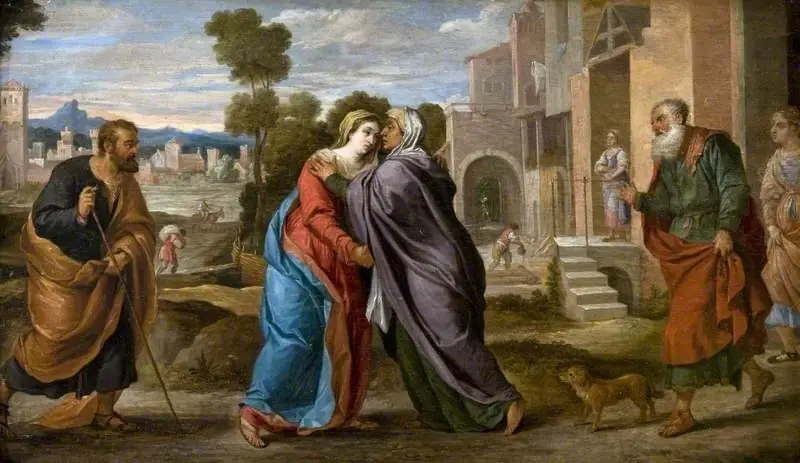 The Visitation (after Jacopo Palma il Vecchio)
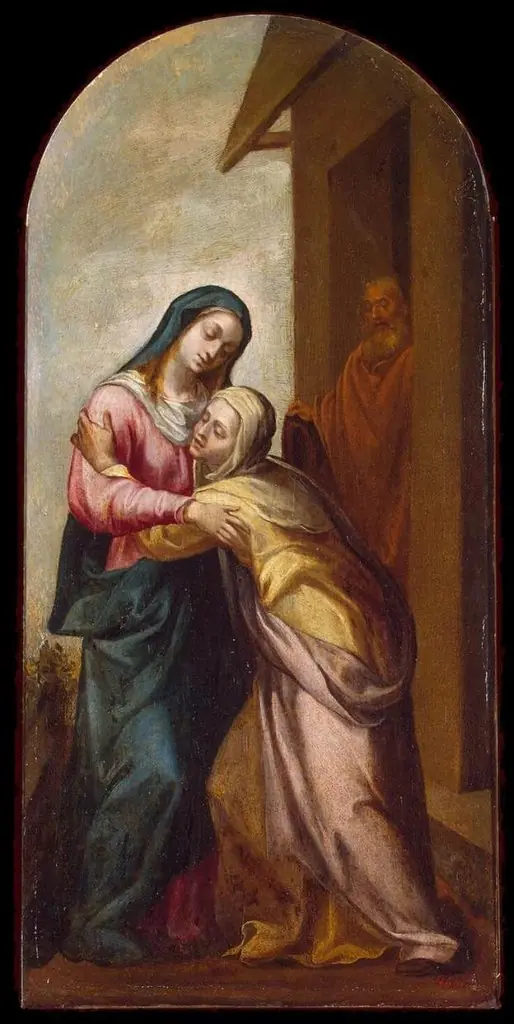 Mary Meeting Elizabeth
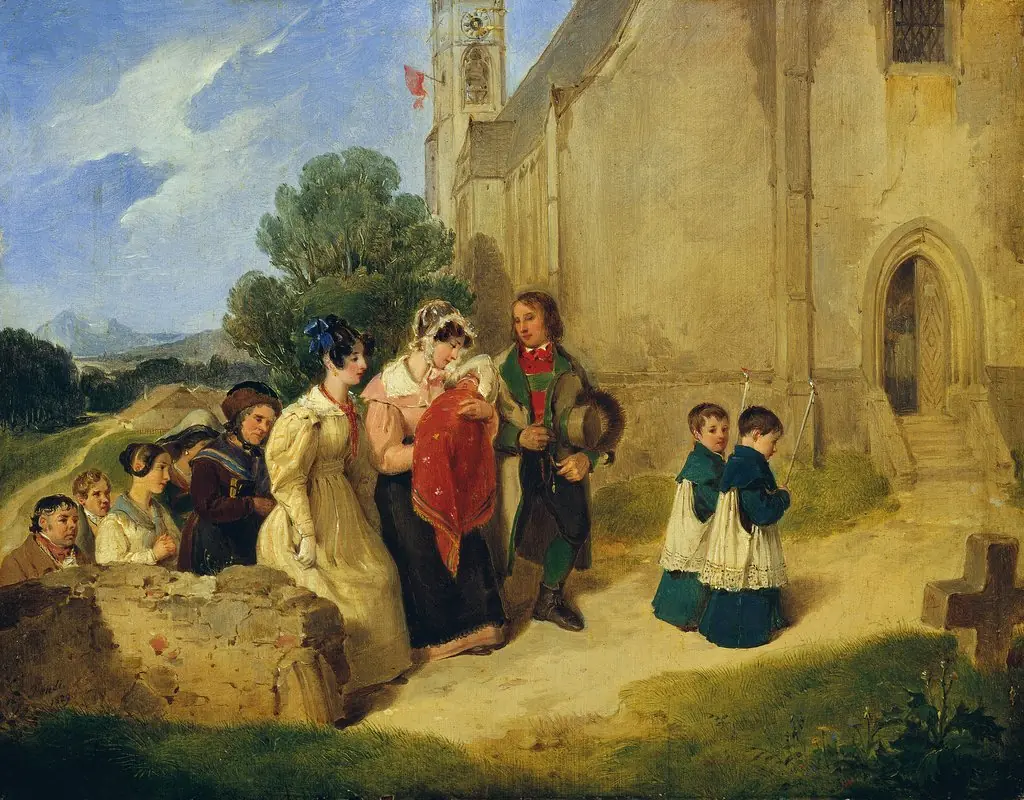 The Baptism Procession
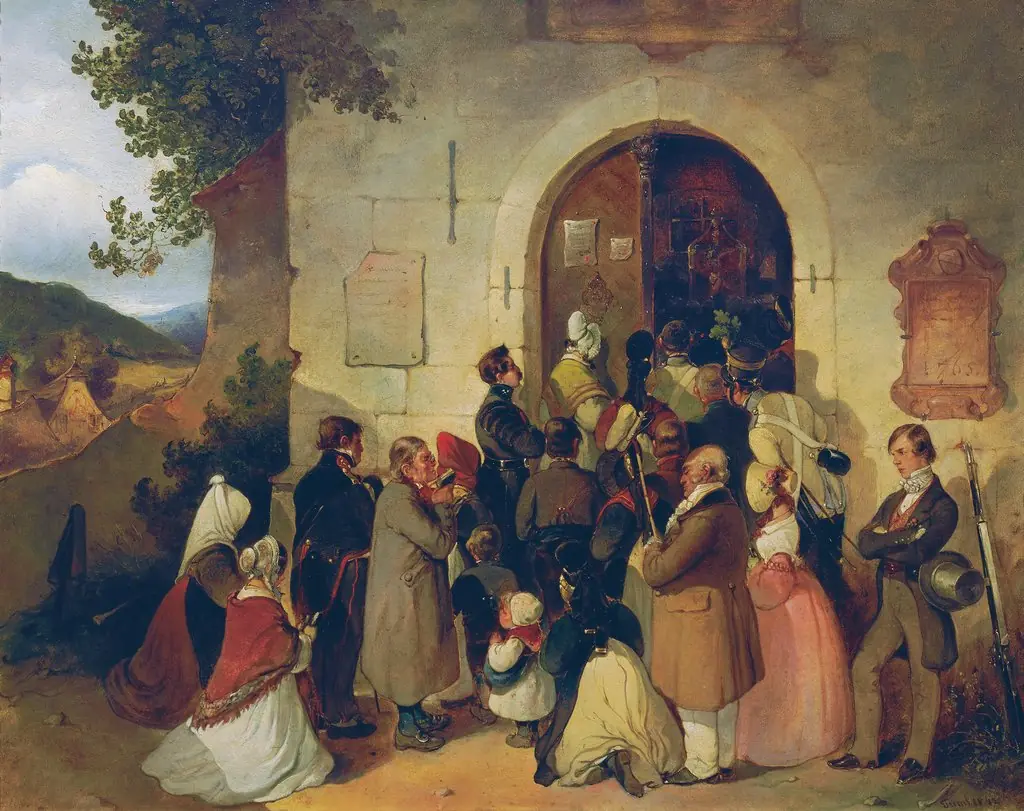 Wallfahrer
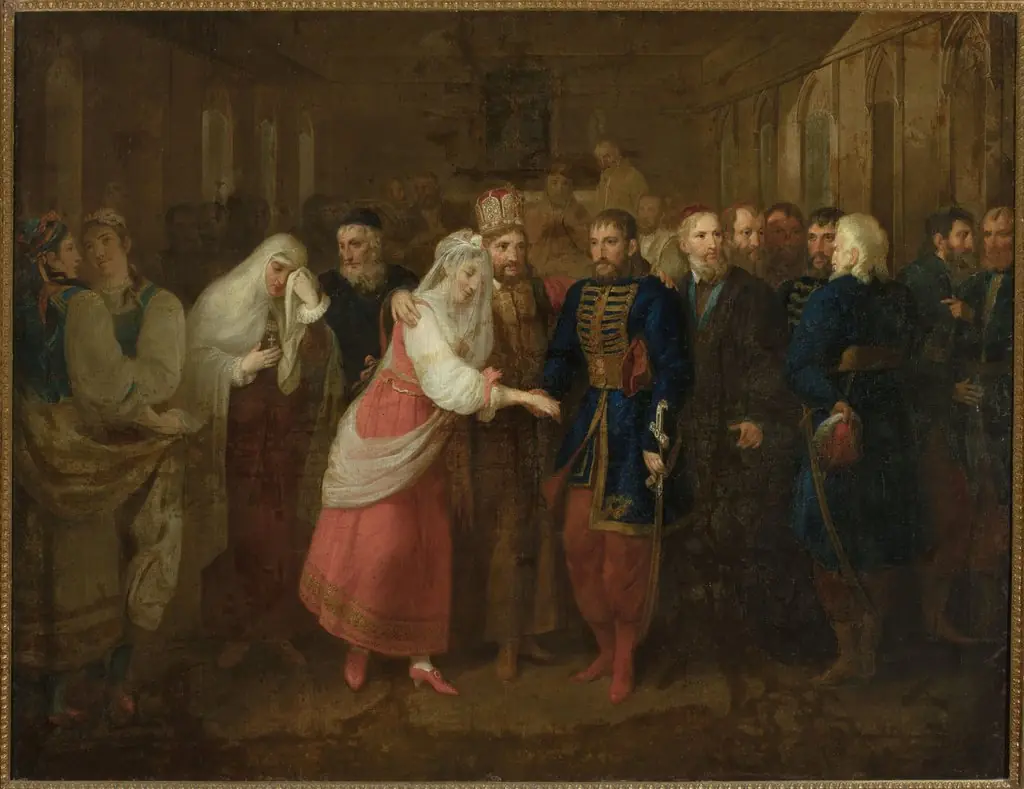 Marriage of Mieszko and Dobrawa
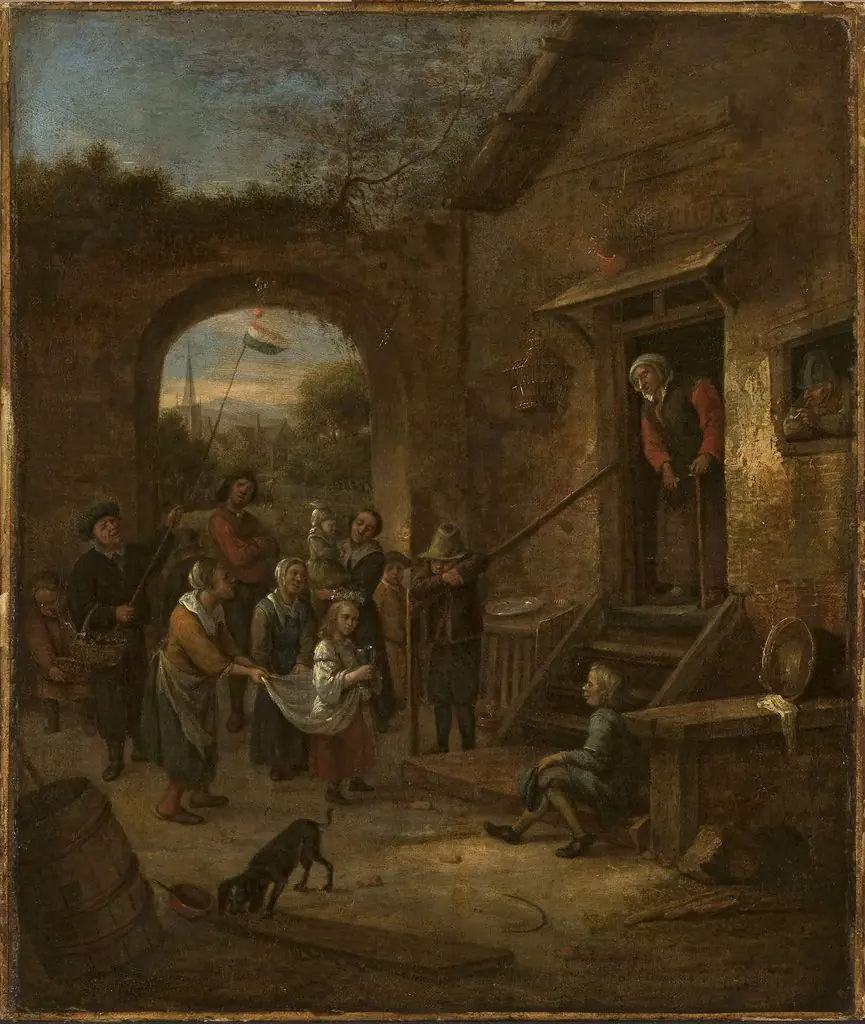 May feast (Gathering alms)
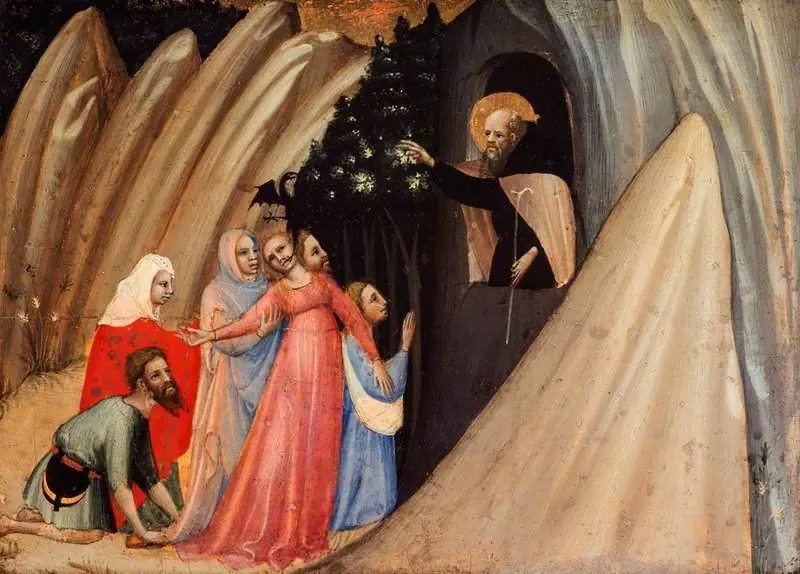 Saint Anthony Abbot Exorcising a Woman Possessed by the Devil
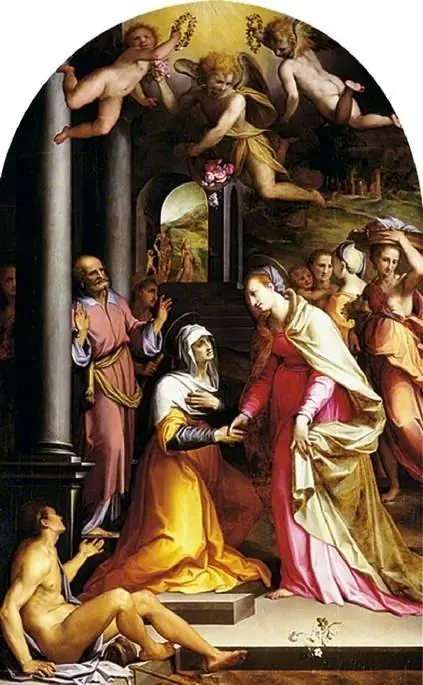 The Visitation
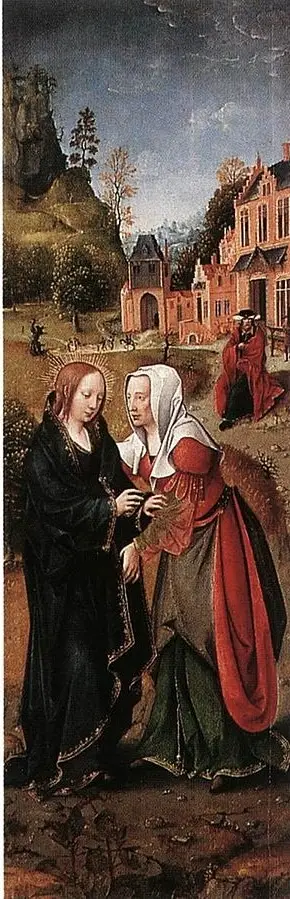 A Visitação (Groeninge)
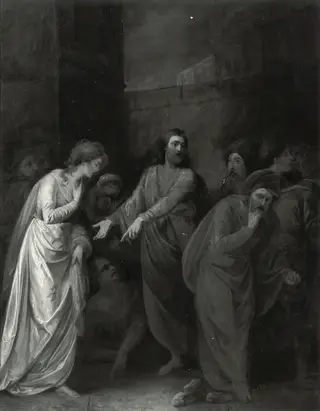 The Woman Accused of Adultery
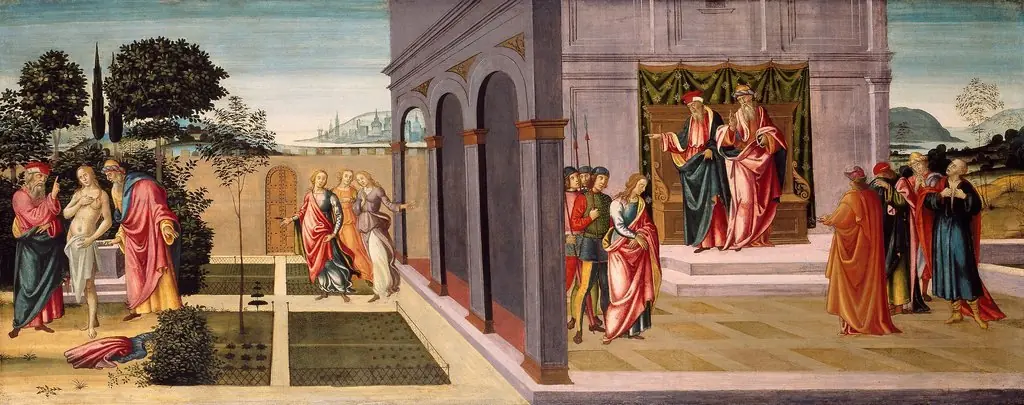 Susanna and the Elders in the Garden, and the Trial of Susanna before the Elders
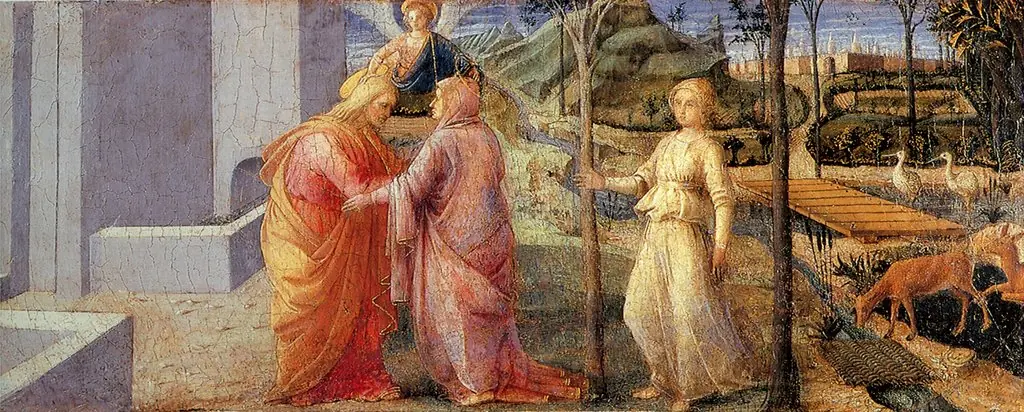 The Meeting at the Golden Gate
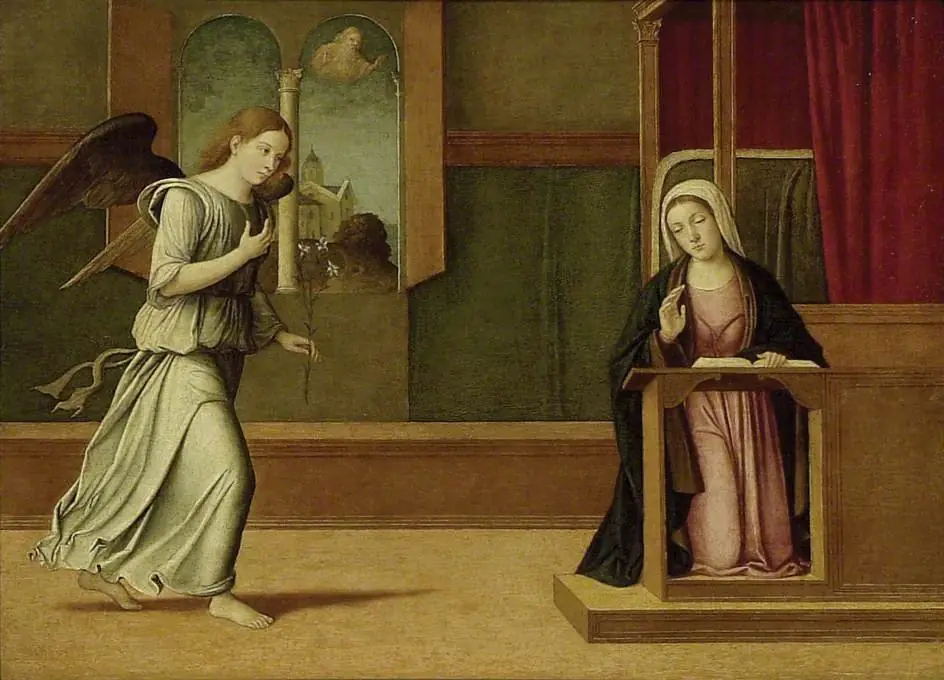 The Annunciation
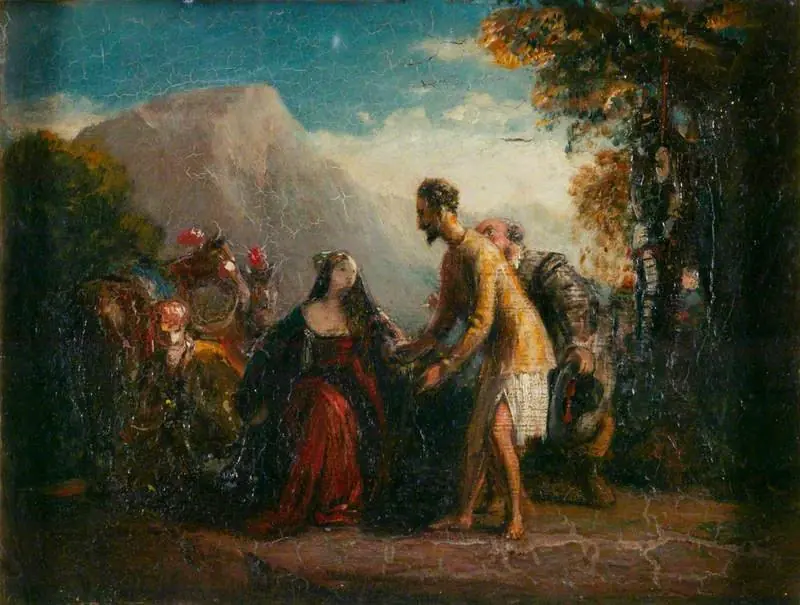 Don Quixote and Dorothea (from Cervantes' novel)
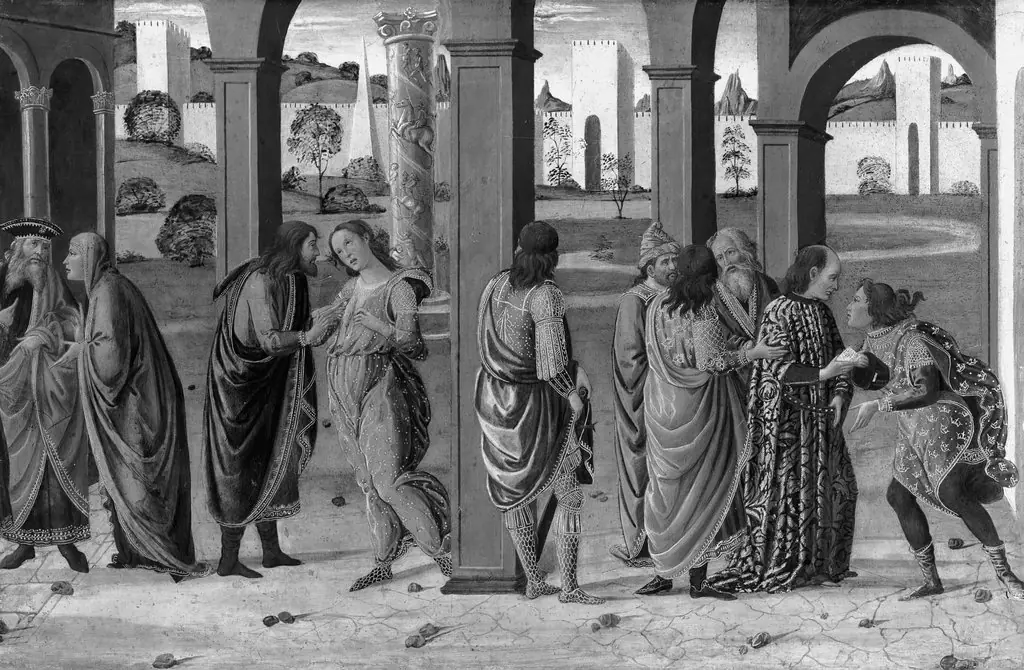 Julius Caesar before his assassination
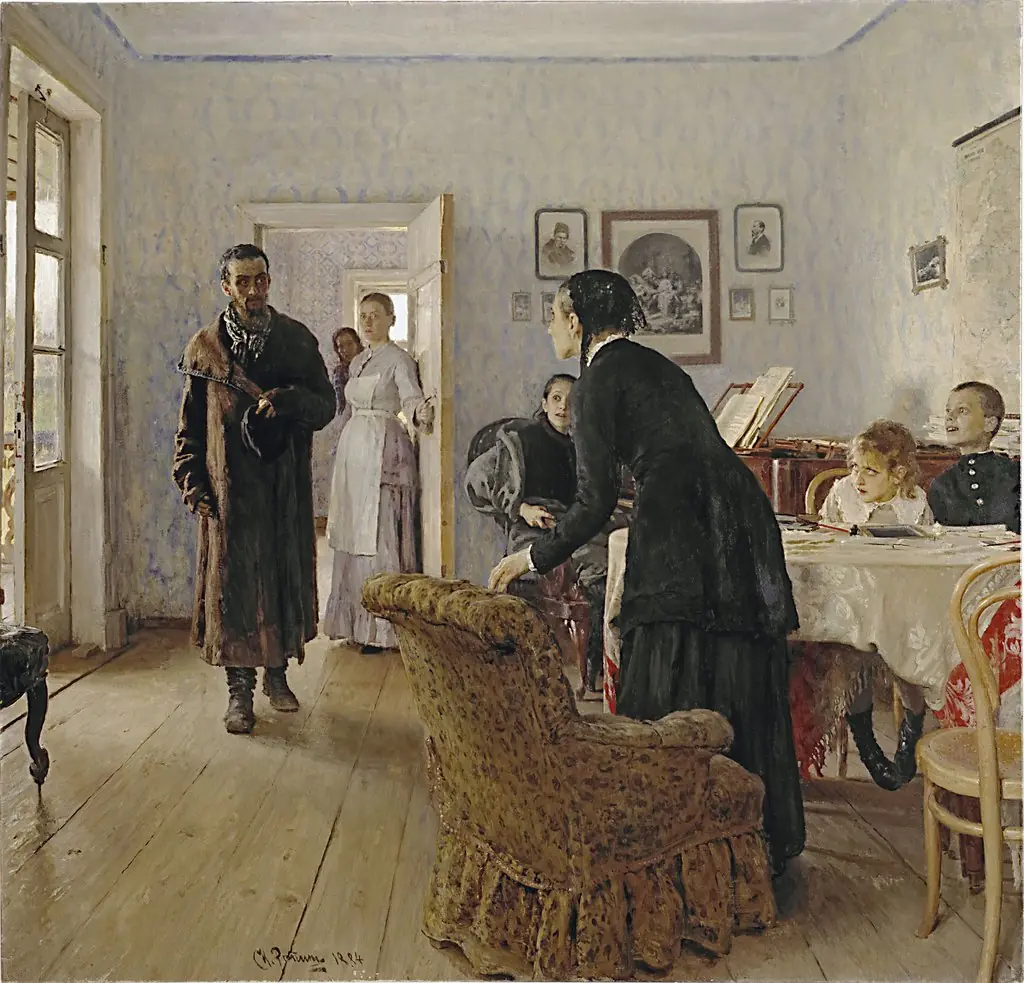 They Did Not Expect Him
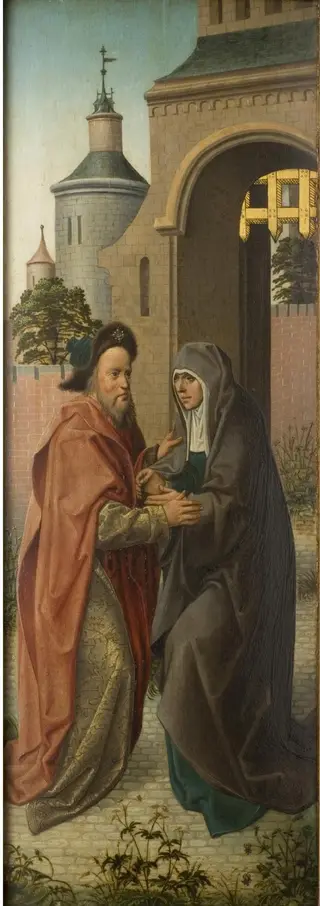 The Meeting at the Golden Gate
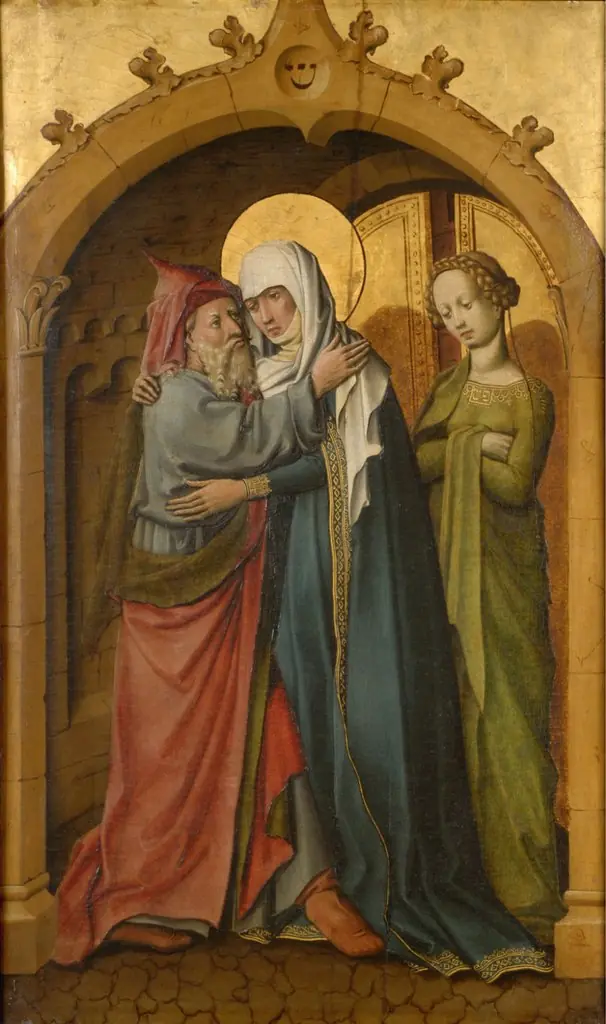 The Meeting at the Golden Gate
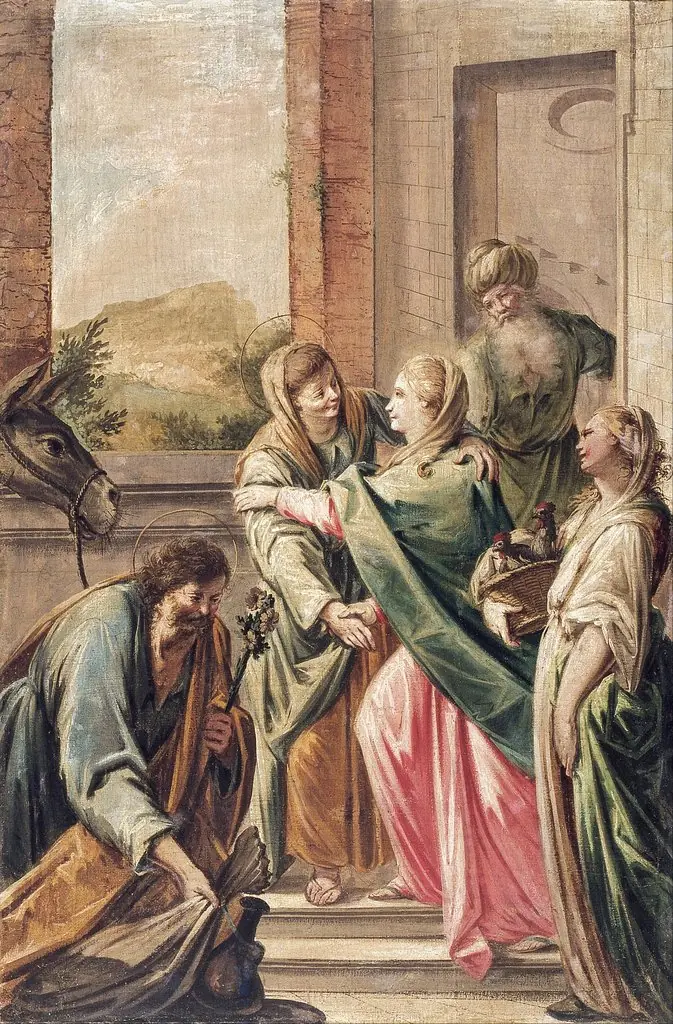 Visitation
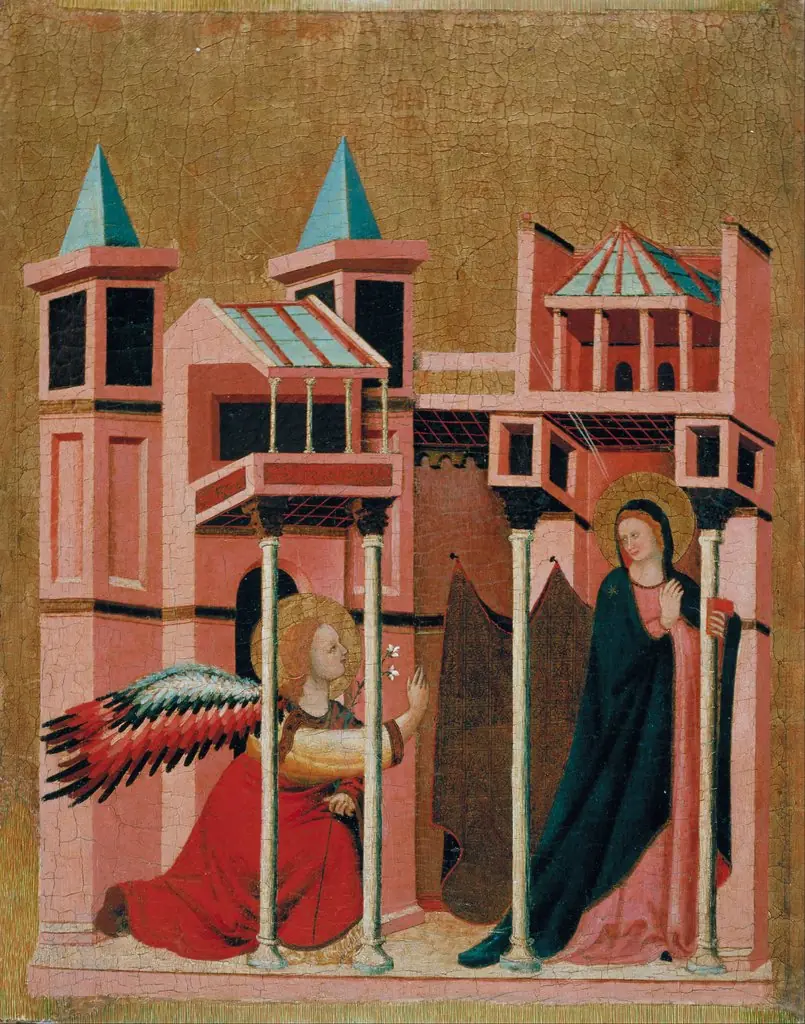 Annunciation
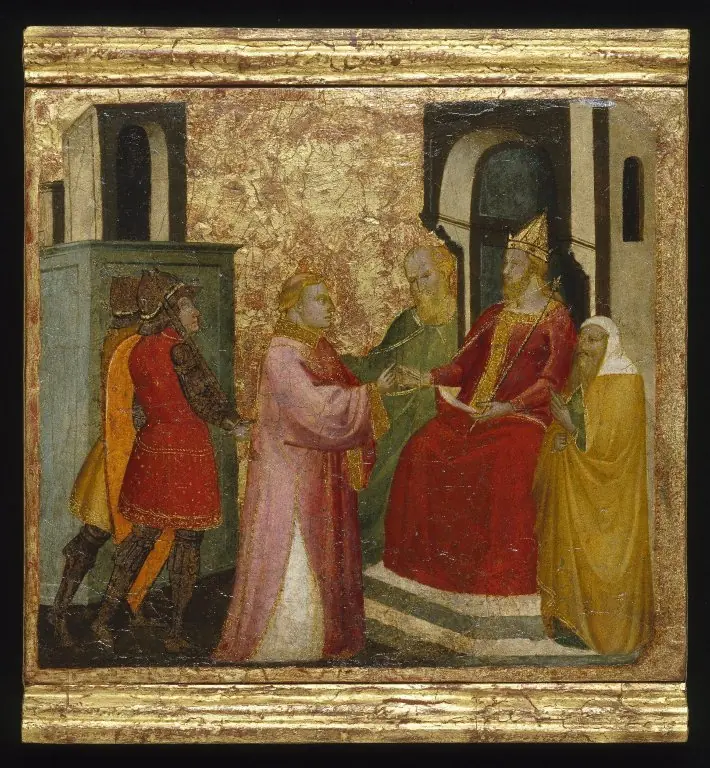 Saint Lawrence Arraigned Before the Prefect Valerianus
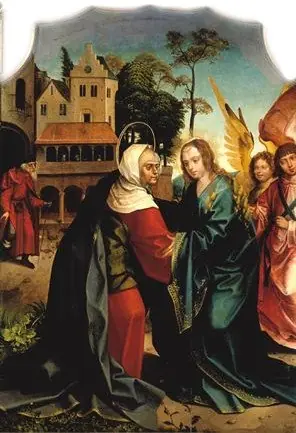 Visitation
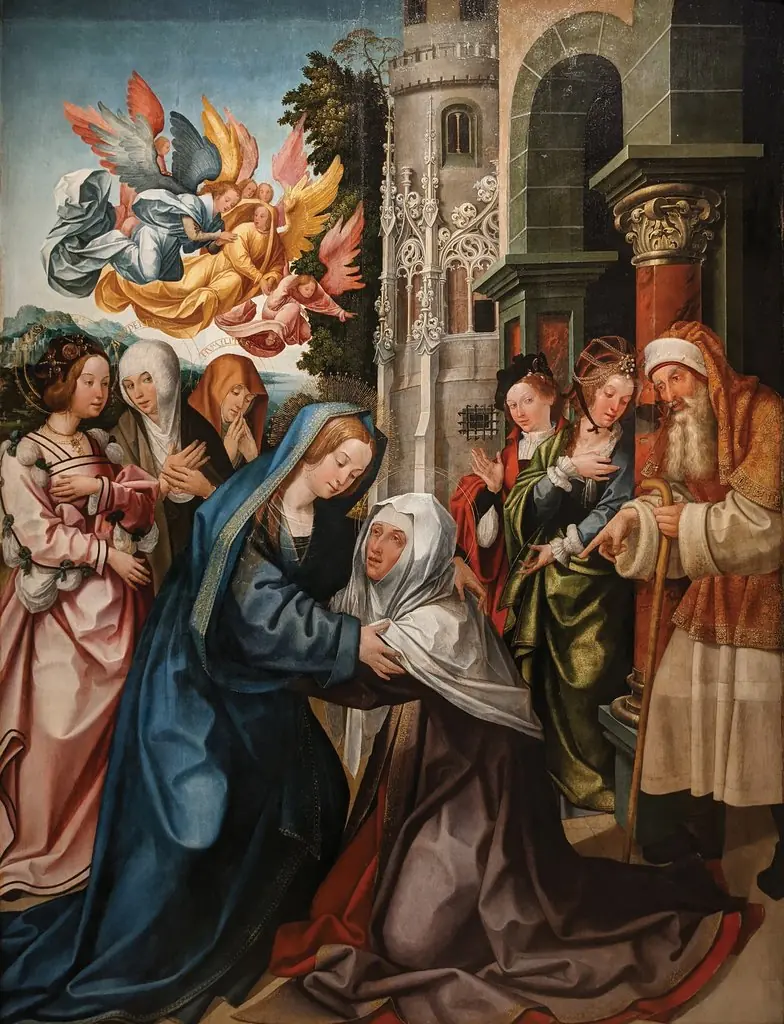 Visitation - Saint Benedict altarpiece
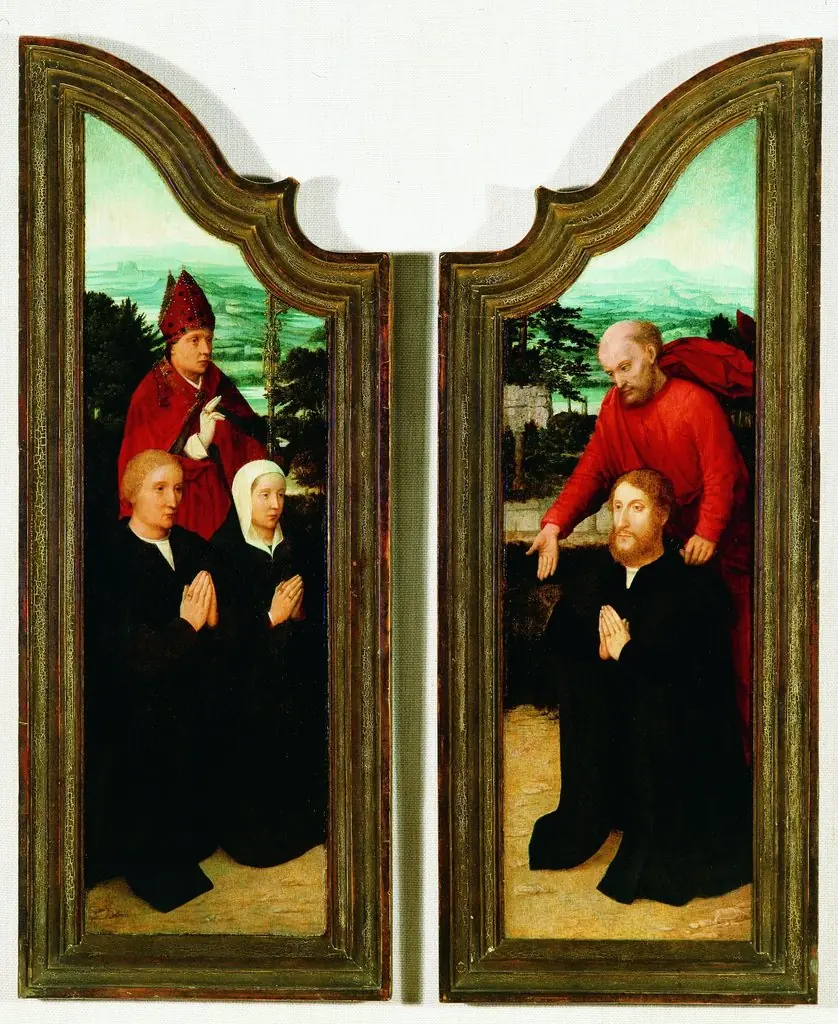 Saints and Donors
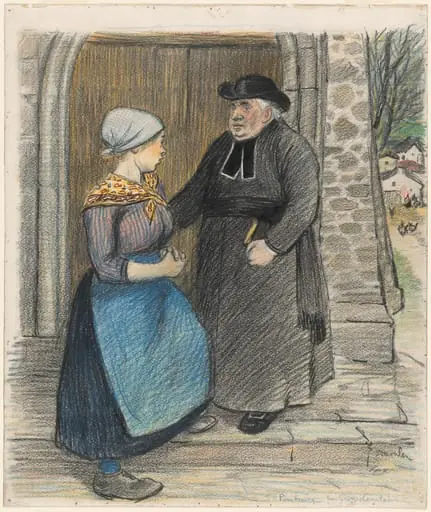 Penitence
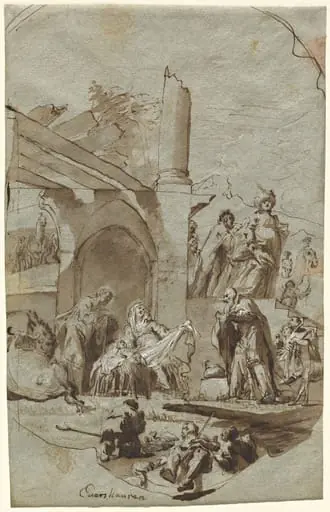 The Adoration of the Magi
 Christ and the Woman Taken in Adultery
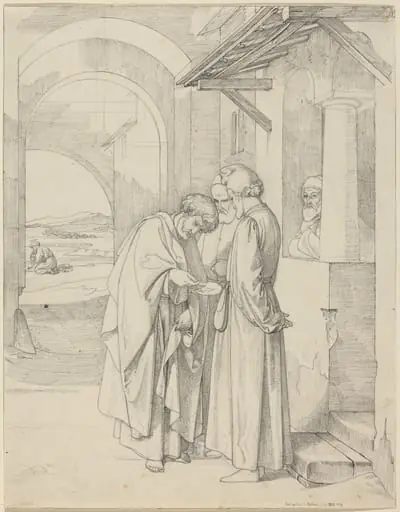 Peter Paying the Temple Tax
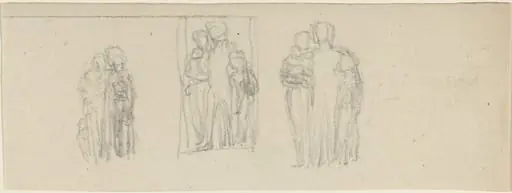 Three Groups of Figures (Parents and Children?)
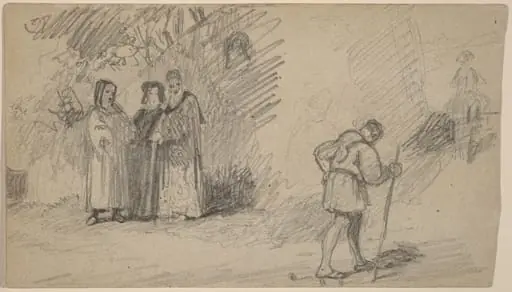 Son and the Donkey
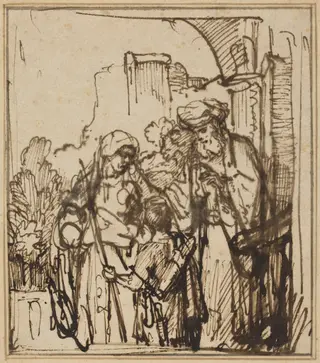 The Dismissal of Hagar
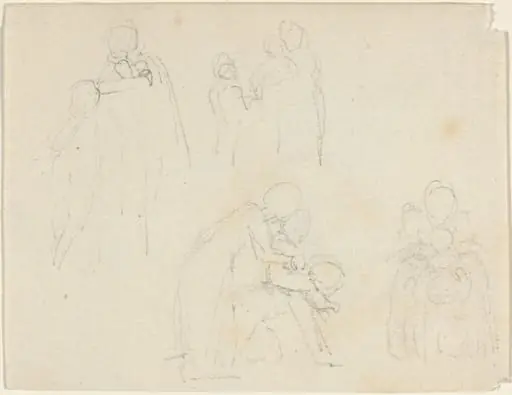 Four Groups of Figures
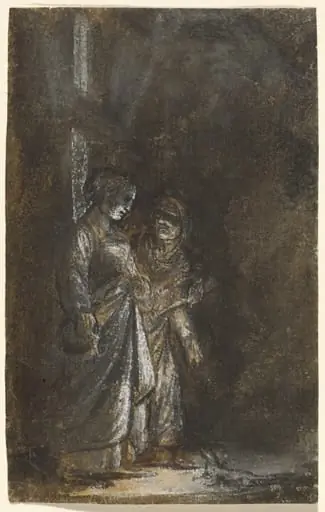 Ceres Changes Stellio into a Lizard
![Joseph and His Brother in Egypt [verso]](https://artifactworldgallery.com/img/joseph-and-his-brother-in-egypt-verso--86cfb4fbb2662a76-w320.webp) Joseph and His Brother in Egypt [verso]
Joseph and His Brother in Egypt [verso]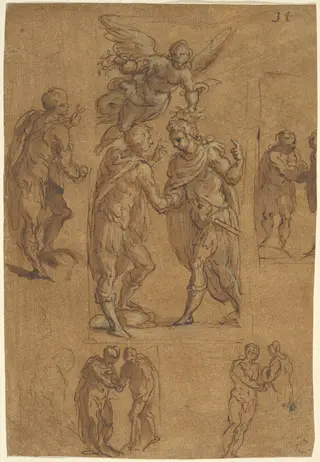 Two Soldiers Crowned by Victory
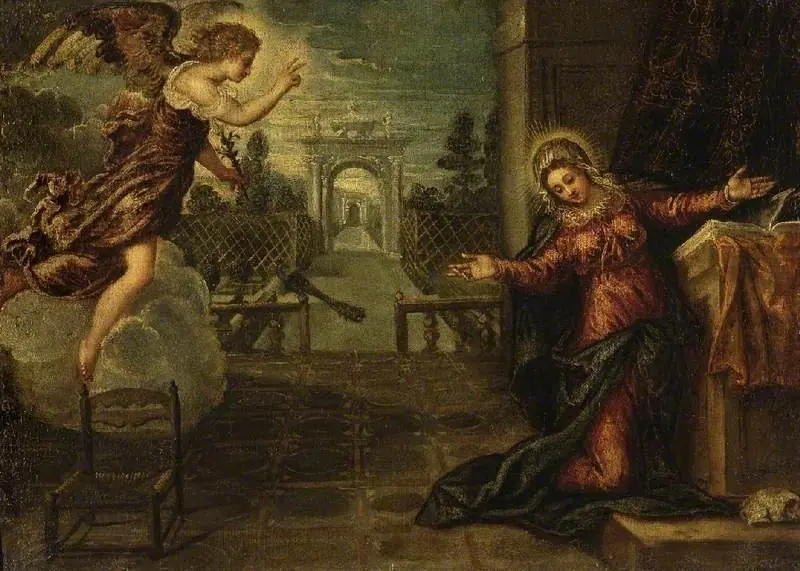 The Annunciation
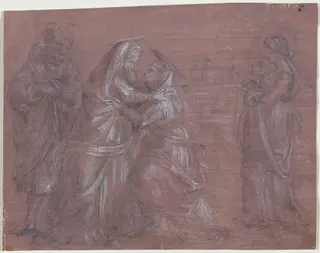 The Visitation
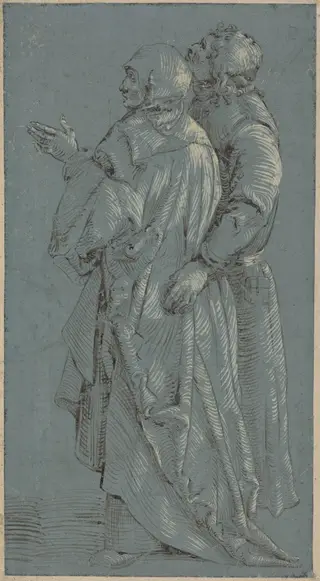 The Virgin and Saint John
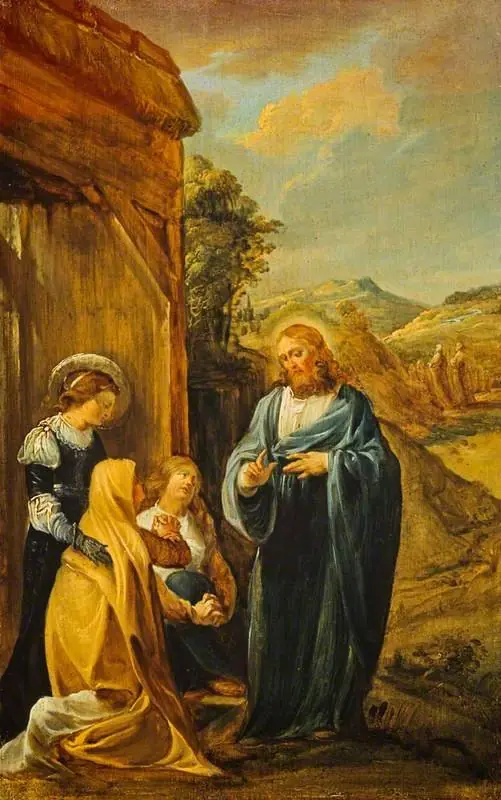 Christ taking leave of his Mother
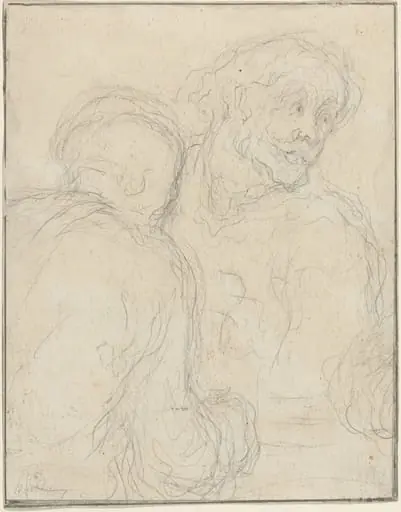 Two Men
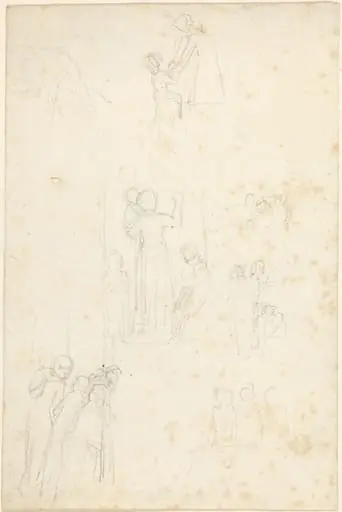 Sheet of Studies
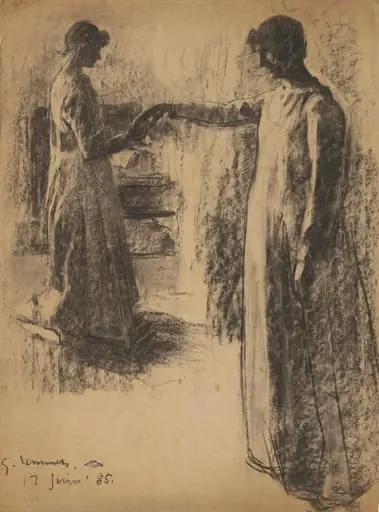 Two Studies of Madame Lemmen
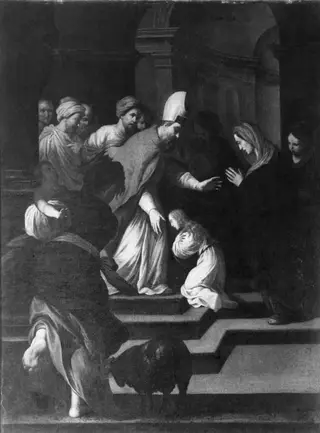 Presentation of the Virgin
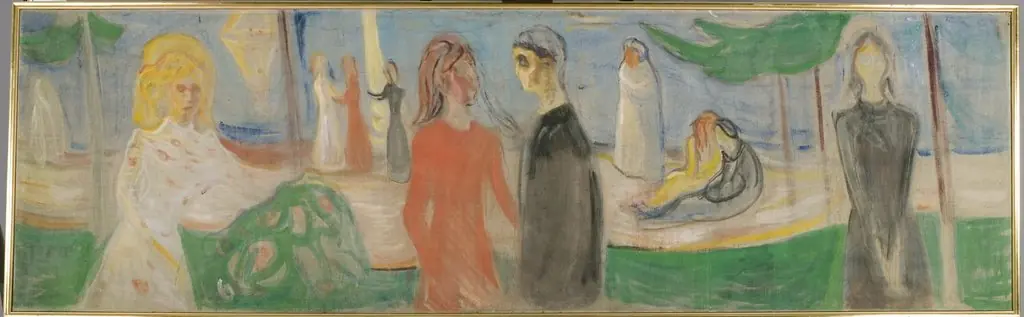 Moonlight on the Beach
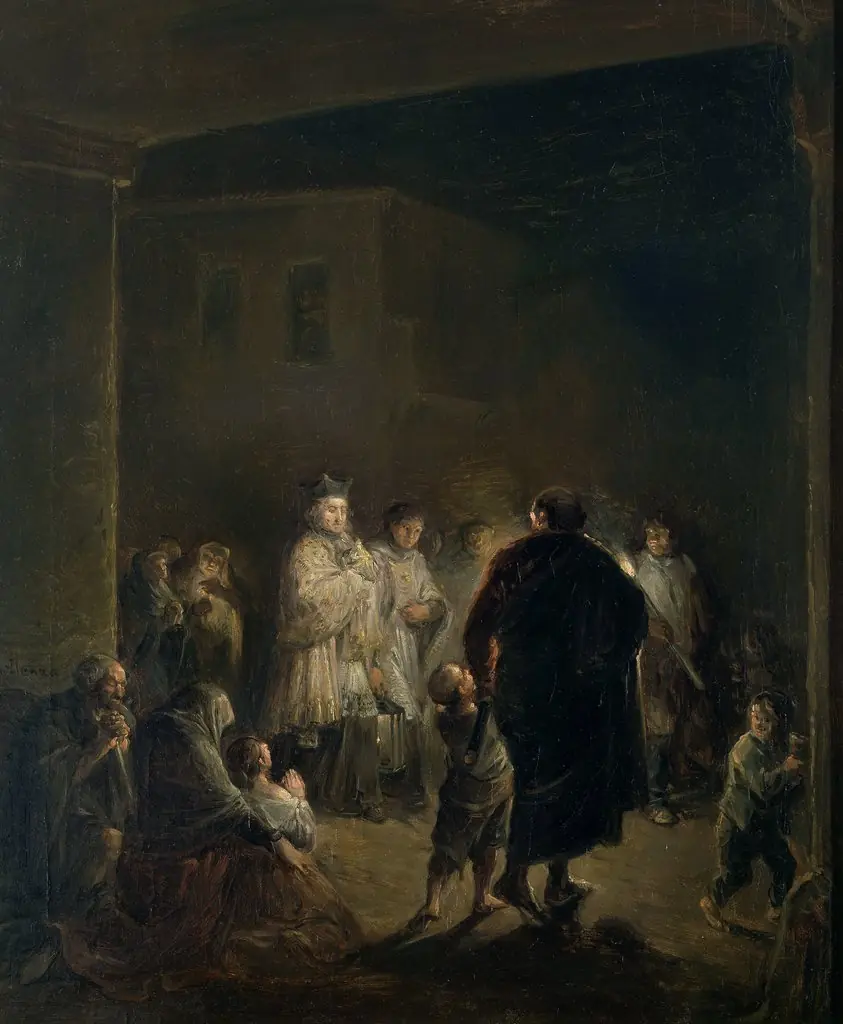 The Viaticum
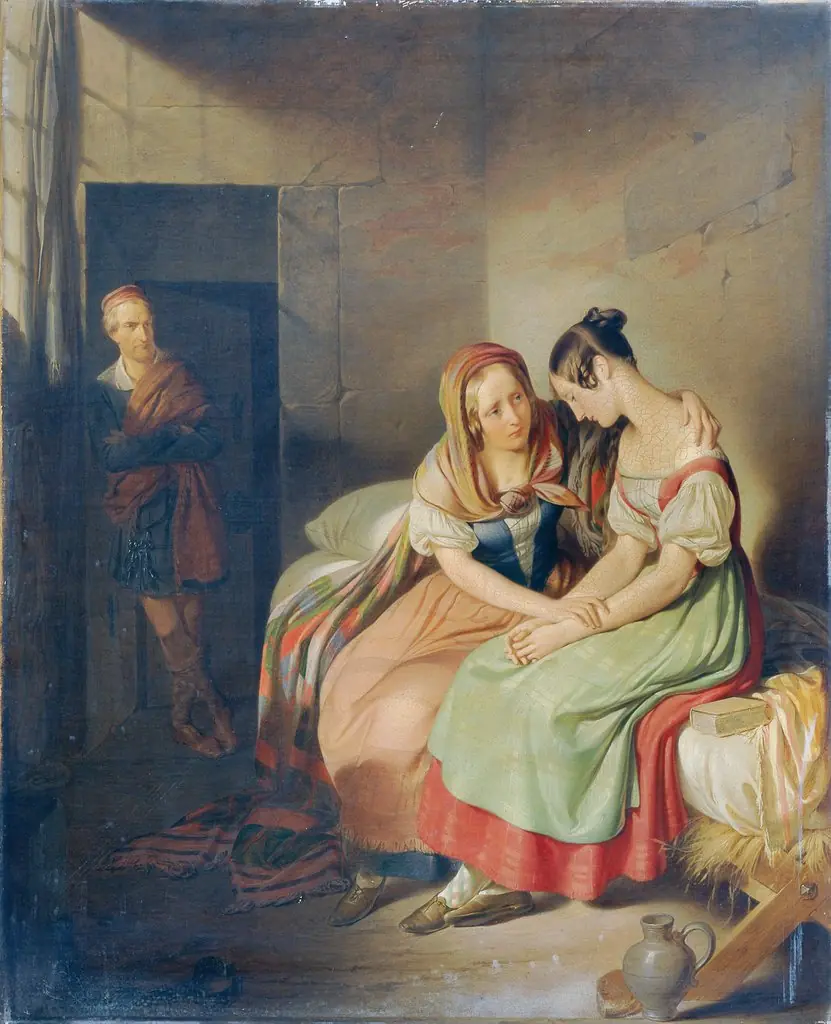 Die Lilie von St. Leonhard
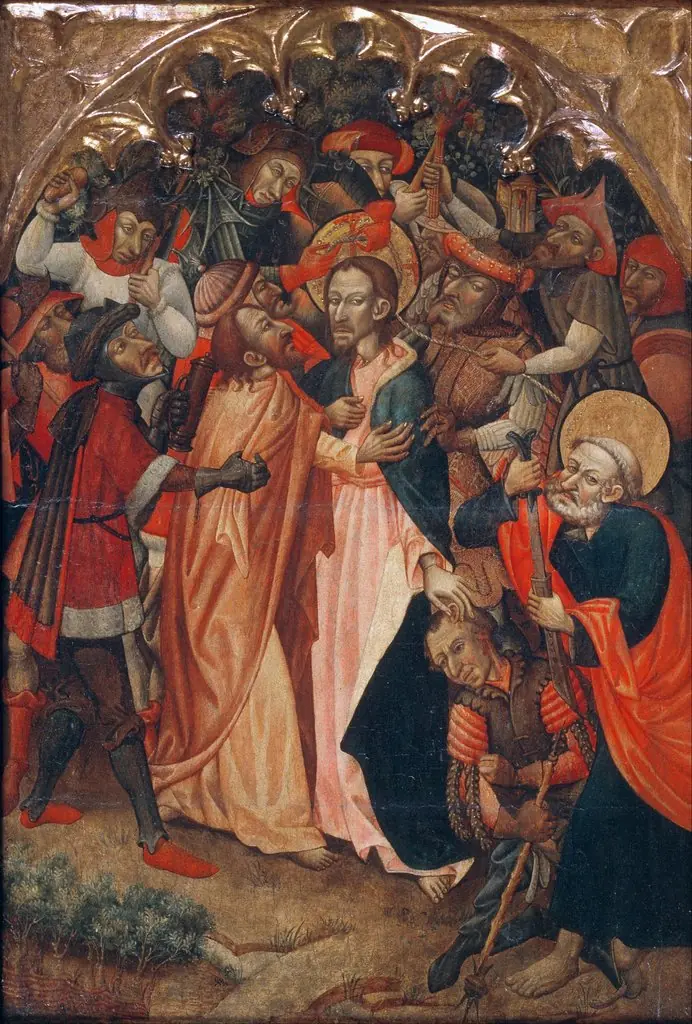 The Kiss of Judas
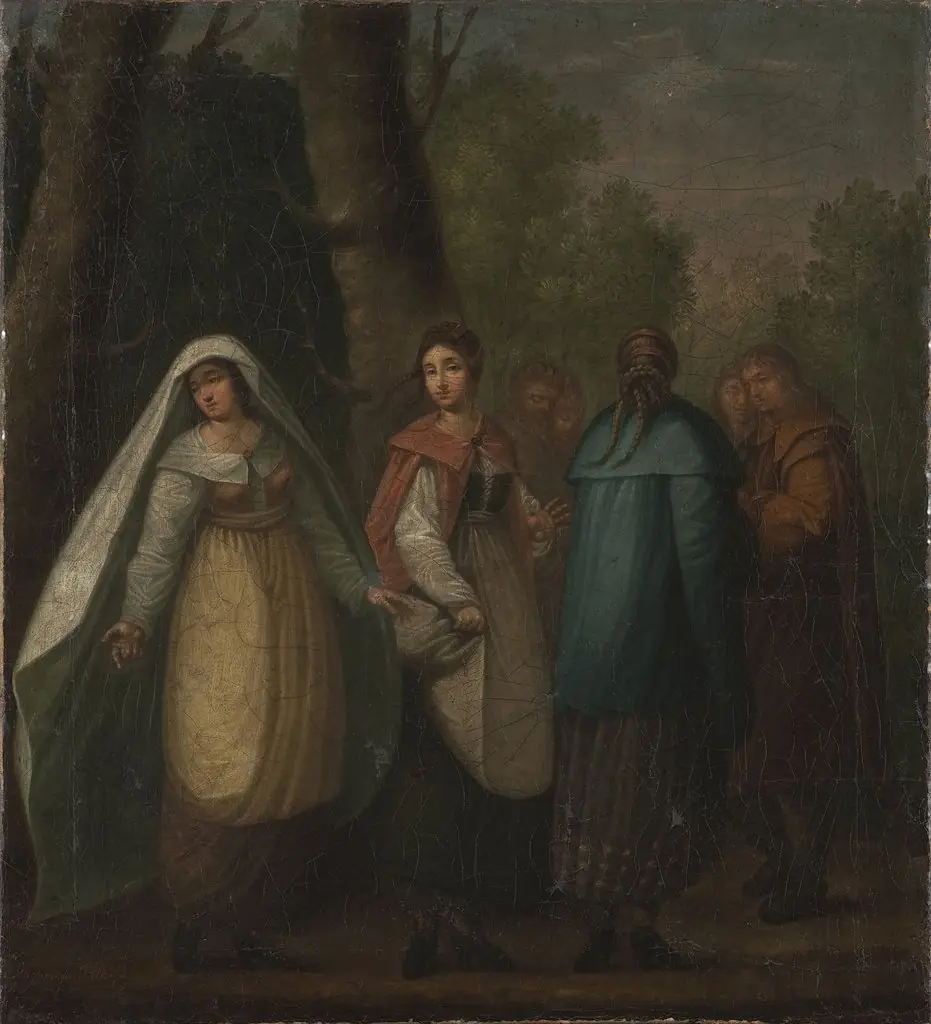 Gathering of ancient Polish women
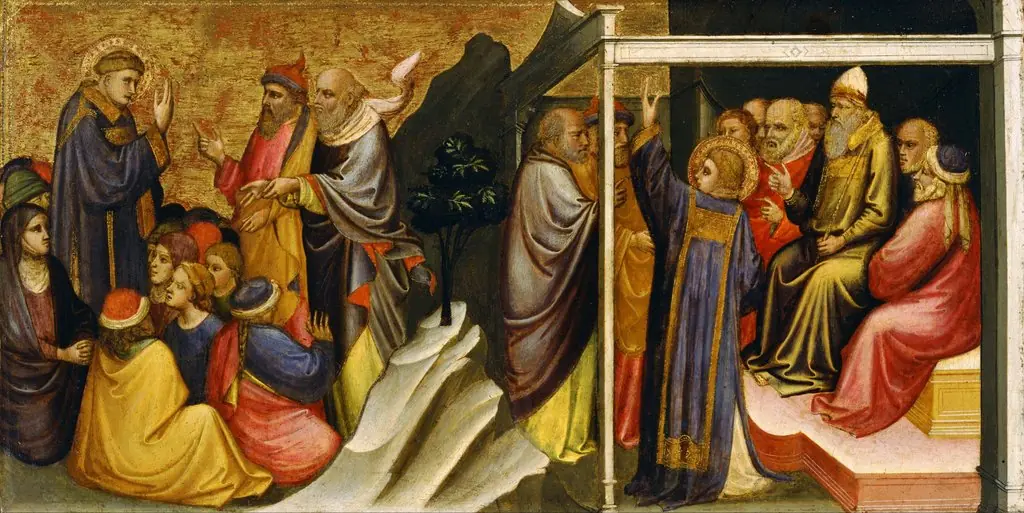 Predella Panel Representing the Legend of St. Stephen: St. Stephen Preaching
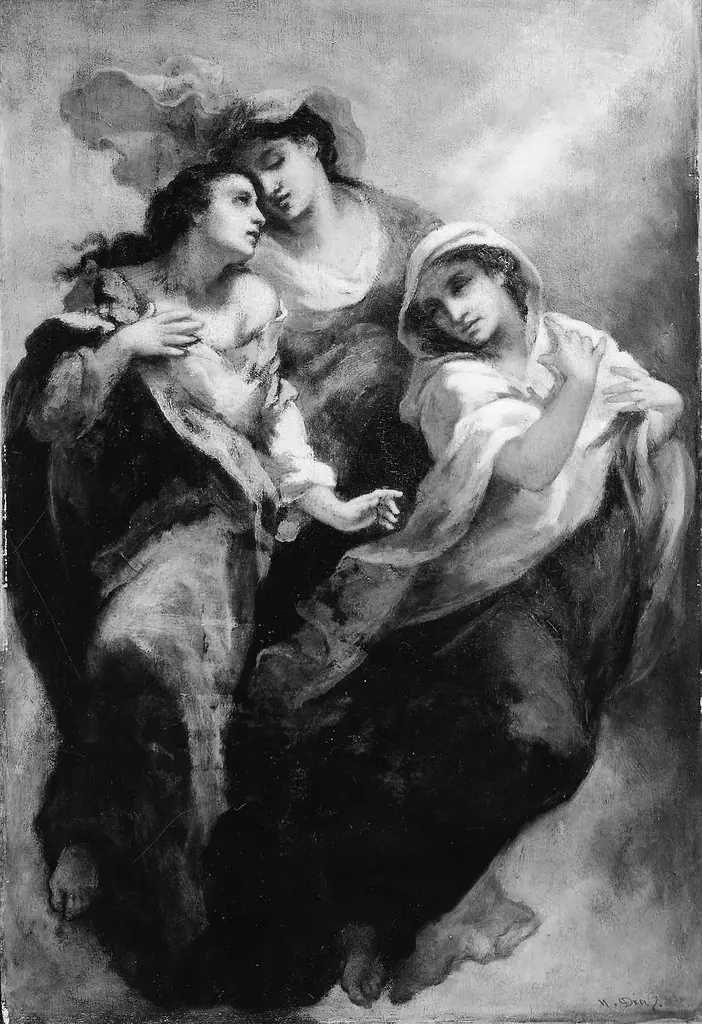 Three Women
 Three Bigots
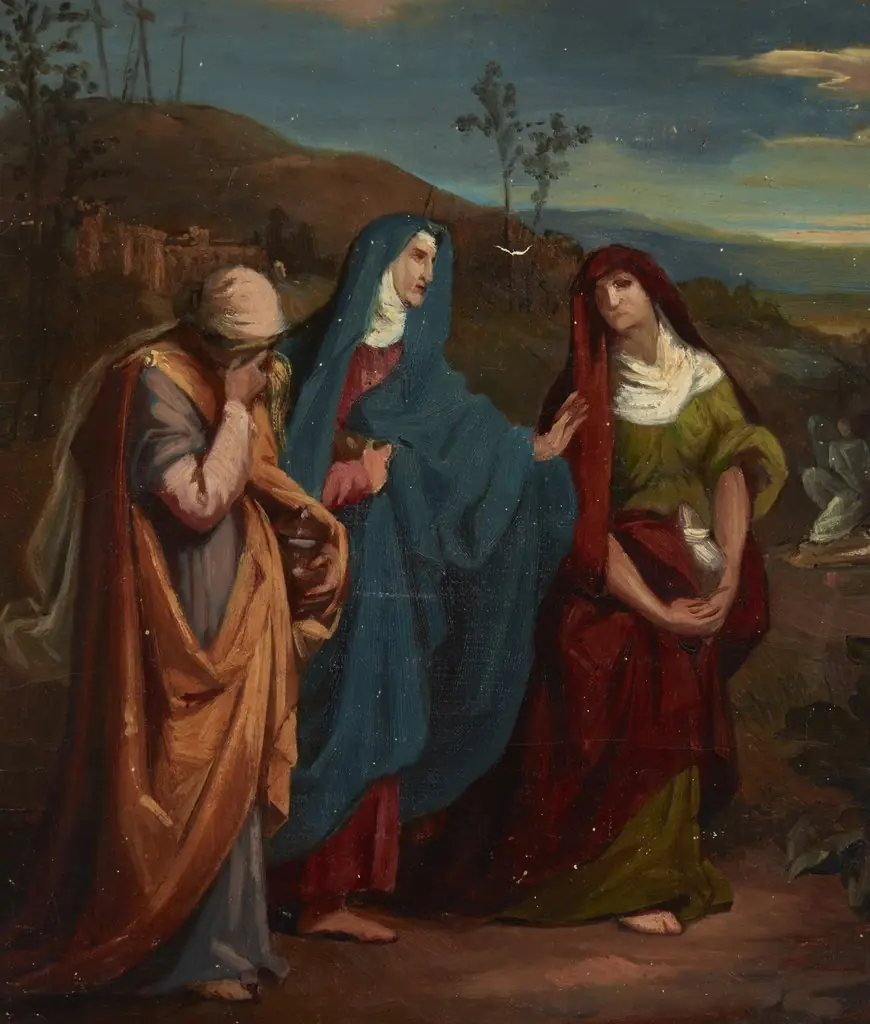 Sketch to the Painting "Three Marys Walking to Christ's Tomb "
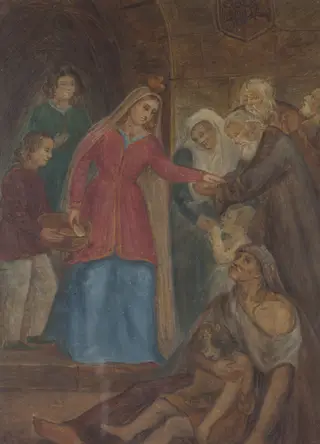 King Jadwiga Distributung Bread to the Poor
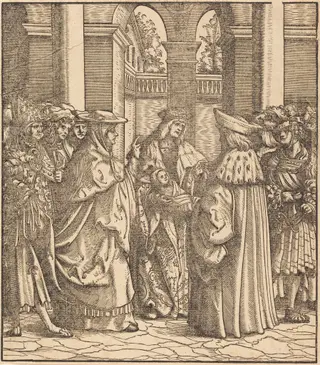 The Archbishop Blessing the Child after the Baptism
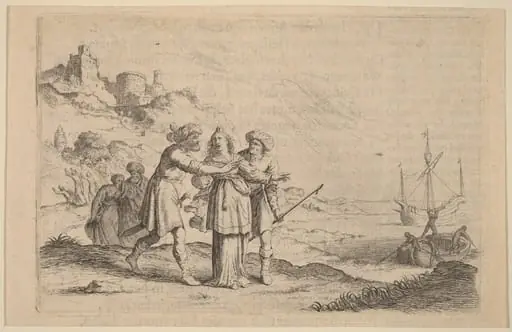 The Abduction of Europa
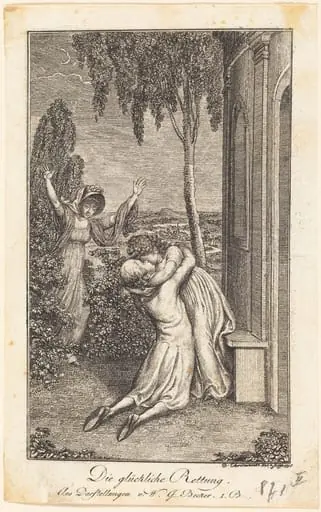 The Fortunate Rescue
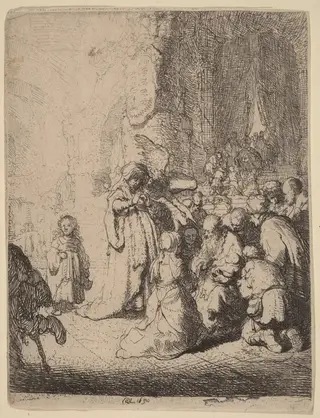 The Presentation in the Temple with the Angel: Small Plate
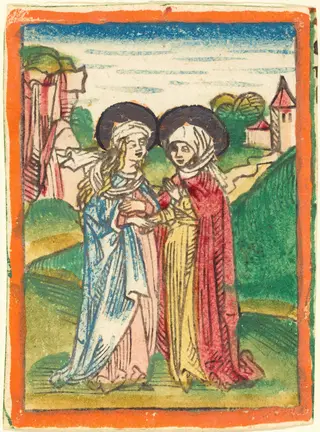 The Visitation
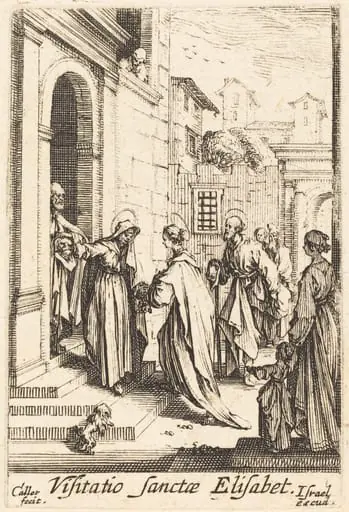 The Visitation
 Bohemians
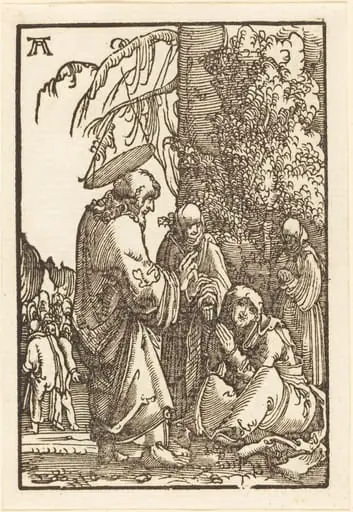 Christ Taking Leave of his Mother
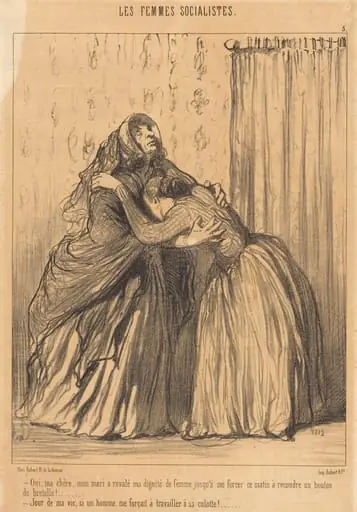 Oui, ma chère, mon mari a ravalé ma dignité...
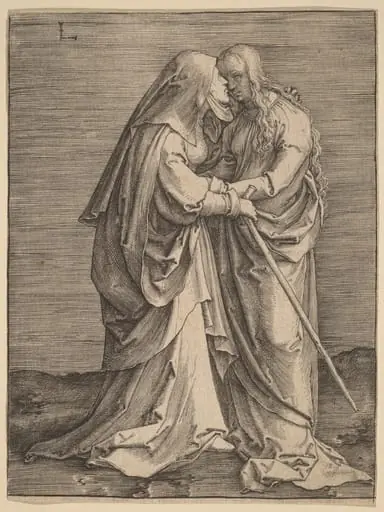 The Visitation
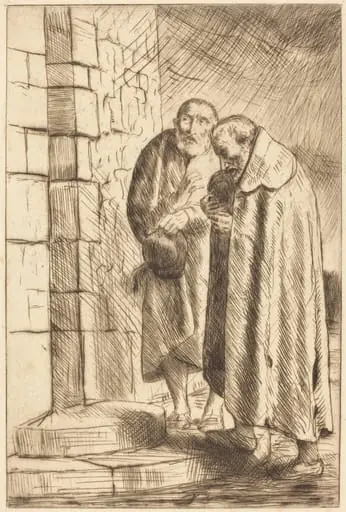 Saint Peter and Saint Paul in the Door of M. Richard (St. Pierre et St. Paul a la porte de M. Richard
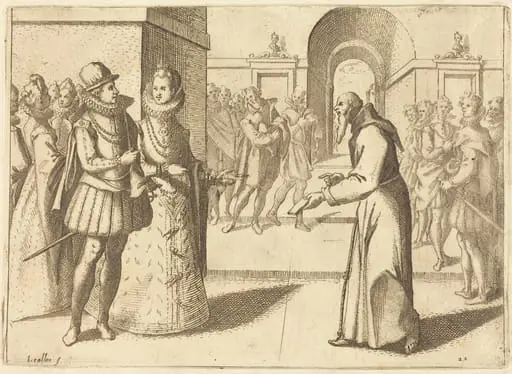 A Capucin Bringing Thanks of the King of Bavaria
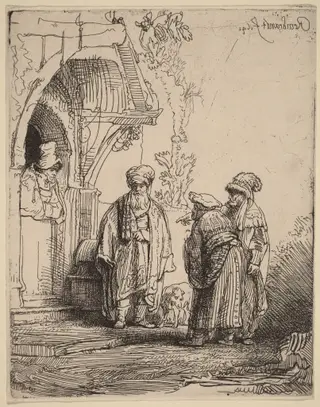 Three Oriental Figures (Jacob and Laban?)
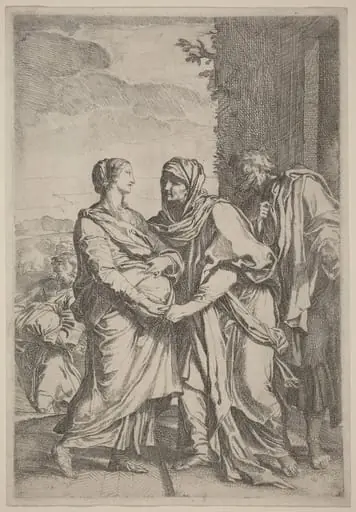 The Visitation
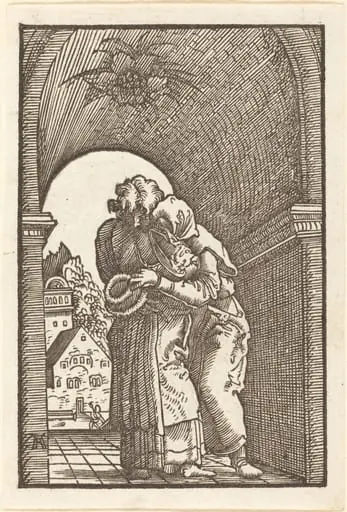 Joachim Embracing Anna
![A Capucin bringing thanks of the King of Bavaria [recto]](https://artifactworldgallery.com/img/jacques-callot--a-capucin-bringing-thanks-of-the-king-of-bavaria-recto--39ed030c08b9b2a7-w320.webp) A Capucin bringing thanks of the King of Bavaria [recto]
A Capucin bringing thanks of the King of Bavaria [recto]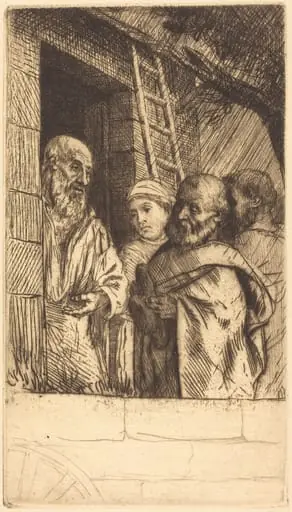 Saint Peter and Saint Paul at the Door of Bonhomme Misere (Saint Pierre et Saint Paula la port du Bonhomme Misere)
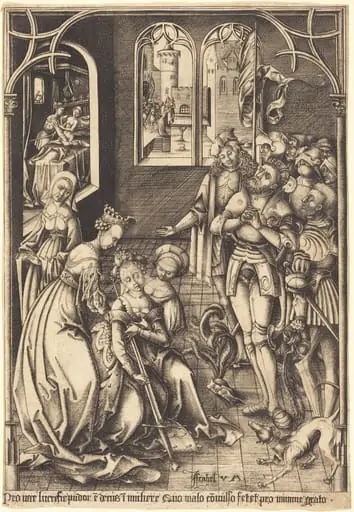 The Death of Lucretia
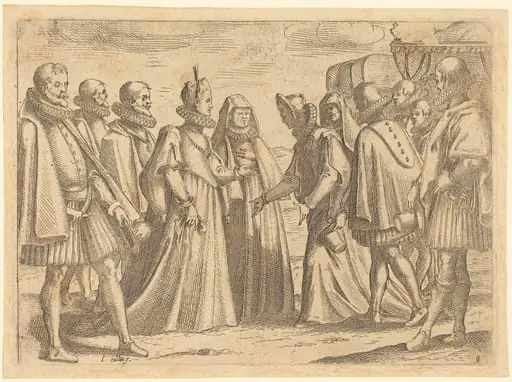 Reception at Mantua
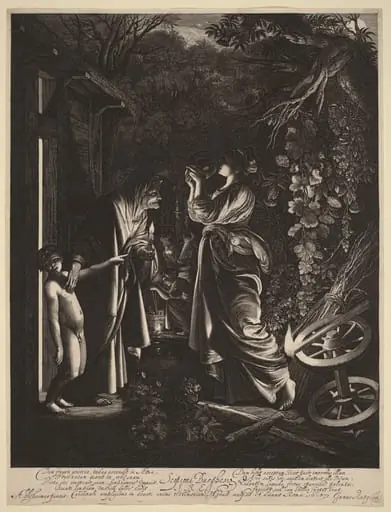 The Mocking of Ceres
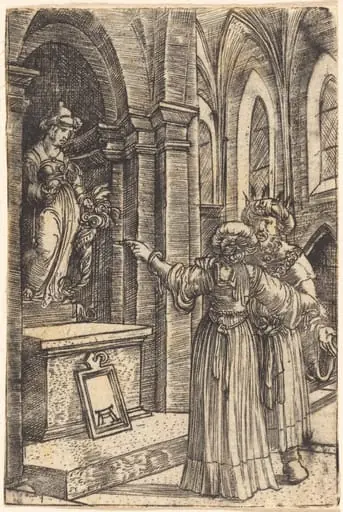 Solomon Praying to the Idols
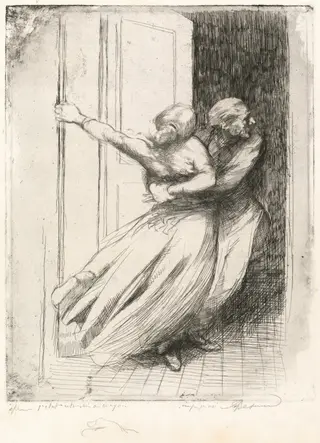 The Rape (Le Viol)
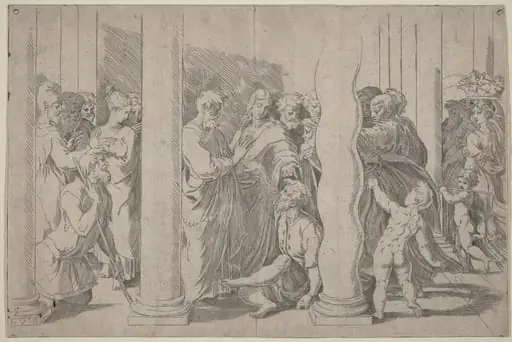 Saints Peter and John Healing the Lame Man at the Golden Gate
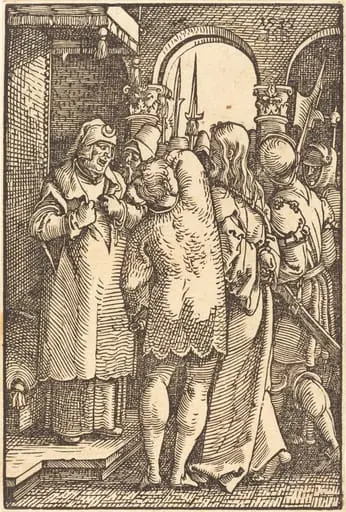 Christ before Caiaphas
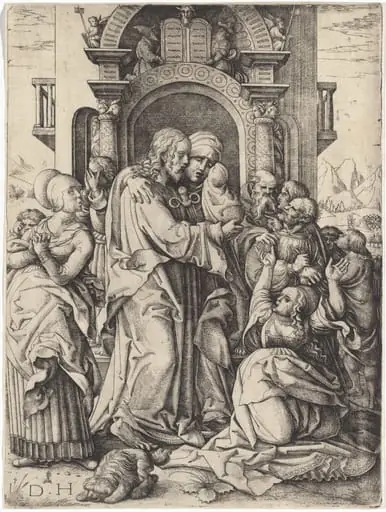 The Virgin Mary Taking Leave of Christ
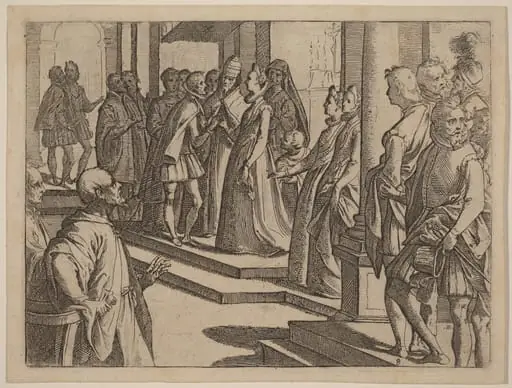 The Betrothal of Margaret of Austria to Philip III, King of Spain
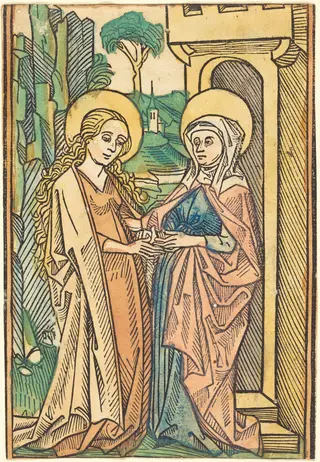 Visitation
![The Betrothal of Margaret of Austria to Philip III, King of Spain [verso]](https://artifactworldgallery.com/img/raffaello-schiaminossi--the-betrothal-of-margaret-of-austria-to-philip-iii-king-of-s--509229b9feb3b80f-w320.webp) The Betrothal of Margaret of Austria to Philip III, King of Spain [verso]
The Betrothal of Margaret of Austria to Philip III, King of Spain [verso]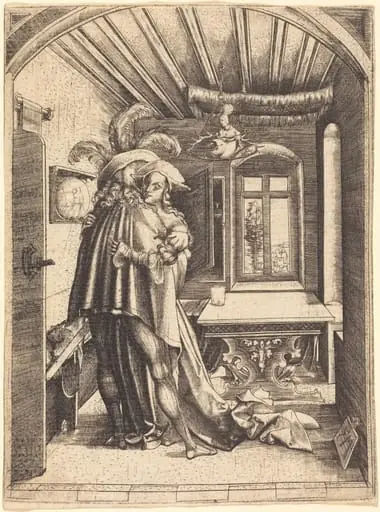 The Embrace
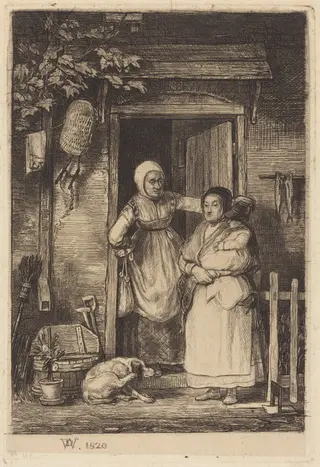 The Cottage Door
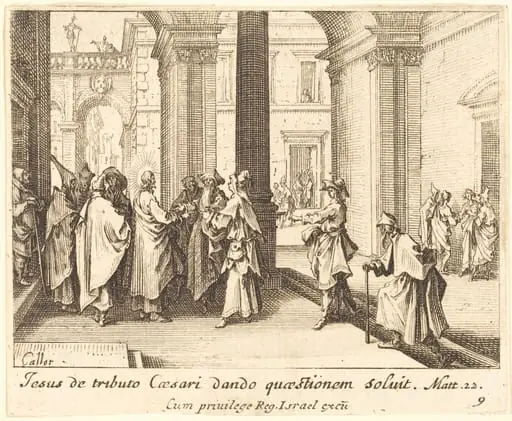 Caesar's Coin
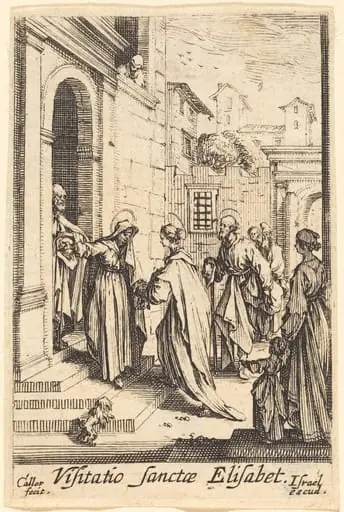 The Visitation
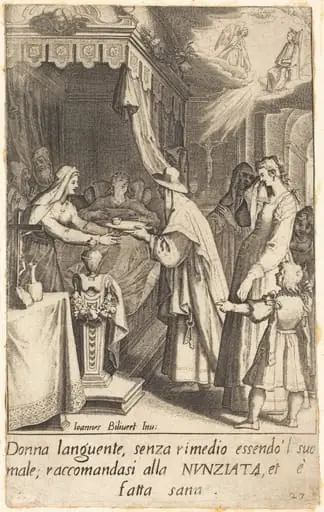 The Cured Sick Person
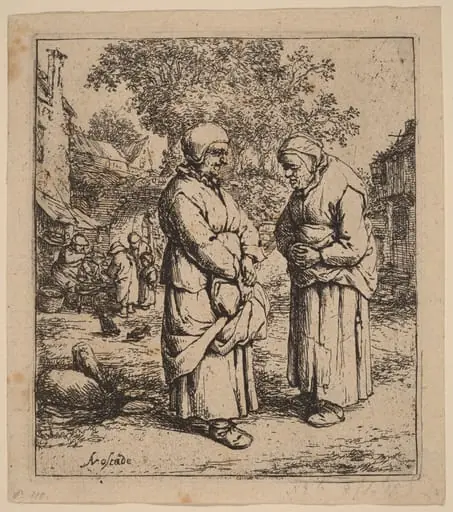 Two Peasant Women Conversing on a Village Street
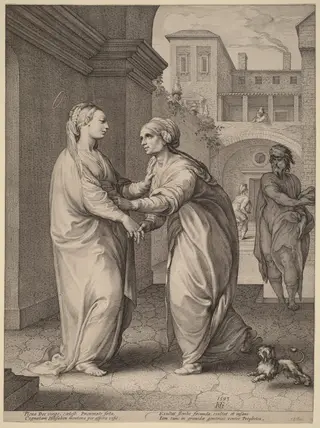 The Visitation
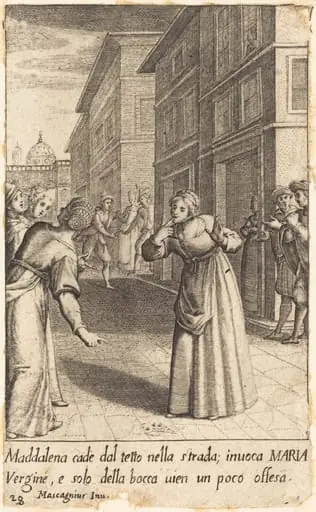 Maddalena
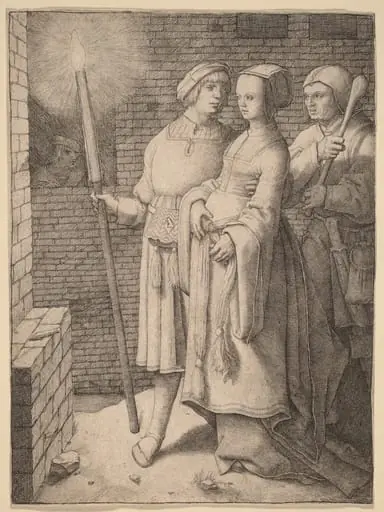 The Man with the Torch and a Woman Followed by a Fool
![Reception at Mantua [recto]](https://artifactworldgallery.com/img/jacques-callot--reception-at-mantua-recto--84e33047dd2baf0a-w320.webp) Reception at Mantua [recto]
Reception at Mantua [recto]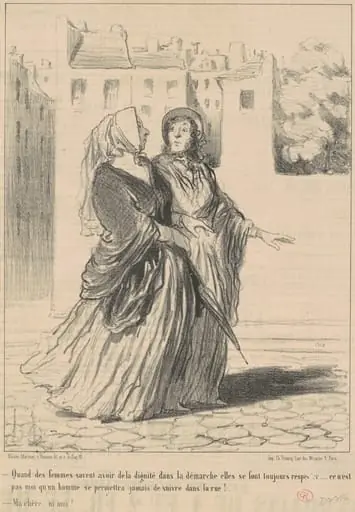 Quand des femmes savent avoir ...
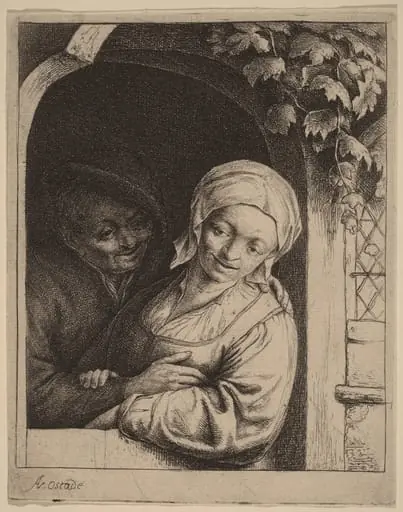 Peasant Couple in a Doorway
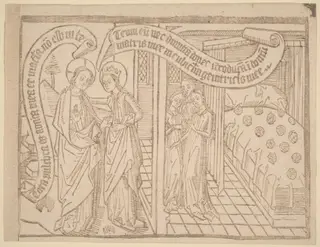 Page from "Canticum Canticorum": 2nd Edition
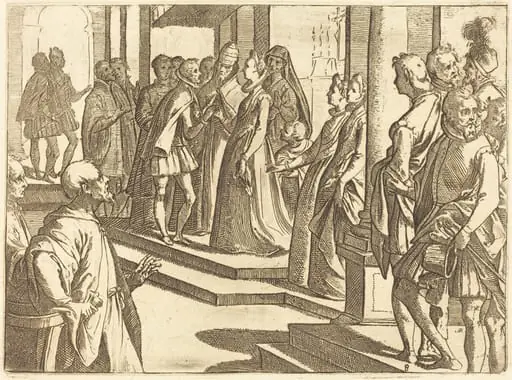 The Betrothal of Margaret of Austria to Philip III, King of Spain
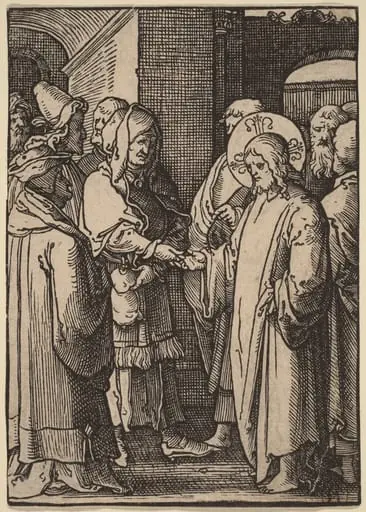 The Tribute Money
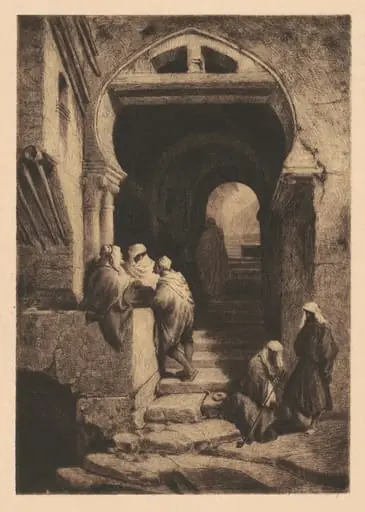 Devils Way, Algiers
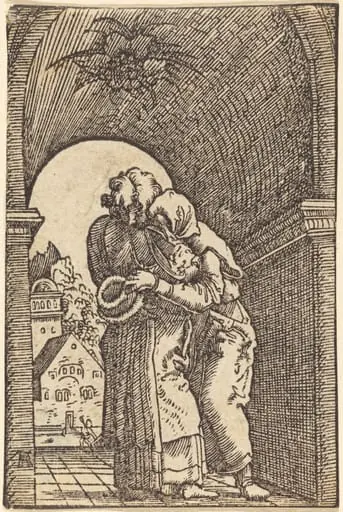 Joachim Embracing Anna
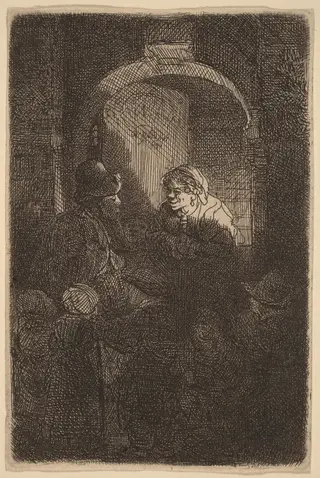 Woman at a Door Hatch Talking to a Man and Children (The Schoolmaster)
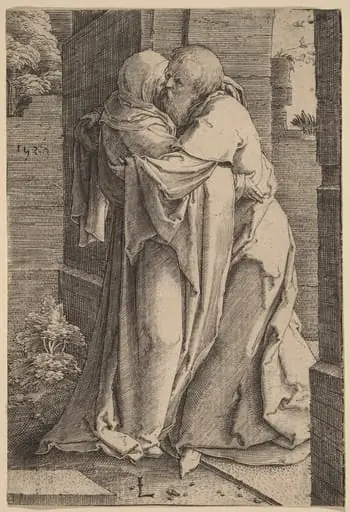 Saint Joachim Embracing Saint Anna
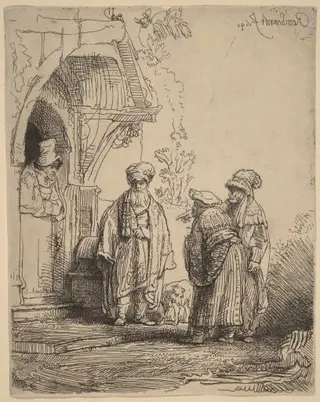 Three Oriental Figures (Jacob and Laban?)
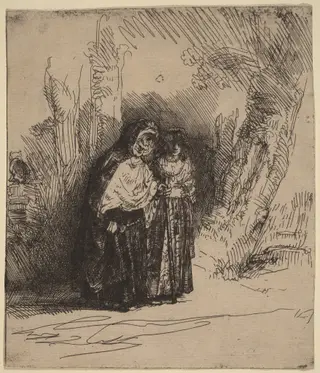 The Spanish Gypsy "Preciosa"
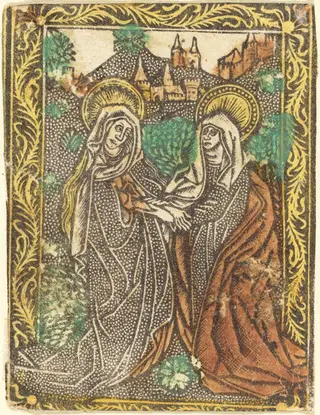 The Visitation
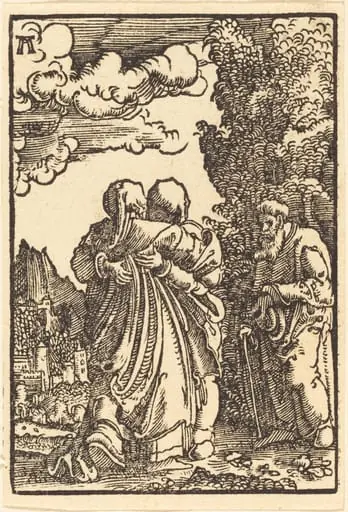 The Visitation
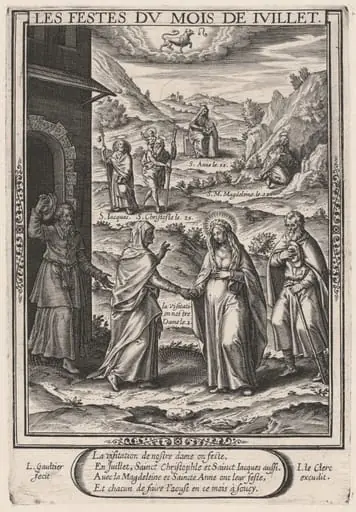 Les Festes du mois de Juillet (July: The Visitation)
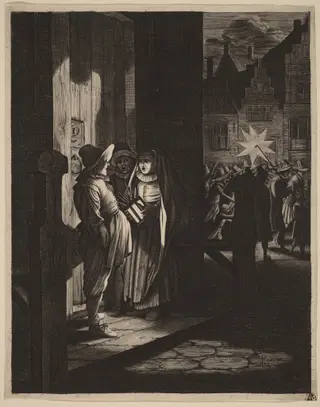 The Star of Kings, a Night Piece
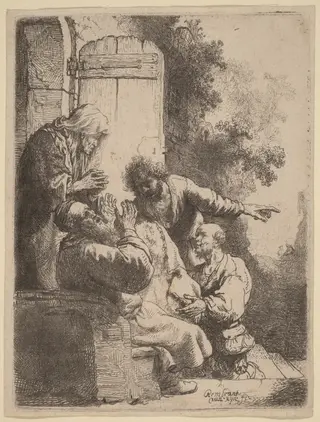 Joseph's Coat Brought to Jacob
 The Visitation
 The Rape (Le Viol)
 Page from "Canticum Canticorum": 2nd Edition
 The Visitation
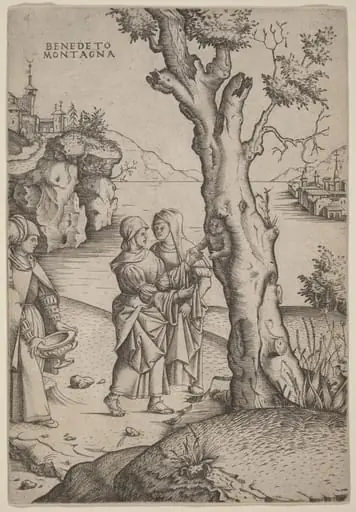 Birth of Adonis
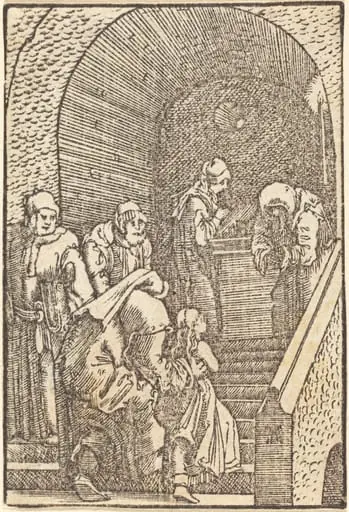 Presentation of the Virgin
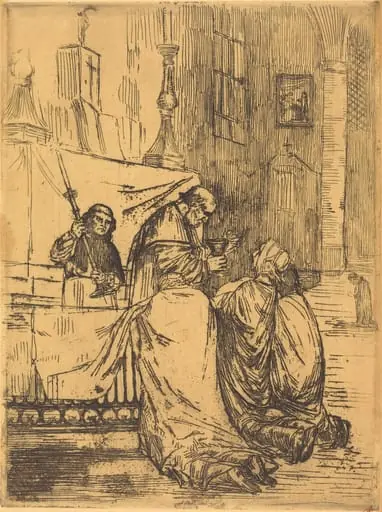 Communion in the Church of Saint Medard (La communion dans l'eglise St.-Medard)
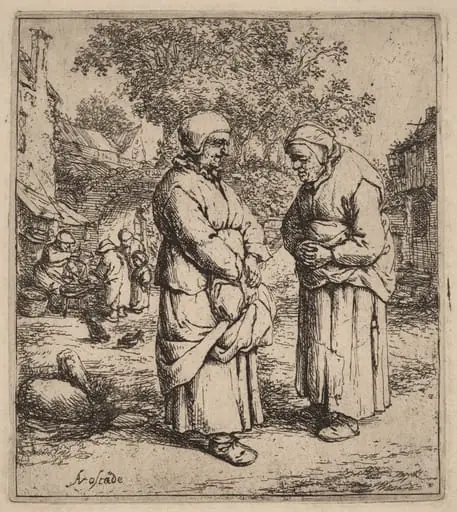 Two Peasant Women Conversing on a Village Street
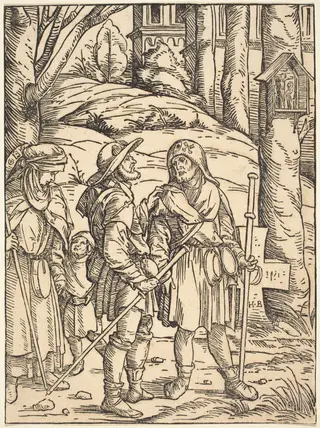 Pilgrims at a Wayside Shrine
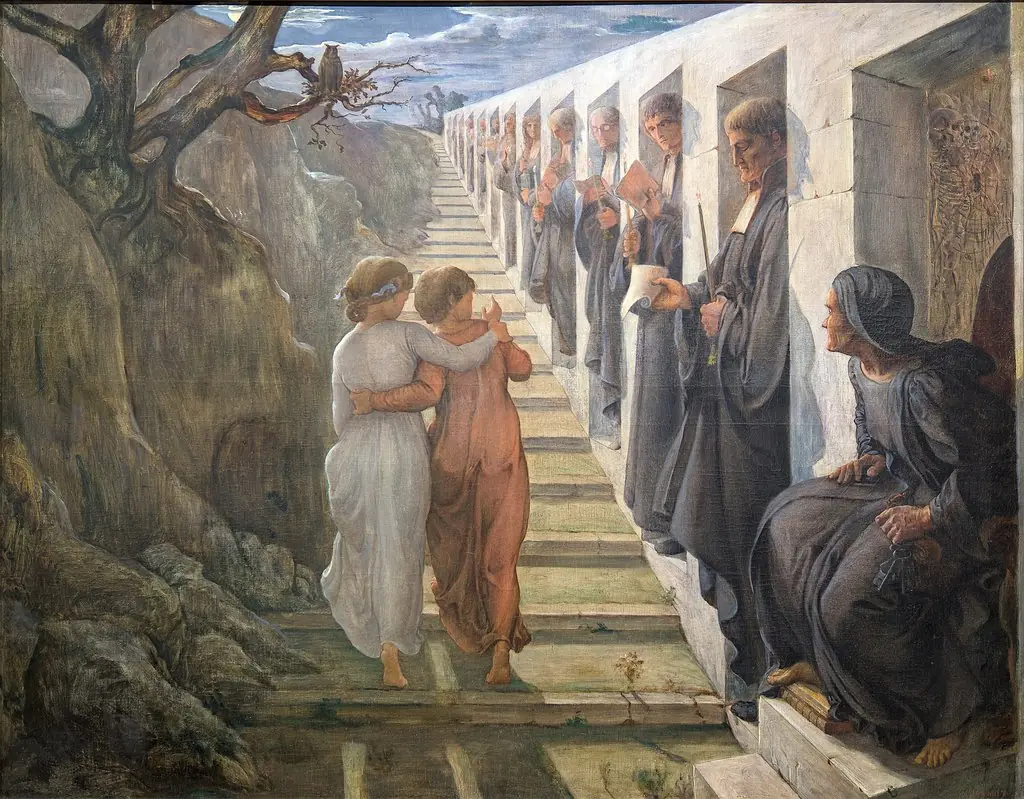 Poem of the Soul - Bad path
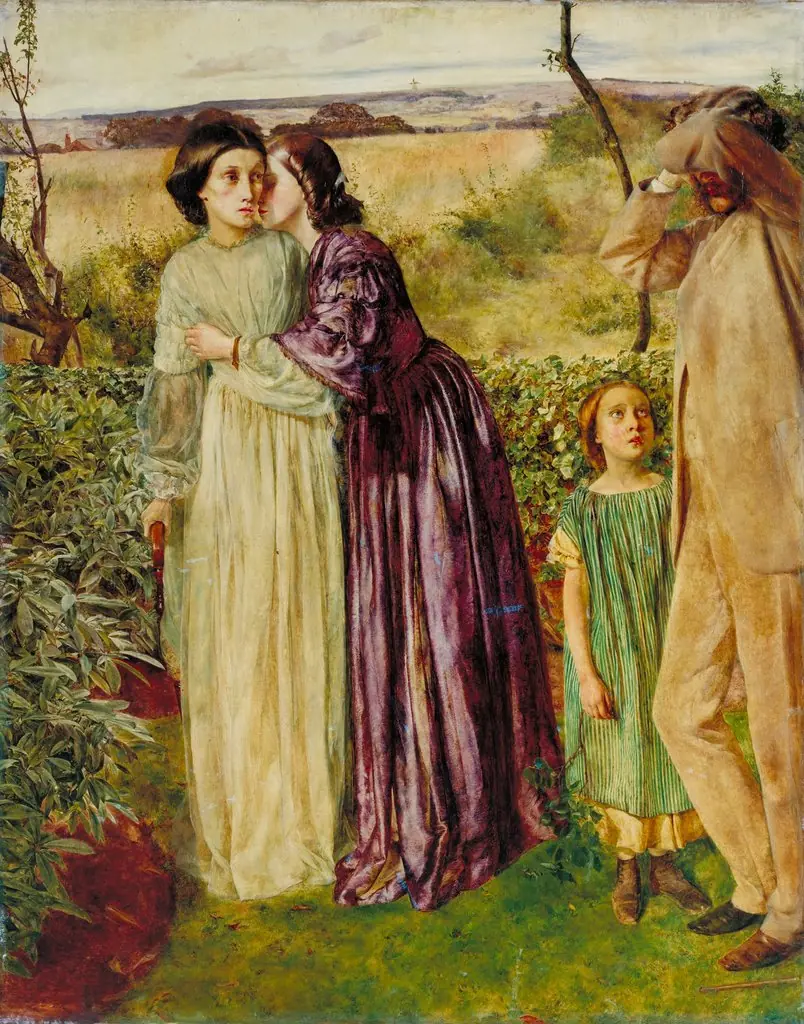 Too Late
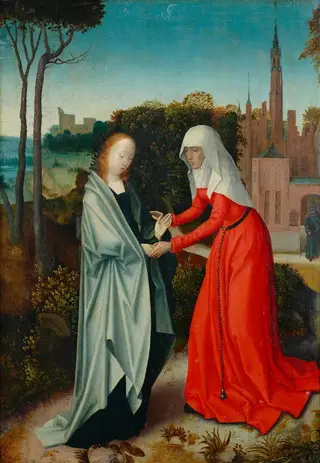 Heimsuchung Mariae zwischen St. Ursula mit den Zehntausend Jungfrauen und St. Martha. Aussenseiten der Flügel: Verkündigung Mariae
Frequently asked questions
What is Visitation?
Visitation is a subject in art. In Christianity, the Visitation, also known as the Visitation of the Blessed Virgin Mary, refers to the visit of Mary, who was pregnant with Jesus, to Elizabeth, who was pregnant with John the Baptist, in the Gospel of Luke, Luke 1:39–56.
How many Visitation works does Artifact World Gallery have?
Artifact World Gallery holds 200 public-domain Visitation works, all free to view and download.
Who are the key Visitation artists?
Key Visitation artists in the collection include Raphael, El Greco and Rembrandt van Rijn.
Where can I see Visitation works?
Visitation works in the collection are held by National Gallery of Art, Cleveland Museum of Art and Museo del Prado.