Subject
Orientalist Painting
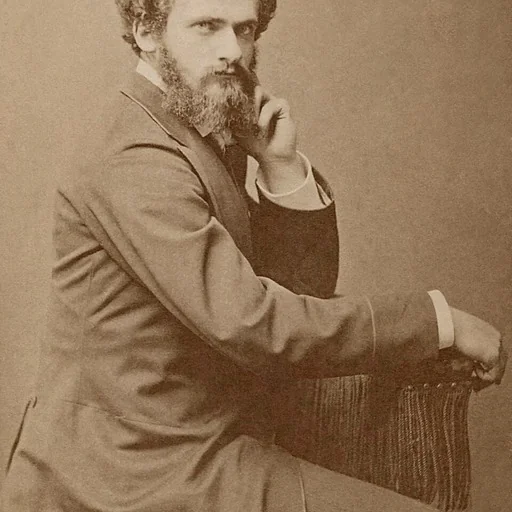
Orientalist Painting is a subject in art. The gallery holds 110 works in this subject in art, including works by Henri Regnault, Jean Léon Gérôme and Pierre-Auguste Renoir.
painting movement
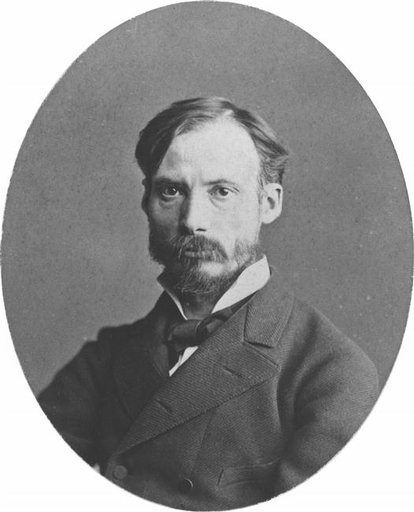
Key artists


Overview
Orientalist painting is a pictorial movement addressing themes revolving around Orientalism, representing the Western vision of the East. It is not a specific style, school, or unified movement, but rather a broad current that intersected with various artistic movements from Romanticism to Post-Impressionism. Emerging in France at the end of the 18th century, the movement reached its apex in the 19th century before themes gradually fell into obsolescence in the 20th century. The Western interest in Orientalist themes was fueled by exoticism and the expansion of European colonialism in North Africa and the Middle East, leading artists to portray Arab or Middle Eastern figures, environments, and scenes of daily life, often laden with exotic mystery and sensuality.
Iconography & meaning
The iconography of Orientalist painting is diverse but consistently references Oriental themes as filtered through a Western lens. Common subjects in the 19th century included harem scenes, hunts, combat, and typical landscapes such as deserts, oases, and Eastern cities. Painters frequently depicted odalisques, historical or mythological figures, and erotic scenes of pure fantasy, especially when the artists had never traveled to the East. These works appealed to Western buyers, particularly in Spain and France, by presenting the exotic world as an environment free from Western bourgeois conventions. By the 20th century, the idealized fantasy subjects declined in favor of a more precise, less idealized ethnographic painting. Technically, the movement is characterized by the use of warmer colors, favoring red, yellow, and brown hues, alongside warm light and accentuated contrasts.
Across movements & periods
The current emerged in France following Napoleon's expedition to Egypt in 1798 and developed with increasing interest in England and other European countries alongside colonial expansion. While some artists like Antoine-Jean Gros achieved fame with Orientalist works without ever leaving Europe or the United States, travel was profoundly linked to the practice. Many artists journeyed to the Maghreb or the Mashreq, such as Alexandre-Gabriel Decamps traveling to Greece and Asia Minor in 1827, Prosper Marilhat joining a scientific expedition from 1831 to 1833, and Eugene Delacroix visiting Morocco and Algeria in 1832. The movement extended beyond France, developing distinct schools in England, Italy, and Russia, the latter focusing on the Caucasus and Islamic Central Asia. The 1893 creation of the Salon des Artistes Orientalistes in Paris marked the peak of this painting style. Travel continued into the 20th century with artists like Henri Matisse and Wassily Kandinsky visiting North Africa until 1914. The movement's end in France is often marked by the independence of Algeria in 1962.
Notable depictions
Major exponents of French and English Orientalism include Eugene Delacroix, Jean Auguste Dominique Ingres, Jean-Leon Gerome, Frederick Arthur Bridgman, and Charles Landelle. Notable depictions include Bonaparte et les pestiferes de Jaffa by Antoine-Jean Gros. Italian painters also contributed significantly: Cesare Biseo frescoed the Cairo Opera House and the Government Palace in Alexandria for the Suez Canal inauguration in 1869, and Arturo Zanieri painted portraits of prominent Egyptian figures like Abbas Hilmi in 1903. Alberto Pasini lived in Persia and traveled across Turkey, Syria, Arabia, and Egypt between 1855 and 1856. Other continental artists include the Belgian Charles Verlat, the Dutch Lawrence Alma-Tadema, and the Italian Mariano Fortuny, whose intense chromatism heavily influenced Roman painters. Etienne Dinet and Camillo Innocenti, who directed the Cairo School of Fine Arts from 1925 to 1940, are also notable figures.
Legacy
The legacy of Orientalist painting is tied closely to its dual nature as both an artistic current and a product of colonial expansion. As the 20th century progressed, the romanticized and fantasy-driven themes of the 19th century lost their relevance, giving way to more ethnographic approaches before the tradition ultimately faded. The establishment of institutions like the Salon des Artistes Orientalistes formalized the movement's influence before its decline. The cultural afterlife of the movement remains intertwined with the history of colonialism, as the Western depiction of the East cemented visual tropes of exoticism and sensuality that persisted long after the paintings themselves stopped being produced, concluding its era in France with the Algerian independence in 1962.
Works
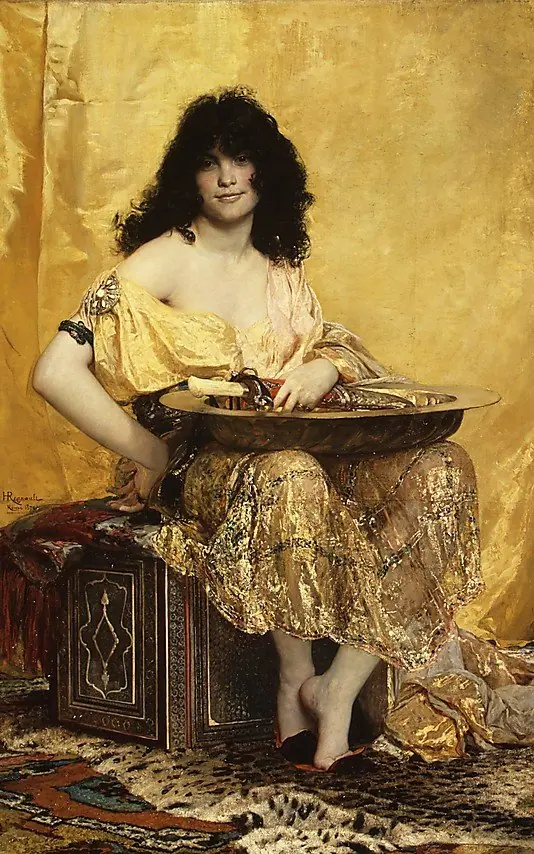 Salome
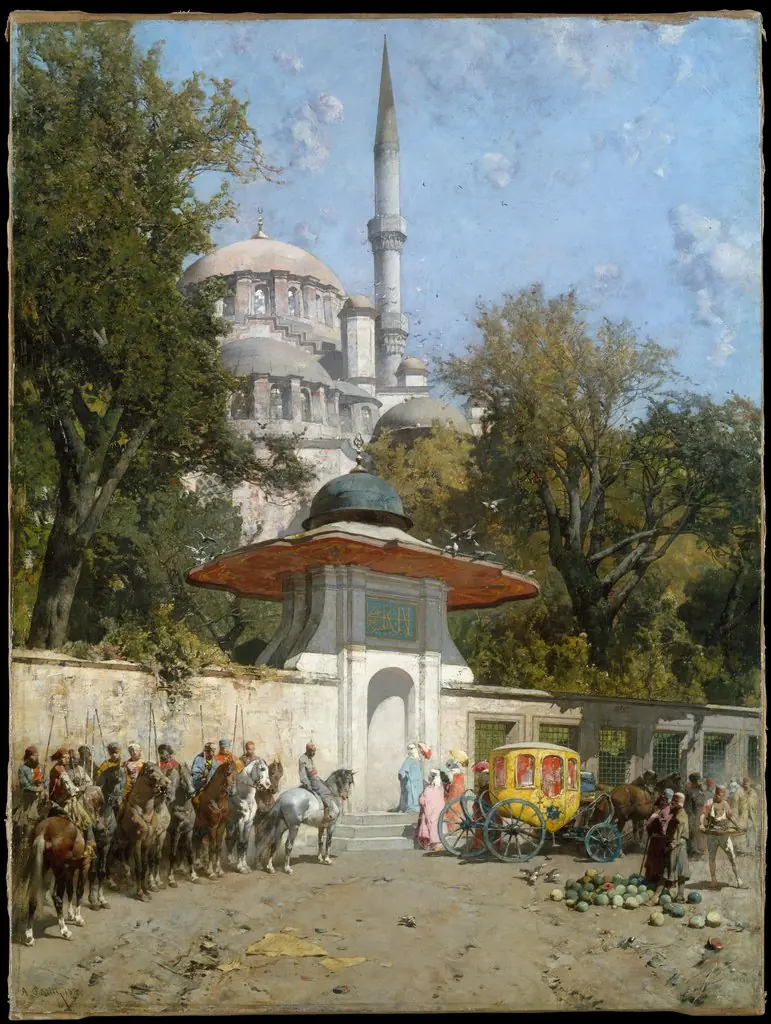 A Mosque
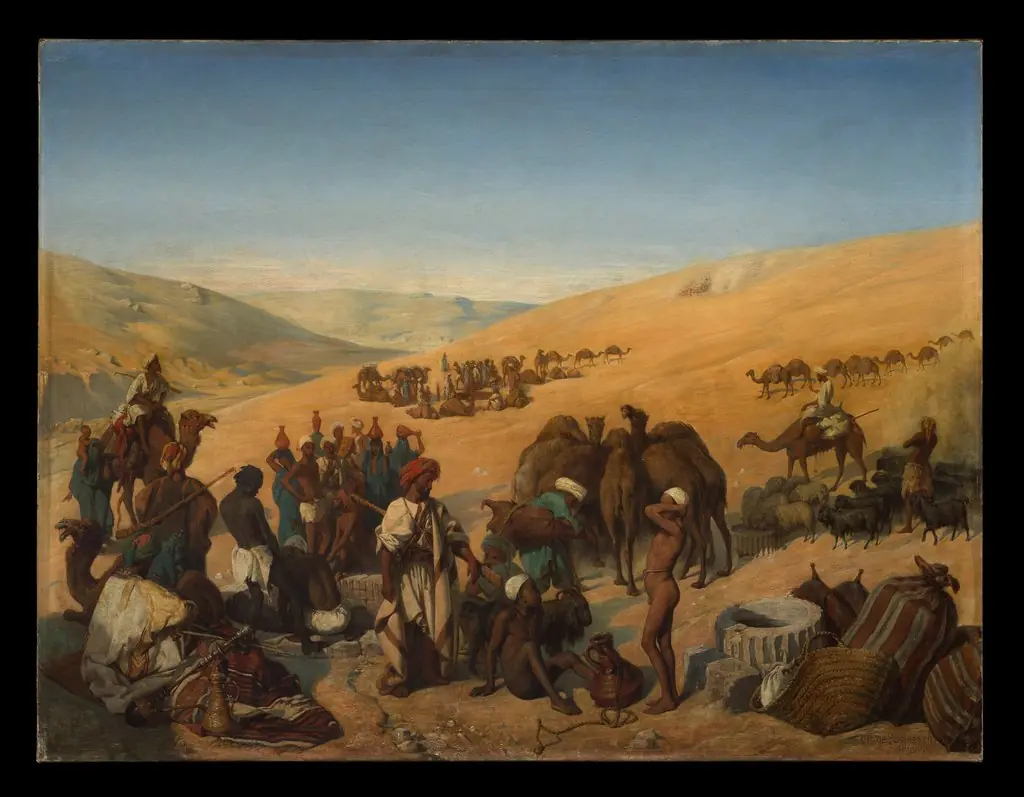 Halt of Caravans at the Wells of Saba (Beersheba) in the Desert South of Hebron
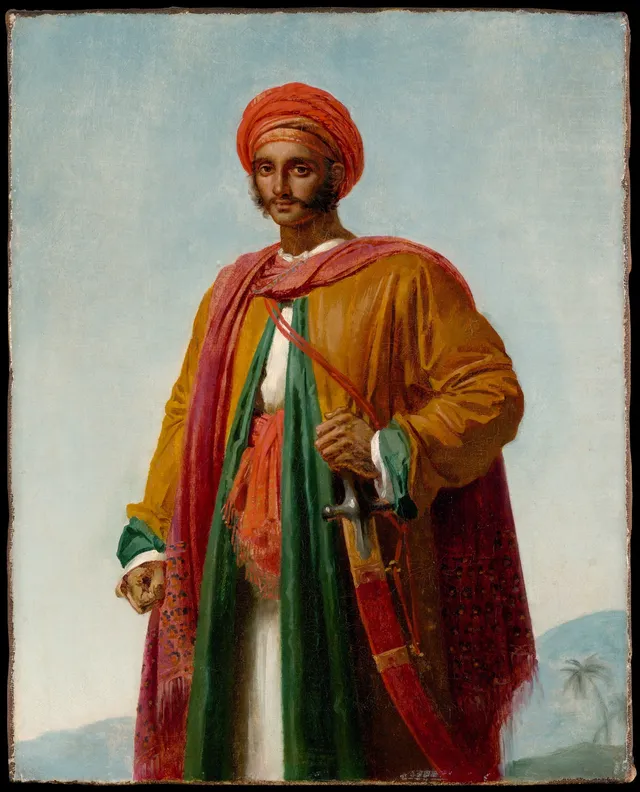
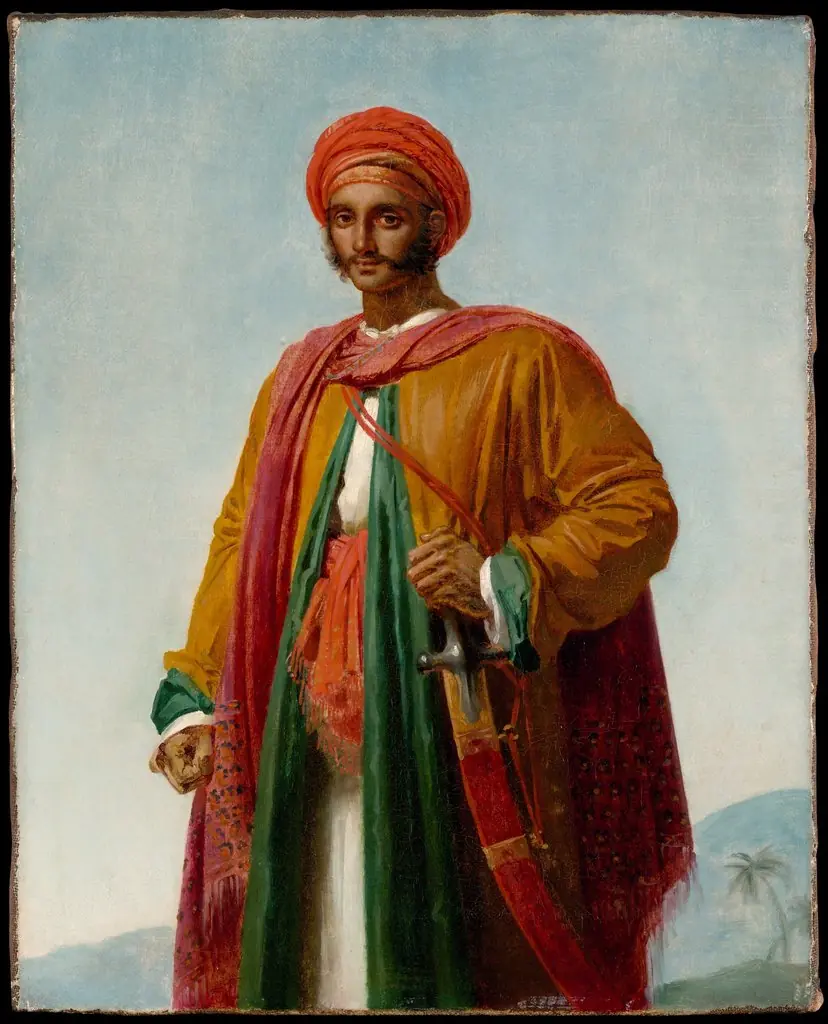 Study for "Portrait of an Indian"
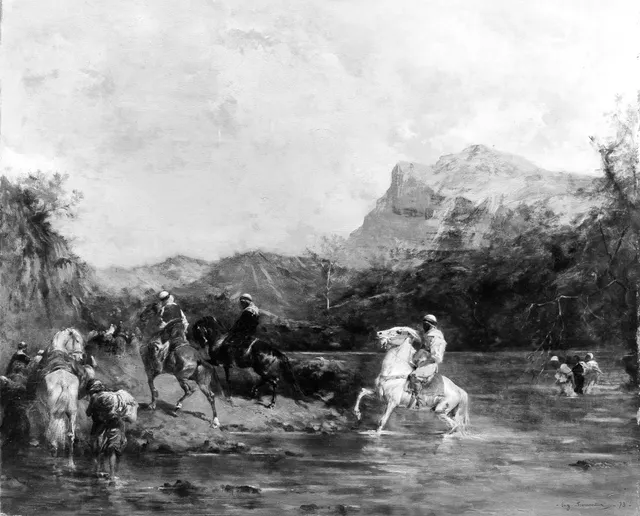
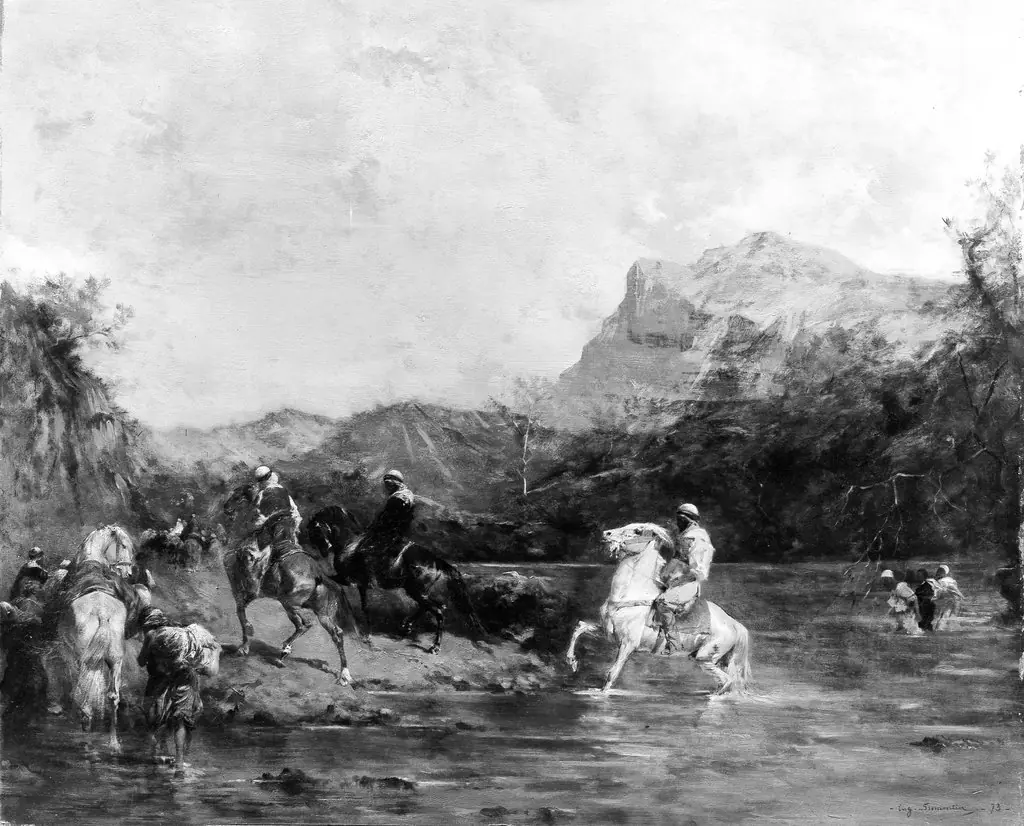 Arabs Crossing a Ford
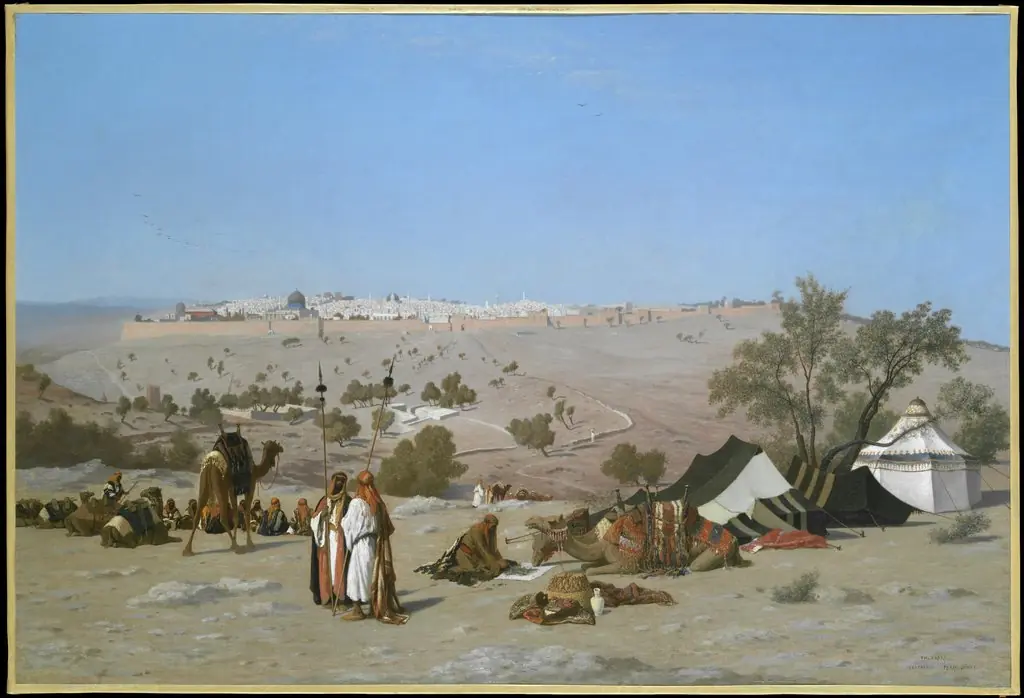 Jerusalem from the Mount of Olives
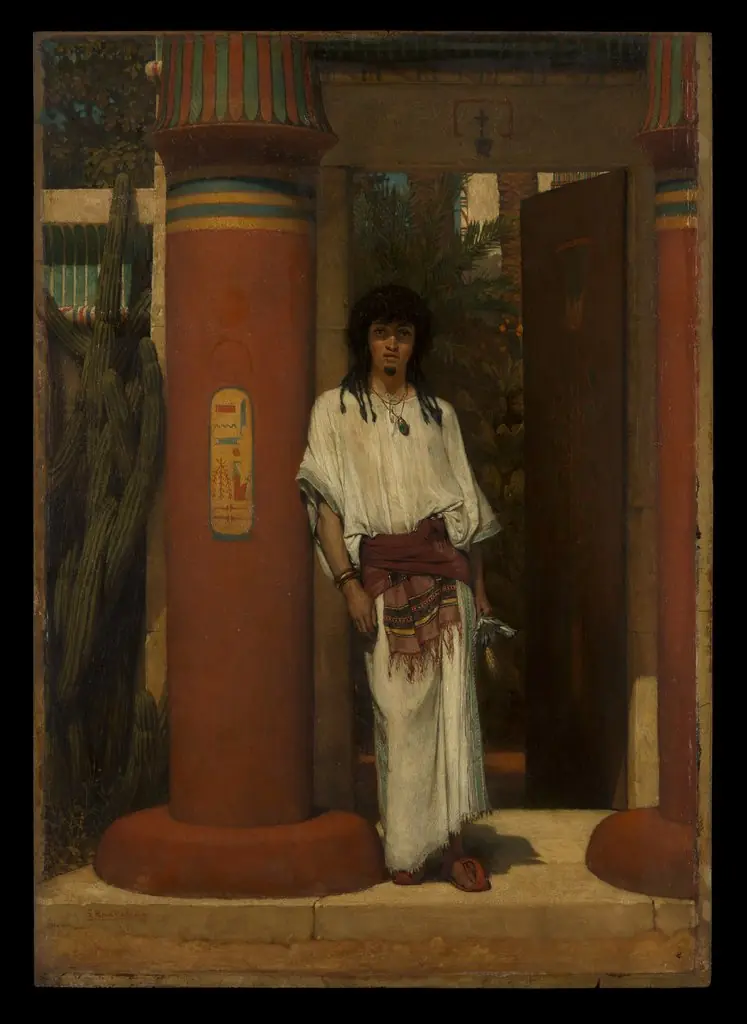 An Egyptian in a Doorway
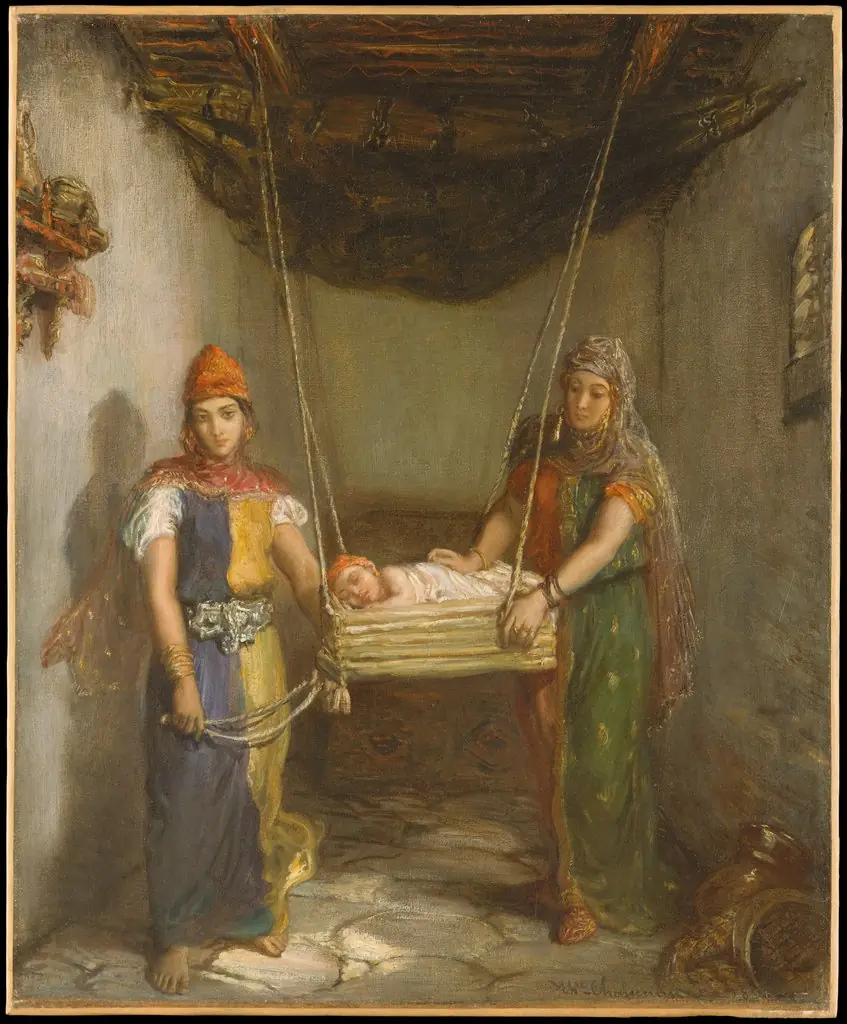 Scene in the Jewish Quarter of Constantine
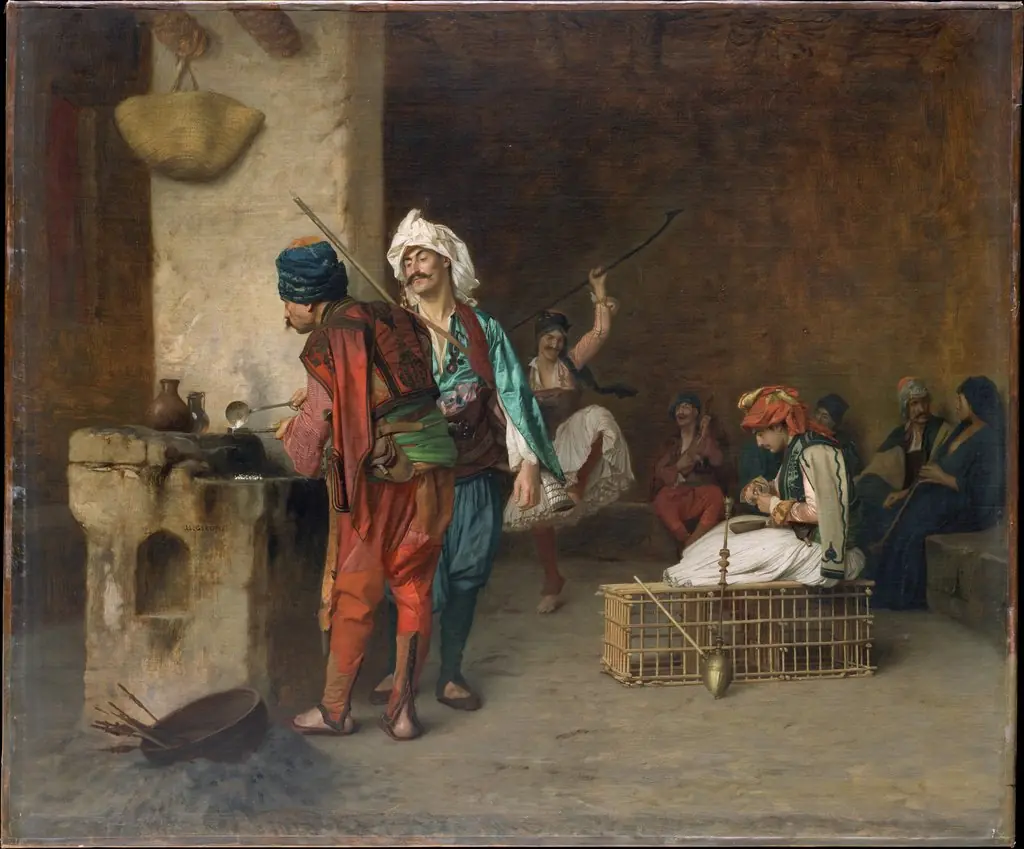 Cafe House, Cairo (Casting Bullets)
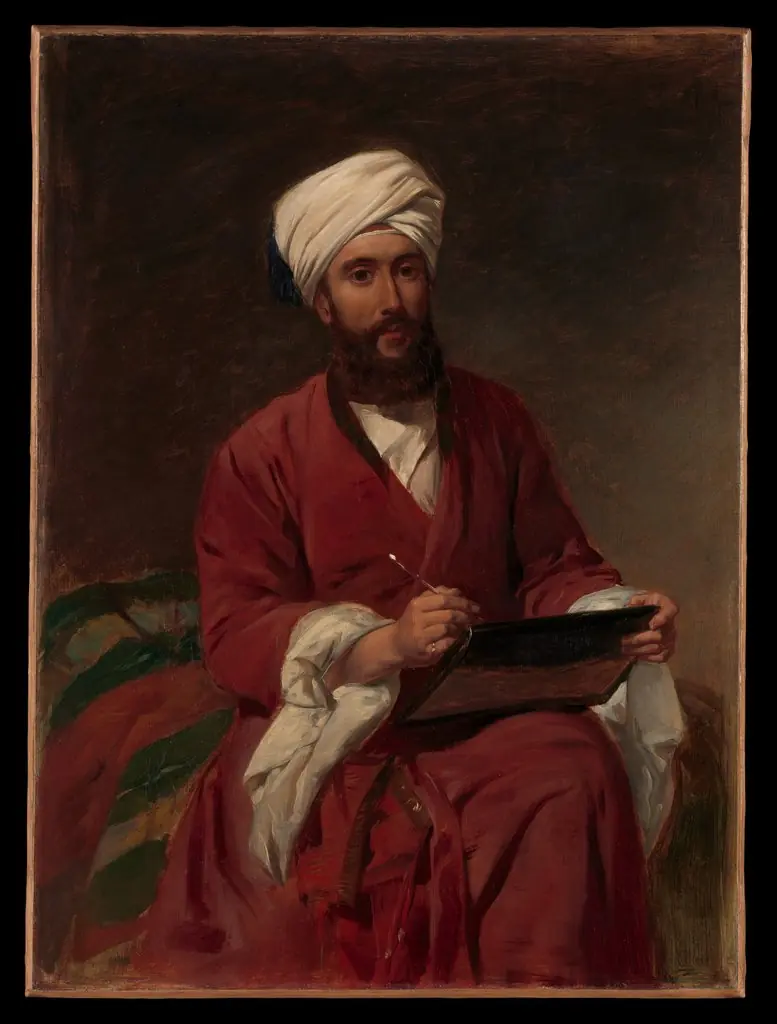 William Edward Dighton (1822–1853) in Middle Eastern Dress
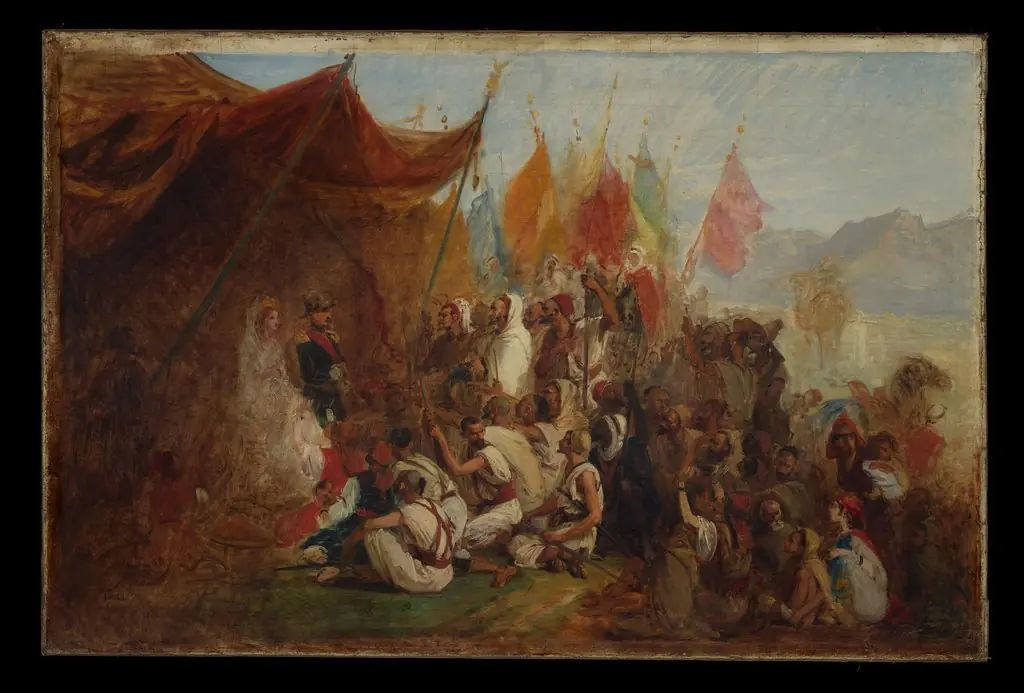 Sketch for "Reception of Emperor Napoleon III and Empress Eugénie by the Kabyle Leaders at Algiers on September 18, 1860"
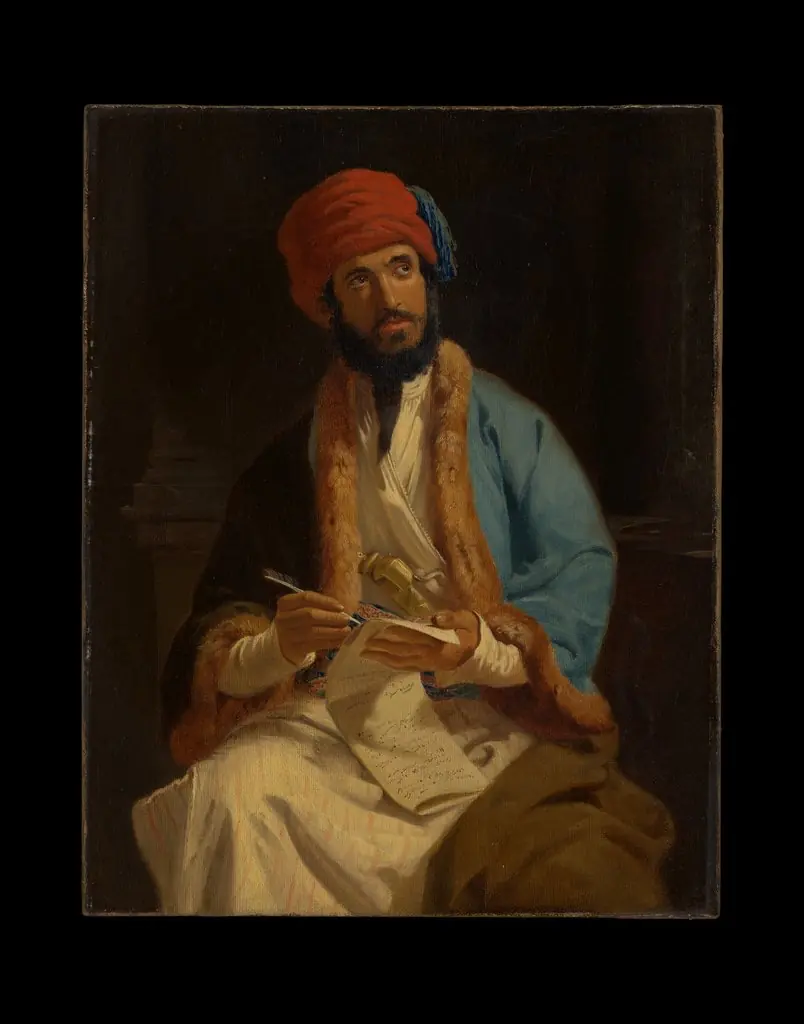 The Arab Sage
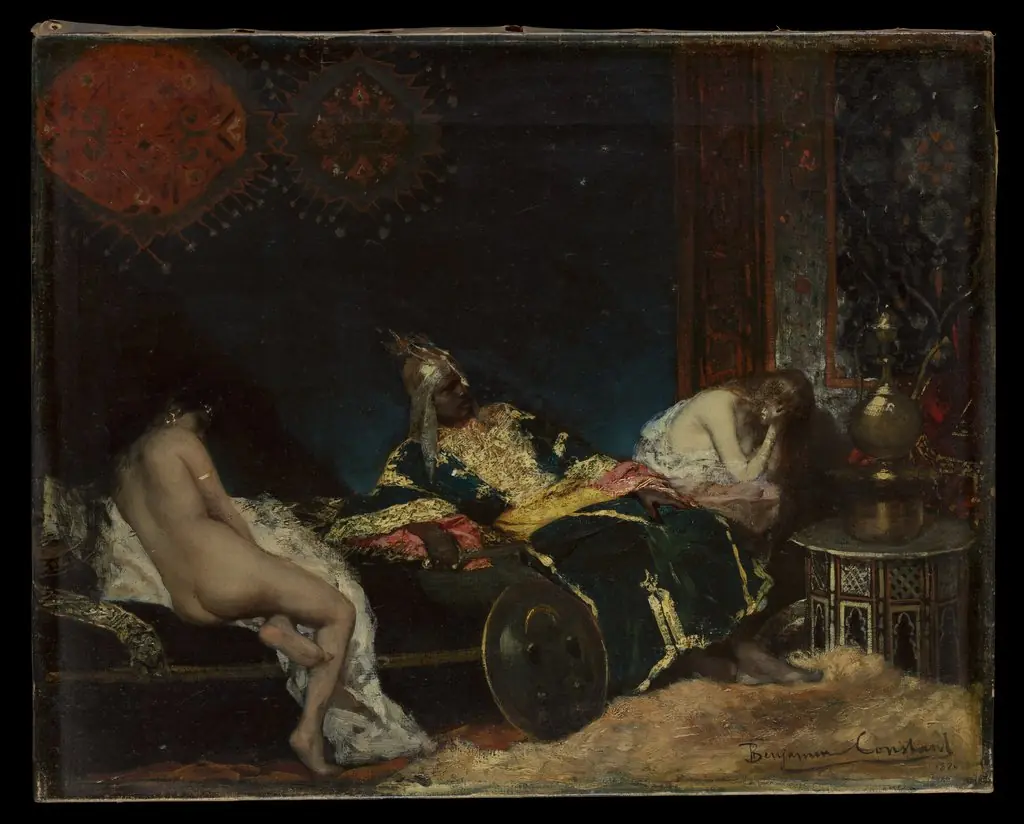 The Serbian Concubine (Un Envoi de Serbie)
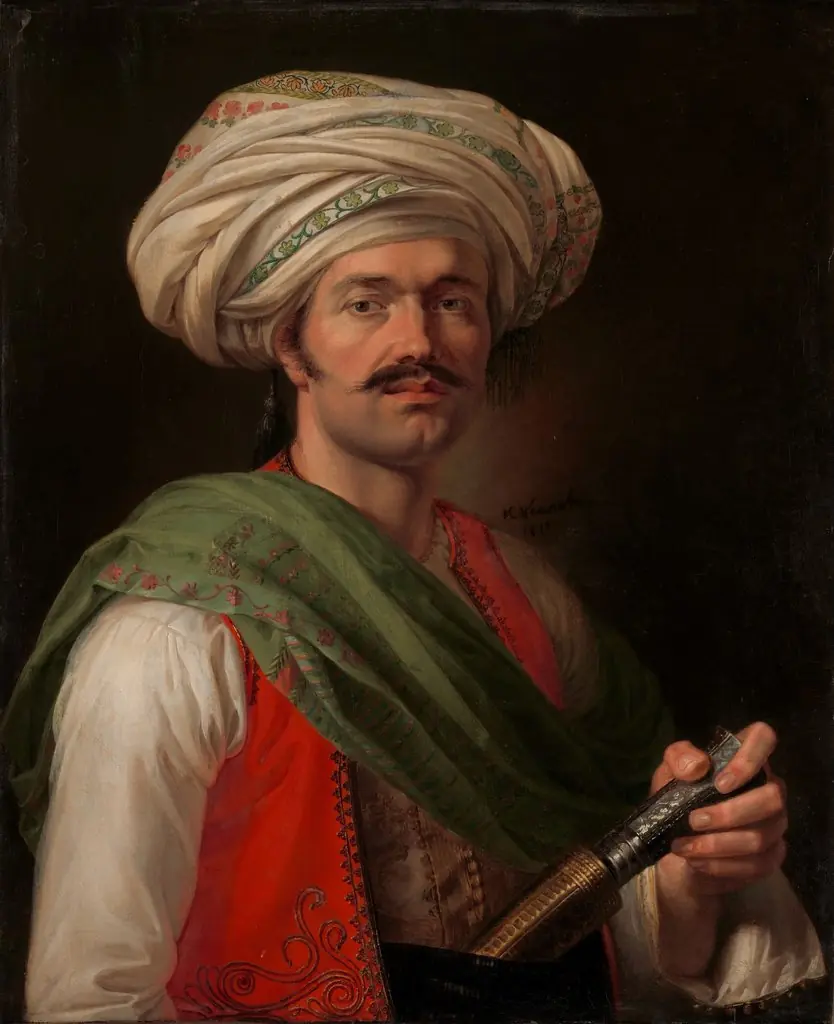 Portrait of a Mameluke, said to be Roustam Raza
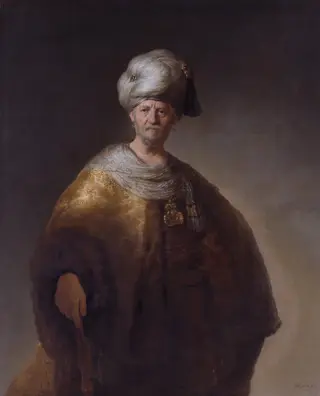 Man in Oriental Costume ("The Noble Slav" or "Man in a Turban")
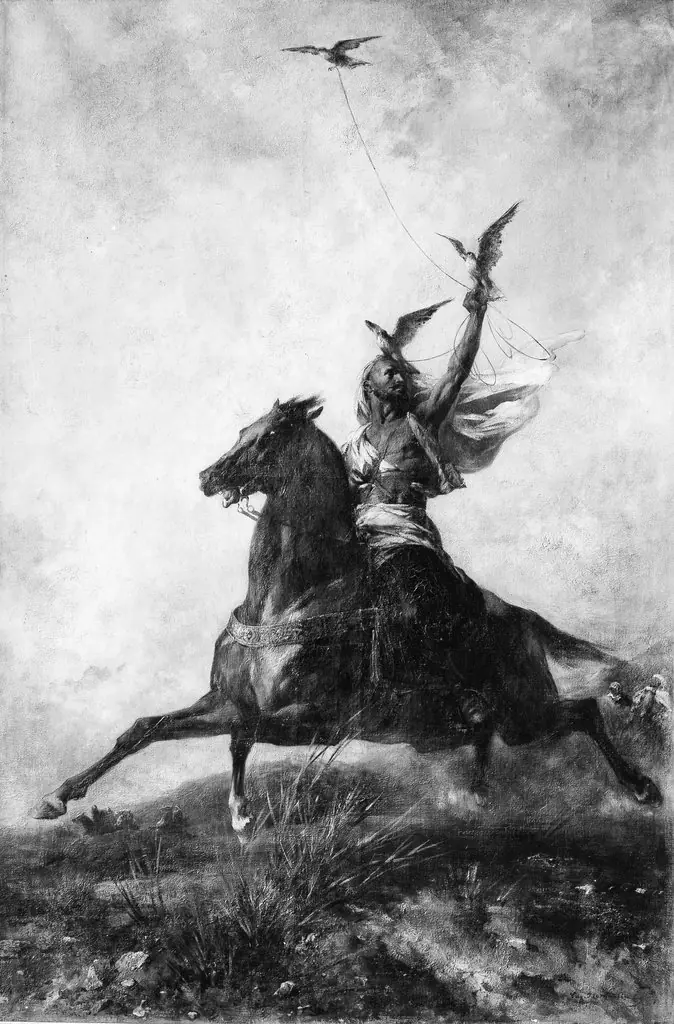 The Arab Falconer
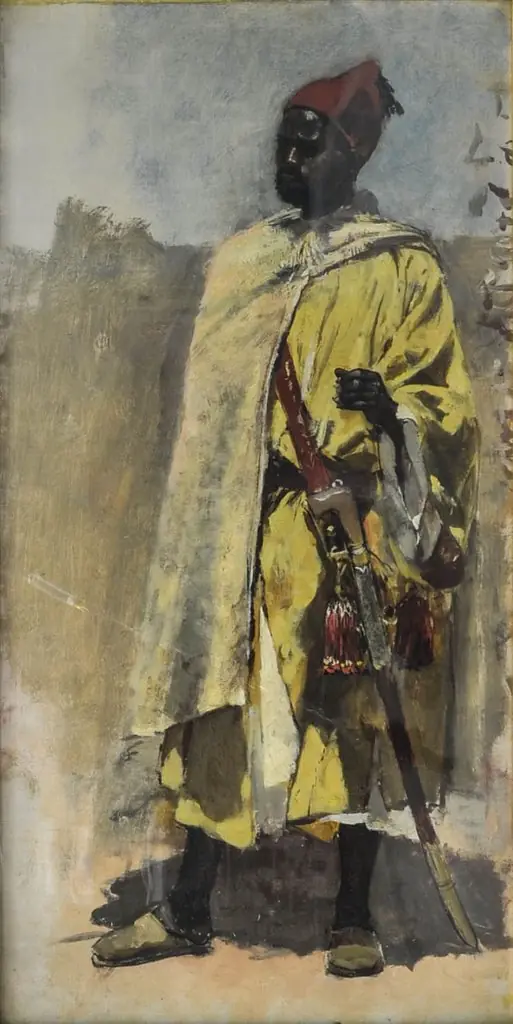 Moorish Guard
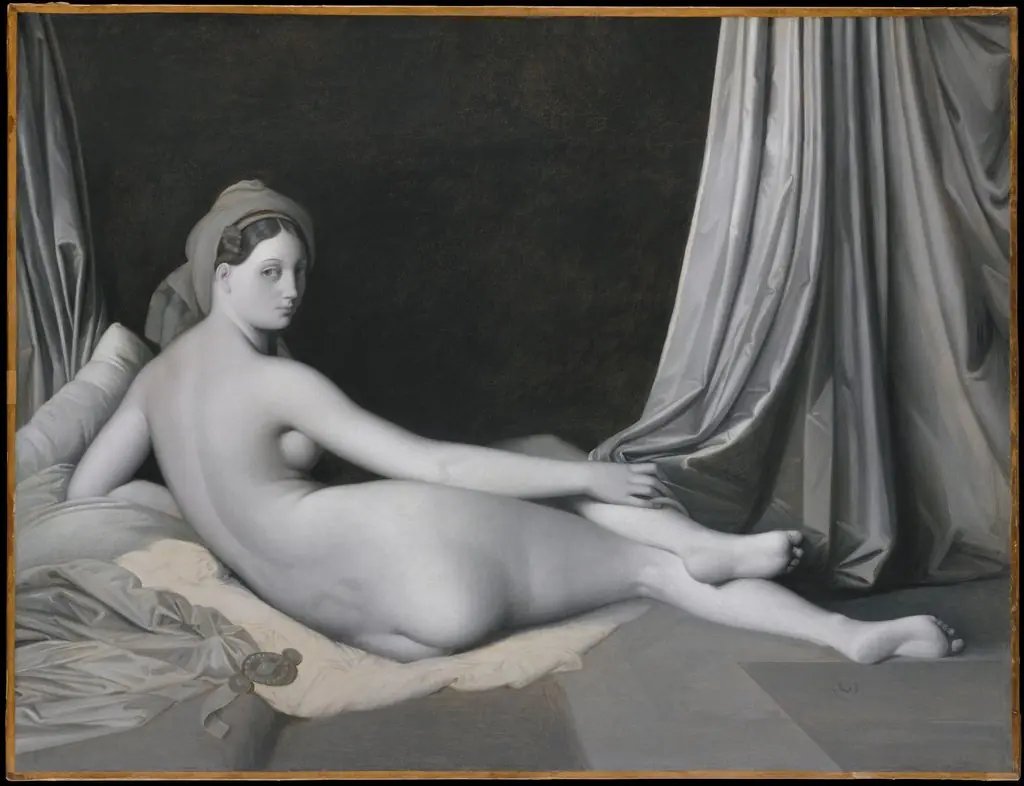 Odalisque in Grisaille
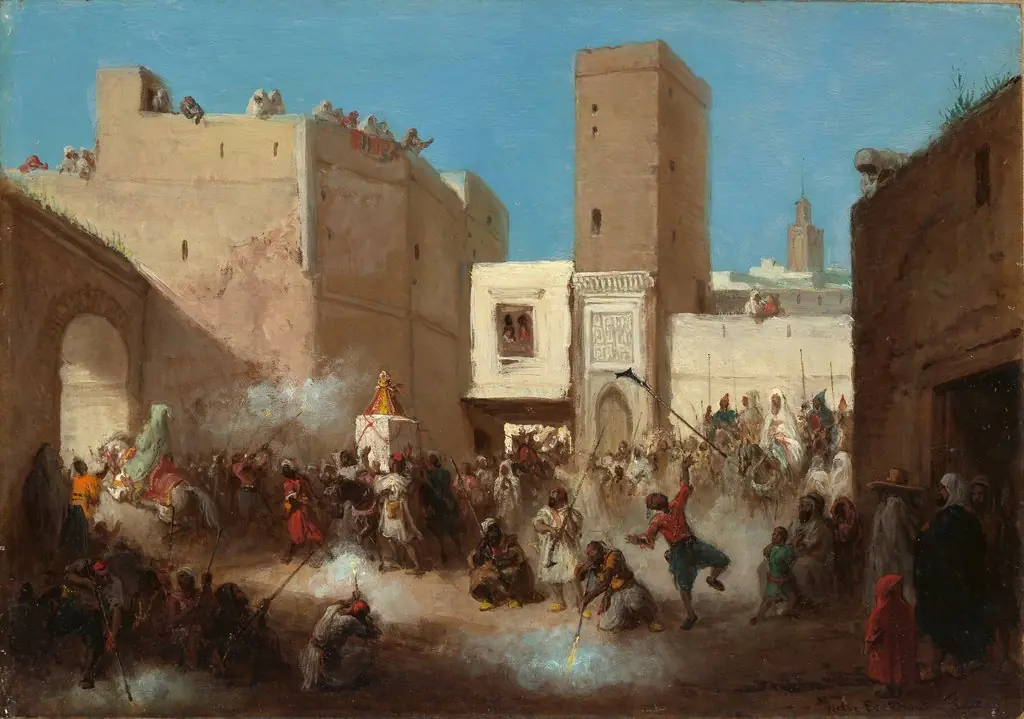 Wedding Procession
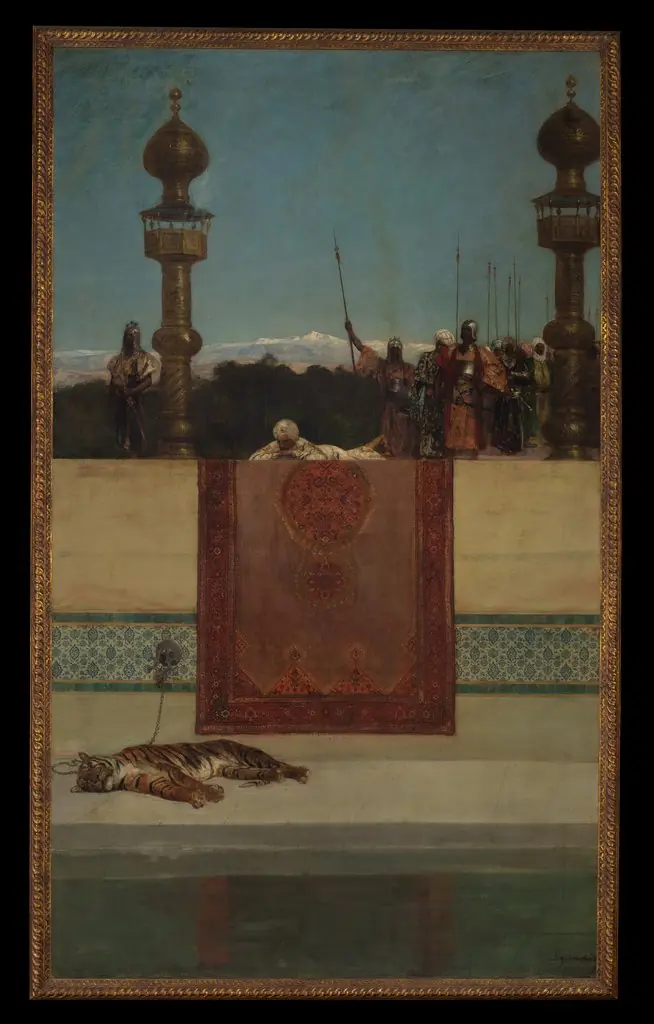 The Sultan's Tiger
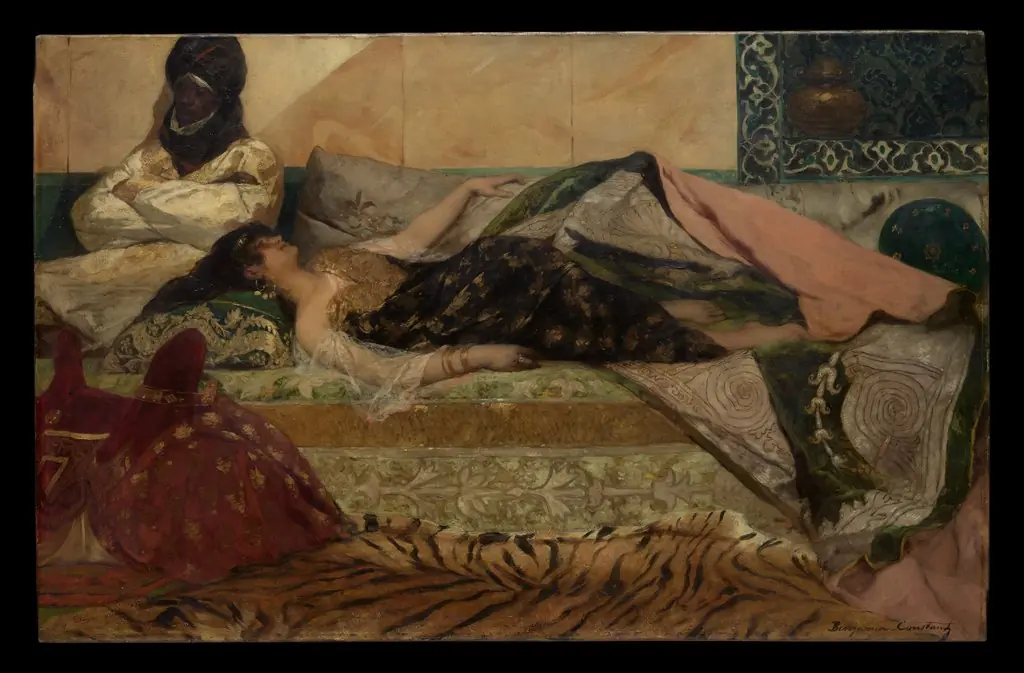 Odalisque
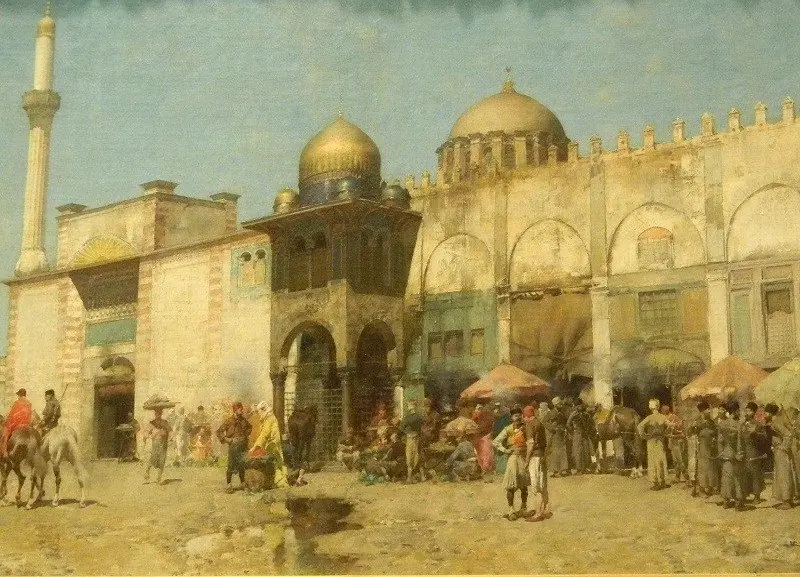 A Mosque
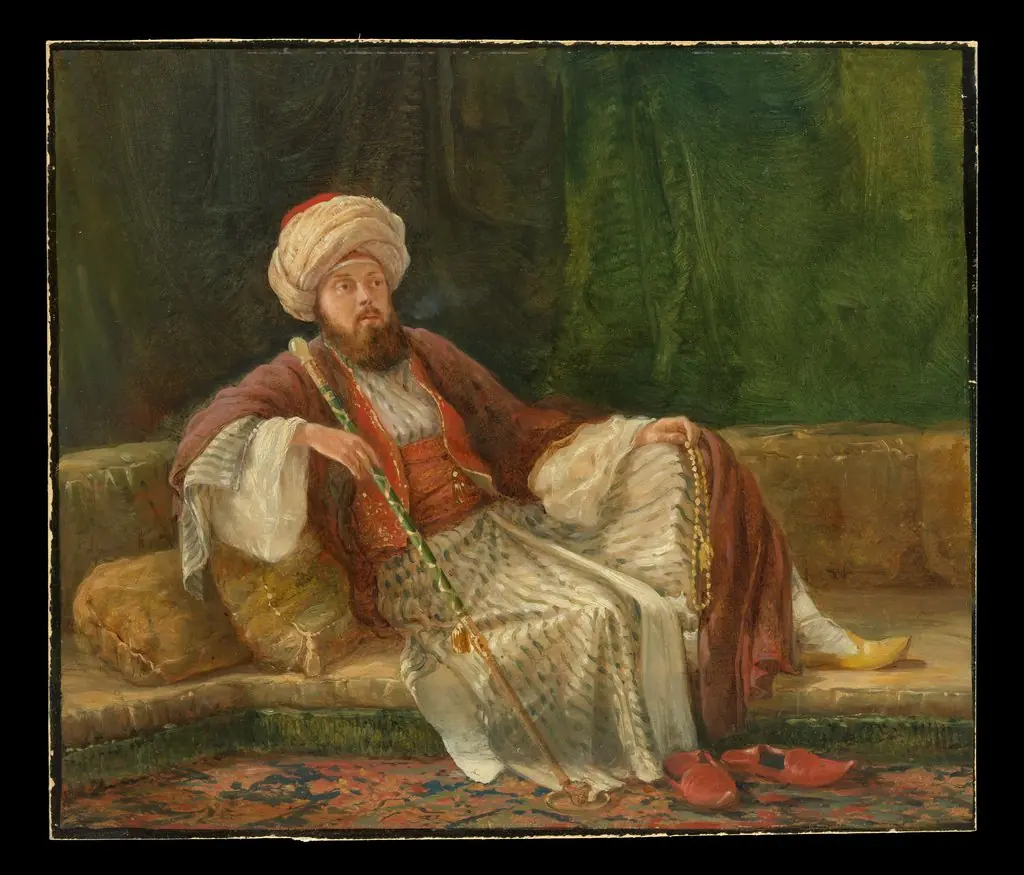 Western Gentleman in Oriental Costume
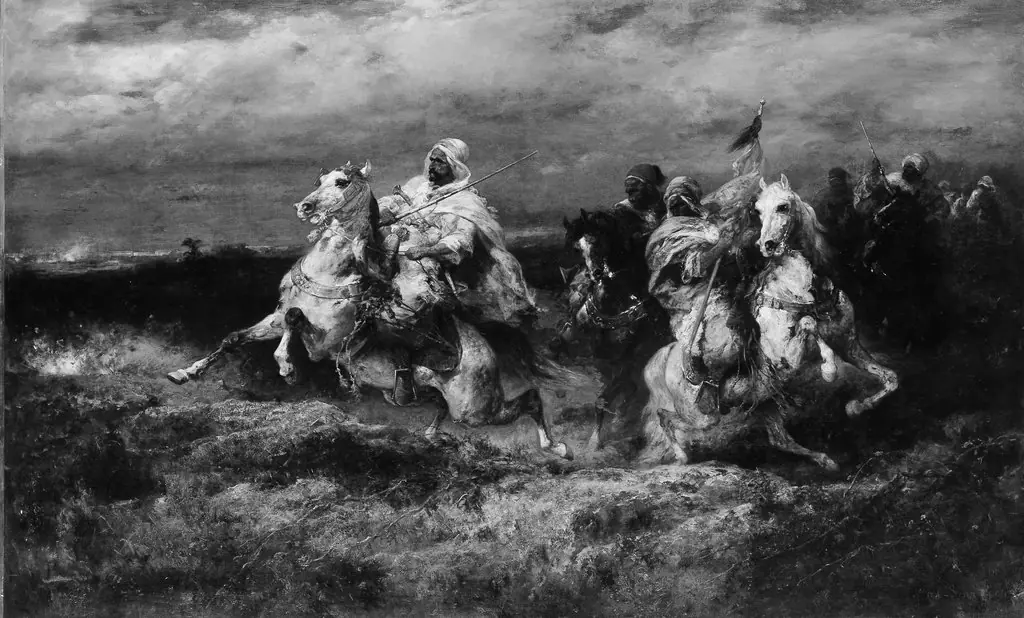 Battle Scene: Arabs Making a Detour
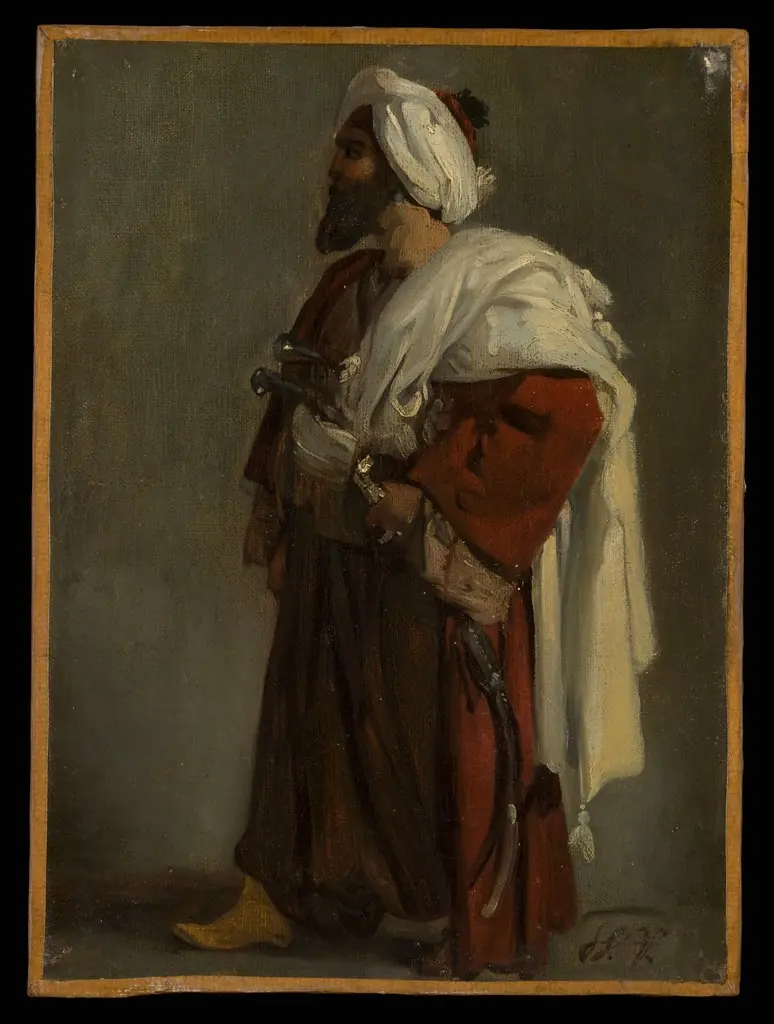 Arab Warrior
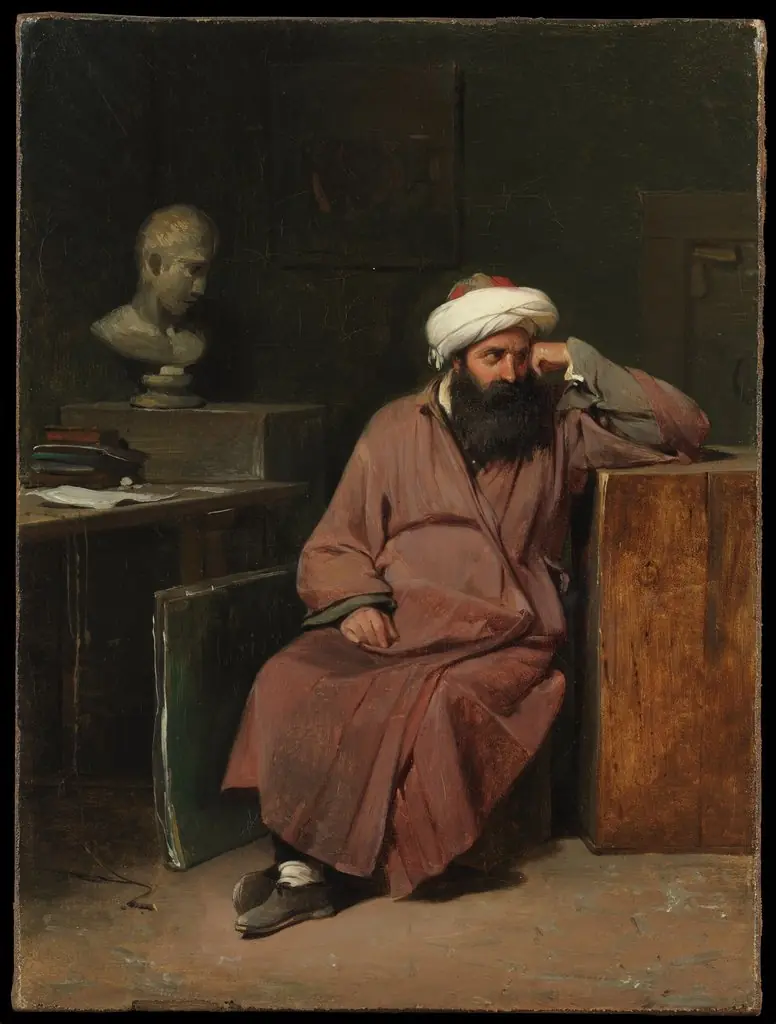 Man in Oriental Costume in the Artist’s Studio
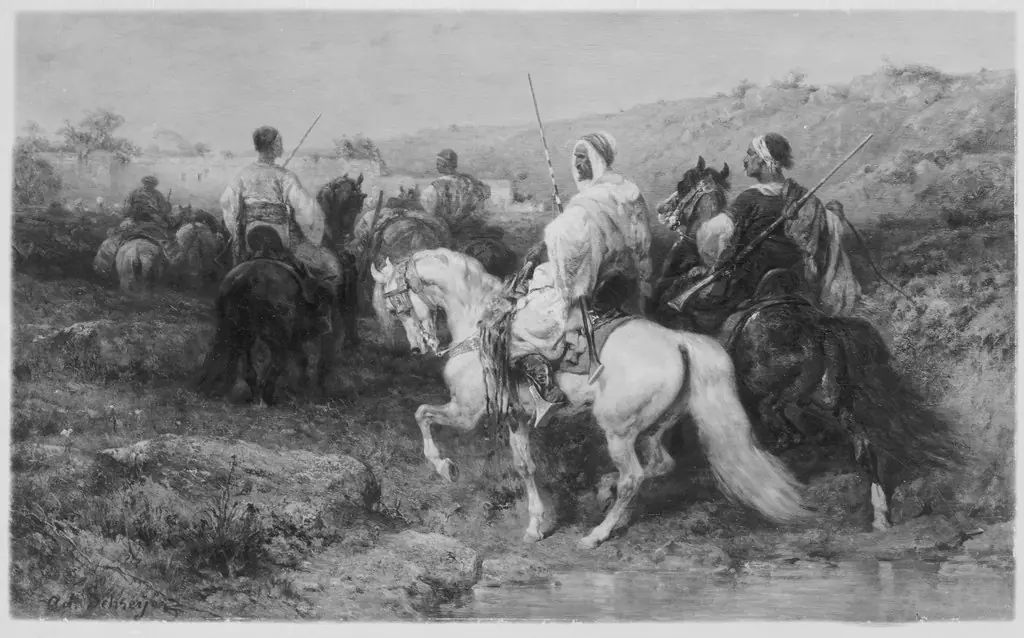 Arabs on the March
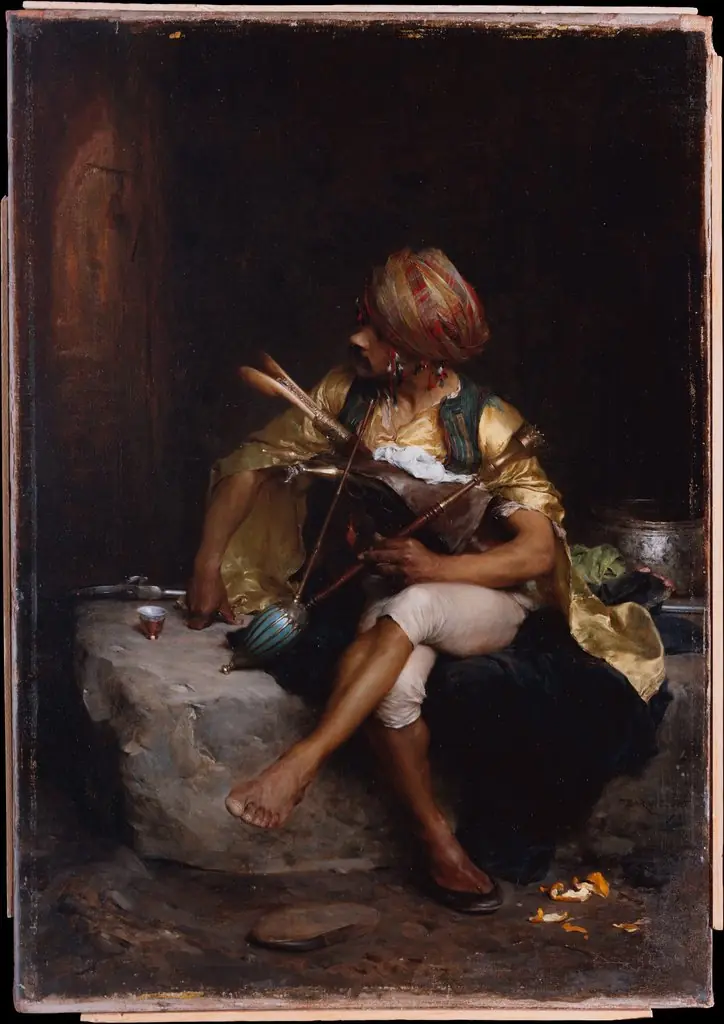 A Bashi-Bazouk
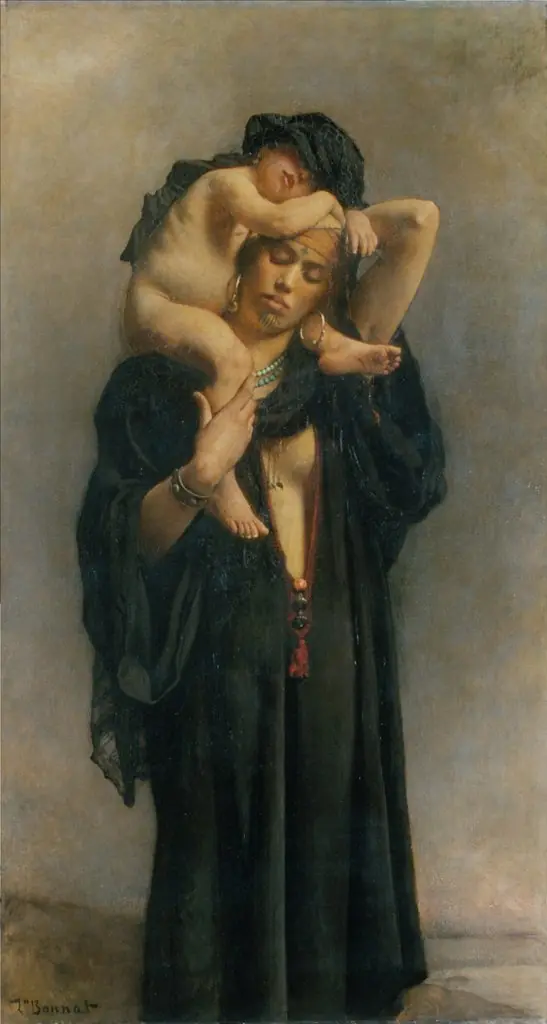 An Egyptian Peasant Woman and Her Child
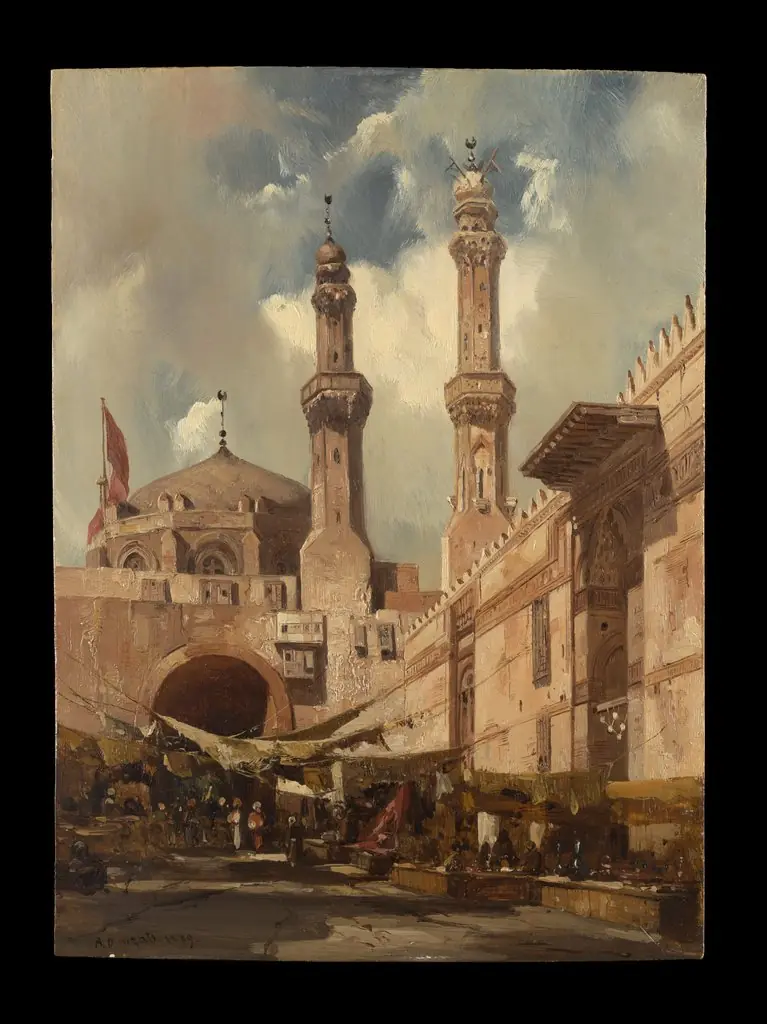 A Cairo Bazaar
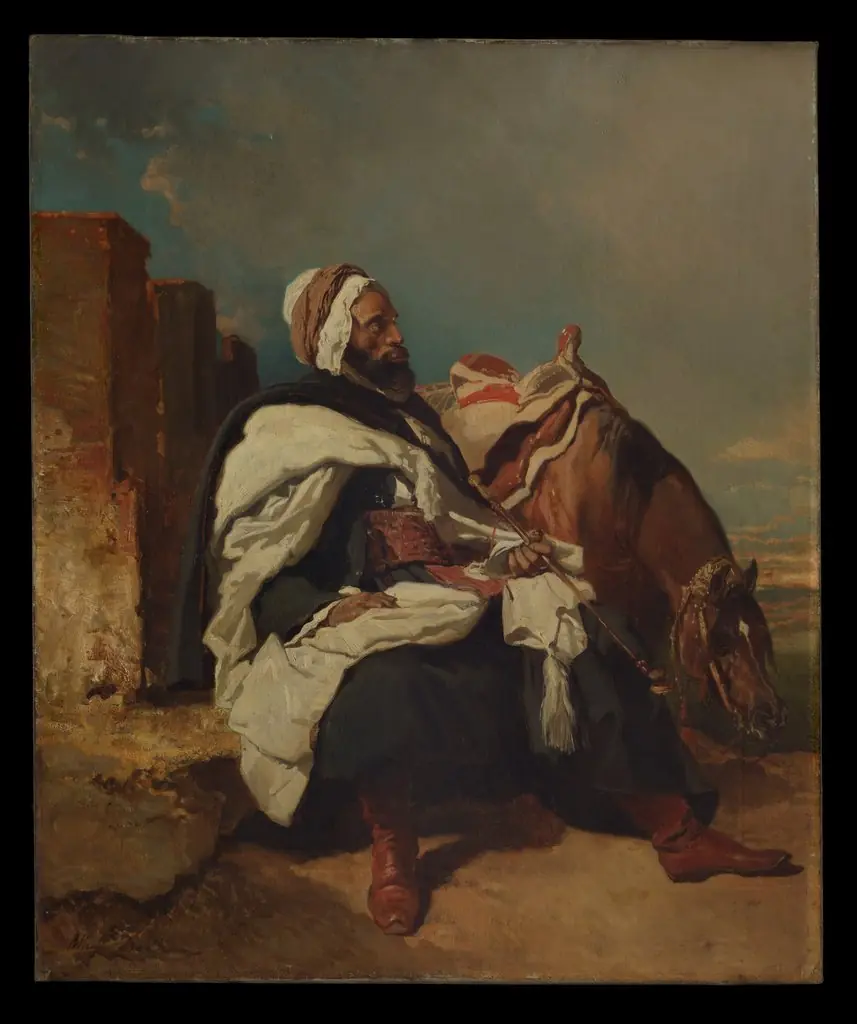 Seated Arab Man with Horse
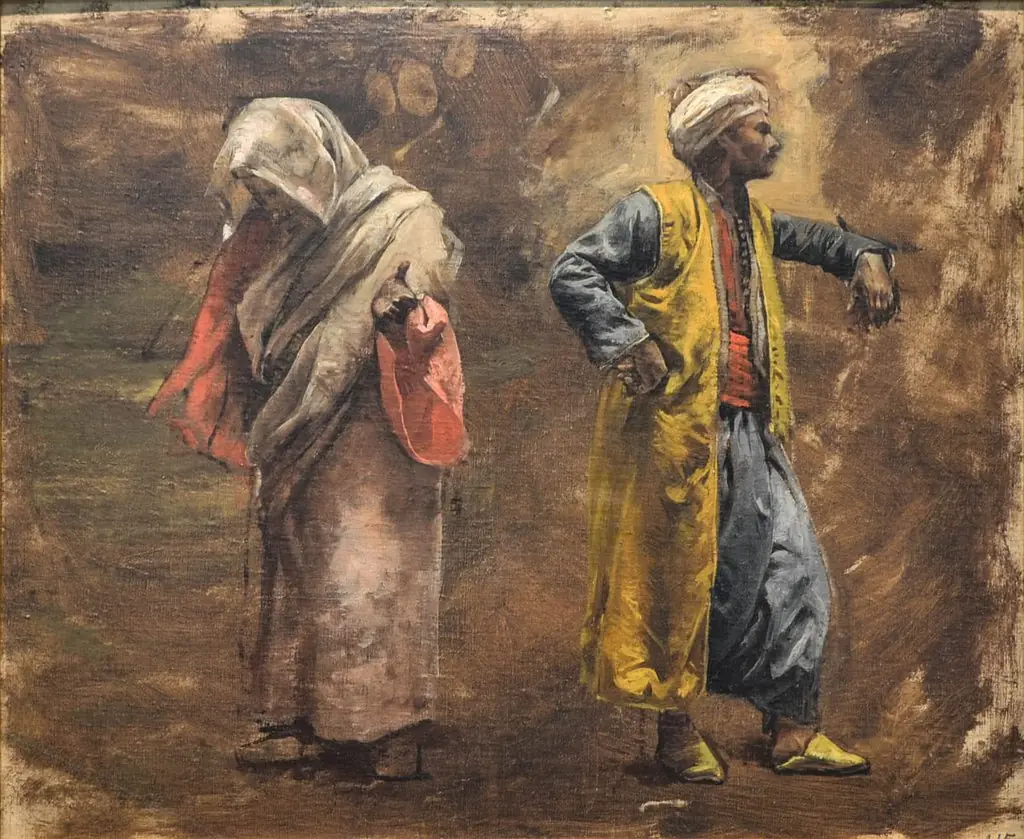 Study of Two Figures
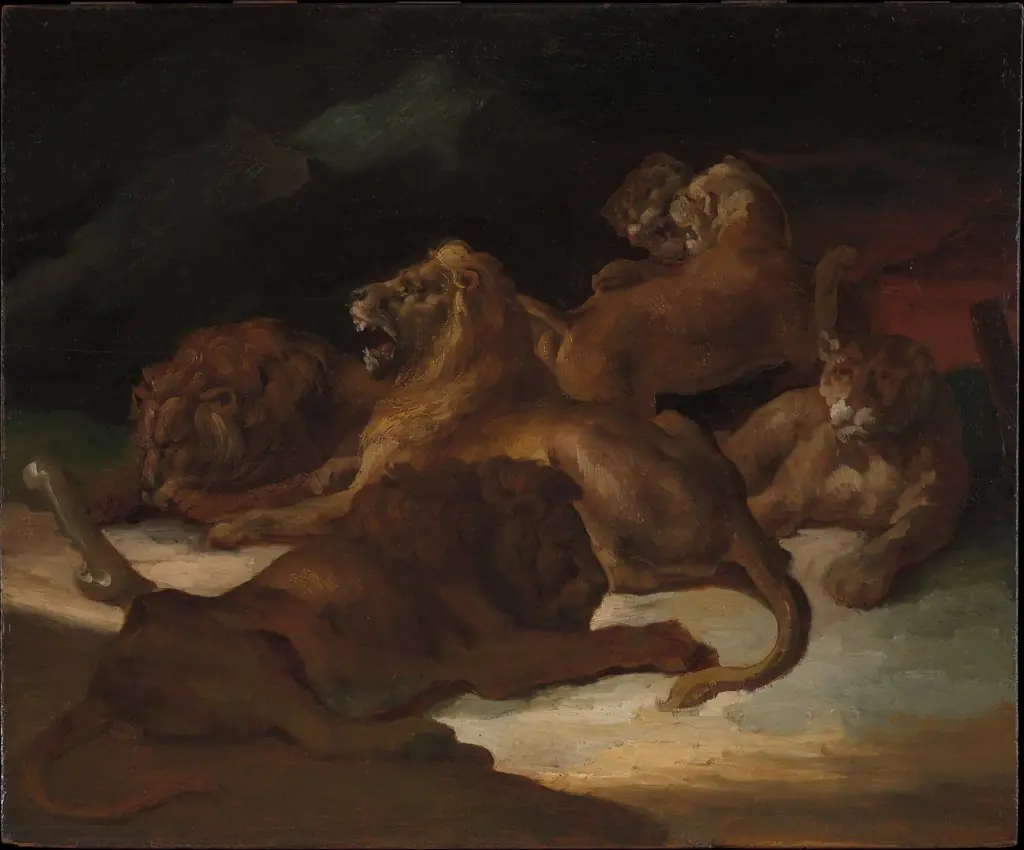 Lions in a Mountainous Landscape
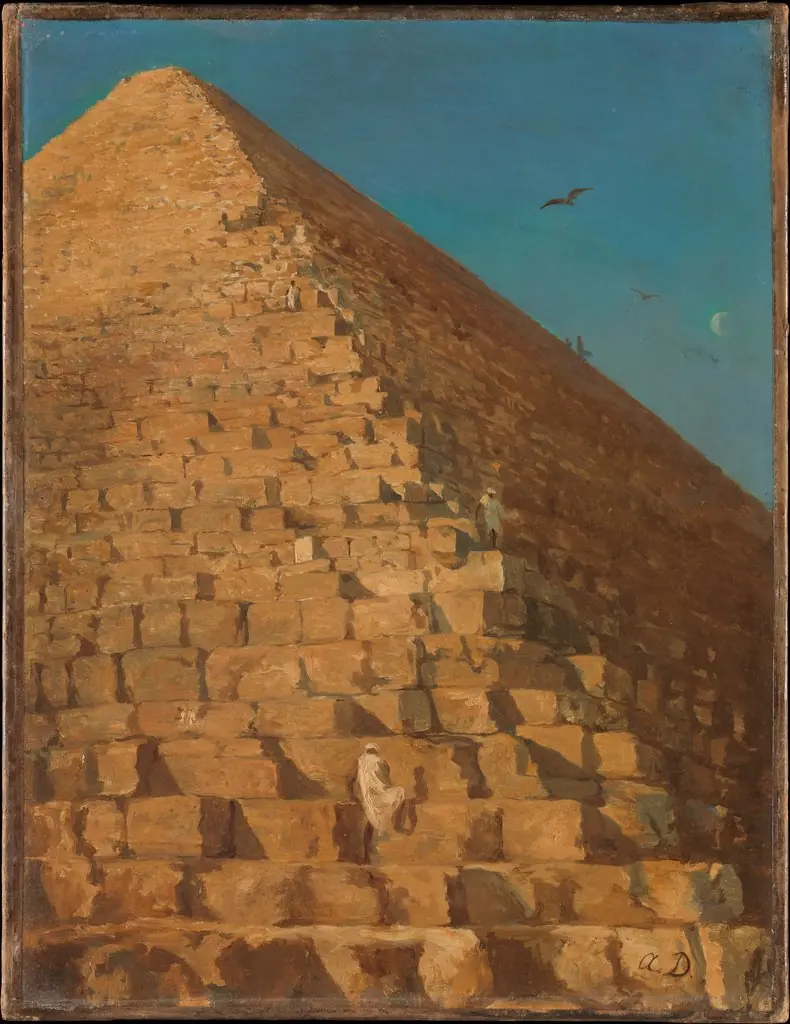 The Great Pyramid, Giza
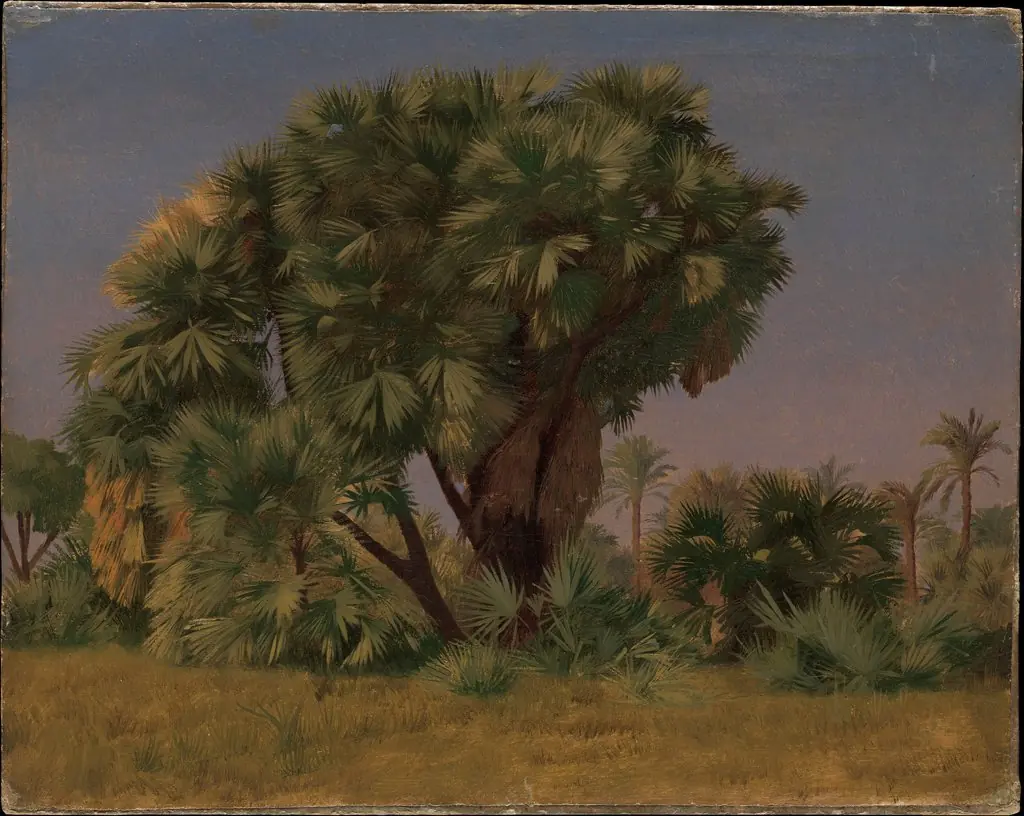 Study of Palm Trees
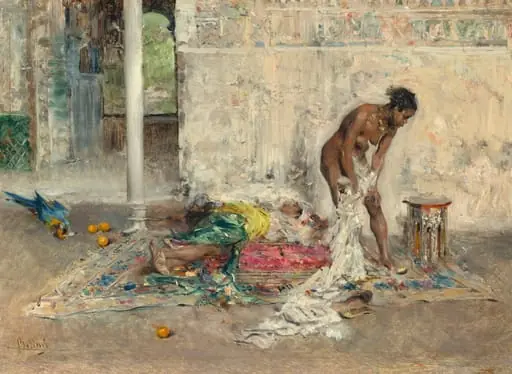 After the Bath
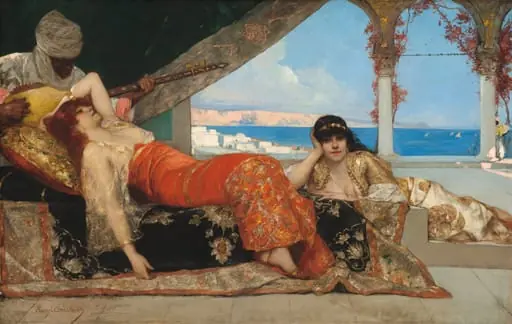 The Favorite of the Emir
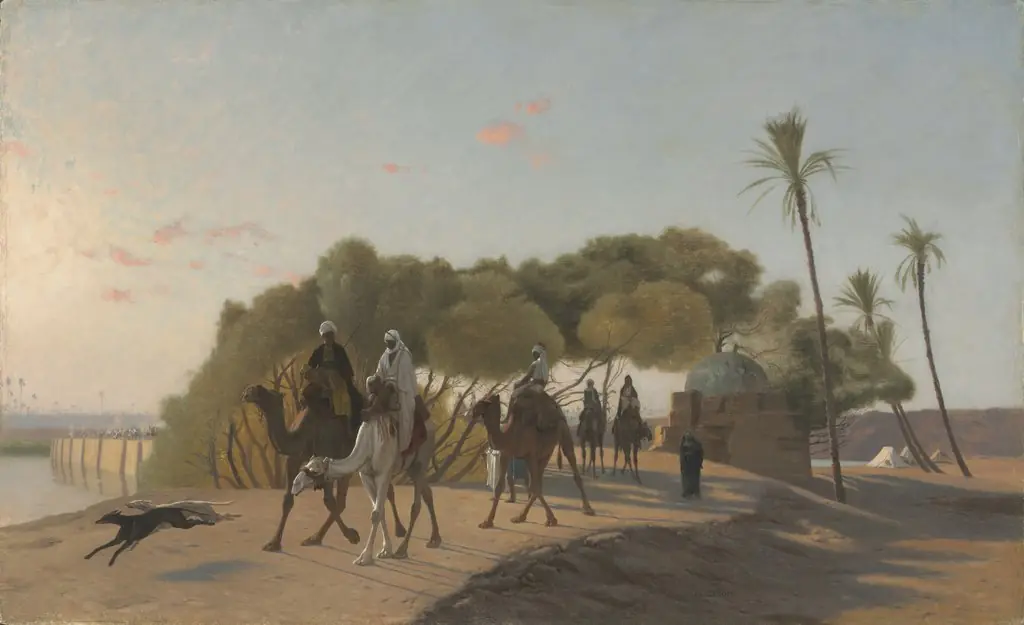 Leaving the Oasis
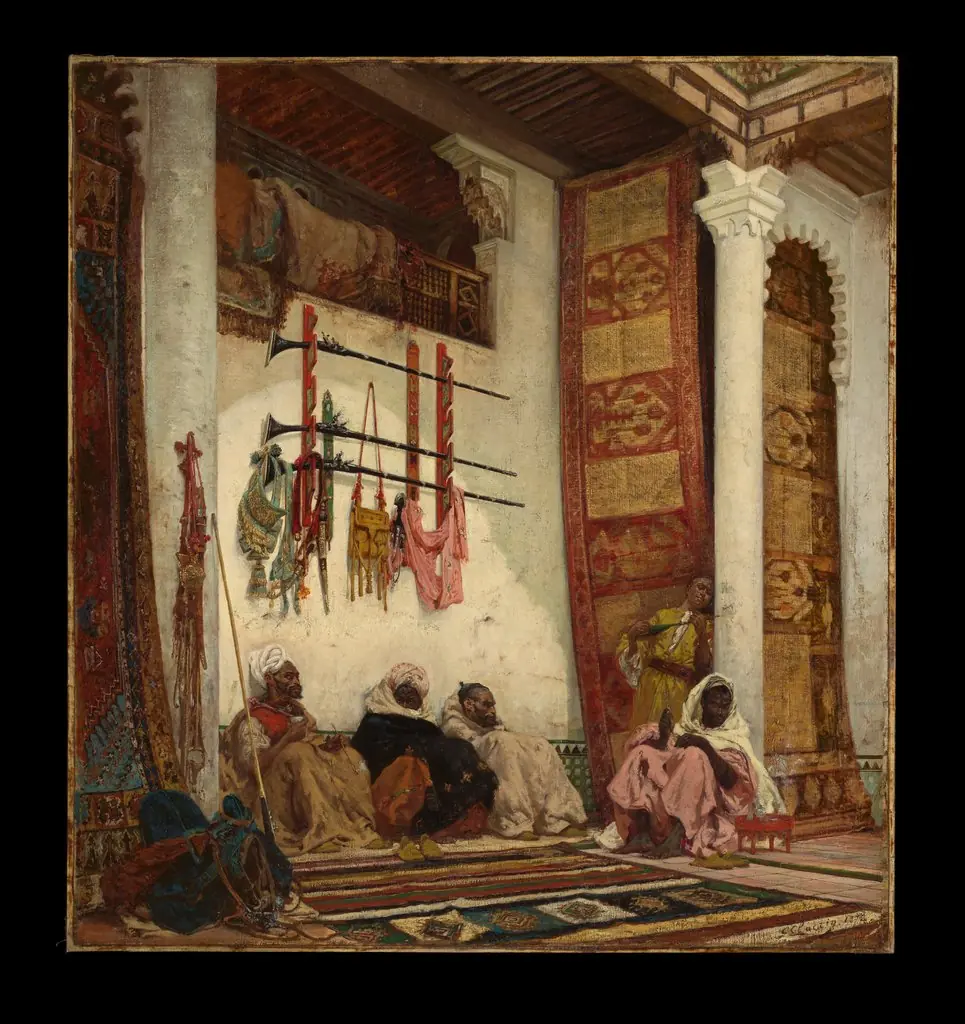 The Opium Smokers
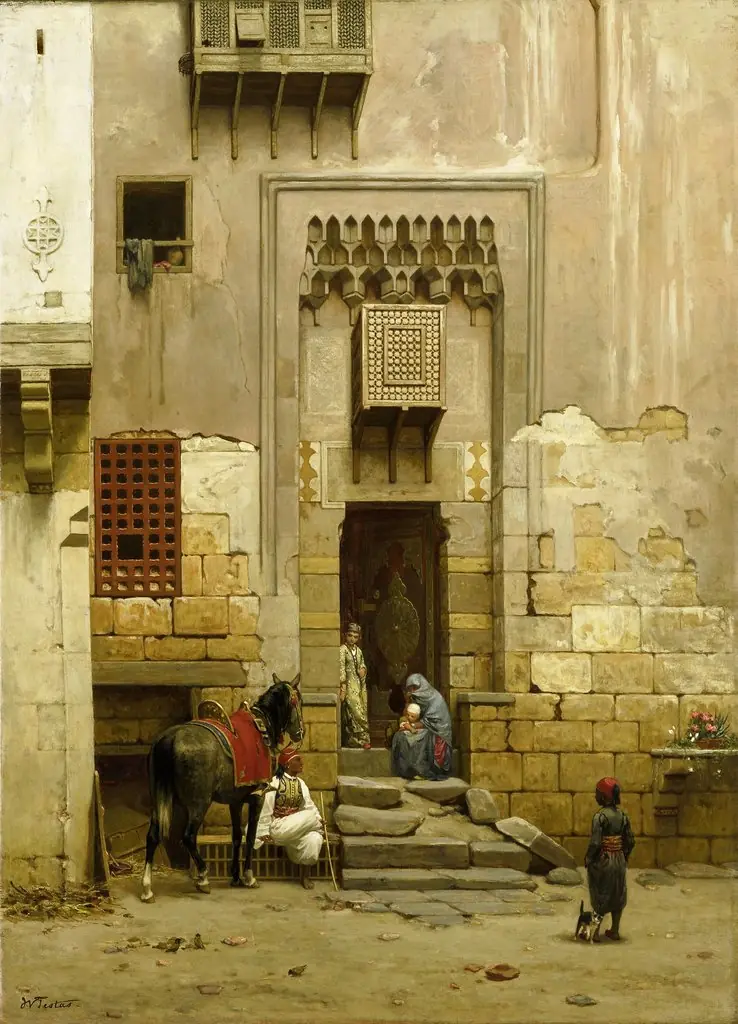 The Courtyard of a house in Cairo
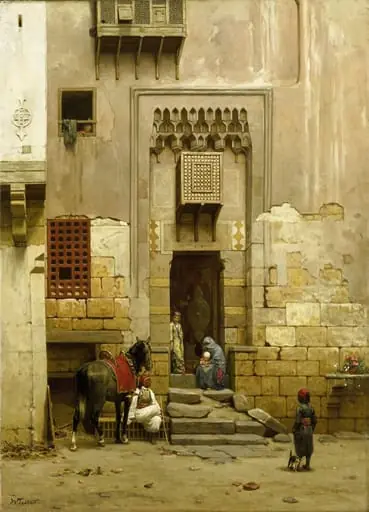 The Courtyard of a house in Cairo
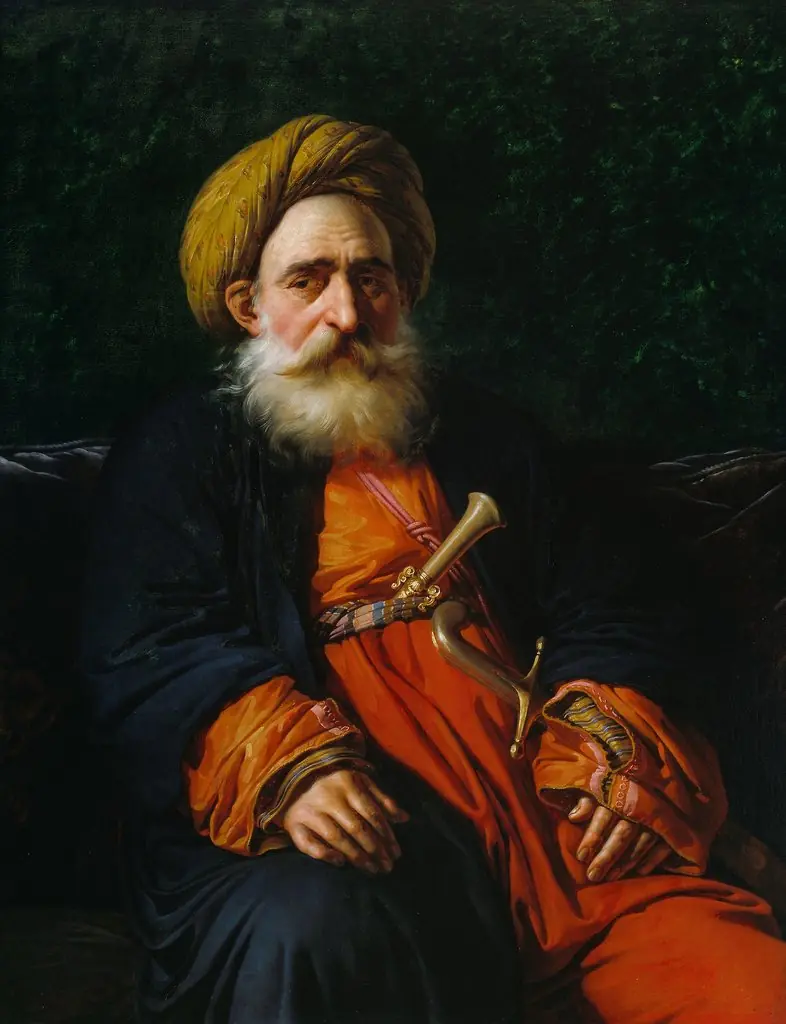 Portrait of the Katchef Dahouth, Christian Mameluke
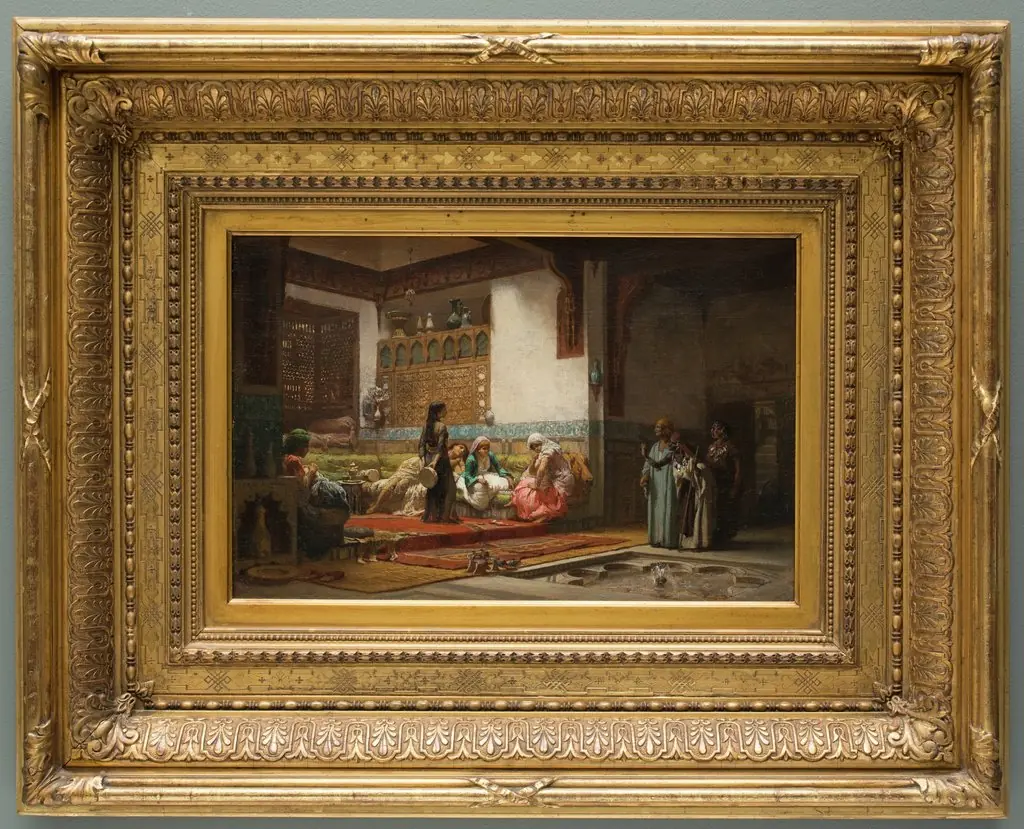 Moorish Interior
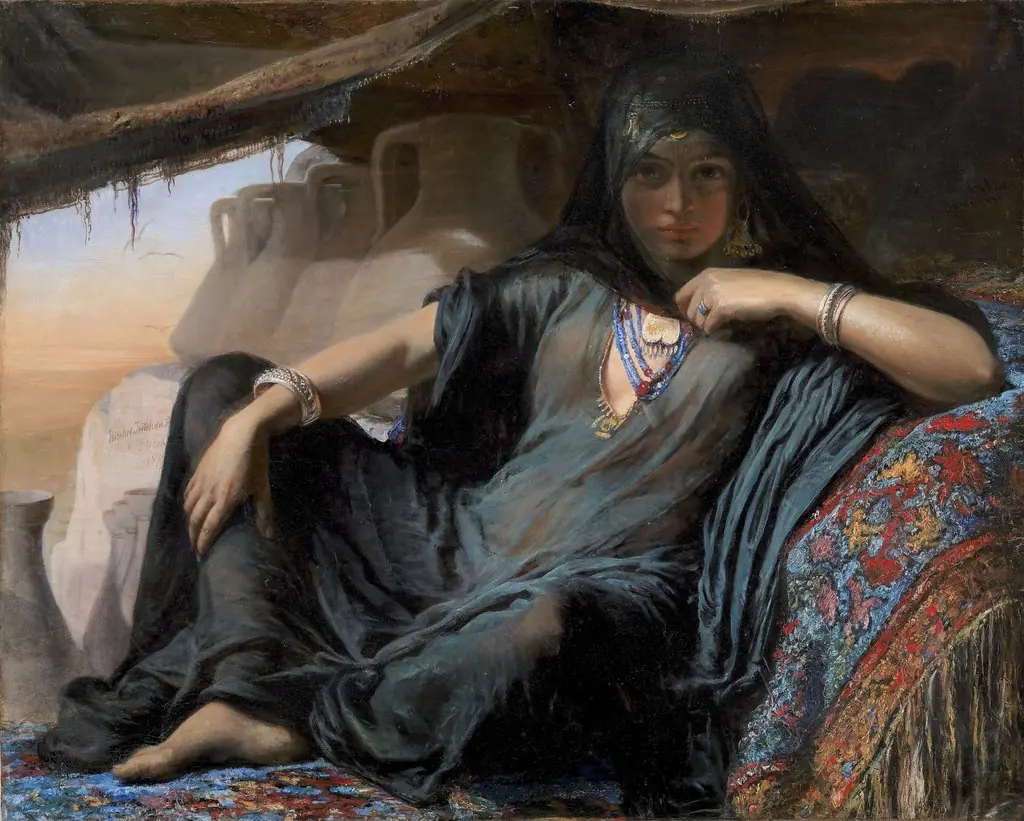 An Egyptian Pot Seller at Gizeh
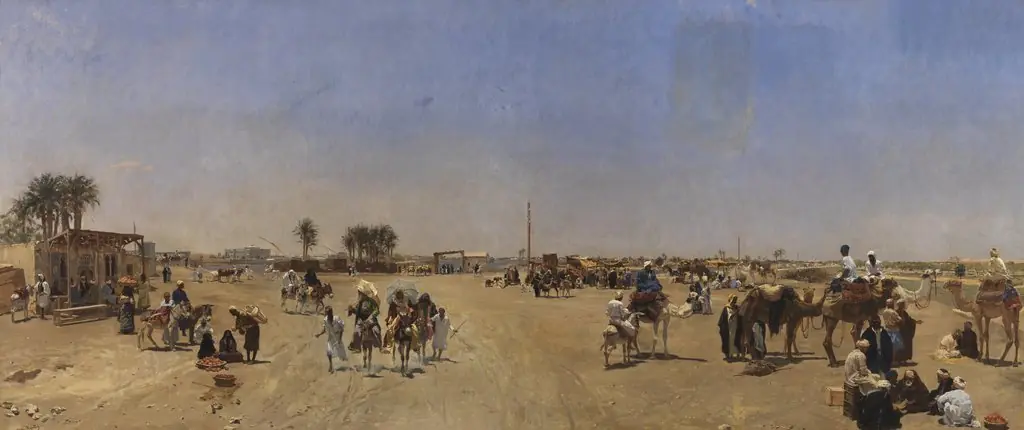 Cairo Seen from the Kasr-el-Nil Bridge
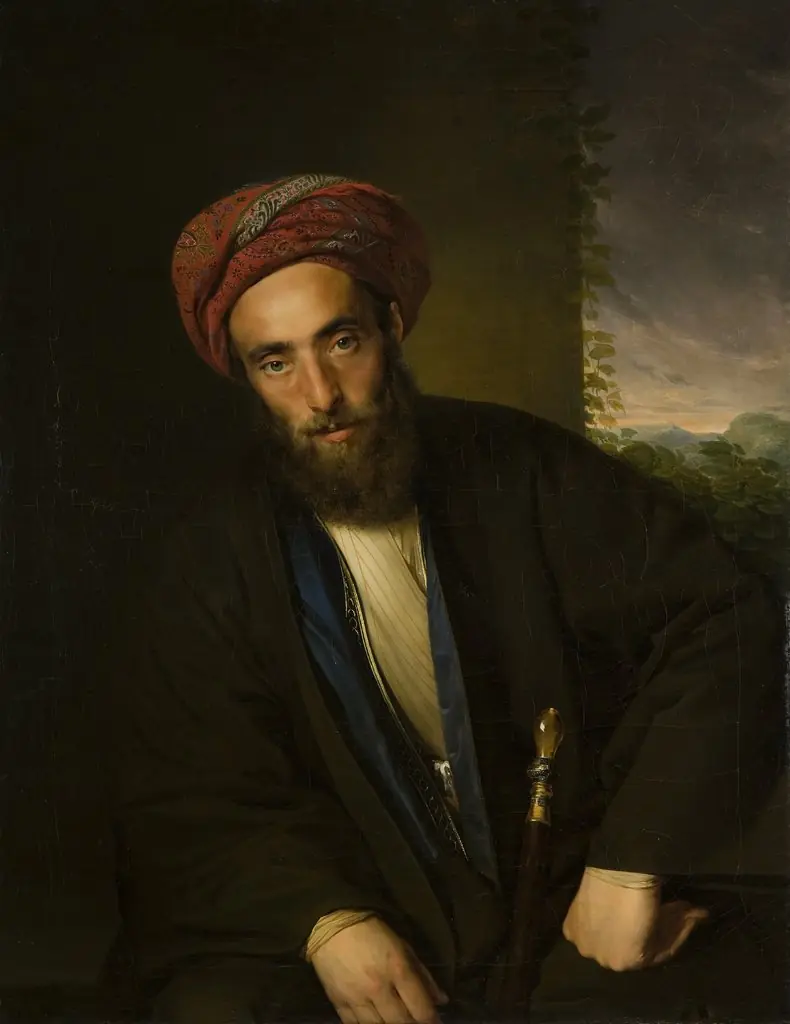 Seated Armenian
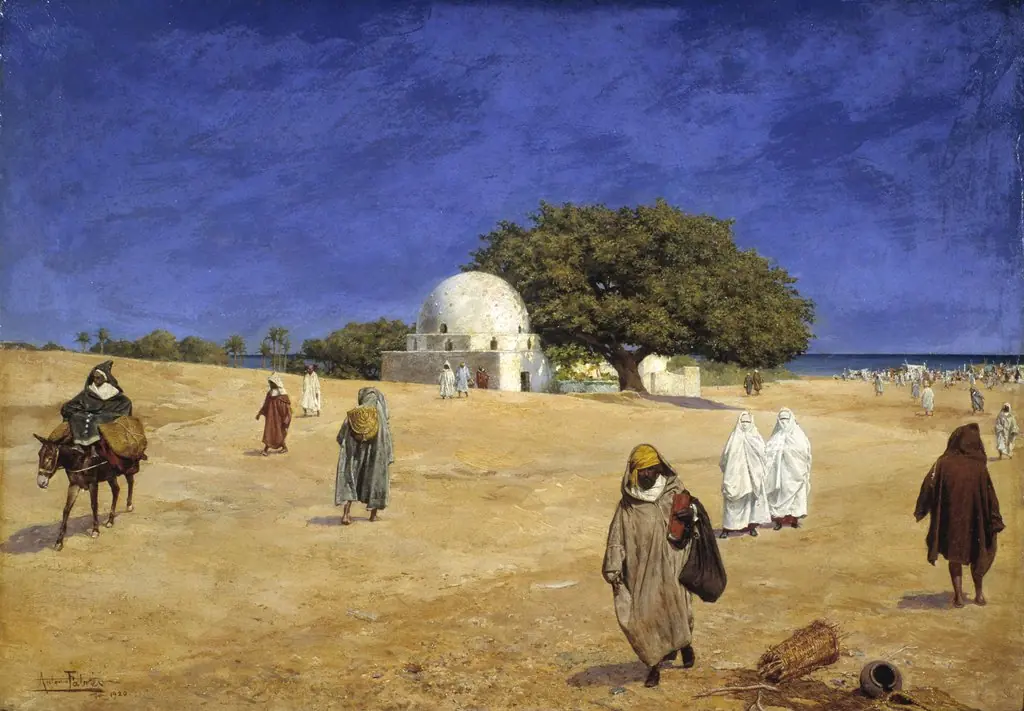 Moroccan Pilgrimage
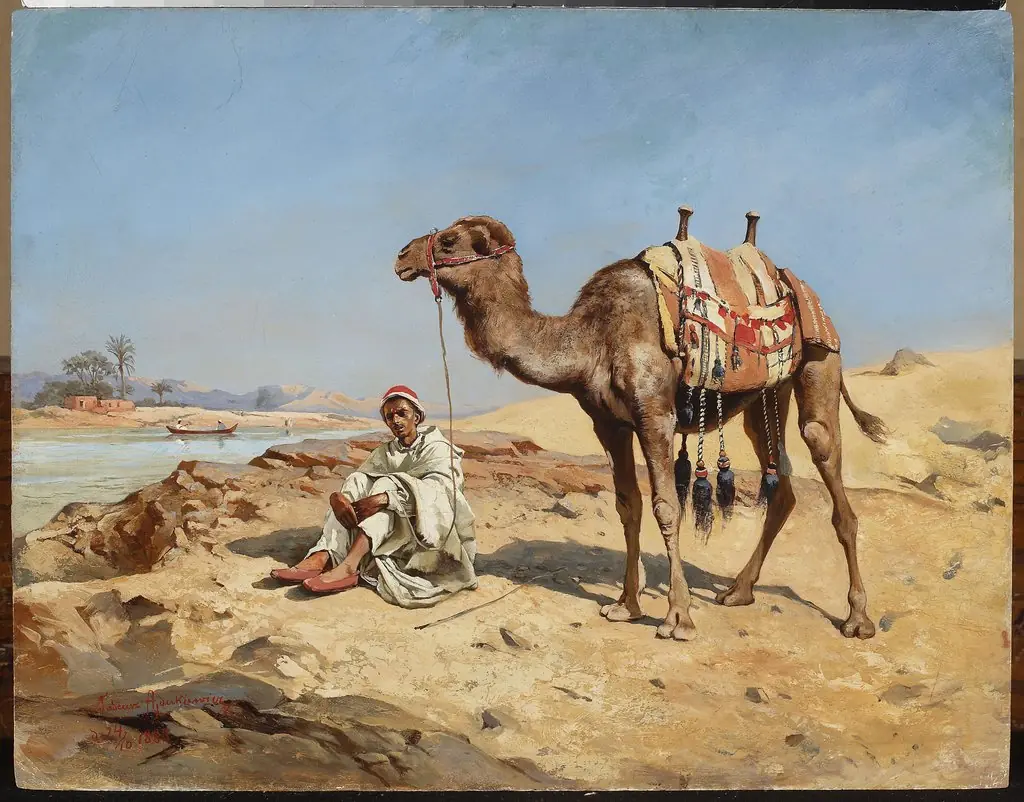 Arab in the desert
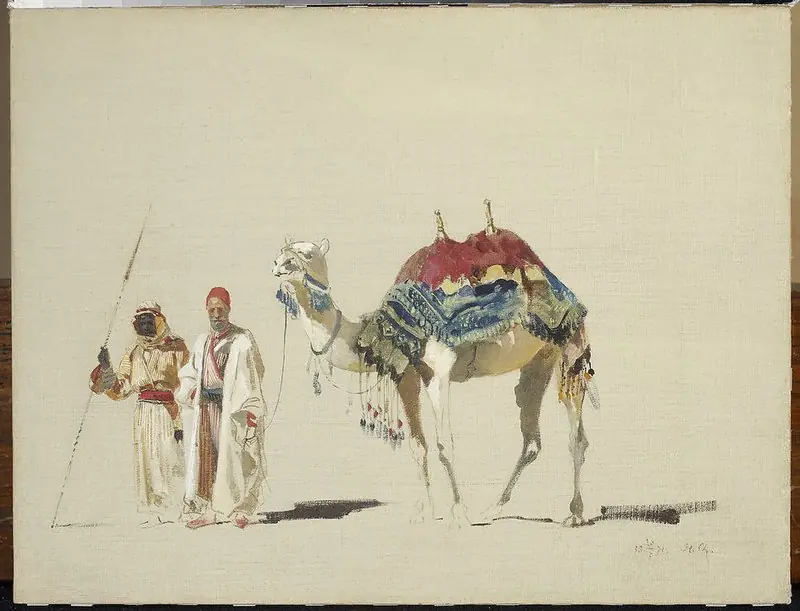 Sultan’s white camel, sketch
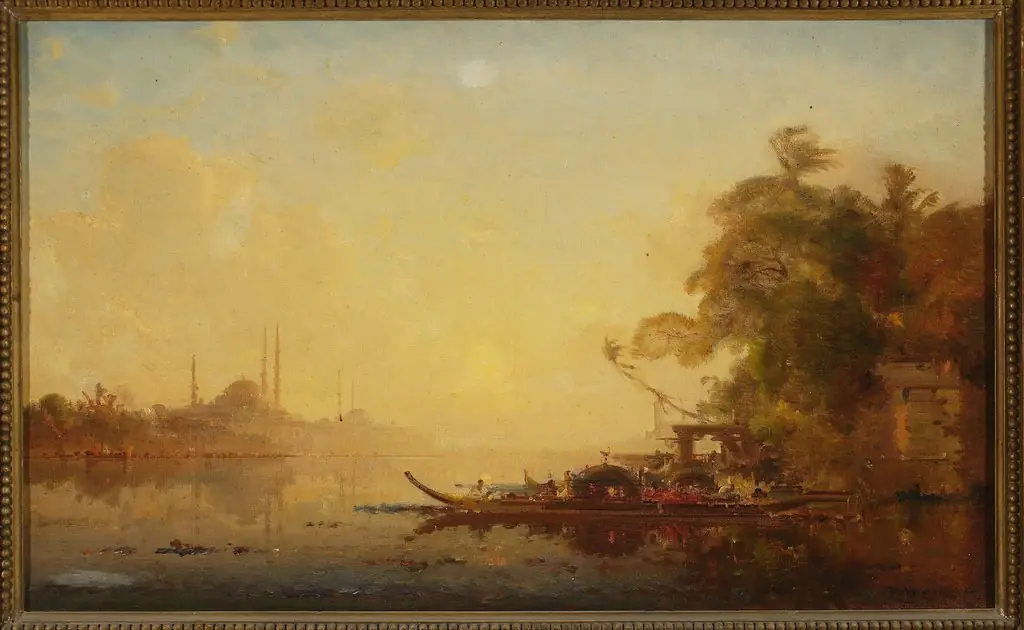 View of Constantinople
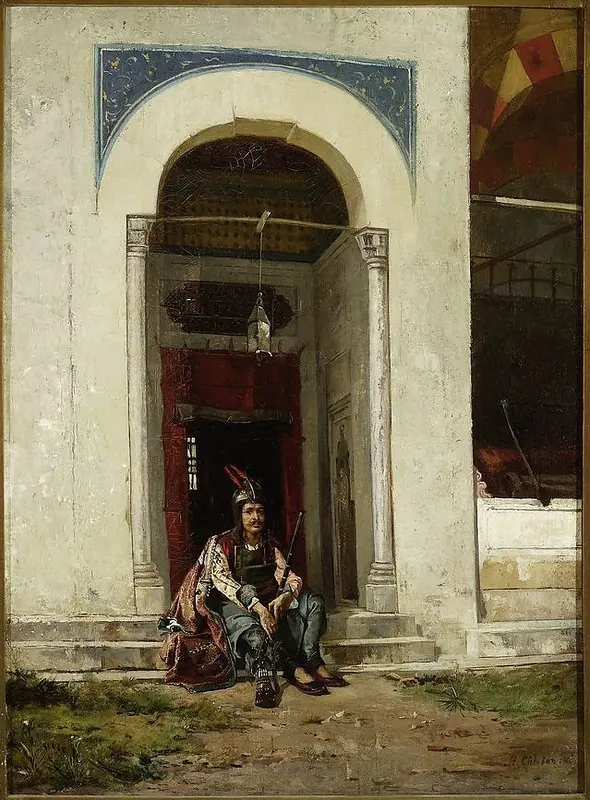 Mosque guard
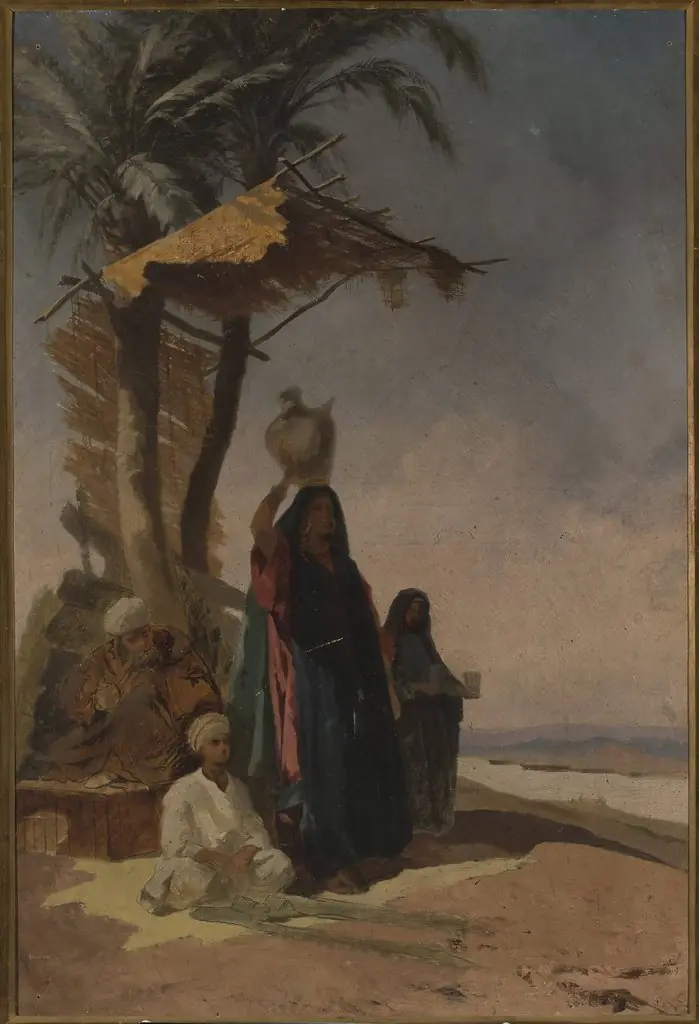 Eastern genre scene under a palm tree
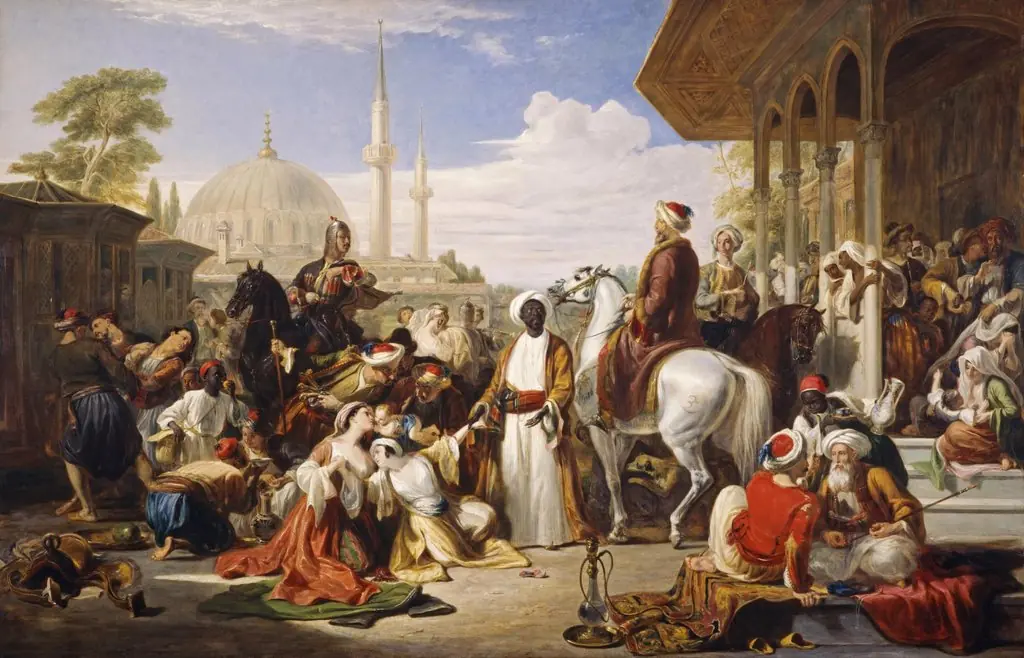 The Slave Market, Constantinople
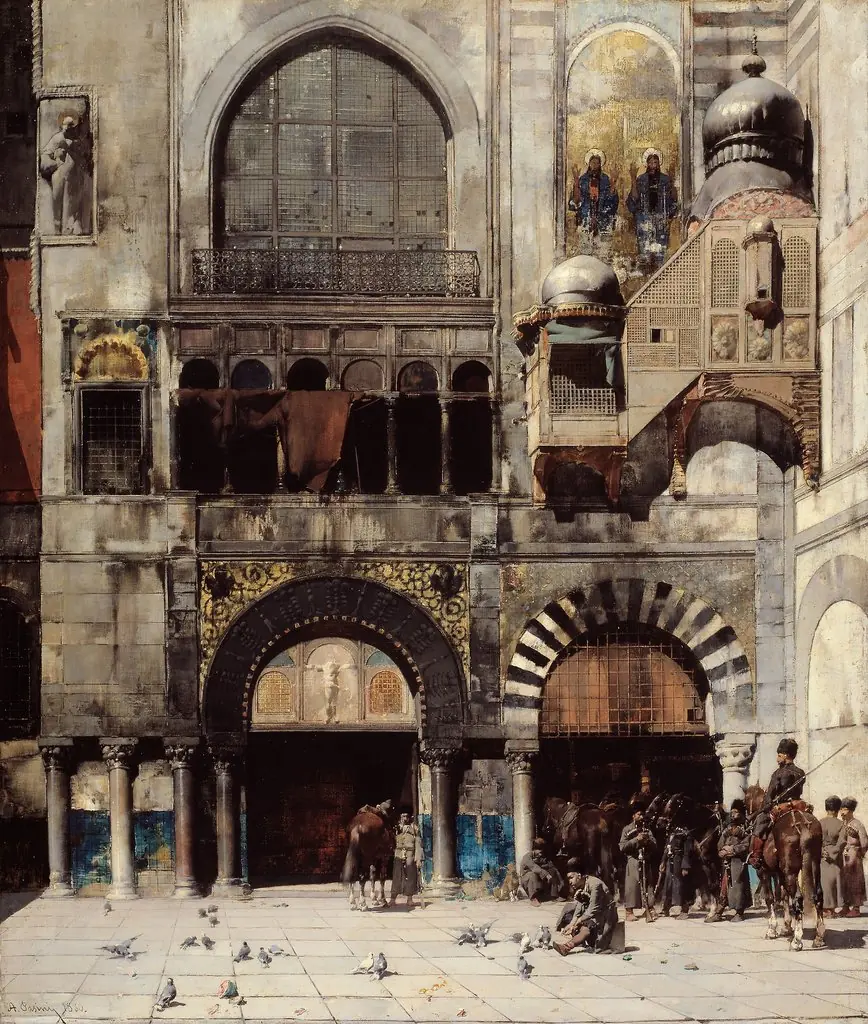 Circassian Cavalry Awaiting their Commanding Officer at the Door of a Byzantine Monument; Memory of the Orient
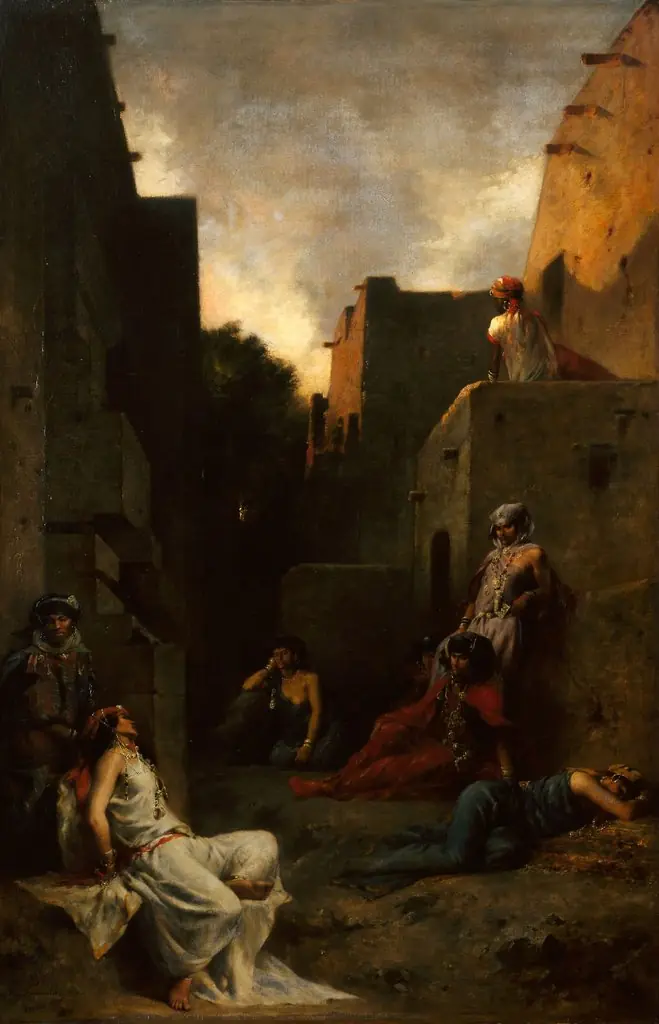 Women of the Ouled Nayls
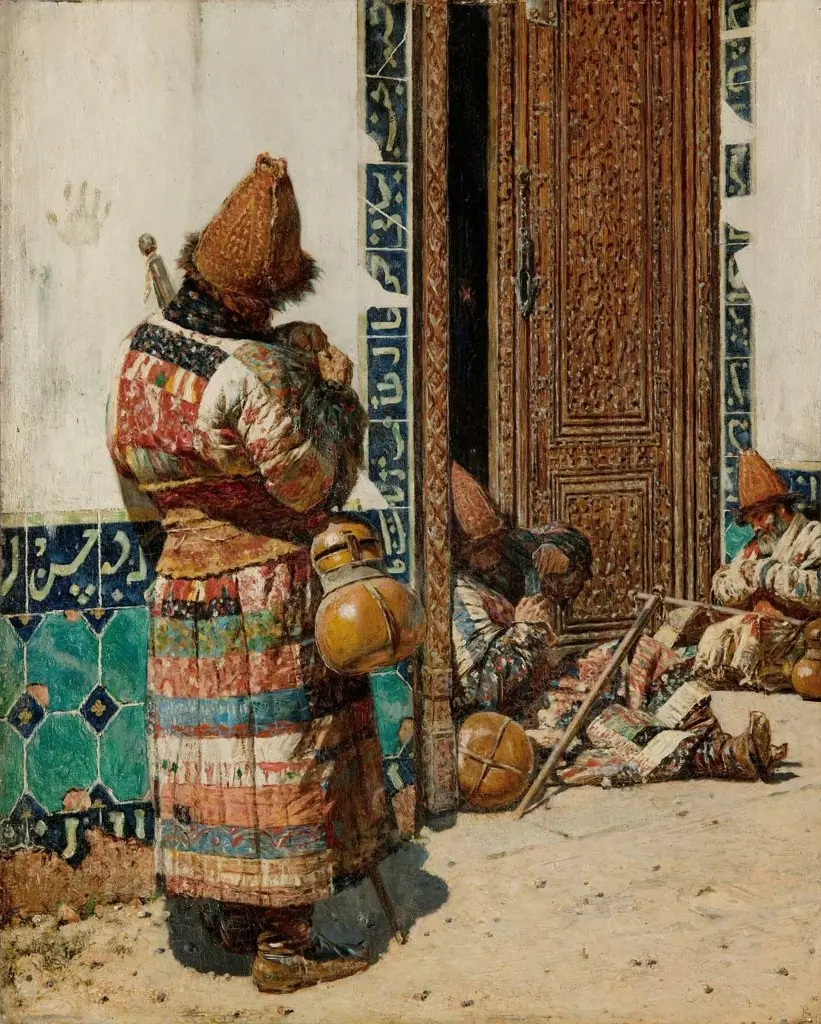 Monks at the Door of a Mosque
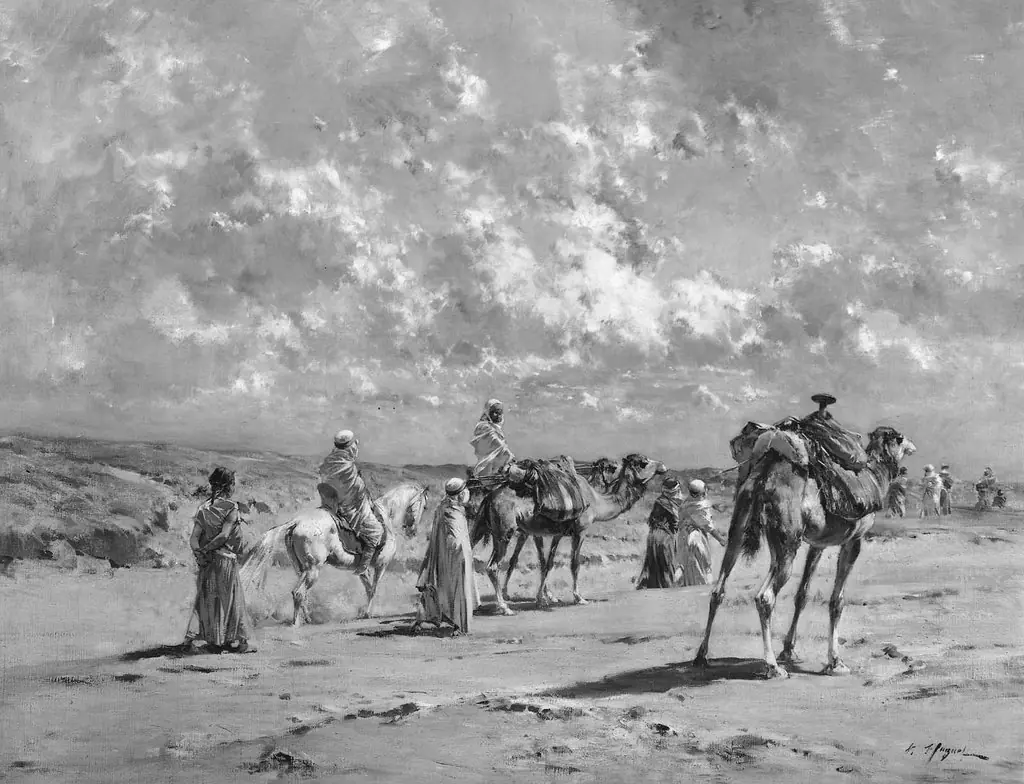 Arabs on the March
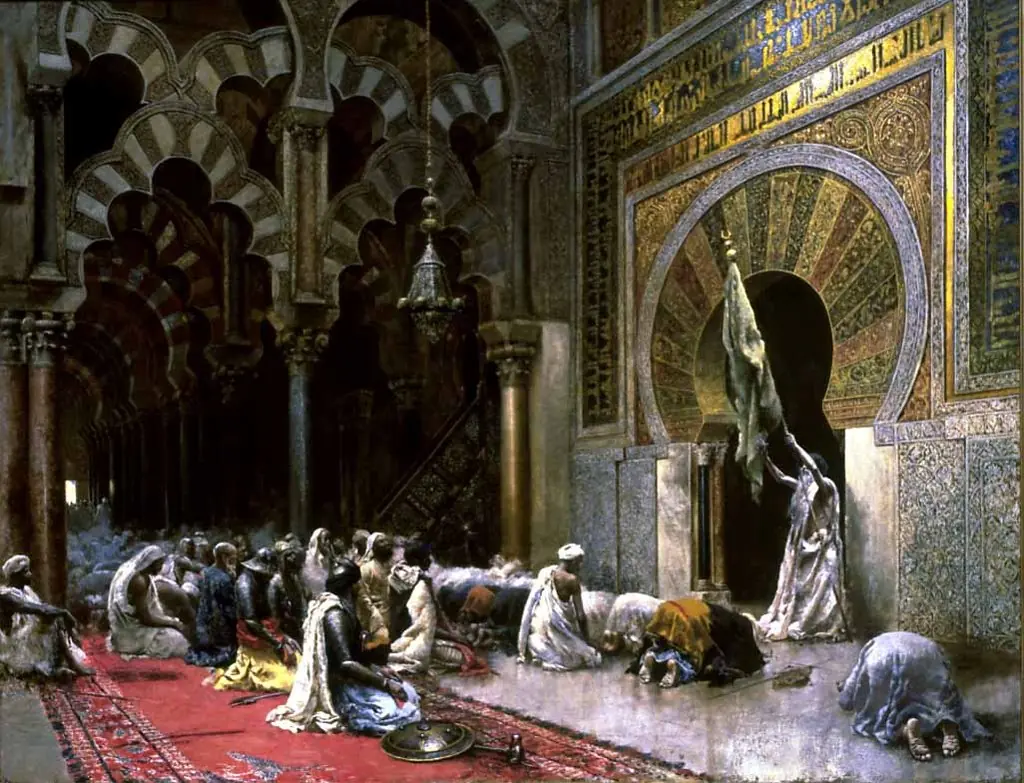 Interior of a Mosque at Cordova
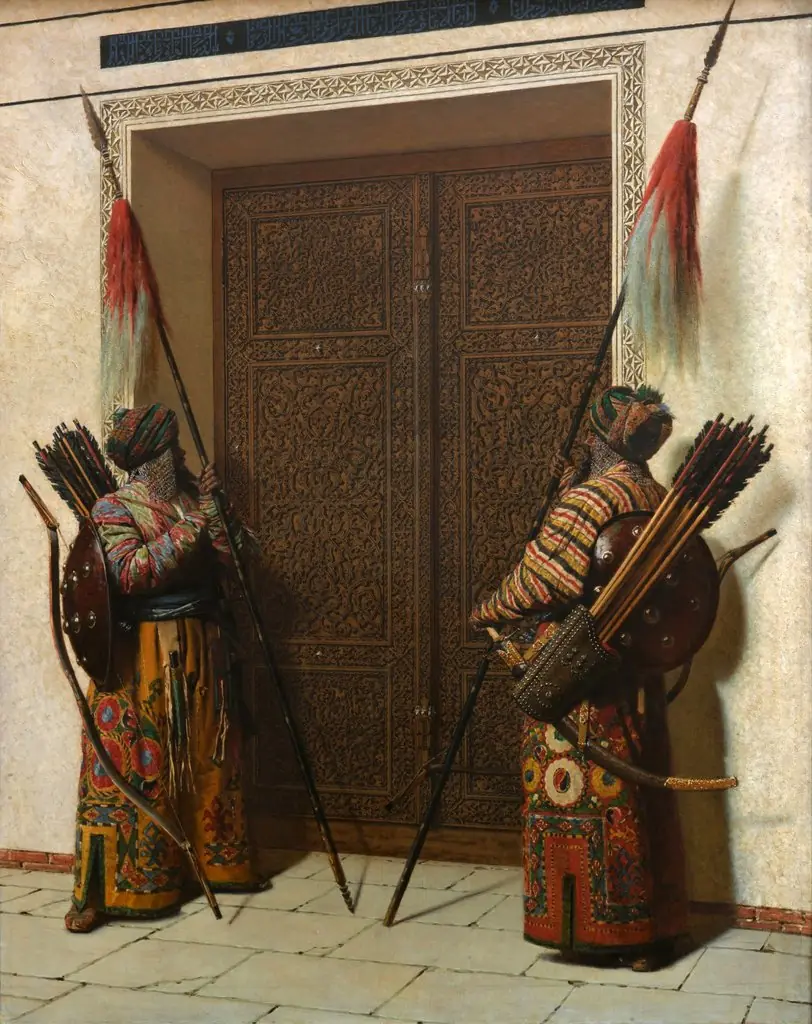 Tamerlan's Doors
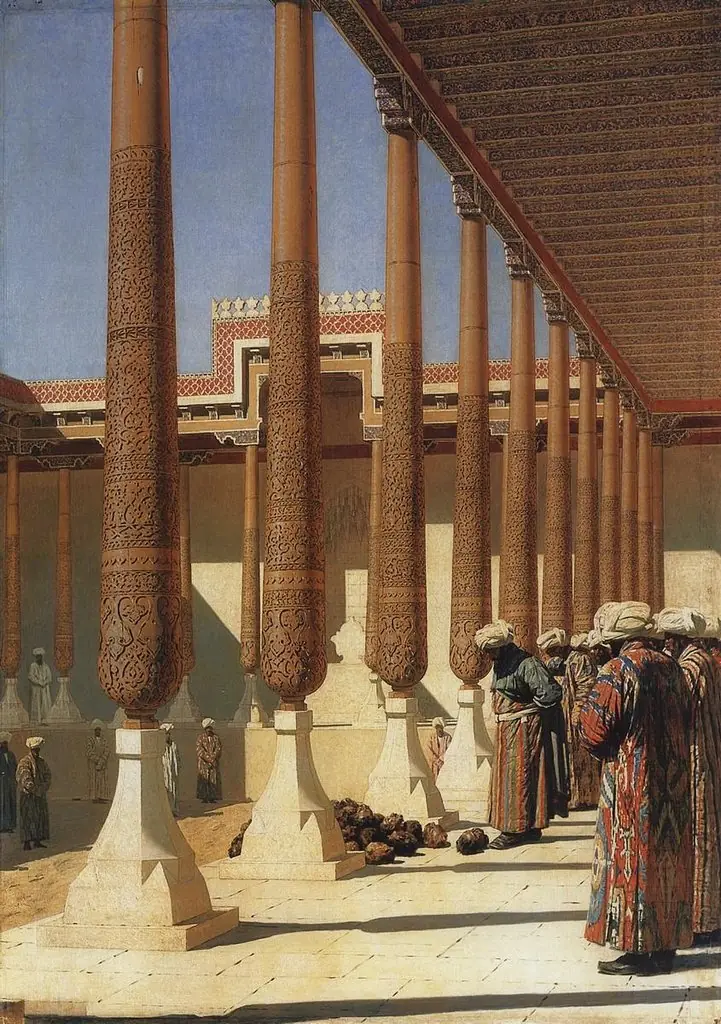 Presentation of the trophies
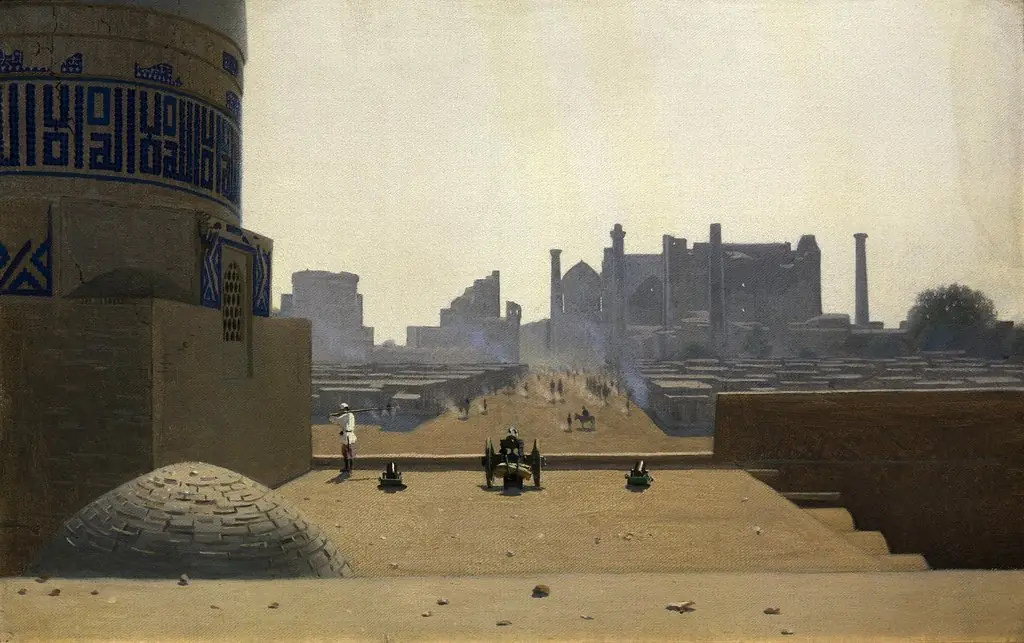 Main Street in Samarkand, from the height of the citadel in the early morning
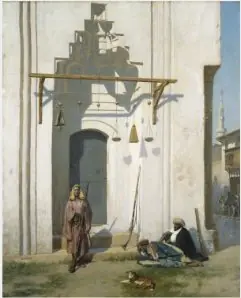 Guards at the Door of a Tomb
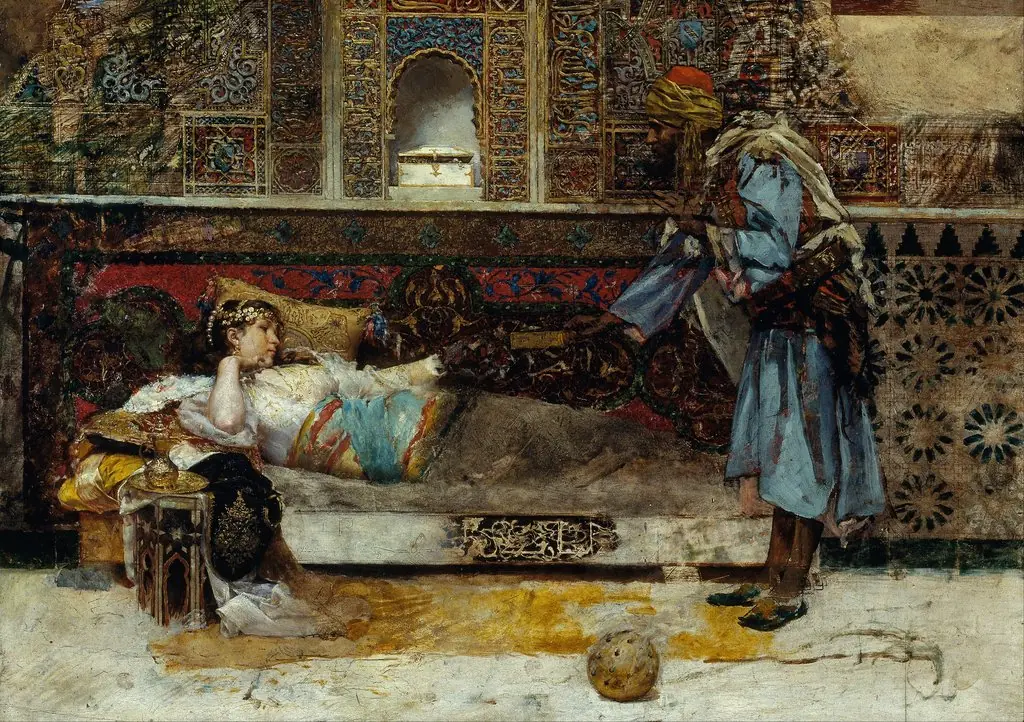 The Sultan's Gift
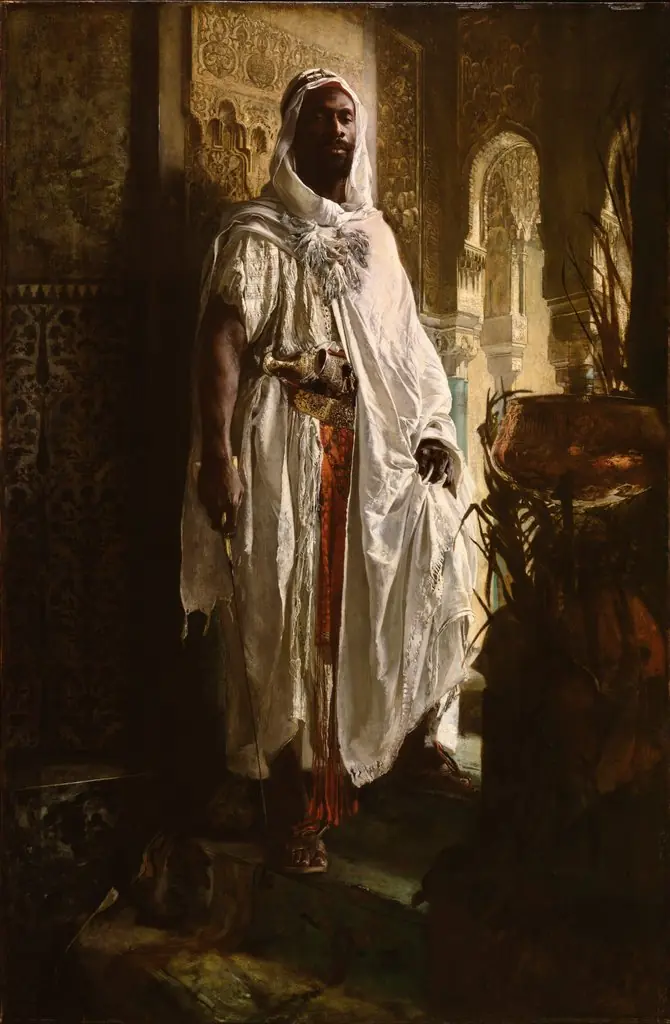 The Moorish Chief
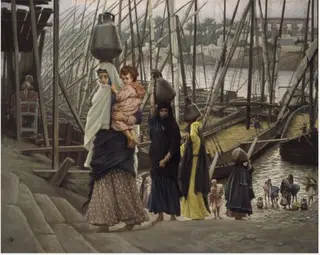 The Sojourn in Egypt
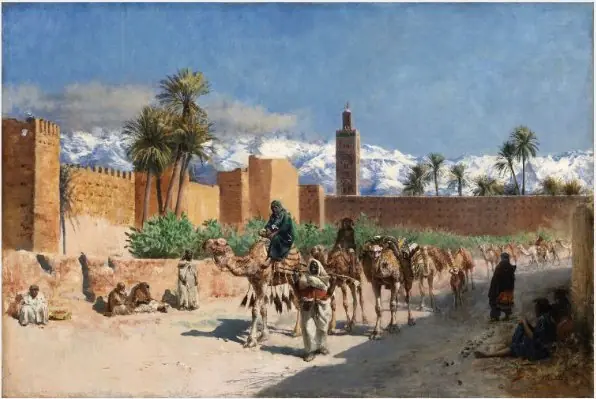 A Camel Caravan
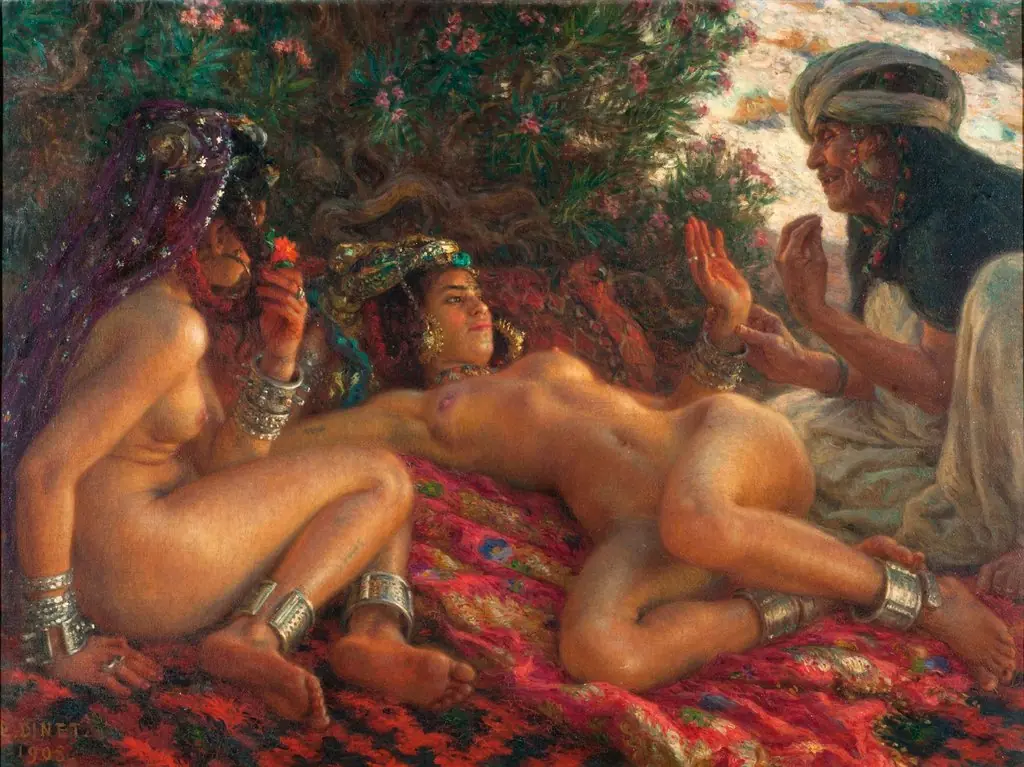 Satan's messenger
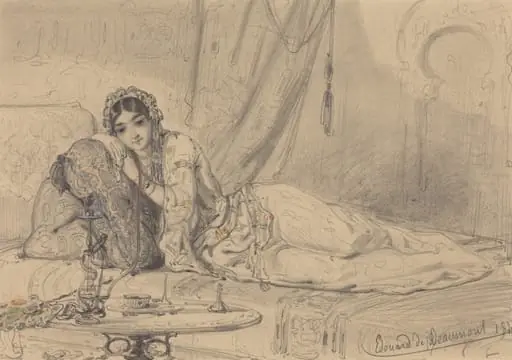 A Middle Eastern Woman Reclining in an Exotic Setting
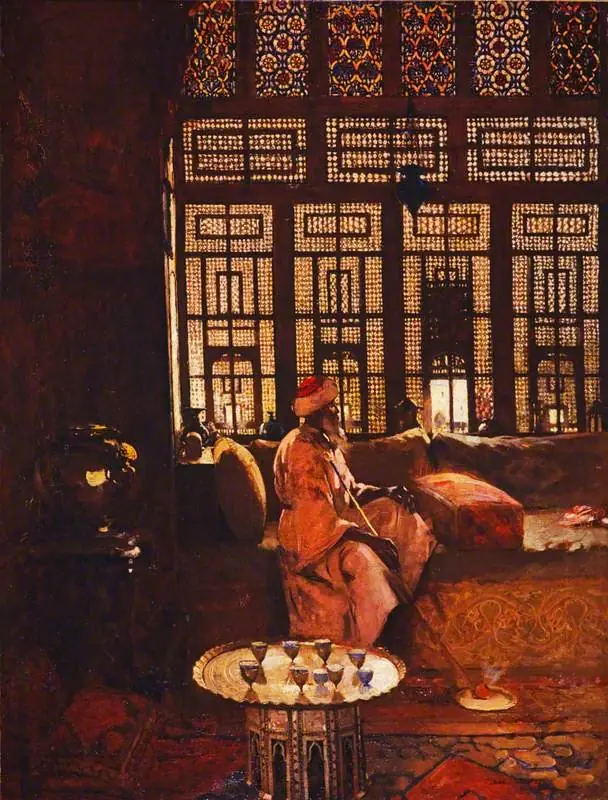 An Arab Interior
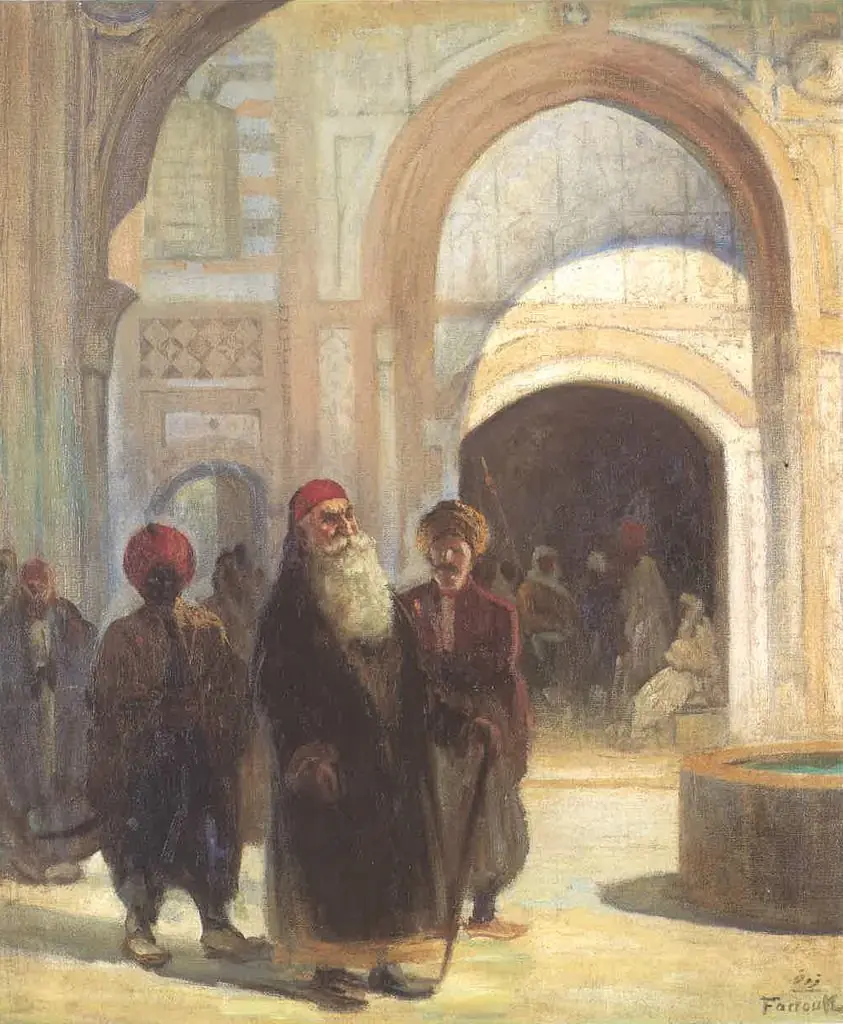 Emir Bashir and Sheikh Nasif al-Yaziji at Beiteddine Palace
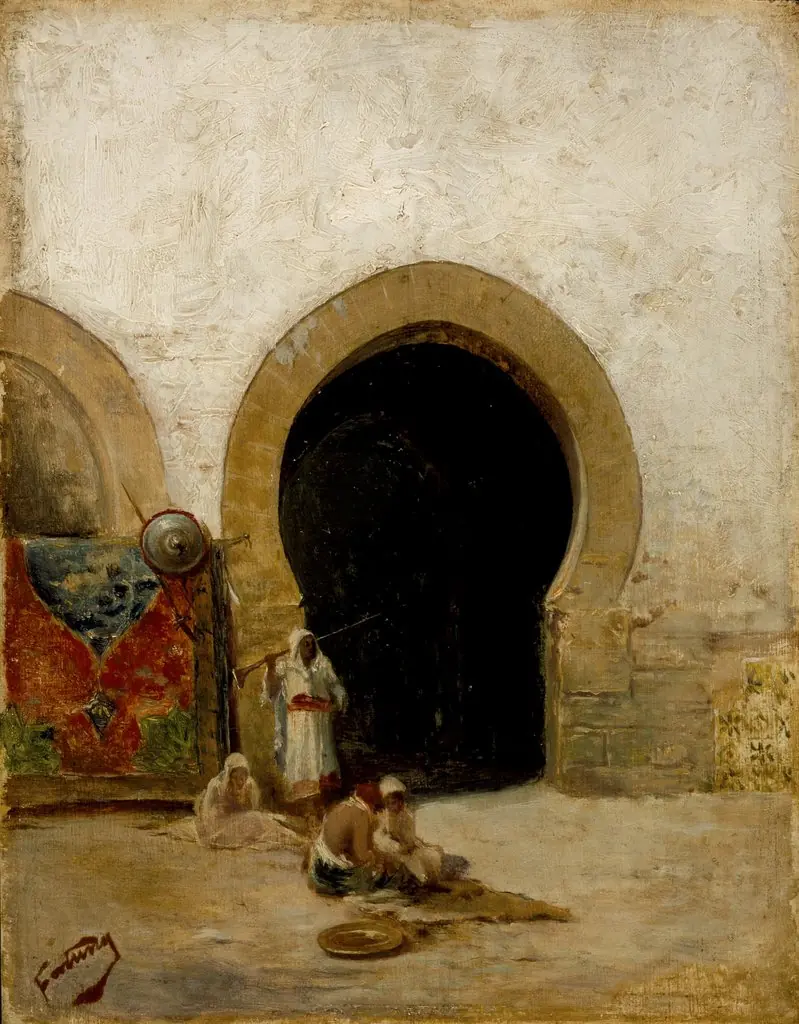 At the Gate of the Seraglio
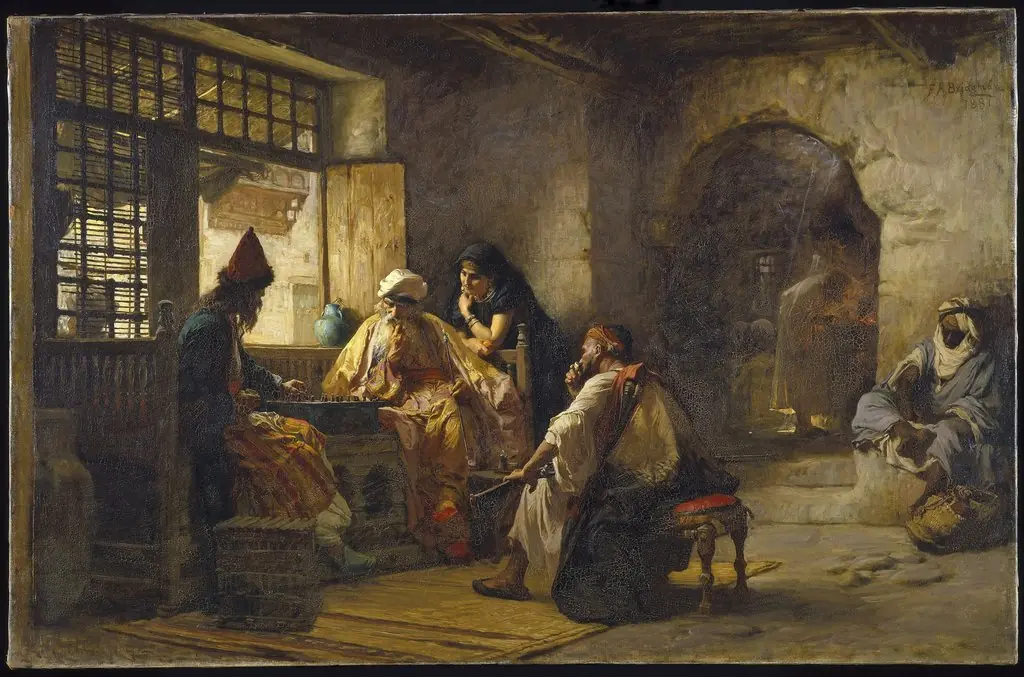 An Interesting Game
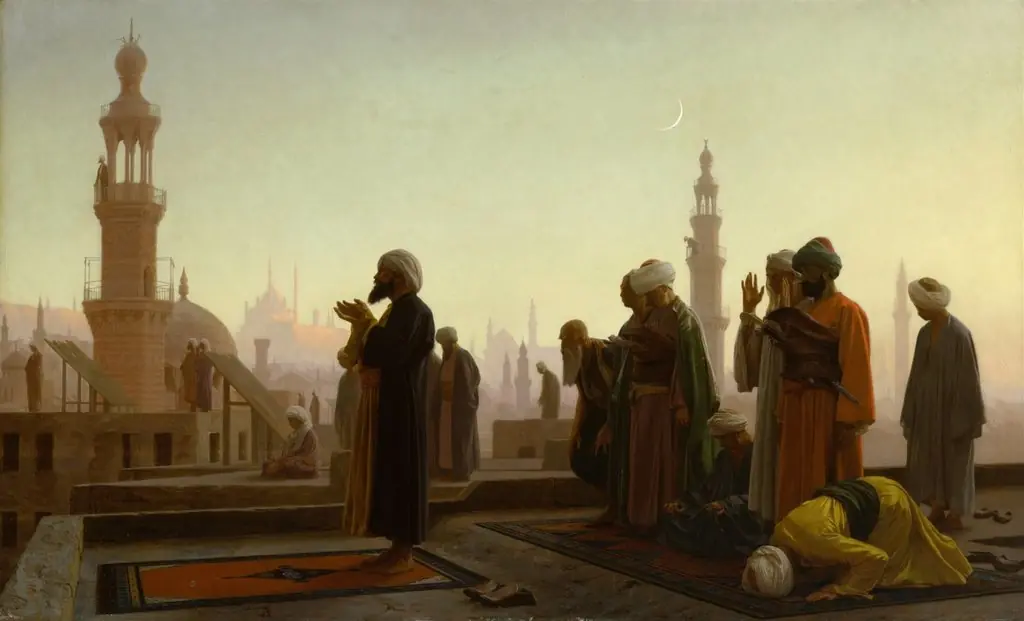 Prayer in Cairo
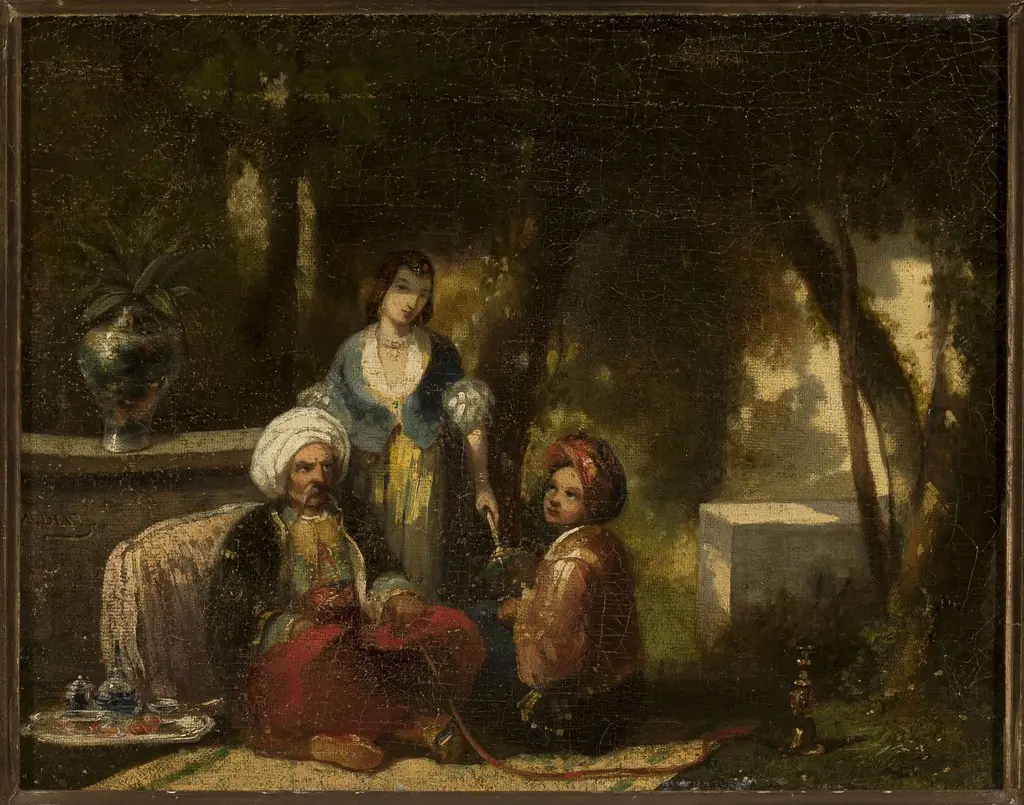 Man with a narghile against forest landscape
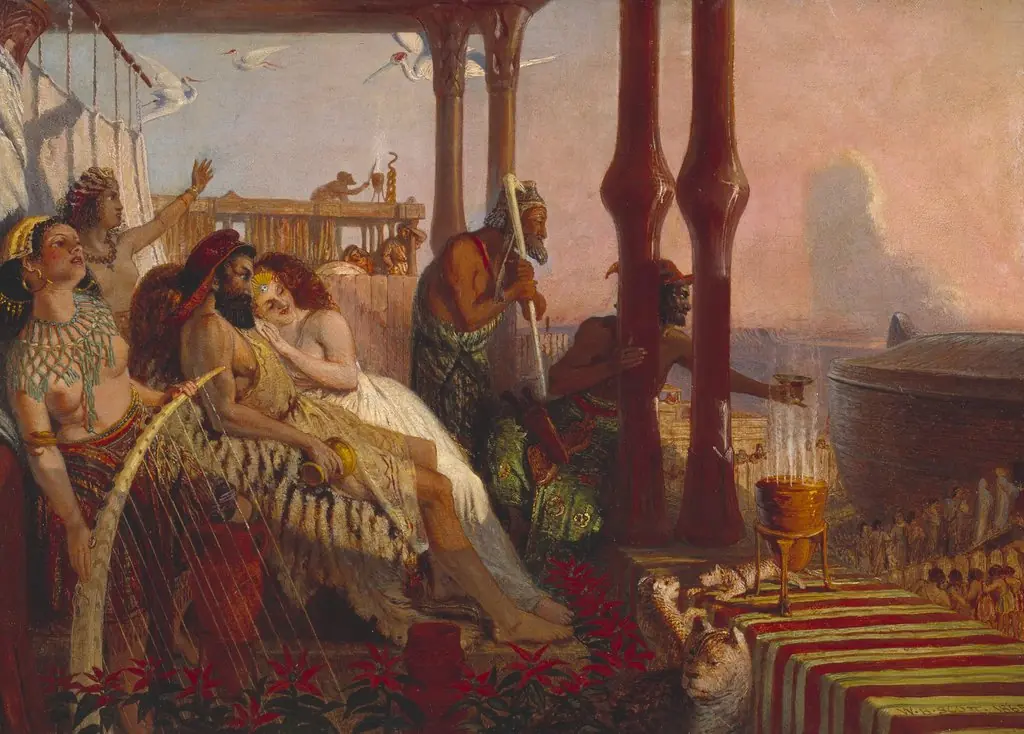 The Eve of the Deluge
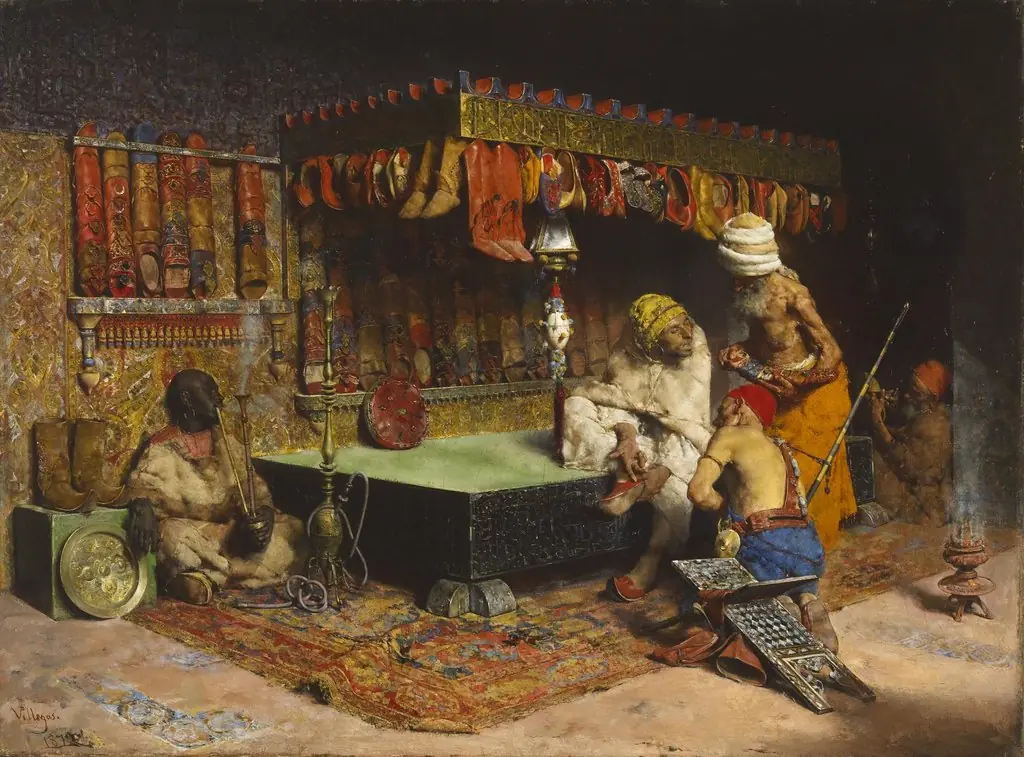 The Slipper Merchant in Morocco
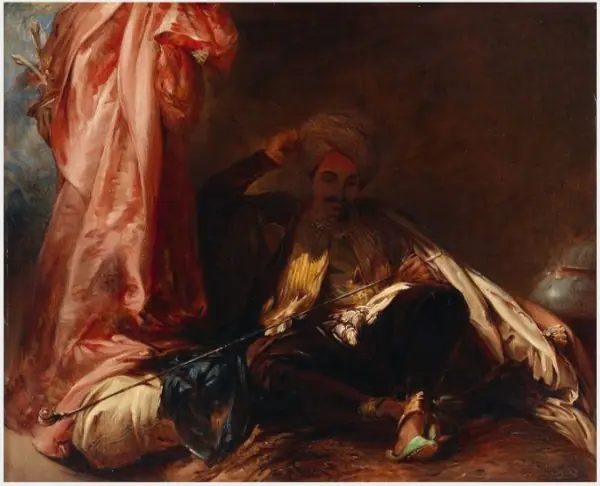 The Chibouk
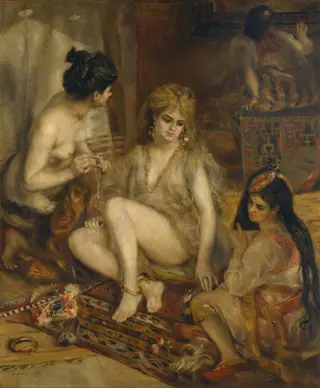 Parisian Women in Algerian Costume
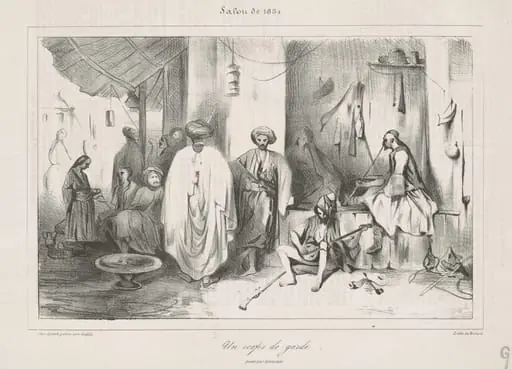 Un corps de garde peint par Decamps
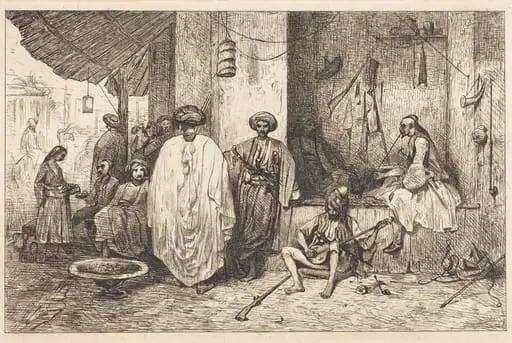 Le Corps de Garde
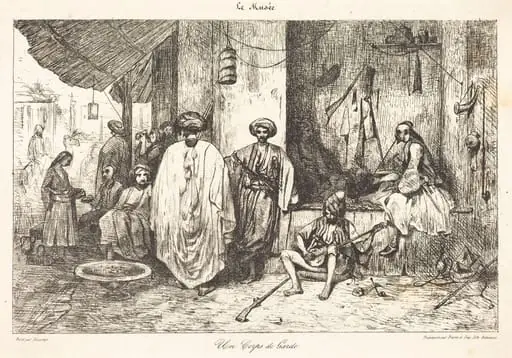 Un Corps de Garde
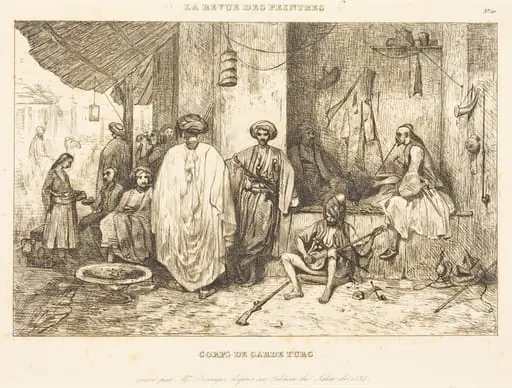 Le Corps de Garde
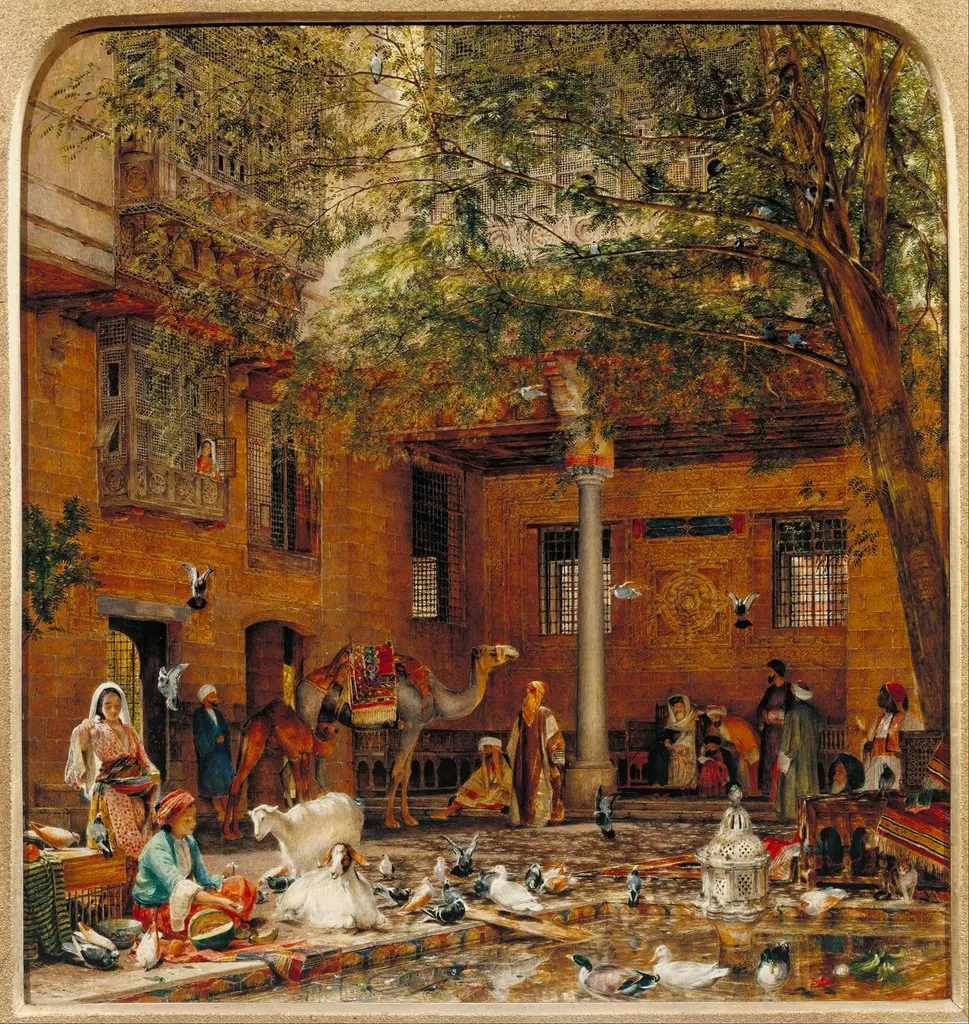 Study for 'The Courtyard of the Coptic Patriarch's House in Cairo'
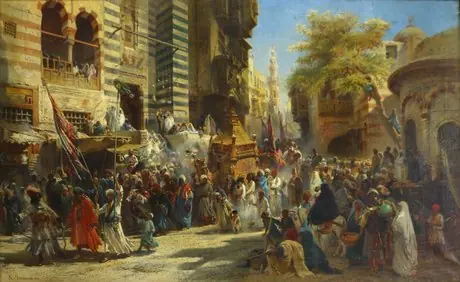 Muhammed's carpet moving from Mecca to Cairo
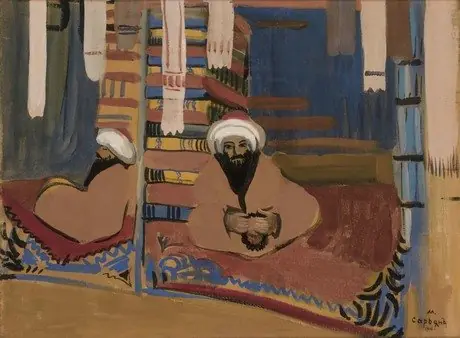 Eastern merchants
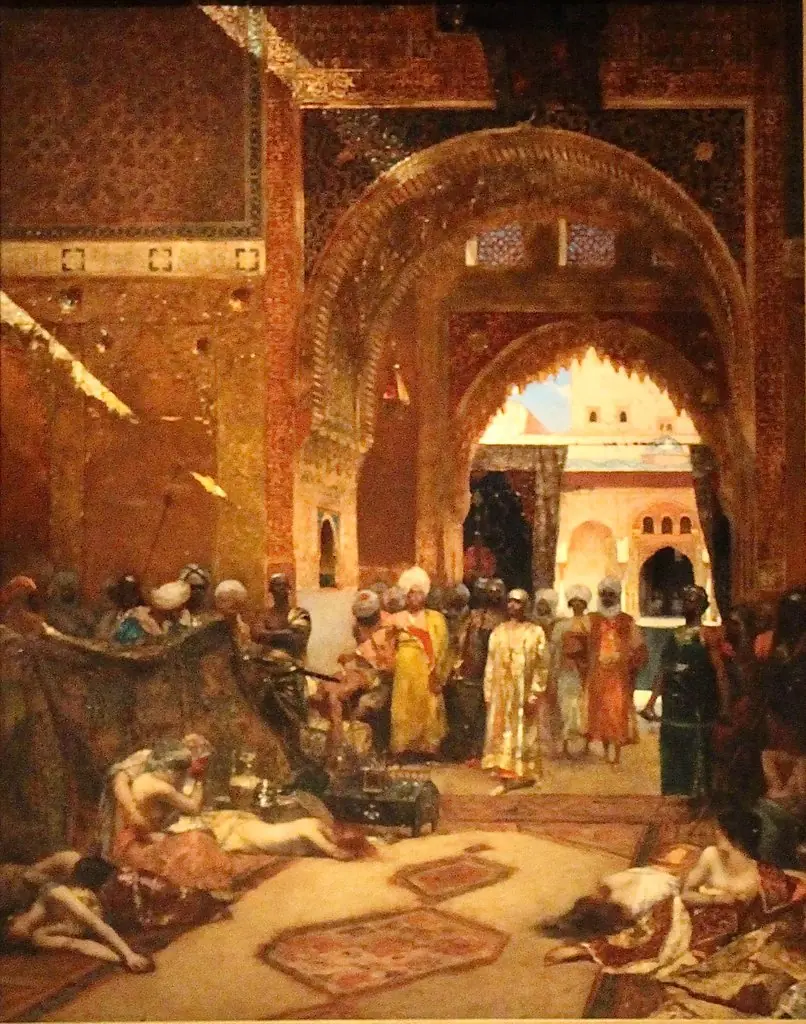 Le lendemain d'une victoire à l'Alhambra
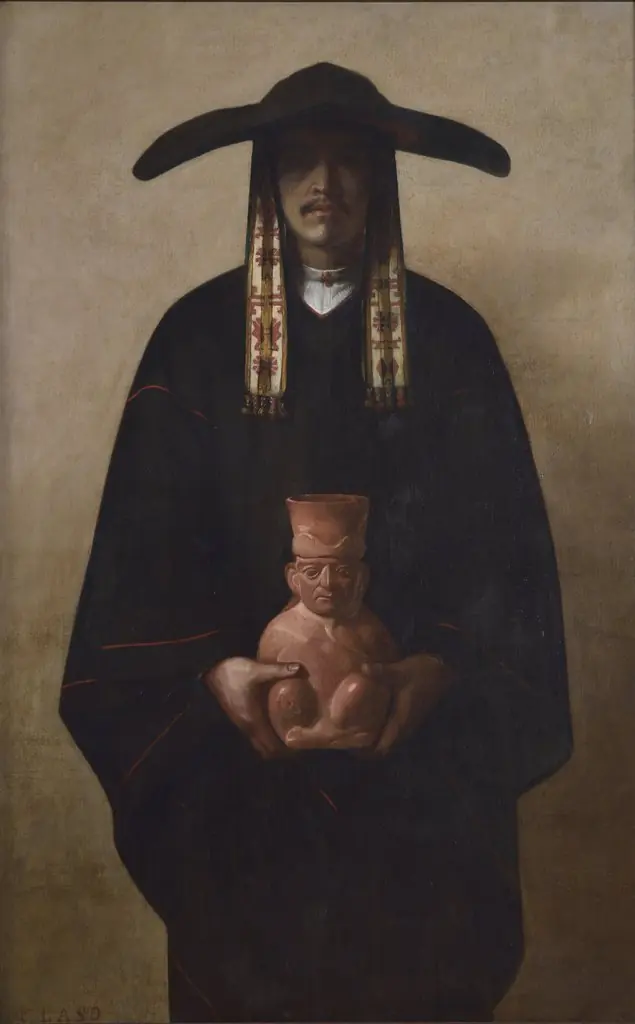 Dweller in the Cordillera
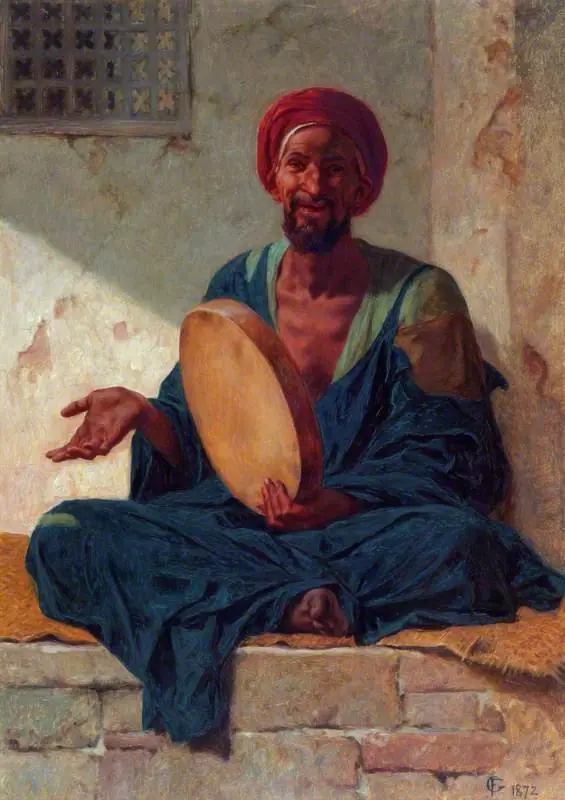 An Arab Improvisatore
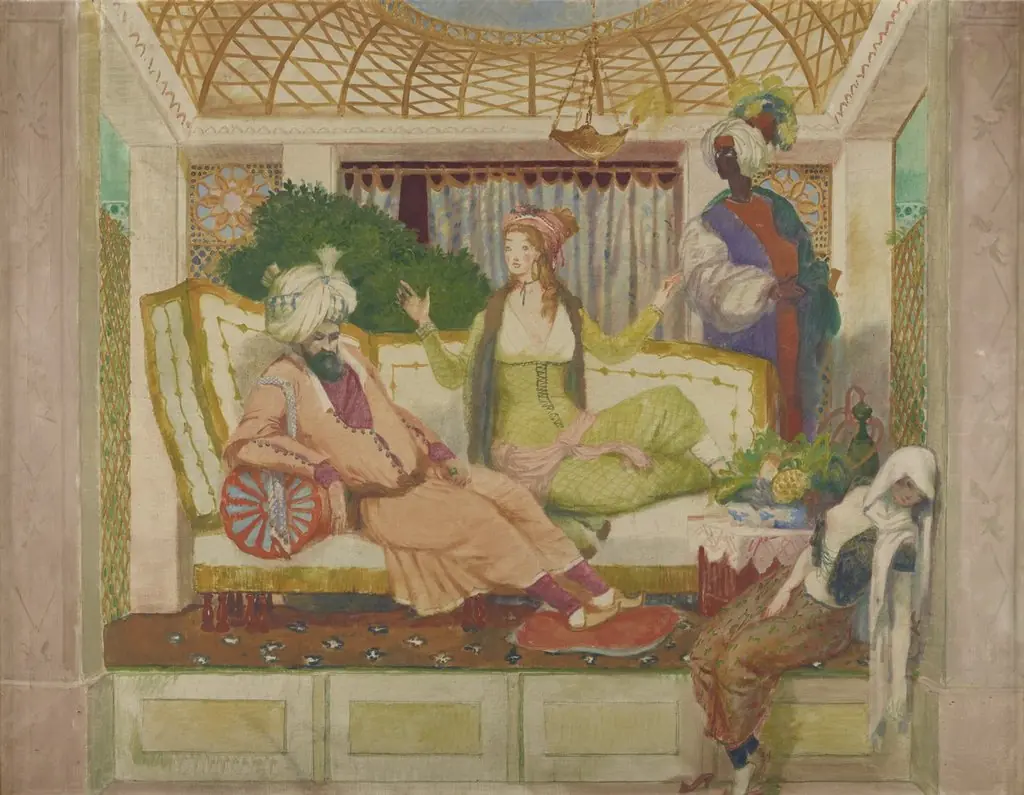 Scheherezade erzählend
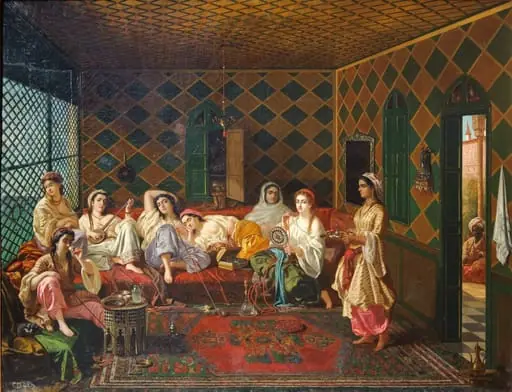 Interior de serai
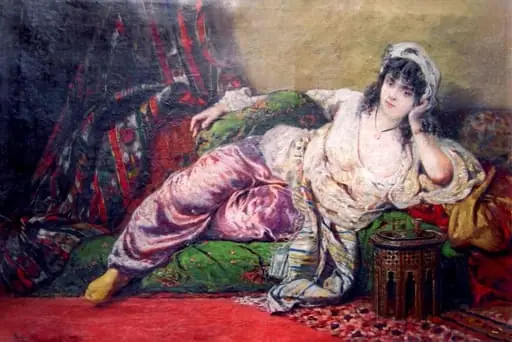 Odaliscă
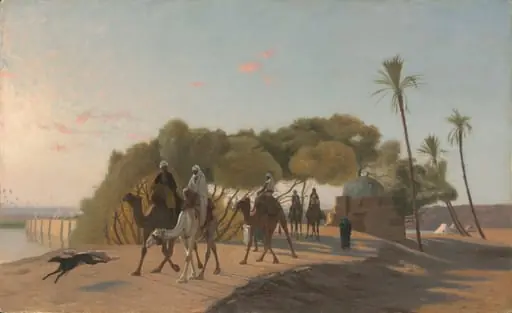 Leaving the Oasis
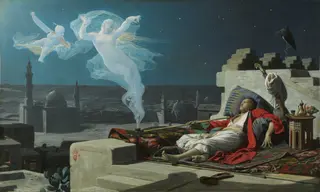 A Eunuch's Dream
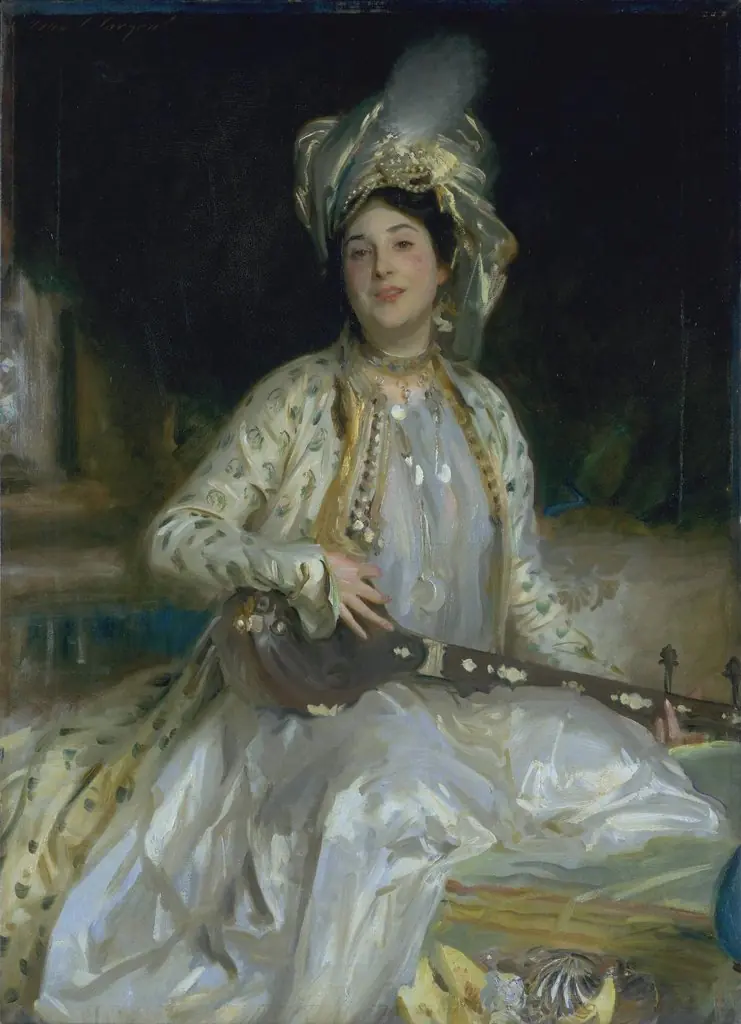 Portrait of Almina Daughter of Asher Wertheimer
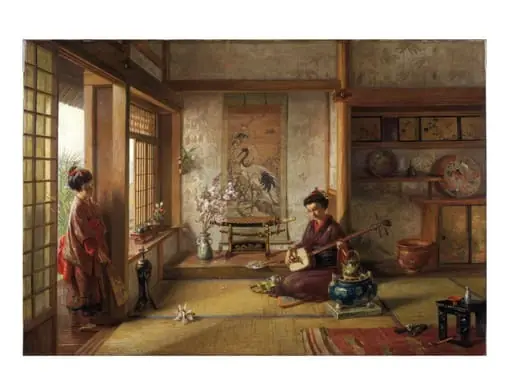 The Stray Shuttlecock
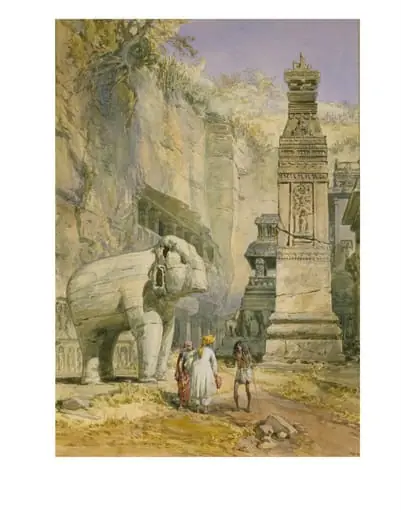 Untitled
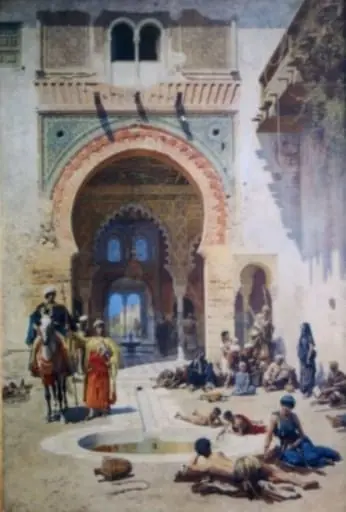 Alhambra
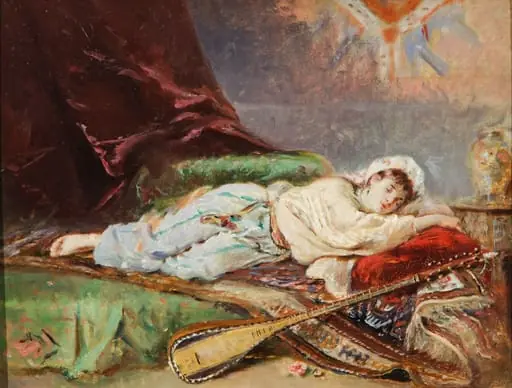 Odaliscă culcată
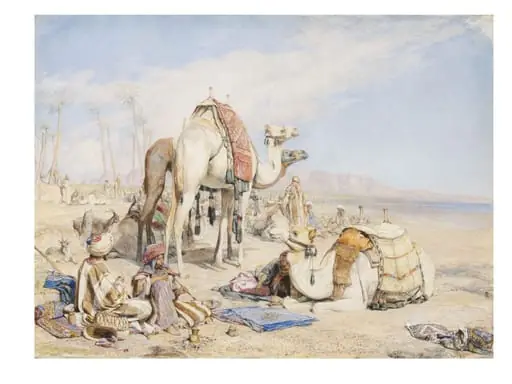 A Halt in the Desert
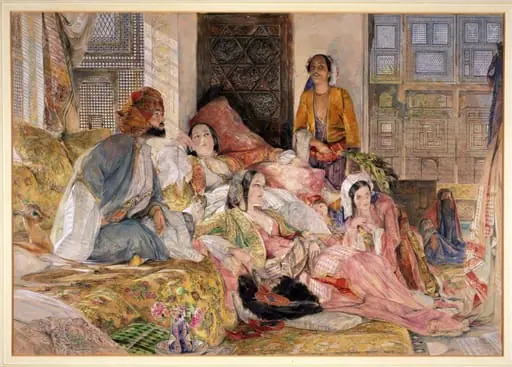 The Hhareem, Cairo
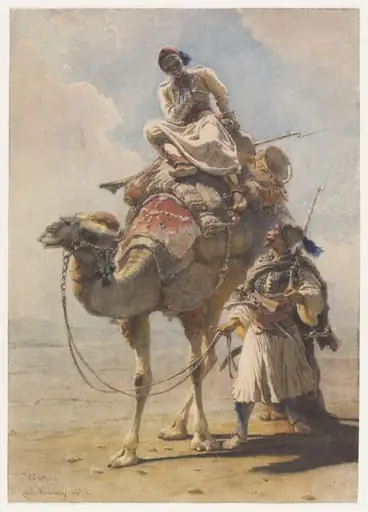 War
War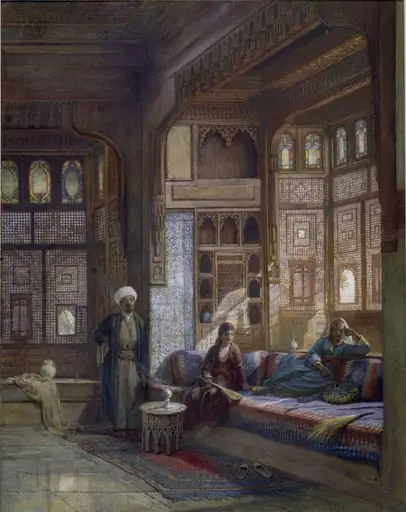 A room in the house of Shayk Sadat, Cairo
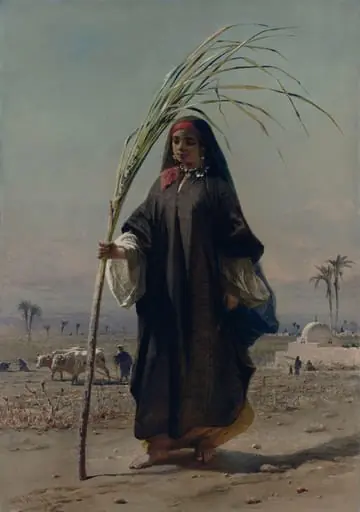 The Sugar Cane Girl
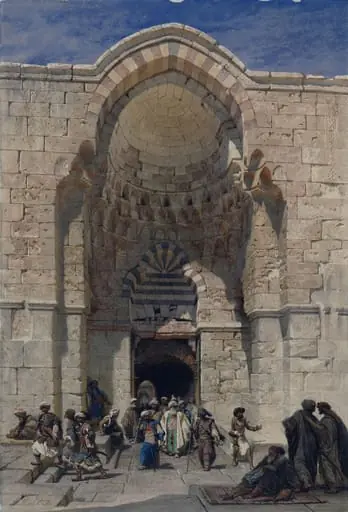 The Gate called Bab-el-Khataneen, at Jerusalem
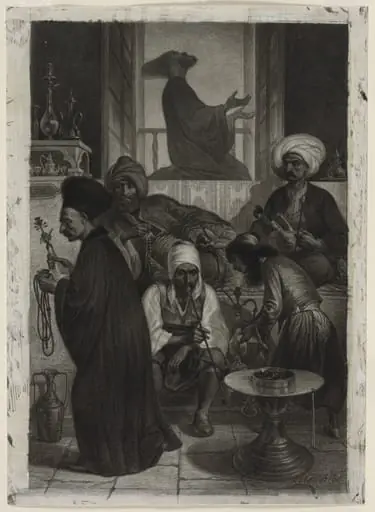 Café in Constantinople
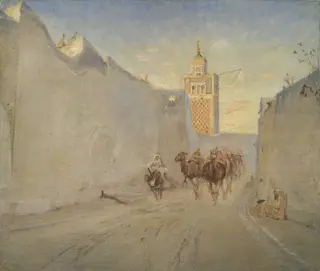 Camels in a Street in Tunisia
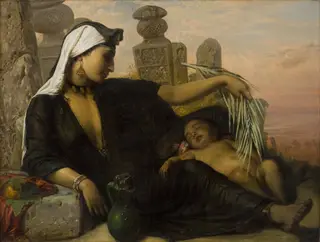 An Egyptian Fellah Woman with her Baby
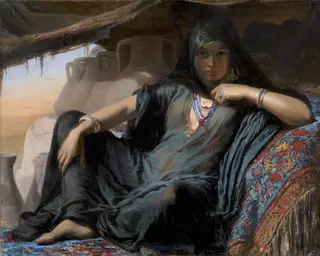 An Egyptian Pot Seller at Gizeh
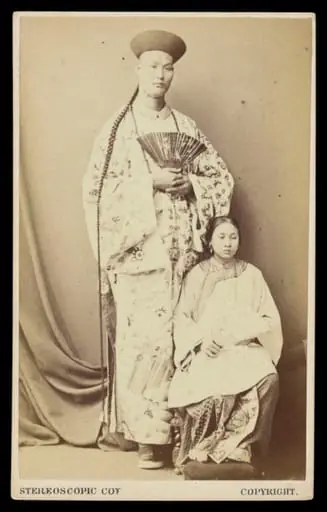 A portrait of Chang Woo Gow and Kin Foo
 Untitled
Frequently asked questions
What is Orientalist Painting?
Orientalist Painting is a subject in art. painting movement
How many Orientalist Painting works does Artifact World Gallery have?
Artifact World Gallery holds 110 public-domain Orientalist Painting works, all free to view and download.
Who are the key Orientalist Painting artists?
Key Orientalist Painting artists in the collection include Henri Regnault, Jean Léon Gérôme and Pierre-Auguste Renoir.
Where can I see Orientalist Painting works?
Orientalist Painting works in the collection are held by Metropolitan Museum of Art, Victoria and Albert Museum and National Gallery of Art.