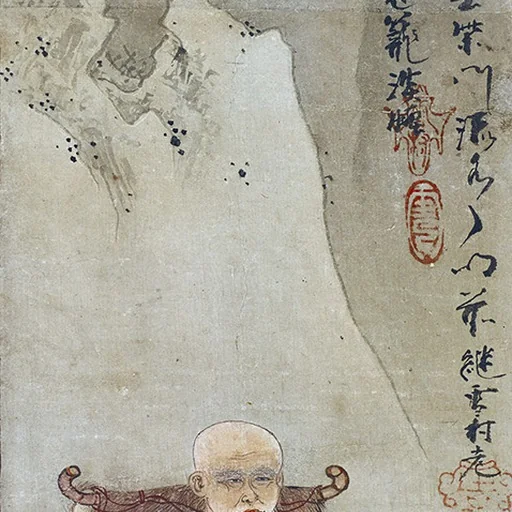
Subject
Muromachi Period
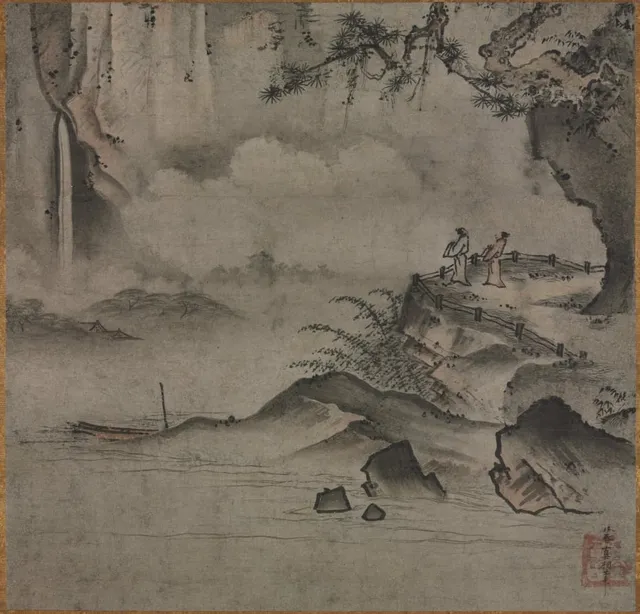
Muromachi Period is a subject in art. The gallery holds 80 works in this subject in art, including works by Sesson Shūkei, Shikibu Terutada and Sesshū Tōyō.
The Muromachi period (c. 1336–1573) takes its name from the Kyoto district where Ashikaga Takauji and his heirs established the seat of the Ashikaga shogunate. It was an age of civil war and shifting power, yet also one of the most fertile in Japanese art, shaped above all by the ascendancy of Zen Buddhism among the samurai elite. Great Zen monasteries such as Kyoto's Shōkoku-ji became centres of learning and patronage, and the Ashikaga shoguns' appetite for imported Chinese art—paintings of the Song and Yuan dynasties prized as karamono—set the aesthetic standard for the era.
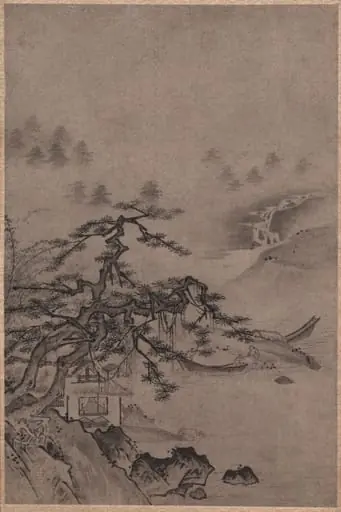
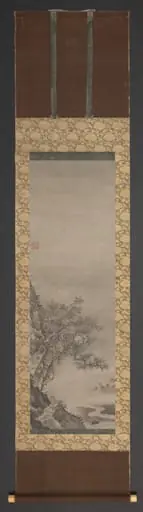
The period's signature achievement is suibokuga, monochrome ink painting in the Chinese manner, and especially sansuiga, the idealised landscape. Working in graded washes and calligraphic brushwork, painters built misty mountains, waterfalls, and solitary hermitages out of black ink and bare paper, drawing on Southern Song masters like Xia Gui and the Chan painter Muqi. Favoured themes included the Eight Views of Xiao and Xiang—reflected in our own View of Xiao Xiang by Kenkō Shōkei—and meditative scenes such as Gazing at a Waterfall by Sōami.
The lineage runs from Josetsu, whose riddling Catching a Catfish with a Gourd (c. 1413) was commissioned by the shogun Ashikaga Yoshimochi, to his pupil Tenshō Shūbun at Shōkoku-ji, and culminates in Sesshū Tōyō (1420–1506), Japan's supreme ink master, who travelled to Ming China and produced the monumental Long Landscape Scroll, the Winter Landscape, and the explosive Splashed-Ink Landscape (1495). Sesshū's circle—including Shūgetsu Tōkan, represented here by his Landscapes with Figures—carried the manner across the provinces. A parallel current ran through the Ami family connoisseurs, Nōami, Geiami, and Sōami, who curated the shogunal collection.
This was also the age of Higashiyama culture, fostered by the retired shogun Ashikaga Yoshimasa at his Silver Pavilion, which gave rise to the tea ceremony, Noh theatre, ikebana, and the dry rock garden. As ink painting migrated out of the monasteries, Kanō Masanobu became official shogunal painter and founded the Kanō school; his son Kanō Motonobu fused ink technique with bold colour and native subjects, forging the decorative idiom that would dominate the succeeding Momoyama and Edo periods.
Key artists


Overview
The Muromachi period (室町時代, Muromachi jidai), also known as the Ashikaga period, is a division of Japanese history spanning approximately 1336 to 1573. Named after the Muromachi district in Kyoto where the Ashikaga shogunate established its headquarters in 1378, this era marks the governance of the Ashikaga shogunate founded by Ashikaga Takauji in 1338, two years after the brief Kenmu Restoration (1333-1336) of imperial rule ended. The period is characterized by prolonged political instability, including the Nanboku-chō or Northern and Southern Court period (1336-1392), the Ōnin War (1467-1477), and the overlapping Sengoku or Warring States period (from 1465). Despite, or perhaps because of, this turbulence, the Muromachi period became one of the most culturally innovative epochs in Japanese history, witnessing the development of aesthetic forms that remain central to Japanese identity. The period ended in 1573 when the last Ashikaga shōgun, Ashikaga Yoshiaki, was driven from Kyoto by Oda Nobunaga.
Iconography & meaning
The Muromachi period in art is inseparable from the iconography and aesthetics of Zen Buddhism, which provided both spiritual framework and visual vocabulary. Zen ideals of austerity, spontaneity, and direct experience manifested in the preference for ink monochrome painting (sumi-e), empty space, and natural motifs such as bamboo, willows, and landscapes. The re-constituted Blue Cliff Record became the central text of Japanese Zen literature, shaping intellectual and artistic production. Shinto imagery experienced renewed interest, particularly through works like the Jinnō Shōtōki (1339-1343) by Kitabatake Chikafusa, which emphasized the divine descent of the imperial line from Amaterasu. This nationalistic Shinto iconography coexisted with and was often syncretized with Buddhist visual culture. The tea ceremony (chanoyu) developed as a ritualized aesthetic practice linking religious sensibility with artistic connoisseurship, incorporating appreciation of garden design, architecture, calligraphy, painting, and ceramics. Noh theater, with its masked actors and elaborate costumes, created a distinctive iconography of supernatural and historical figures. The Eight Views of Xiao-Xiang (潇湘八景) motif, derived from Chinese literary and painting traditions, became particularly significant; the Ashikaga shoguns actively collected Chinese paintings, and works such as Mu Xi's "Returning Sails off a Distant Shore" were treasured and recontextualized within Japanese Zen aesthetic frameworks.
Across movements & periods
The treatment of Muromachi-related subjects evolved significantly across sub-periods and subsequent eras. The early Nanboku-chō period (1336-1392) maintained strong connections to Kamakura-period Buddhist imagery while beginning to absorb new Chinese influences. Under Ashikaga Yoshimitsu (shōgun 1368-1394), the consolidation of power and reunification of the Northern and Southern courts in 1392 created conditions for the flourishing of Kitayama culture, characterized by opulent display as exemplified by the Golden Pavilion (Kinkaku-ji, built 1397). The later Higashiyama epoch, associated with Ashikaga Yoshimasa and the Silver Pavilion (Ginkaku-ji, completed 1489), shifted toward more restrained, wabi-influenced aesthetics. The Ōnin War (1467-1477) devastated Kyoto and effectively ended centralized shogunal authority, initiating the Sengoku period's regional fragmentation. This political breakdown paradoxically accelerated cultural dissemination as provincial warlords assumed patronage roles and invited Kyoto artists to regional courts. The subsequent Azuchi-Momoyama period (1568-1600) and Edo period (1603-1867) preserved and transformed Muromachi cultural achievements; Noh continued as a ceremonial art, tea ceremony aesthetics were further codified, and ink painting traditions were maintained even as new schools and subjects emerged. The European contact initiated in 1543, Portuguese firearms, Jesuit missionaries under Francis Xavier (arrived 1549), and trade goods, introduced novel visual elements that would increasingly influence Japanese art in the late sixteenth and early seventeenth centuries.
Notable depictions
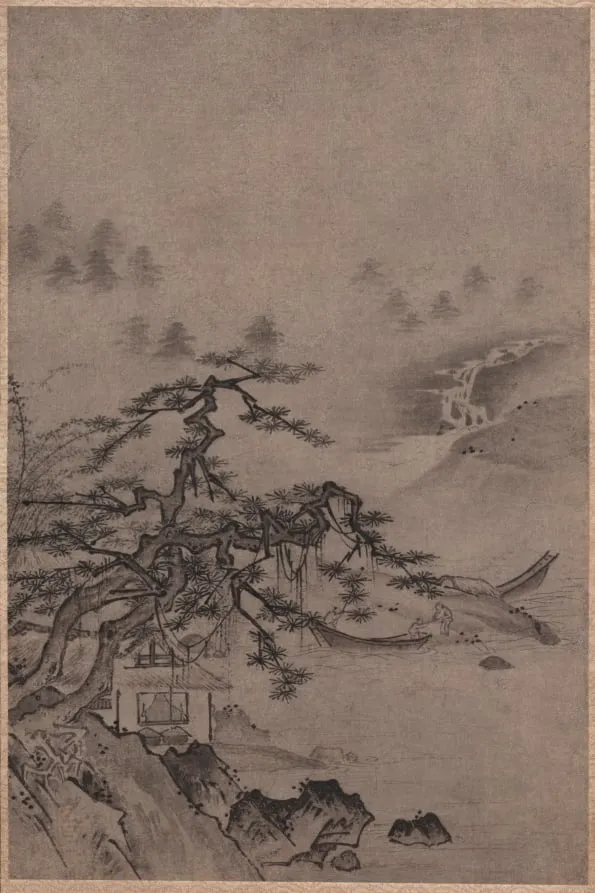
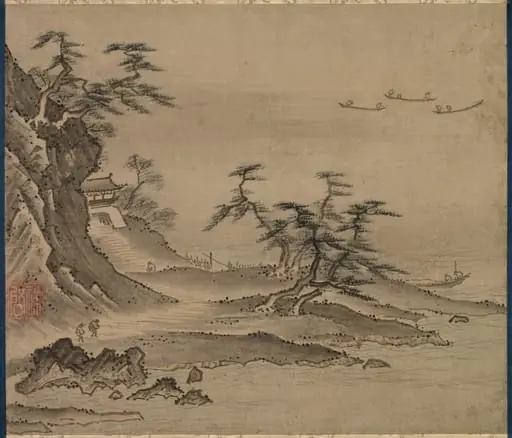
Among the most significant works associated with the Muromachi period is the painting "Returning Sails off a Distant Shore," attributed to the Southern Song artist and Zen priest Mu Xi. Originally part of a handscroll depicting the Eight Views of Xiao and Xiang Rivers, this work was separated and remounted as a hanging scroll, purportedly by Ashikaga Yoshimitsu for display in a reception room; it bears Yoshimitsu's "Doyu" seal. The painting exemplifies the Chinese ink monochrome tradition that Japanese collectors and artists deeply admired. Within the collection, the Eight Views of Xiao-Xiang stands as a major thematic work, while individual paintings such as Gazing at a Waterfall and Thatched Hut by Water's Edge represent the Chinese-inspired landscape tradition that dominated Muromachi ink painting. The Willow-and-Moon Kannon (Yōryū Kannon) and Monju as a Child (Chigo Monju) demonstrate the continued production of Buddhist imagery, albeit often infused with the more spontaneous, less formally rigid approach characteristic of Zen-influenced ateliers. The paired screens Landscapes with Figures and the multiple bamboo paintings (Bamboo in Rain, Bamboo in Wind) illustrate the period's development of serial and seasonal treatments of natural subjects. Emperor Minghuang Teaching Yang Gueifei to Play the Flute represents the enduring interest in Chinese historical and literary narratives.
Legacy
The Muromachi period's cultural legacy proved extraordinarily durable, shaping fundamental aspects of Japanese aesthetic identity. The tea ceremony (chanoyu), Noh theater, flower arrangement (tachibana/ikebana), ink painting, and dry landscape gardens (karesansui) developed during this era became canonical art forms. Noh was designated UNESCO Intangible Cultural Heritage in 2001 and continues to be performed in approximately 70-80 theaters across Japan, with the National Noh Theatre in Tokyo (built 1983) serving as a major institution with a collection of around 600 items including masks, costumes, and paintings. The aesthetic principles of wabi (austere simplicity) and the integration of art forms within ritual contexts established during the Muromachi period remain operative in contemporary Japanese culture. The political legacy was more ambivalent: the period demonstrated both the potential and limitations of warrior rule, with the Ashikaga shogunate's failure to maintain centralized authority providing the template for subsequent unifiers, Oda Nobunaga, Toyotomi Hideyoshi, and Tokugawa Ieyasu, who studied its example in constructing more durable systems of control. The Ashikaga shoguns' active collection and display of Chinese art established patterns of cultural capital accumulation that influenced elite behavior for centuries. The period's artistic achievements, particularly in ink painting and garden design, continue to attract scholarly attention and public appreciation, with major institutions such as the Kyoto National Museum preserving and exhibiting Muromachi-period works.
Works
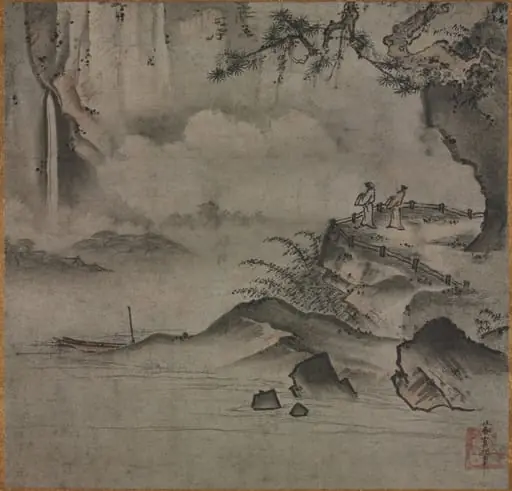 Gazing at a Waterfall
 Thatched Hut by Water's Edge
 View of Xiao Xiang
 Landscapes with Figures (one of a pair)
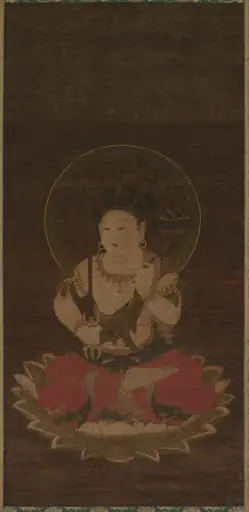 Monju as a Child (Chigo Monju)
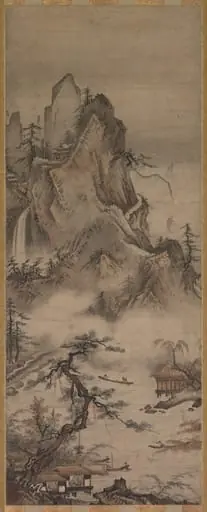 Landscape
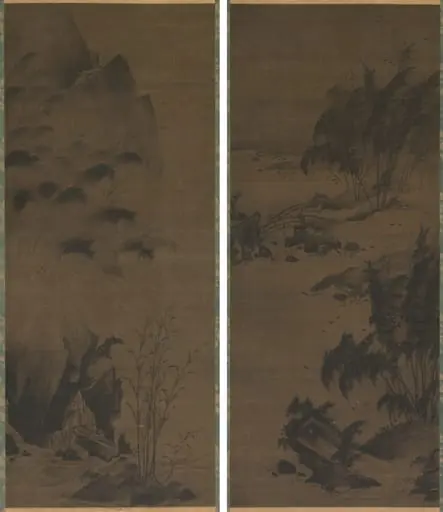 Bamboo in Rain; Bamboo in Wind
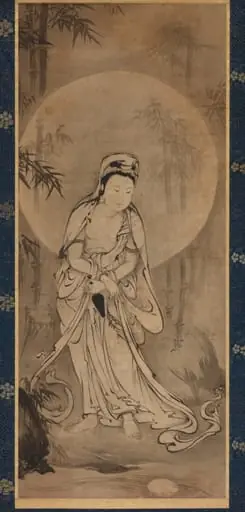 Willow-and-Moon Kannon (Yōryū Kannon)
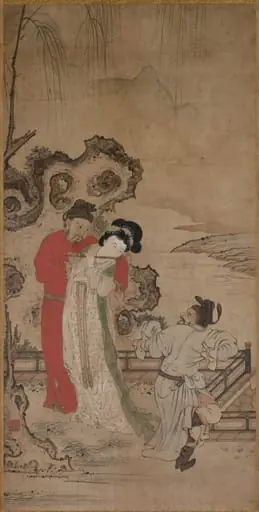 Emperor Minghuang Teaching Yang Gueifei to Play the Flute
 Eight Views of Xiao-Xiang
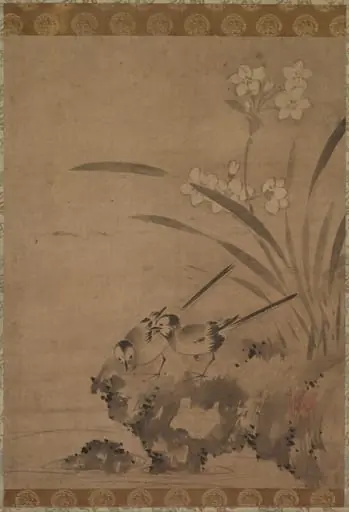 Wagtails and Narcissus
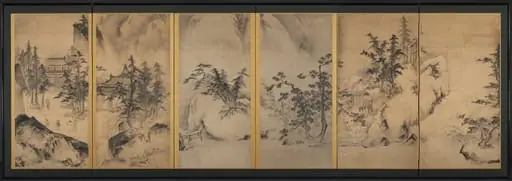 Winter and Spring Landscape
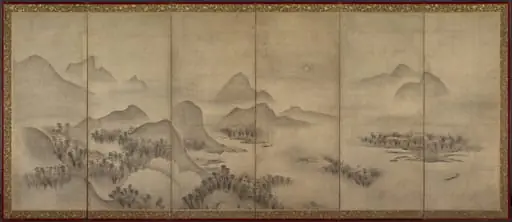 Moonlit Landscape (one of a pair)
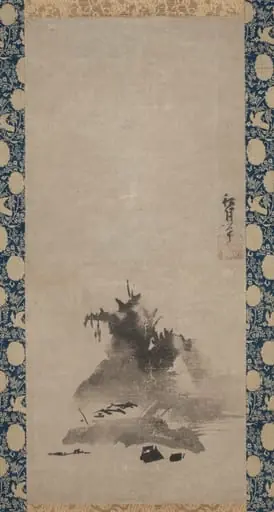 Haboku (Flung-ink) Landscape
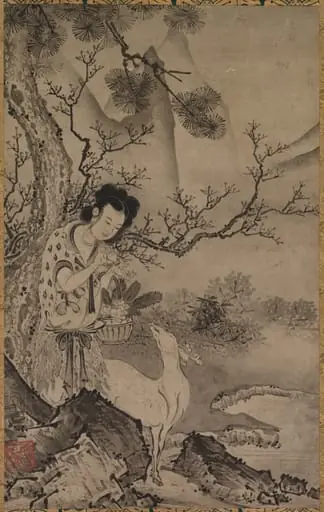 Female Daoist Figure in Landscape
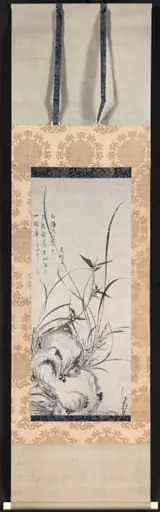 Rock, Bamboo, and Orchids
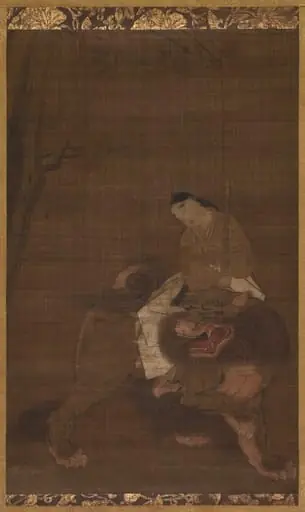 Monju as a Child
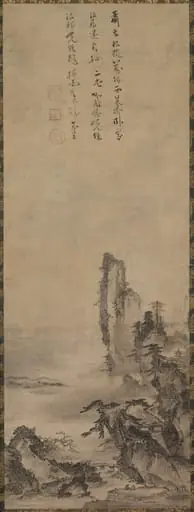 Lonely Temple and Towering Cliff
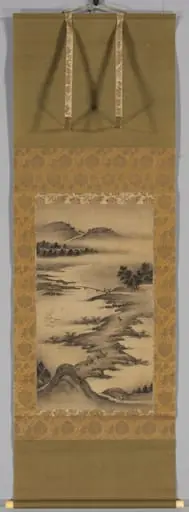 Seasonal Landscapes: Autumn
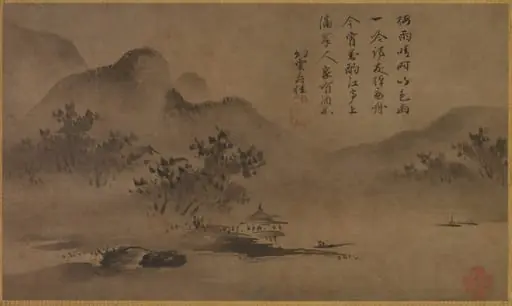 Landscape
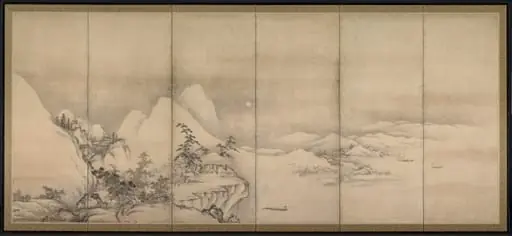 Chinese Landscape
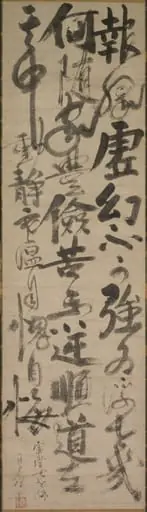 Reflections of Priest Foyen
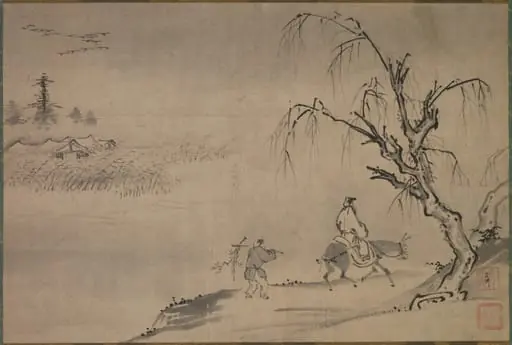 Chinese Literatus in an Autumn Landscape
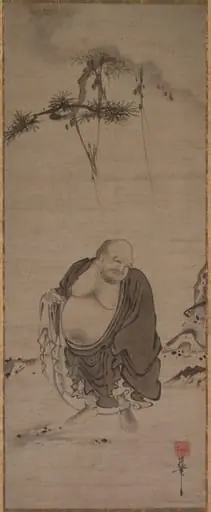 Hotei
Hotei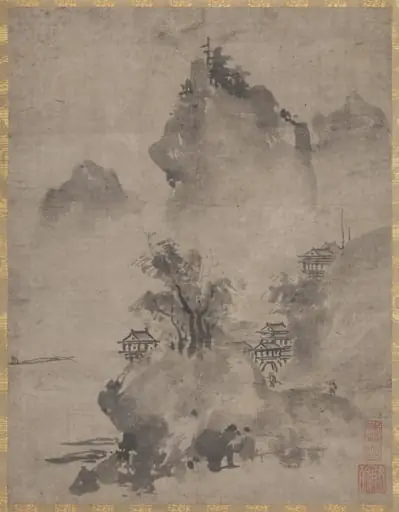 Coastal Landscape in the Haboku Style
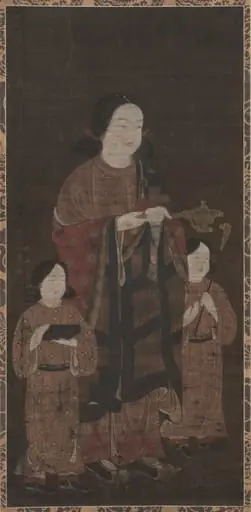 Shōtoku Taishi at Sixteen
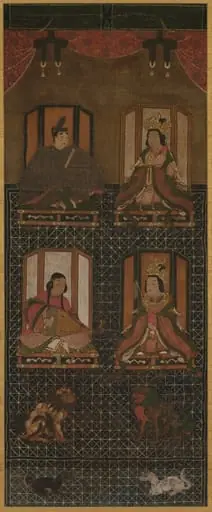 Mandala of the Four Deities of Mt. Kōya
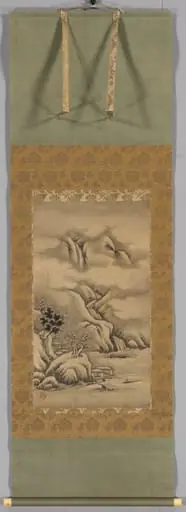 Seasonal Landscapes: Winter
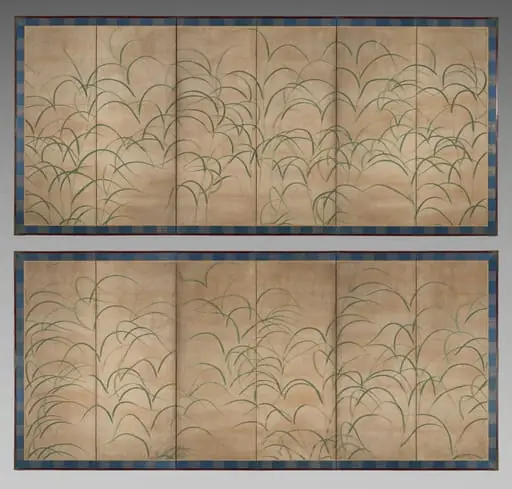 Susuki Grass
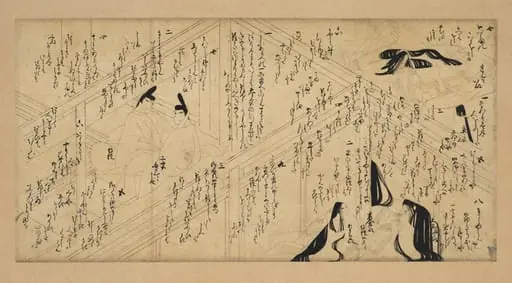 Scene from the Tale of the Wisteria Robe
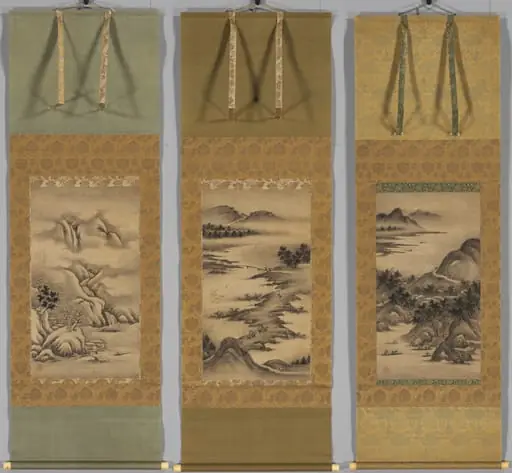 Seasonal Landscapes
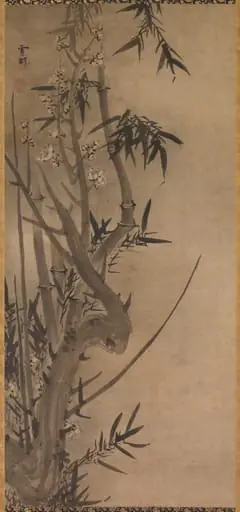 Bamboo and Plum
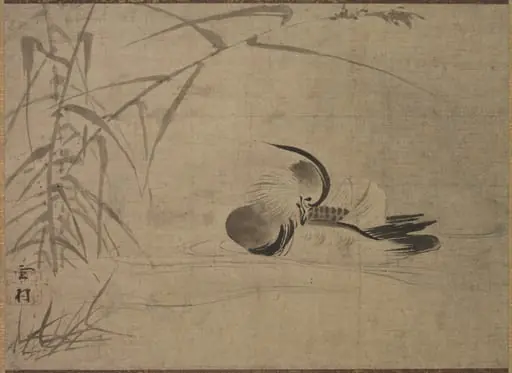 Mandarin Duck
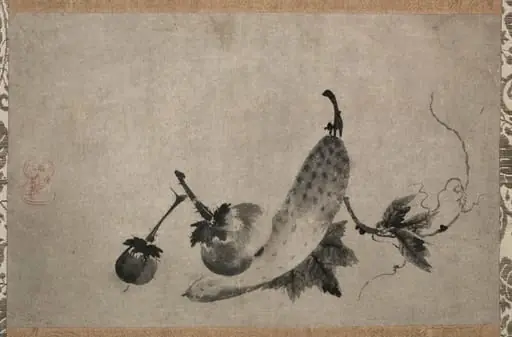 Cucumber and Eggplants
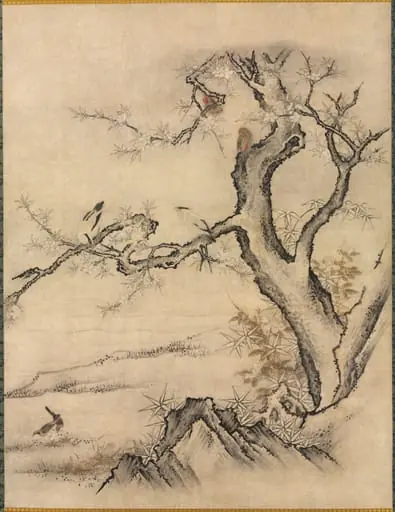 Flowers and Birds in a Spring Landscape
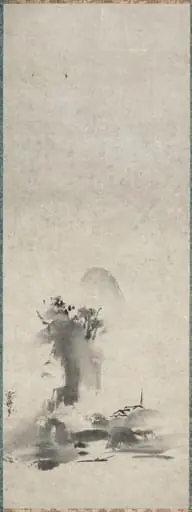 Haboku, Splashed Ink Landscape
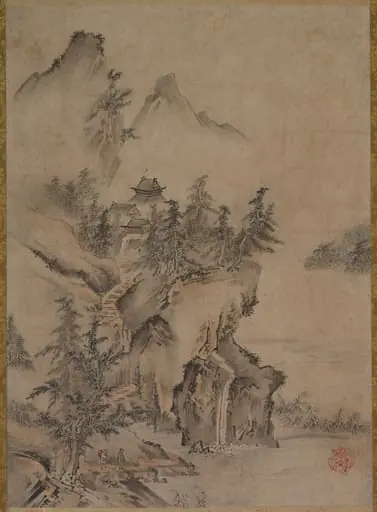 Chinese Literatus Traveling to a Mountain Temple
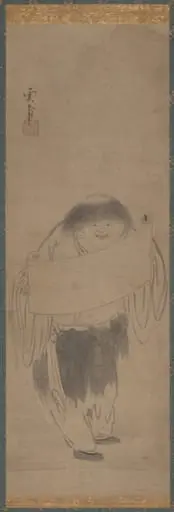 Kanzan Holding a Scroll
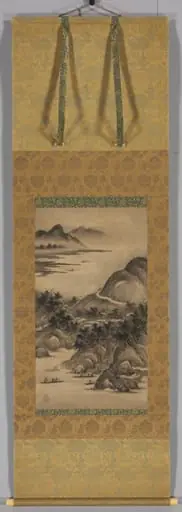 Seasonal Landscapes: Summer
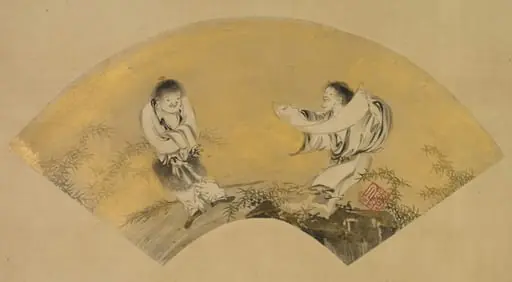 Hanshan and Shide (Kanzan and Jittoku)
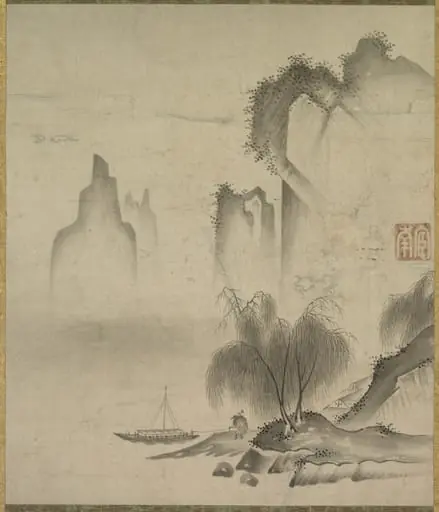 Figure Mooring a Boat
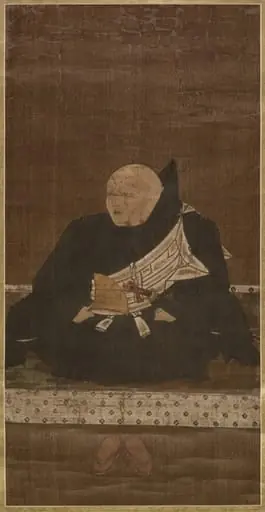 A High-ranking Noble in Priest's Robe
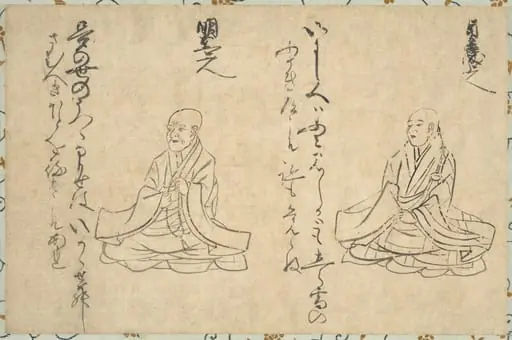 Thirty-Six Poetic Immortals of the Buddhist Clergy
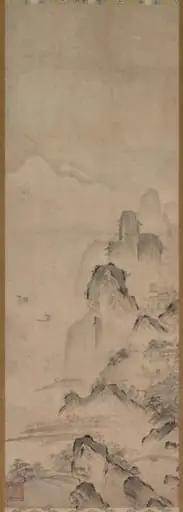 Landscape
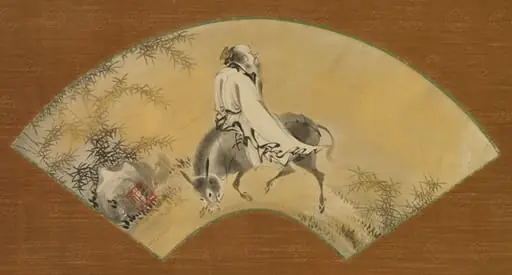 Pan Lang (Han Rō)
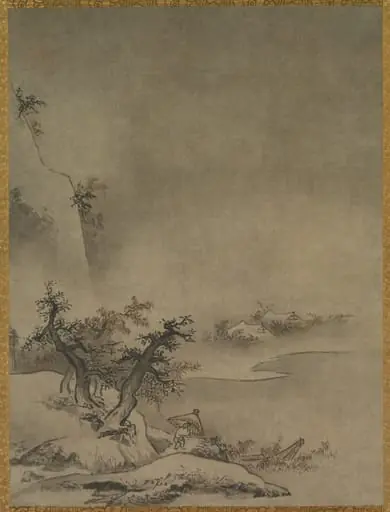 Chinese Servant Walking in the Rain
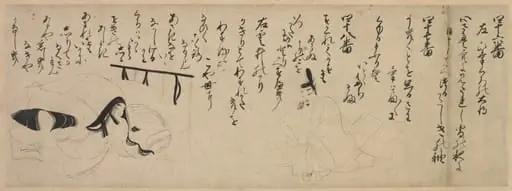 Section of an Illustrated Tale of Genji Poetry Contest
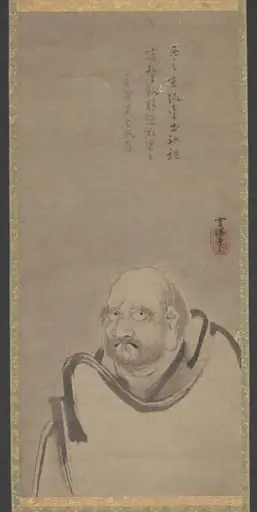 Bodhidharma
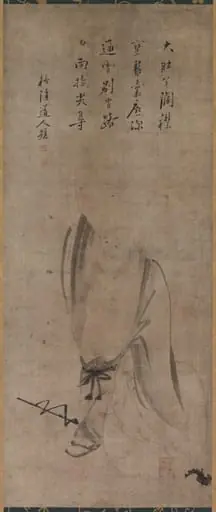 Hotei
Hotei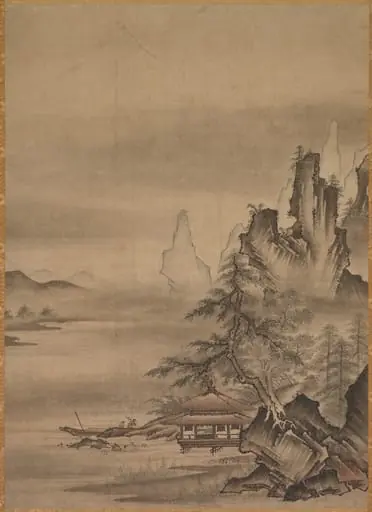 Returning Home
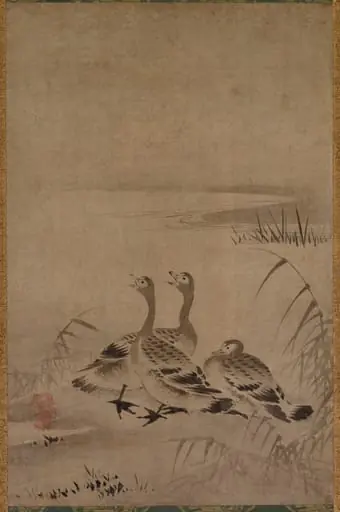 Wild Geese
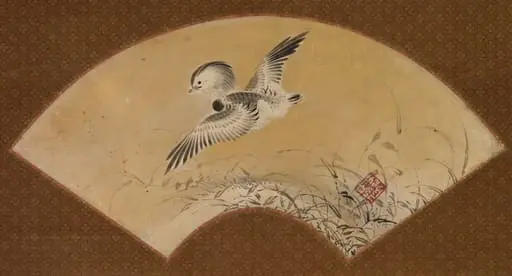 Duck in Flight
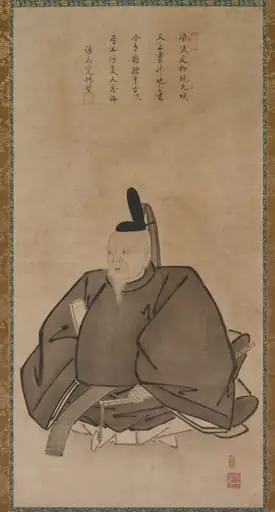 Portrait of Sugawara Michizane
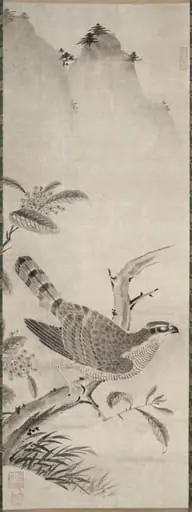 Hawk
Hawk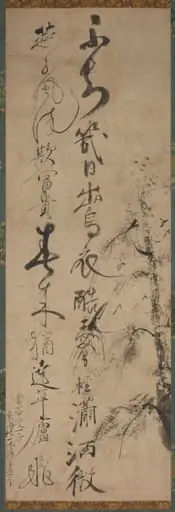 Calligraphy with Willow and Swallows
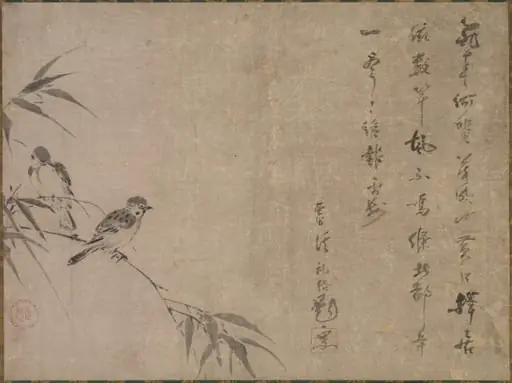 Sparrows and Bamboo
 The Story of Fukutomi
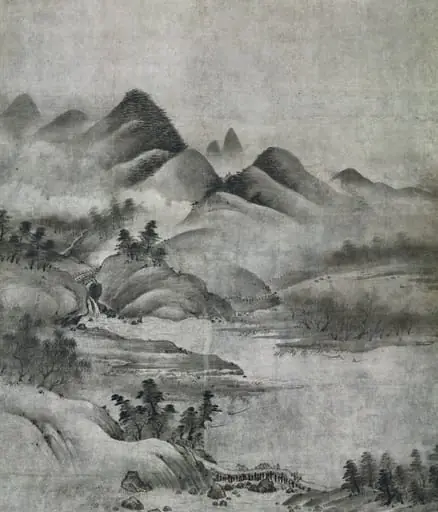 Landscape
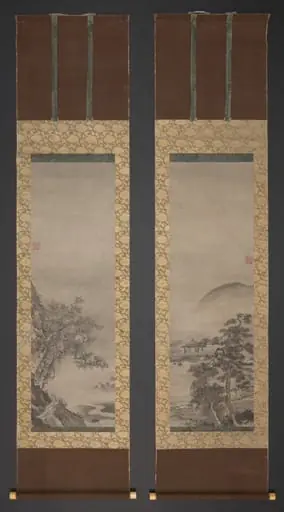 Landscapes with Figures
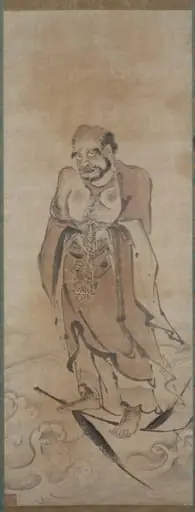 Bodhidharma on a Reed
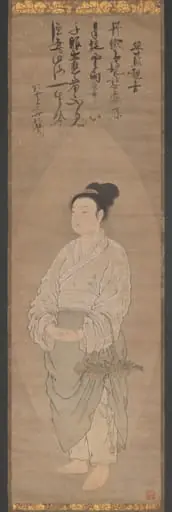 Fish Basket Kannon (Gyoran Kannon)
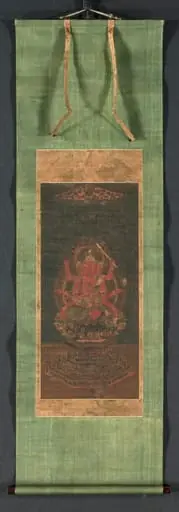 Wisdom King of Passion (Aizen Myōō)
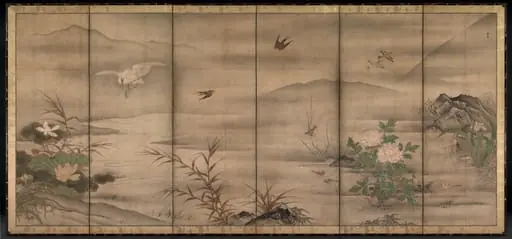 Birds and Flowers in a Landscape of the Four Seasons
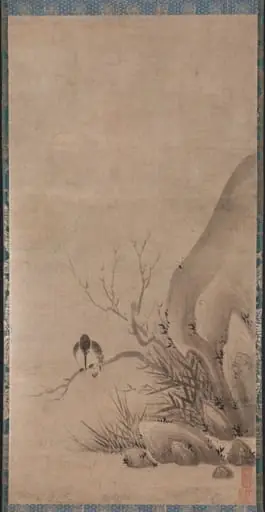 Kingfisher Perched above a Stream
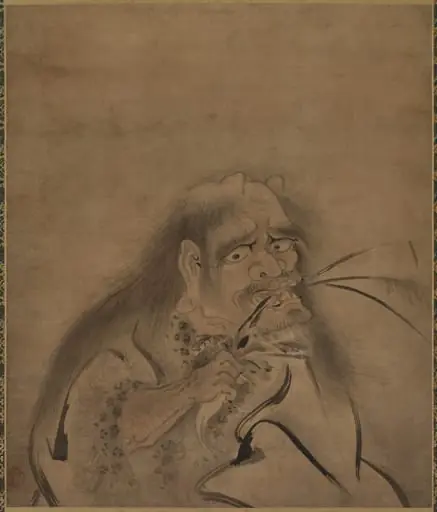 Shennong (Shinnō)
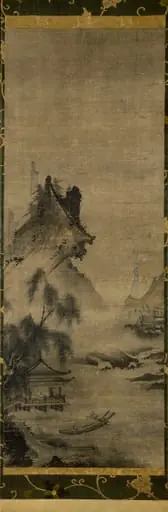 Lakeside Retreat
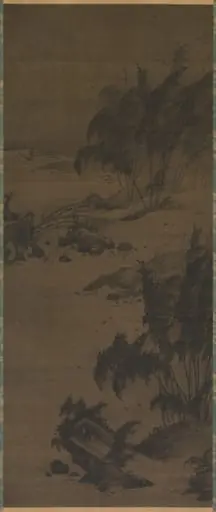 Bamboo in Wind
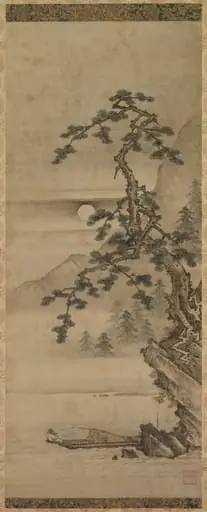 Playing Flute in Moonlight
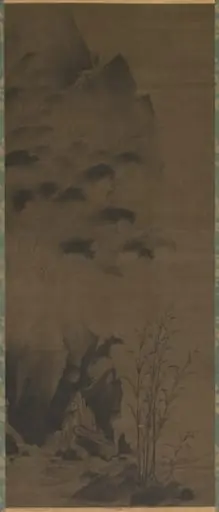 Bamboo in Rain
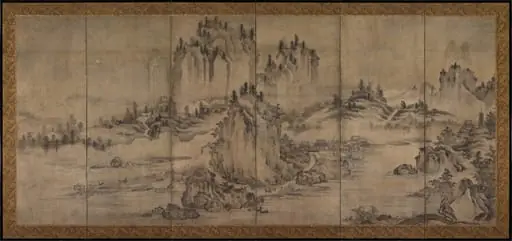 Landscape
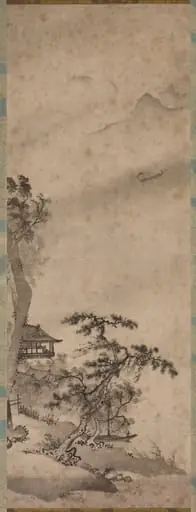 Windy Landscape with Sailboat
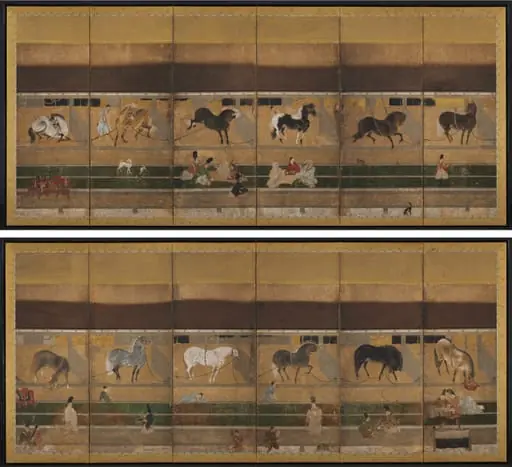 Horse Stable
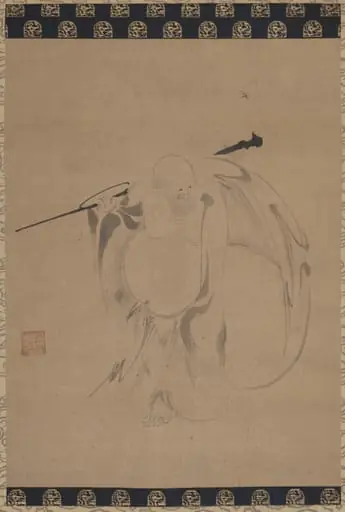 Hotei
Hotei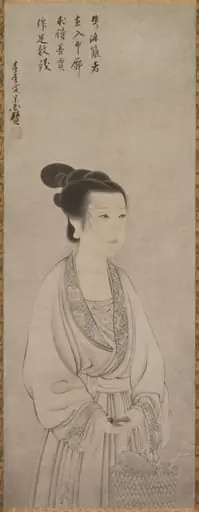 Rei Shōjo (Ling Zhaonu)
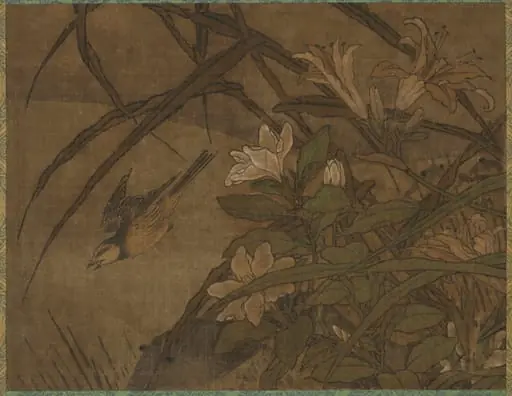 Birds and Flowers
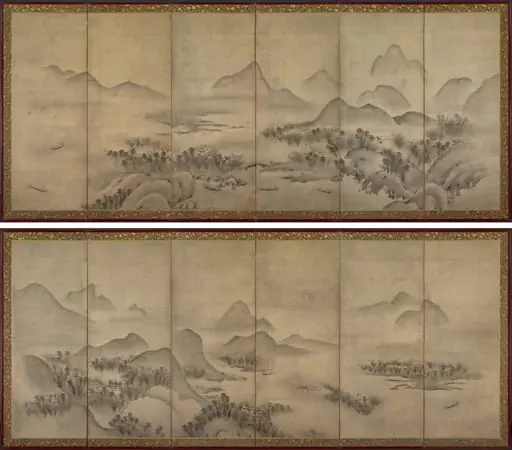 Moonlit Landscape
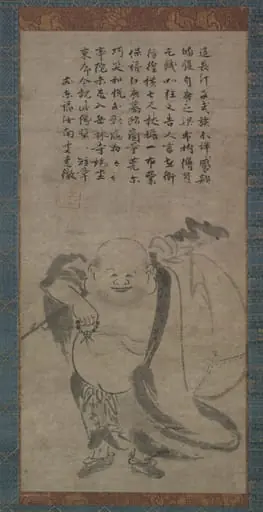 Budai
Budai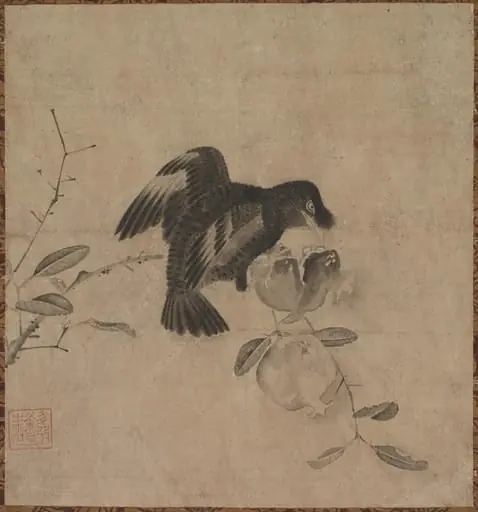 Crow on a Pomegranate
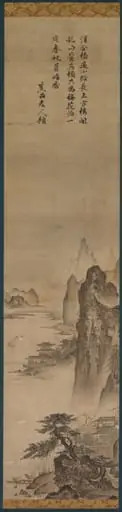 Landscape
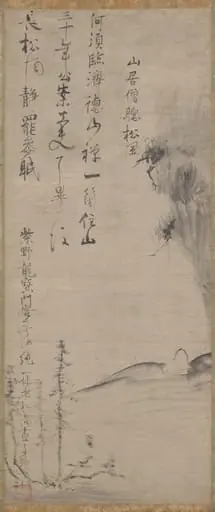 Listening to the Wind in the Pines
Frequently asked questions
What is Muromachi Period?
Muromachi Period is a subject in art. The Muromachi period or Muromachi era (室町時代, Muromachi jidai), also known as the Ashikaga period or Ashikaga era (足利時代, Ashikaga jidai), is a division of Japanese history running from approximately 1336 to 1573.
How many Muromachi Period works does Artifact World Gallery have?
Artifact World Gallery holds 80 public-domain Muromachi Period works, all free to view and download.
Who are the key Muromachi Period artists?
Key Muromachi Period artists in the collection include Sesson Shūkei, Shikibu Terutada and Sesshū Tōyō.
Where can I see Muromachi Period works?
Muromachi Period works in the collection are held by Cleveland Museum of Art.