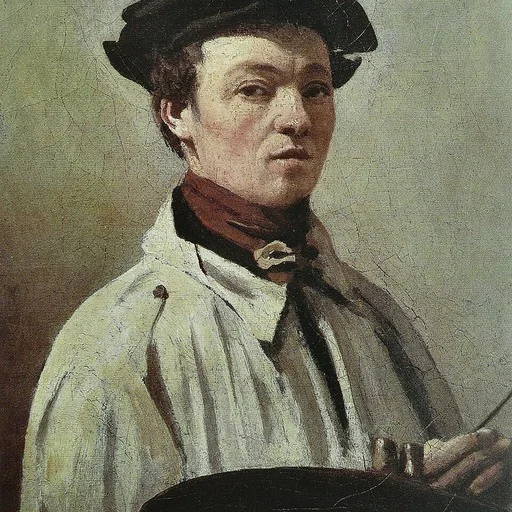
Subject
Bathing
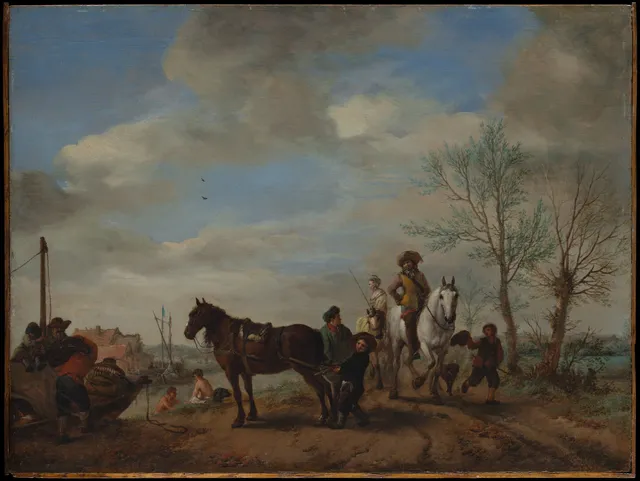
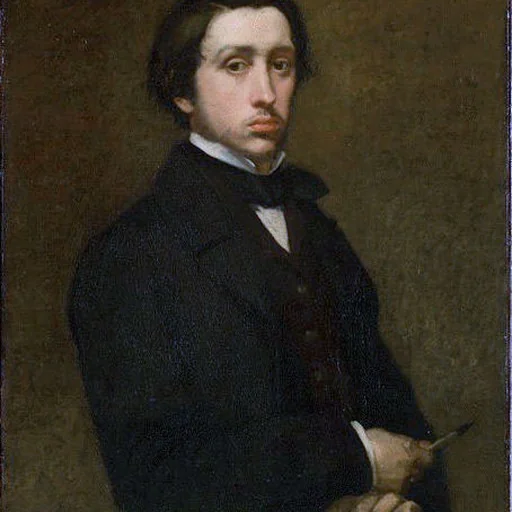
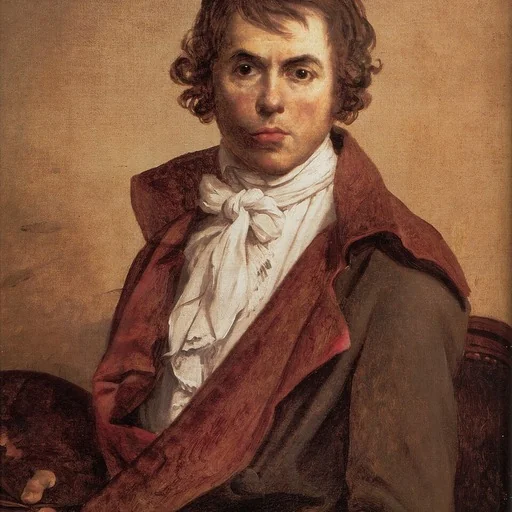
Bathing is a subject in art. The gallery holds 190 works in this subject in art, including works by Jean Baptiste Camille Corot, Gustave Courbet and Edgar Degas.
Bathing is the immersion of the body, wholly or partially, usually in water, but often in another medium such as hot air. It is most commonly practised as part of personal cleansing, and less frequently for relaxation or as a leisure activity.
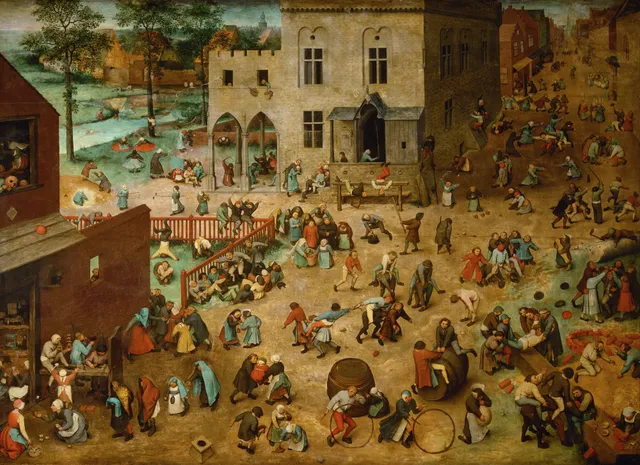
Key artists
Overview
Bathing, the immersion of the body wholly or partially in water or another medium such as hot air, ranks among the most enduring and versatile subjects in visual art. While most commonly associated with personal cleansing, bathing encompasses relaxation, leisure, ritual purification, and therapeutic practice. The motif appears in 205 works in the collection, spanning genres from Impressionist landscapes to mythological narratives and scenes of modern life. Artists have been drawn to bathing scenes for the formal challenges they present: the play of light on skin and water, the opportunity to depict the nude in a naturalistic context, and the potential for narrative drama or contemplative intimacy. The subject's persistence across cultures and periods reflects both the universality of the activity itself and its rich symbolic resonance, from spiritual purification to sensual pleasure and social ritual.
Iconography & meaning
The iconography of bathing carries multiple layers of meaning that have evolved across religious, cultural, and artistic contexts. Ritual religious bathing, or immersion, appears in Christianity as baptism, in Judaism and Islam as purification after sexual intercourse or menstruation, and in Hinduism as the auspicious dawn practice of snanam recorded in the grihya sutras from around 500 BCE. These spiritual dimensions often translate into art as scenes of transformation or divine encounter. Mythological bathing carries potent narrative force, most notably in the story of Diana and Actaeon, where the goddess's vulnerability at her bath becomes a moment of fatal discovery. The public baths of antiquity, particularly the Roman thermae, symbolized civic virtue and democratic socialization, available to all classes for minimal cost. Conversely, the private bath has served as a space of intimacy, sensuality, and voyeurism in art, while also representing hygiene, health, and modern domesticity. The Dutch and German sources emphasize that swimming pools, though derived from bathing culture, are typically treated as distinct from it in both functional and artistic terms.
Across movements & periods
The treatment of bathing in art has shifted significantly across movements and periods, reflecting changing attitudes toward the body, nature, and society. In antiquity, Greek and Roman artists depicted bathing within contexts of athletic training, civic life, and mythological narrative; the Mycenaean asaminthos and later Greek balaneion established visual precedents for the architectural bath setting. Medieval European imagery largely suppressed the subject, though Islamic and Byzantine traditions preserved Roman bathing culture through the hammam. The Renaissance recovery of classical forms brought renewed interest in mythological bathers, while the Northern tradition explored the domestic bath as a scene of everyday life. The nineteenth century marked a particular high point across multiple movements: classicism revived idealized antique forms, realism documented contemporary bathing practices, and Impressionism seized upon the subject for its optical and coloristic possibilities. Edgar Degas alone painted approximately one hundred bath scenes, exploiting the informal, unguarded moments of women at their toilette. The Dutch source notes that bath scenes served as popular studies for artists working with biblical and mythological themes as well. Modern and contemporary treatments have continued to explore bathing as a site of psychological vulnerability, environmental concern, or social commentary, even as the subject retains its capacity for pure formal exploration.
Works
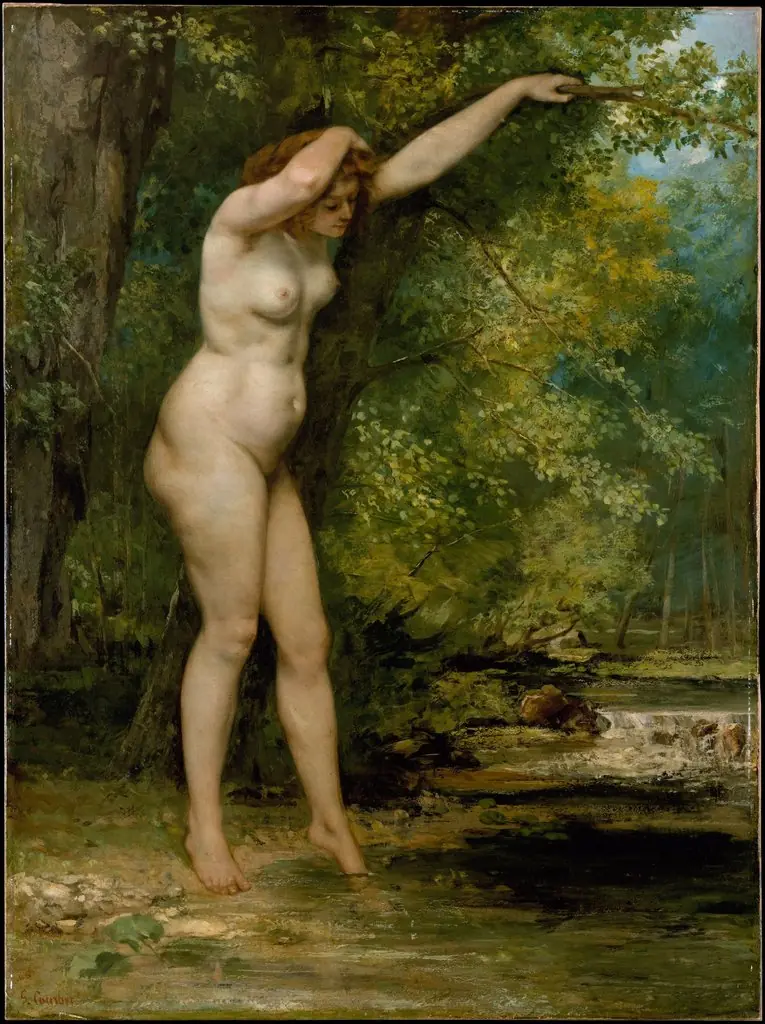 The Young Bather
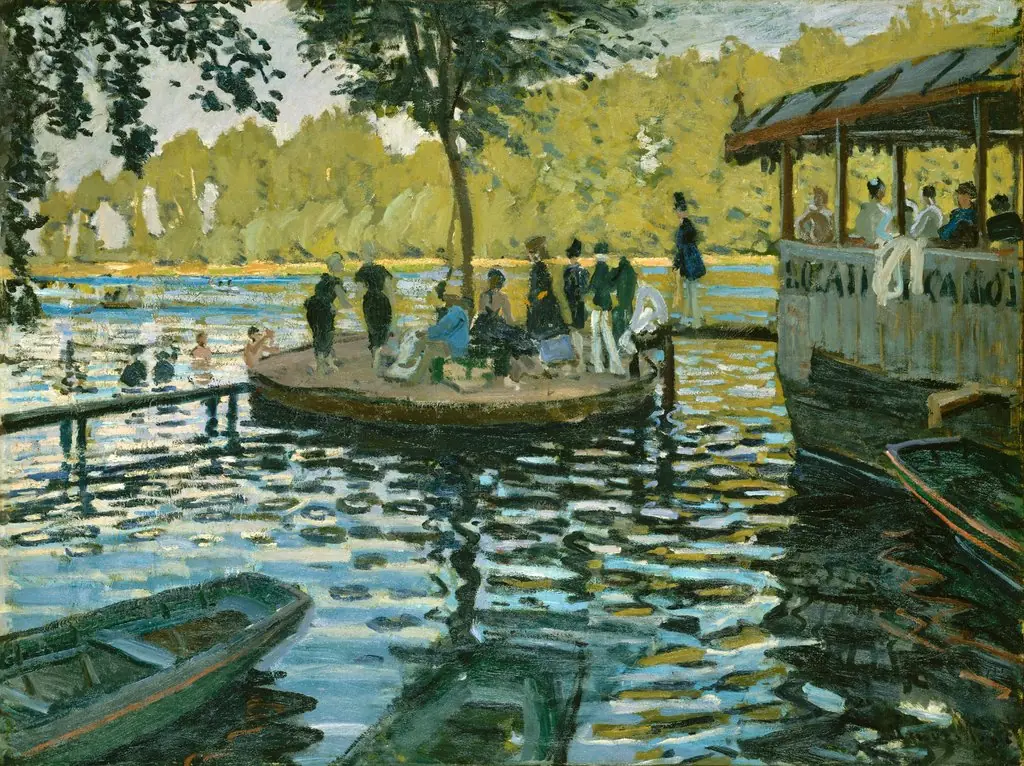 La Grenouillère
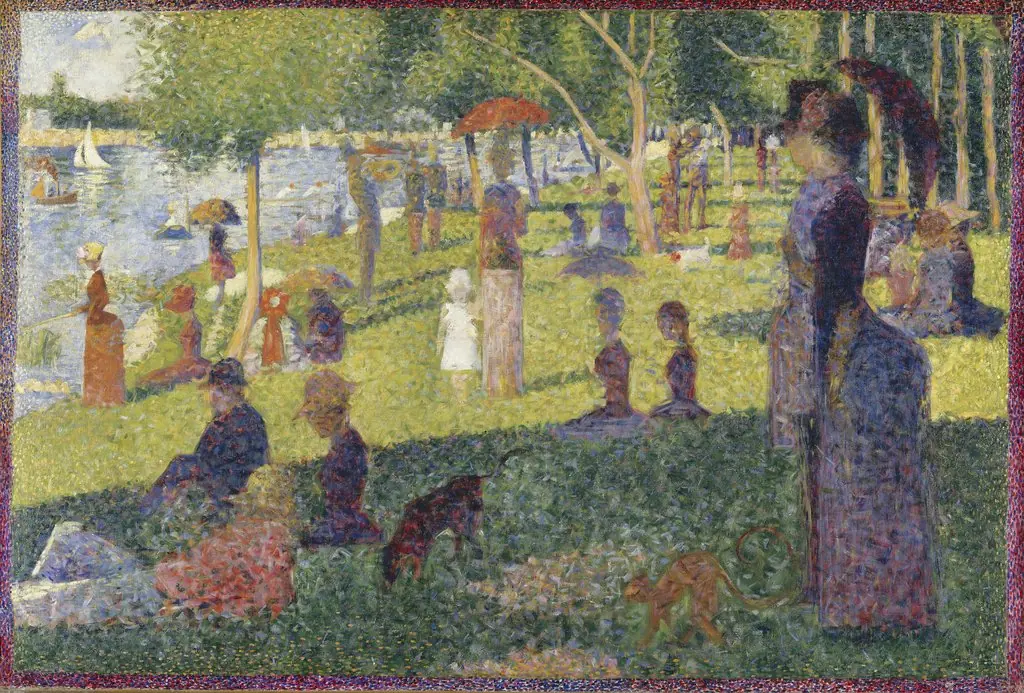 Final study for "La Grande Jatte"
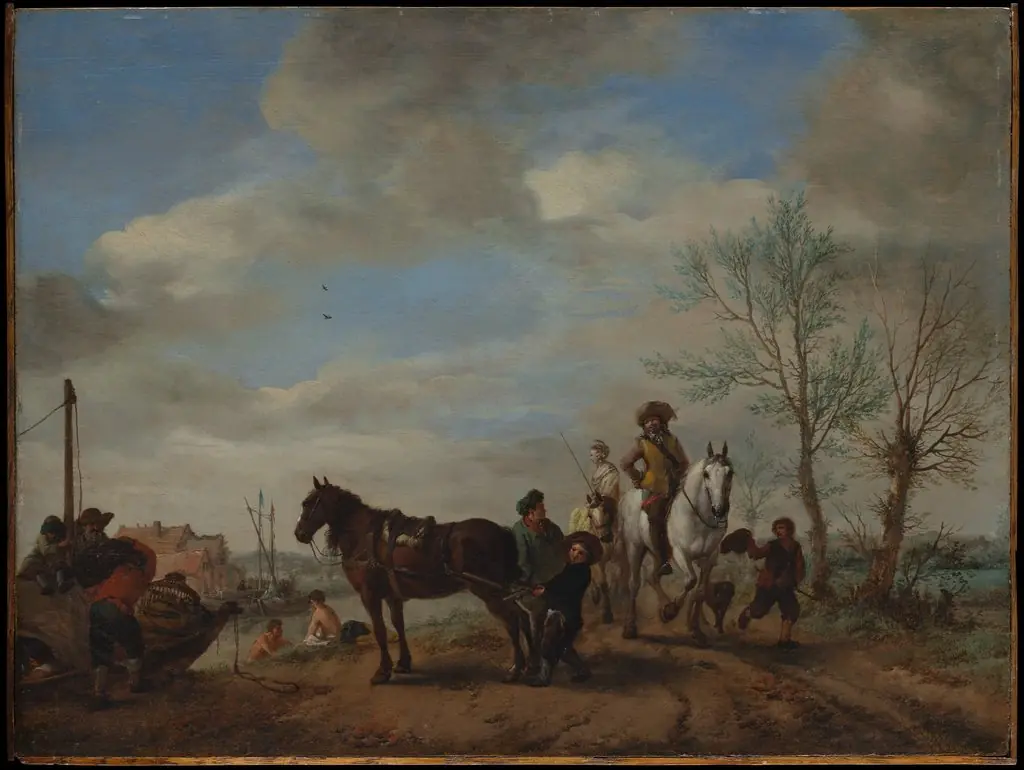 A Man and a Woman on Horseback
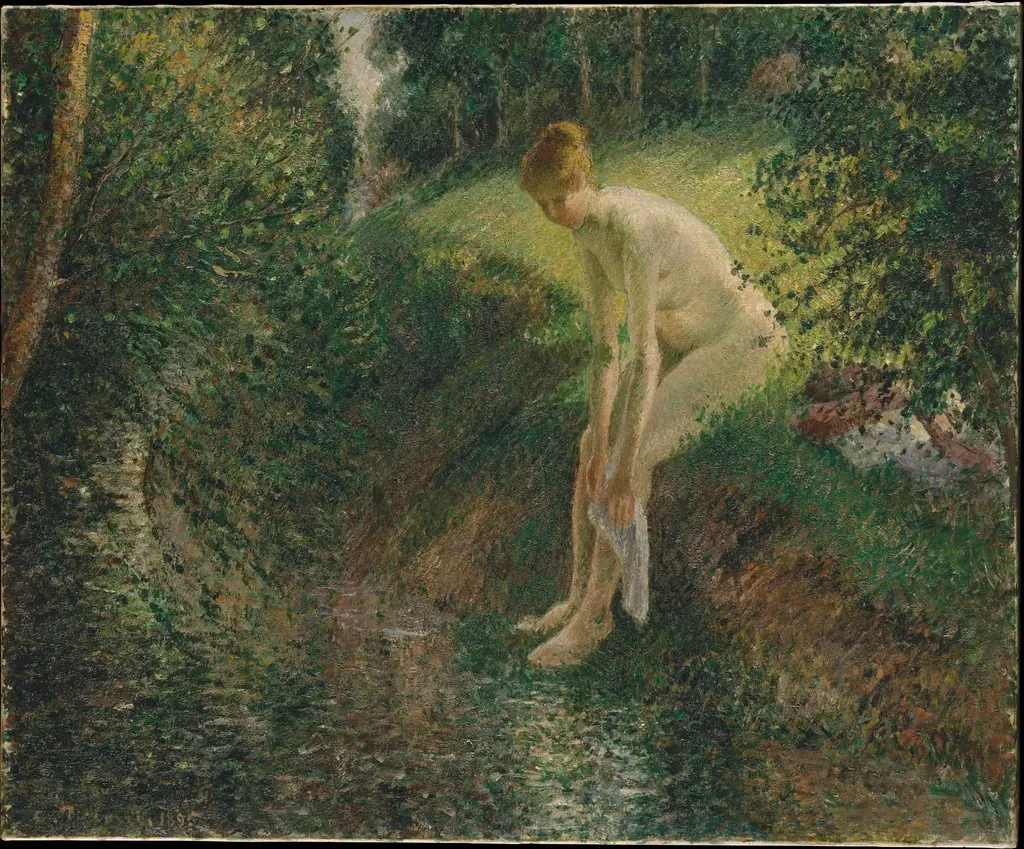 Bather in the Woods
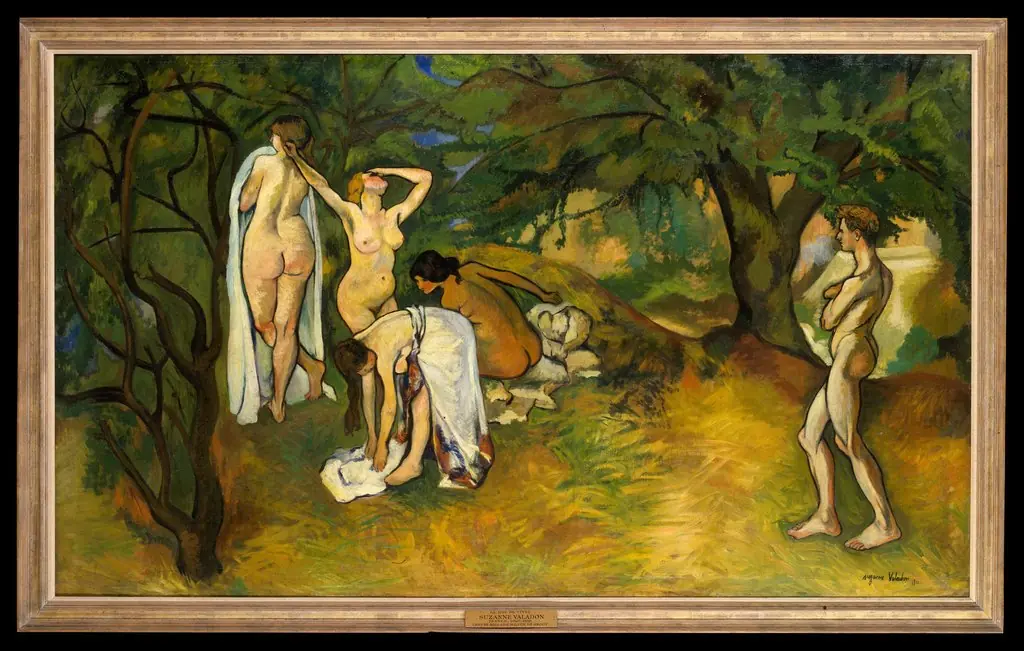 Joy of Life
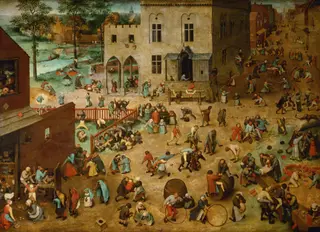 Children's Games
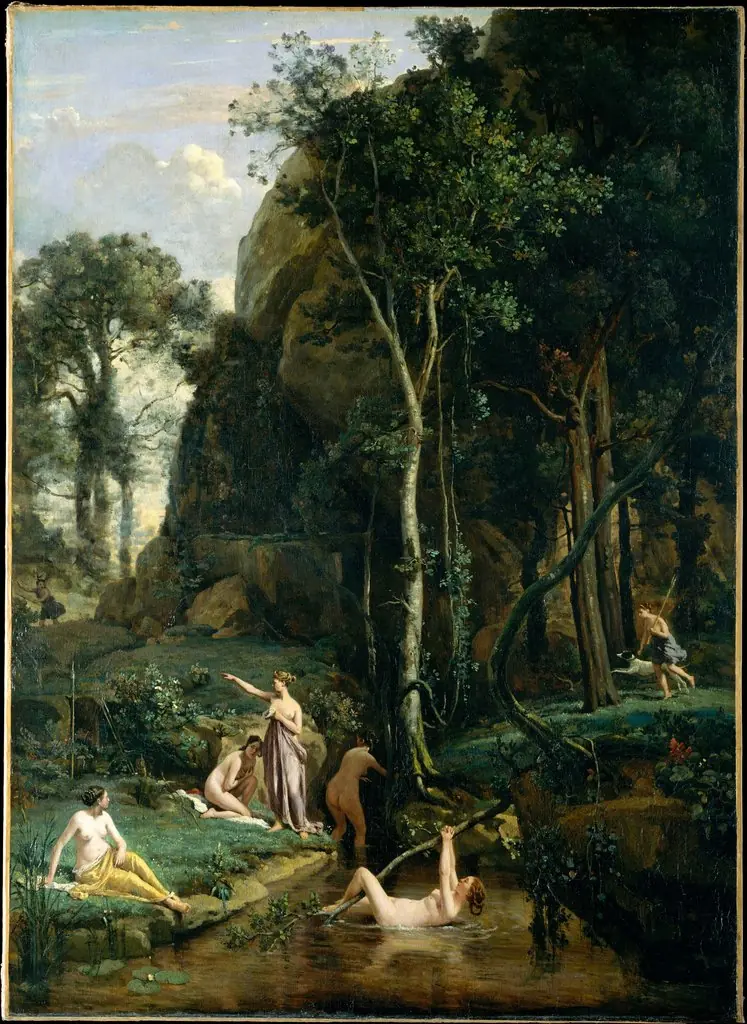 Diana and Actaeon (Diana Surprised in Her Bath)
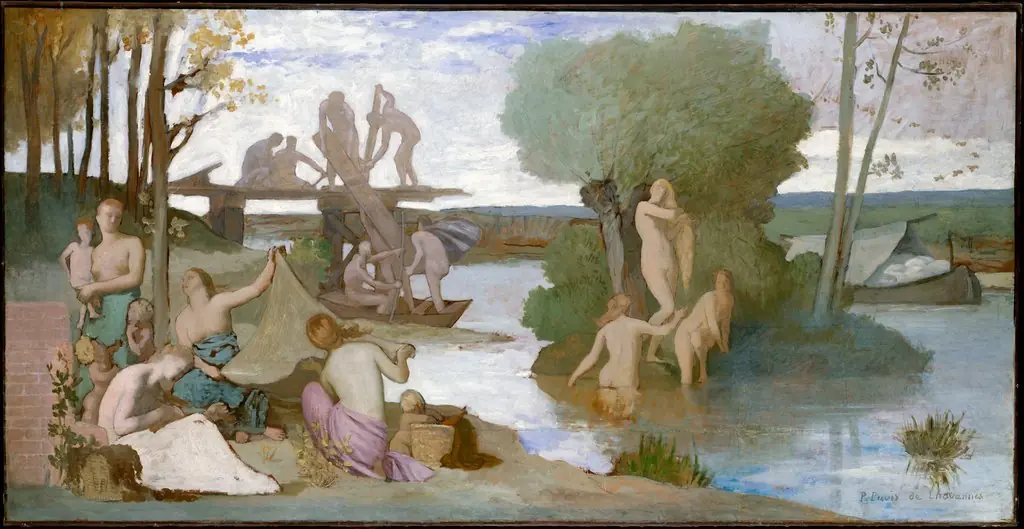 The River
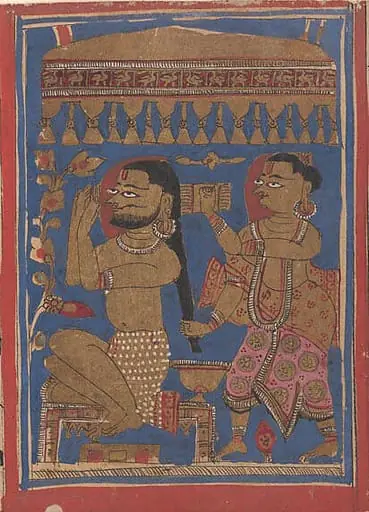 Untitled
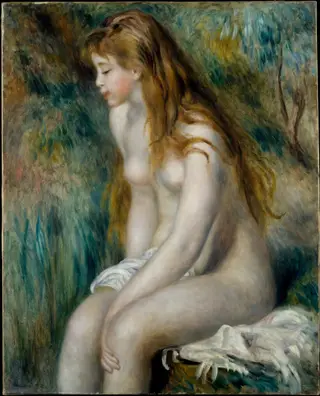 Young Girl Bathing
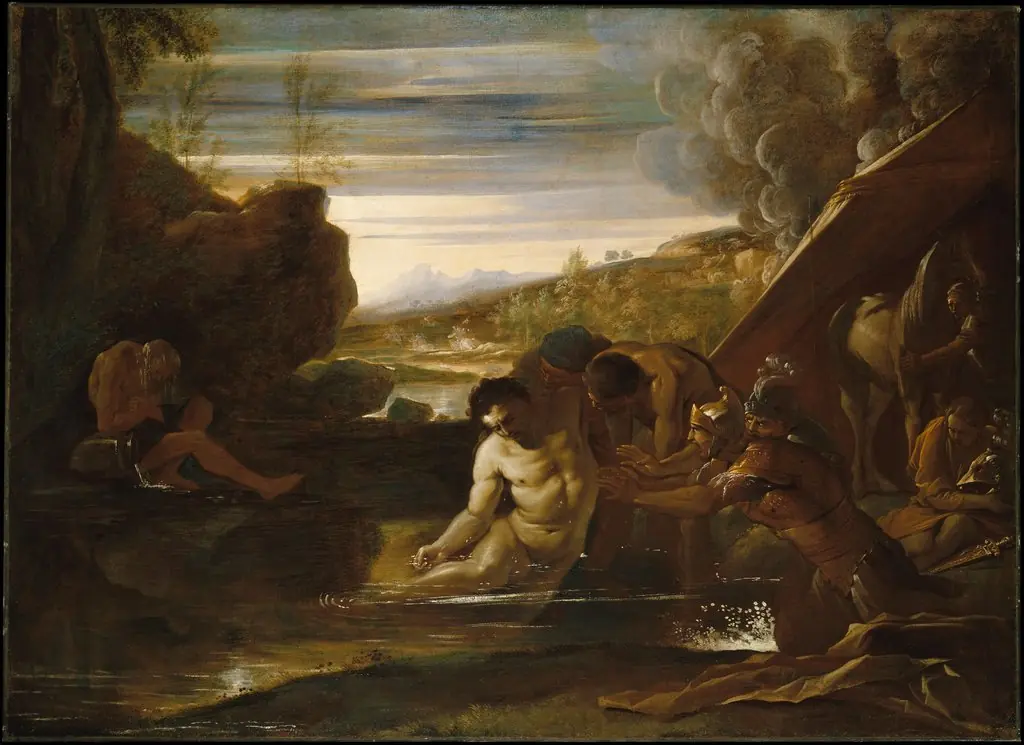 Alexander the Great Rescued from the River Cydnus
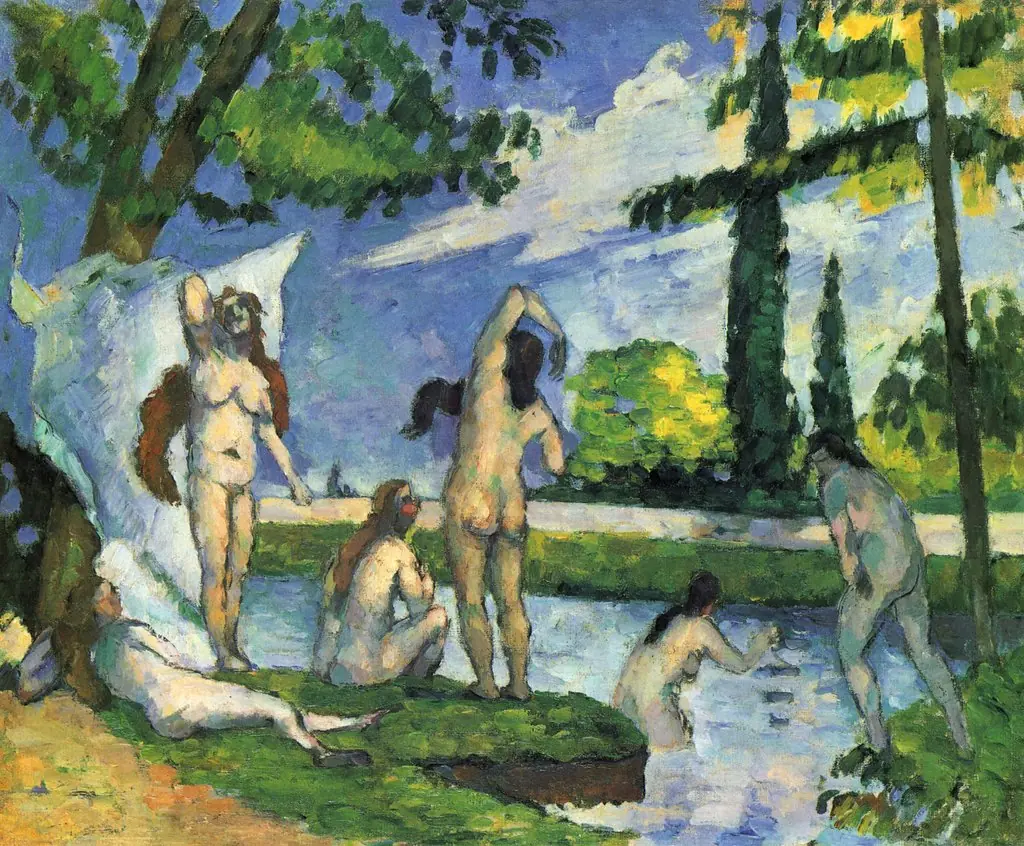 Baigneuses (Bathers)
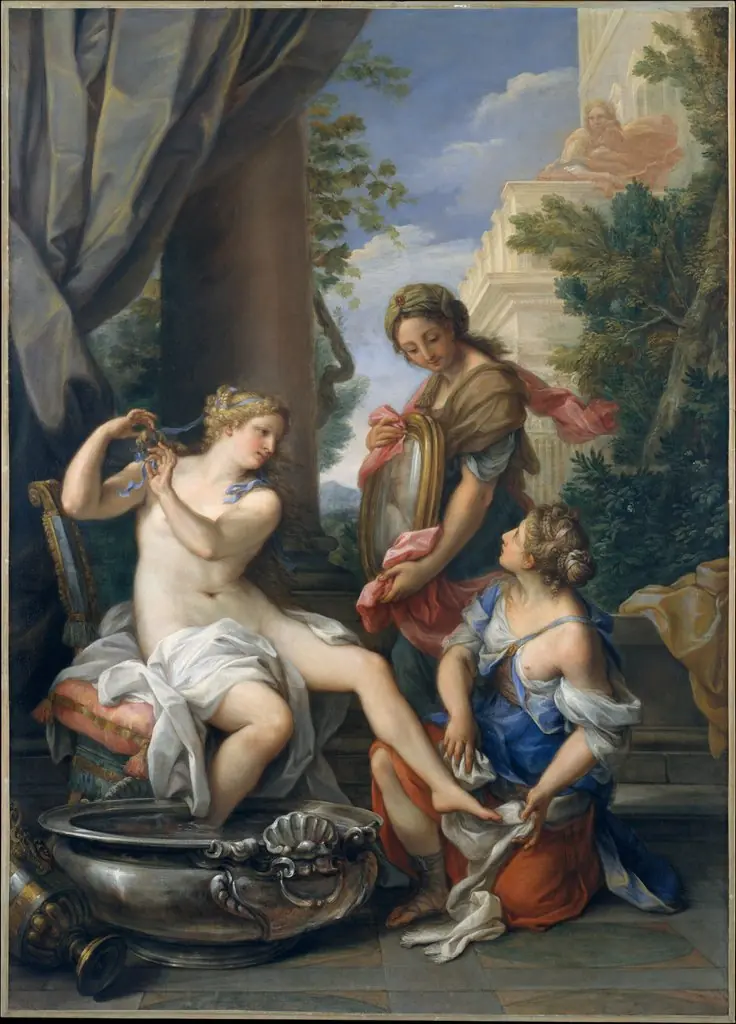 Bathsheba at Her Bath
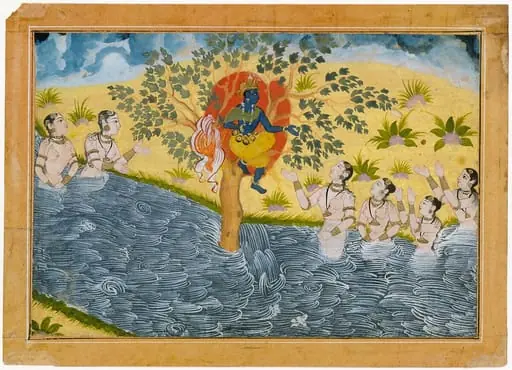 Untitled
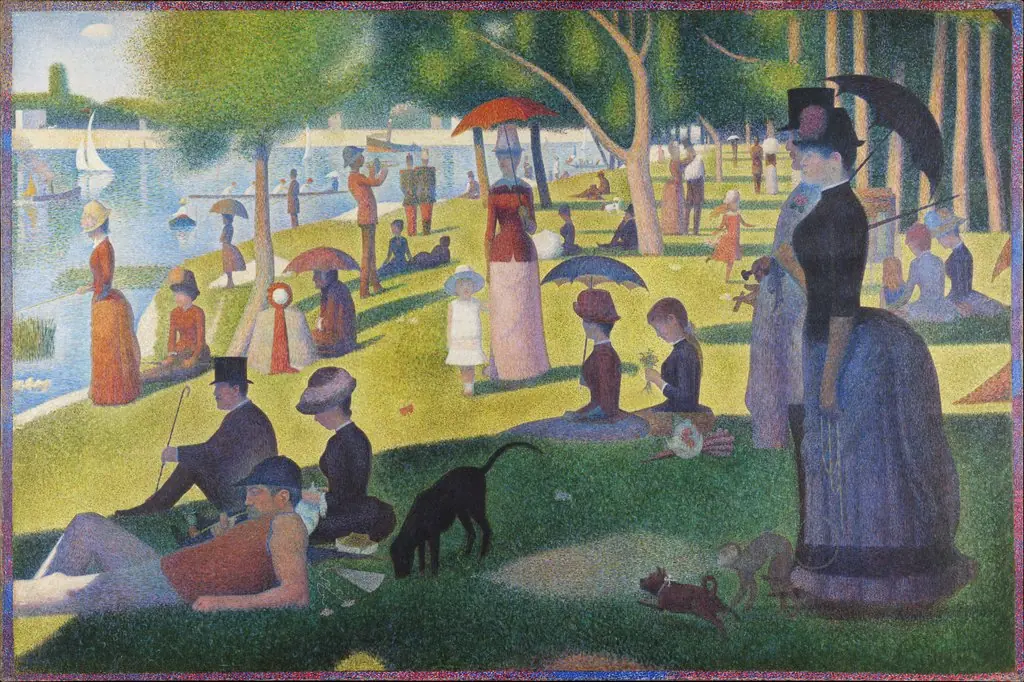 A Sunday Afternoon on the Island of La Grande Jatte
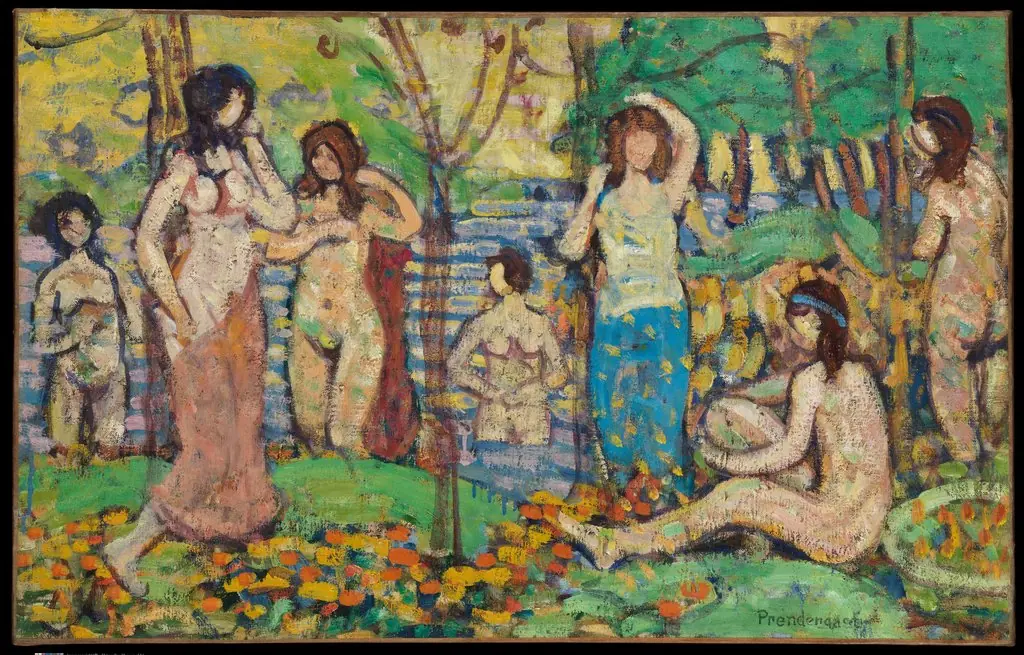 Beach No. 3
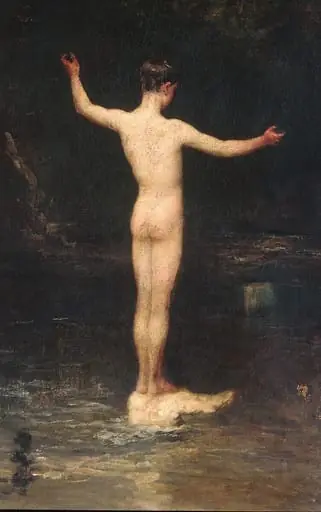 The Bathers
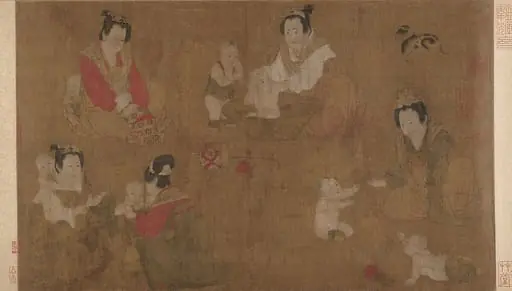 宋 佚名 倣周昉 戲嬰圖 卷|Palace Ladies Bathing Children
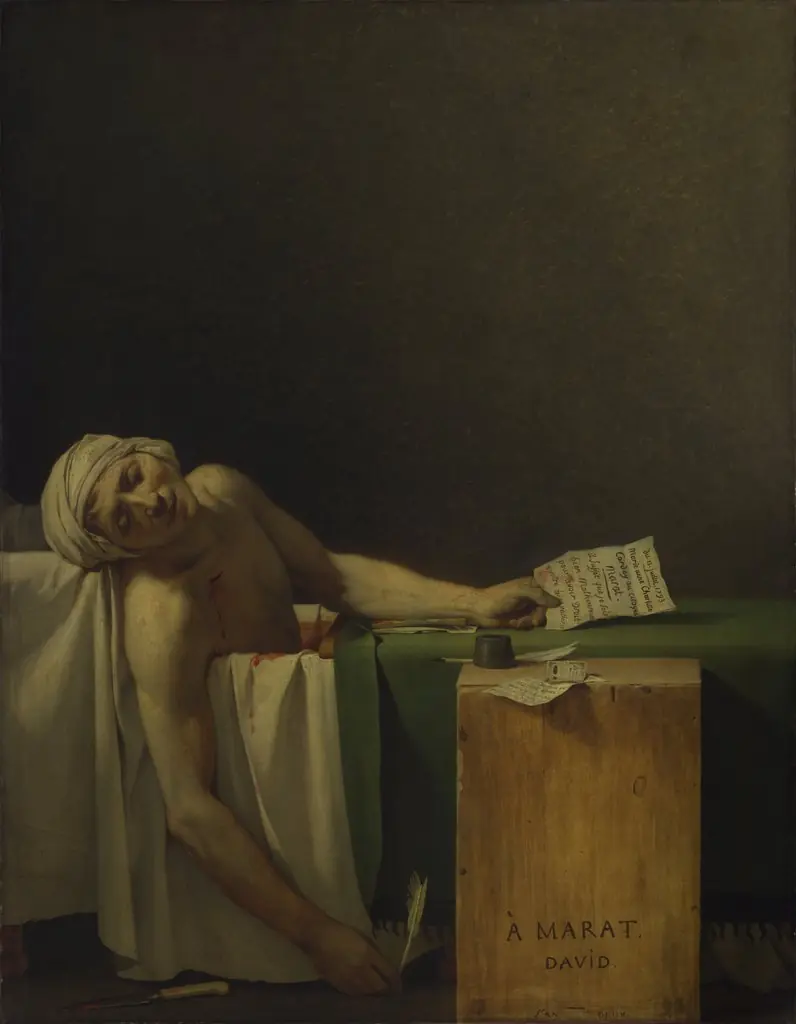 The Death of Marat
![The Balcony, Spain [and] Two Nude Bathers Standing on a Wharf](https://artifactworldgallery.com/img/john-singer-sargent--the-balcony-spain-and-two-nude-bathers-standing-on-a-wharf--0ed1cd84ffcfb319-w320.webp) The Balcony, Spain [and] Two Nude Bathers Standing on a Wharf
The Balcony, Spain [and] Two Nude Bathers Standing on a Wharf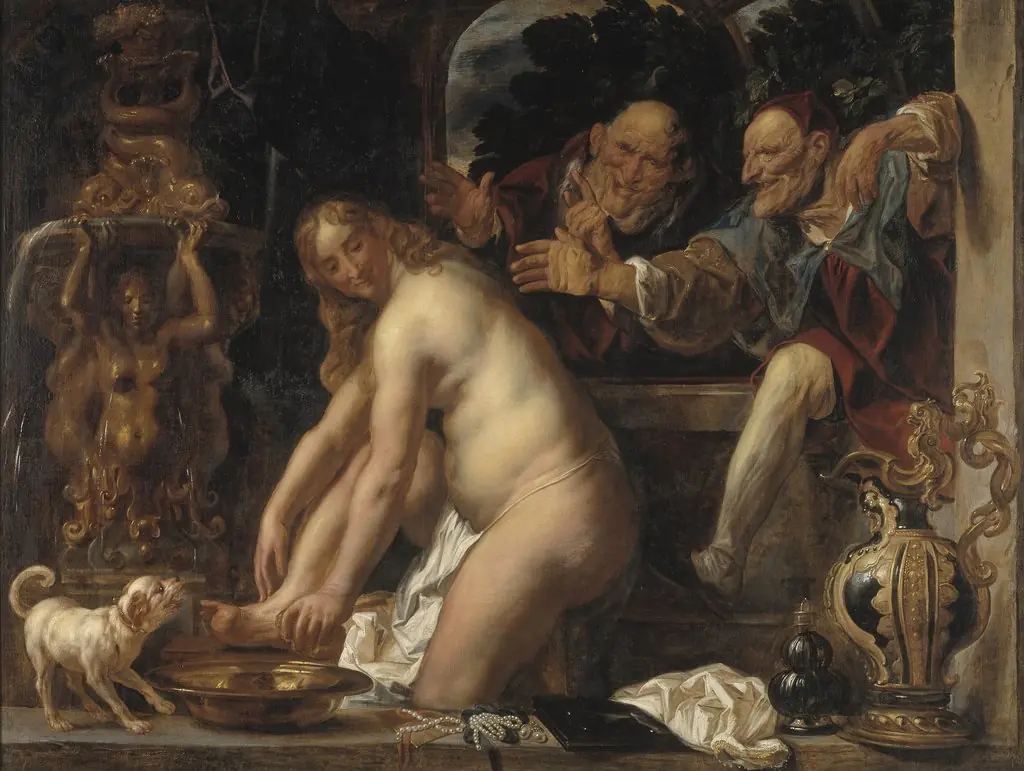 Susanna and the Elders
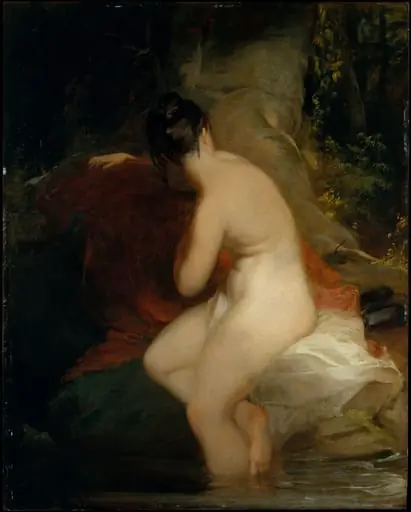 Musidora
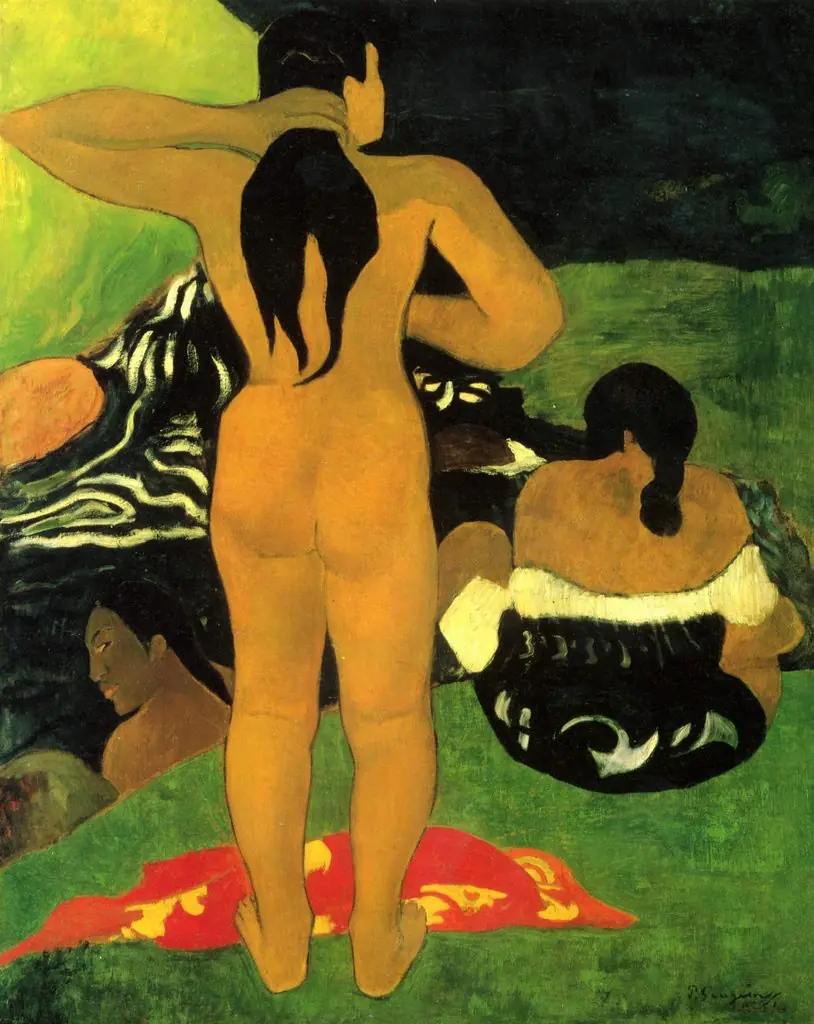 Tahitian Women Bathing
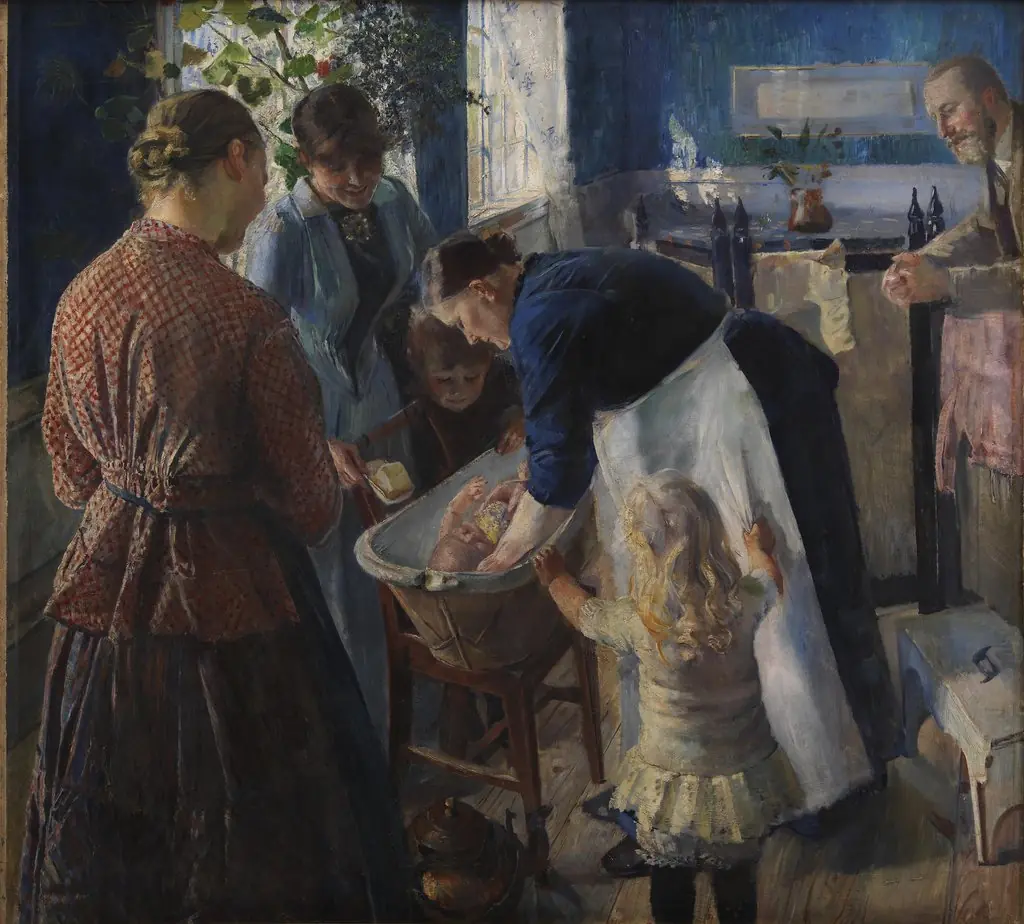 In the Tub
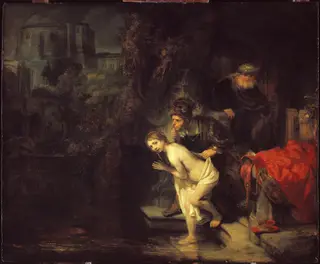 Susanna and the Elders
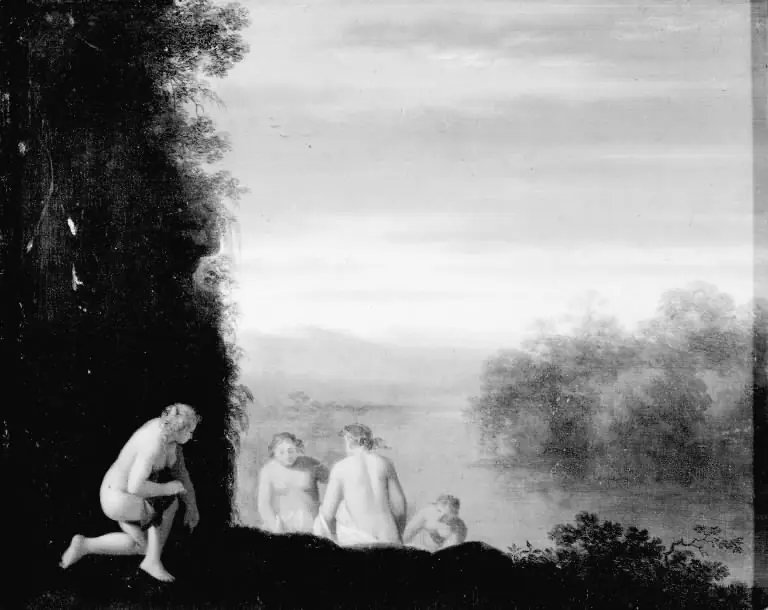 Nymphs in the Bath
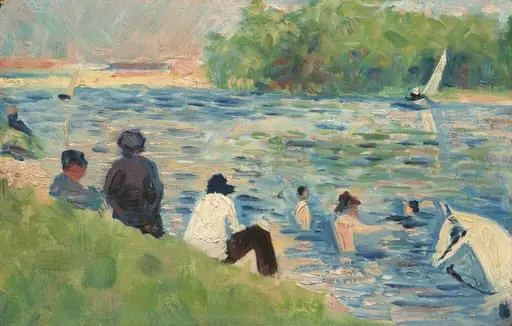 Bathers (Study for "Bathers at Asnières")
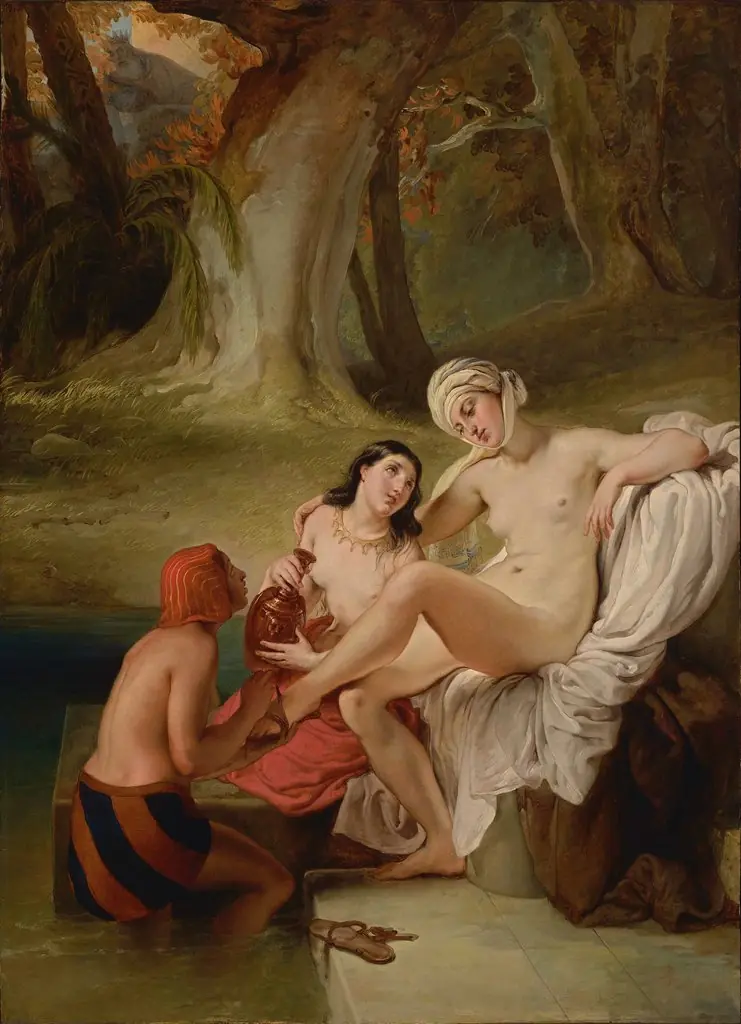 Bathsheba Bathing
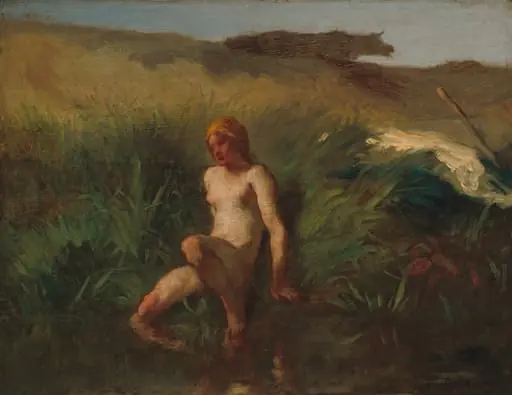 The Bather
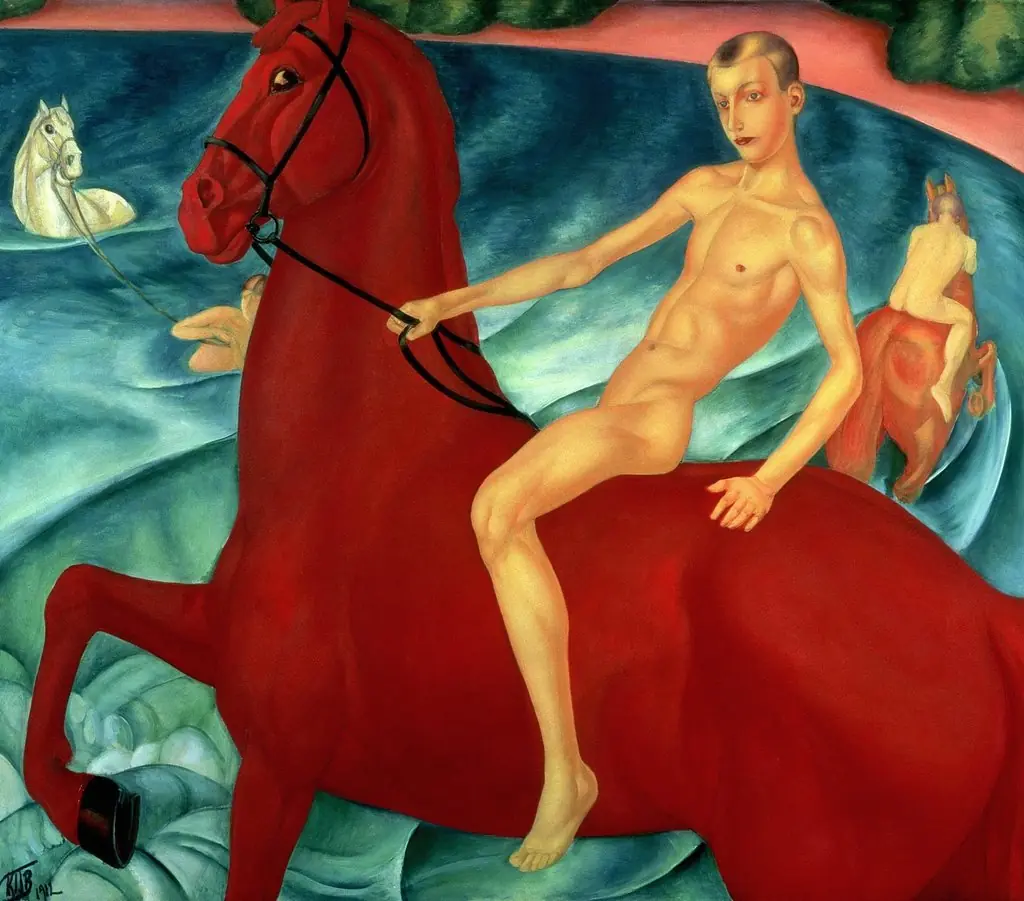 Bathing the Red Horse
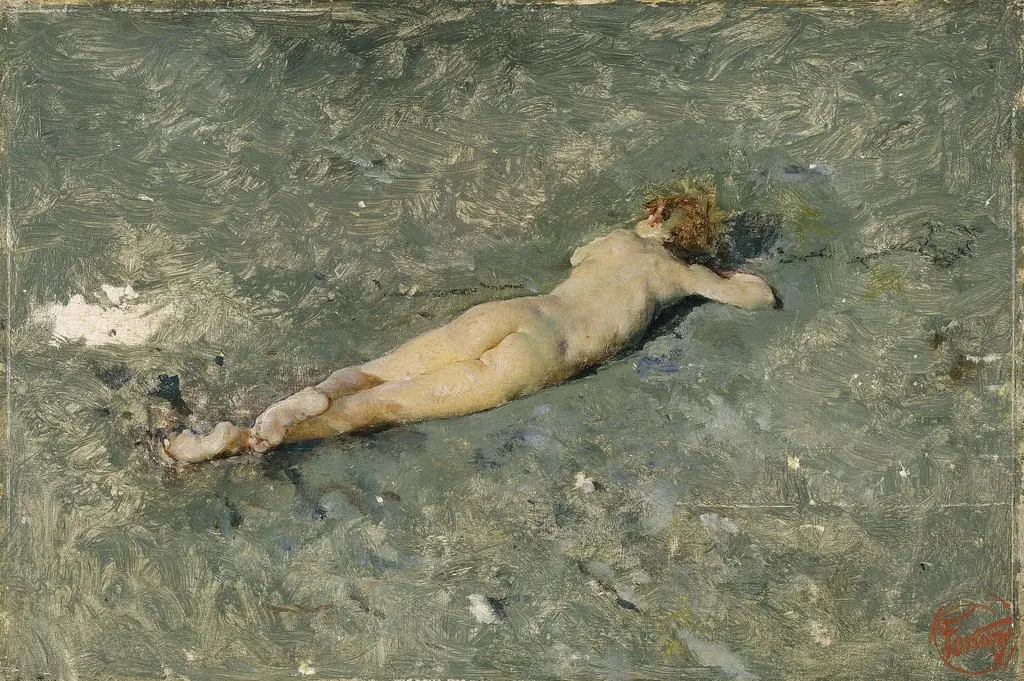 Nude Boy on the Beach at Portici
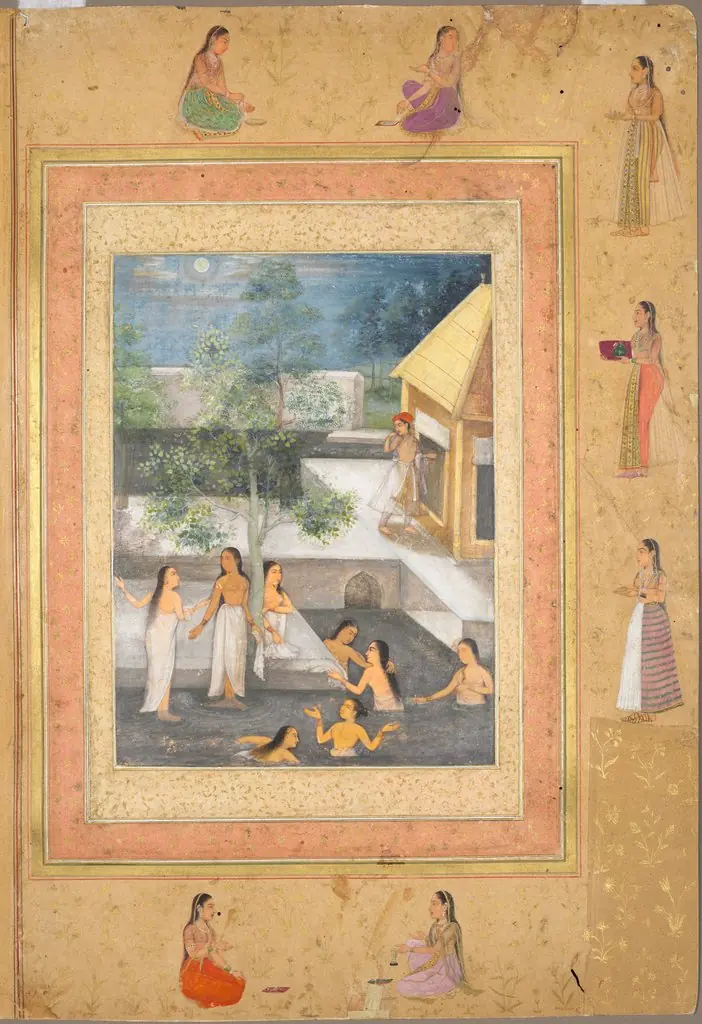 Leaf from the Late Shah Jahan Album: Harem Night-Bathing Scene (recto); Calligraphy Framed by an Ornamental Border of Flowers and Birds (verso)
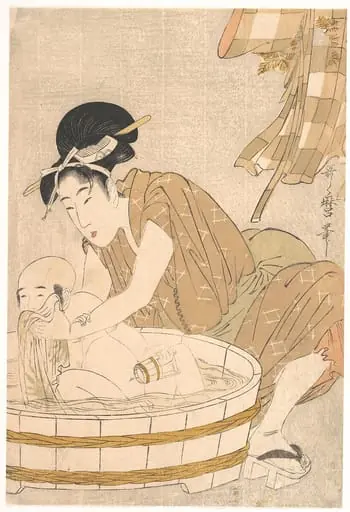 行水|Bathtime (Gyōzui)
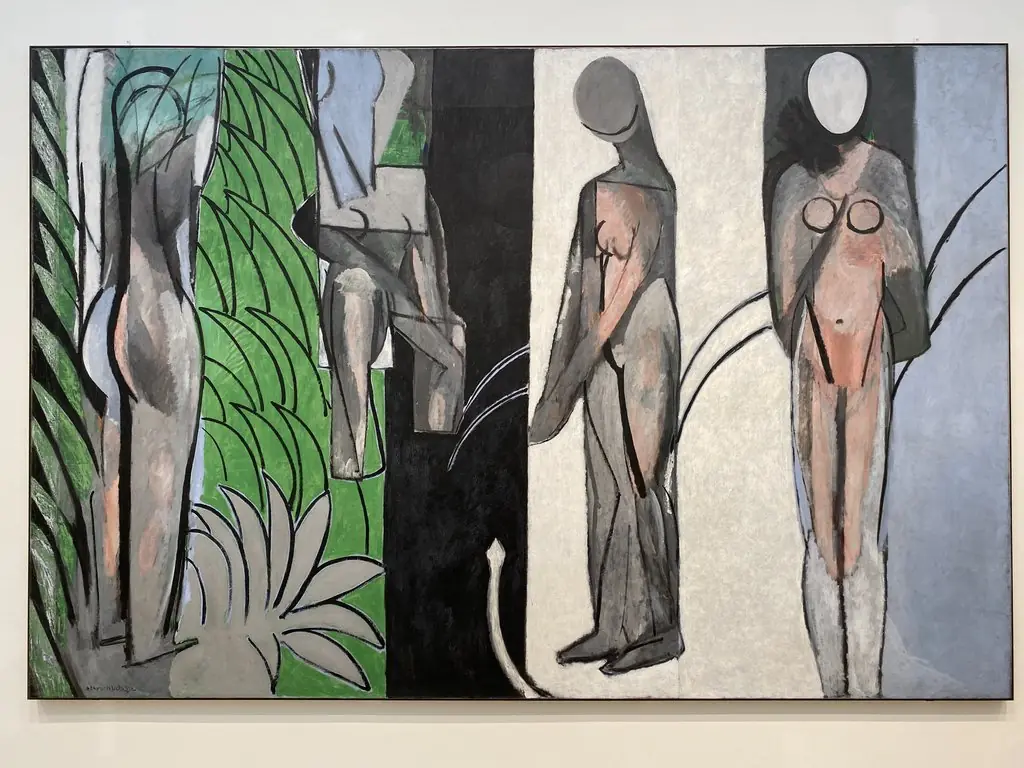 Bathers by a River
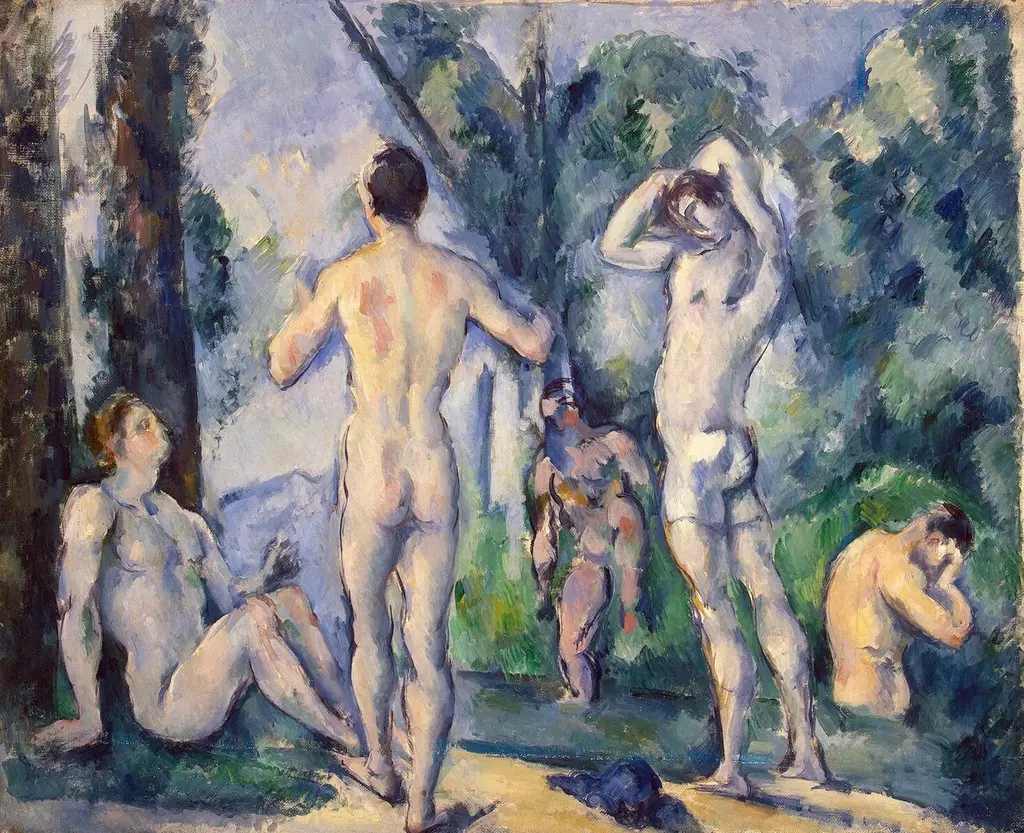 Bathers
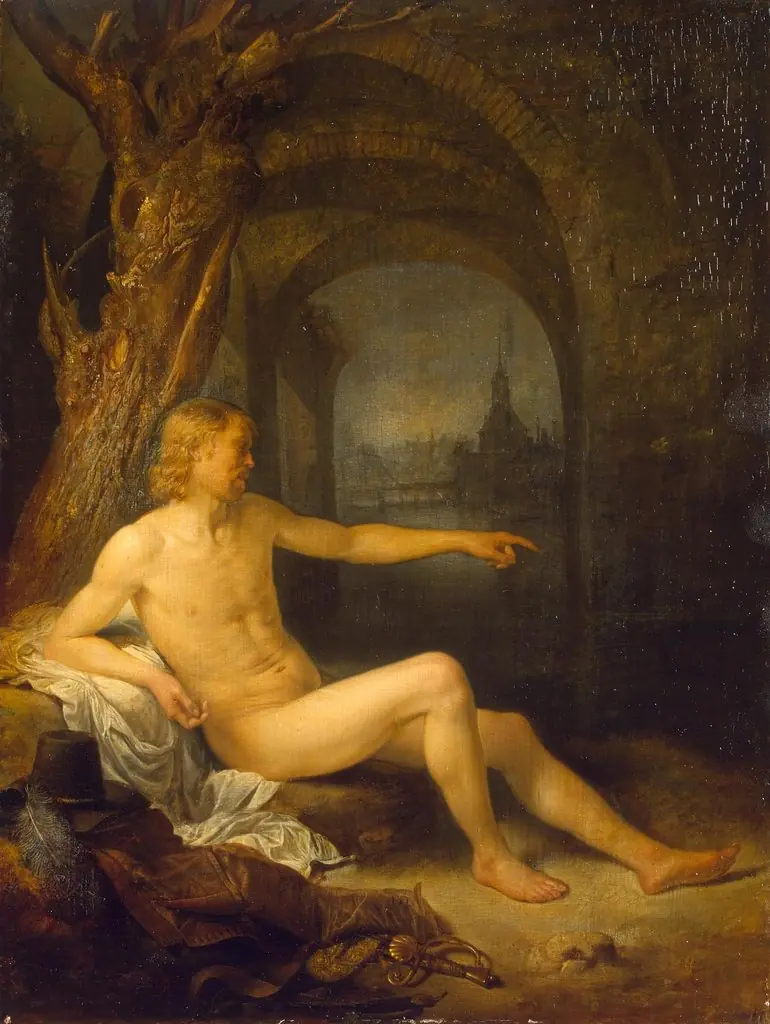 Soldier Bather
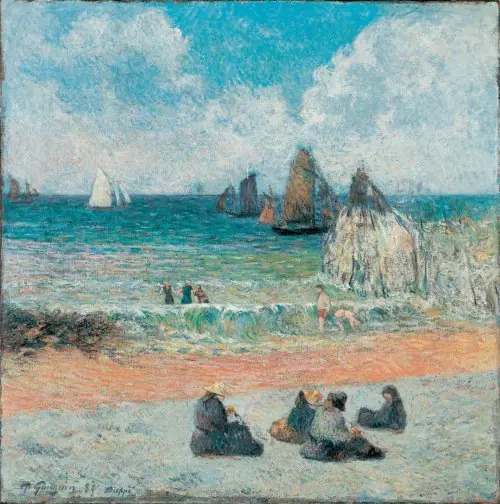 Coast at Dieppe
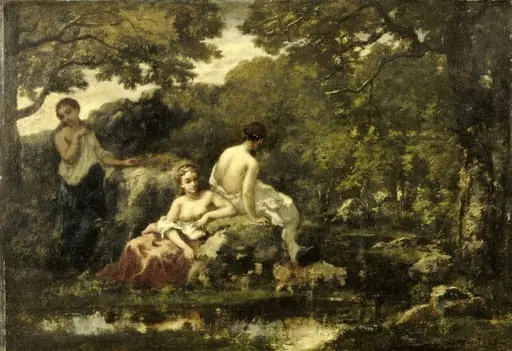 Idyll
Idyll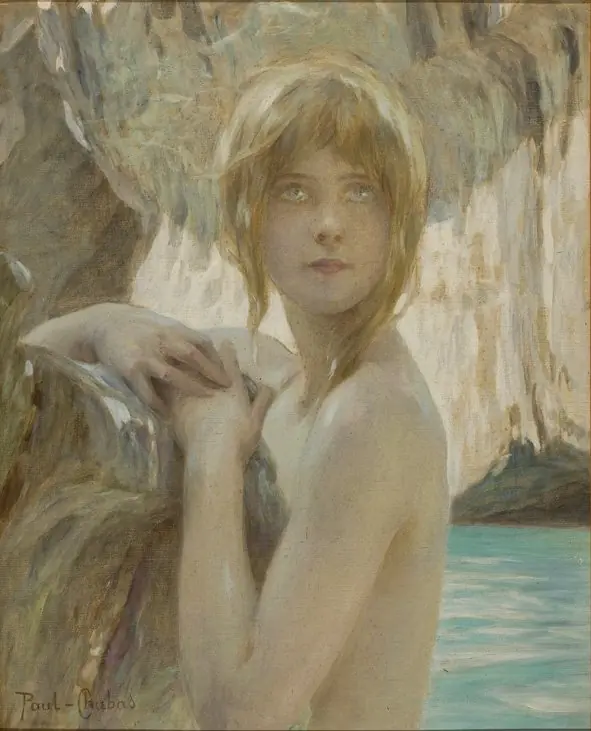 Blonde Nymph
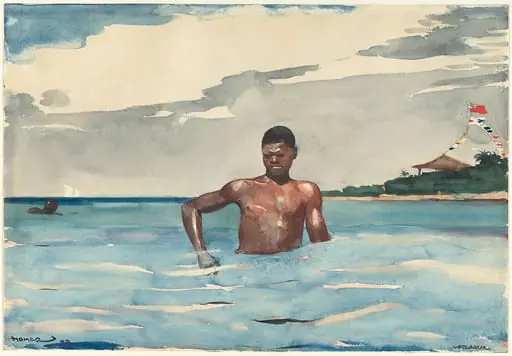 The Bather
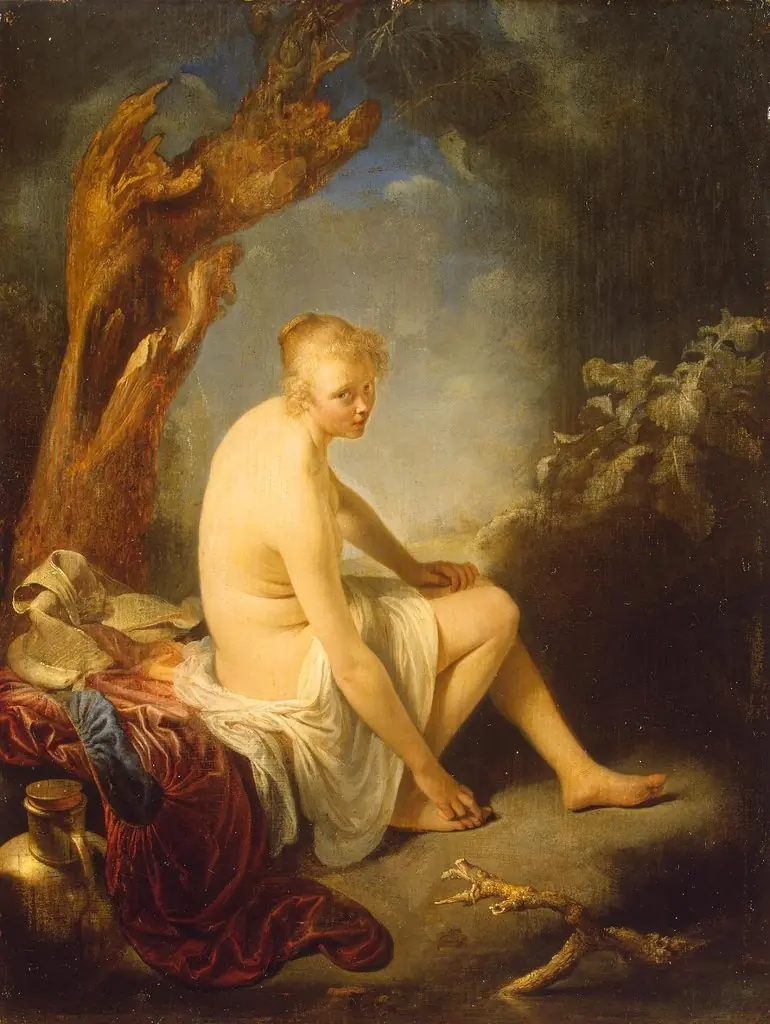 Woman Bather
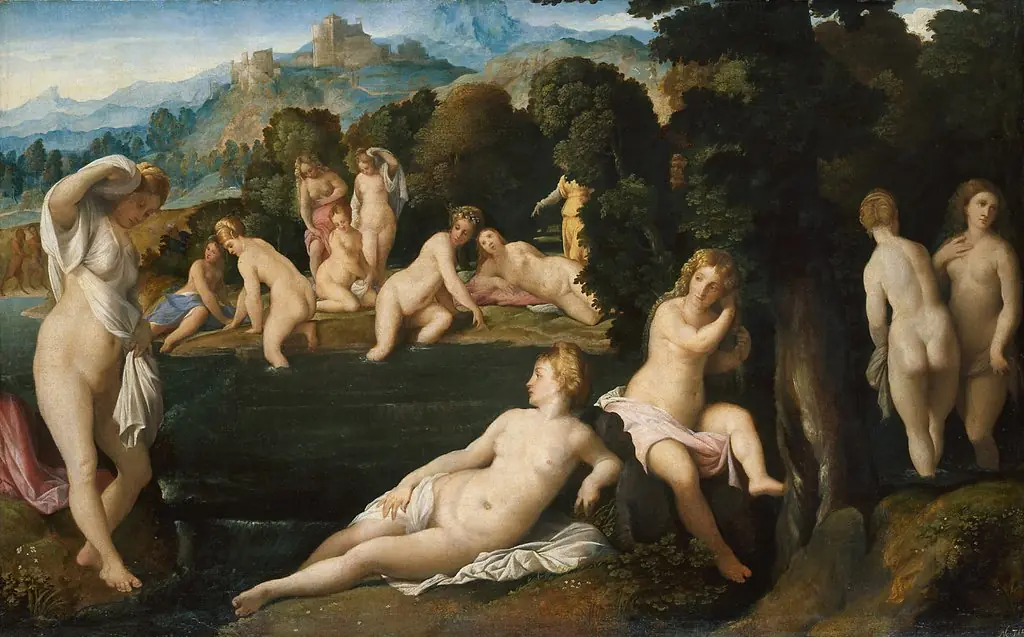 Bathing Nymphs
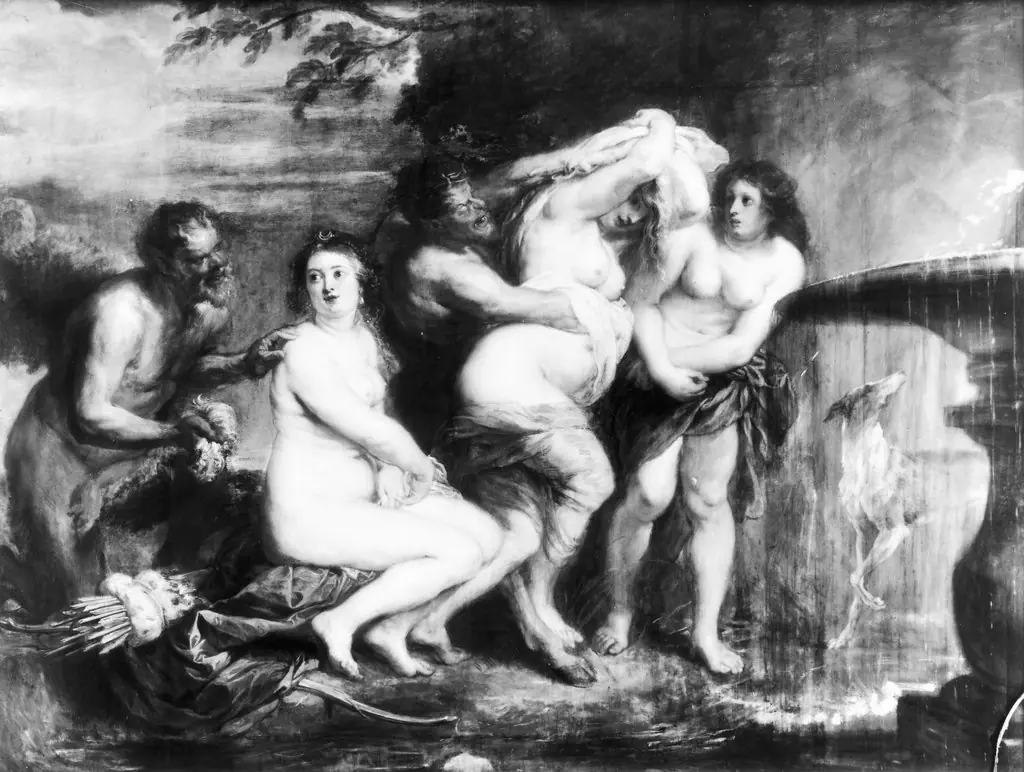 Diana and two nymphs surprised by satyrs while bathing
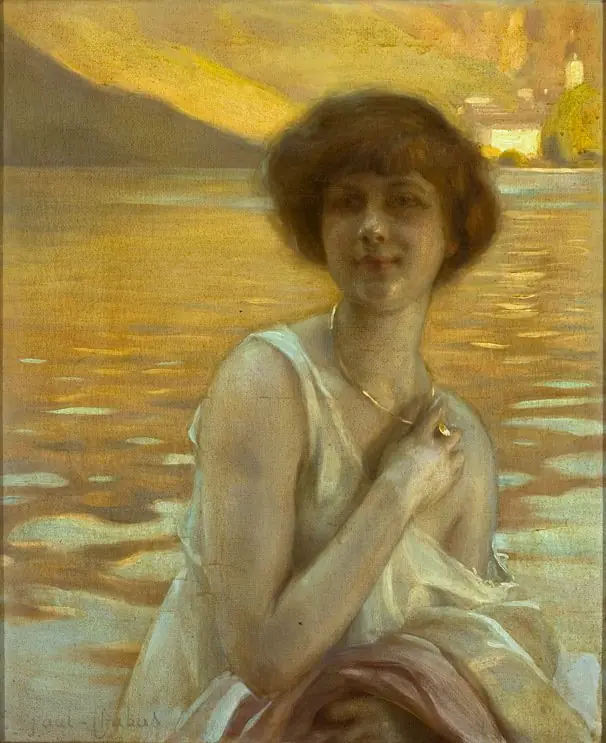 Portrait of a Lady
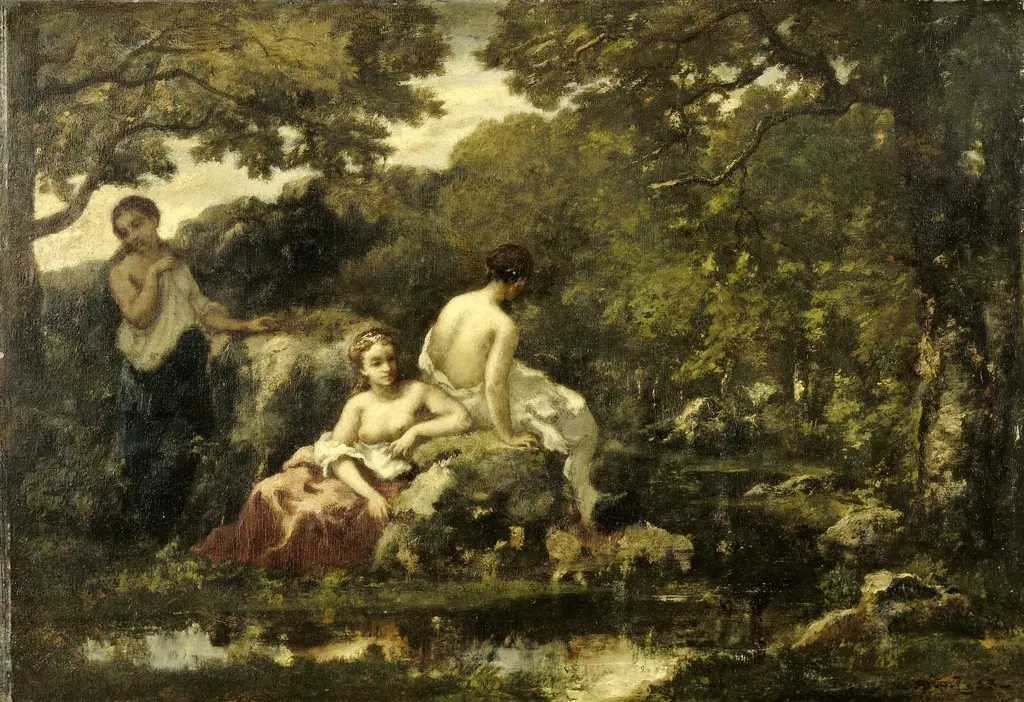 Idyll
Idyll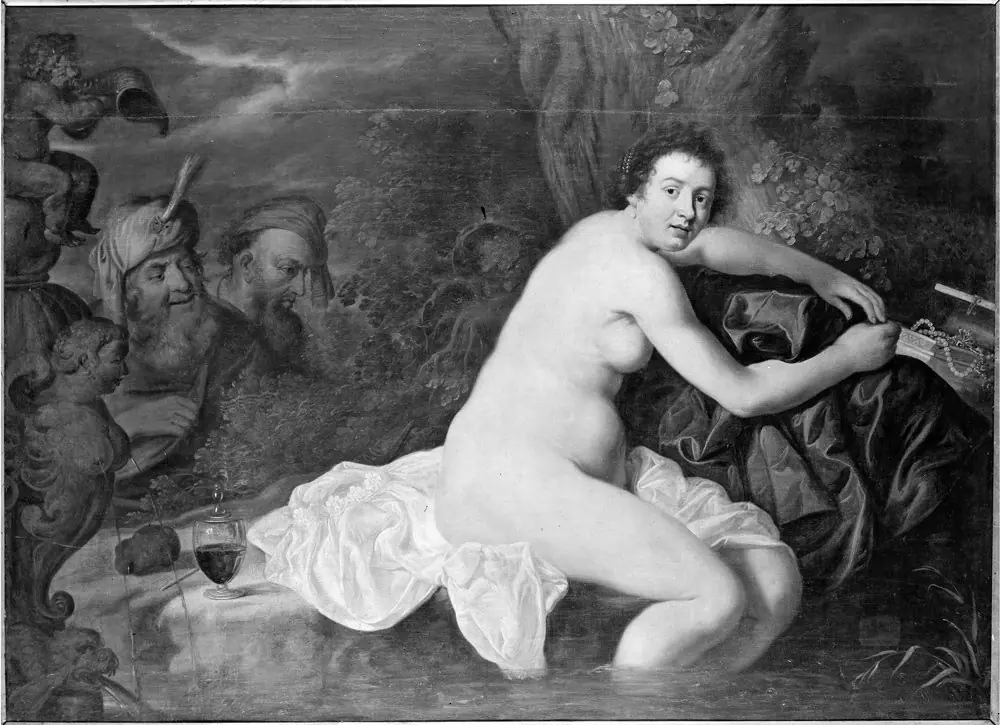 Susanna and the Elders
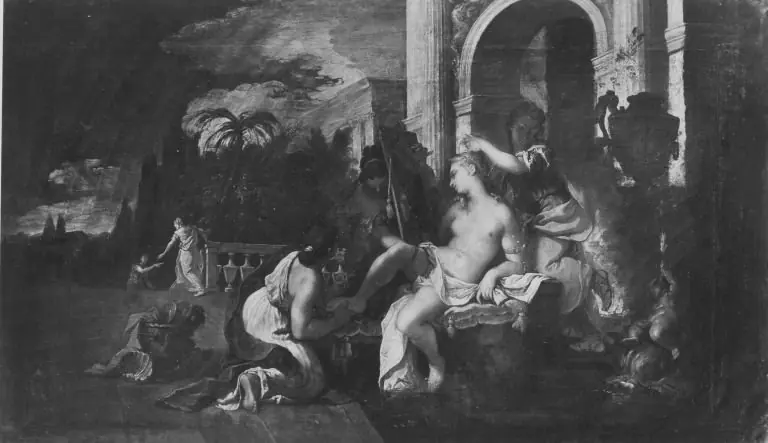 Bathseba im Bade
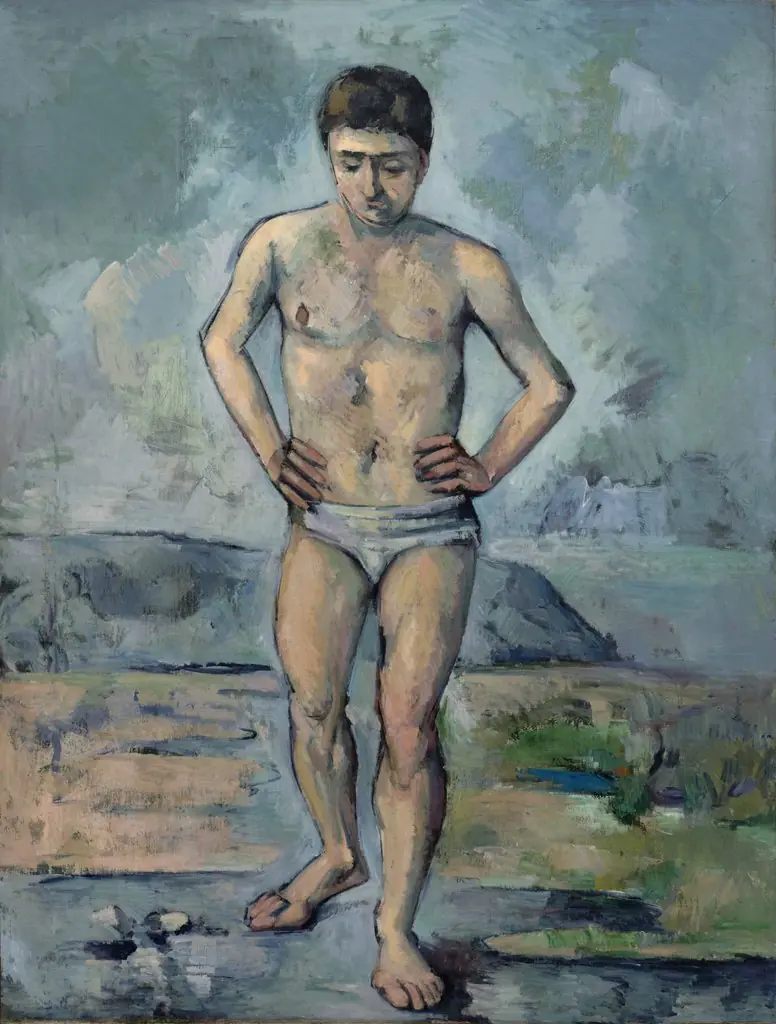 The Bather
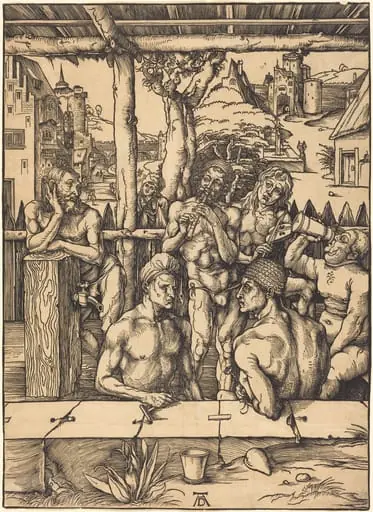 Bath House
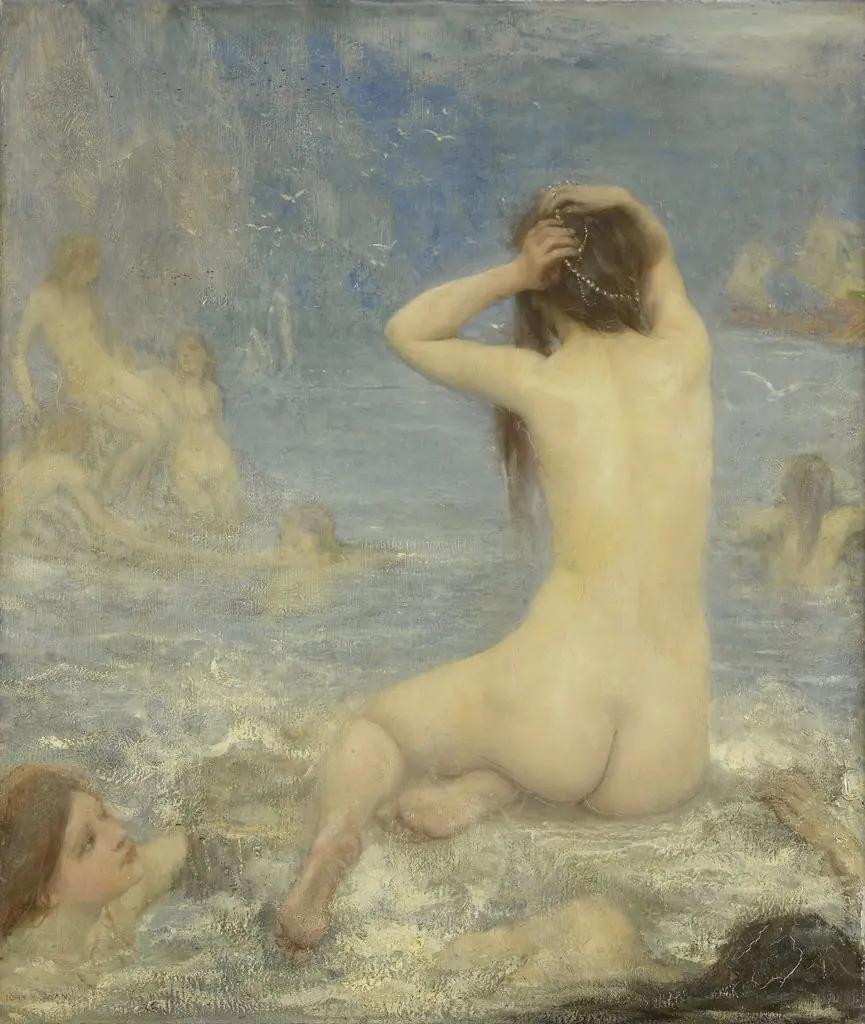 The Sirens
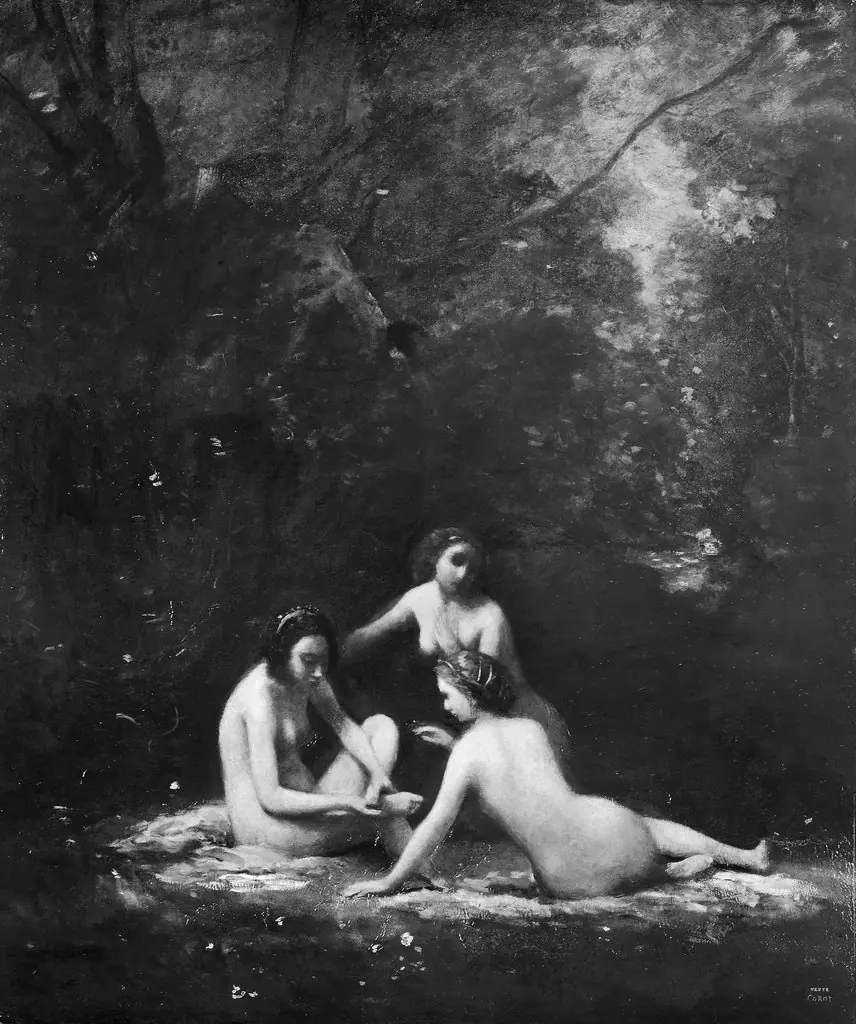 Nymphs Leaving the Bath
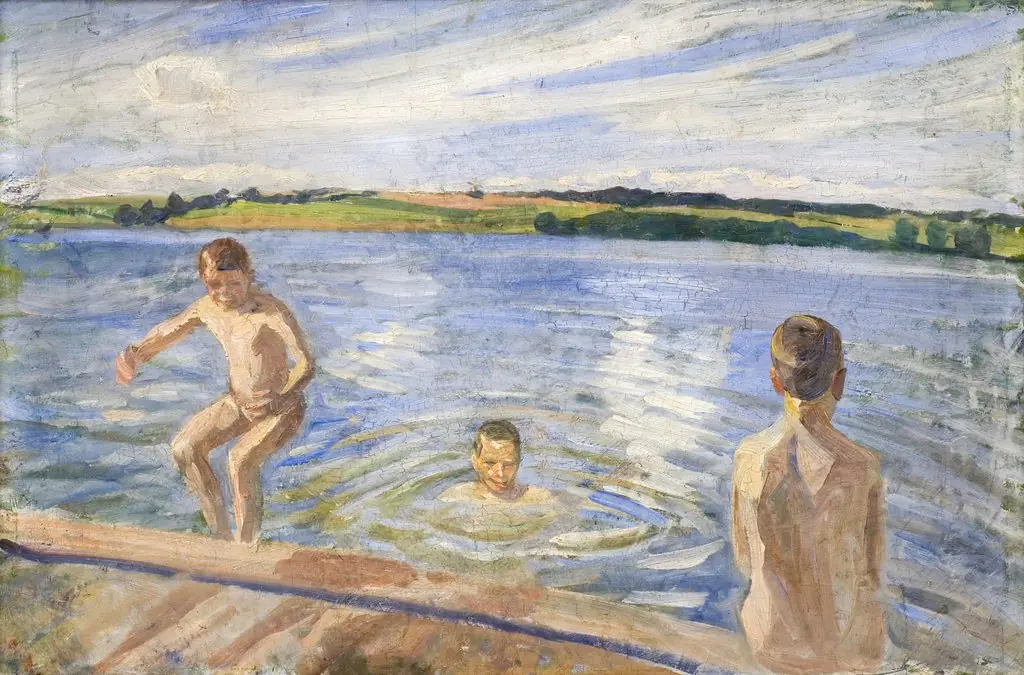 Boys Bathing
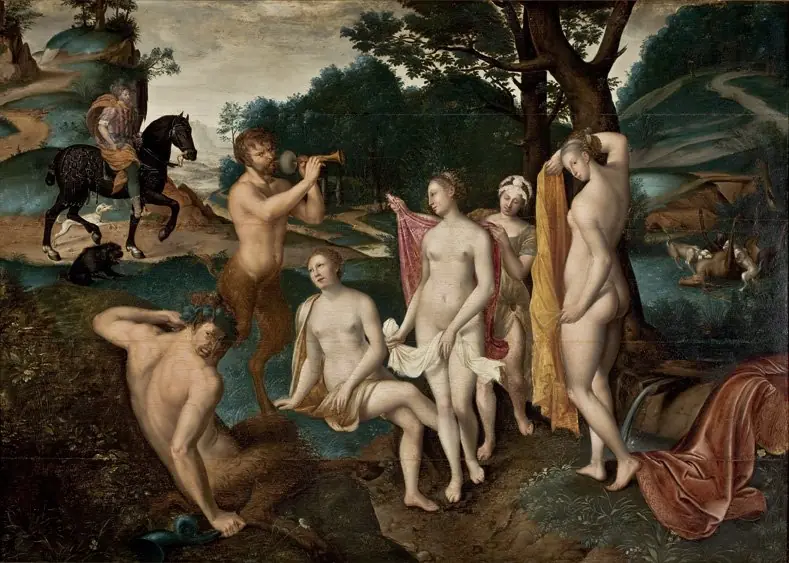 The Bath of Diana
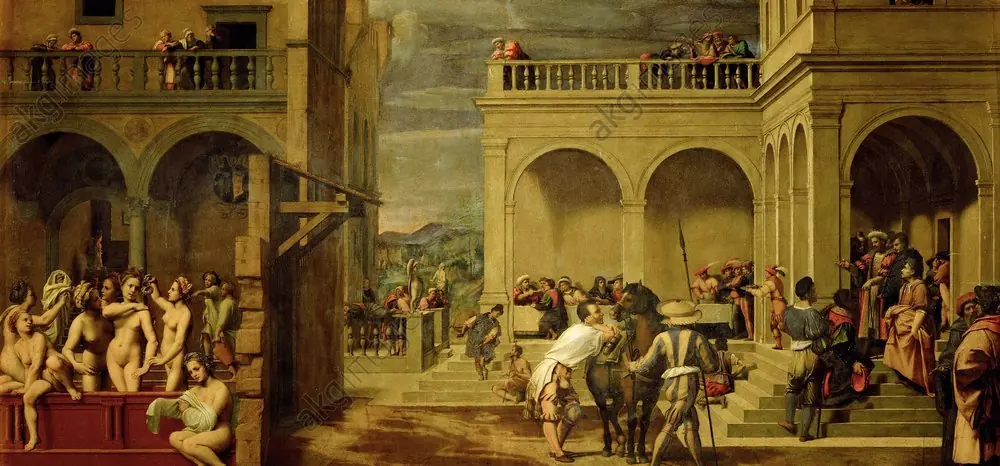 Bathsheba bathing
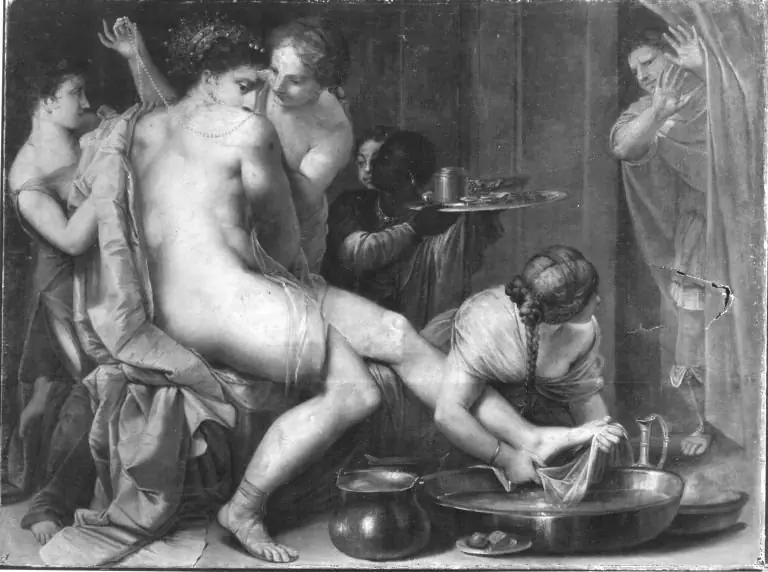 Bathseba im Bade (?) beziehungsweise: Gyges erblickt die Frau des Kandaulus
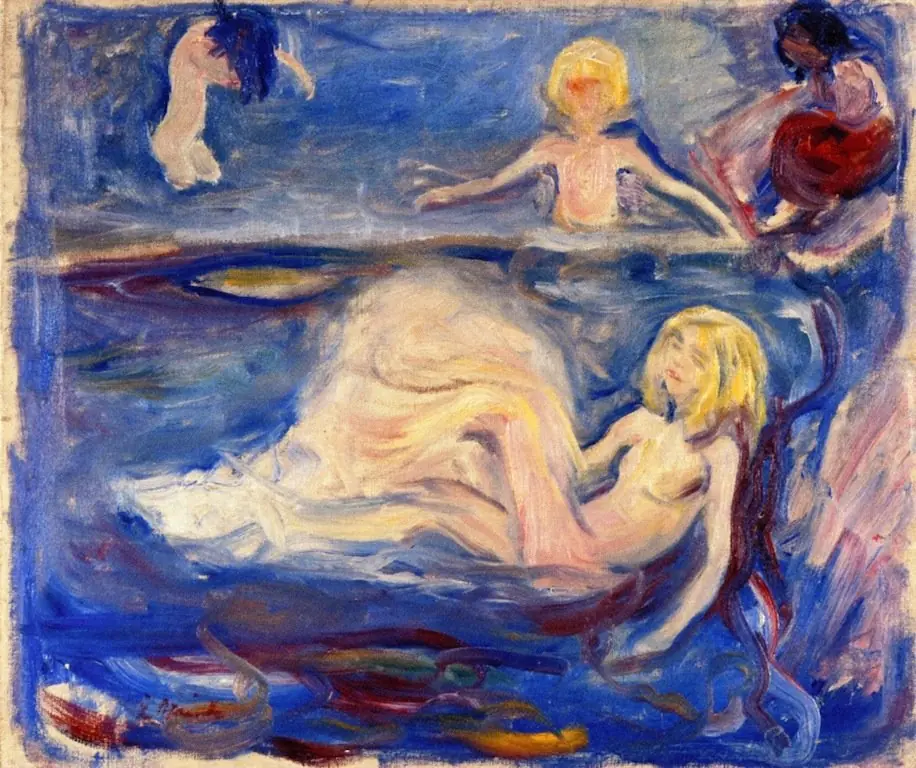 Bathing Children
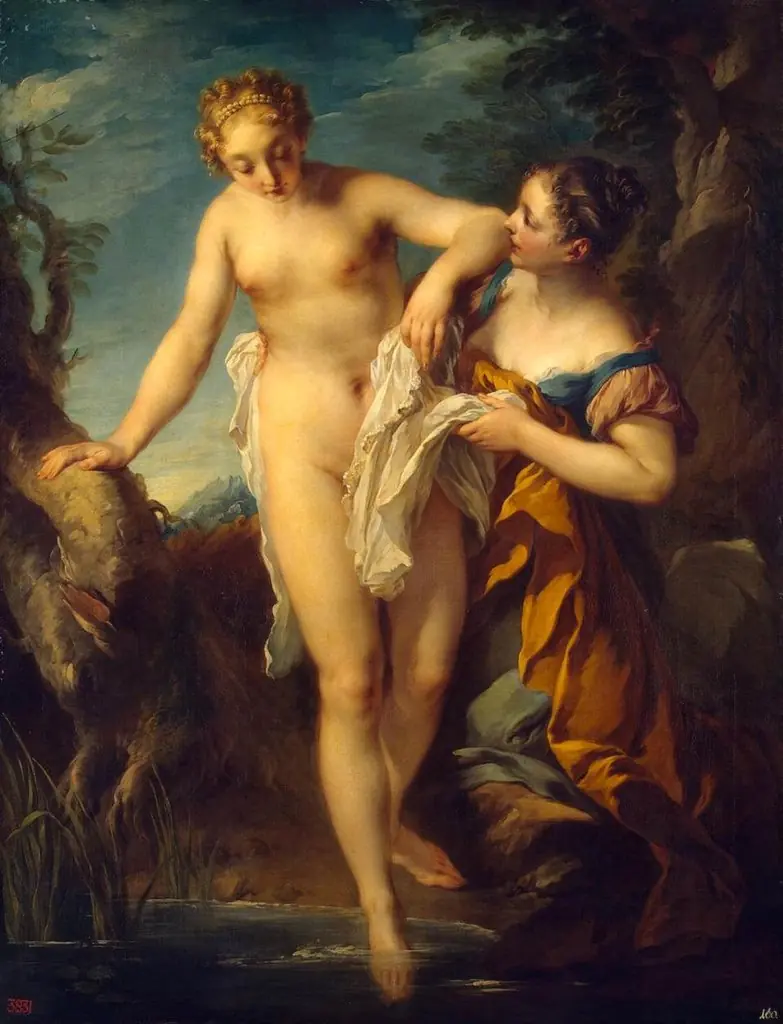 Woman Bathing
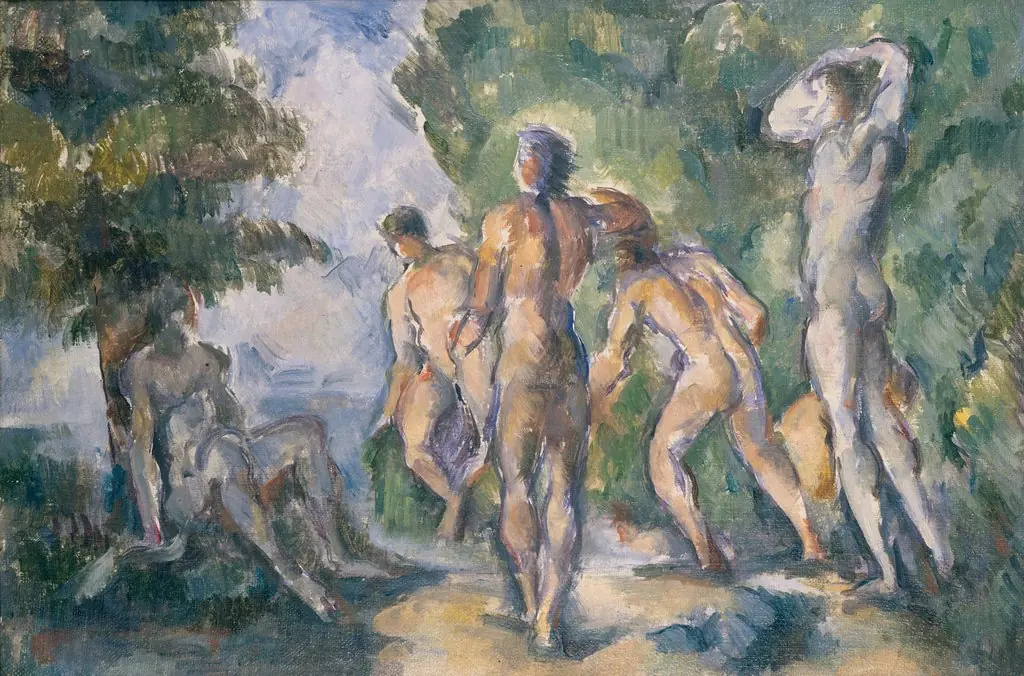 Baigneurs (Bathers)
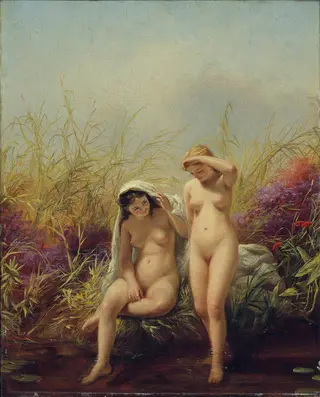 American Beauties
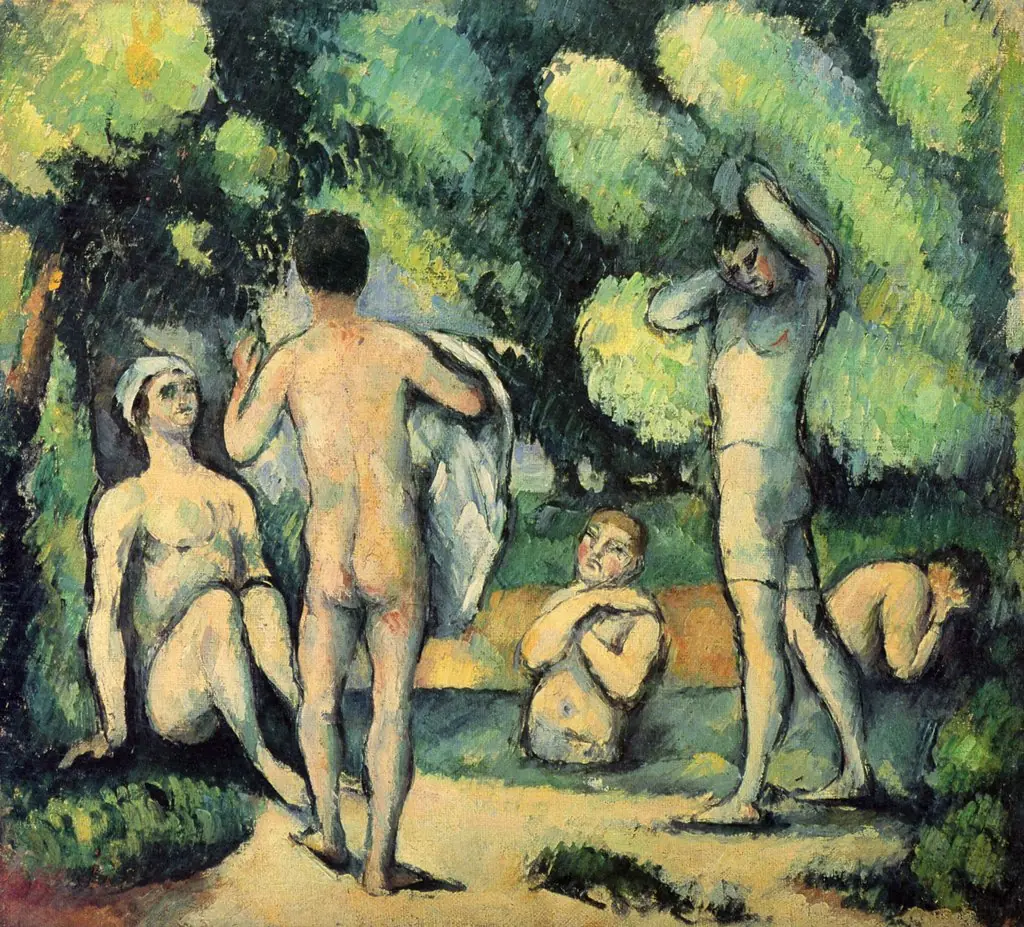 Bathers
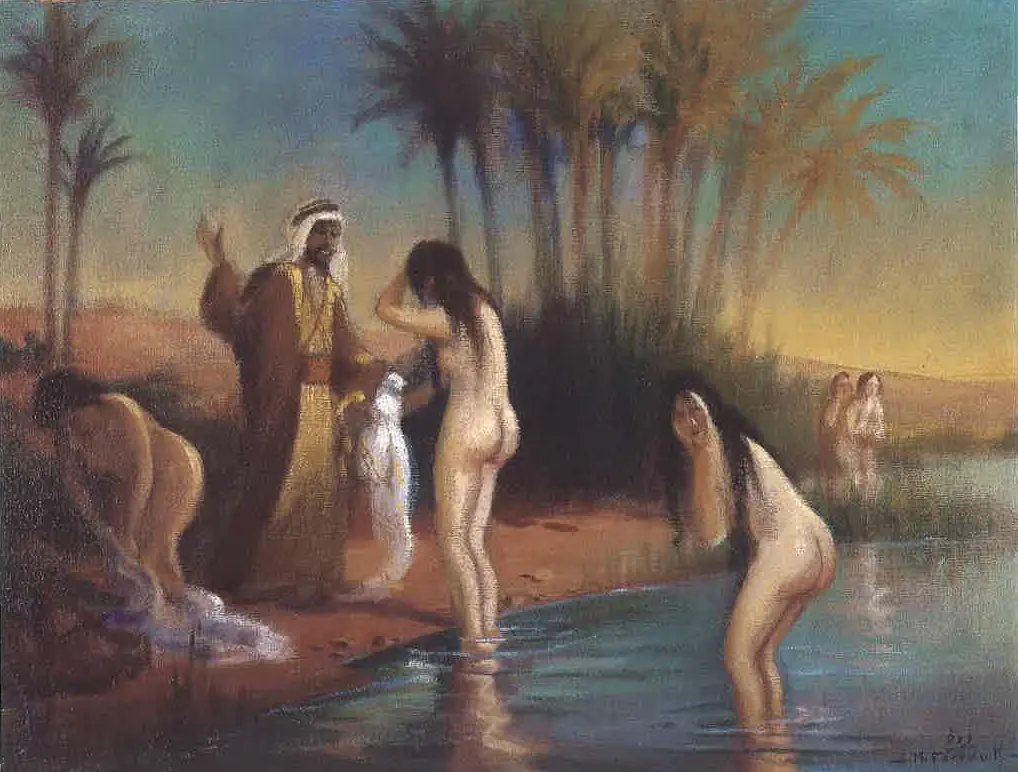 The Bathing Women of Darat Jouljoul (Mu'allaqat Imru' al-Qais)
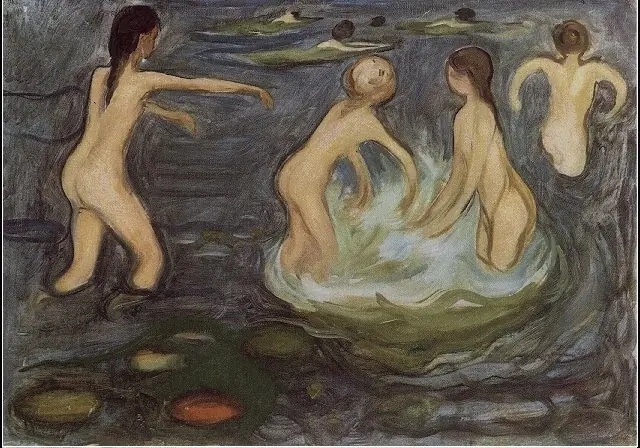 Bathing Girls
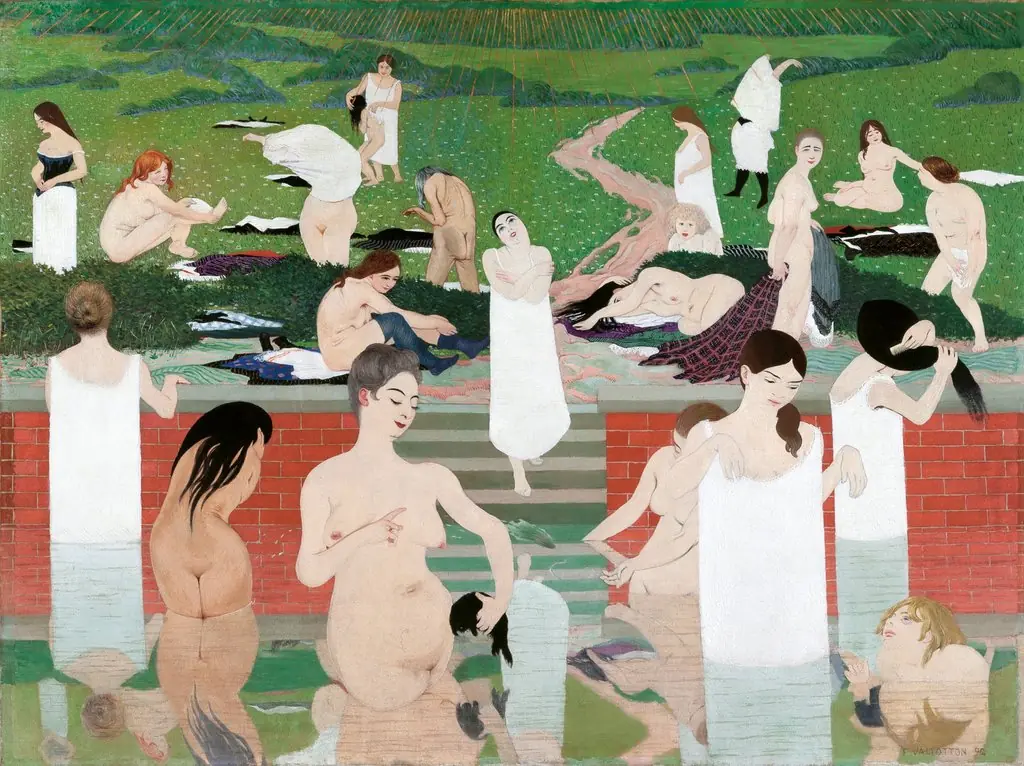 Bathing on a Summer Evening
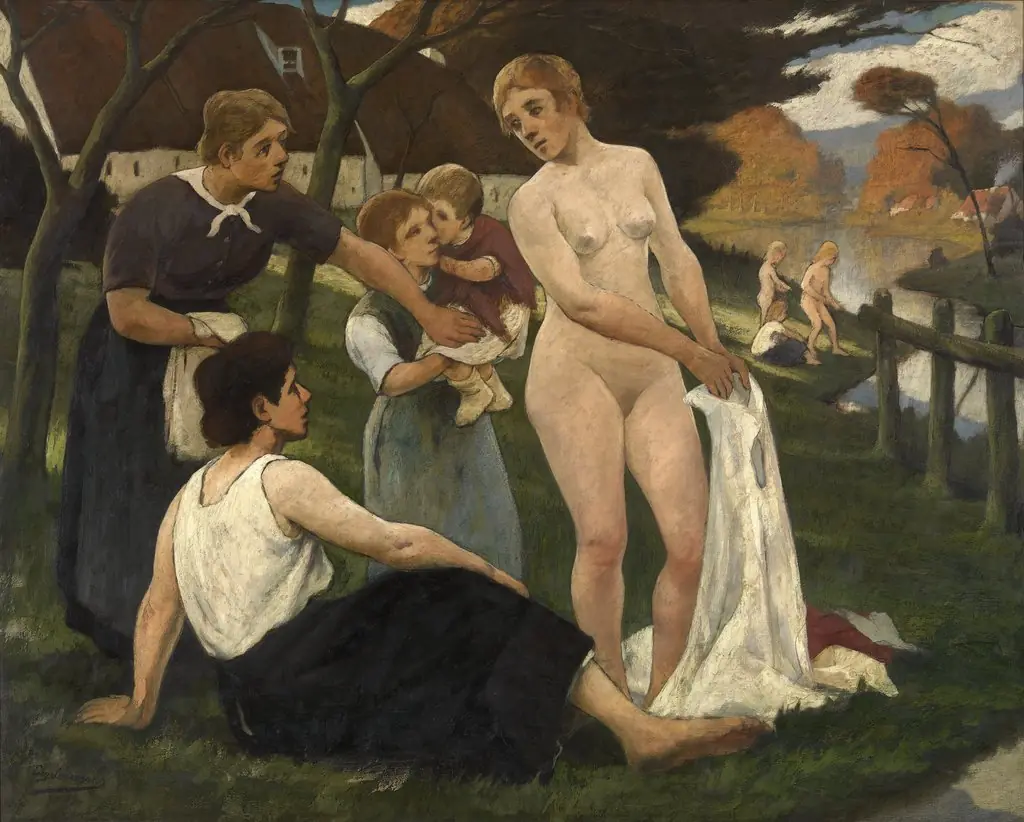 Oasis
Oasis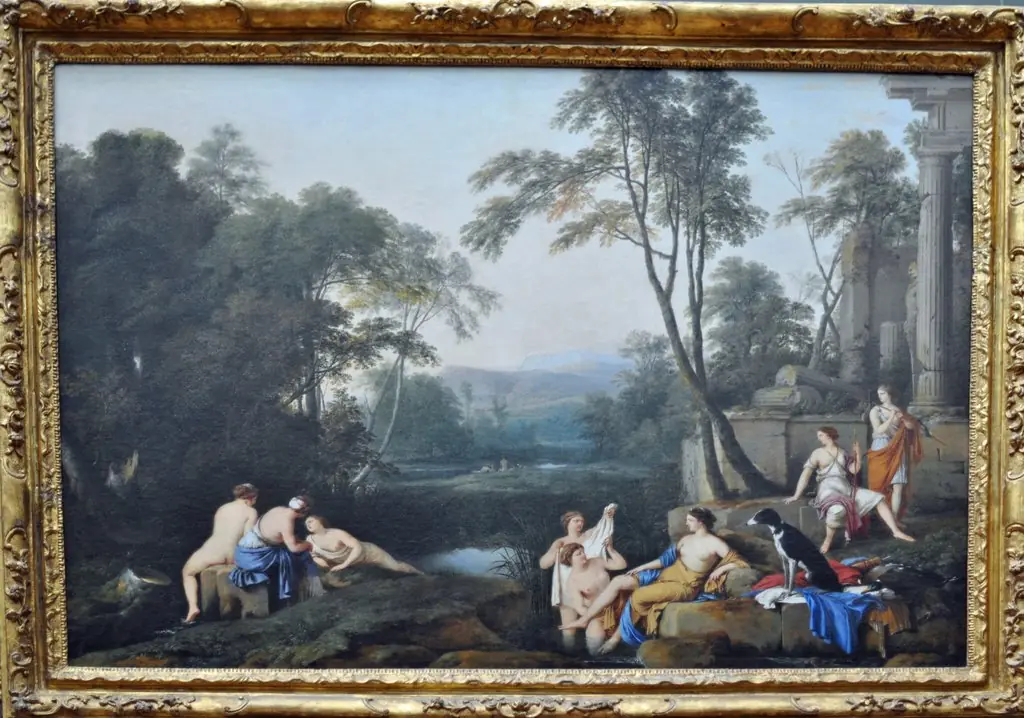 Diana and Her Nymphs in a Landscape
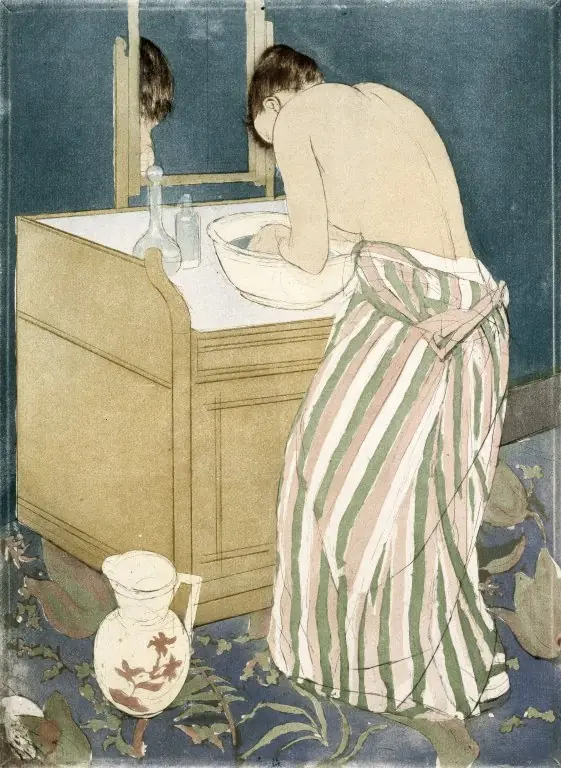 The Toilette
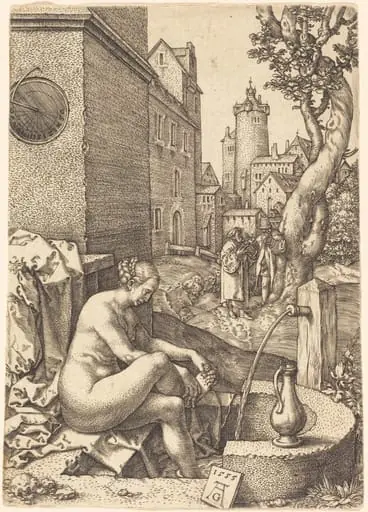 Susanna Surprised by the Two Elders
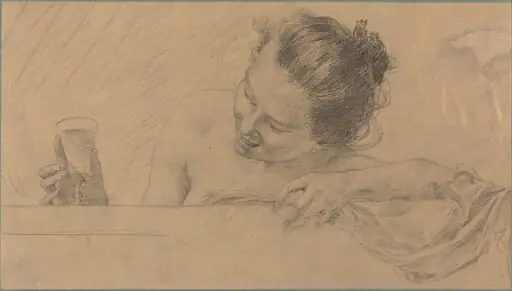 Woman in Bath, Holding a Glass of Wine
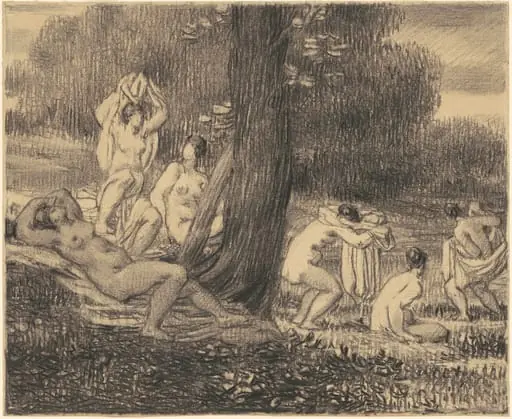 Bathers
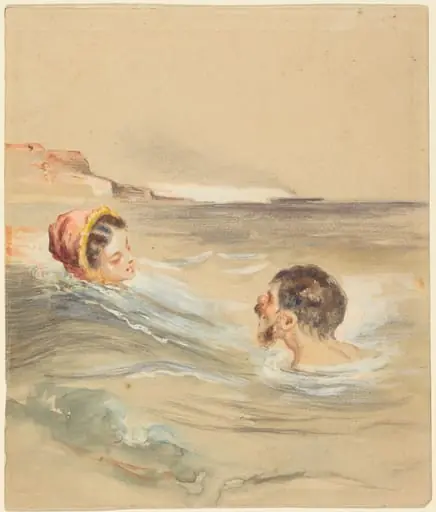 Male and Female Bathers
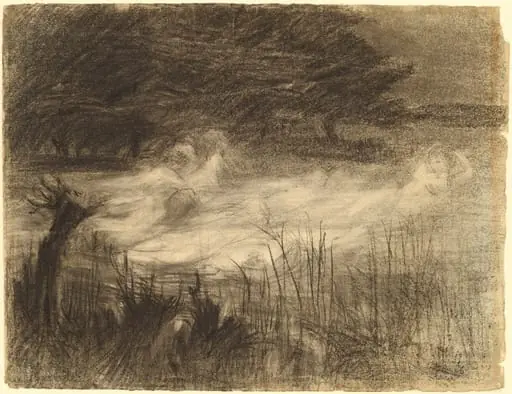 Woman Floating in a River Attended by Several Female Spirits
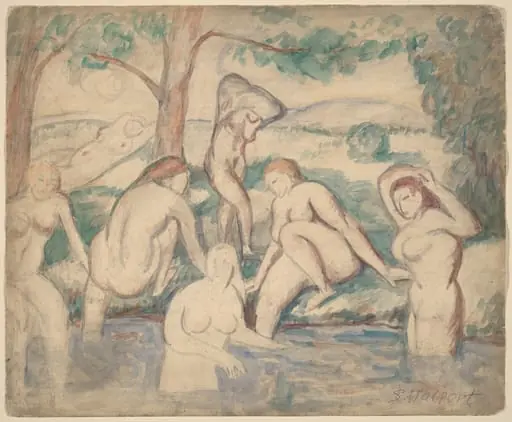 Bathers
![Seated Bather [verso]](https://artifactworldgallery.com/img/paul-cezanne--seated-bather-verso--4cc110a5000a6bd3-w320.webp) Seated Bather [verso]
Seated Bather [verso]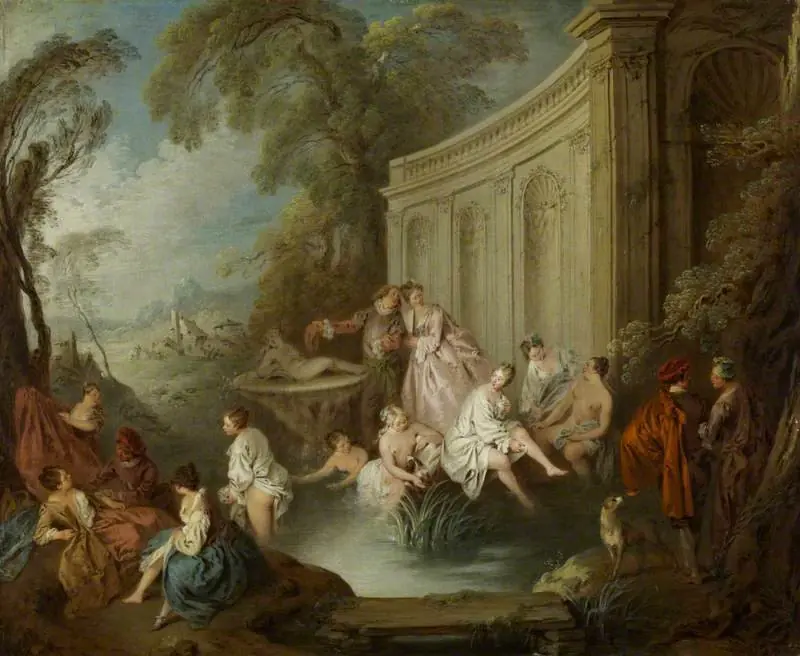 Ladies Bathing
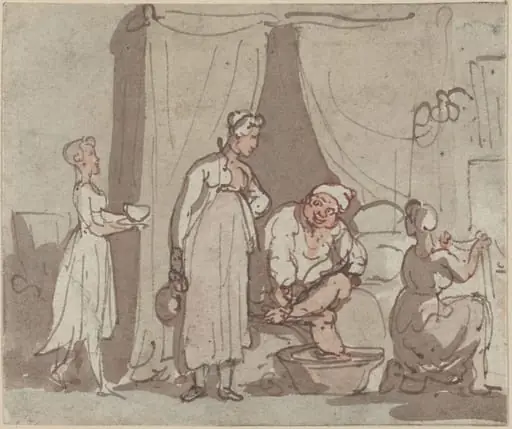 The Foot Bath (Drying Out)
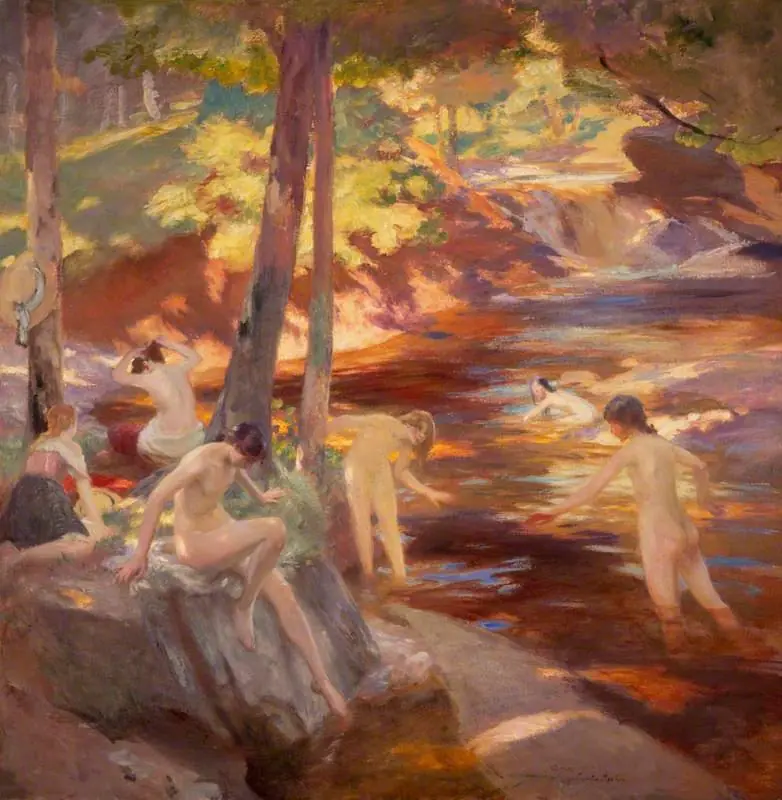 The Bathing Pool
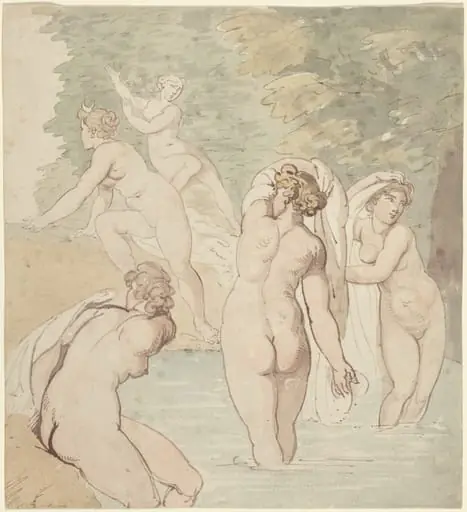 Diana and Her Nymphs Bathing
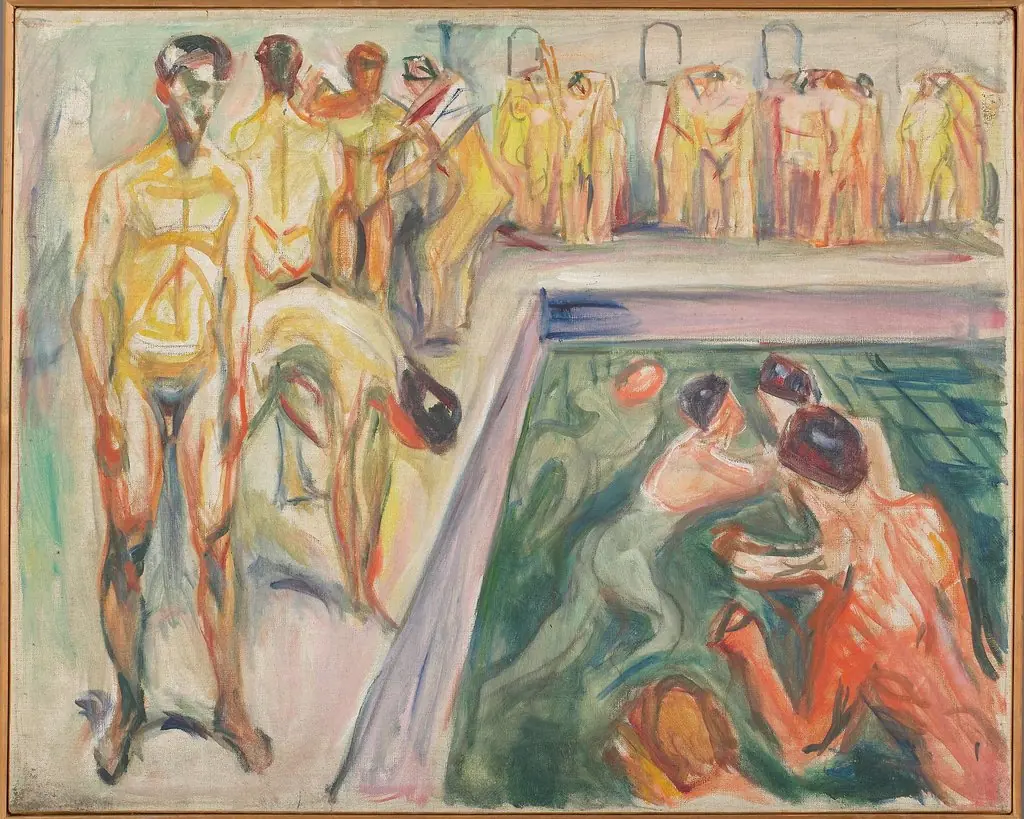 Naked Men in Swimming Pool
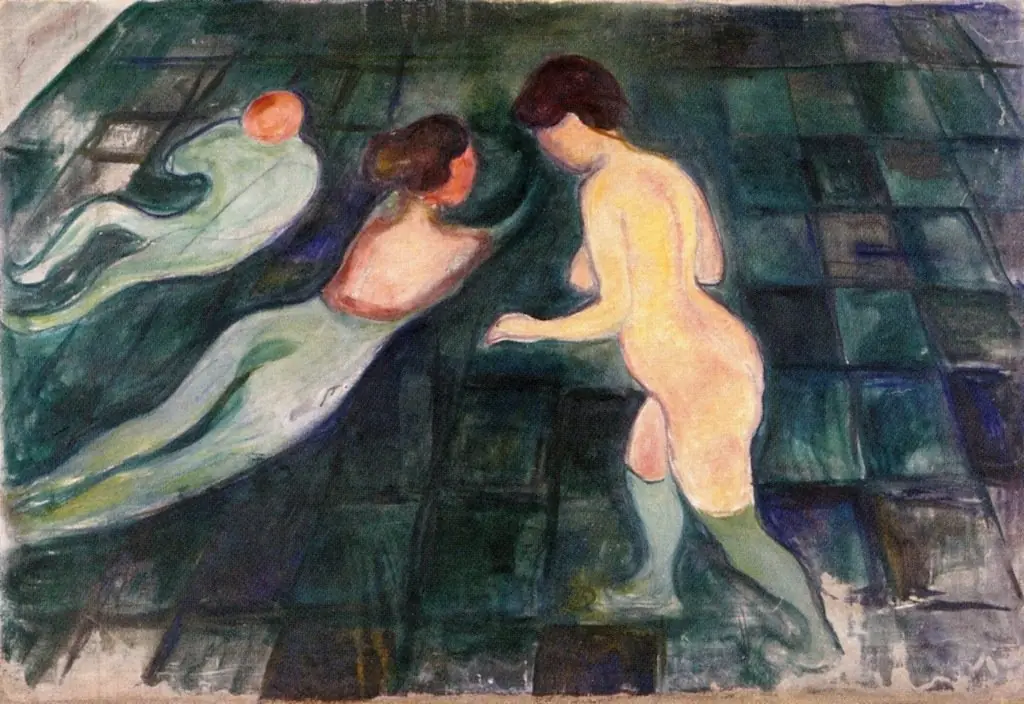 Bathing Woman
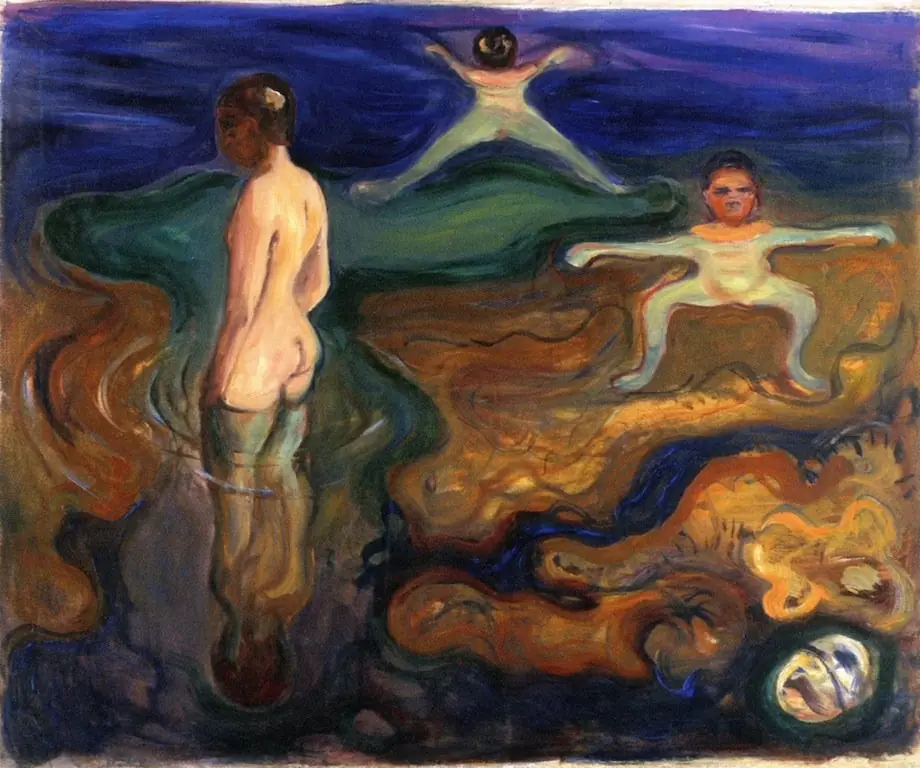 Bathing Boys
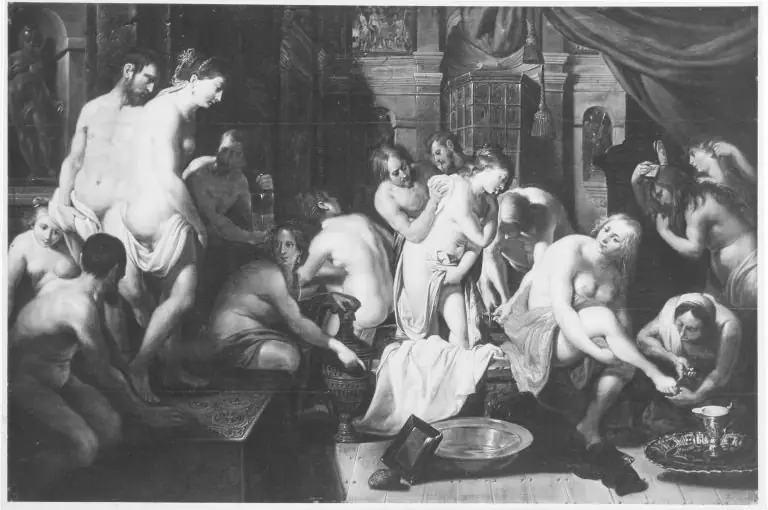 Badestube (Kopie nach)
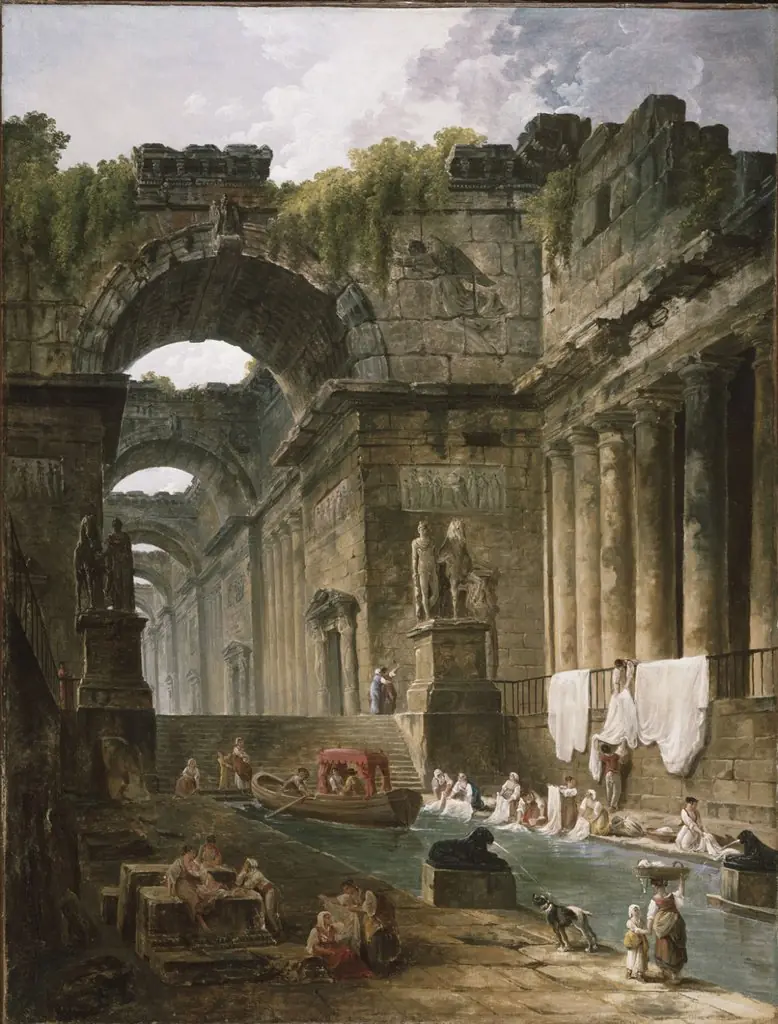 Ruins of a Roman Bath with Washerwomen
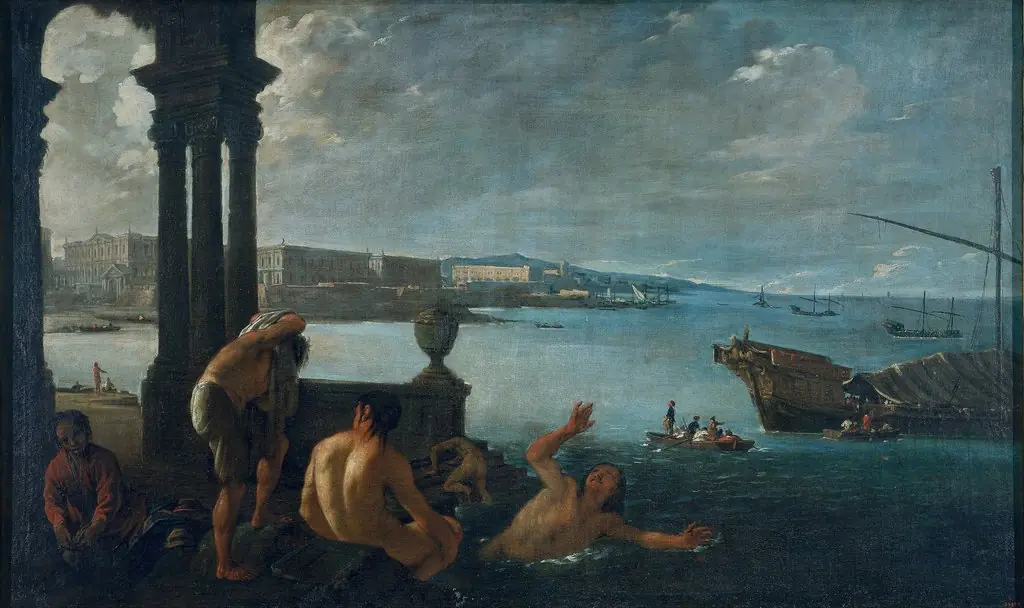 Summer
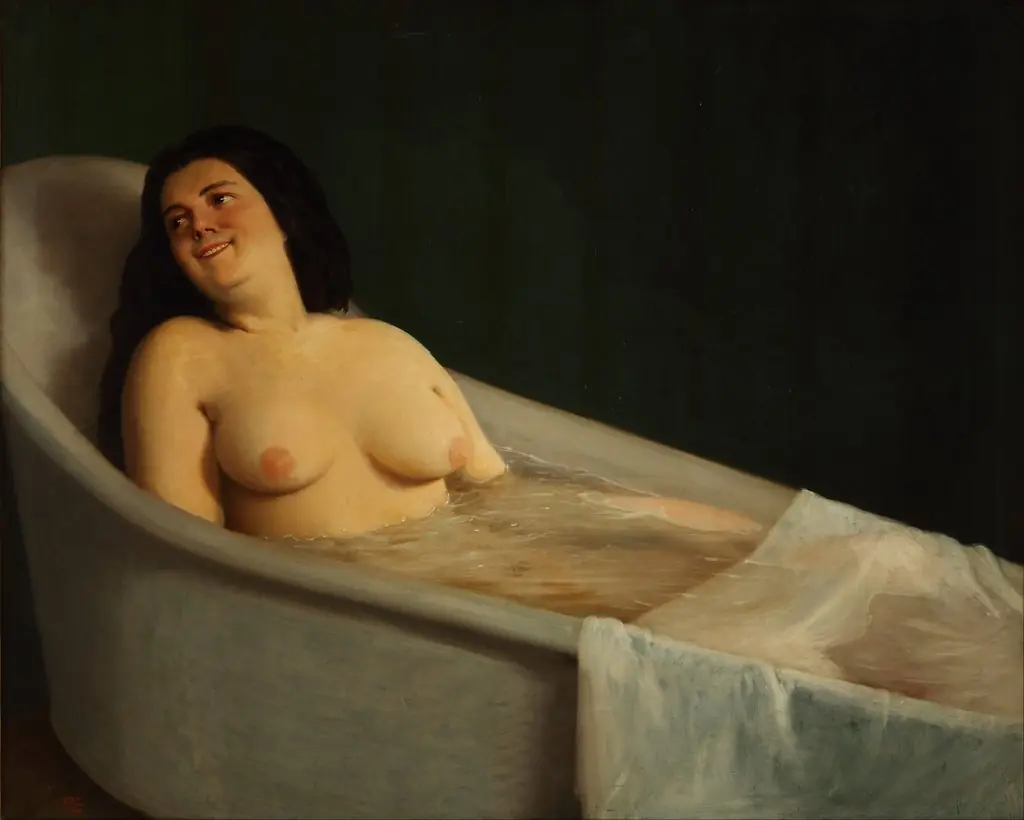 The Bath
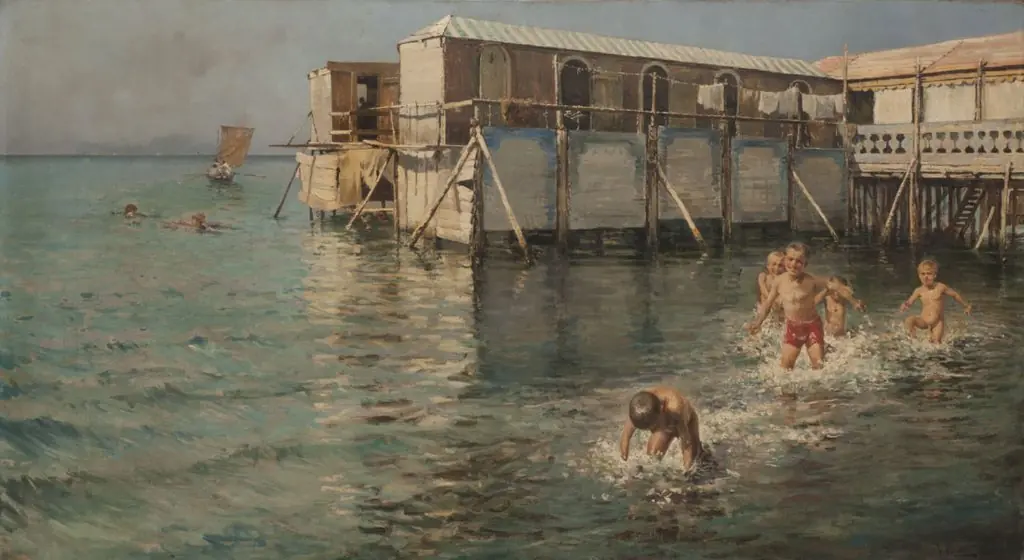 Sea Baths (Guaglioni)
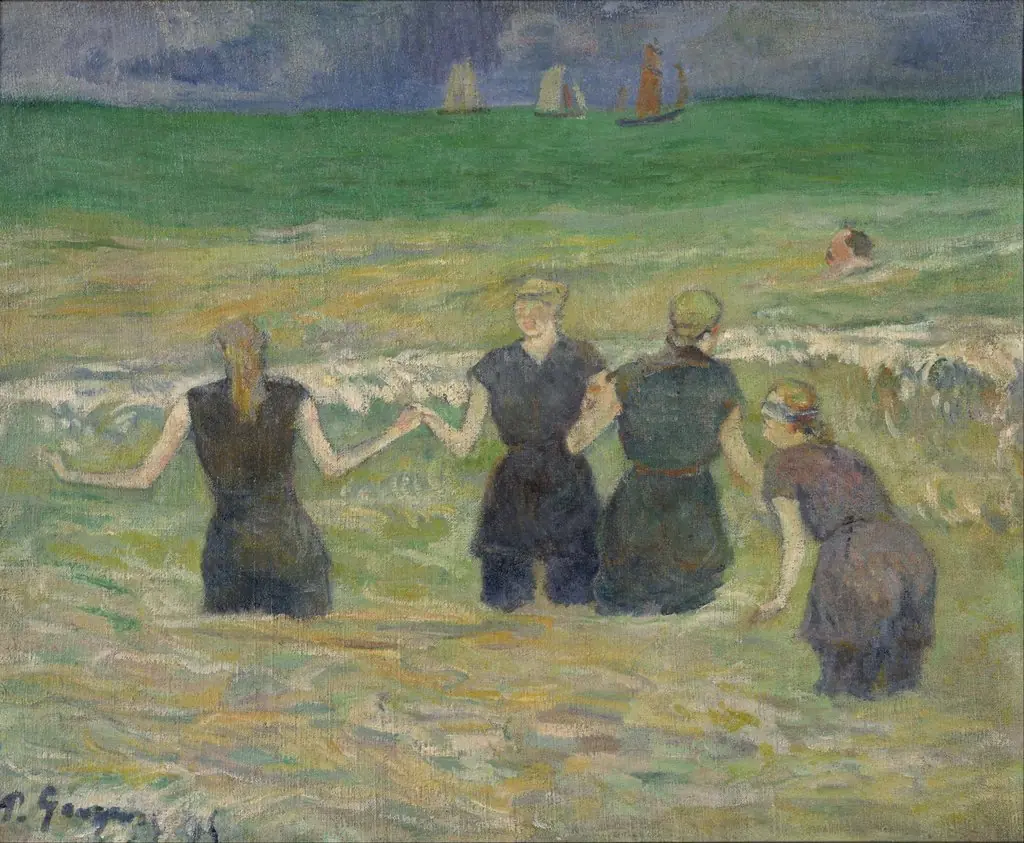 Women Bathing
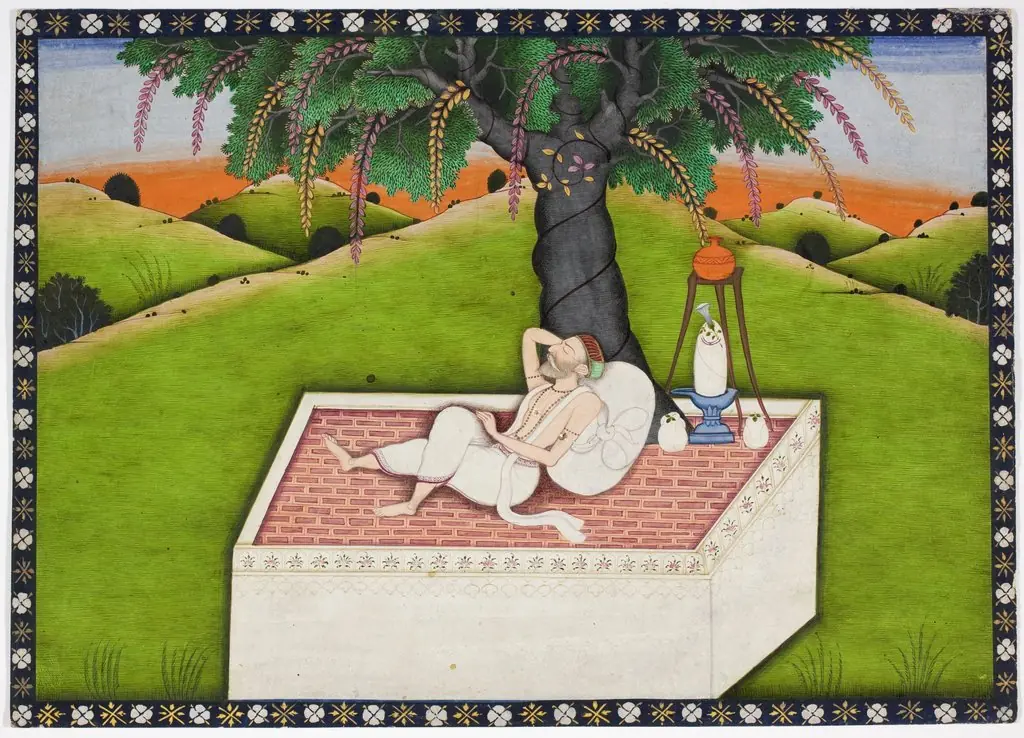 Guru Resting on Platform Beneath Tree
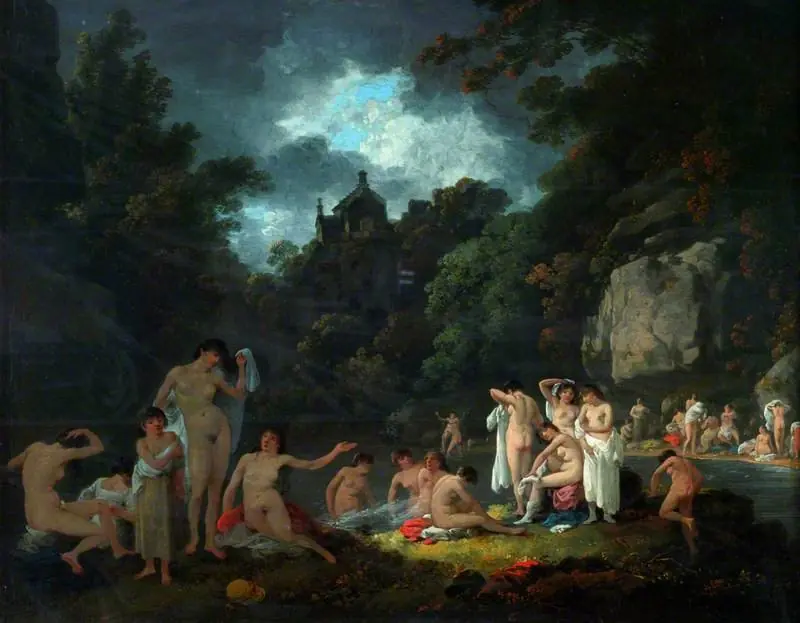 The Mermaid's Haunt
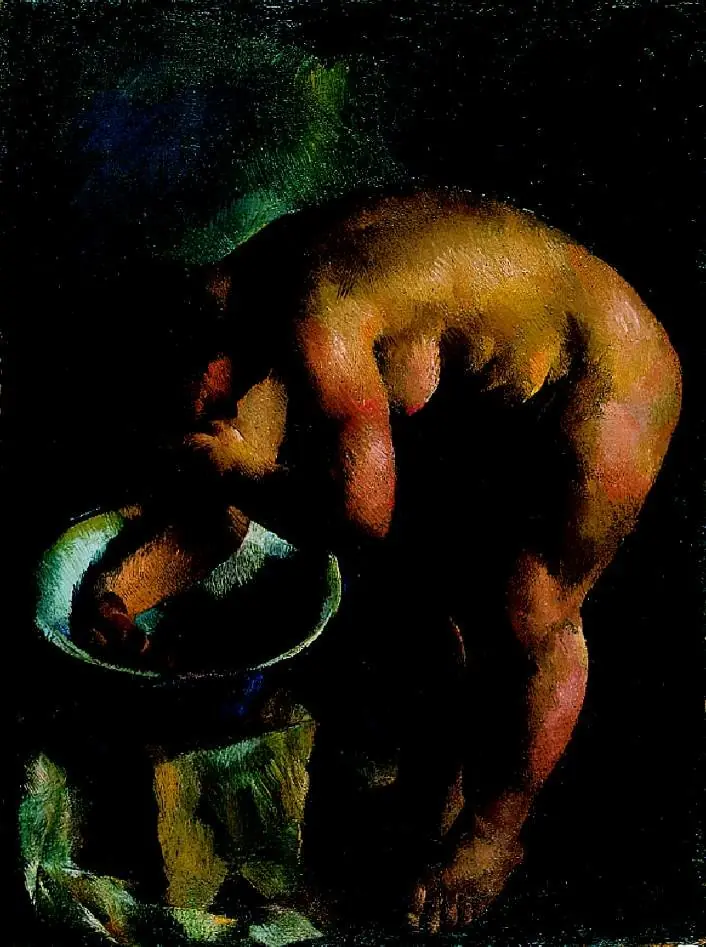 Eta is Bathing
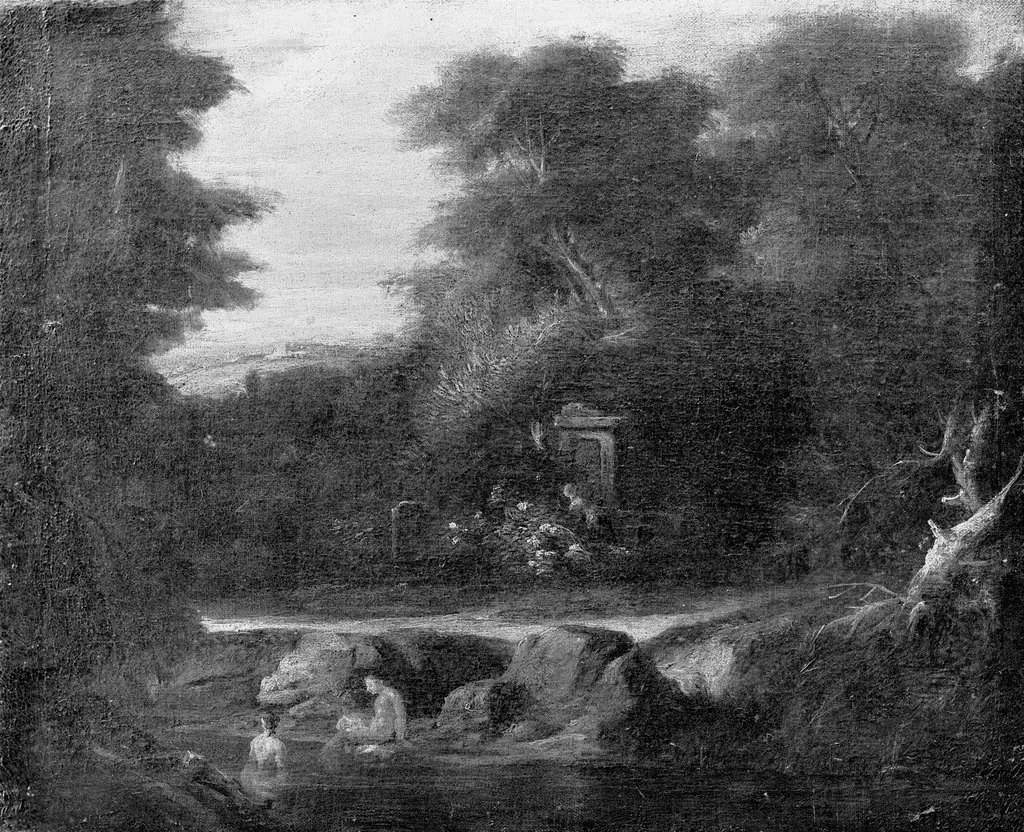 Landscape
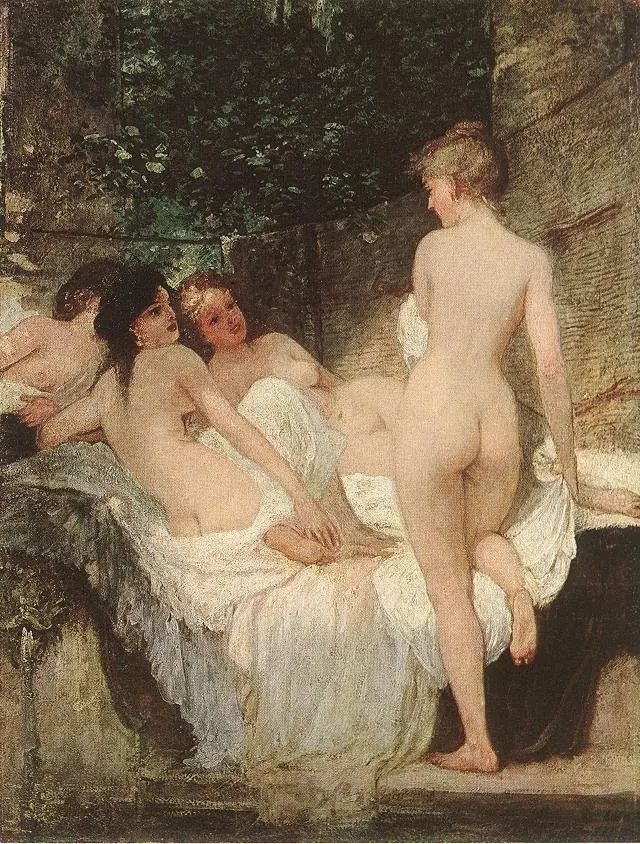 After Bathing
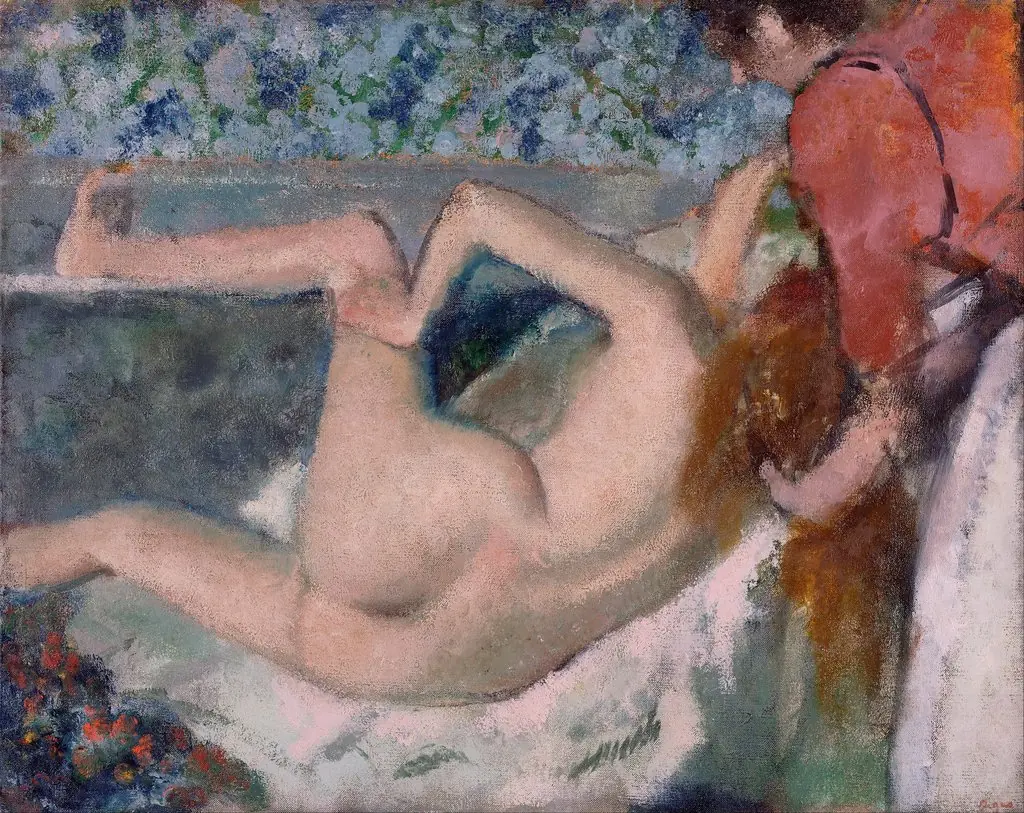 After the Bath
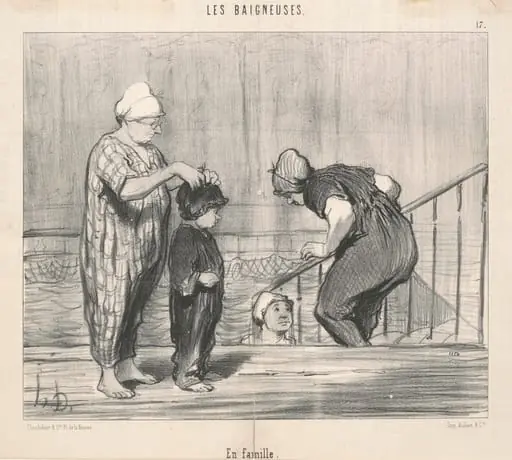 En famille
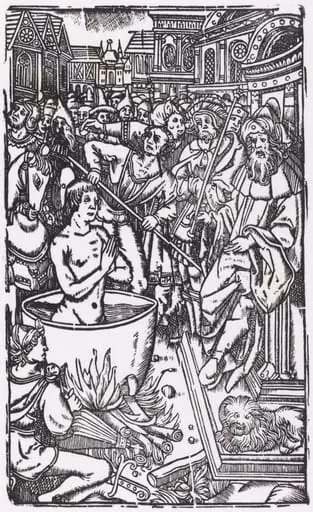 The Martyrdom of a Saint
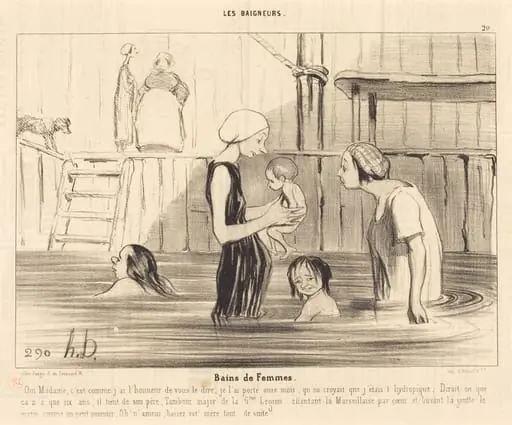 Bains de Femmes
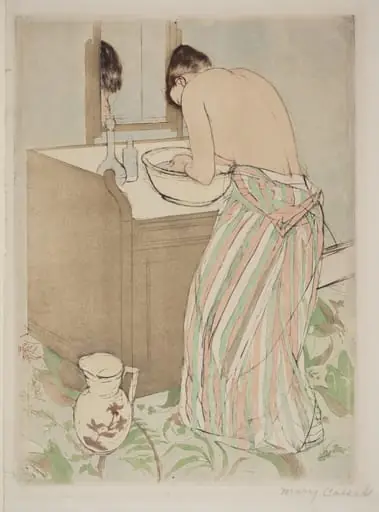 Woman Bathing
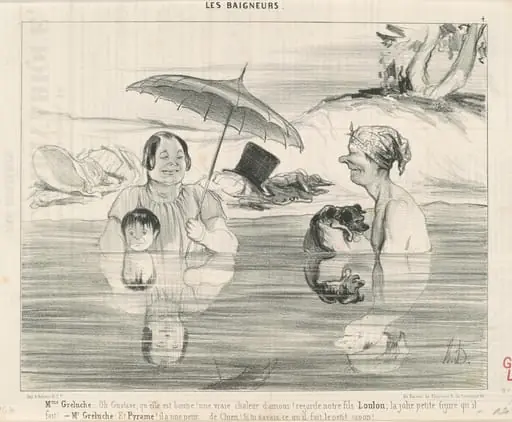 Mme Greluche: Oh Gustave, qu'elle est bonne!
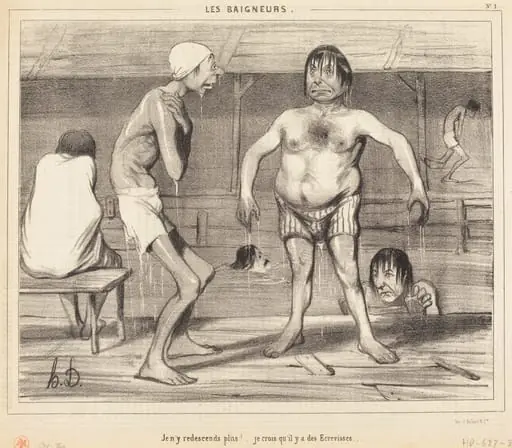 Je n'y redescends plus!... je crois...
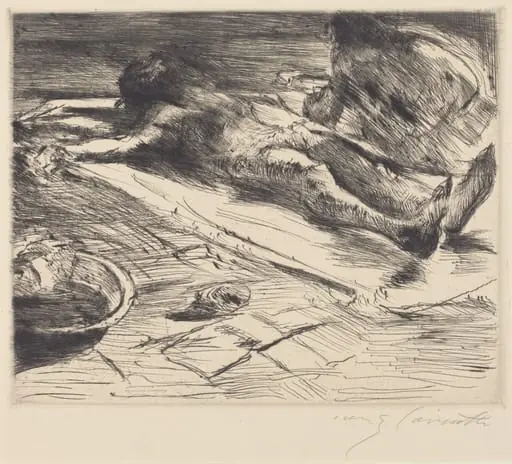 Pietà
Pietà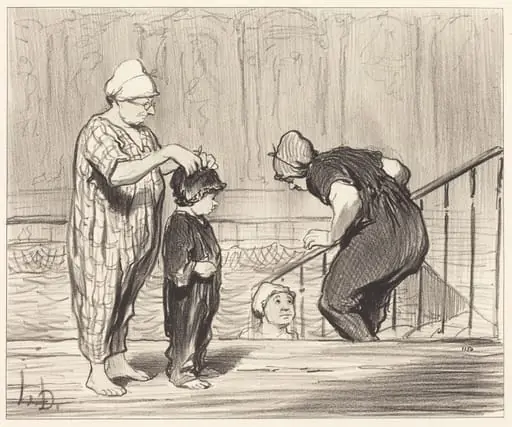 En Famille
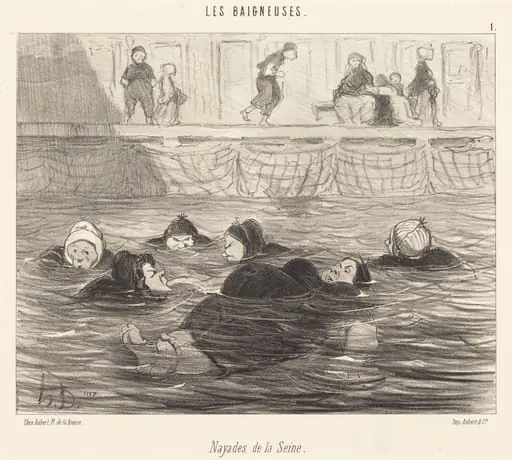 Nayades de la Seine (Sea Nymphs of the Seine)
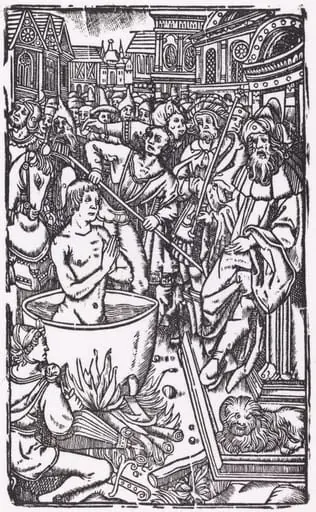 The Martyrdom of a Saint
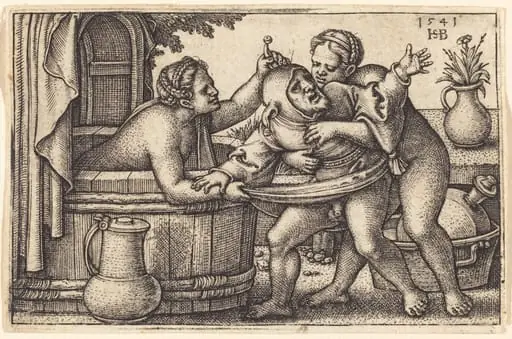 Fool and Two Bathing Women
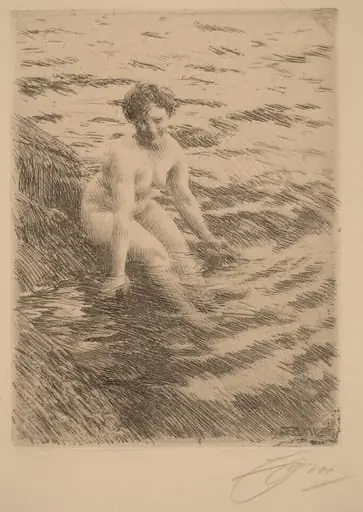 Wet
Wet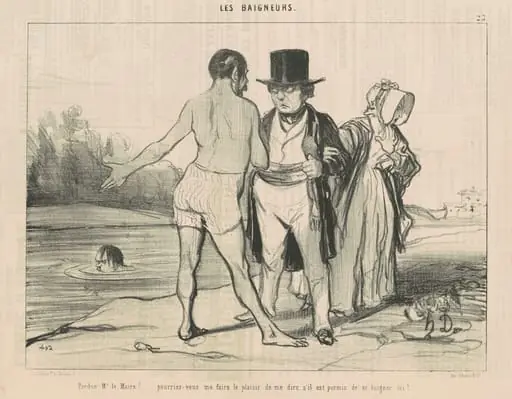 Pardon, Mr Le Maire! ... pourriez-vous ...
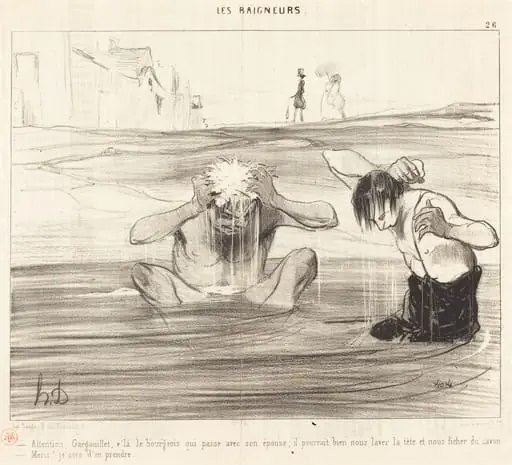 Attention, Gargouillet, v'la le bourgeois qui passe...
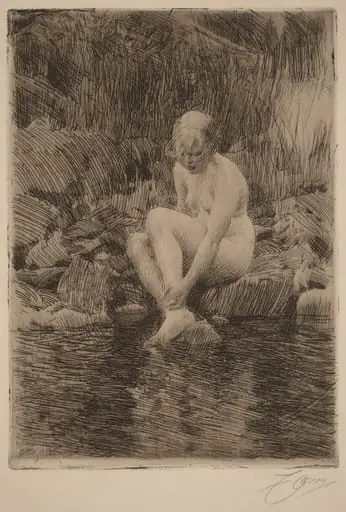 Dagmar
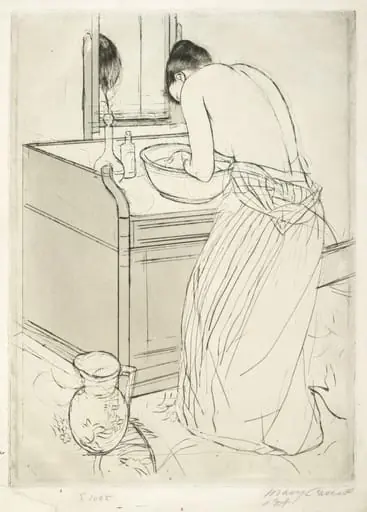 Woman Bathing
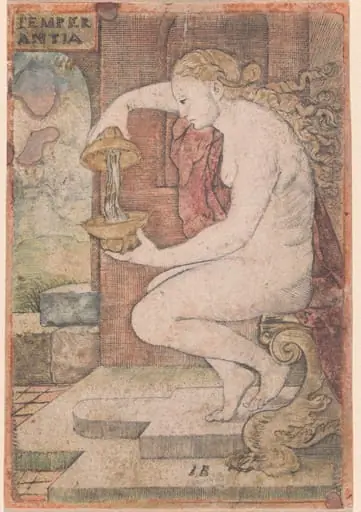 Temperantia (Temperance)
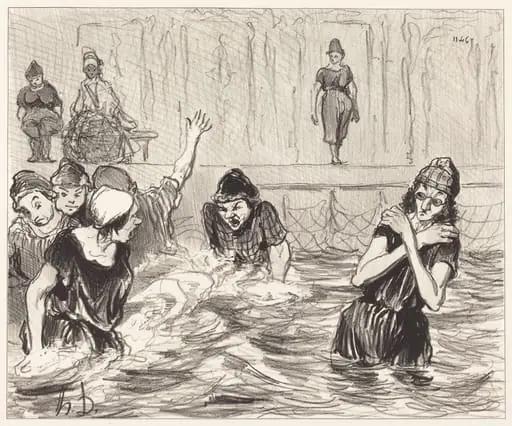 Les Barbotteuses
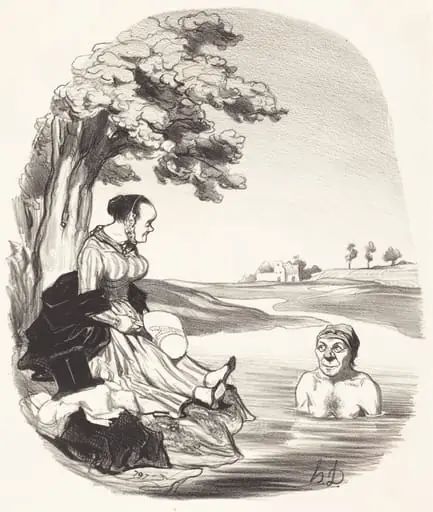 L'Eau est délicieuse... je t'assure...
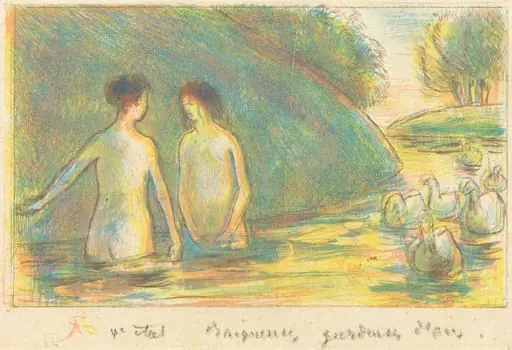 Baigneuses, gardeuses d'oies (Bathers Tending Geese)
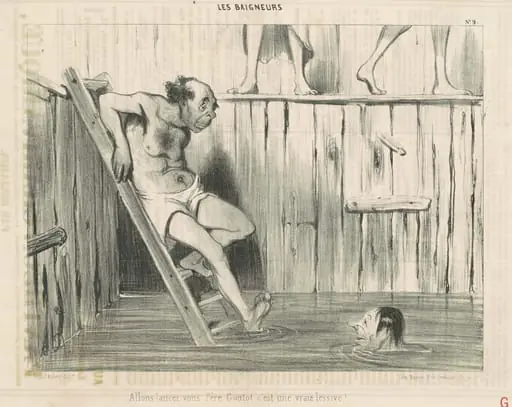 Allons lancez vous père goutot...
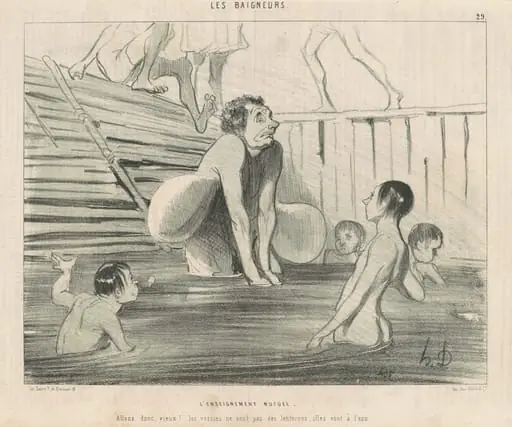 L'enseignement mutuel
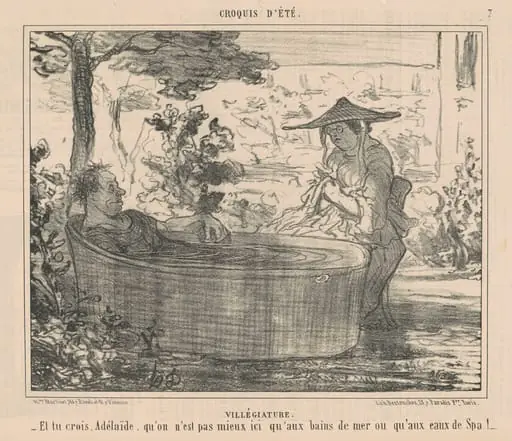 Villégiature
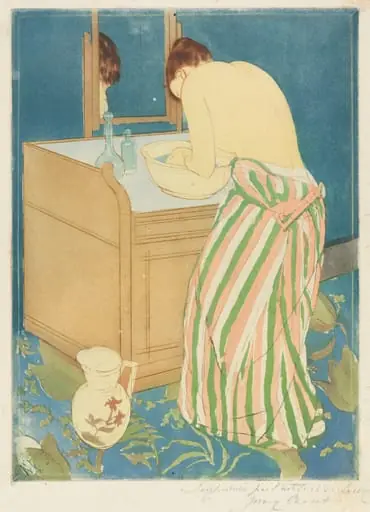 Woman Bathing
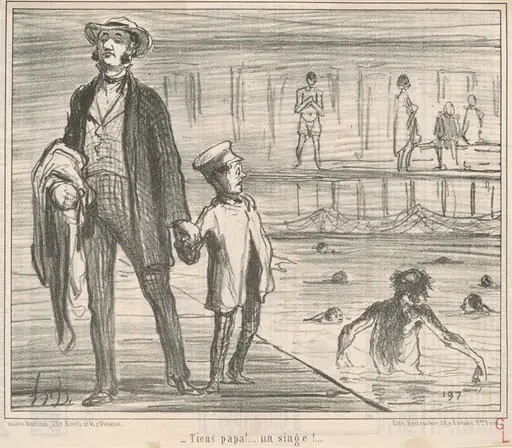 Tiens papa! ... un singe! ...
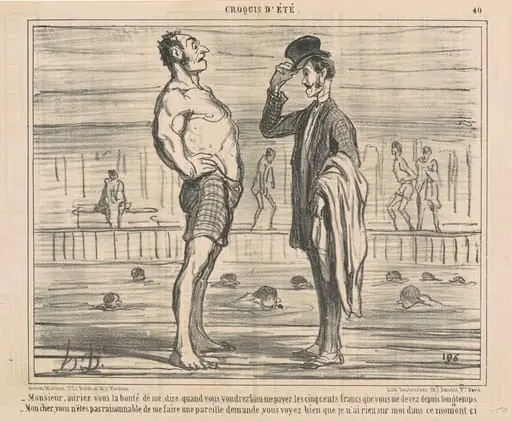 Monsieur, Auriez-vous la bonté de me dire ...
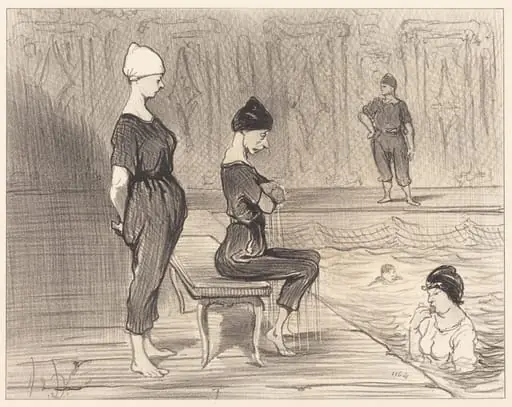 Fesant toutes partie de la plus belle moitié...
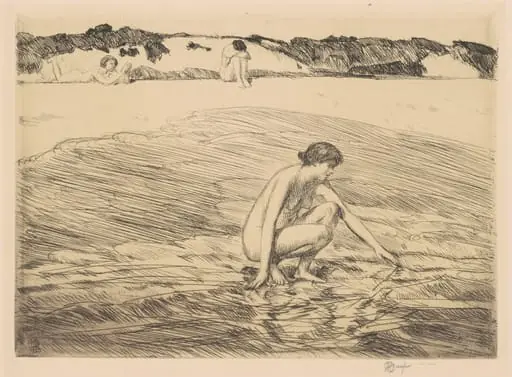 Hight Tide, Montauk
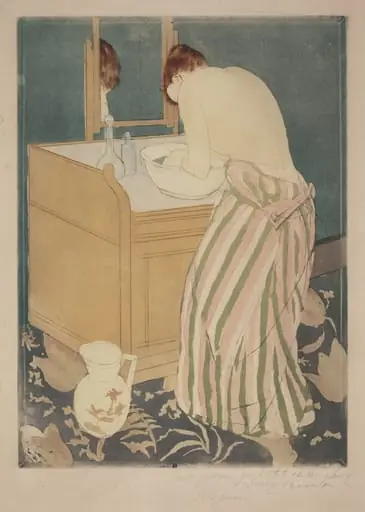 Woman Bathing
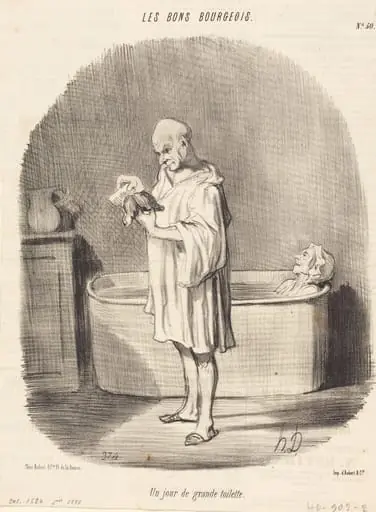 Un Jour de grande toilette
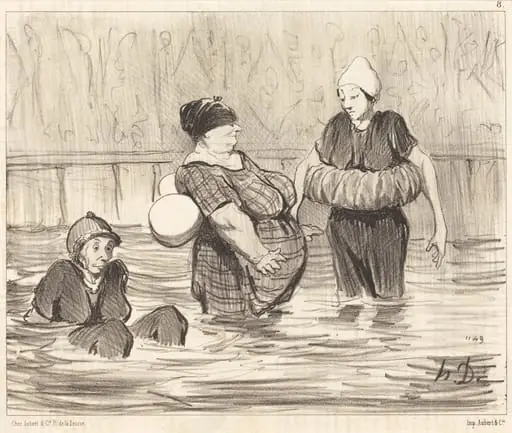 Les Baigneuses prudentes
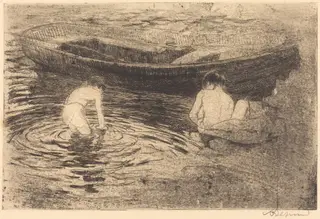 Bathing at Talloires (La baignade à Talloires)
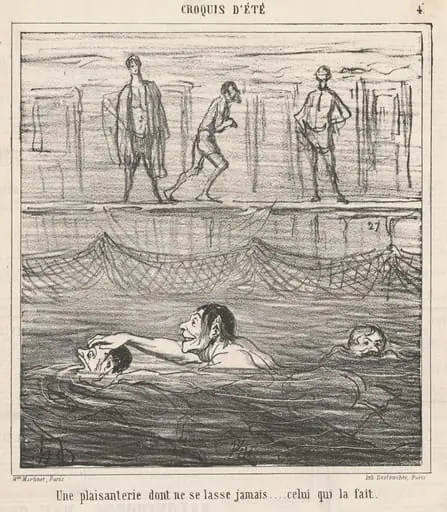 Une plaisanterie dont ne se lasse ...
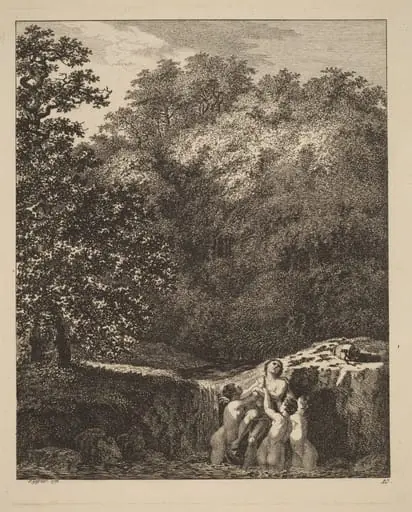 Hylas and the Nymphs
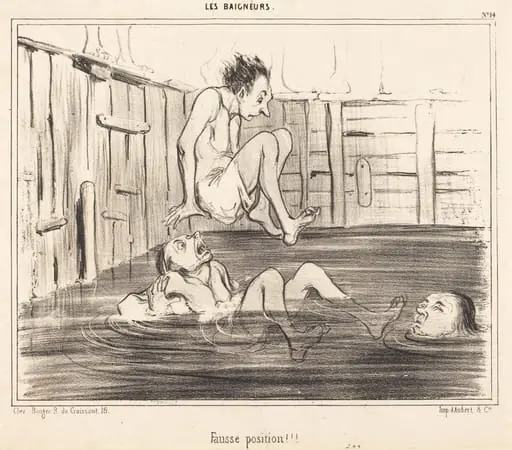 Fausse position!!!
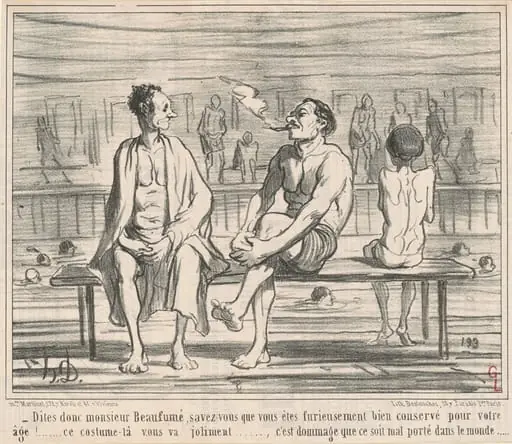 Dites donc, monsieur Beaufumé ...
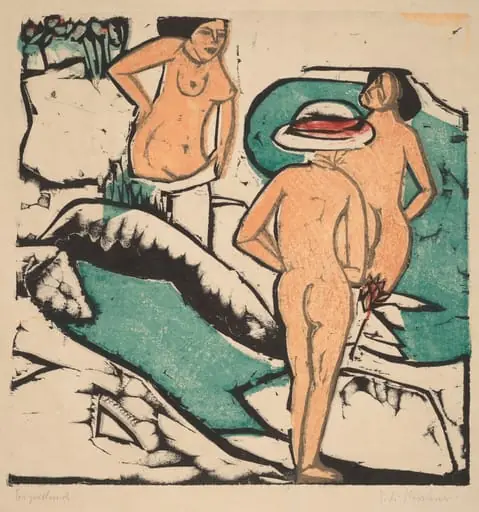 Women Bathing Between White Stones (Badende Frauen Zwischen Weissen Steinen)
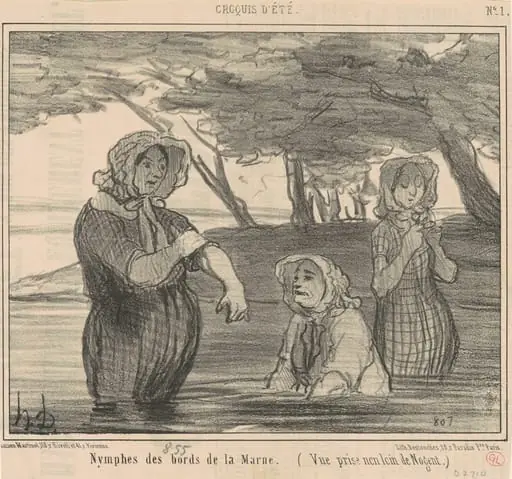 Nymphes des bords de la marene
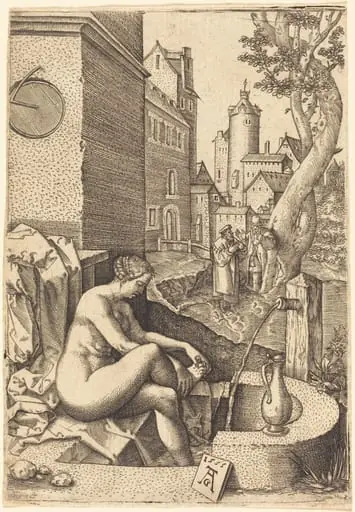 Susanna Surprised by the Two Elders
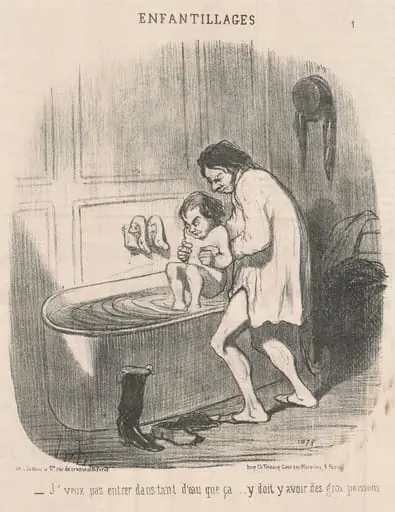 J'veux pas entrer dans tant d'eau ...
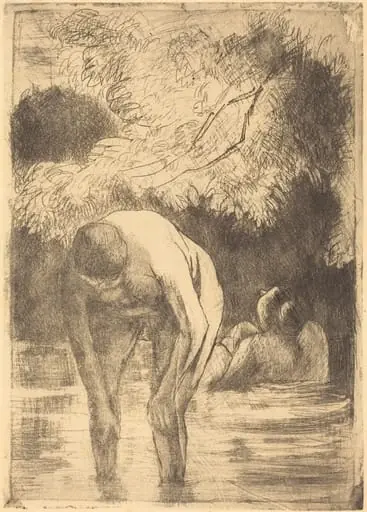 Two Women Bathing (Les deux baigneuses)
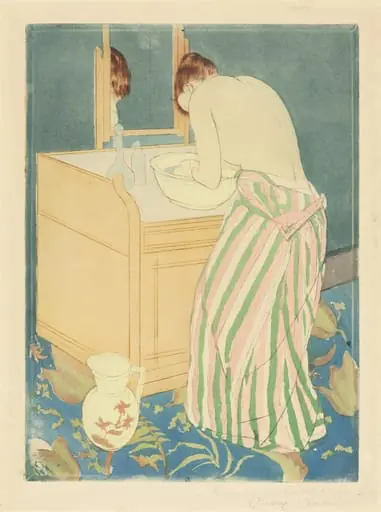 Woman Bathing
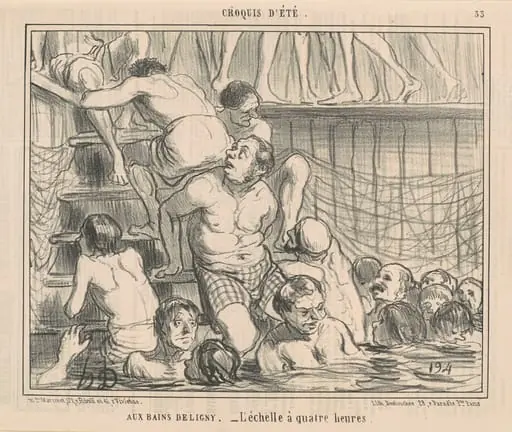 Aux bains Deligny
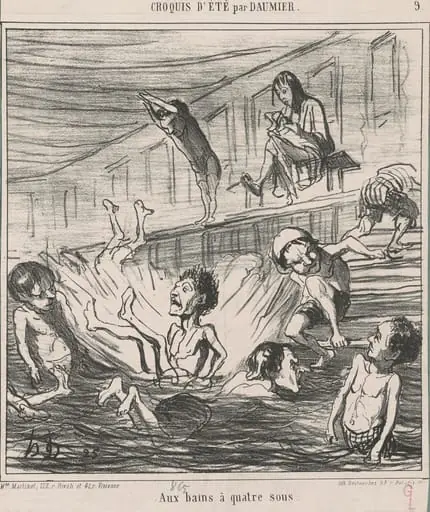 Aux bains a quatre sous
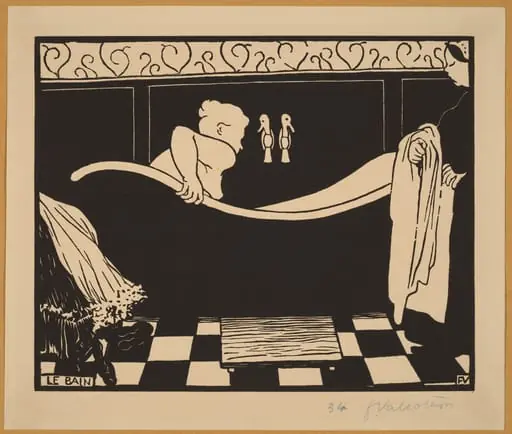 Le Bain (The Bath)
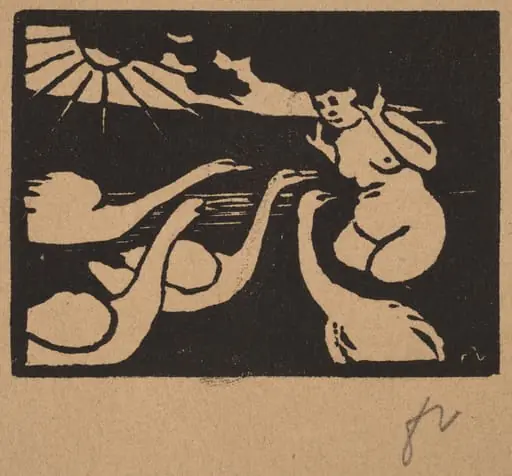 Bather with Swans (La baigneuse aux cygnes)
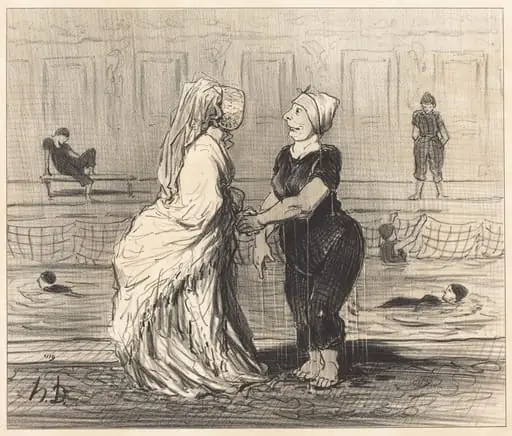 Chère baronne, je vous félicite...
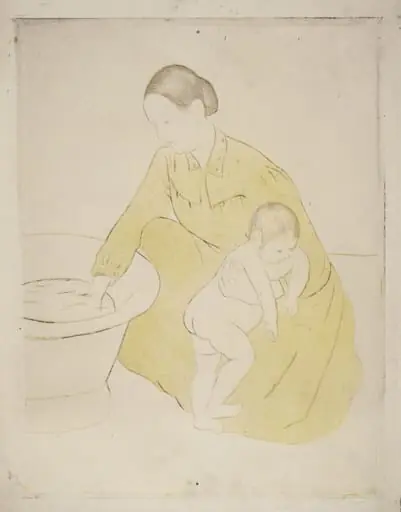 The Bath
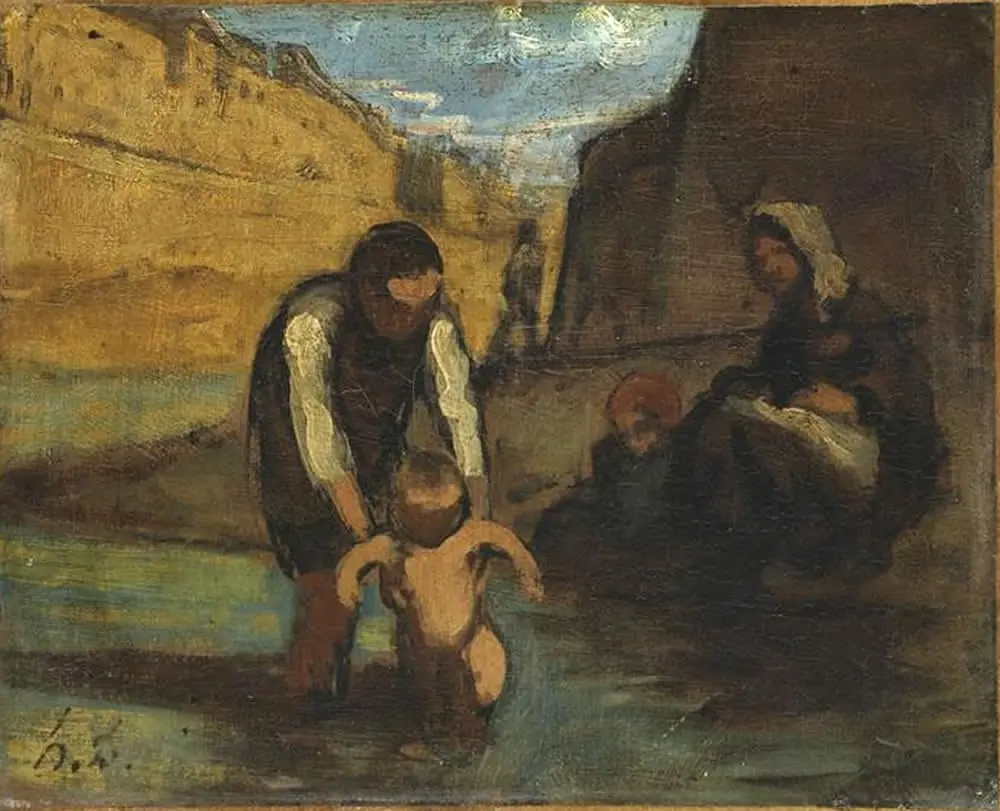 The First Bath
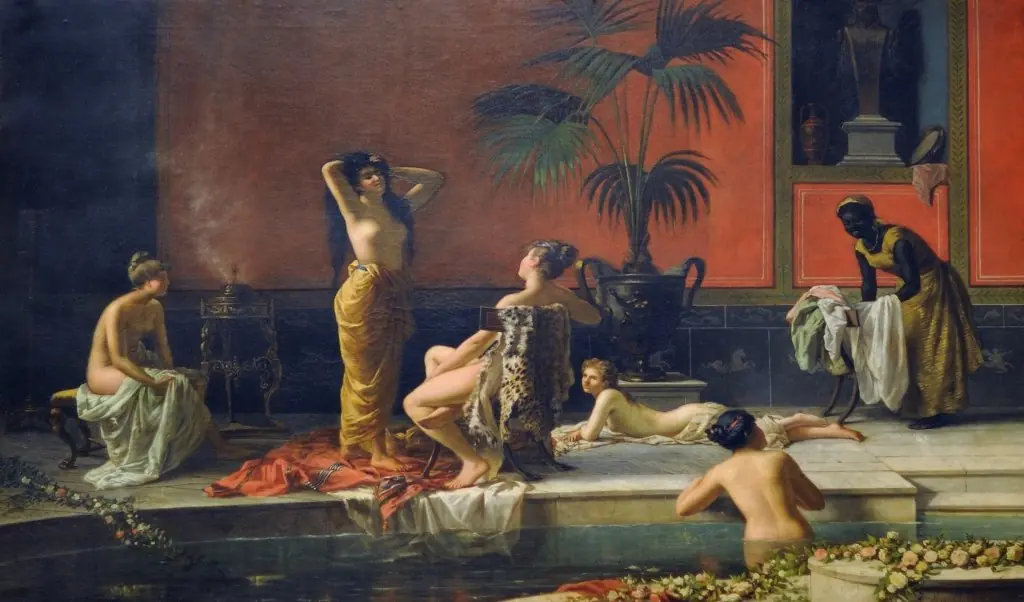 Pompeian bath
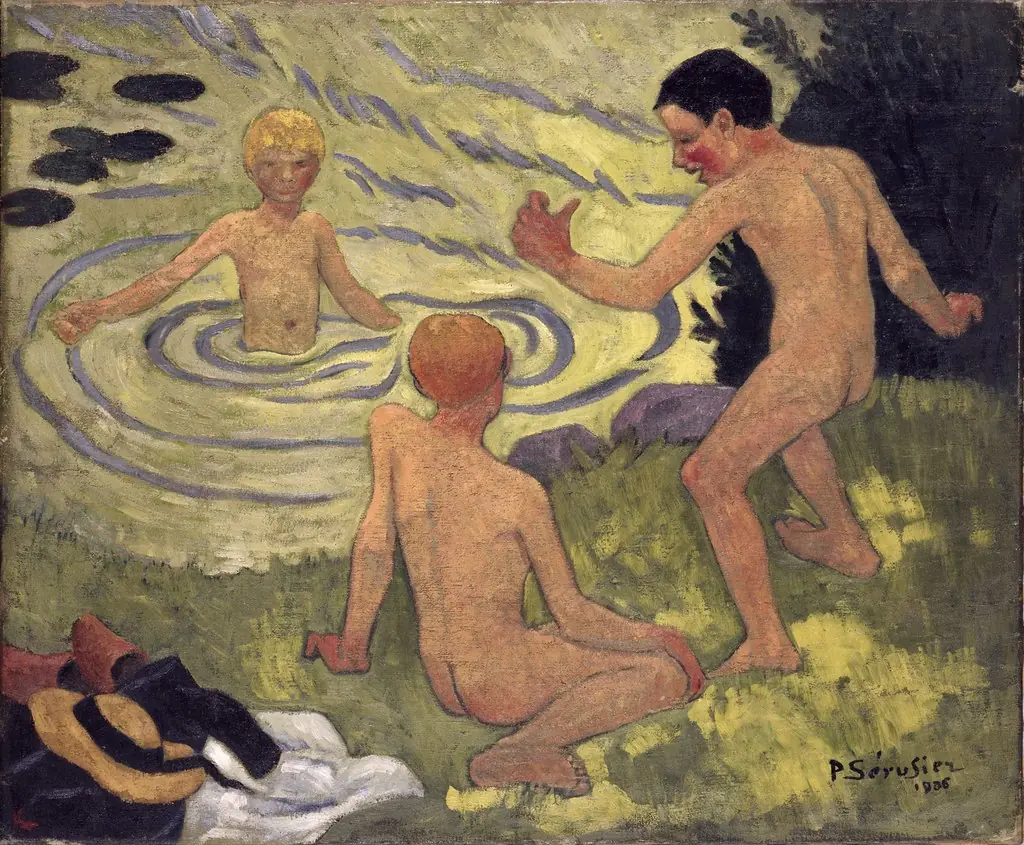 Boys on a river bank
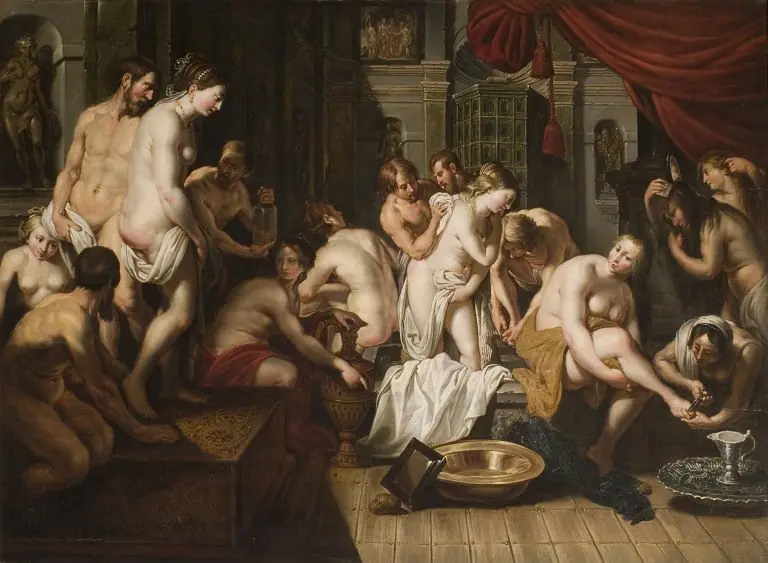 Esther's Toilet in the Harem of Ahasuerus
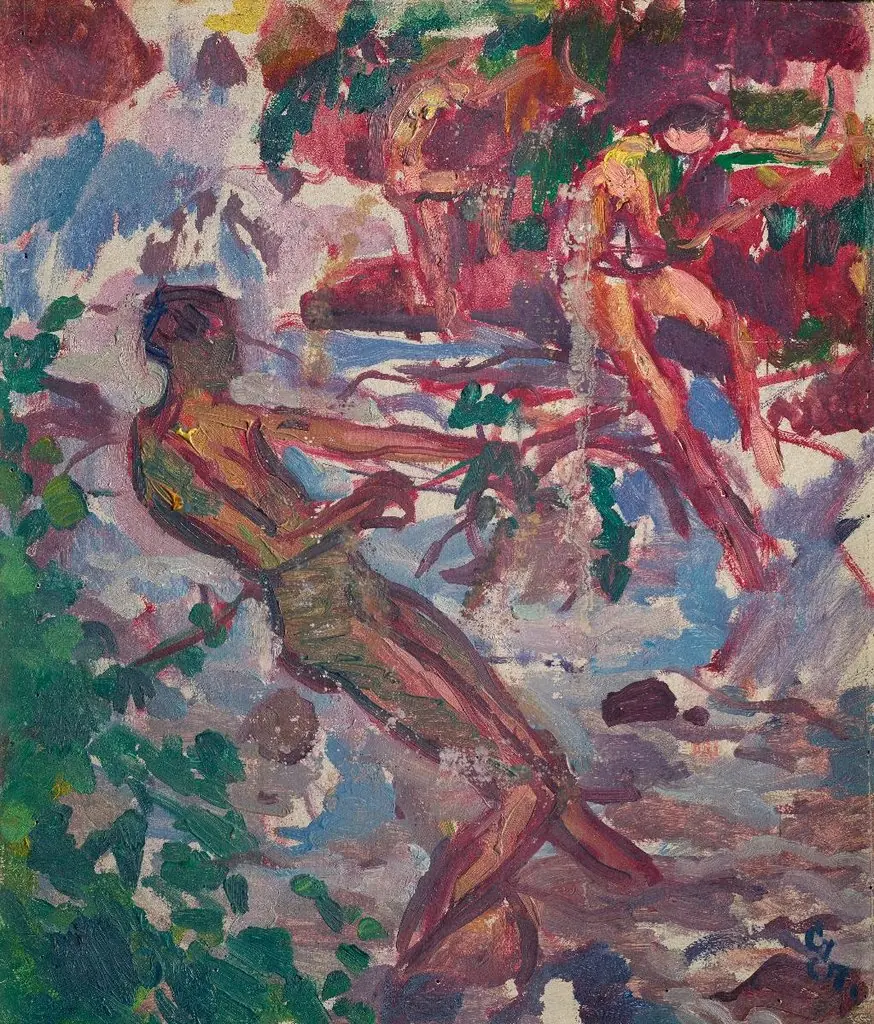 Badende im Bergbach bei Daganece. (Studie)
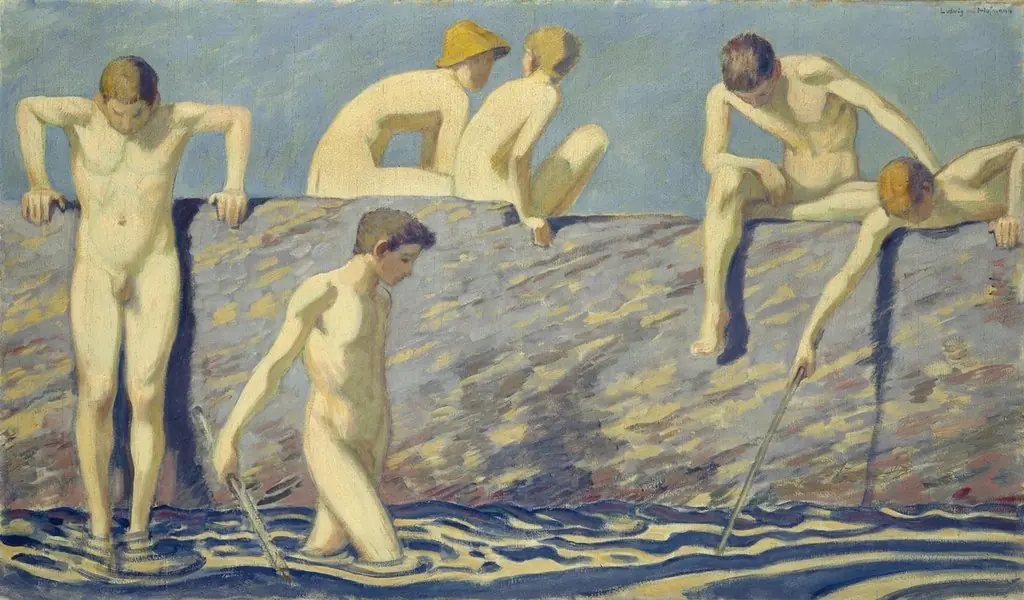 Badende Knaben
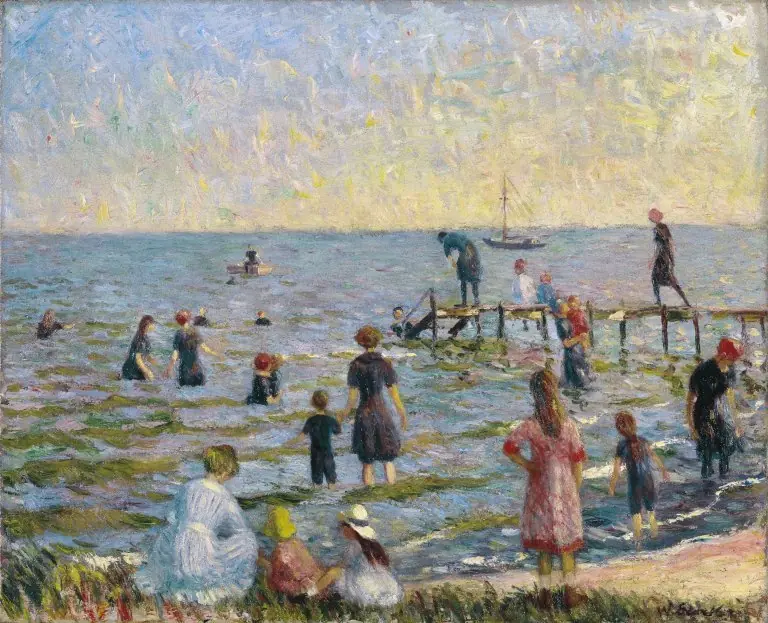 Bathing at Bellport, Long Island
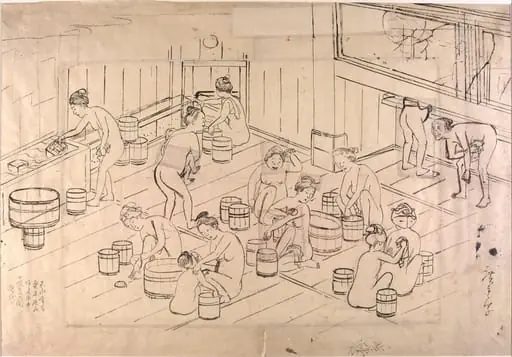 Women's Bathhouse in the City
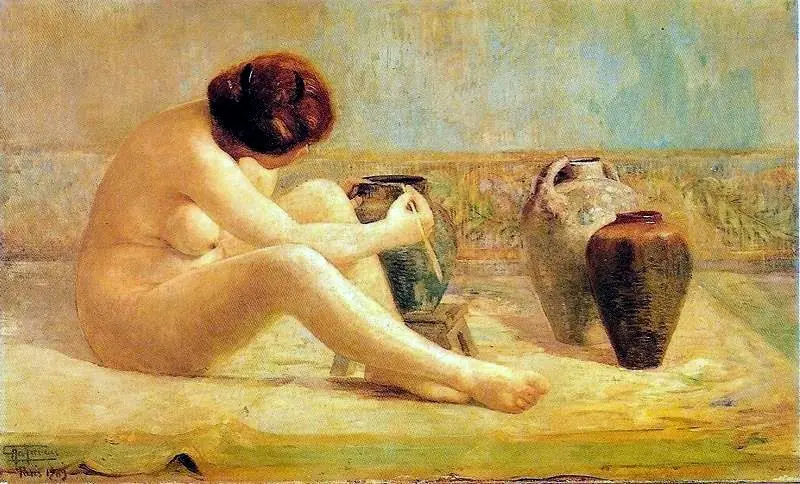 Fantasia
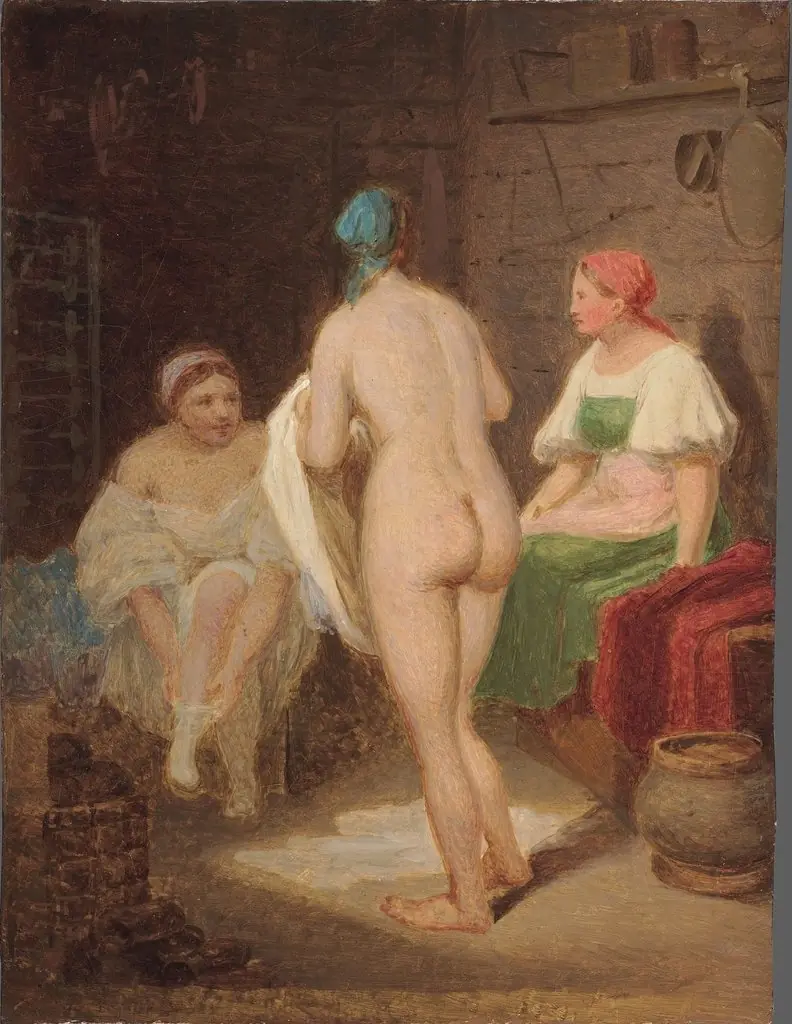 В бане. Эскиз
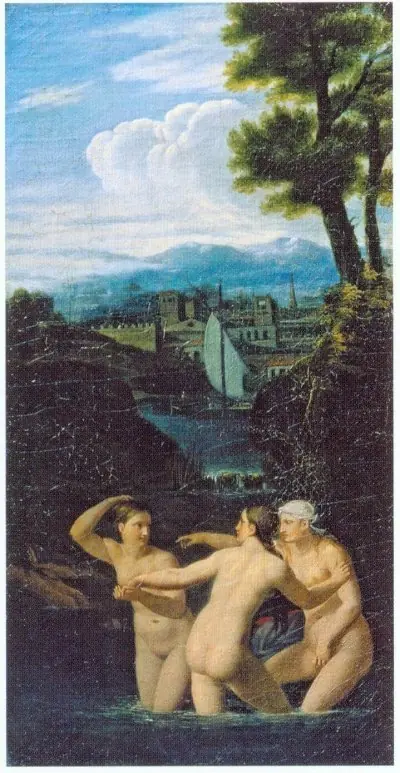 Nymphs
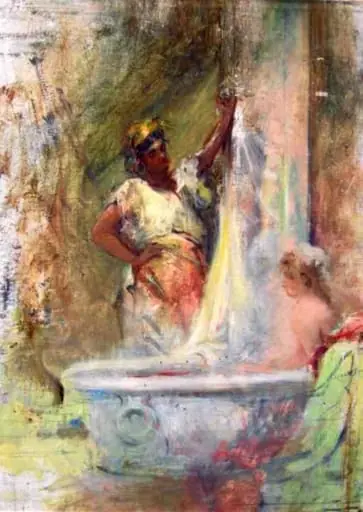 În baie
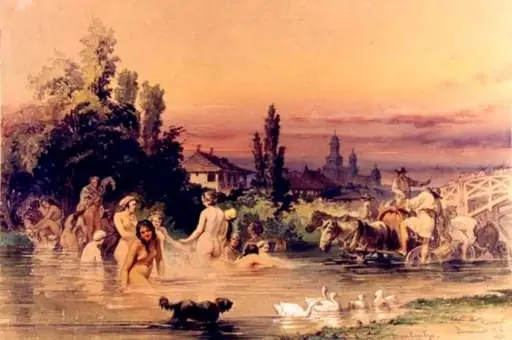 Dâmbovița la București
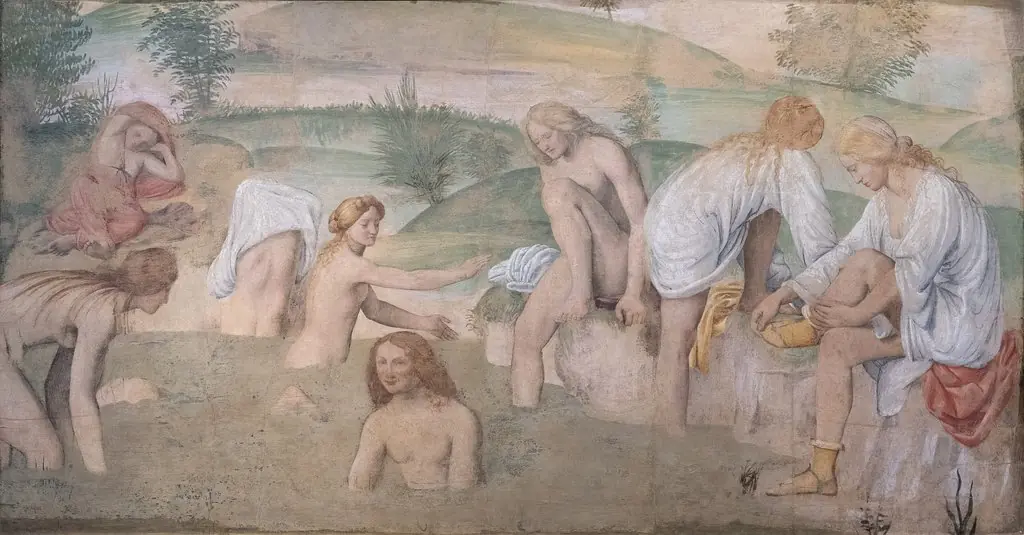 Girls Bathing
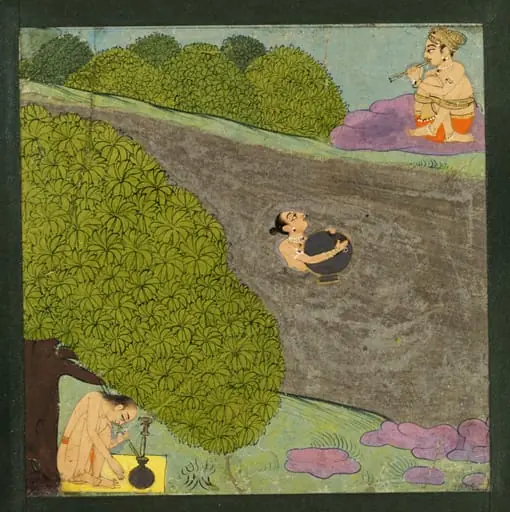 Sohini
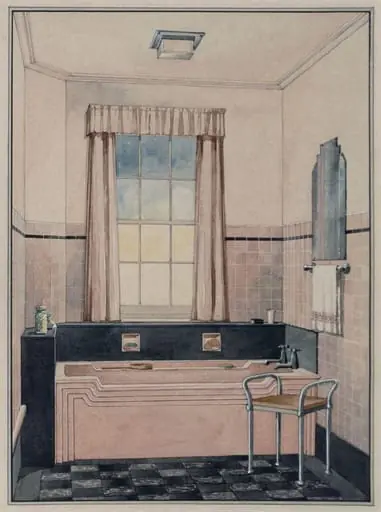 Design for a bathroom
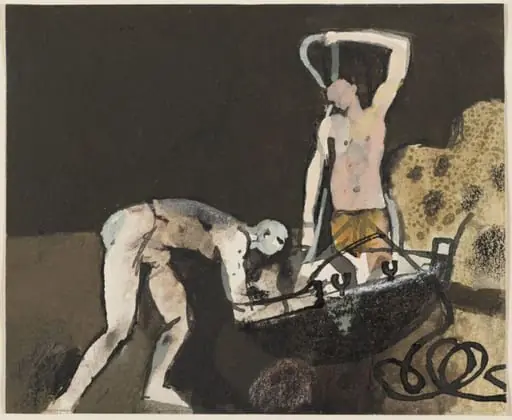 Finistère
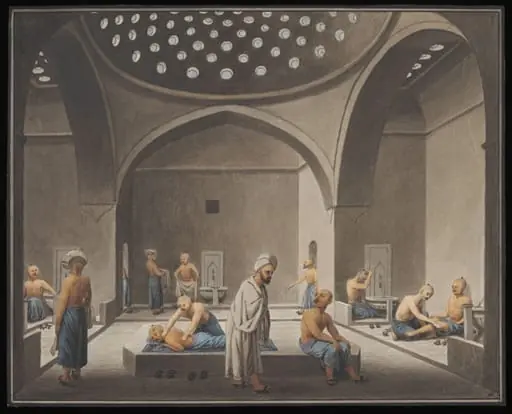 Hamam, or Turkish bath
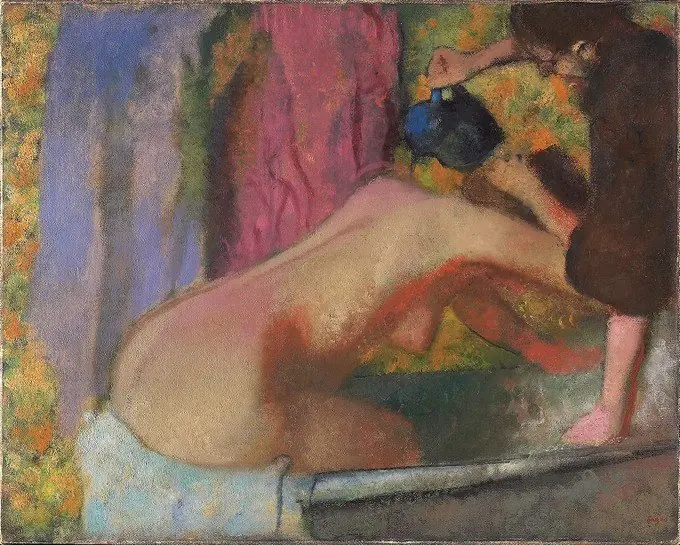 Femme au bain
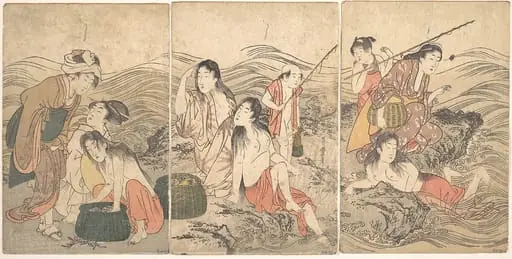 Untitled
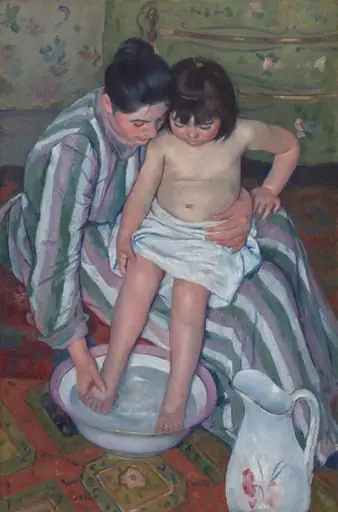 The Child's Bath
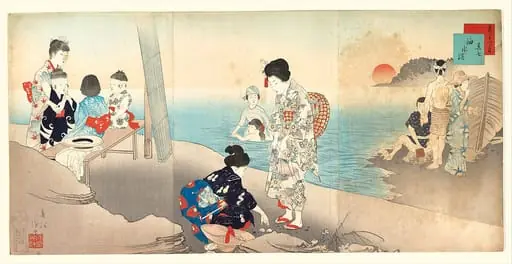 Untitled
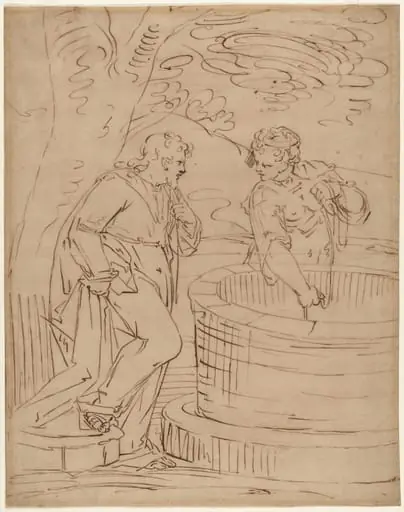 Rebecca at the Well
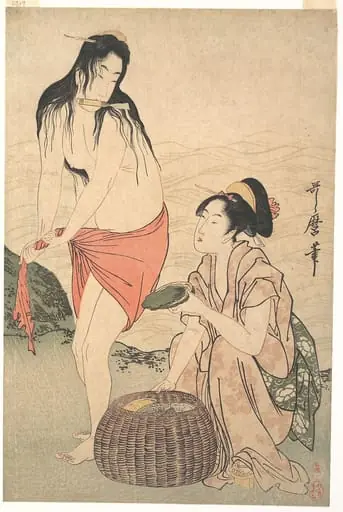 喜多川歌麿画 鮑取り|Abalone Divers
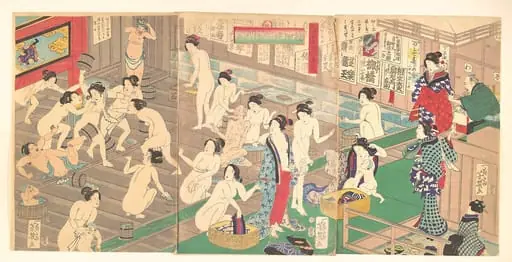 Untitled
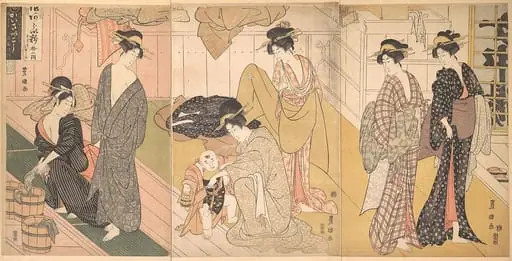 Untitled
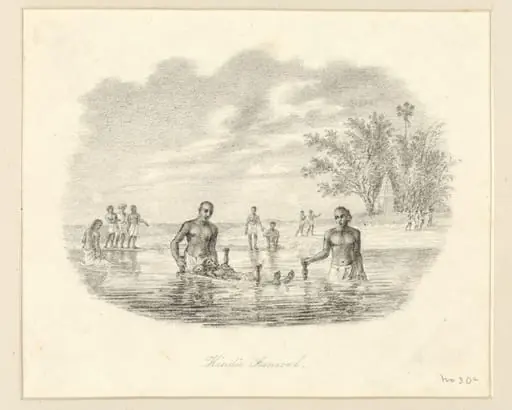 Hindu Funeral
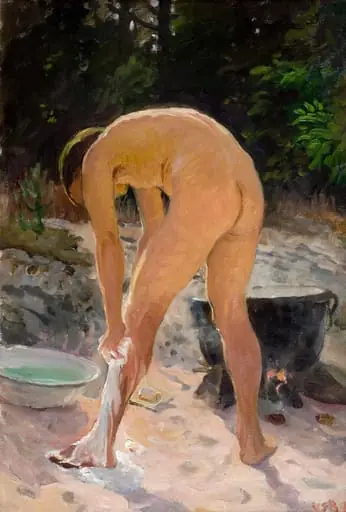 Aamupesu
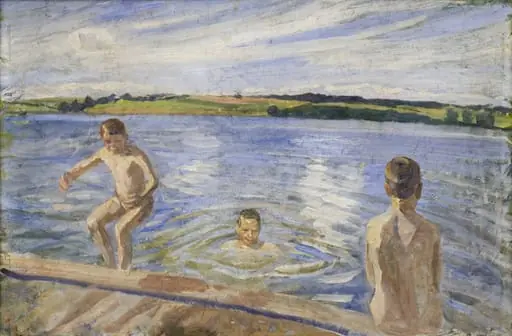 Boys Bathing
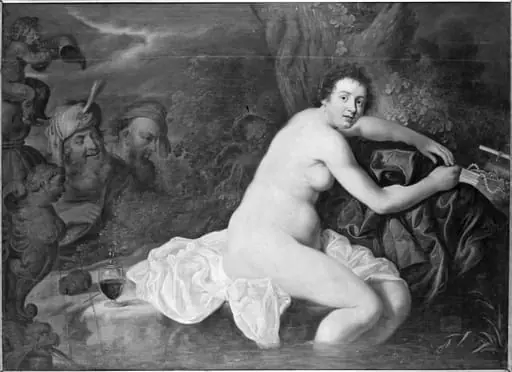 Susanna and the Elders
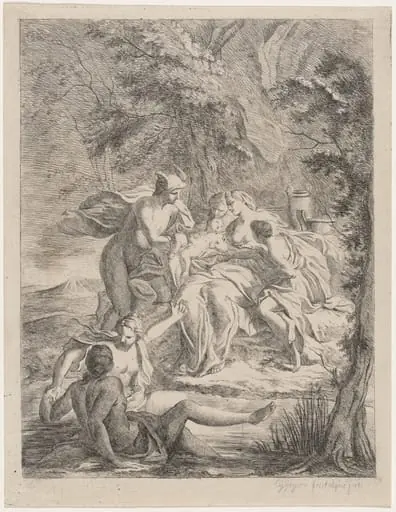 Hermes Bringing the Infant Dionysus to the Nymphs
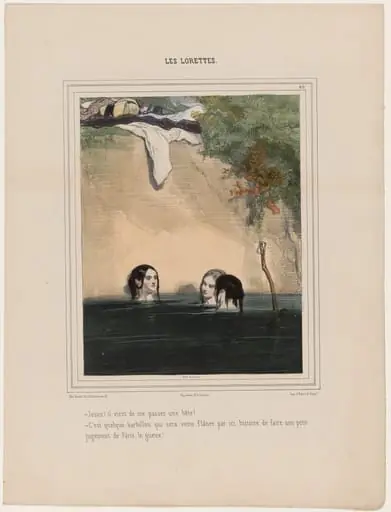 Jésus! Il vient de me passer une bête...
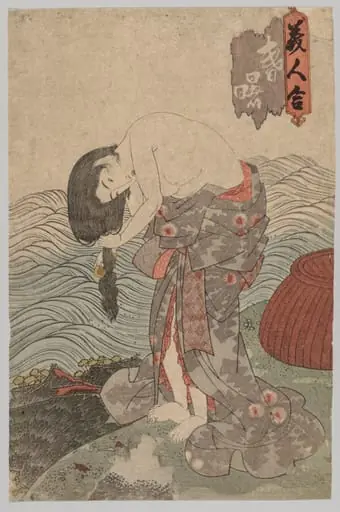 Woman Diver Combing her Hair
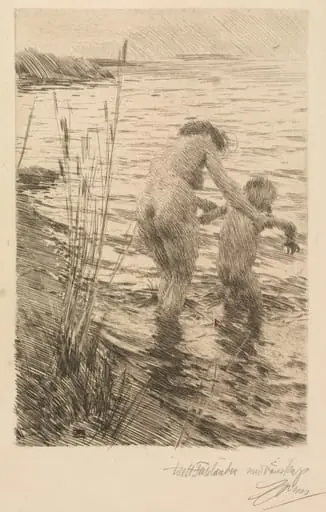 Première
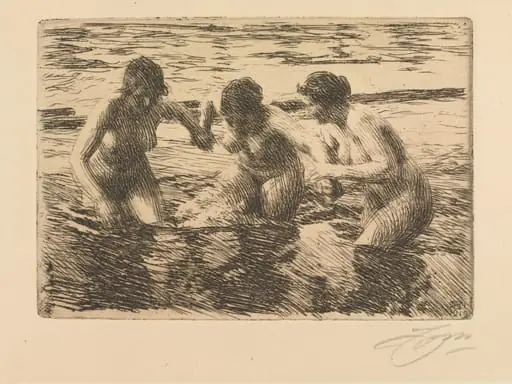 Against the Current
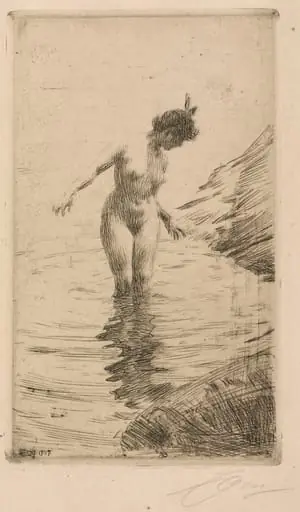 Circles of Water II
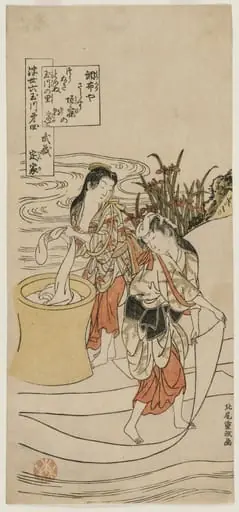 The Chofu Tama River in Musashi Province (from the series The Six Tama Rivers of the Floating World)
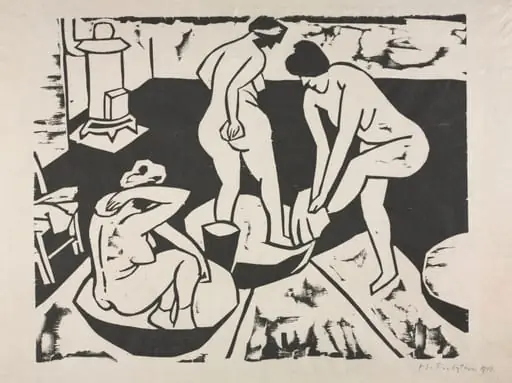 Women Bathing
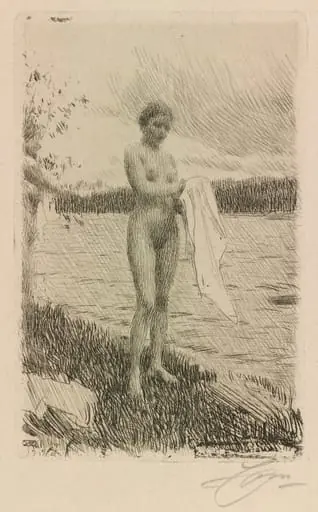 Dal River
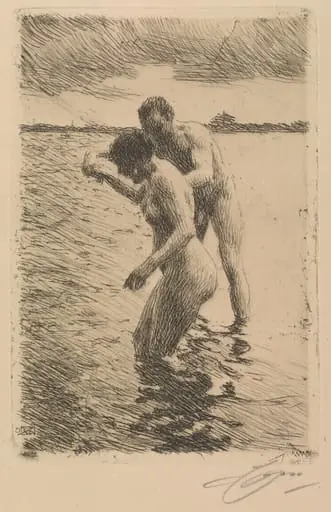 Pilot
Pilot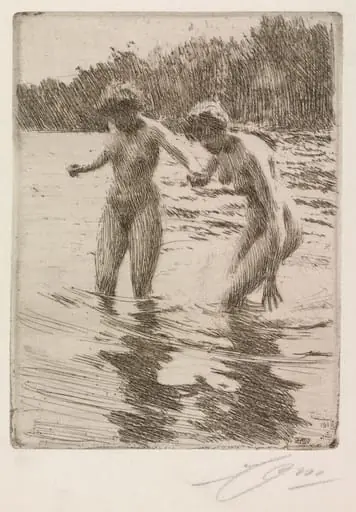 Two Bathers
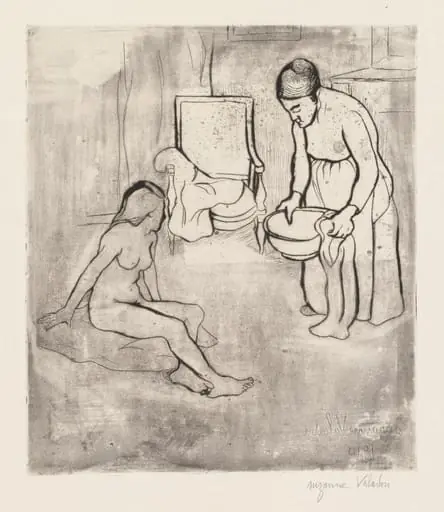 Grandmother with Louise, Nude Seated on the Floor (Grand-Mère et Louise Nue Assise par Terre)
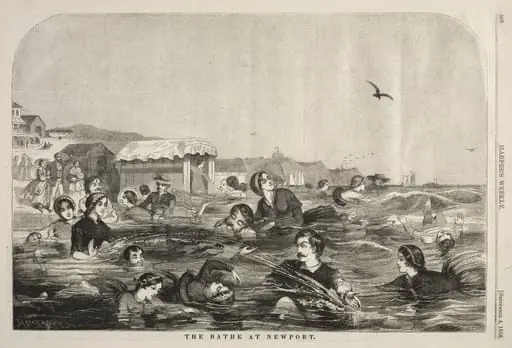 The Baths at Newport
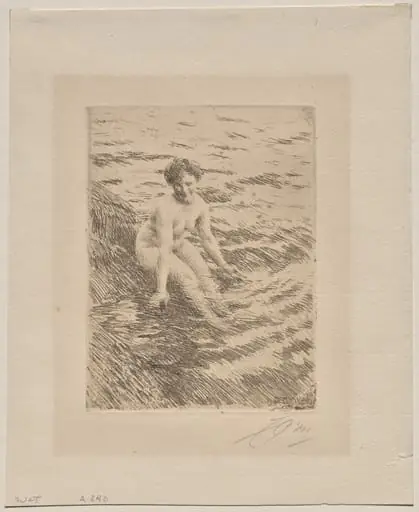 Wet
Wet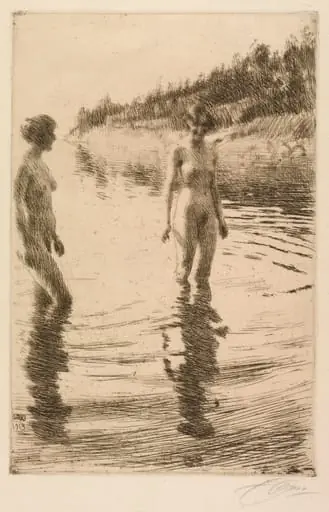 Shallow
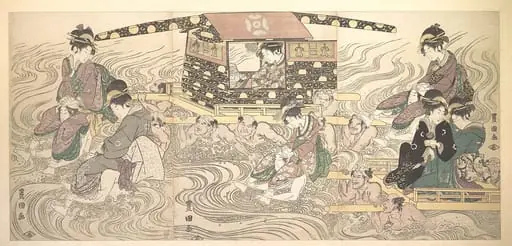 Untitled
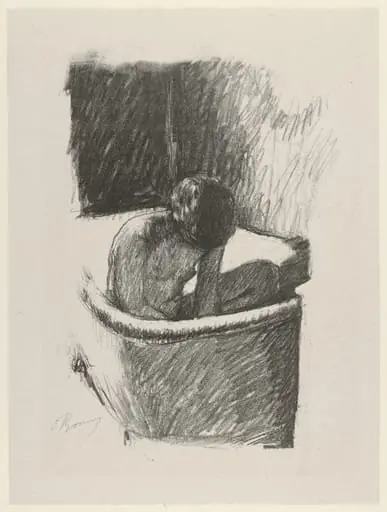 Untitled
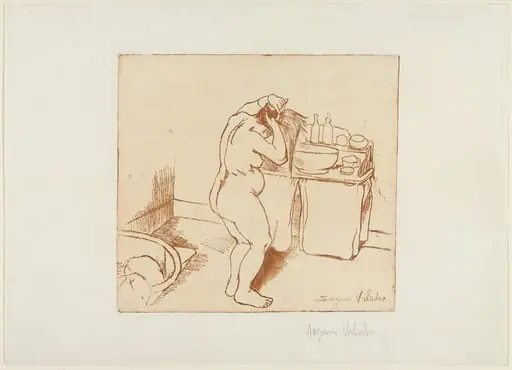 Untitled
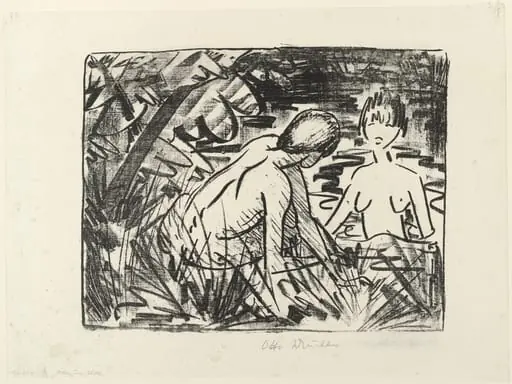 Untitled
Frequently asked questions
What is Bathing?
Bathing is the immersion of the body, wholly or partially, usually in water, but often in another medium such as hot air.
How many Bathing works does Artifact World Gallery have?
Artifact World Gallery holds 190 public-domain Bathing works, all free to view and download.
Who are the key Bathing artists?
Key Bathing artists in the collection include Jean Baptiste Camille Corot, Gustave Courbet and Edgar Degas.
Where can I see Bathing works?
Bathing works in the collection are held by National Gallery of Art, Metropolitan Museum of Art and Cleveland Museum of Art.