Subject
Kolkata
Kolkata is a subject in art. The gallery holds 106 works in this subject in art, including works by Shri Gobinda Chandra Roy, Frederick William Alexander De Fabeck and Samuel Bourne.
Kolkata, known as Calcutta until 2001, is the capital of West Bengal, set on the eastern bank of the Hooghly River roughly 80 km west of the Bangladesh border. As the first capital of British India and the engine of the nineteenth-century Bengal Renaissance, the city became a crucible where indigenous craft, Hindu devotion, and colonial modernity collided—nowhere more vividly than in the popular painting that took the city's own name.
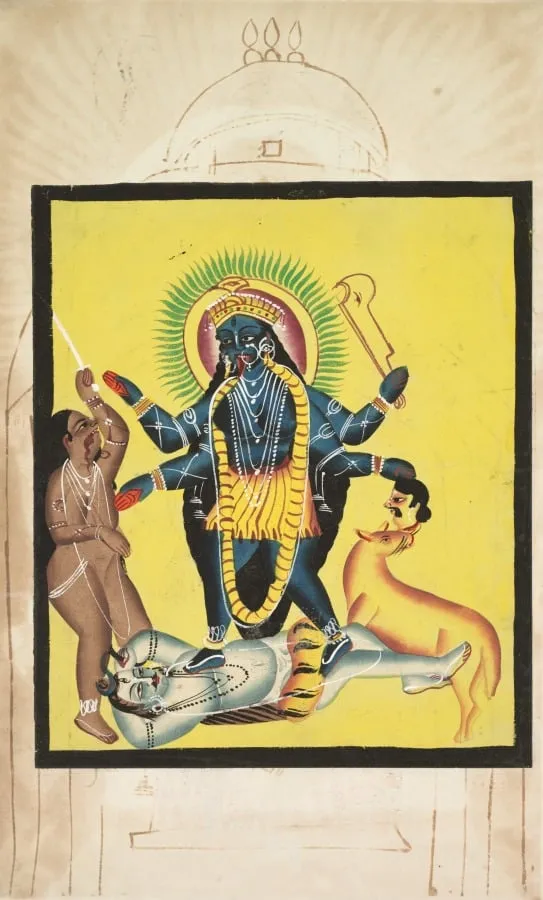
The defining art form of nineteenth-century Kolkata is Kalighat painting, which emerged in the first half of the 1800s among the patuas, traditional scroll-painters who migrated from rural Bengal and settled near the Kali temple at Kalighat. Its rise roughly coincided with the temple's reconstruction around 1809. Abandoning the long narrative scroll for cheap single sheets of mill-made paper, these artisans produced quick souvenirs for pilgrims and city visitors. Typically about 17 by 11 inches, the works are unmistakable: bold sweeping brush lines, flat saturated colour, swelling rounded forms, stylised elongated eyes, and bare unfilled backgrounds, all calibrated for rapid mass production with brushes of calf and squirrel hair.
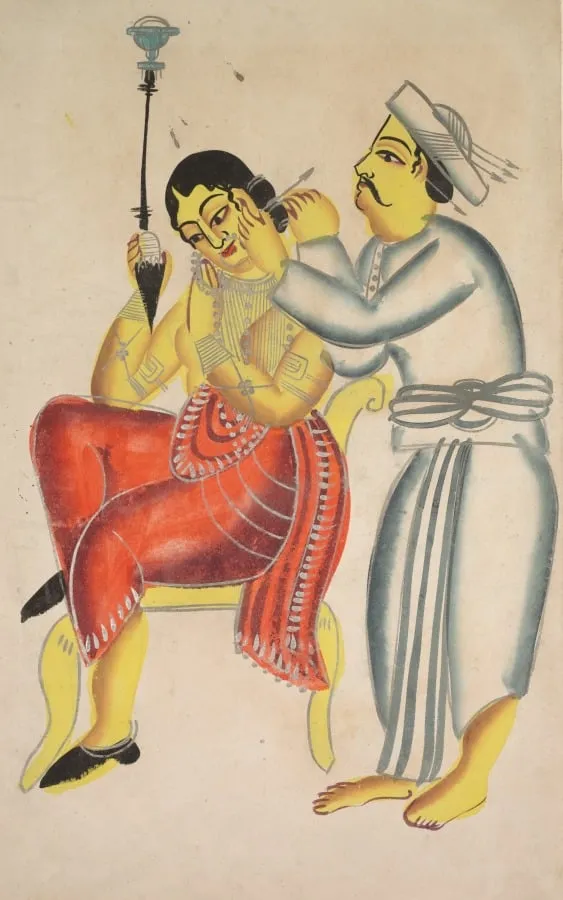
The subjects span the sacred and the scandalous. Devotional sheets depict Kali standing on Shiva, Balarama and Krishna, or the goddesses Lakshmi and Sarasvati—types represented in this collection's Kalighat-album leaves, several signed by the rare named painter Shri Gobinda Chandra Roy, whose 'Barber Cleaning a Woman's Ear' survives in multiple versions. Equally characteristic is the satirical strain that mocked Westernised 'babus,' courtesans, and corrupt priests. The notorious Tarakeswar affair of 1873—in which Nabin Chandra Banerjee cut his wife Elokeshi's throat after her seduction by the temple Mahant—generated a whole series of prints, including the scene of the jailer receiving the imprisoned Mahant.
Kalighat painting faded by the early twentieth century, undercut by cheap lithographs, but its legacy proved durable. Its bold contours and economy of means decisively shaped Jamini Roy (1887–1972), who rejected his academic European training to rebuild a folk idiom from Kalighat sources. Through Roy and the wider Bengal School, the marketplace art of Kolkata's temple lanes became foundational to the search for an authentically Indian modern art.
Key artists

Overview
Kolkata, historically known as Calcutta until 2001, is the capital and largest city of the Indian state of West Bengal. Situated on the eastern bank of the Hooghly River approximately 80 kilometers west of the border with Bangladesh, it serves as the primary financial and commercial center of eastern India. The city is the seventh most populous in the nation, with an estimated proper population of 4.5 million, while its broader metropolitan region ranks as the third most populous in India with over 15 million residents. Widely regarded as the cultural capital of India, Kolkata recurs as a subject in art due to its profound historical significance as the former capital of British India, its role as the epicenter of the Bengali Renaissance, and its dense concentration of religious, imperial, and contemporary urban landscapes.
Iconography & meaning
The iconography of Kolkata is deeply intertwined with its etymological and spiritual origins. The city's name is widely believed to derive from Kalikkhetro, meaning the field of the goddess Kali, or directly from the Kalighat temple, a major Hindu pilgrimage site. Consequently, the goddess Kali is a central iconographic motif, symbolizing the city's spiritual identity and its historical role as a hub of Hindu devotion. Beyond religious iconography, Kolkata represents the cultural and intellectual zenith of the Bengali Renaissance. The city's visual identity also encompasses imperial British architecture, which stands as a symbol of colonial power and administration, juxtaposed against the vernacular culture characterized by close knit neighborhoods known as paras and freestyle intellectual conversations called adda.
Across movements & periods
The artistic treatment of Kolkata has shifted dramatically across historical periods. In its earliest mentions, the area was depicted as a jungle surrounded village on the Ganges, notable as a commercial hub and a Hindu pilgrimage site. During the 17th and 18th centuries, under the British East India Company, the city's visual representation transitioned to that of a fortified trading bridgehead and later the grand capital of British India, characterized by western architectural styles and imperial monuments. Following the 1947 partition, artistic focus shifted to the demographic upheavals and political violence that defined the city for decades, capturing the influx of Hindu refugees from East Bengal and the subsequent economic stagnation before its eventual modern resurgence.
Notable depictions
Notable depictions of Kolkata frequently center on its architectural and spiritual landmarks. The Victoria Memorial, a white marble monument blending British, Mughal, and Venetian styles completed in 1921, serves as a major visual symbol of the colonial era and houses a museum of colonial artifacts. The Howrah Bridge, a massive cantilever structure completed in 1943, is an engineering icon synonymous with the city's identity. Religious sites such as the Dakshineswar Kali Temple, built in 1855, and the Belur Math, which combines Christian, Islamic, Hindu, and Buddhist motifs, represent the city's spiritual iconography. The Indian Museum, founded in 1814 and housed in an Indo Saracenic building designed by W. L. Granville, stands as a major repository of the region's artistic and natural heritage.
Legacy
The legacy of Kolkata as a subject in art and culture persists through its continued status as India's cultural capital. The city's heritage is preserved and propagated by institutions of national importance, including the Academy of Fine Arts, the Asiatic Society, and the National Library of India. The University of Calcutta, the first modern university in South Asia, has produced many leading figures who shaped the region's intellectual and artistic trajectory. The city remains the center of the Indian Bengali film industry, known as Tollywood. Furthermore, Kolkata's grand celebrations of the Hindu festival of Durga Puja have been recognized by UNESCO for their importance to world heritage, ensuring that the city's traditional iconography and communal artistic expressions remain a vibrant, living legacy.
Works
 Kali Standing on Shiva (verso), from a Kalighat album
 Barber Cleaning a Woman’s Ear
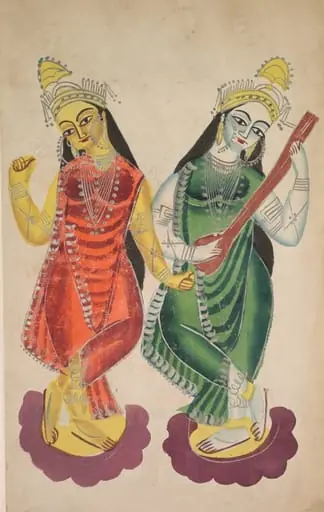 Goddesses Lakshmi and Sarasvati (verso), from a Kalighat album
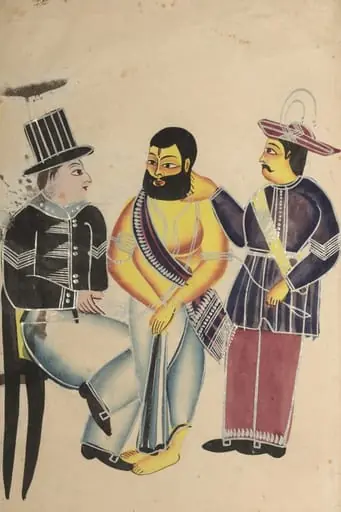 Jailer Receiving the Mahant of Tarakeshwar in Prison
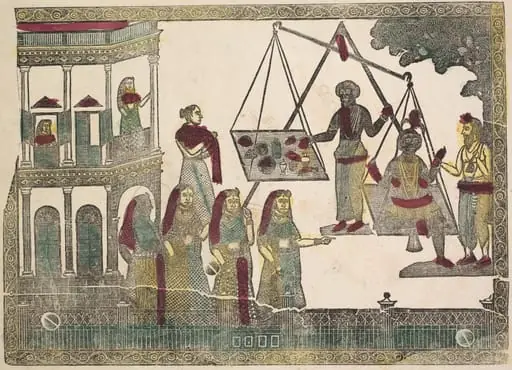 Krishna weighed against precious objects(?) (verso), from a Kalighat album
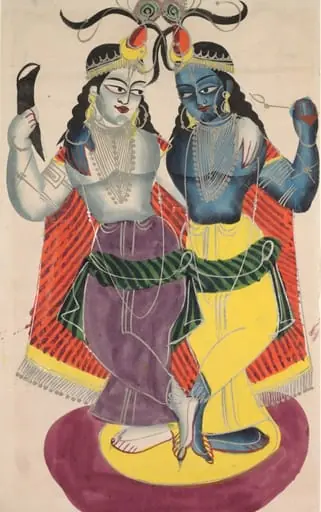 Balarama and Krishna
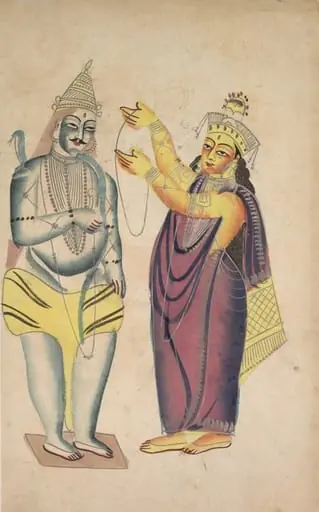 Parivati Placing a Wedding Garland on Shiva (verso)
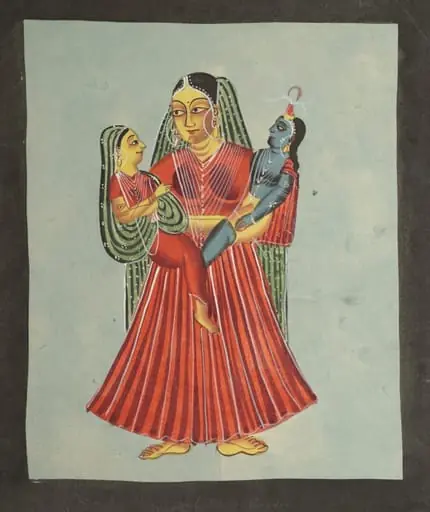 Yasoda Holding Krishna and Radha
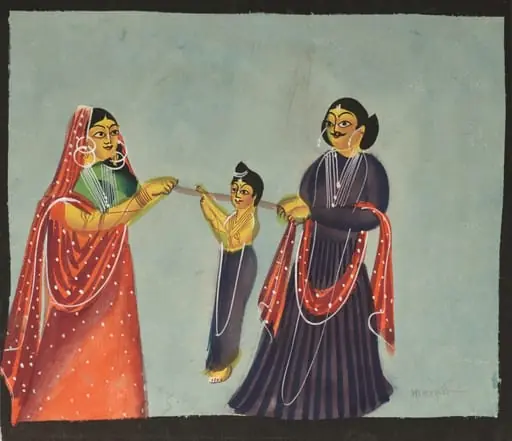 Kalighat Painting
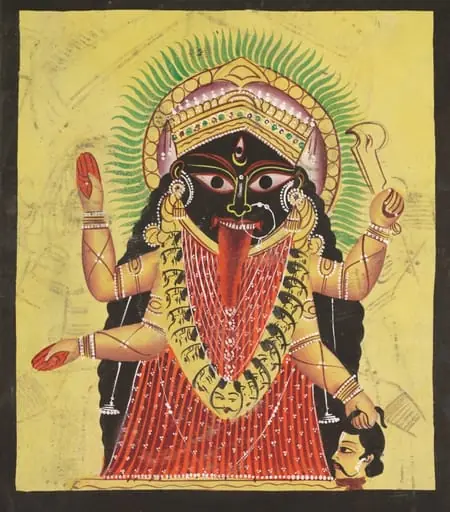 Kali Enshrined (verso), from a Kalighat album
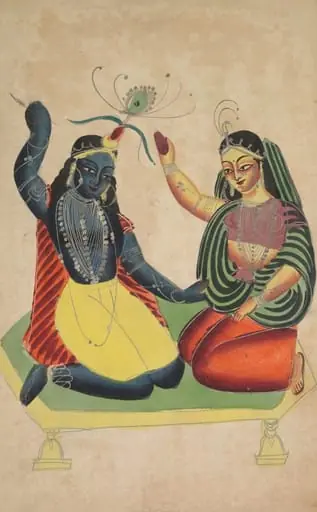 Radha and Krishna (verso), from a Kalighat album
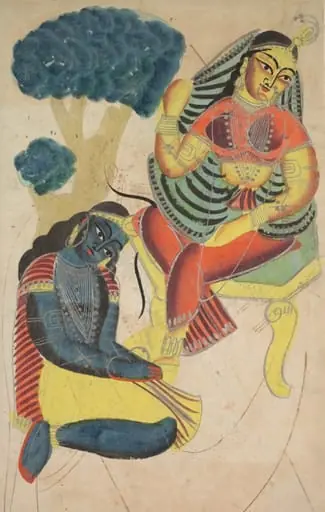 Krishna Stroking Radha's Feet (verso), from a Kalighat album
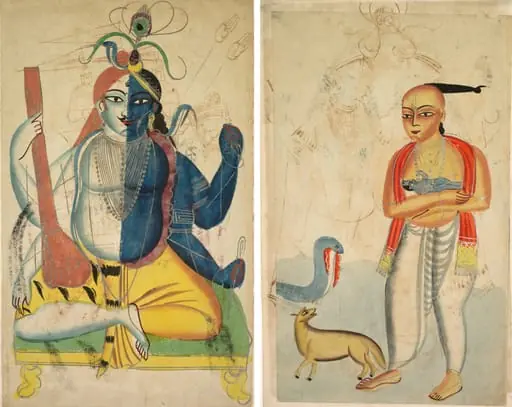 Leaf from a Kalighat album: Hari-Hara (recto); Vasudeva (Krishna's Father) Fleeing with Krishna Encounters a Cobra and a Jackal (verso)
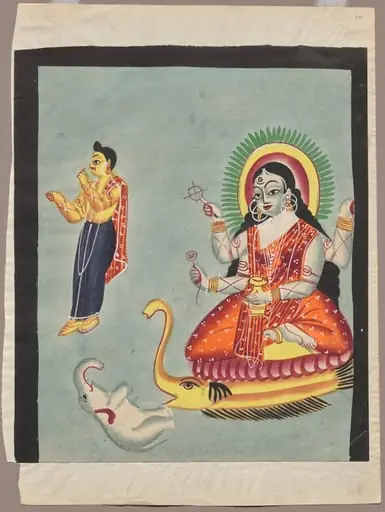 The Goddess Ganga, from a Kalighat album
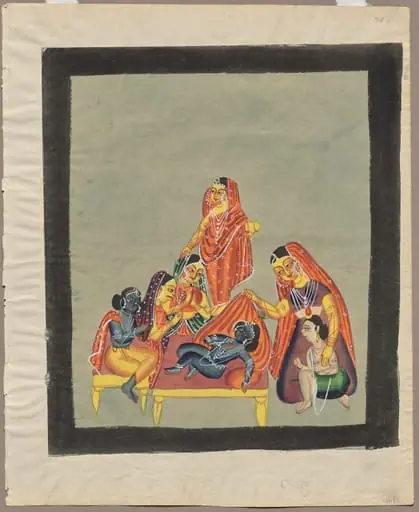 Worship of the Infant Krishna, from a Kalighat album
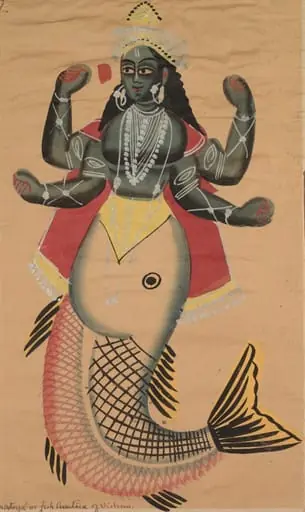 Matsya, Fish Avatara of Vishnu
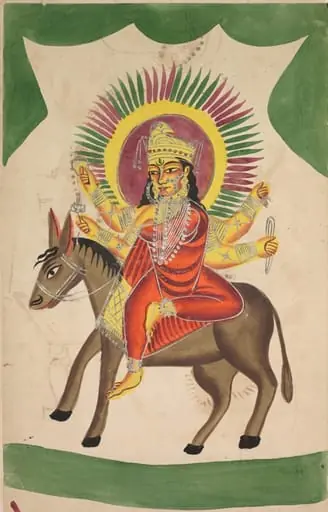 Sheetaladevi: The Smallpox Goddess (recto), from a Kalighat album
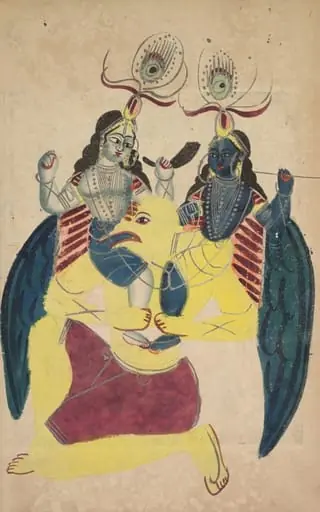 Garuda Carrying Balarama and Krishna (verso), from a Kalighat album
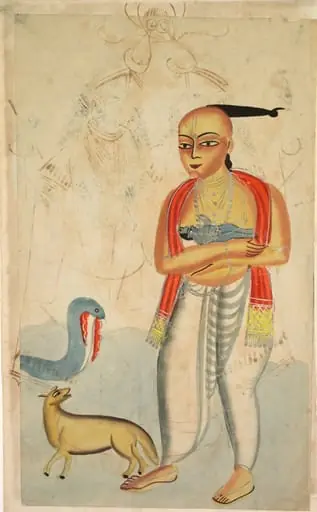 Vasudeva (Krishna's Father) Fleeing with Krishna Encounters a Cobra and a Jackal (verso), from a Kalighat album
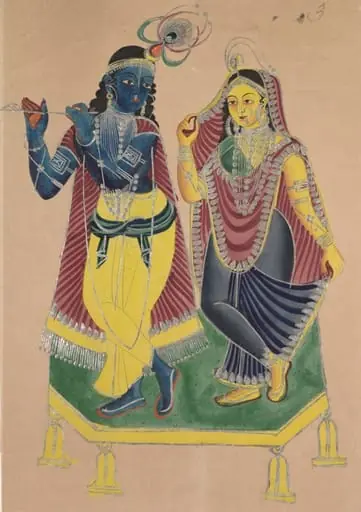 Radha and Krishna
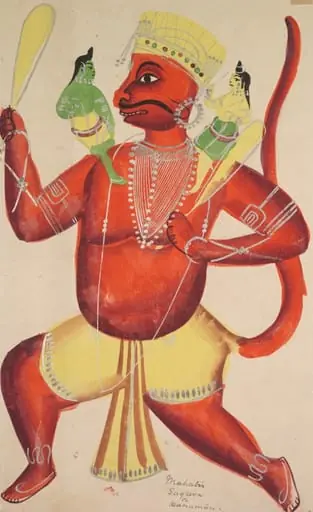 Hanuman with Rama and Lakshmana on his shoulders, from a Kalighat album
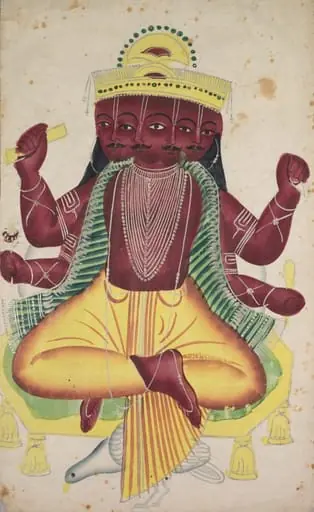 Brahma
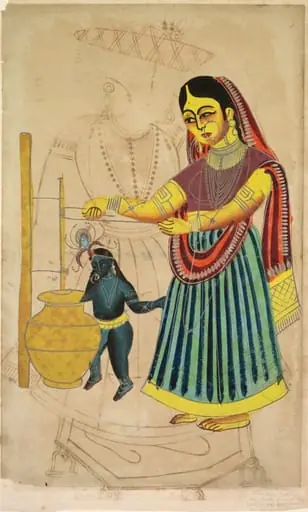 Yasoda Churning Butter (verso), from a Kalighat album
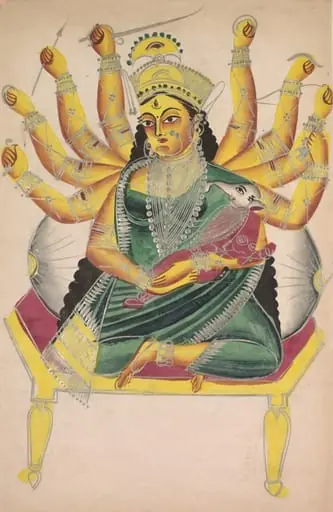 Ganesha-Janani (Mother of Ganesh)
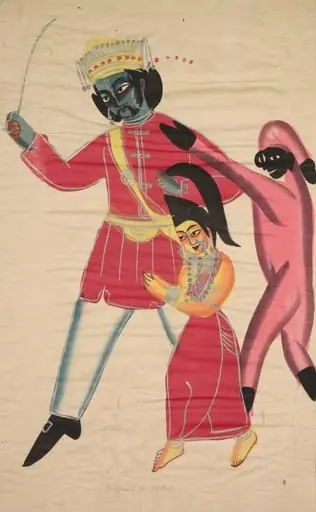 Megha-Nada (Indrajit, Son of Radha)
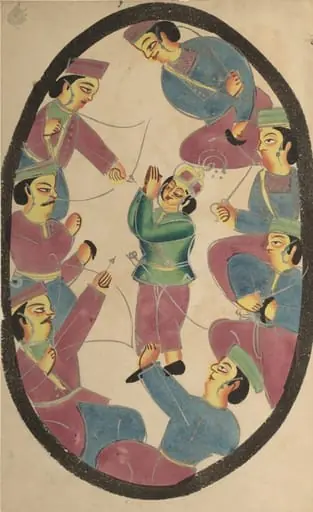 Seven Heroes or Warriors Killing Abhimanya, Son of Arjuna
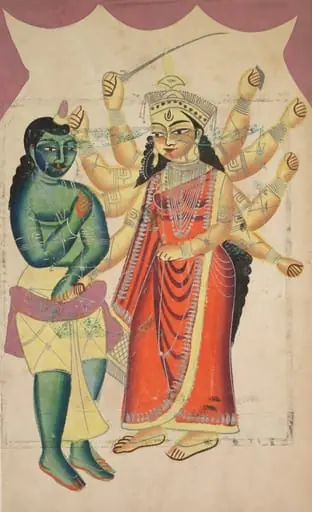 Durga (verso), from a Kalighat album
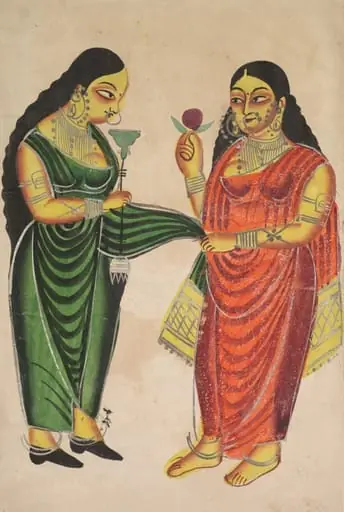 Maid bringing a hookah to a lady (recto), from a Kalighat album
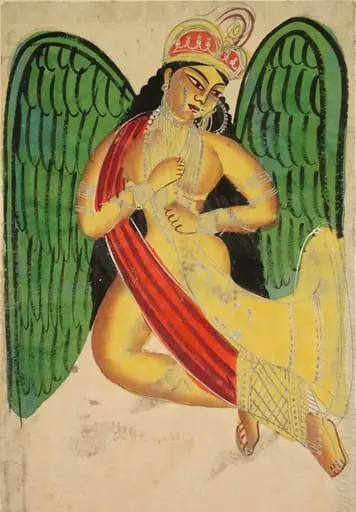 Winged Apsara with a Horn (recto)
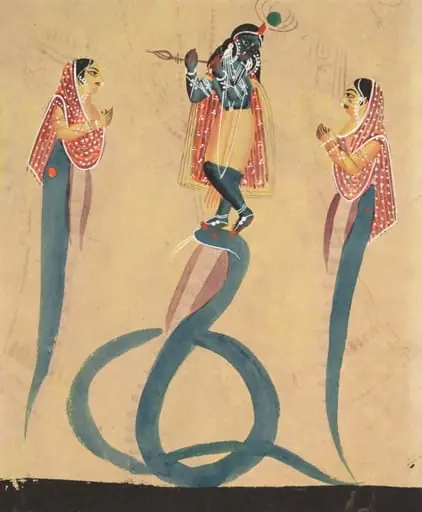 Krishna quells the serpent Kaliya (verso), from a Kalighat album
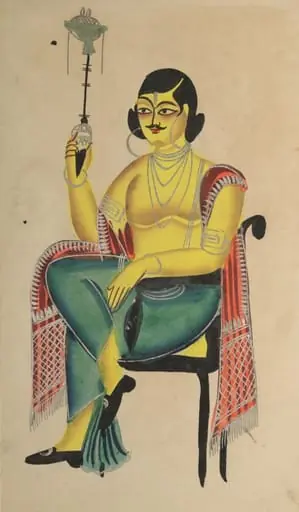 English Babu (Native Indian Clerk) Holding a Hookah
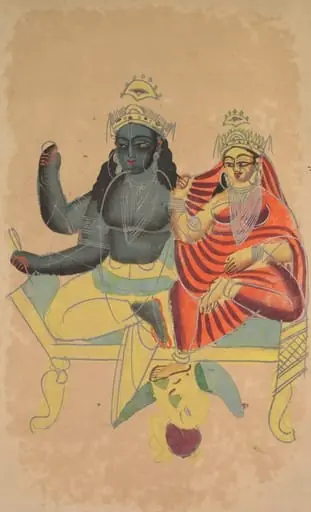 Vishnu and Lakshmi
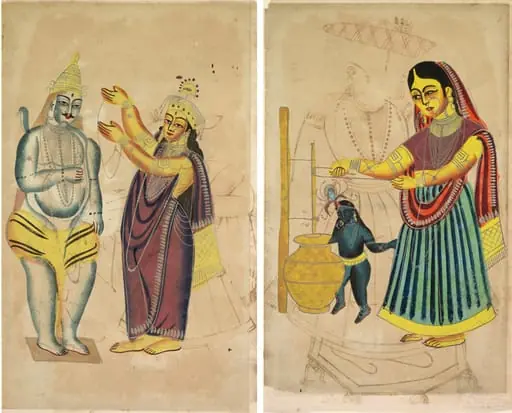 Leaf from a Kalighat album: Parvati Placing a Wedding Garland on Shiva (recto); Yasoda Churning Butter (verso)
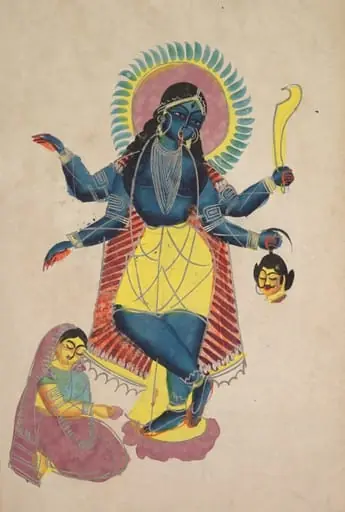 Krishna as Kali worshipped by Radha (recto), from a Kalighat album
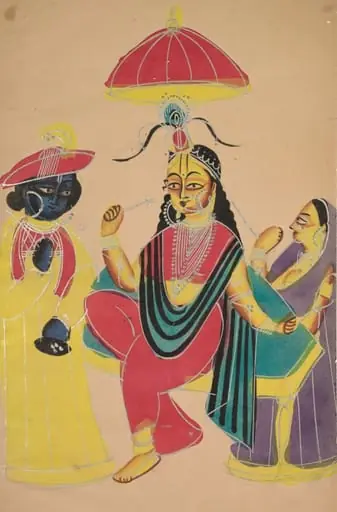 Krishna Standing by Radha who is Seated on a Chair
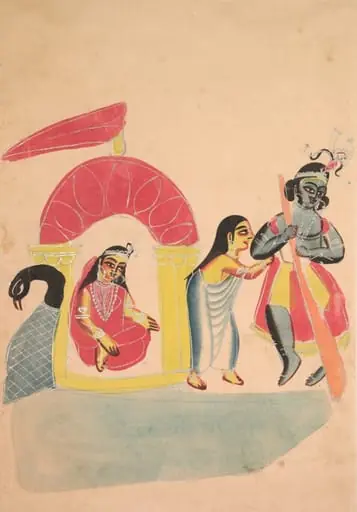 Krishna Ferrying Radha Across the Yamuna River
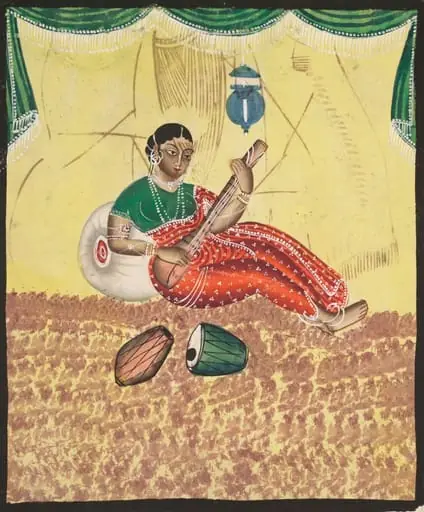 Woman Playing Music (recto), from a Kalighat album
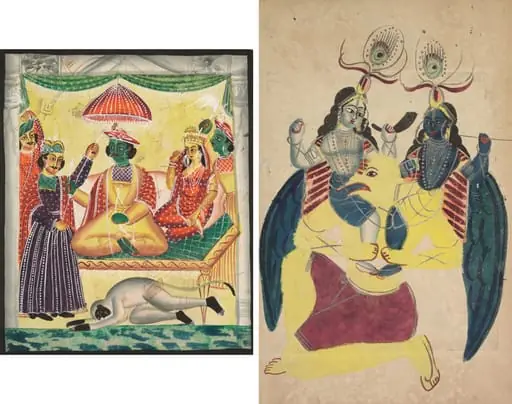 Leaf from a Kalighat album: Rama and Sita enthroned (recto); Garuda carrying Balarama and Krishna (verso)
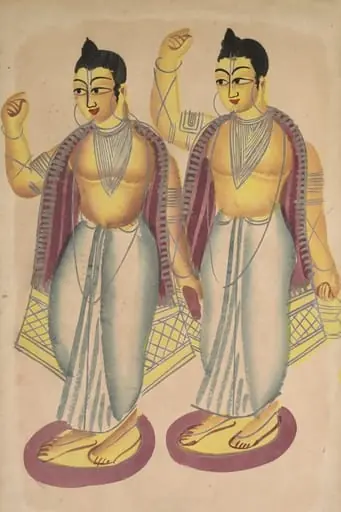 Nitai and Gaur
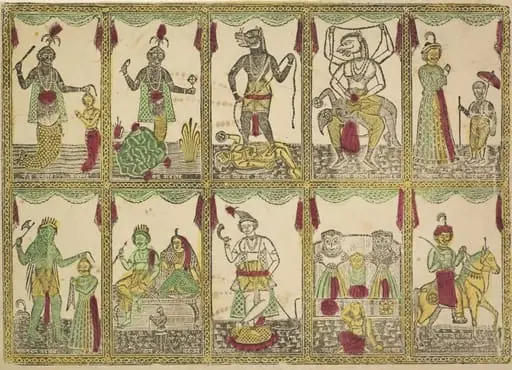 Das Avataras, Ten Incarnations of Vishnu (verso), from a Kalighat album
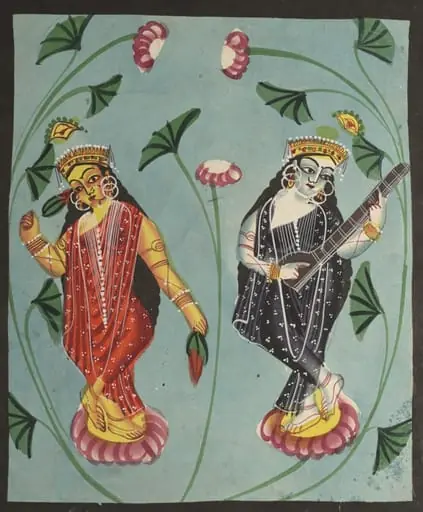 Lakshmi and Sarasvati
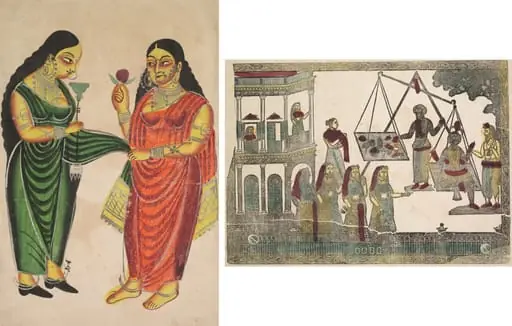 Leaf from a Kalighat album: Maid bringing a hookah to a lady (recto); Krishna weighed against precious objects(?) (verso)
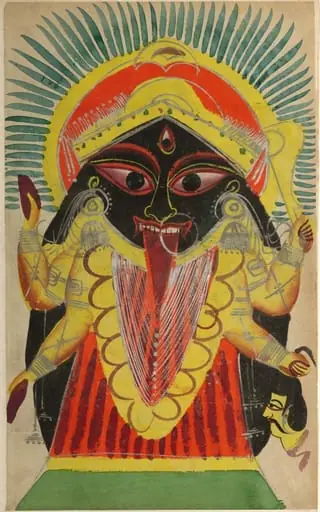 The Goddess Kali (recto), from a Kalighat album
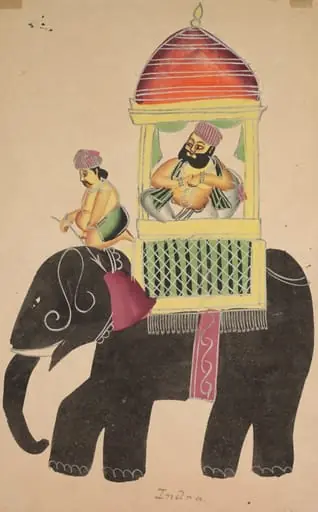 Mahant of Tarakeshwar Rides on an Elephant
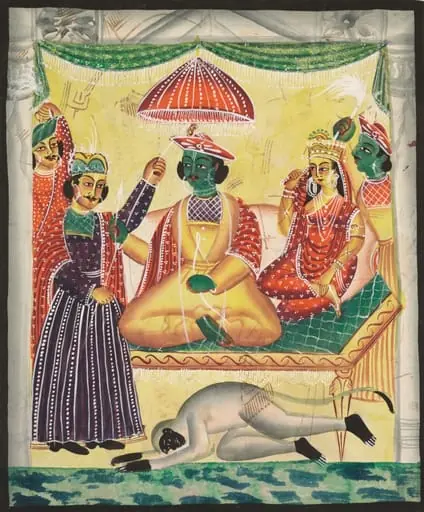 Rama and Sita enthroned (recto), from a Kalighat album
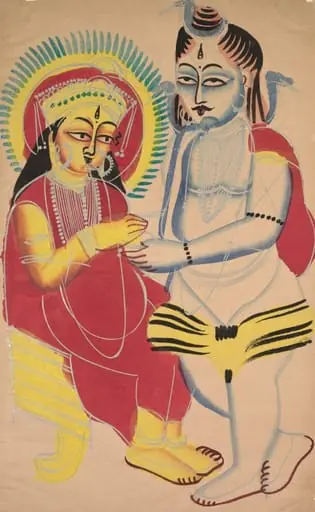 Annapurna and Shiva
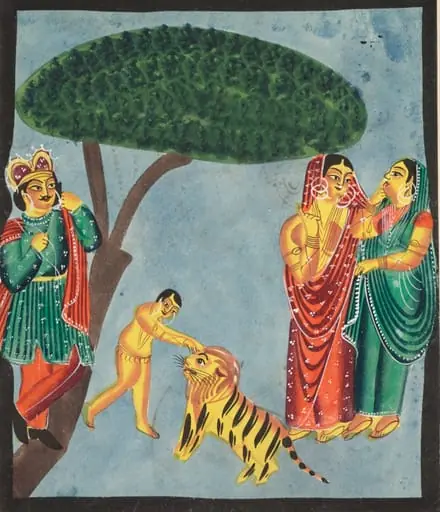 Dushyanta watching his son Bharat playing with the tiger at the end of the Abhijnanashakuntalam (verso), from a Kalighat album
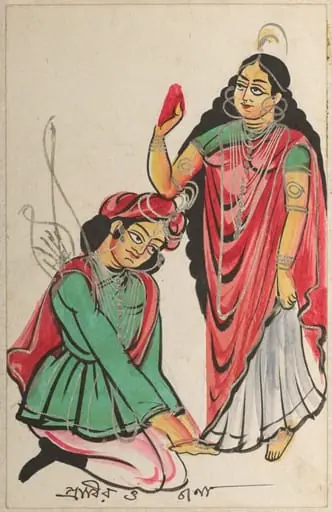 Pravira Kneeling at the Feet of Jana
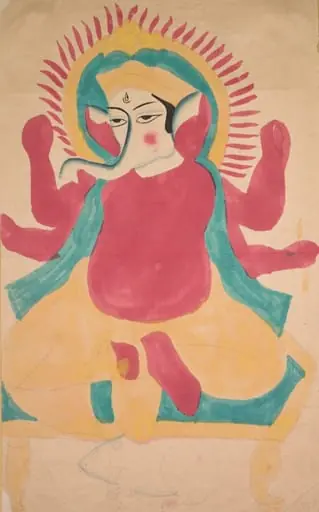 Ganesha
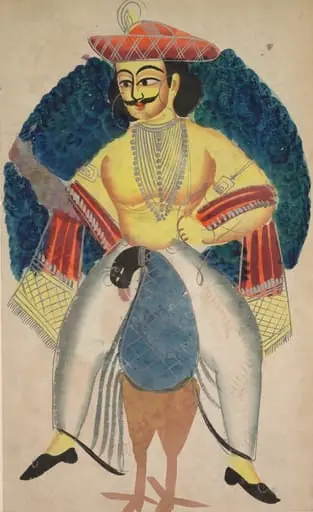 Kartikeya, from a Kalighat album
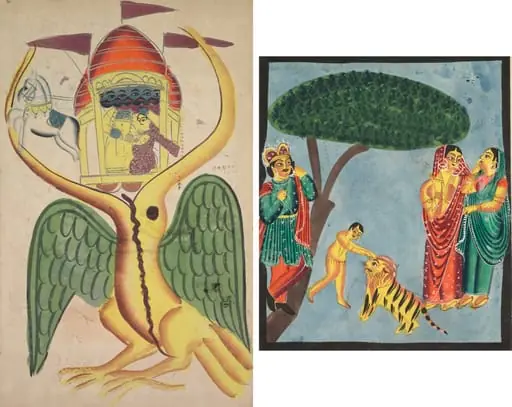 Leaf from a Kalighat album: Jatayu hinders Ravana’s chariot, trying to prevent the abduction of Sita (recto); Dushyanta watching his son Bharat playing with the tiger at the end of the Abhijnanashakuntalam (verso)
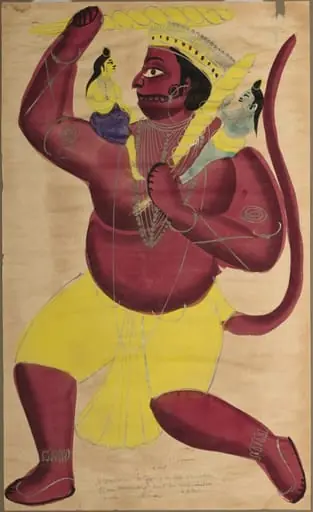 Hanuman
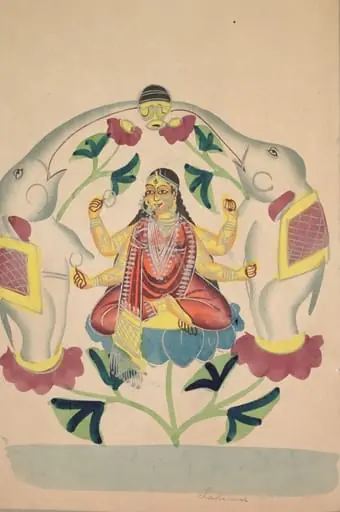 Gajalakshmi: Lakshmi with Elephants
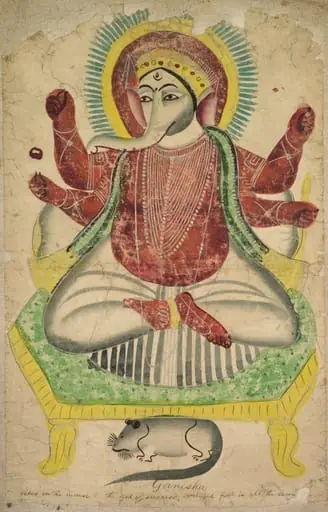 Ganesh
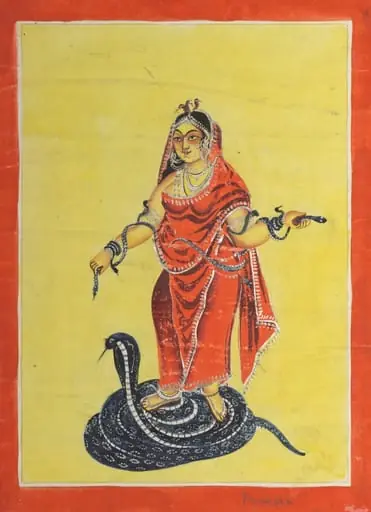 Manasa, The Snake Goddess
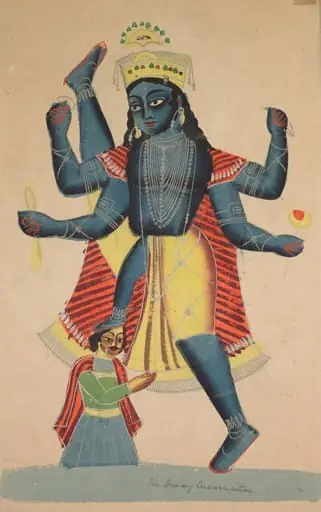 Trivikramapada (Three Steps of Vishnu)
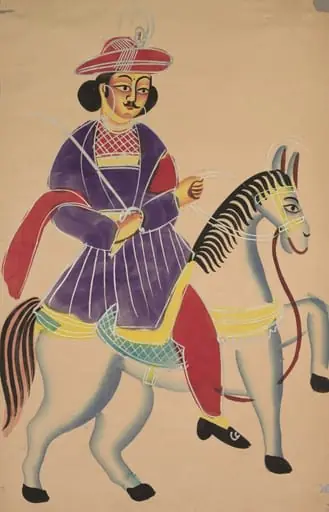 Raja Riding a Horse
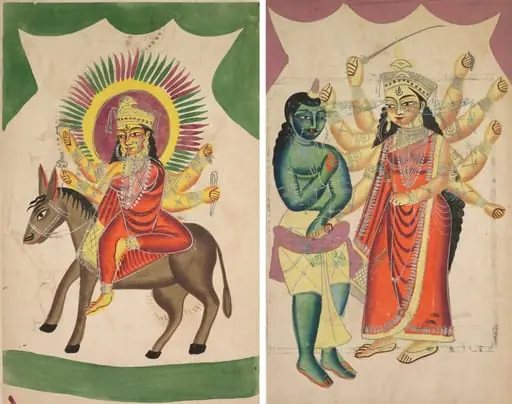 Leaf from a Kalighat album: Sheetaladevi: The Smallpox Goddess (recto); Durga (verso)
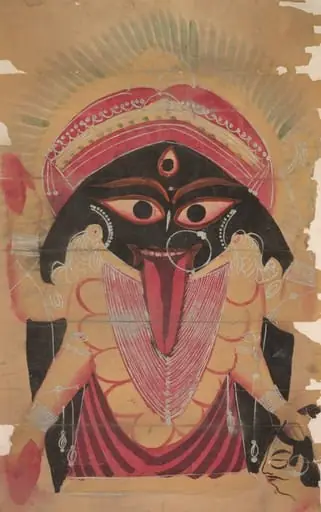 Kali
Kali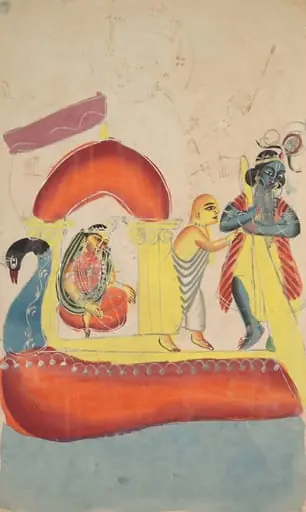 Krishna Ferrying Radha Across the Yamuna River (recto)
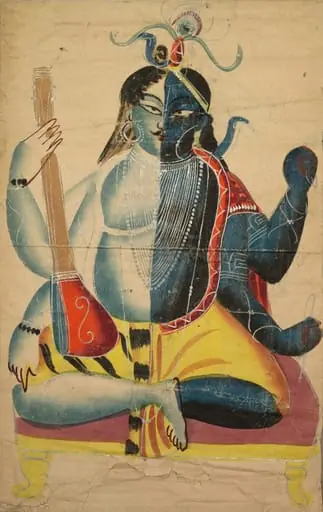 Hari-Hara
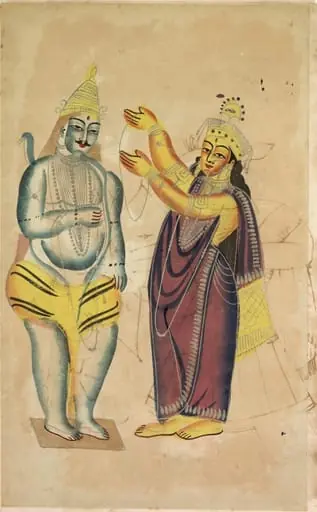 Parvati Placing a Wedding Garland on Shiva (recto), from a Kalighat album
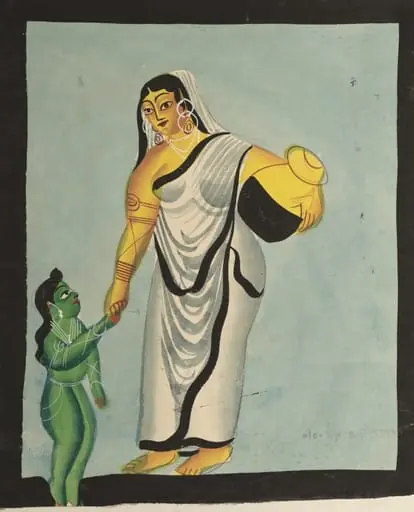 Yasoda Taking the Infant Krishna for a Walk
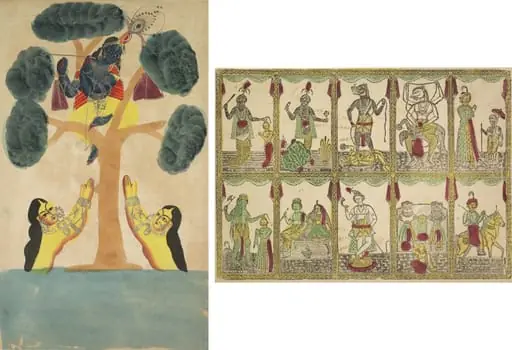 Leaf from a Kalighat album: Krishna Steals the Clothes of the Cowgirls (Gopis) (recto); Das Avataras, Ten Incarnations of Vishnu (verso)
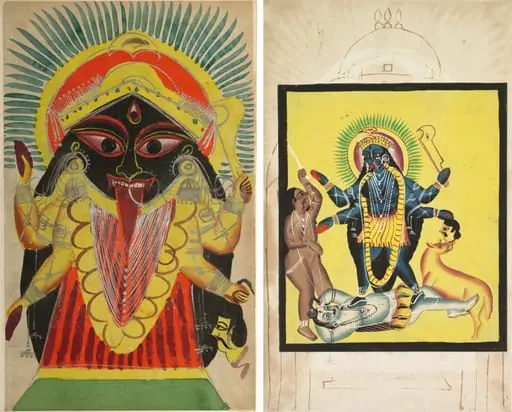 Leaf from a Kalighat album: The Goddess Kali (recto); Kali Standing on Shiva (verso)
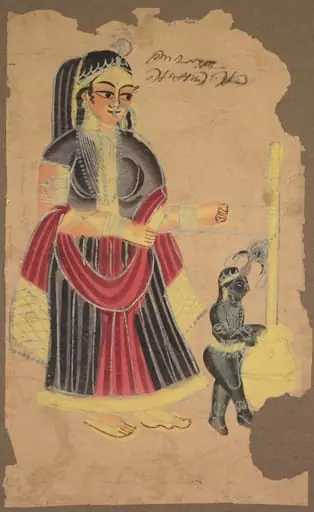 Yasoda and Krishna
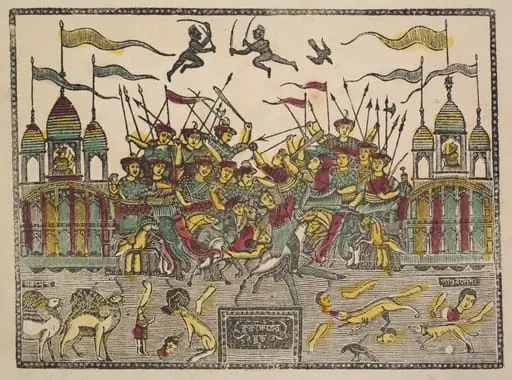 Battle Scene at Kurukshetra from the Mahabharata War (verso), from a Kalighat album
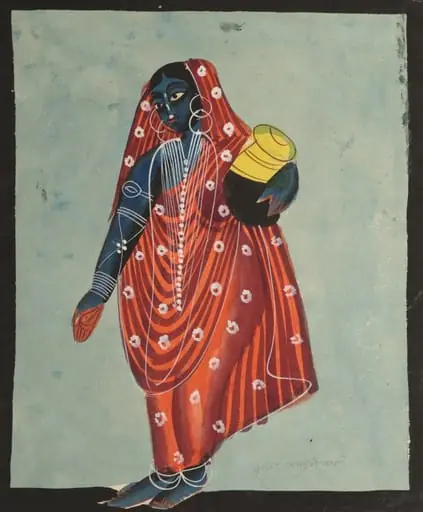 Vishnu in Female Form of Mohini Carrying Amrita for the Gods
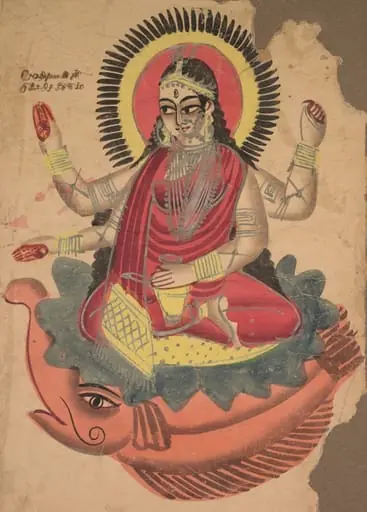 The Goddess Ganga
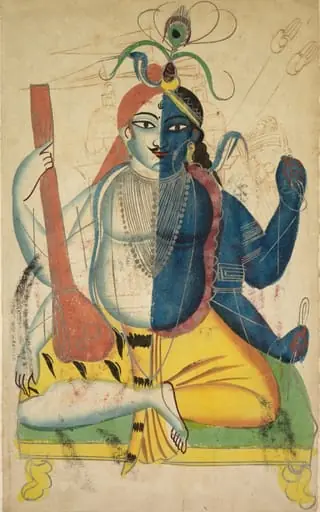 Hari-Hara (recto), from a Kalighat album
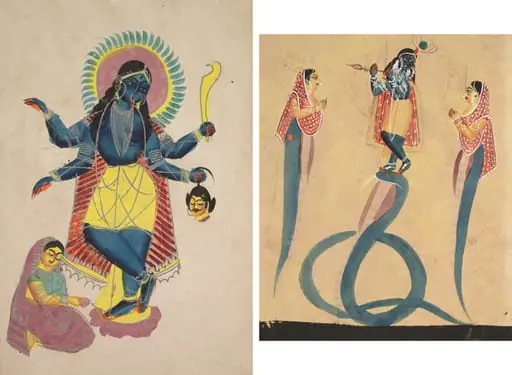 Leaf from a Kalighat album: Krishna as Kali worshipped by Radha (recto); Krishna quells the serpent Kaliya (verso)
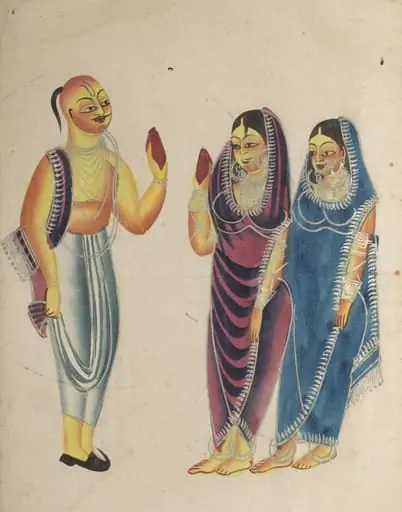 Vaishnava Devotee with Two Women
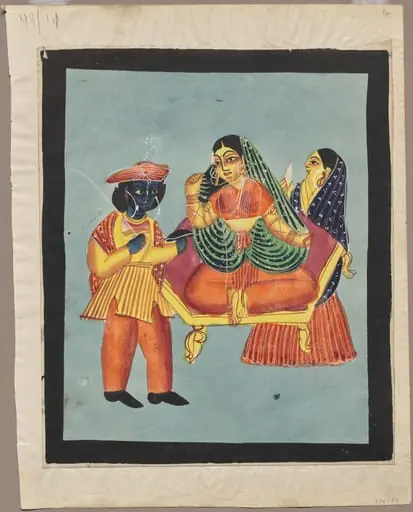 Rai Raja, from a Kalighat album
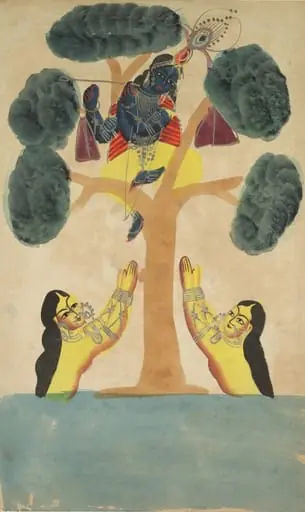 Krishna Steals the Clothes of the Cowgirls (Gopis) (recto), from a Kalighat album
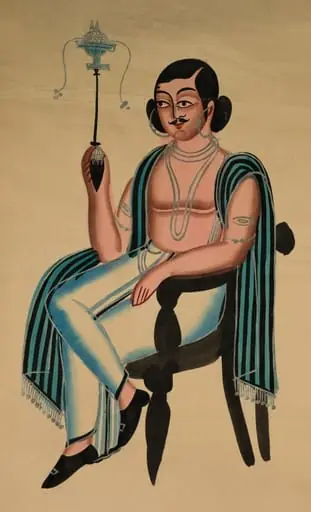 Man Seated in a European Chair Smoking a Margila Pipe, from a Kalighat album
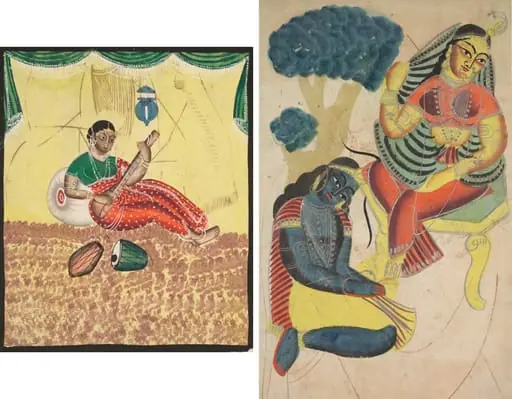 Leaf from a Kalighat album: Woman Playing Music (recto); Krishna Stroking Radha's Feet (verso)
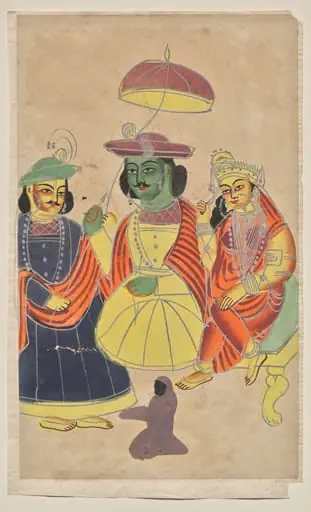 Rama and Sita enthroned with Lakshmana and Hanuman attending, from a Kalighat album
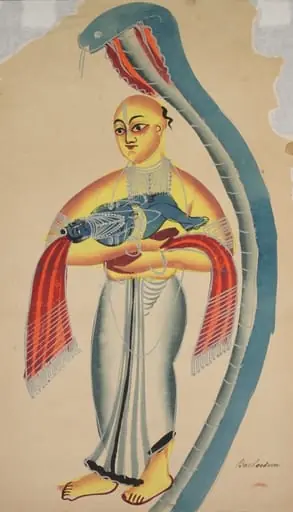 A Serpent Protects Vasudeva Taking His Infant Son Krishna to Safety
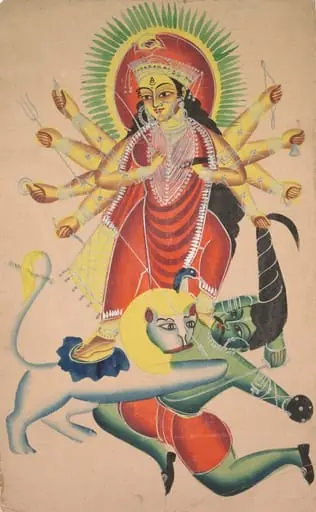 Durga Killing the Demon Mahisha
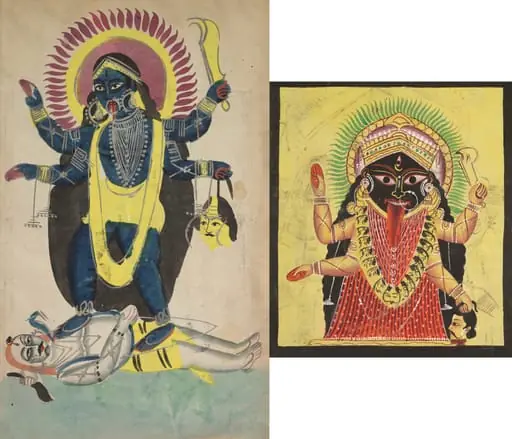 Leaf from a Kalighat album: Two Aspects of Kali
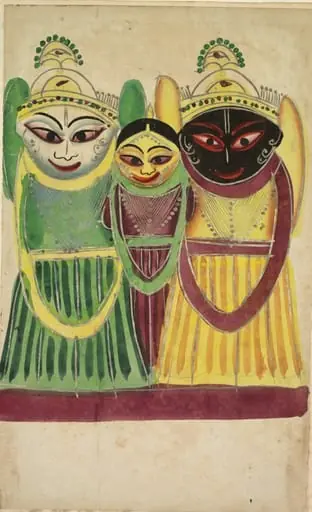 Jagannatha Trio (verso)
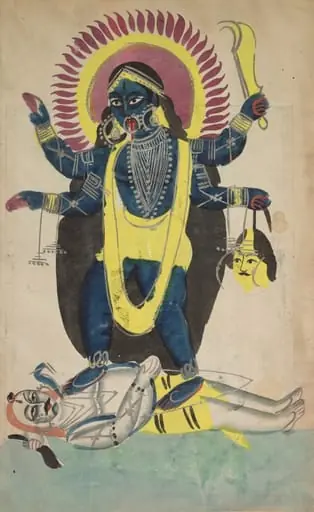 Kali Dancing on Shiva (recto), from a Kalighat album
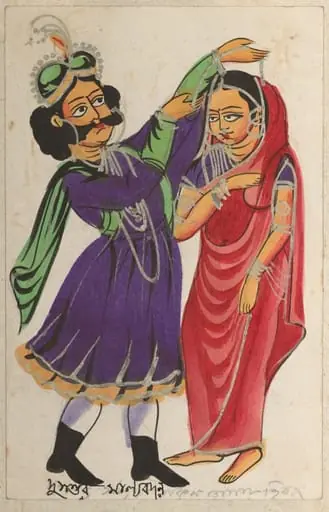 Dusmanta Garlanding Shakumtala
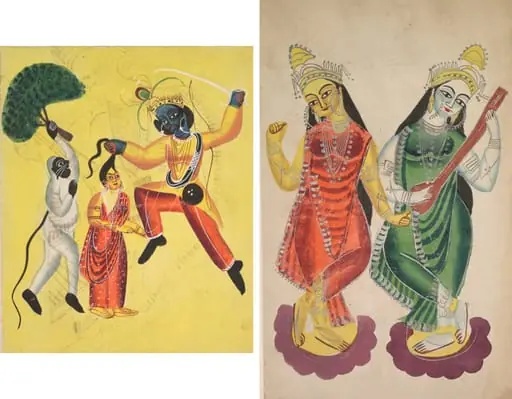 Leaf from a Kalighat album: Hanuman attacks Indrajit holding an apparition of Sita by the hair (recto); Goddesses Lakshmi and Sarasvati (verso)
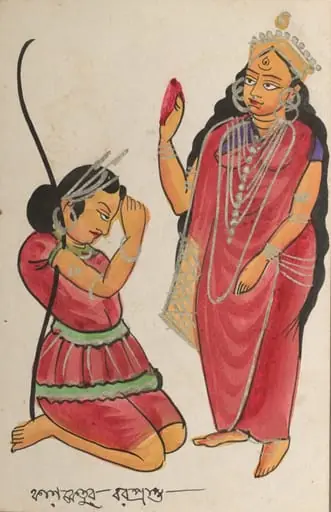 Kalaketu Receiving a Boon from the Goddess Chandi
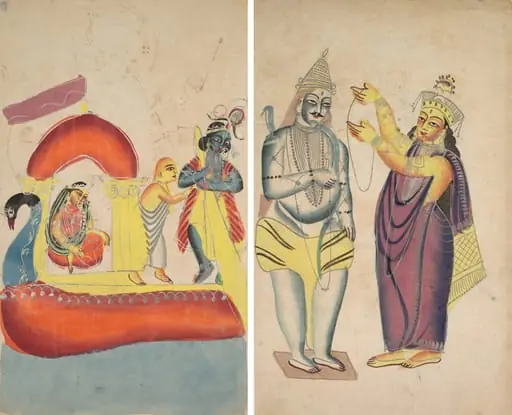 Krishna Ferrying Radha Across the Yamuna River (recto); Parivati Placing a Wedding Garland on Shiva (verso)
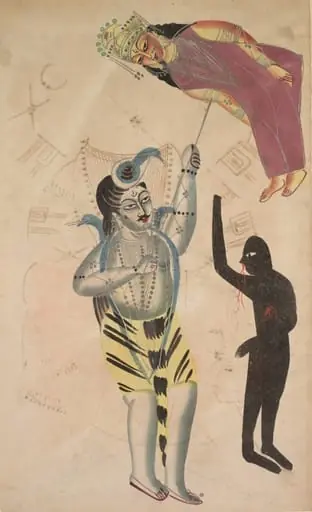 Shiva Bearing Aloft the Body of His Sati
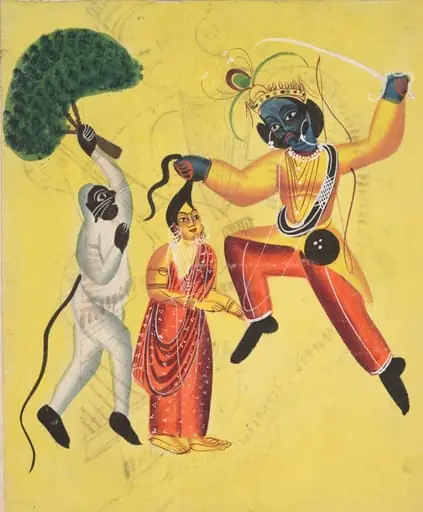 Hanuman attacks Indrajit holding an apparition of Sita by the hair
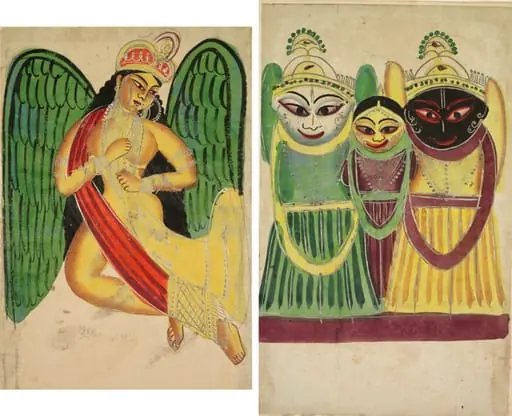 Winged Apsara with a Horn (recto); Jagannatha Trio (verso)
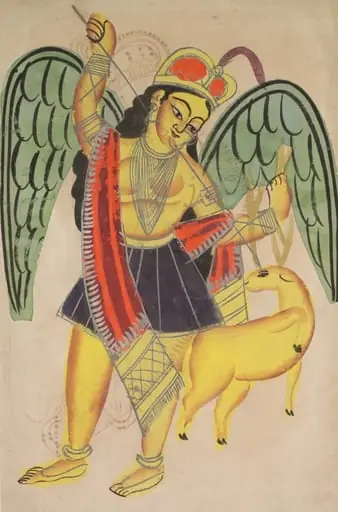 Diana or Artemis, Goddess of the Hunt
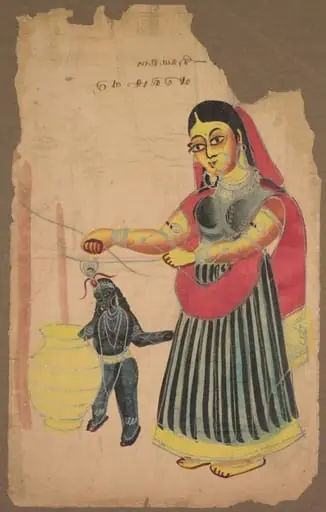 Yasoda with Krishna Churning Butter
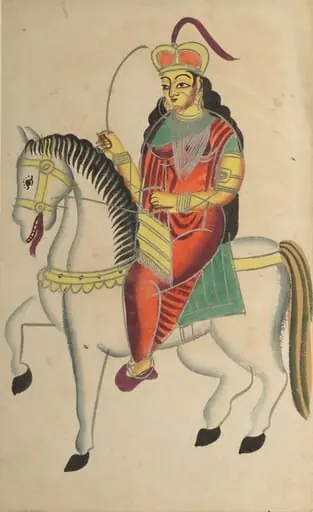 The Mutiny of the Heroine Rani Lakshmi Bai of Jhansi
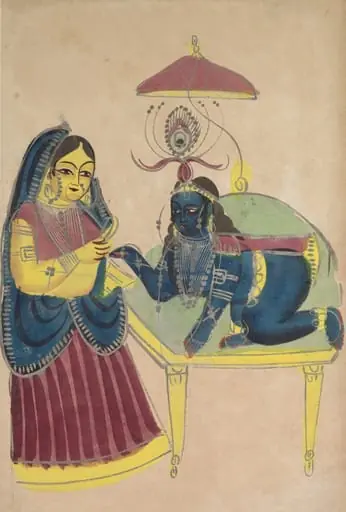 Baby Krishna Asking for Butter from Yashoda, from a Kalighat album
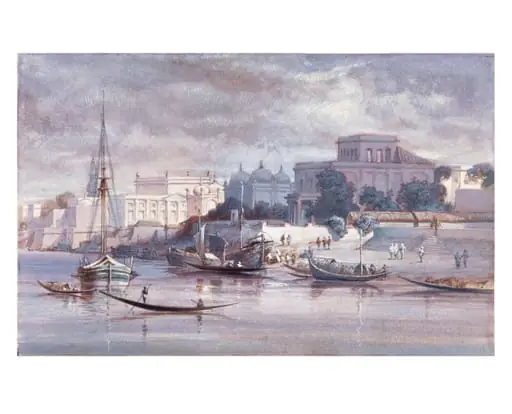 Untitled
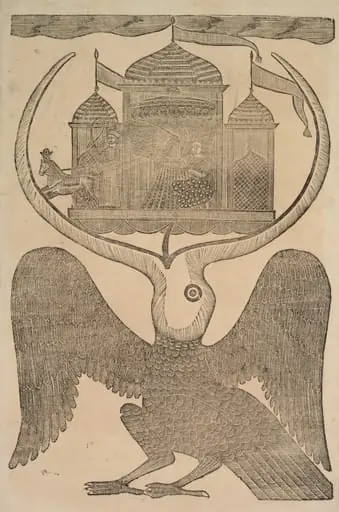 Jatayu hinders Ravana’s chariot trying to prevent Sita’s abduction (recto), from a Kalighat album
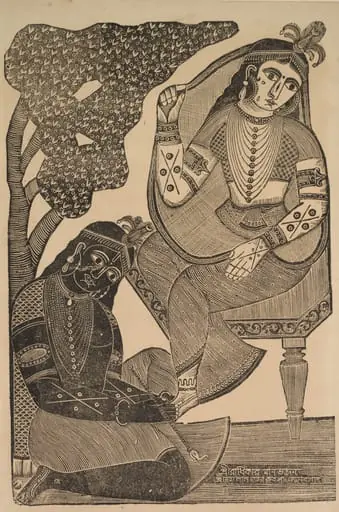 Krishna Stroking Radha's Feet
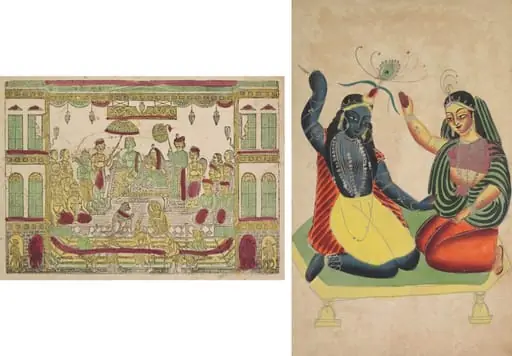 Leaf from a Kalighat album: Rama and Sita in the Royal Palace (recto); Radha and Krishna (verso)
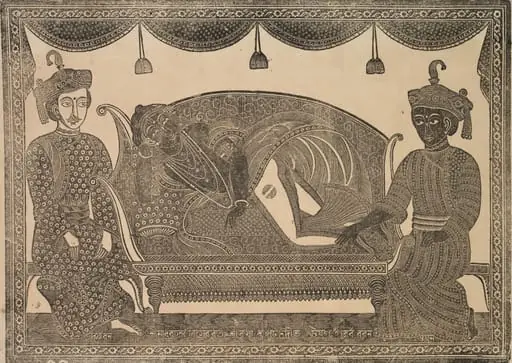 Kalighat Painting
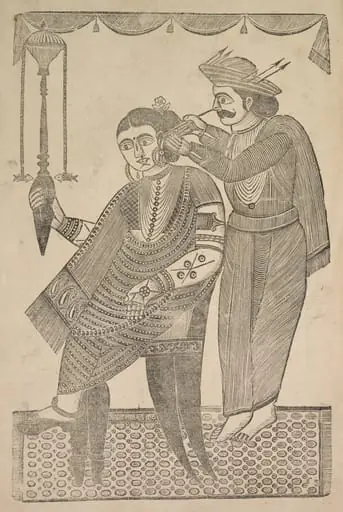 A Barber Cleaning the Ear of a Courtesan
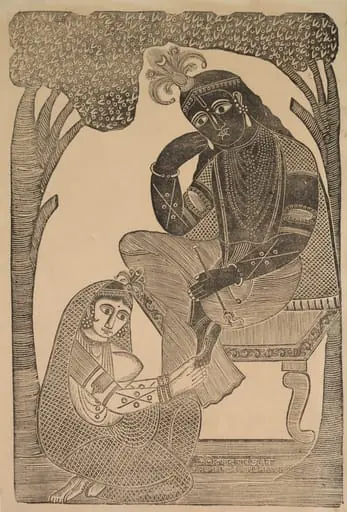 Radha Stroking Krishna's Feet
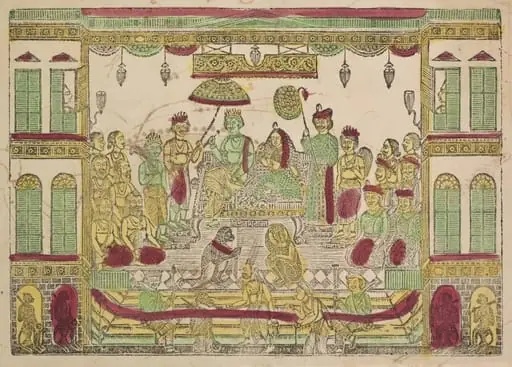 Rama and Sita in the royal palace (recto), from a Kalighat album
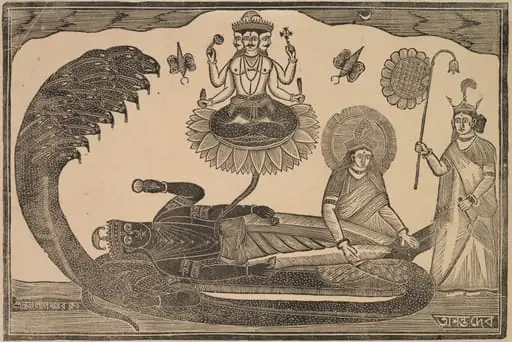 Anantasayan (Vishnu Reclining on Serpent Ananta)
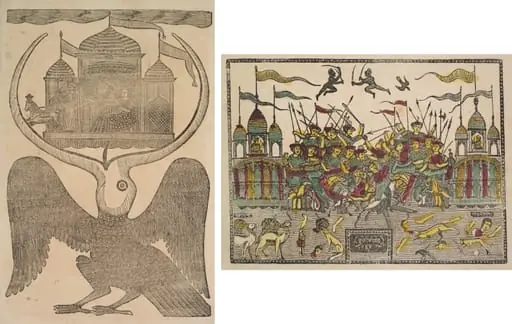 Leaf from a Kalighat album: Jatayu hinders Ravana’s chariot trying to prevent Sita’s abduction (recto); Battle Scene at Kurukshetra from the Mahabharata War (verso)
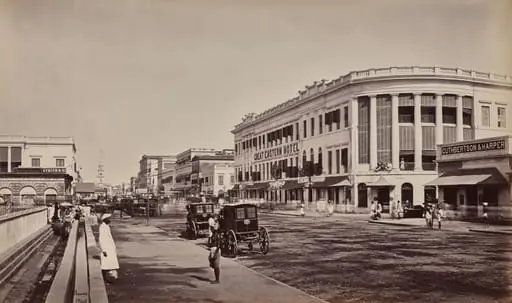 Calcutta. Old Court House Street
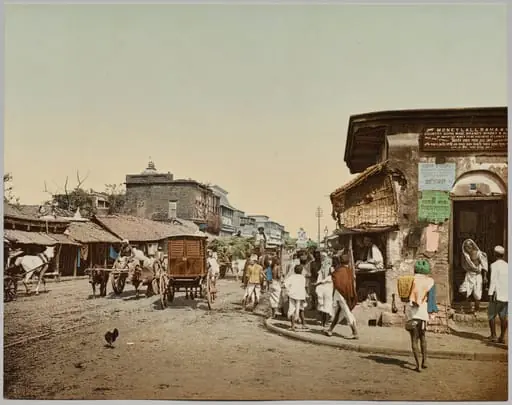 India. Calcutta. Upper Chitpore Road (A), after photo by Dr. Kurt Boeck
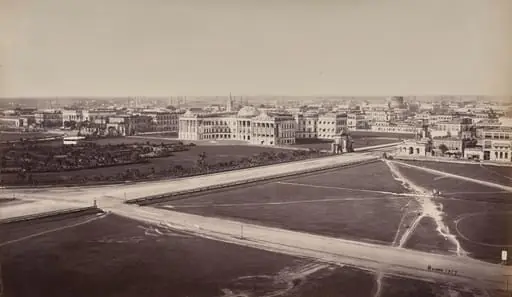 Calcutta. General View. Government House in the Foreground
Frequently asked questions
What is Kolkata?
Kolkata, also known as Calcutta (its official name until 2001), is the capital and largest city of the Indian state of West Bengal.
How many Kolkata works does Artifact World Gallery have?
Artifact World Gallery holds 106 public-domain Kolkata works, all free to view and download.
Who are the key Kolkata artists?
Key Kolkata artists in the collection include Shri Gobinda Chandra Roy, Frederick William Alexander De Fabeck and Samuel Bourne.
Where can I see Kolkata works?
Kolkata works in the collection are held by Cleveland Museum of Art and Victoria and Albert Museum.