Subject
Kalighat
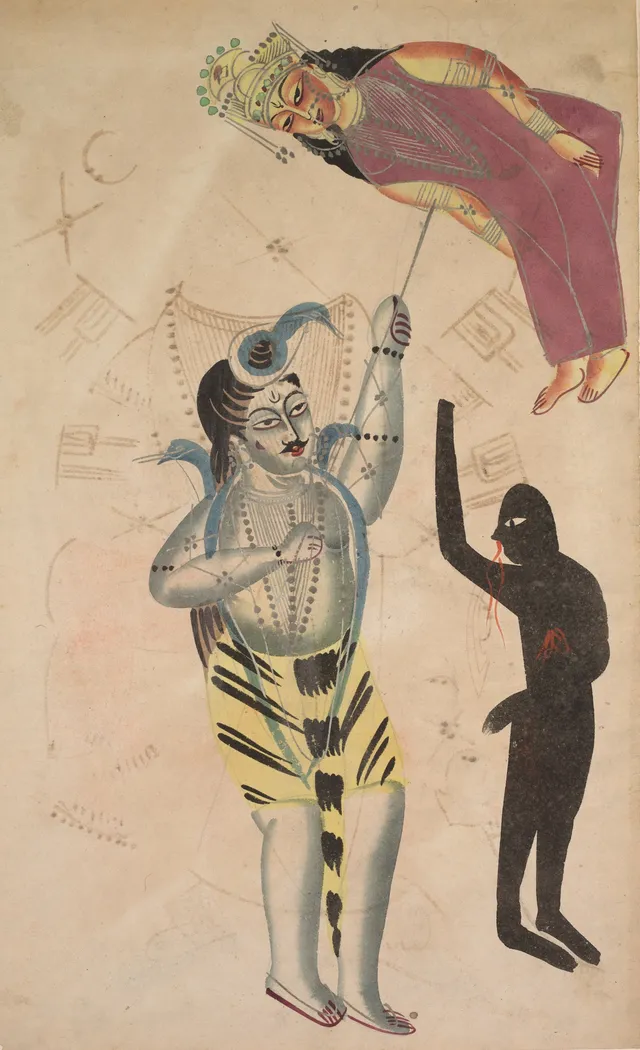
Kalighat is a subject in art. The gallery holds 200 works in this subject in art, including works by Shri Gobinda Chandra Roy, Nibaran Chandra Ghosh and George Keyt.
Kalighat painting is a vibrant urban folk idiom that emerged in the first half of the nineteenth century around the Kali temple at Kalighat, in what was then Calcutta (now Kolkata), West Bengal. Its makers were the patuas (or chitrakars), hereditary scroll-painters and storytellers from rural Bengal who migrated to the booming colonial city. There they abandoned the long sequential cloth scrolls (patachitra) of their village trade and reinvented their craft for a new market: cheap, quickly produced souvenir pictures sold to the pilgrims, visitors and tourists thronging the temple. The style's rise coincides roughly with the construction of the present Kali temple around the 1810s–1820s, and material evidence — machine-made paper and imported watercolours — confirms a date in the 1830s onward.
Visually, Kalighat work is defined by economy and confidence. Each picture distils its subject into a single, simplified scene rather than a narrative sequence. Patuas painted with watercolour on mill-made paper, sometimes primed with a lime paste, using broad sweeping brushstrokes, sinuous calligraphic outlines and flat, saturated fields of colour against bare, neutral backgrounds. Figures are rounded and sculptural, often with a characteristic shaded, almost three-dimensional modelling of limbs; silver and tinsel were occasionally added for jewellery. The result is bold, immediate and reproducible — an early form of mass-market pictorial art.
The subjects fall into two great streams. The first is devotional: Hindu deities such as Kali, Durga, Shiva, Krishna, Lakshmi and the avatars of Vishnu, alongside episodes from the epics — the very repertoire represented in our holdings, from The Goddess Kali and Kali Standing on Shiva to Matsya, Fish Avatara of Vishnu and Shiva Bearing Aloft the Body of His Sati. The second stream is sharply secular and satirical, mocking the westernised Bengali "babu," courtesans, scandal-mongering and corrupt priests; the notorious 1873 Tarakeswar murder of Elokeshi generated a whole genre of pictures.
The school was largely anonymous and faded by about 1930, eclipsed by cheaper chromolithographs. Yet its legacy is profound: the modernist Jamini Roy (1887–1972) drew directly on its linework and flat colour, and contemporary practitioners such as Kalam Patua and Anwar Chitrakar continue the tradition. Major collections survive at the Victoria and Albert Museum, the Bodleian Library and museums worldwide, securing Kalighat's place as a pioneering popular art of colonial India.
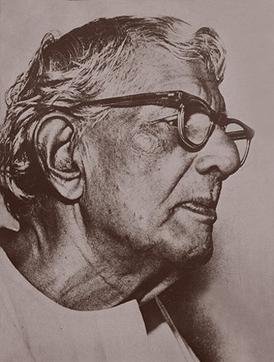
Key artists
Works
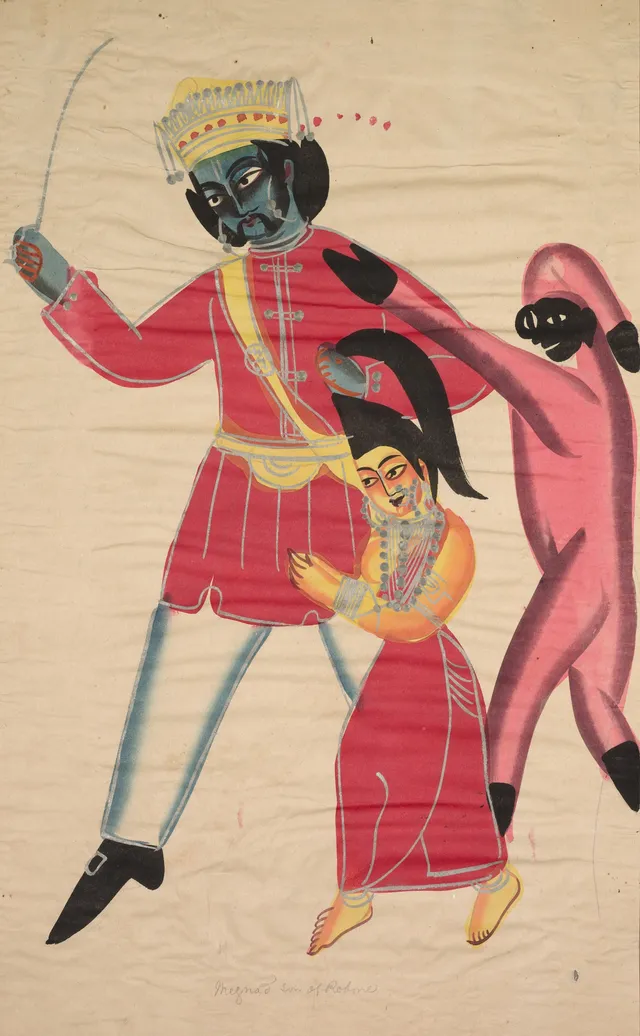
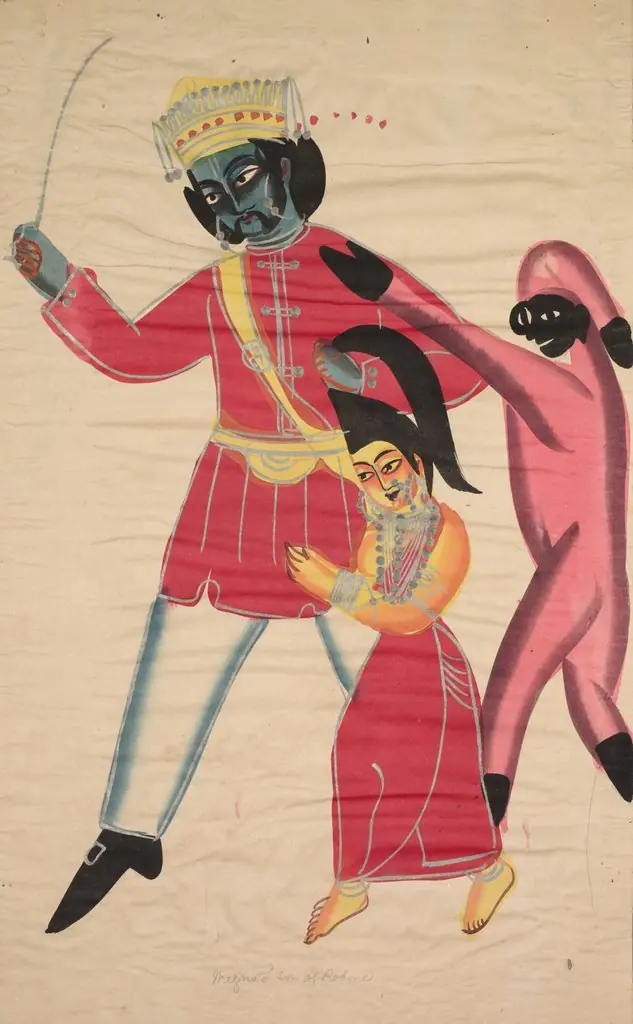 Megha-Nada (Indrajit, Son of Radha)
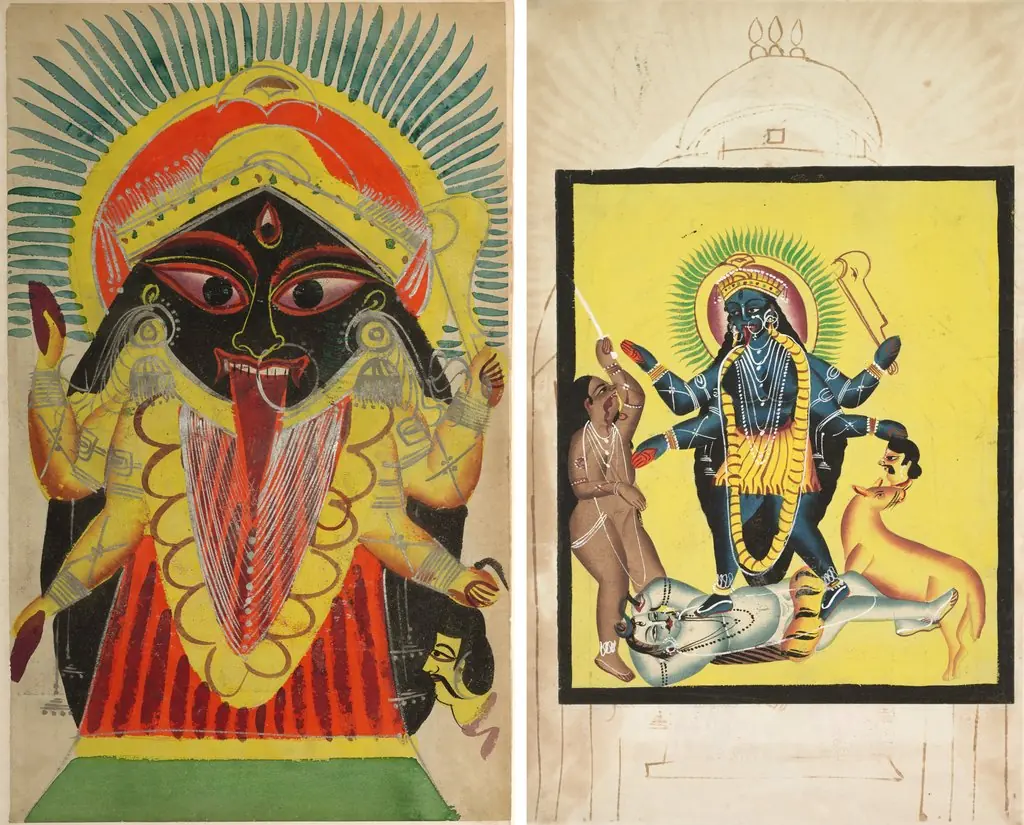 Leaf from a Kalighat album: The Goddess Kali (recto); Kali Standing on Shiva (verso)
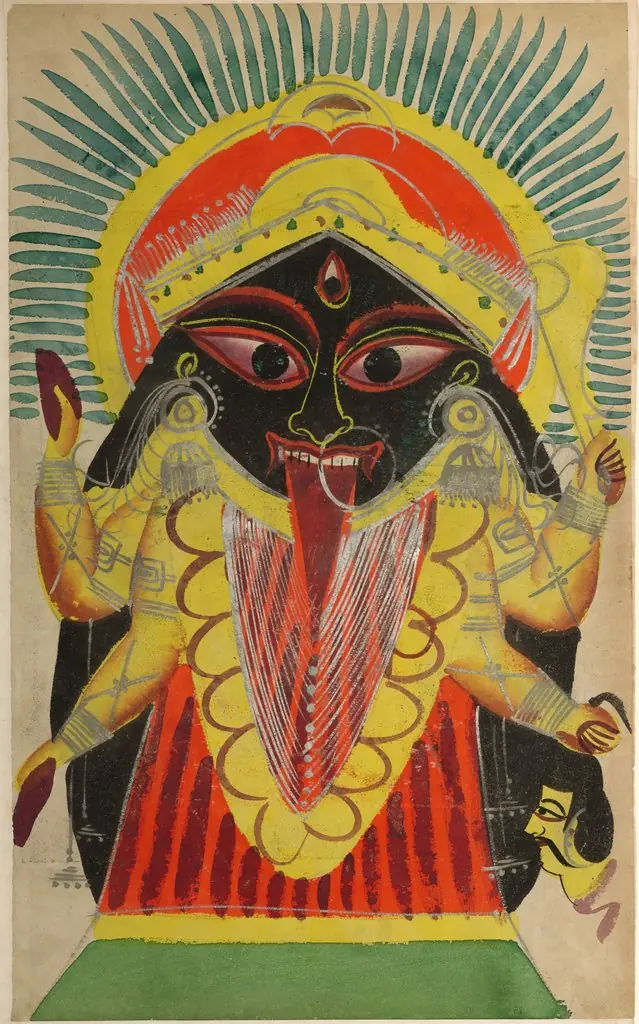 The Goddess Kali (recto), from a Kalighat album
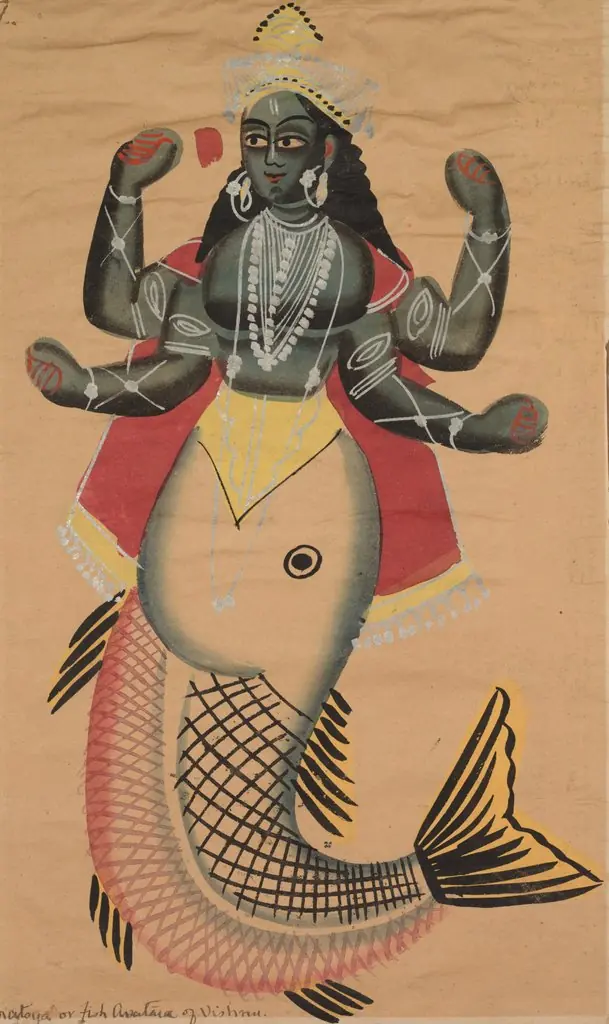 Matsya, Fish Avatara of Vishnu
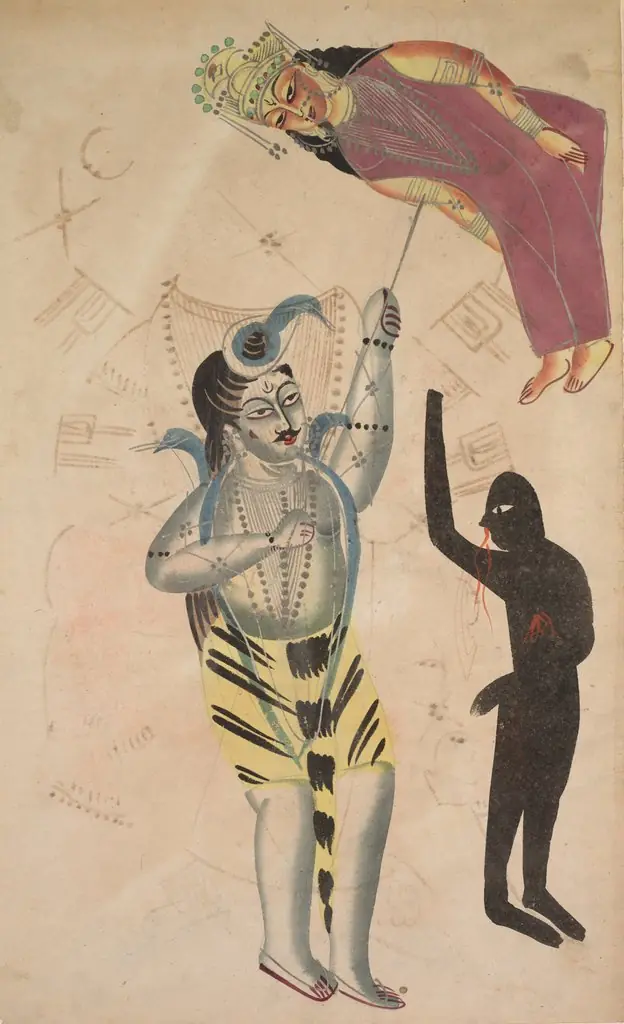 Shiva Bearing Aloft the Body of His Sati
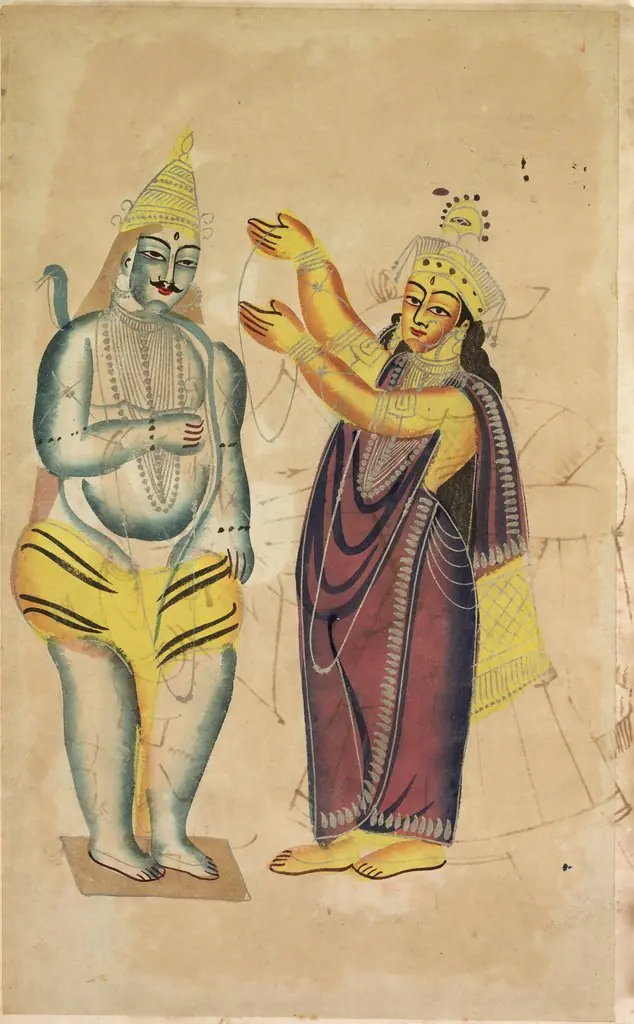 Parvati Placing a Wedding Garland on Shiva (recto), from a Kalighat album
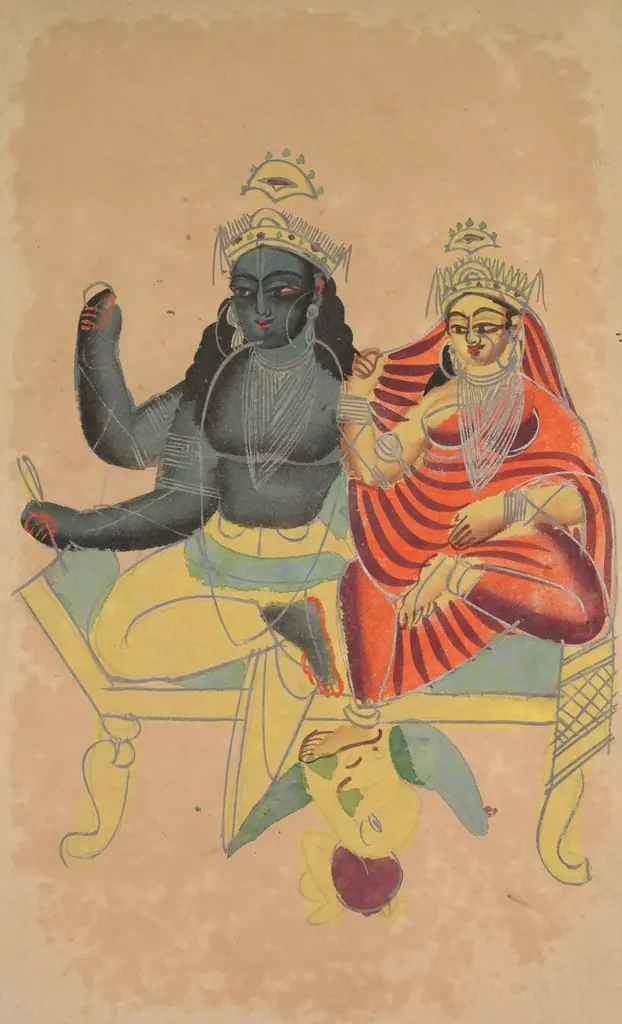 Vishnu and Lakshmi
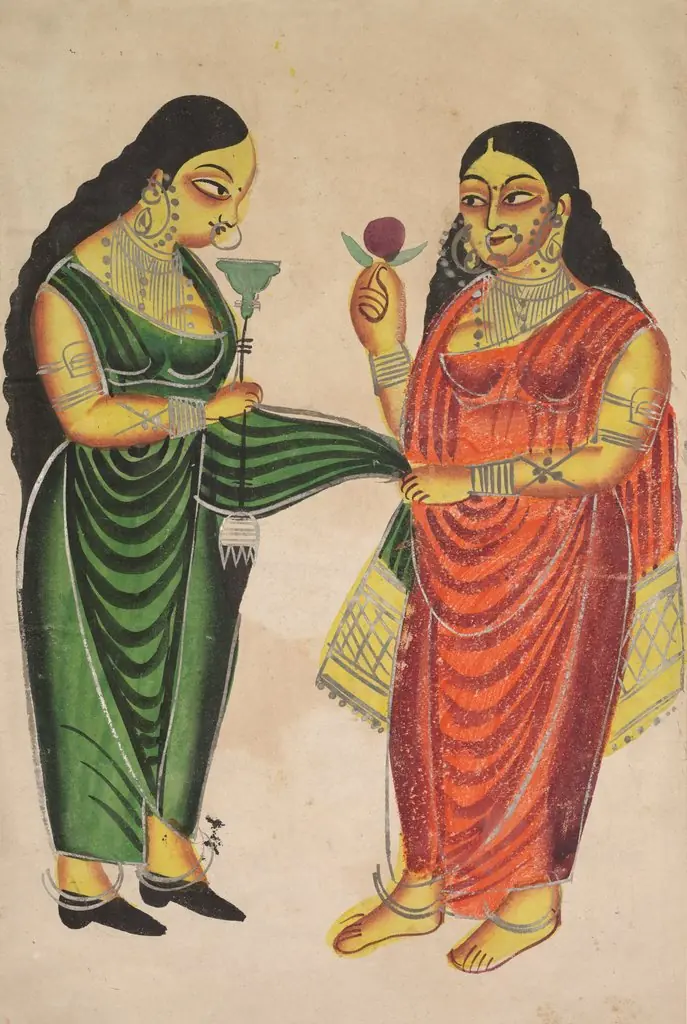 Maid bringing a hookah to a lady (recto), from a Kalighat album
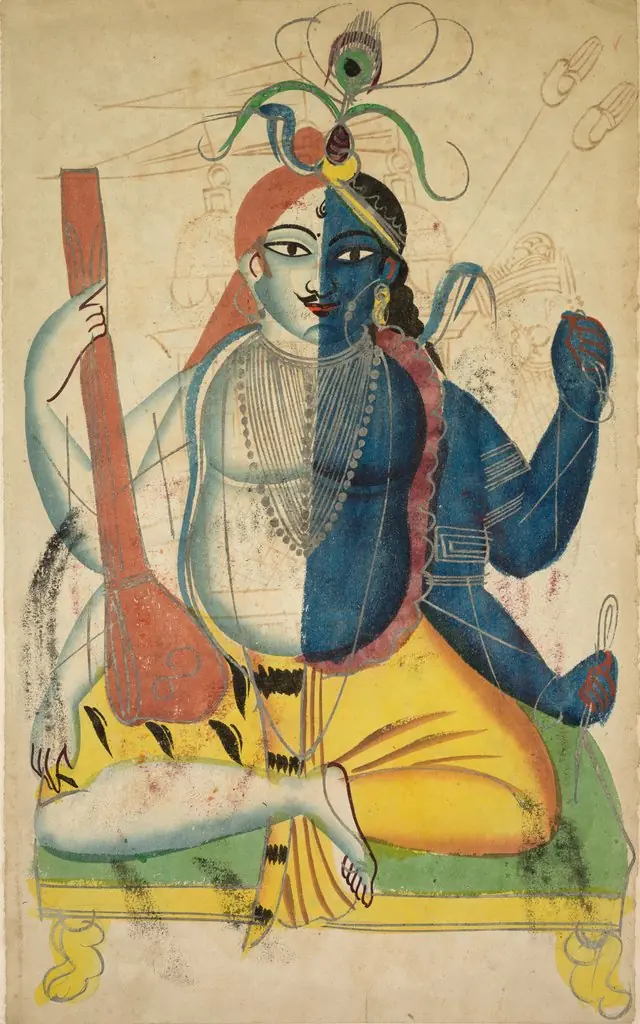 Hari-Hara (recto), from a Kalighat album
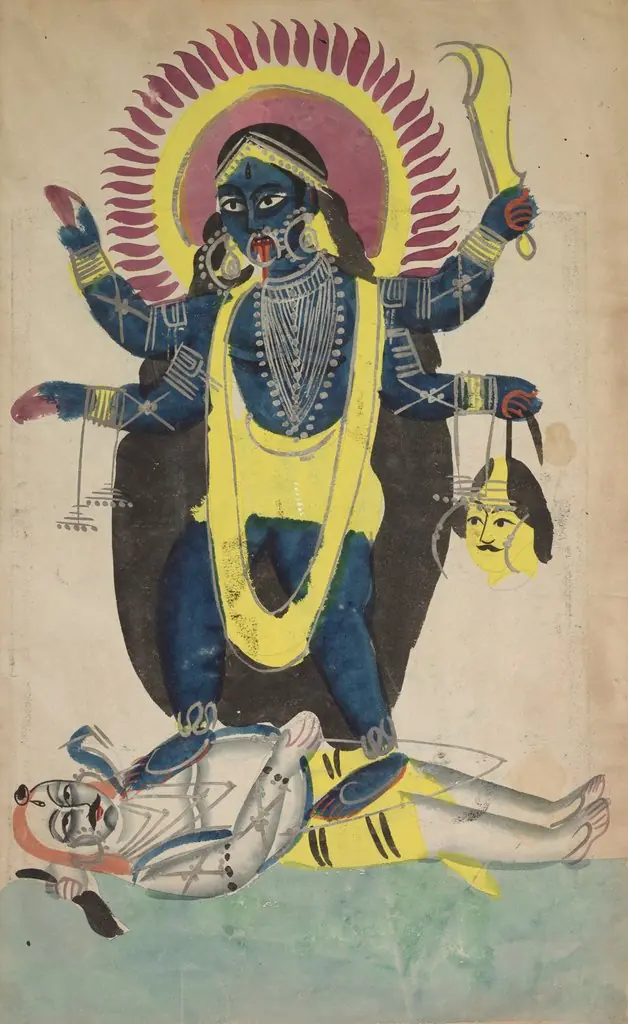 Kali Dancing on Shiva (recto), from a Kalighat album
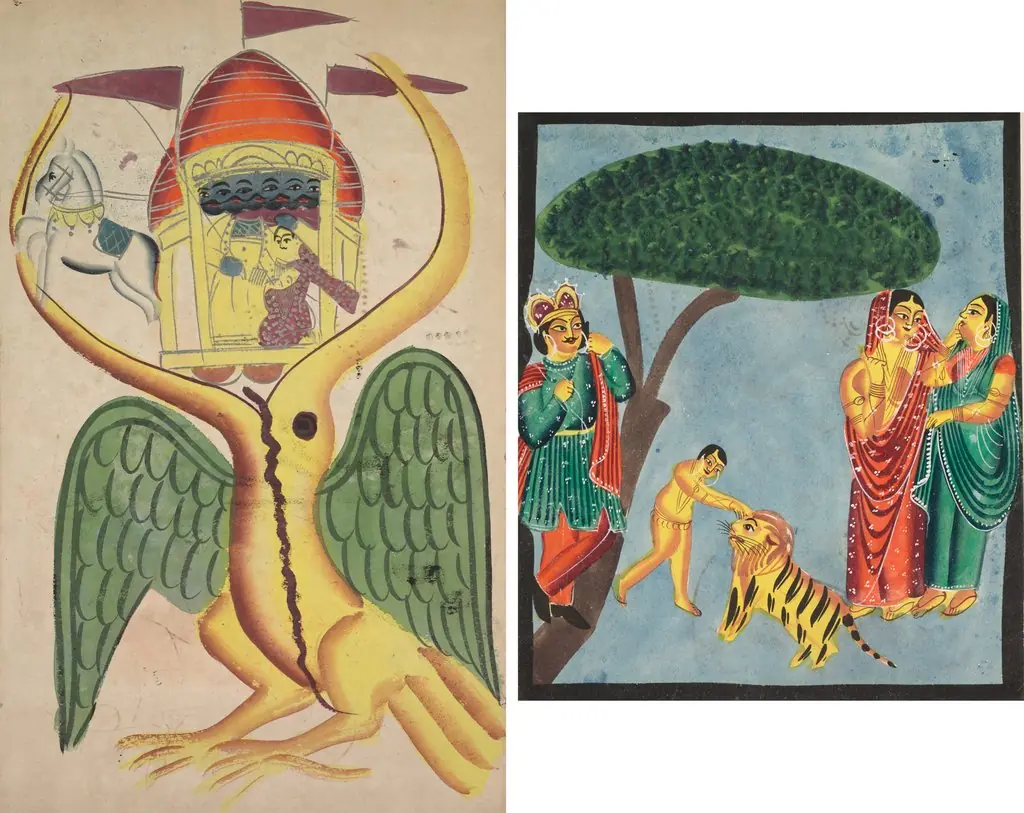 Leaf from a Kalighat album: Jatayu hinders Ravana’s chariot, trying to prevent the abduction of Sita (recto); Dushyanta watching his son Bharat playing with the tiger at the end of the Abhijnanashakuntalam (verso)
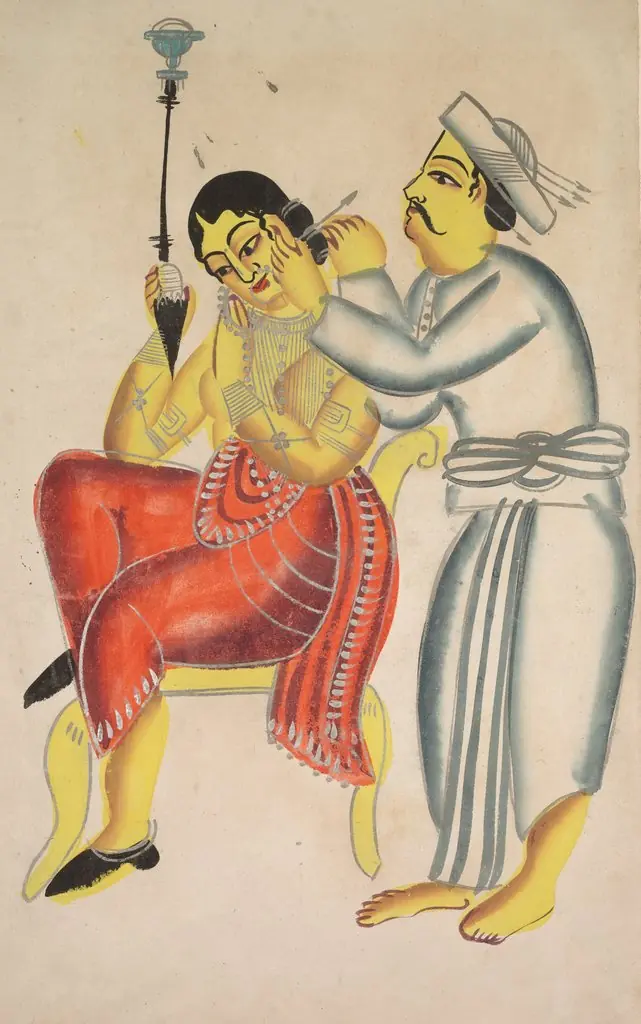 Barber Cleaning a Woman’s Ear
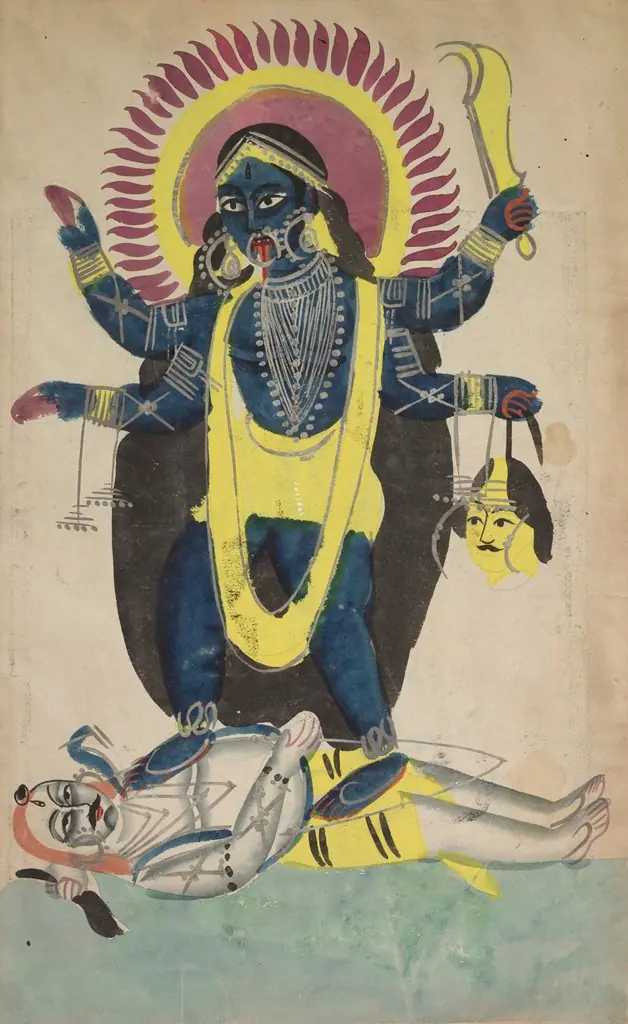 Leaf from a Kalighat album: Two Aspects of Kali
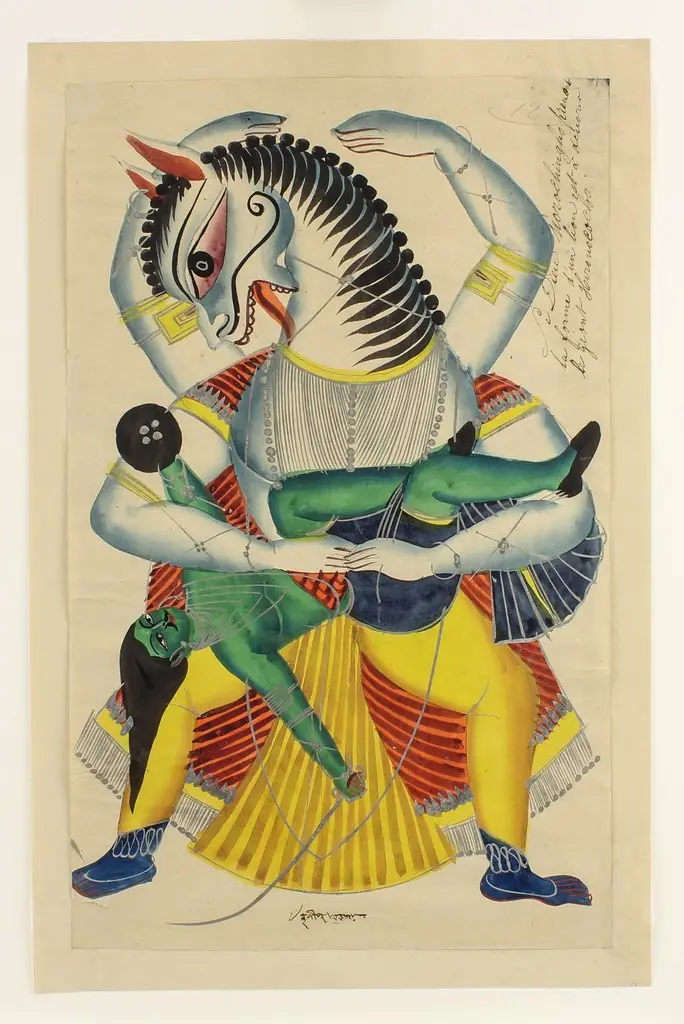 The avatar Narasimha
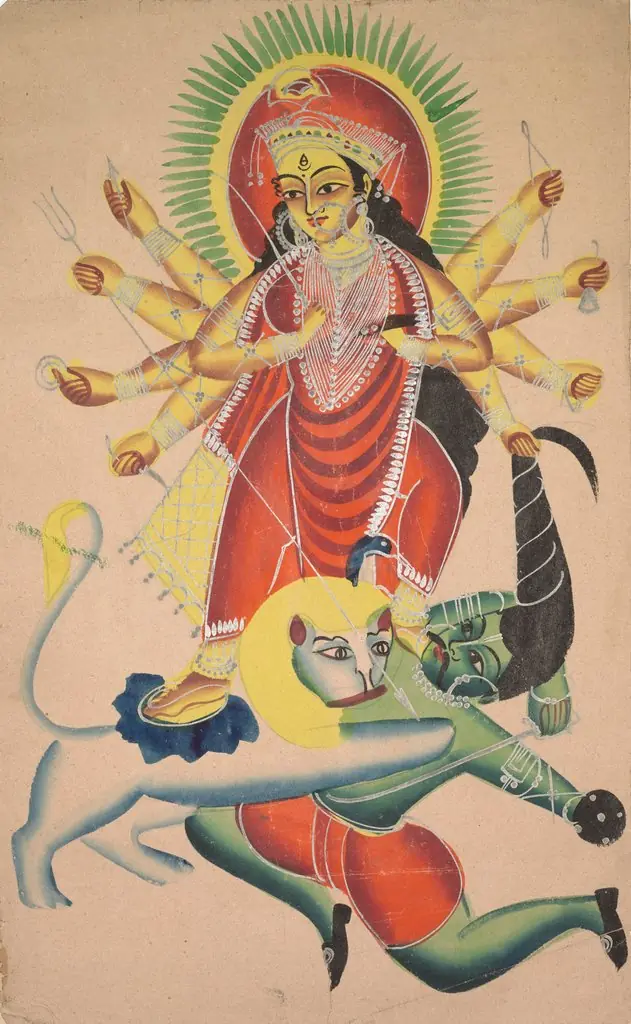 Durga Killing the Demon Mahisha
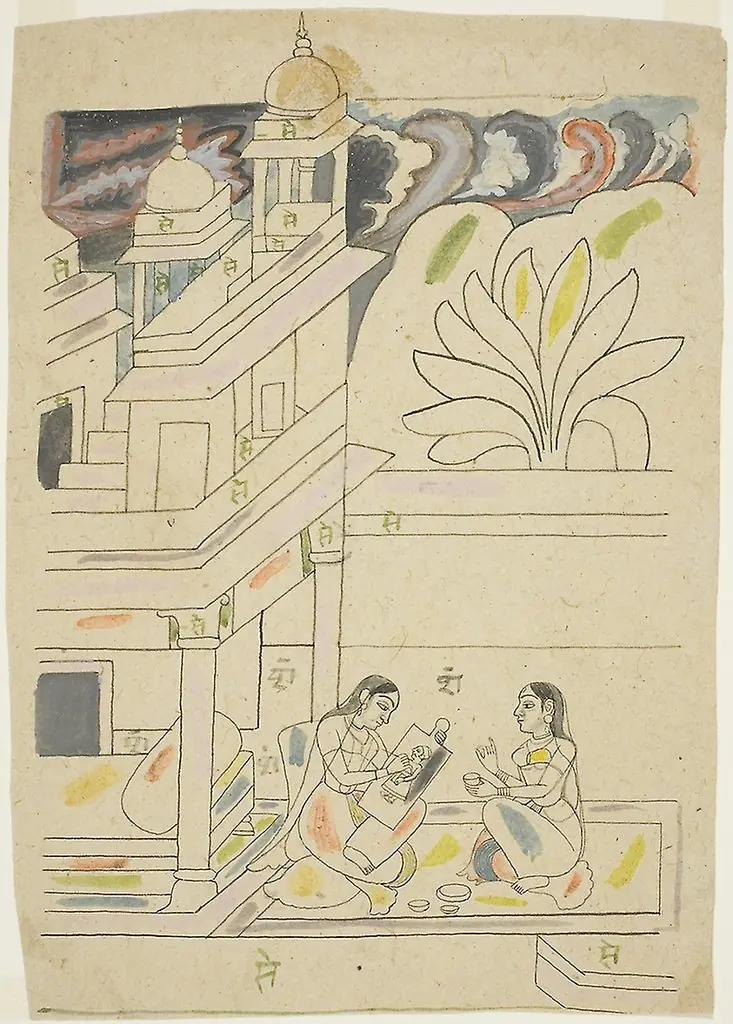 Dhanasri Ragini
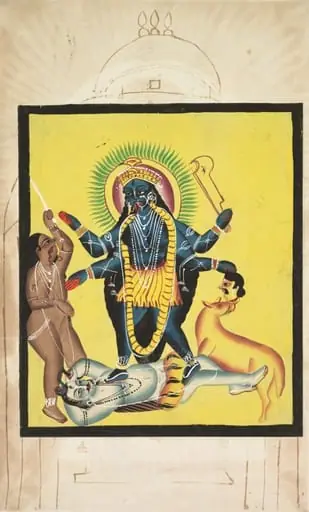 Kali Standing on Shiva (verso), from a Kalighat album
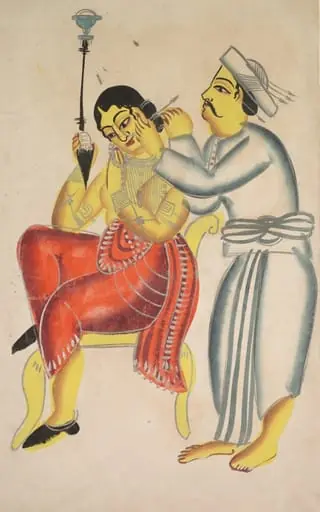 Barber Cleaning a Woman’s Ear
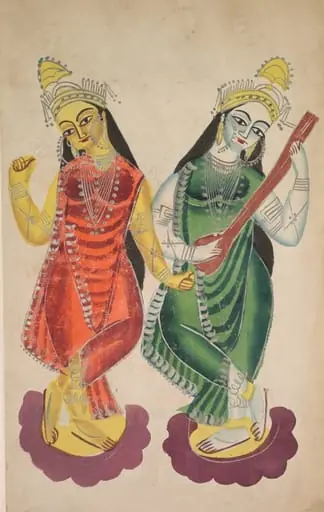 Goddesses Lakshmi and Sarasvati (verso), from a Kalighat album
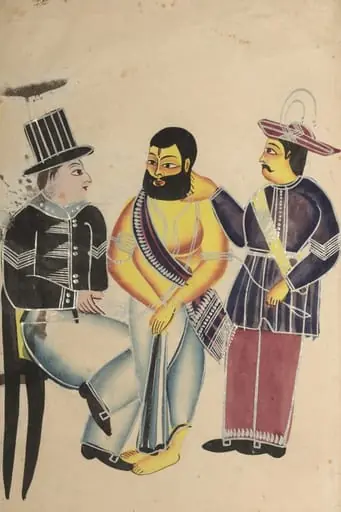 Jailer Receiving the Mahant of Tarakeshwar in Prison
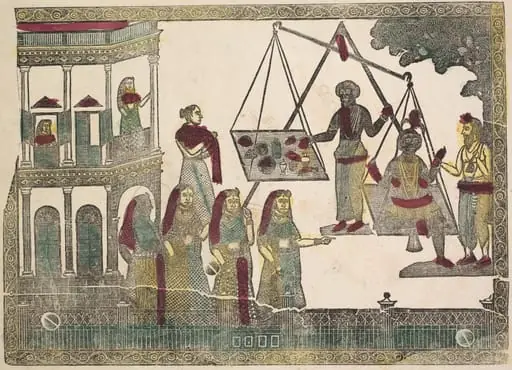 Krishna weighed against precious objects(?) (verso), from a Kalighat album
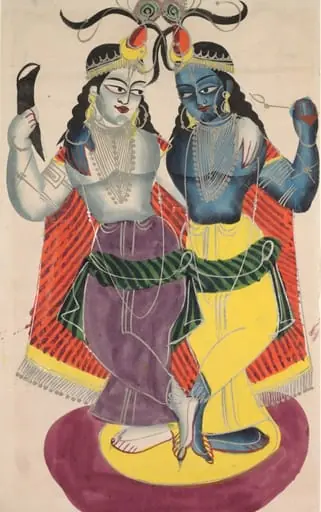 Balarama and Krishna
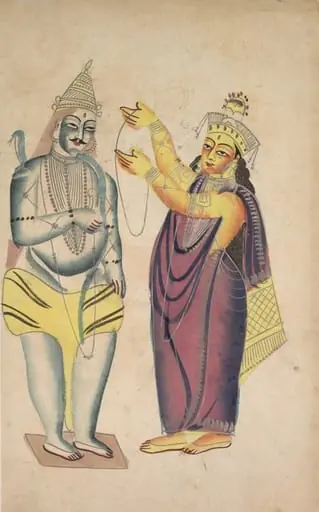 Parivati Placing a Wedding Garland on Shiva (verso)
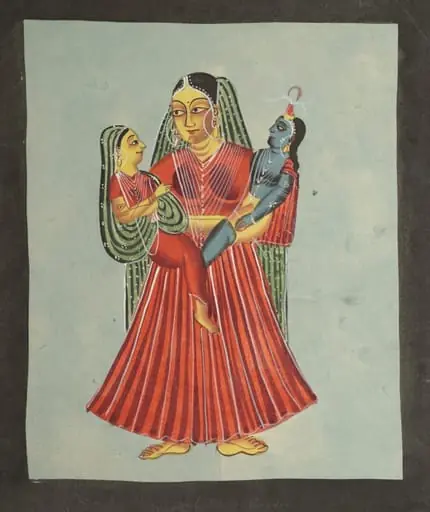 Yasoda Holding Krishna and Radha
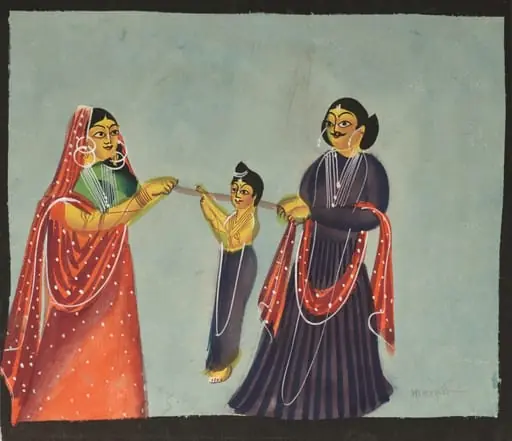 Kalighat Painting
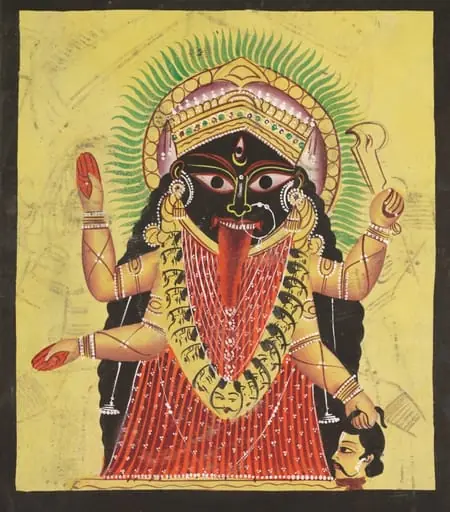 Kali Enshrined (verso), from a Kalighat album
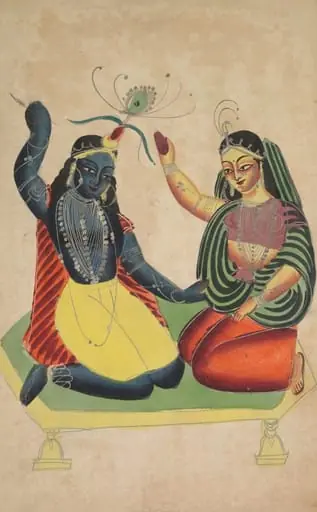 Radha and Krishna (verso), from a Kalighat album
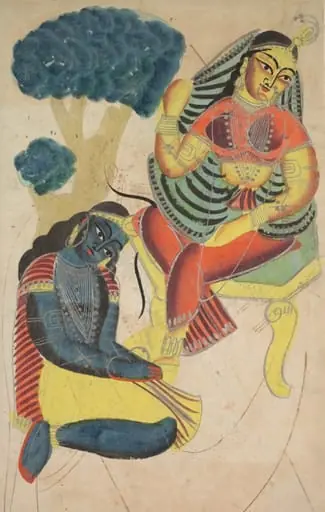 Krishna Stroking Radha's Feet (verso), from a Kalighat album
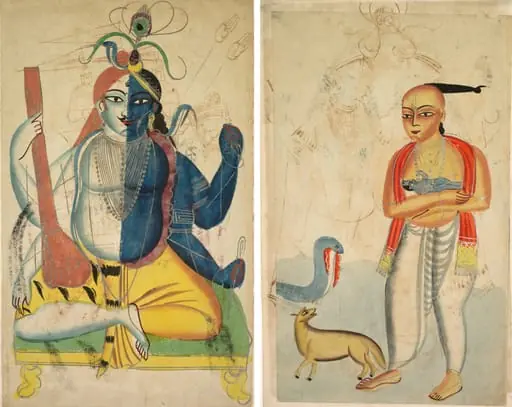 Leaf from a Kalighat album: Hari-Hara (recto); Vasudeva (Krishna's Father) Fleeing with Krishna Encounters a Cobra and a Jackal (verso)
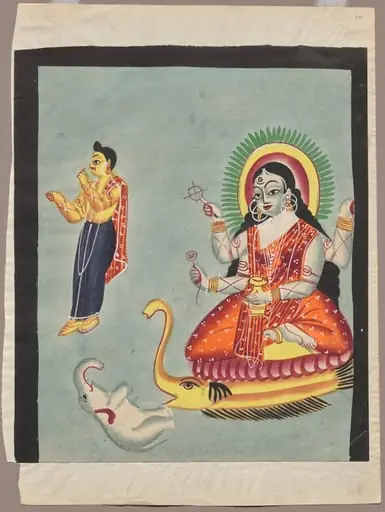 The Goddess Ganga, from a Kalighat album
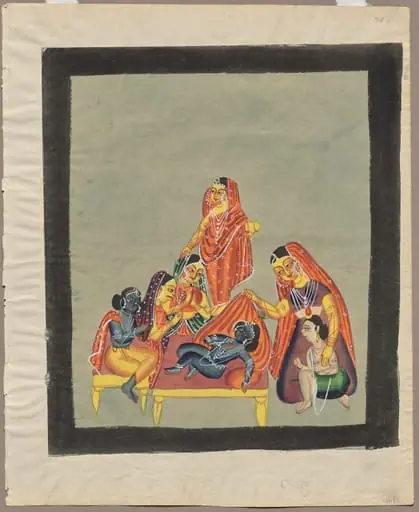 Worship of the Infant Krishna, from a Kalighat album
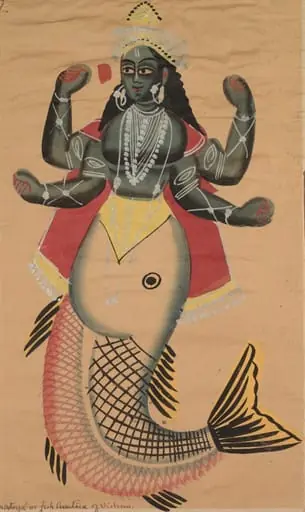 Matsya, Fish Avatara of Vishnu
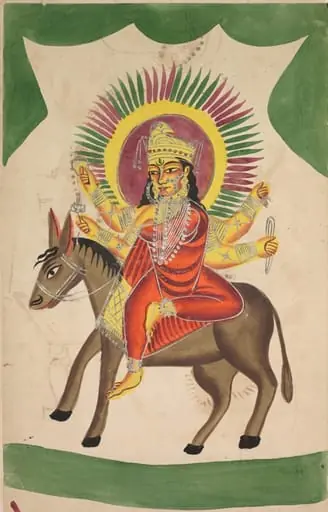 Sheetaladevi: The Smallpox Goddess (recto), from a Kalighat album
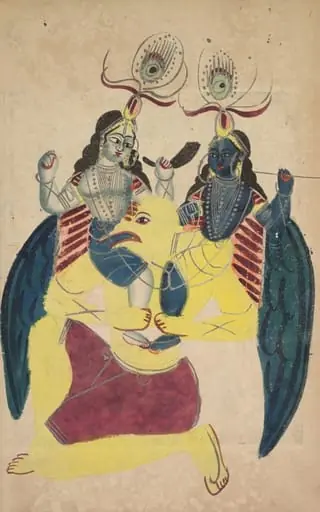 Garuda Carrying Balarama and Krishna (verso), from a Kalighat album
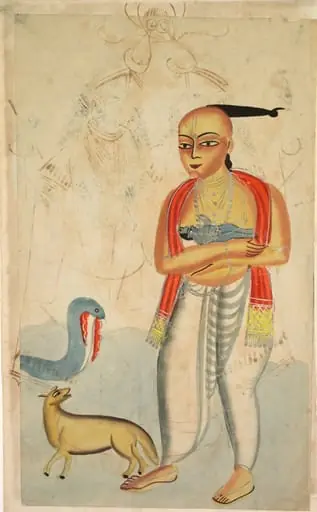 Vasudeva (Krishna's Father) Fleeing with Krishna Encounters a Cobra and a Jackal (verso), from a Kalighat album
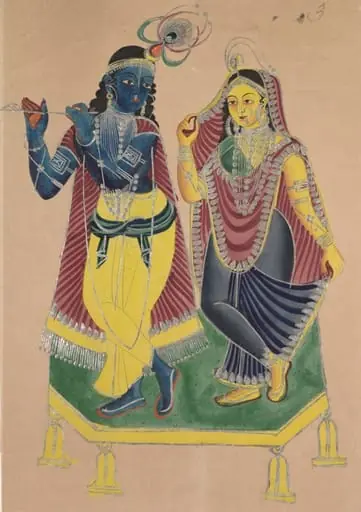 Radha and Krishna
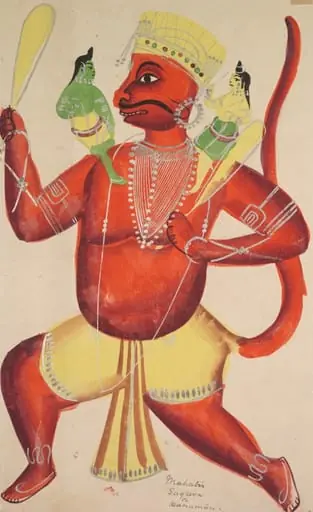 Hanuman with Rama and Lakshmana on his shoulders, from a Kalighat album
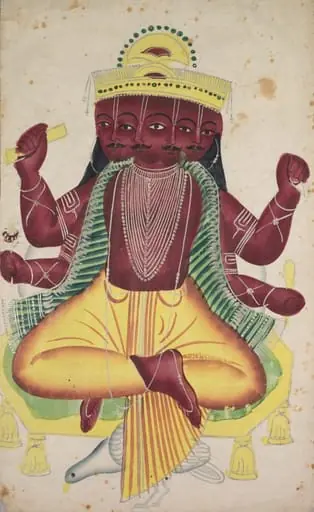 Brahma
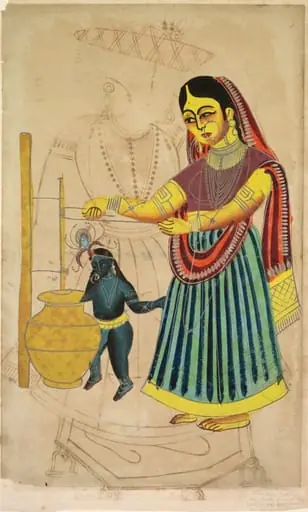 Yasoda Churning Butter (verso), from a Kalighat album
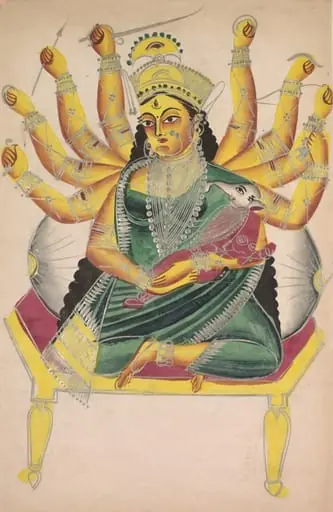 Ganesha-Janani (Mother of Ganesh)
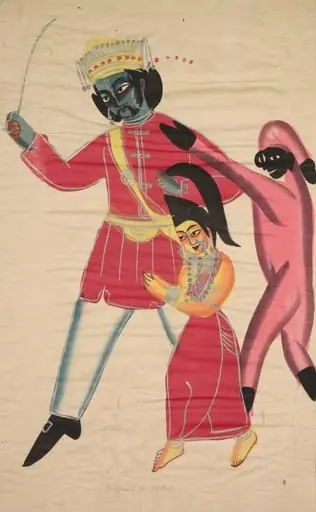 Megha-Nada (Indrajit, Son of Radha)
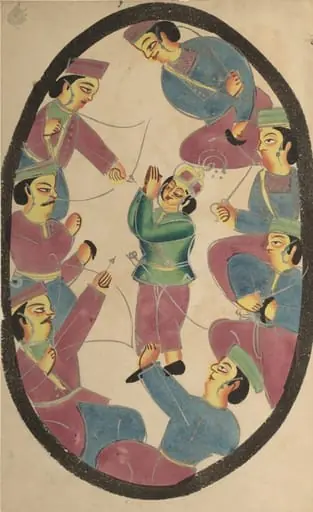 Seven Heroes or Warriors Killing Abhimanya, Son of Arjuna
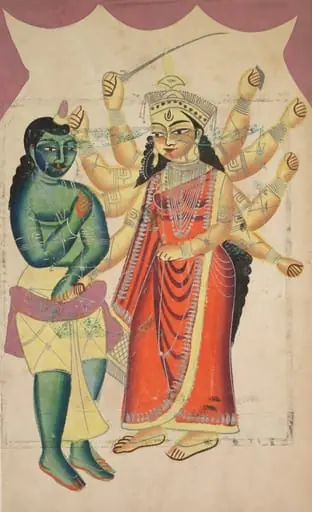 Durga (verso), from a Kalighat album
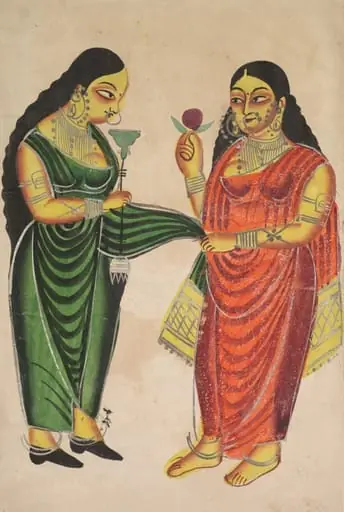 Maid bringing a hookah to a lady (recto), from a Kalighat album
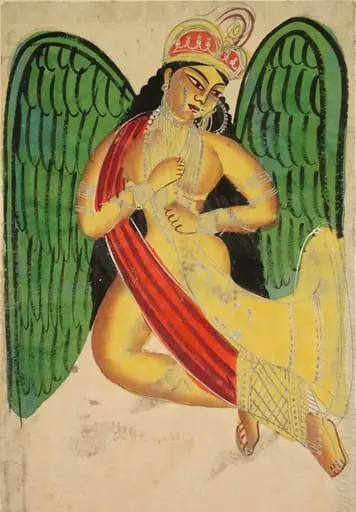 Winged Apsara with a Horn (recto)
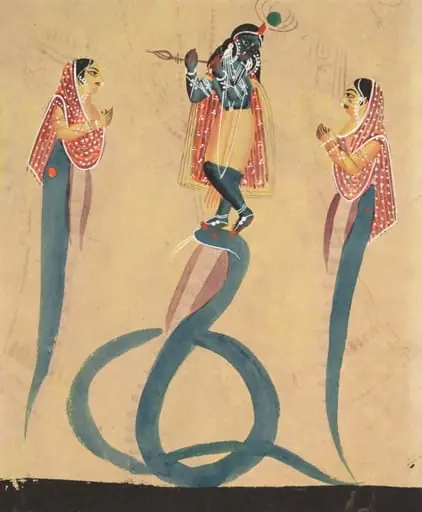 Krishna quells the serpent Kaliya (verso), from a Kalighat album
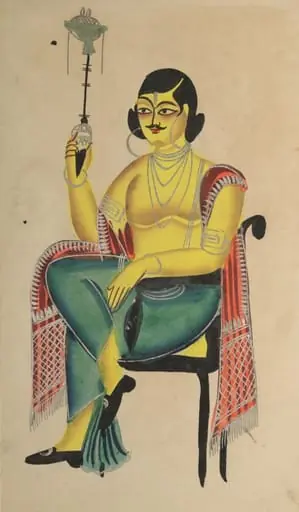 English Babu (Native Indian Clerk) Holding a Hookah
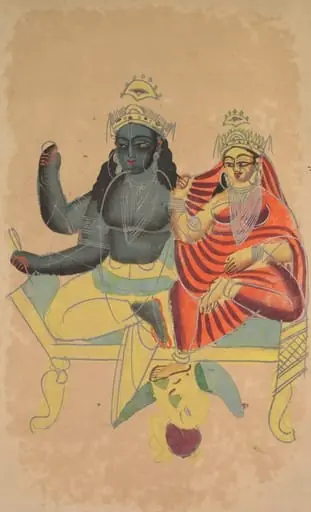 Vishnu and Lakshmi
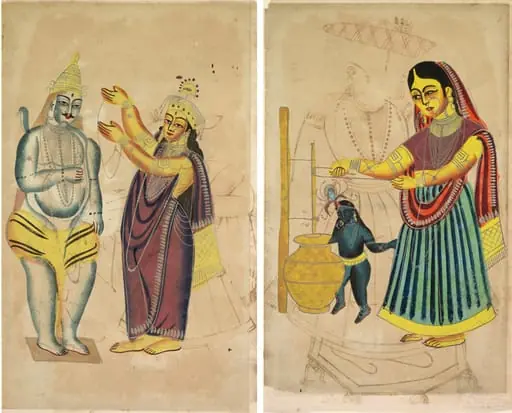 Leaf from a Kalighat album: Parvati Placing a Wedding Garland on Shiva (recto); Yasoda Churning Butter (verso)
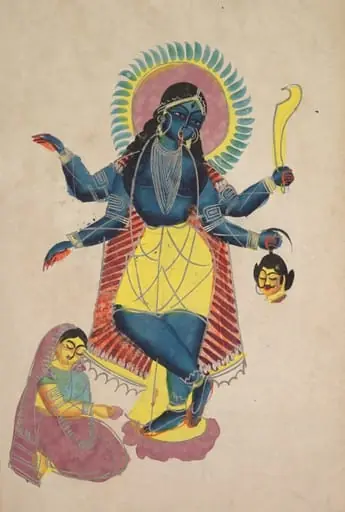 Krishna as Kali worshipped by Radha (recto), from a Kalighat album
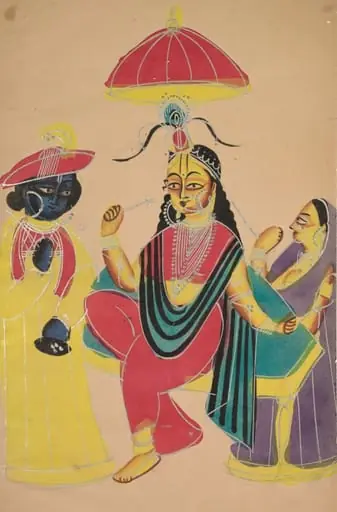 Krishna Standing by Radha who is Seated on a Chair
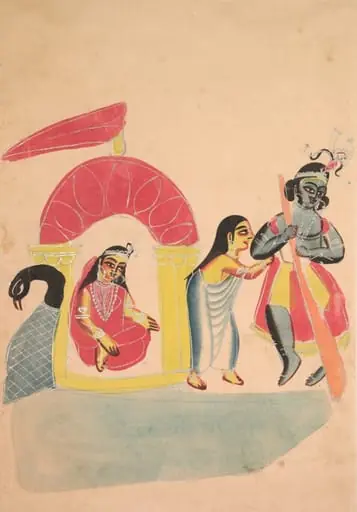 Krishna Ferrying Radha Across the Yamuna River
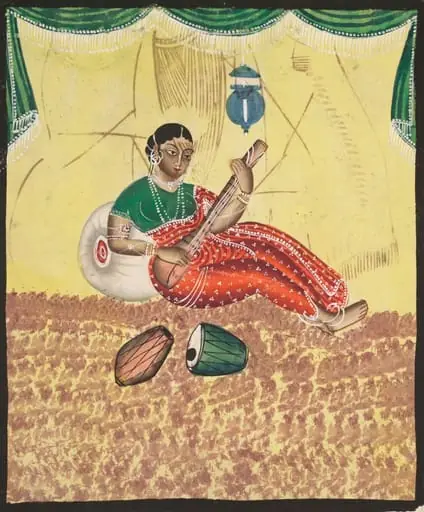 Woman Playing Music (recto), from a Kalighat album
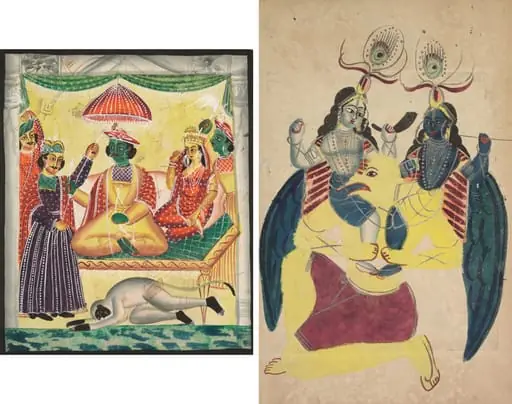 Leaf from a Kalighat album: Rama and Sita enthroned (recto); Garuda carrying Balarama and Krishna (verso)
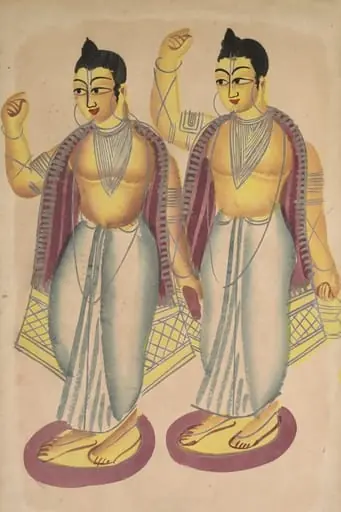 Nitai and Gaur
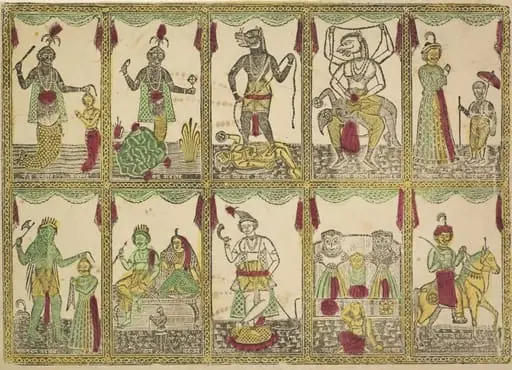 Das Avataras, Ten Incarnations of Vishnu (verso), from a Kalighat album
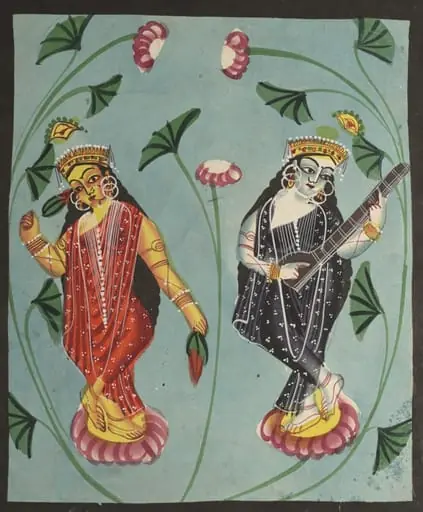 Lakshmi and Sarasvati
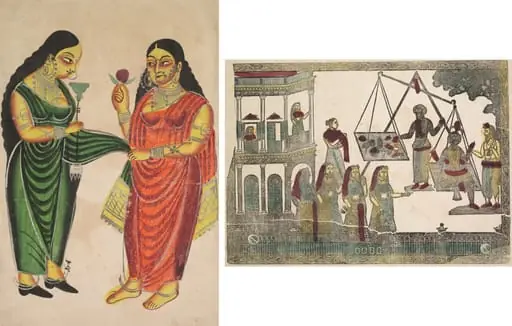 Leaf from a Kalighat album: Maid bringing a hookah to a lady (recto); Krishna weighed against precious objects(?) (verso)
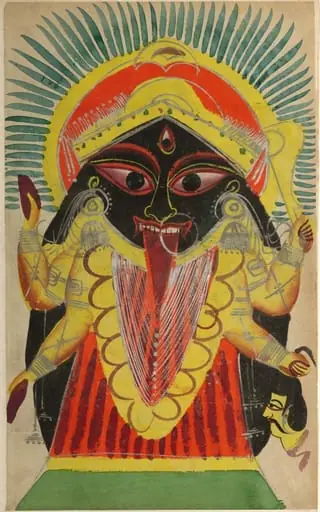 The Goddess Kali (recto), from a Kalighat album
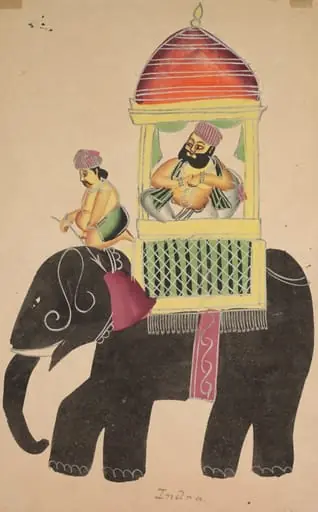 Mahant of Tarakeshwar Rides on an Elephant
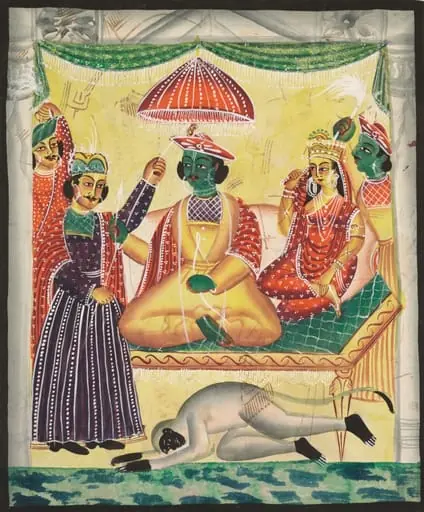 Rama and Sita enthroned (recto), from a Kalighat album
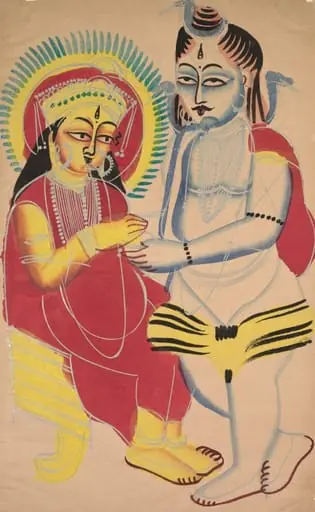 Annapurna and Shiva
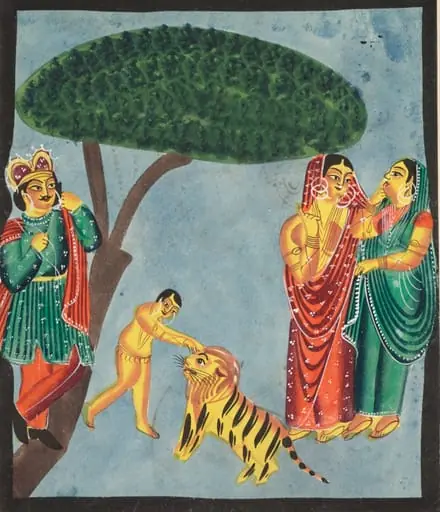 Dushyanta watching his son Bharat playing with the tiger at the end of the Abhijnanashakuntalam (verso), from a Kalighat album
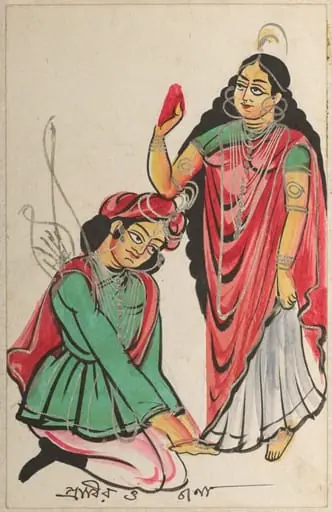 Pravira Kneeling at the Feet of Jana
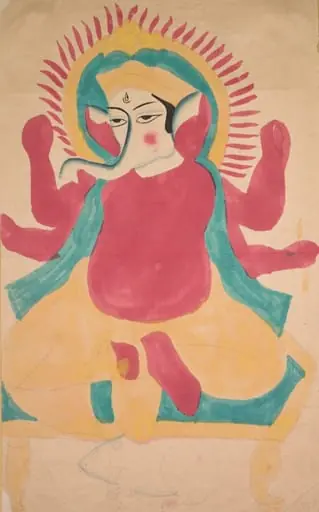 Ganesha
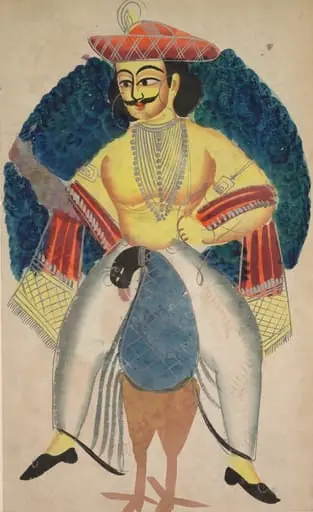 Kartikeya, from a Kalighat album
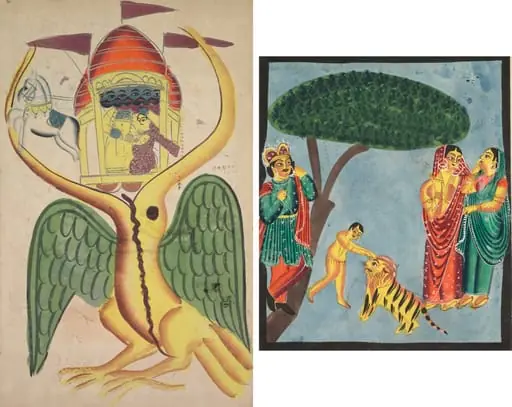 Leaf from a Kalighat album: Jatayu hinders Ravana’s chariot, trying to prevent the abduction of Sita (recto); Dushyanta watching his son Bharat playing with the tiger at the end of the Abhijnanashakuntalam (verso)
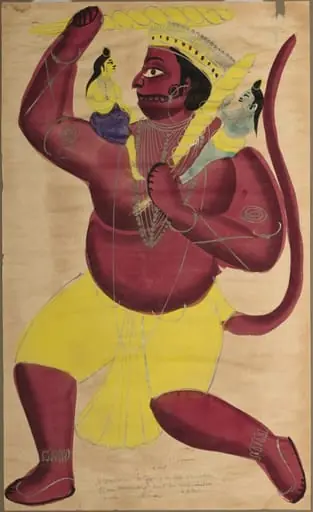 Hanuman
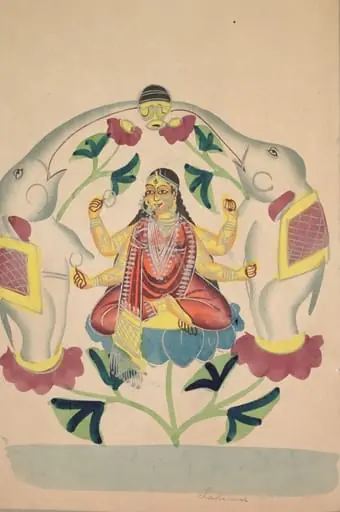 Gajalakshmi: Lakshmi with Elephants
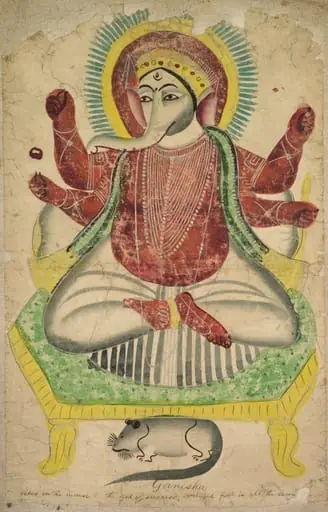 Ganesh
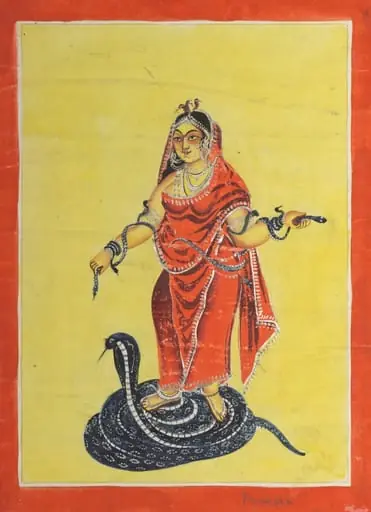 Manasa, The Snake Goddess
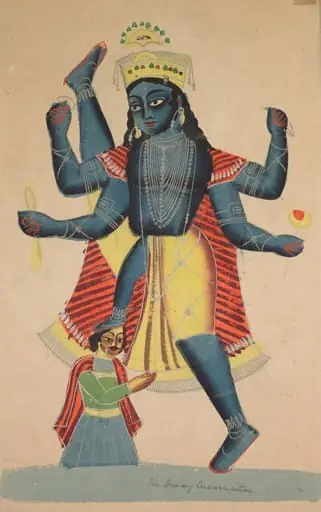 Trivikramapada (Three Steps of Vishnu)
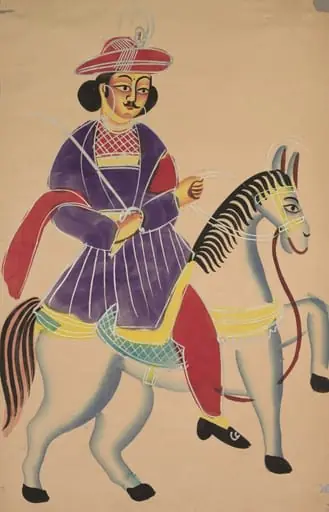 Raja Riding a Horse
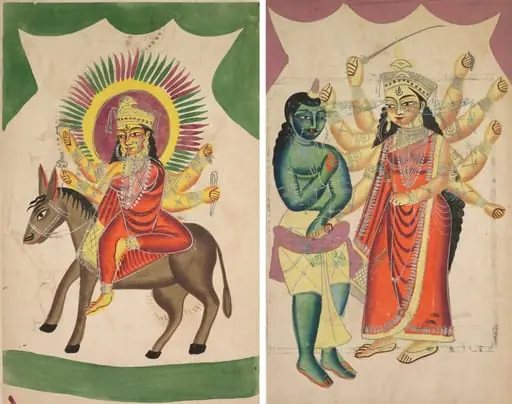 Leaf from a Kalighat album: Sheetaladevi: The Smallpox Goddess (recto); Durga (verso)
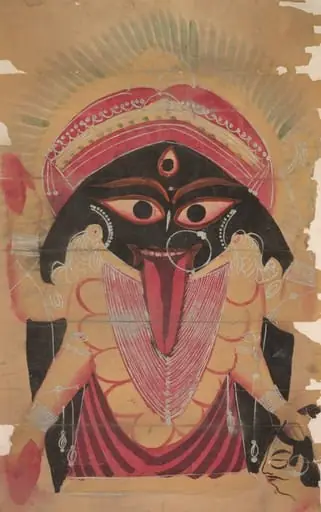 Kali
Kali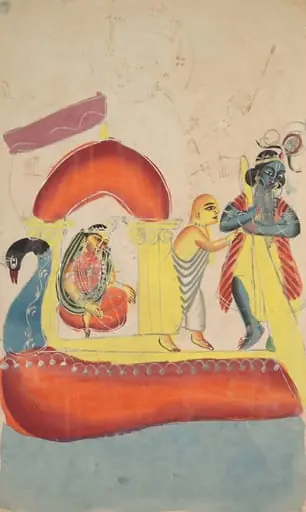 Krishna Ferrying Radha Across the Yamuna River (recto)
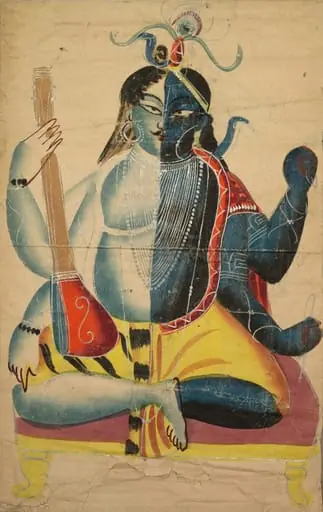 Hari-Hara
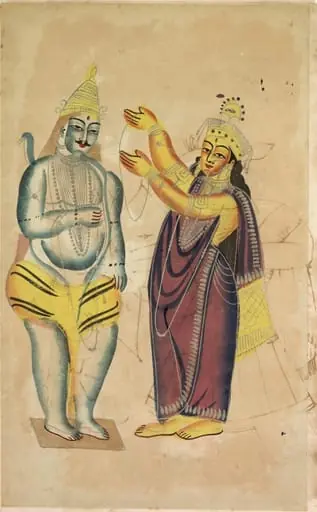 Parvati Placing a Wedding Garland on Shiva (recto), from a Kalighat album
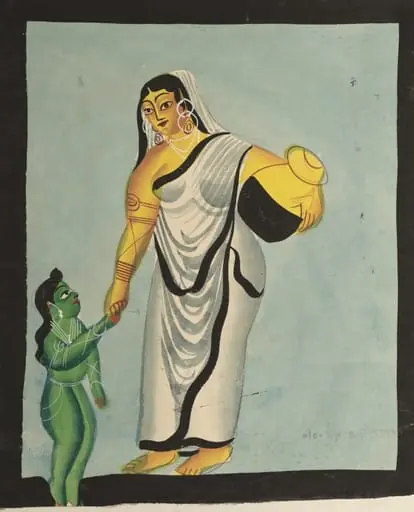 Yasoda Taking the Infant Krishna for a Walk
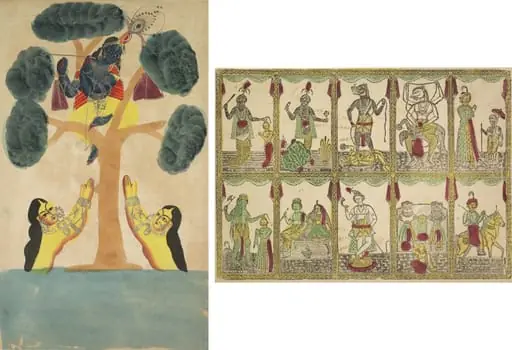 Leaf from a Kalighat album: Krishna Steals the Clothes of the Cowgirls (Gopis) (recto); Das Avataras, Ten Incarnations of Vishnu (verso)
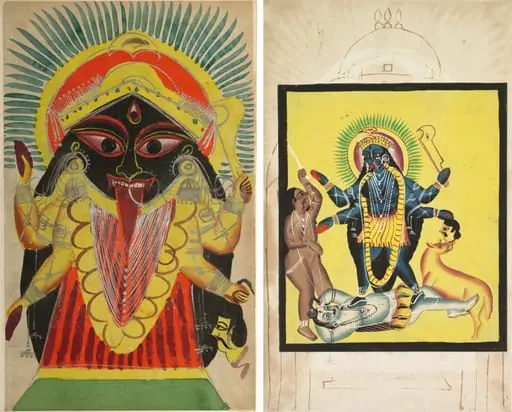 Leaf from a Kalighat album: The Goddess Kali (recto); Kali Standing on Shiva (verso)
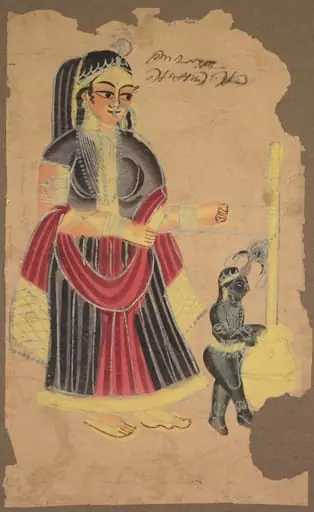 Yasoda and Krishna
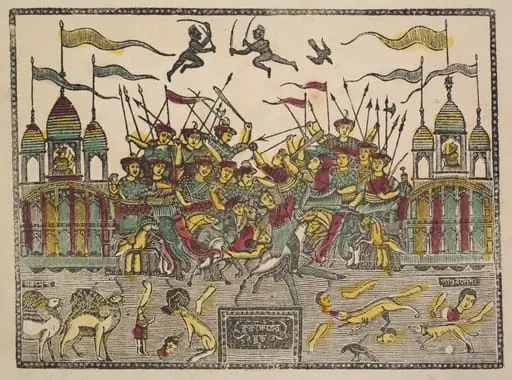 Battle Scene at Kurukshetra from the Mahabharata War (verso), from a Kalighat album
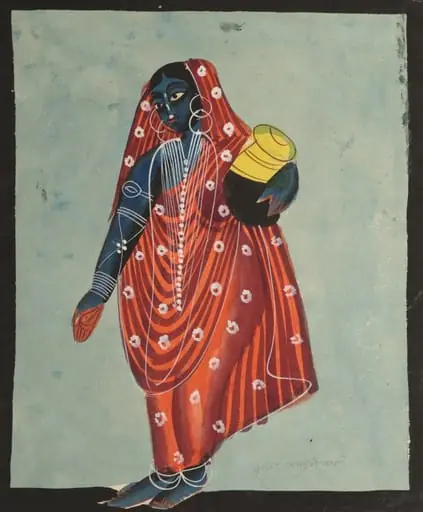 Vishnu in Female Form of Mohini Carrying Amrita for the Gods
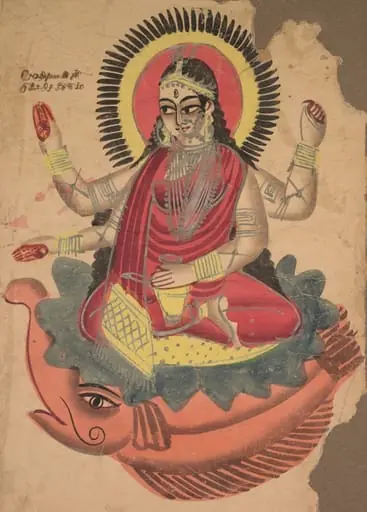 The Goddess Ganga
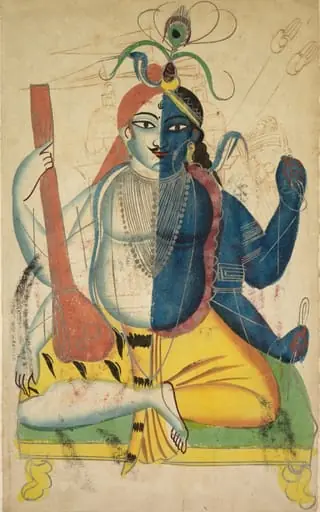 Hari-Hara (recto), from a Kalighat album
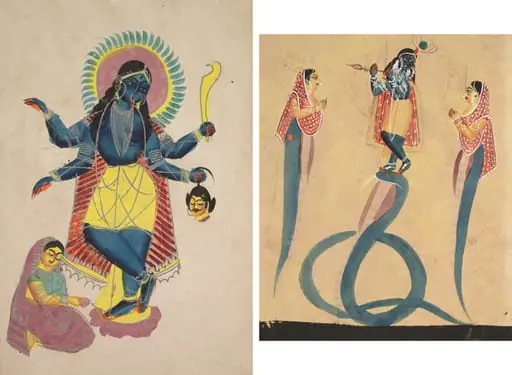 Leaf from a Kalighat album: Krishna as Kali worshipped by Radha (recto); Krishna quells the serpent Kaliya (verso)
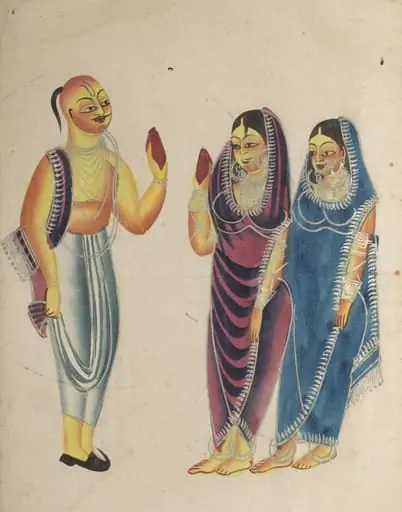 Vaishnava Devotee with Two Women
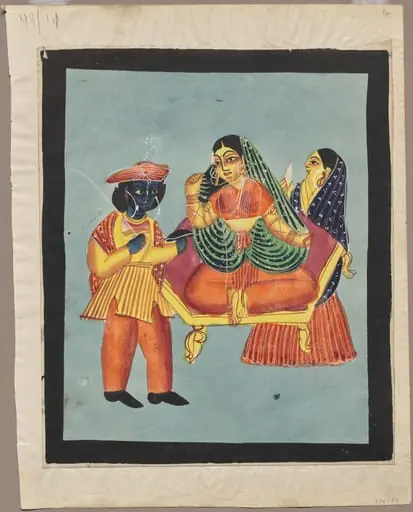 Rai Raja, from a Kalighat album
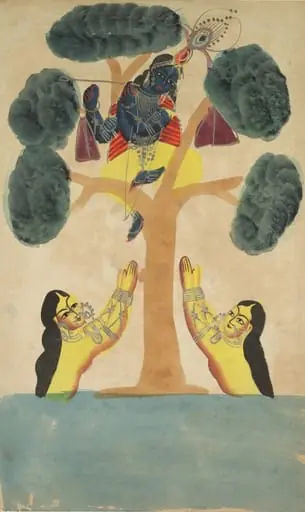 Krishna Steals the Clothes of the Cowgirls (Gopis) (recto), from a Kalighat album
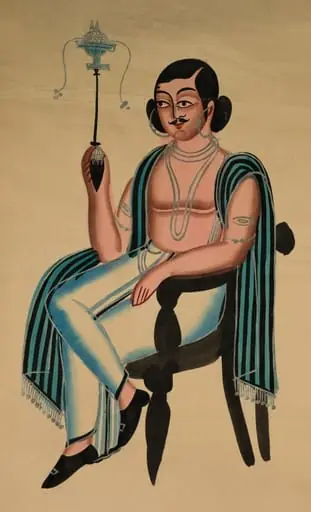 Man Seated in a European Chair Smoking a Margila Pipe, from a Kalighat album
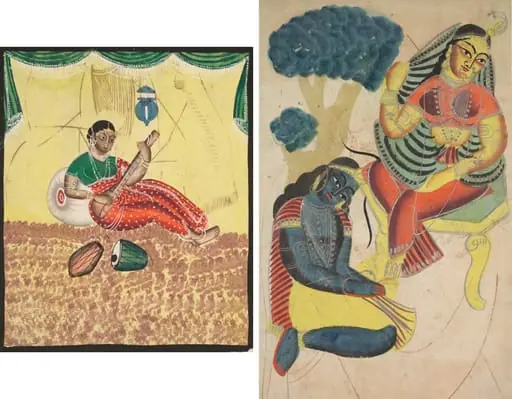 Leaf from a Kalighat album: Woman Playing Music (recto); Krishna Stroking Radha's Feet (verso)
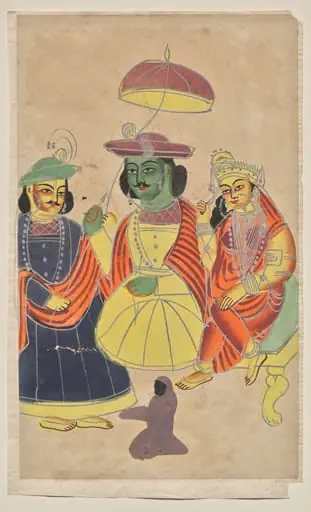 Rama and Sita enthroned with Lakshmana and Hanuman attending, from a Kalighat album
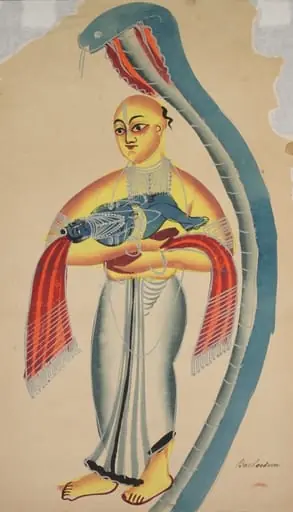 A Serpent Protects Vasudeva Taking His Infant Son Krishna to Safety
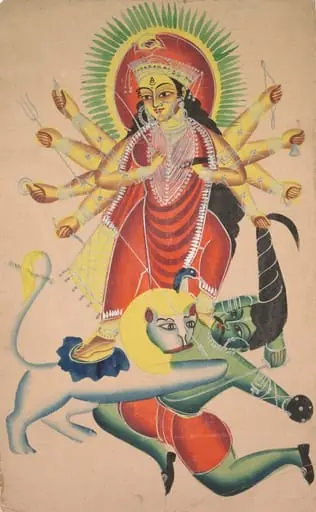 Durga Killing the Demon Mahisha
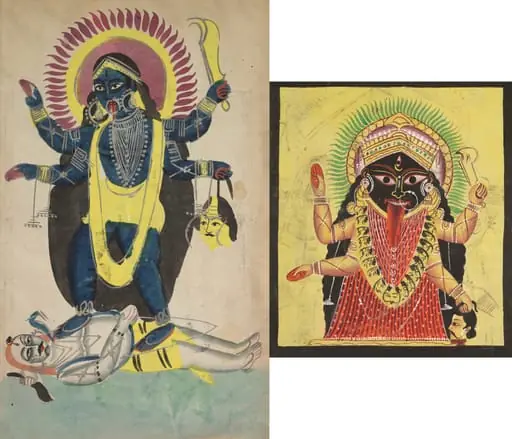 Leaf from a Kalighat album: Two Aspects of Kali
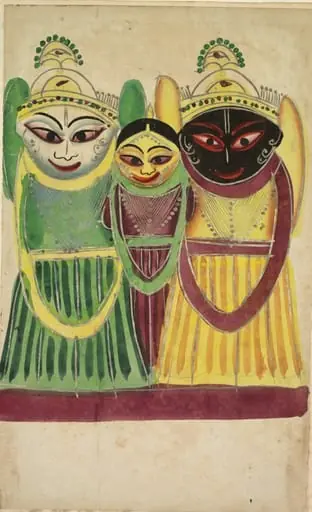 Jagannatha Trio (verso)
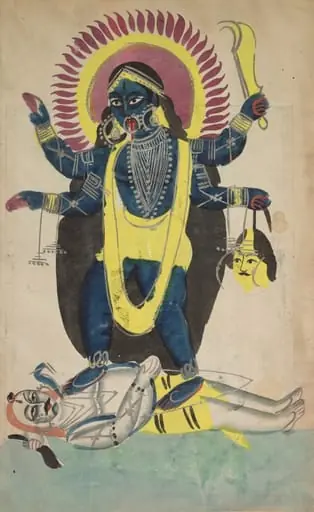 Kali Dancing on Shiva (recto), from a Kalighat album
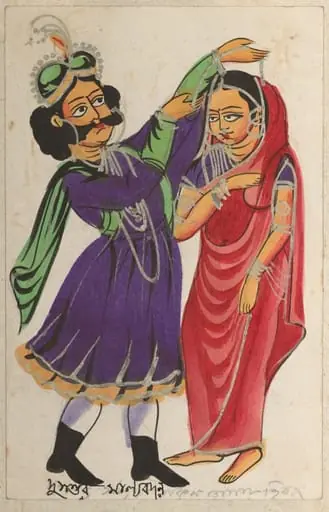 Dusmanta Garlanding Shakumtala
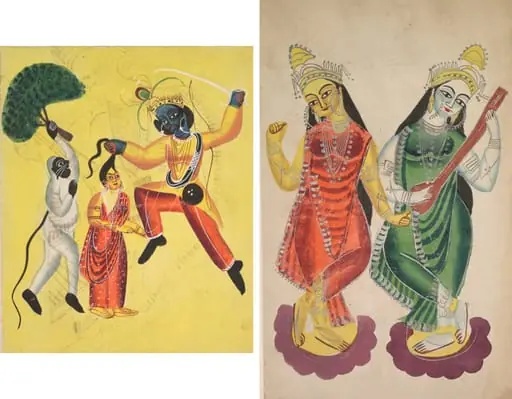 Leaf from a Kalighat album: Hanuman attacks Indrajit holding an apparition of Sita by the hair (recto); Goddesses Lakshmi and Sarasvati (verso)
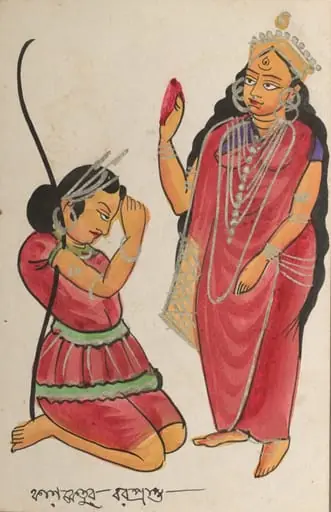 Kalaketu Receiving a Boon from the Goddess Chandi
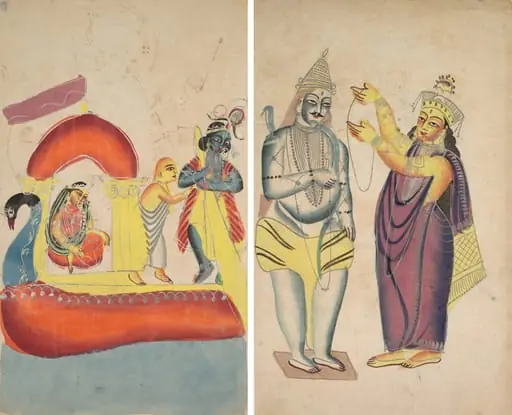 Krishna Ferrying Radha Across the Yamuna River (recto); Parivati Placing a Wedding Garland on Shiva (verso)
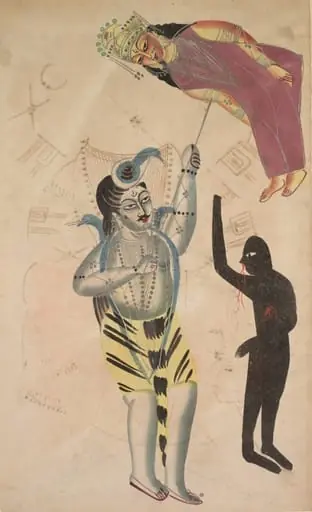 Shiva Bearing Aloft the Body of His Sati
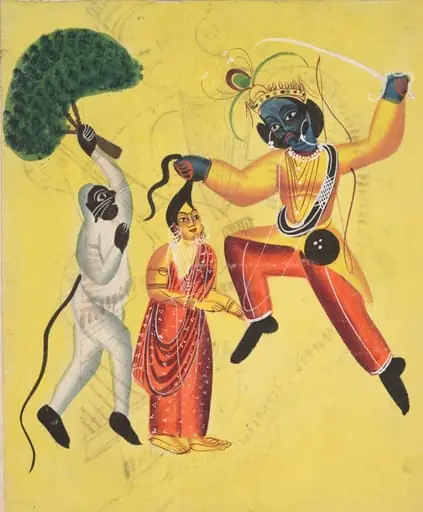 Hanuman attacks Indrajit holding an apparition of Sita by the hair
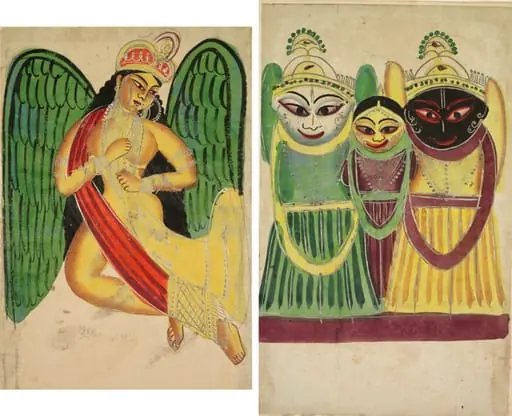 Winged Apsara with a Horn (recto); Jagannatha Trio (verso)
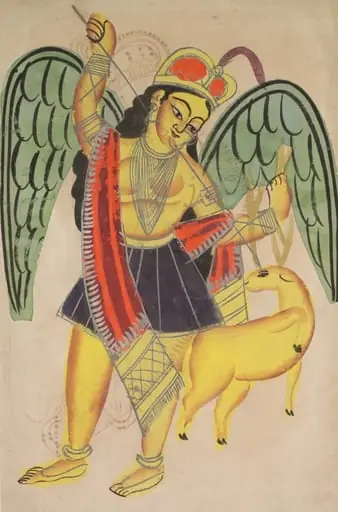 Diana or Artemis, Goddess of the Hunt
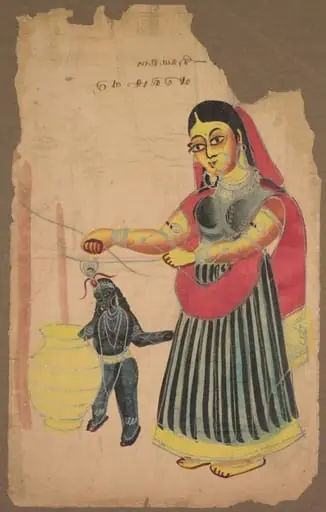 Yasoda with Krishna Churning Butter
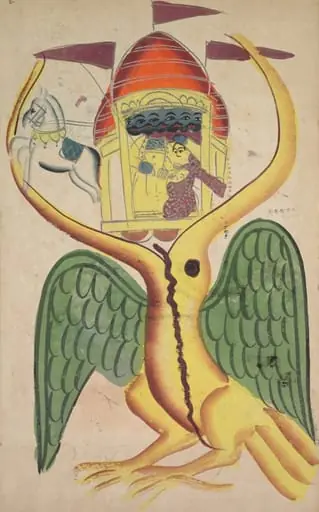 Jatayu hinders Ravana’s chariot, trying to prevent the abduction of Sita (recto), from a Kalighat album
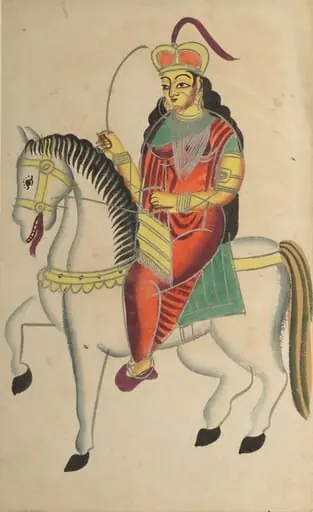 The Mutiny of the Heroine Rani Lakshmi Bai of Jhansi
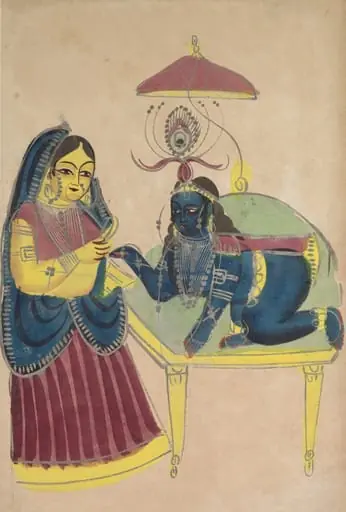 Baby Krishna Asking for Butter from Yashoda, from a Kalighat album
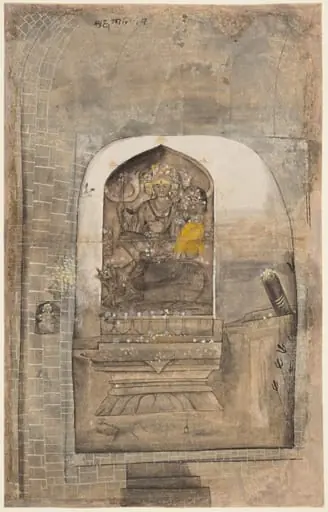 Stone sculptures in a Shiva temple
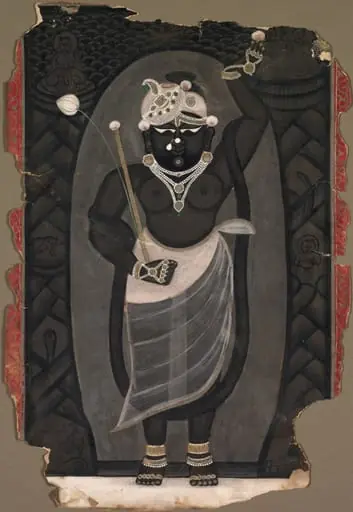 Sri Nathaji
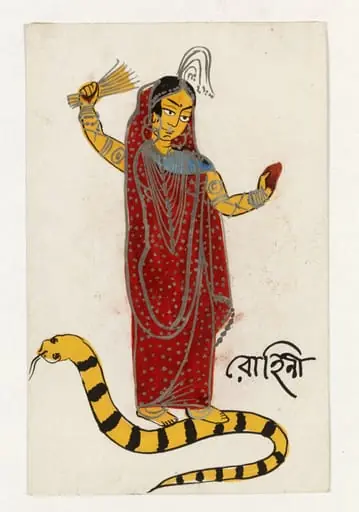 Rohini
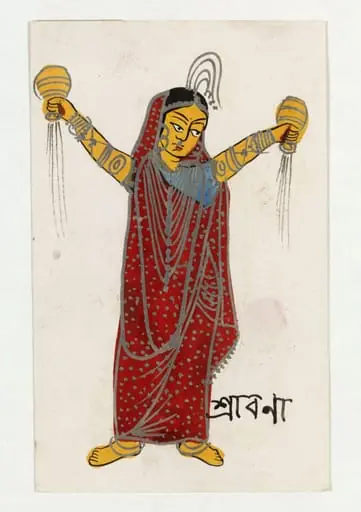 Sravan
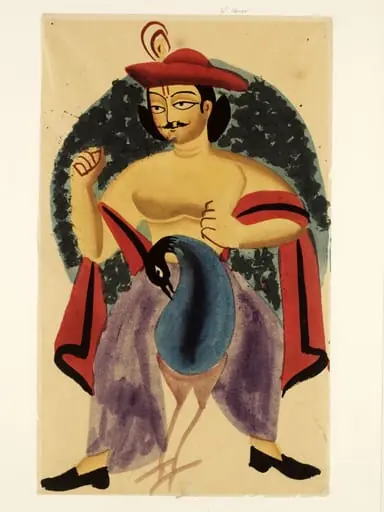 Karttikeya
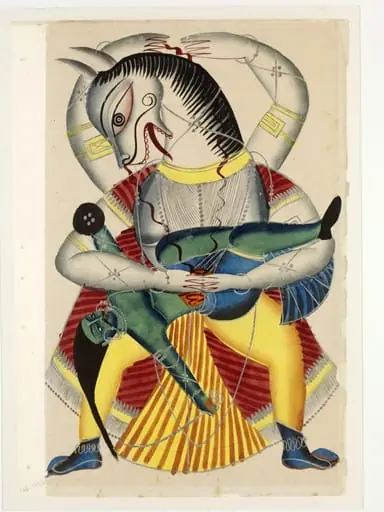 Narasimha
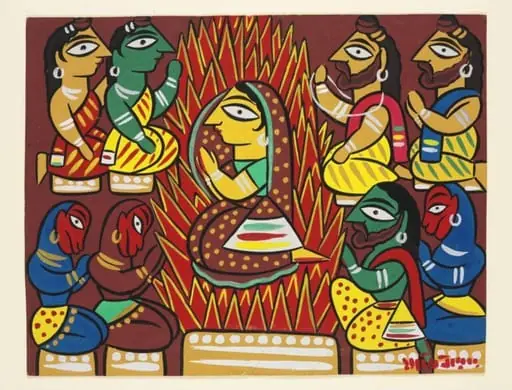 Sita
Sita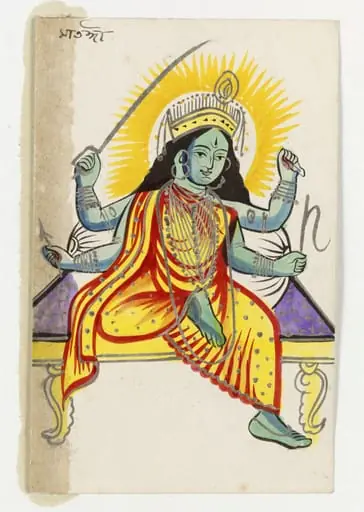 Devi as Matangi
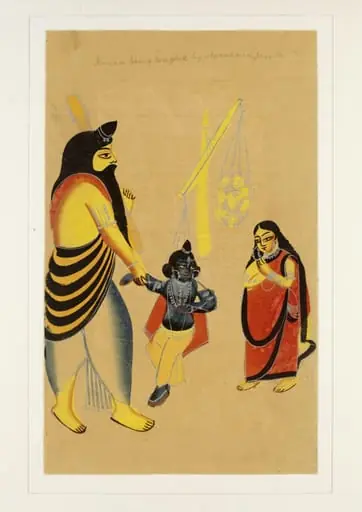 Krishna, Narada and Jasoda
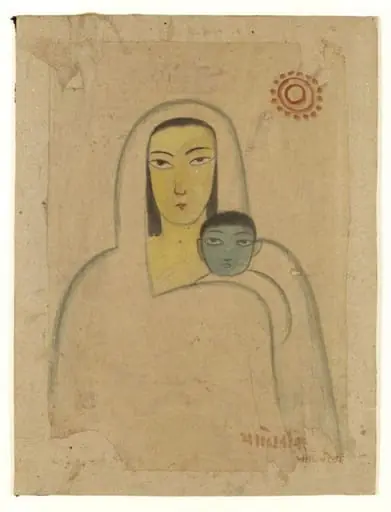 Yashoda and Krishna
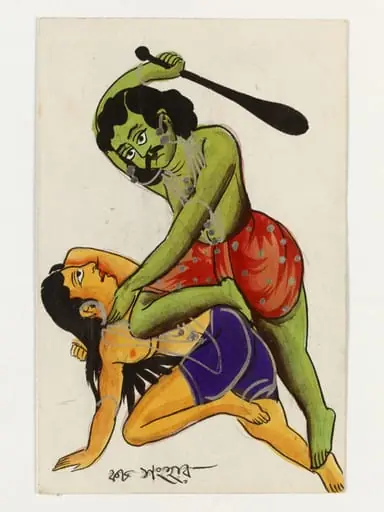 Kacha
Kacha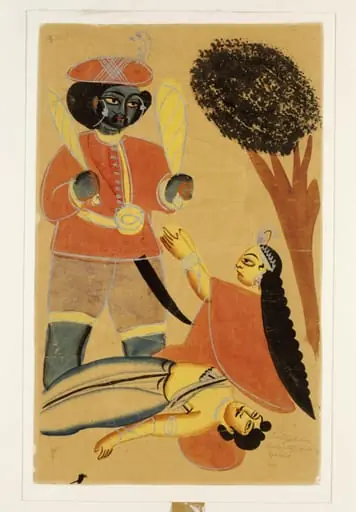 Savitri, Yama and Satravan
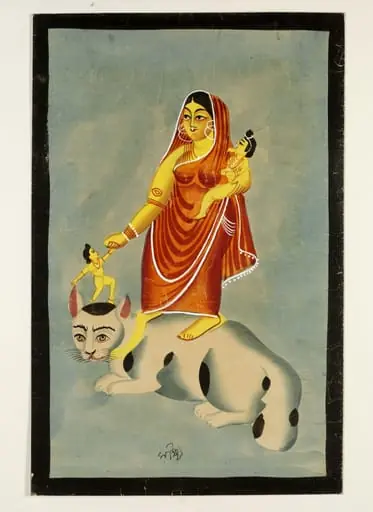 Shashthi
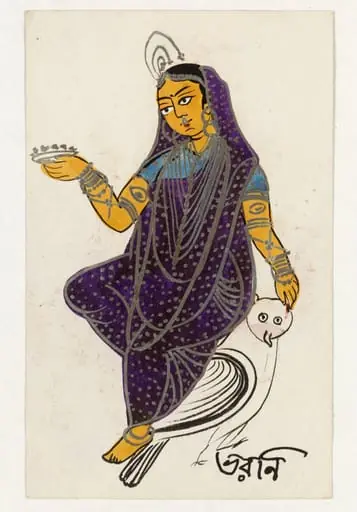 Varuni
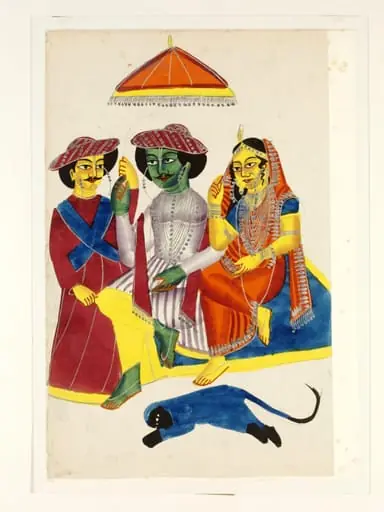 Hanuman before Rama, Sita and Lakshmana
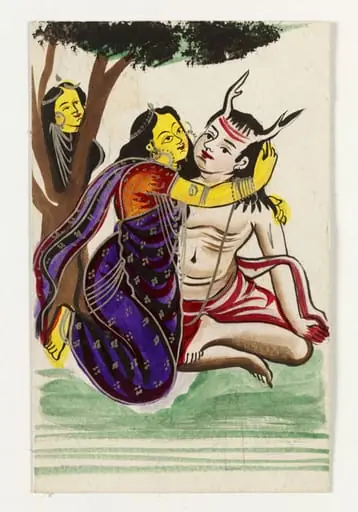 Risyasringa and Santa
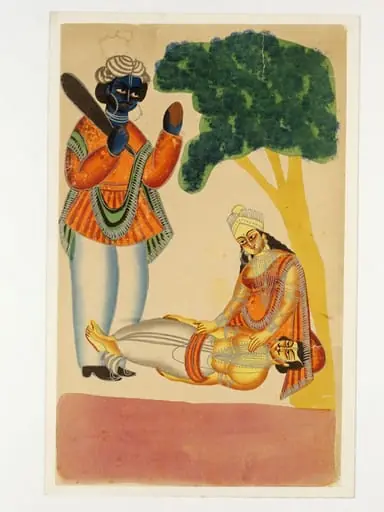 Savitri and Yama
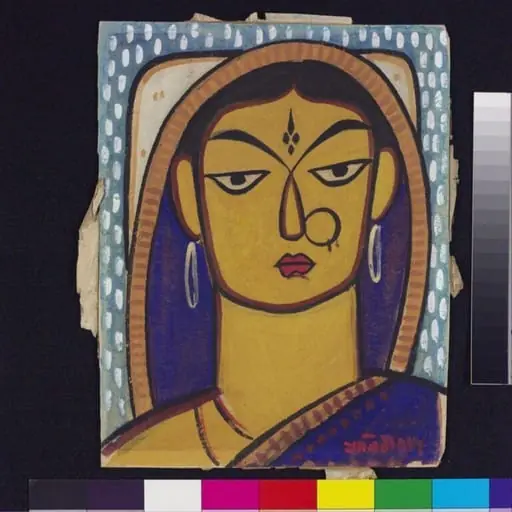 Untitled
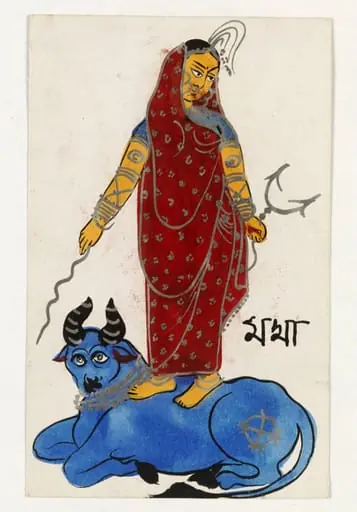 Magha
Magha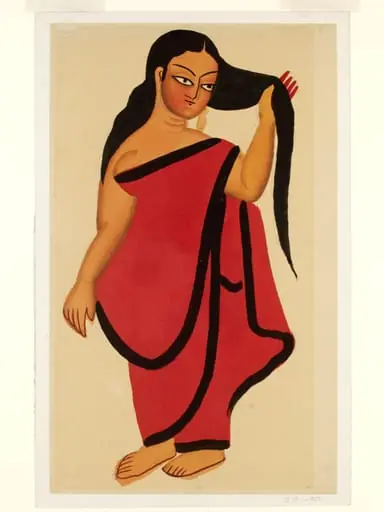 Untitled
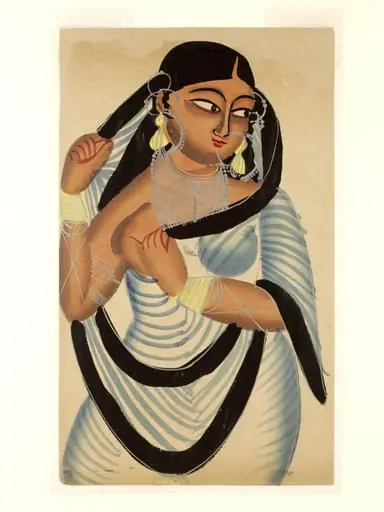 A Bengali courtesan
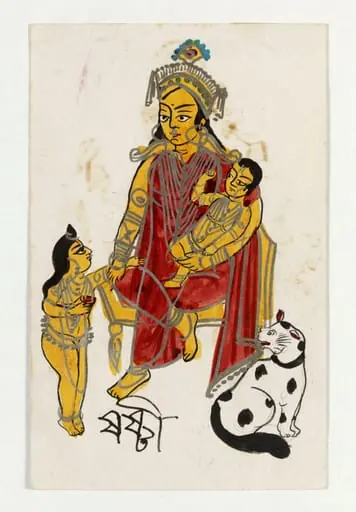 Shashti
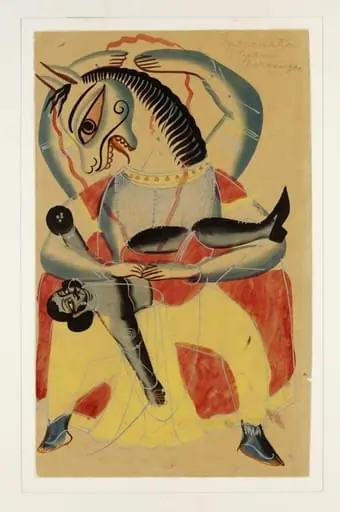 Narasimha
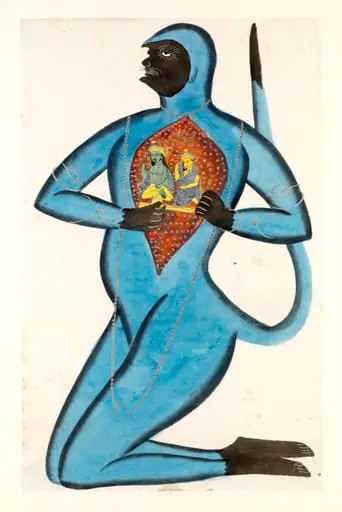 Hanuman, Rama and Sita
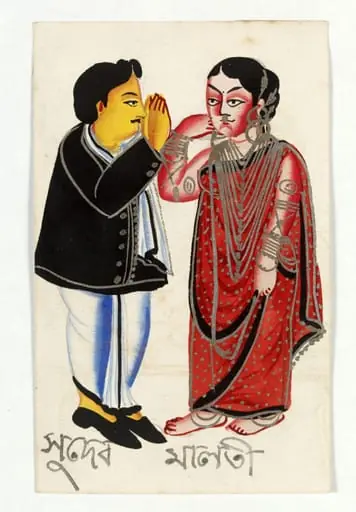 Sudeva and Malati
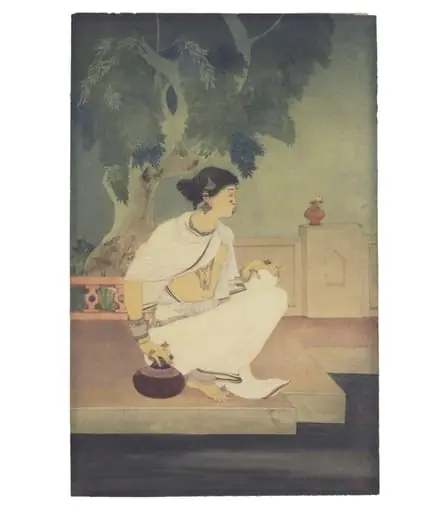 Untitled
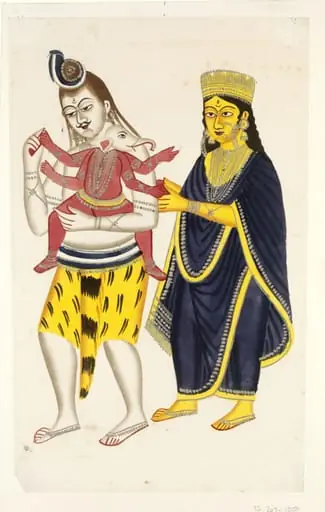 Shiva, Parvati and Ganesha
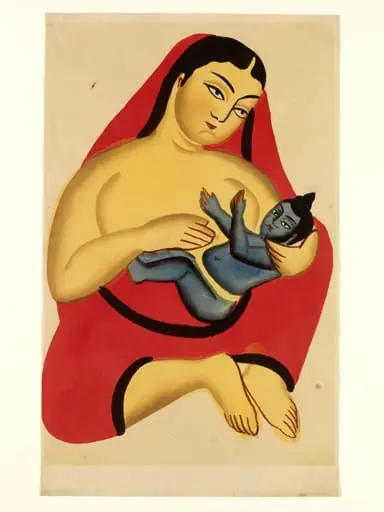 Jasoda and Krishna
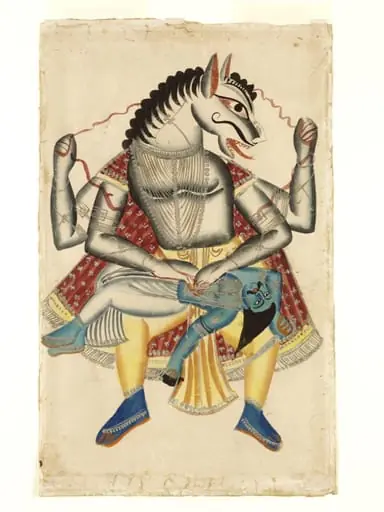 Narasimha and Hiranyakasipu
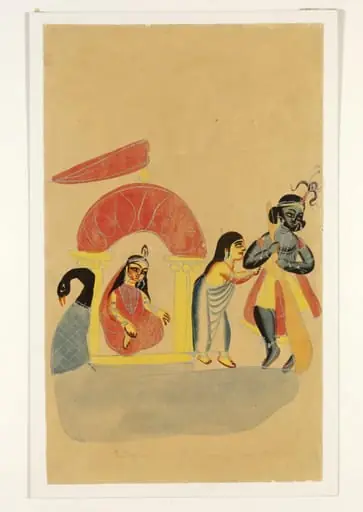 Untitled
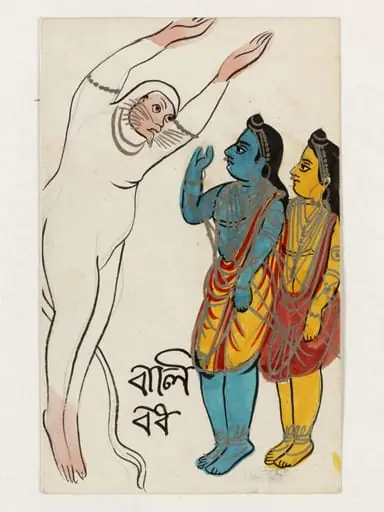 Bali
Bali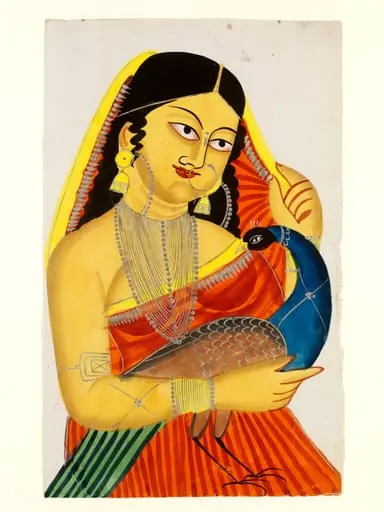 Untitled
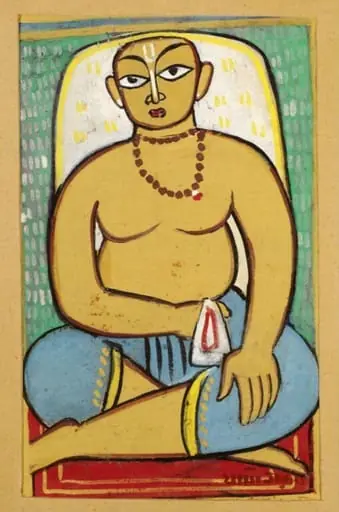 Untitled
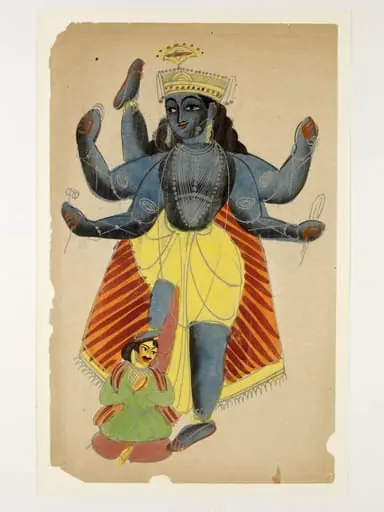 Vamana and Bali
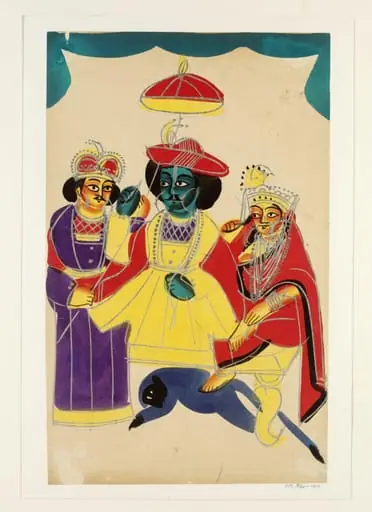 Rama, Sita, Lakshmana and Hanuman
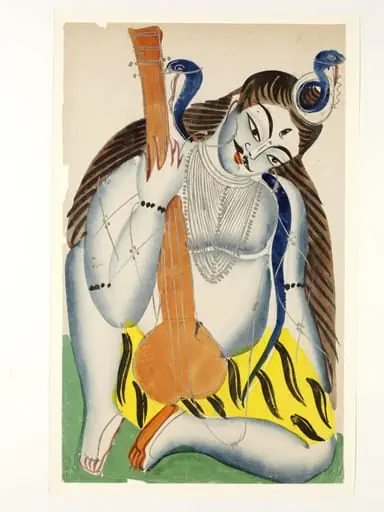 Shiva
Shiva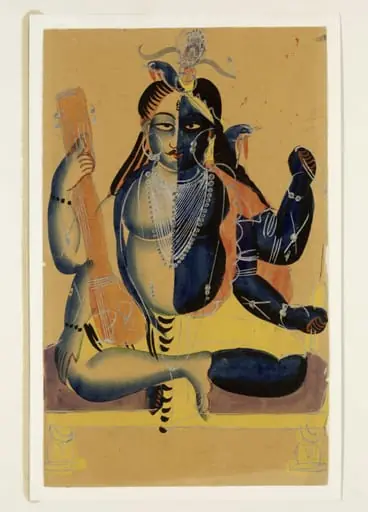 Hari-Hara
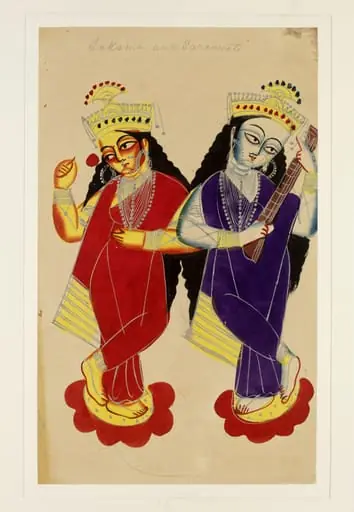 Lakshmi and Saraswati
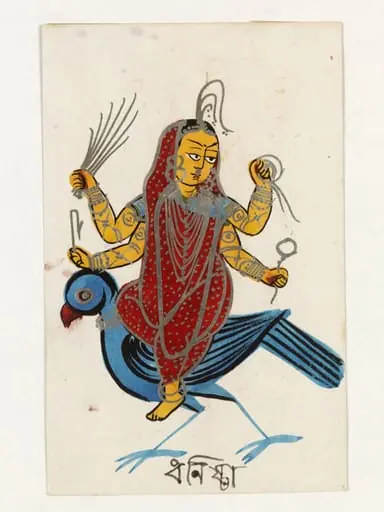 Dhanishtha
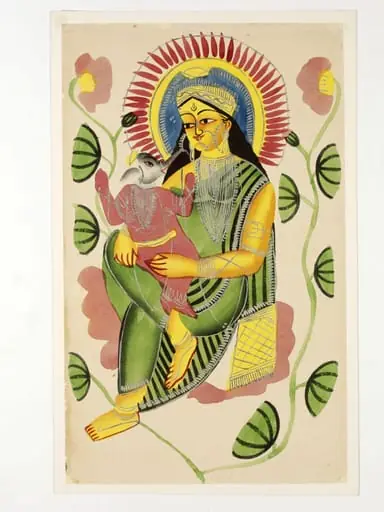 Kamala Kamini and Ganesha
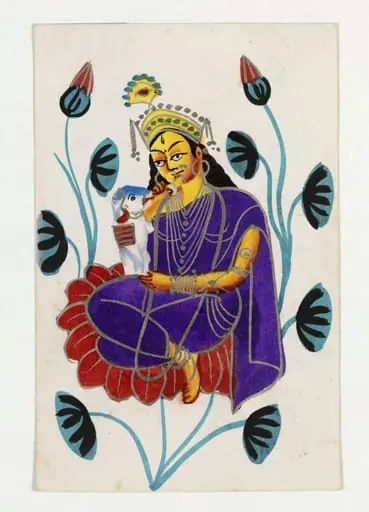 Kamala Kamini
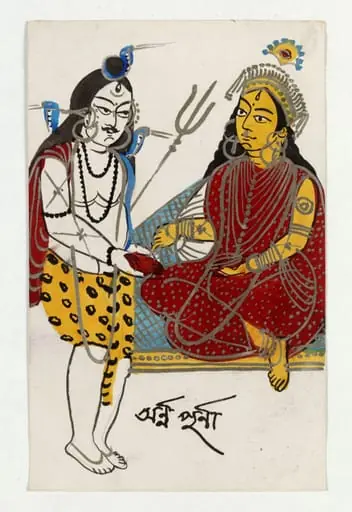 Durga as Annapurna
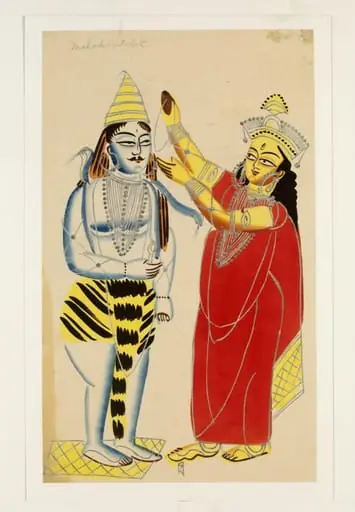 Parvati and Shiva
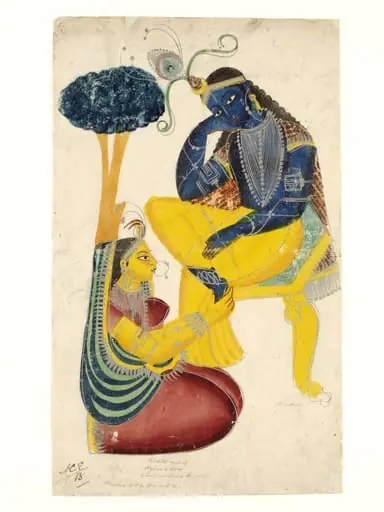 Radha and Krishna
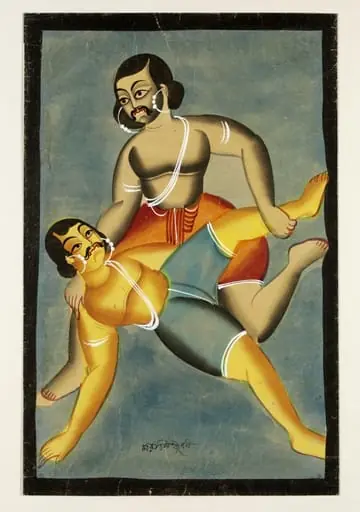 Bhima and Jarasandha
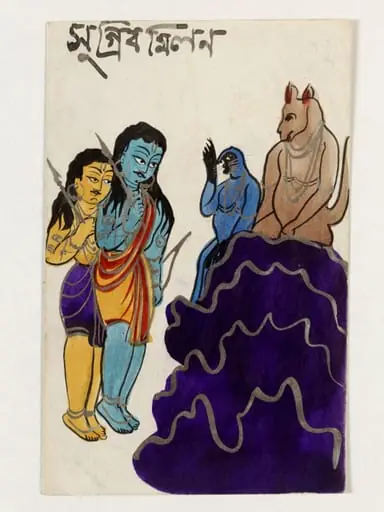 Rama, Lakshman and Sugriva
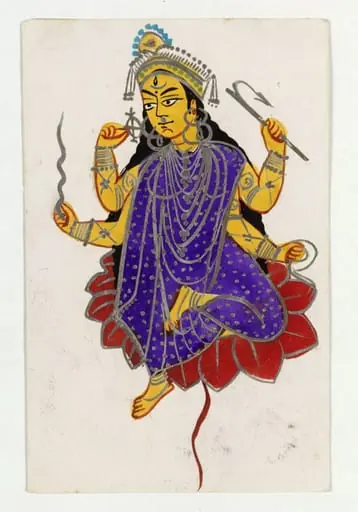 Bhuvanesvari
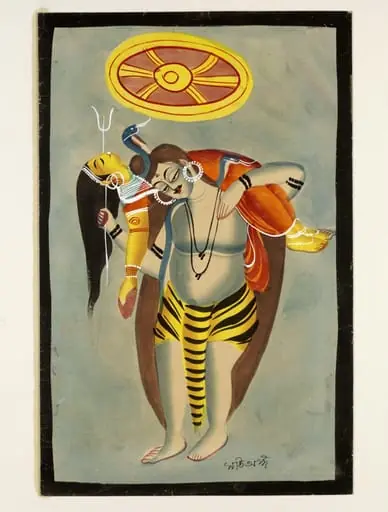 Shiva and Sati
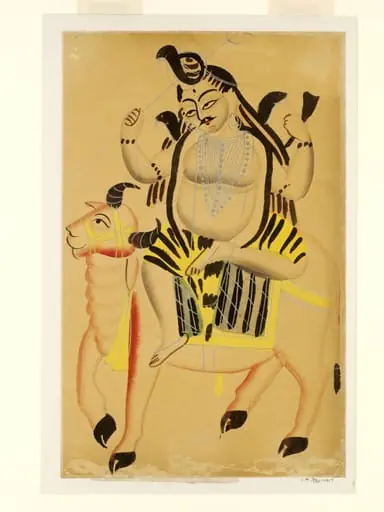 Shiva on Nandi
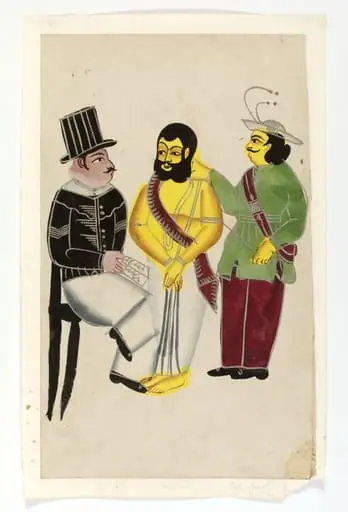 Madhavchandra Giri (the Mahant)
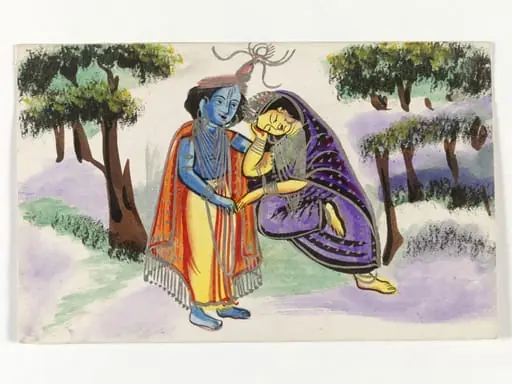 Viraja and Krishna
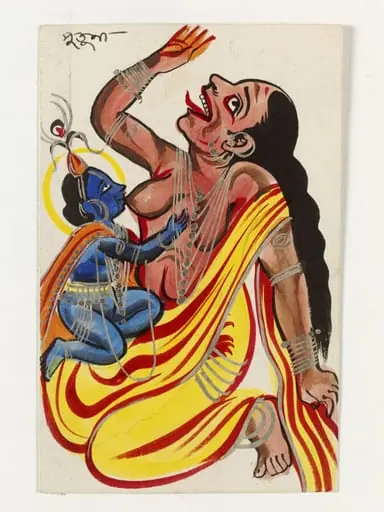 Putana and Krishna
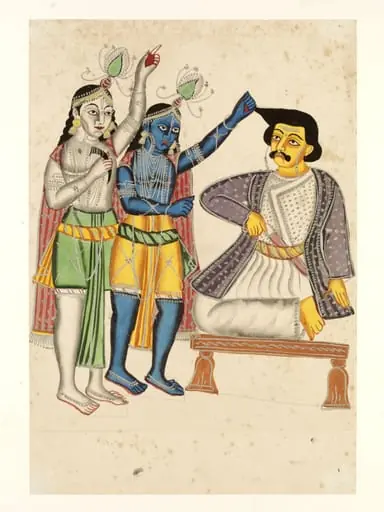 Krishna, Balarama and Kansa
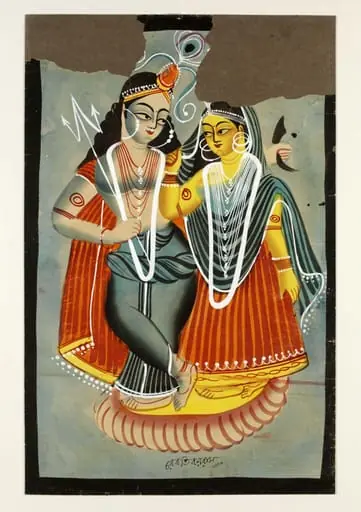 Balarama and Revati
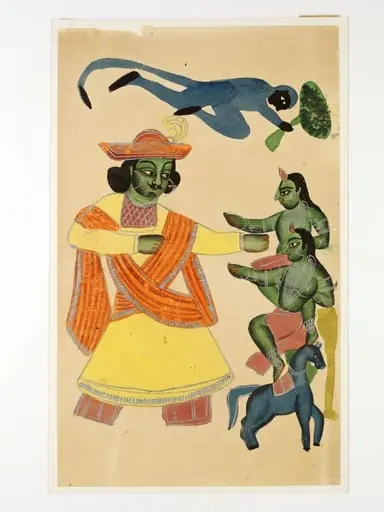 Rama, Kusha and Lava
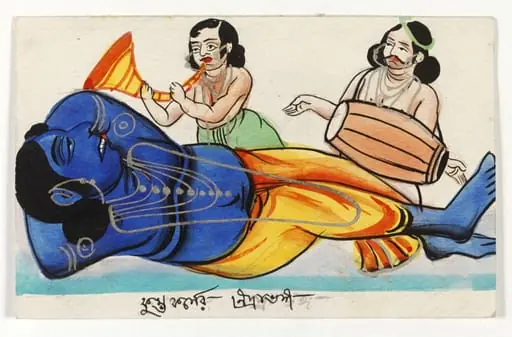 Kumbhakarna
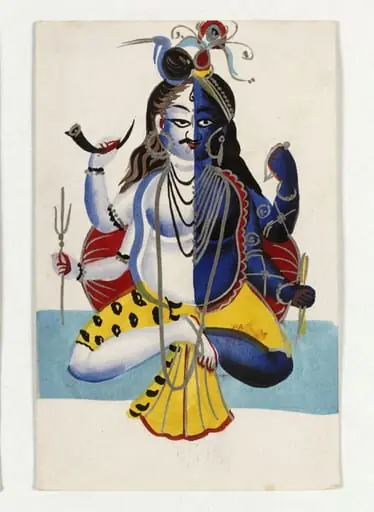 Hari-Hara
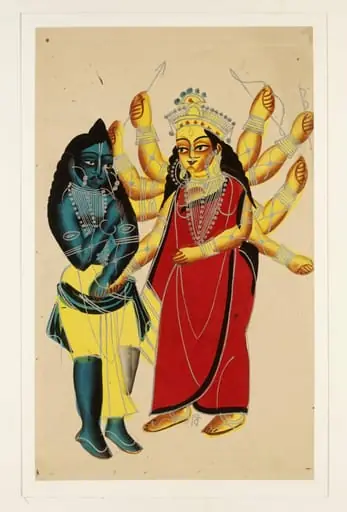 Rama and Durga
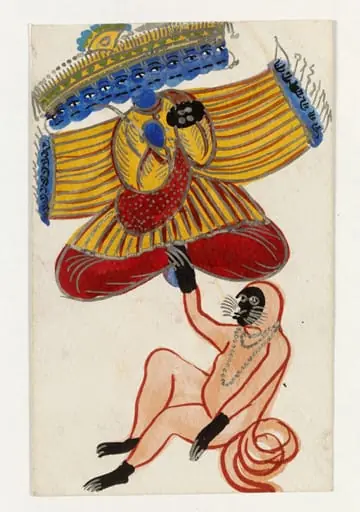 Hanuman and Ravana
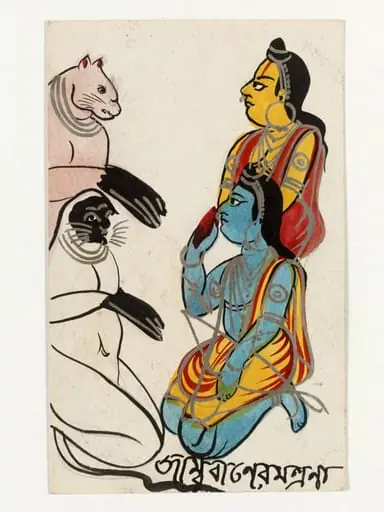 Jambuvan, Rama and Lakshmana
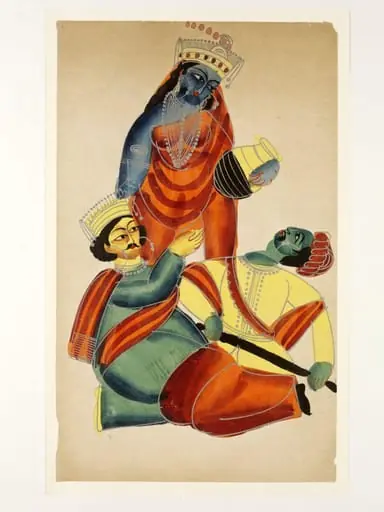 Mohini
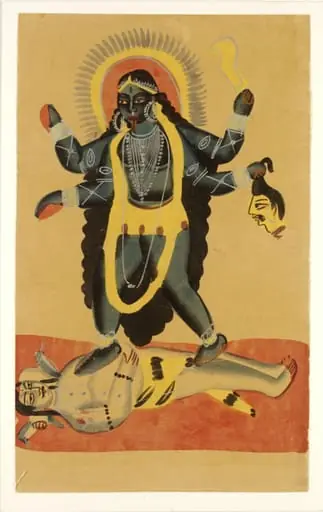 Kali and Shiva
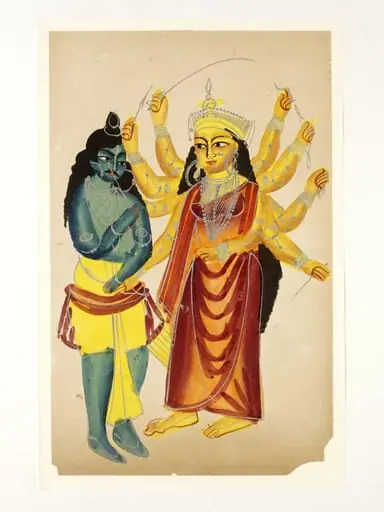 Rama and Durga
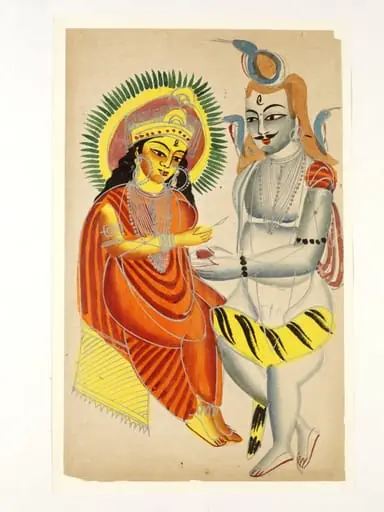 Annapurna and Shiva
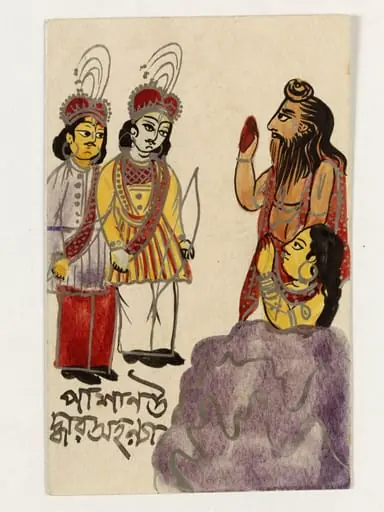 Rama, Lakshmana and Ahalya
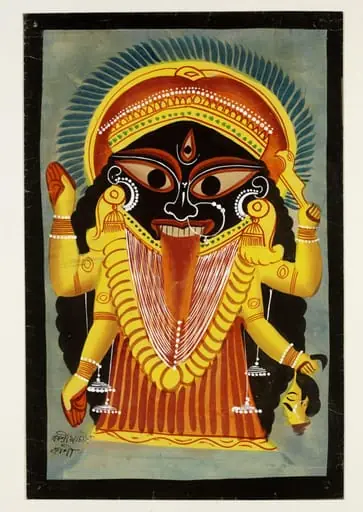 Kali
Kali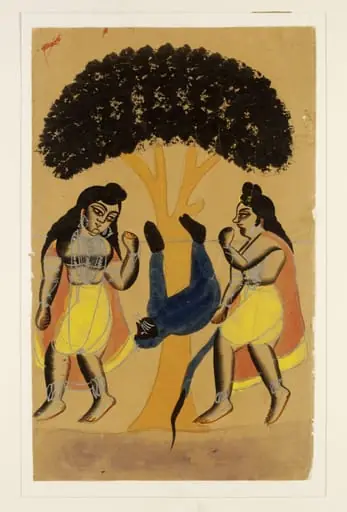 Kusha, Lava and Hanuman
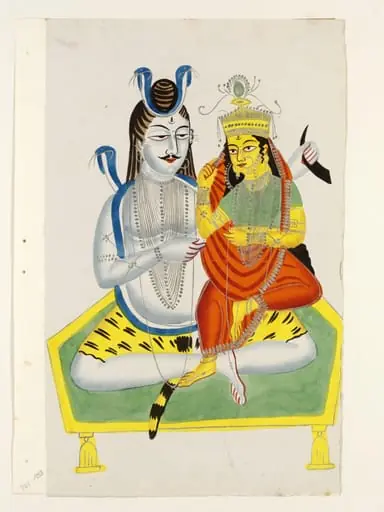 Shiva and Parvati
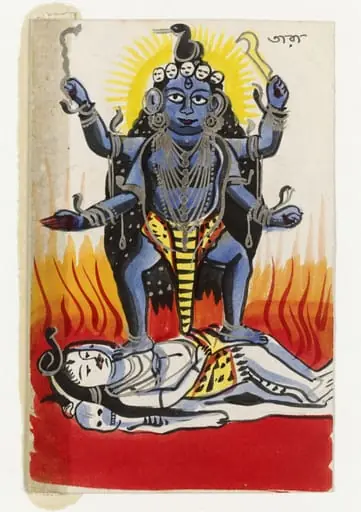 Tara, Sakala and Nishkala Shiva
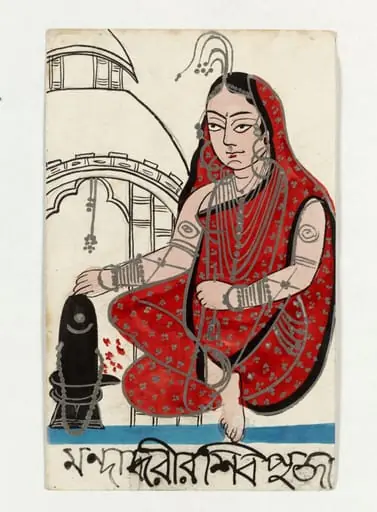 Mandodari
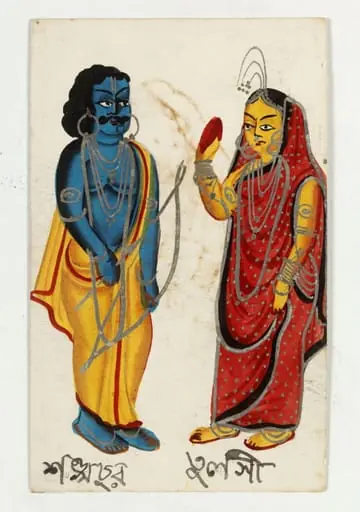 Sankhachur and Tulsi
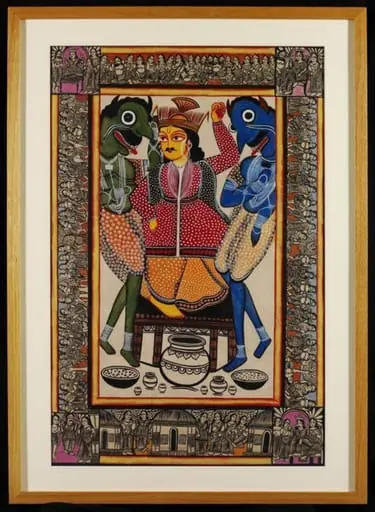 'Yama the god of death'
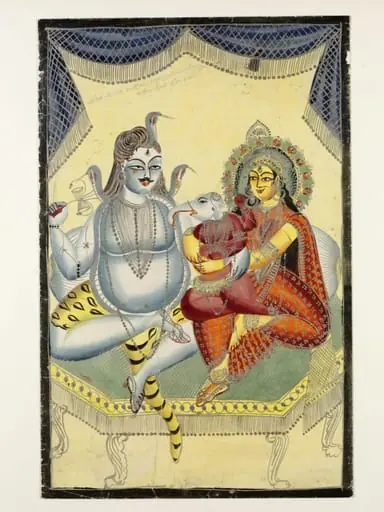 Shiva and Parvati with Ganesha
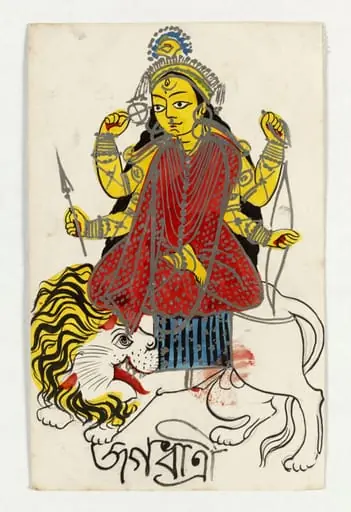 Jagaddhatri
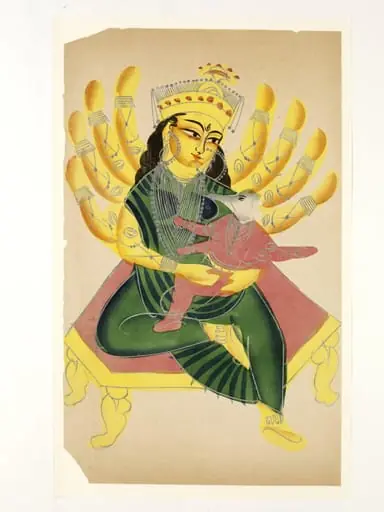 Durga and Ganesha
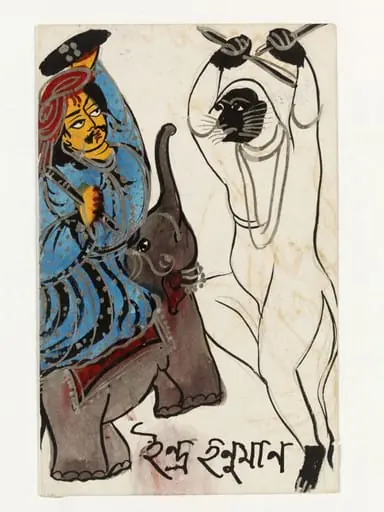 Hanuman and Indra
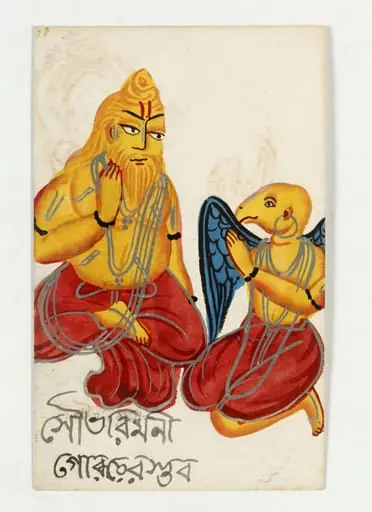 Garuda and Saubhari
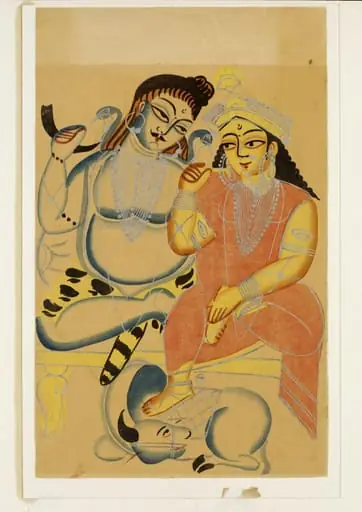 Shiva, Parvati and Nandi
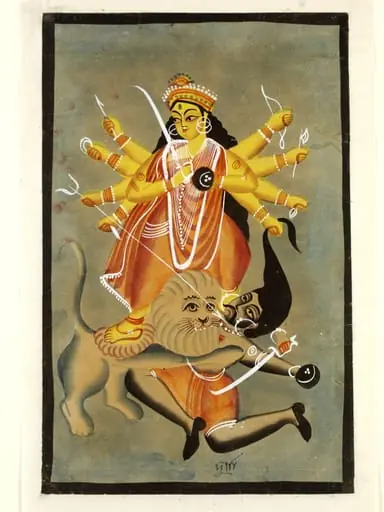 Durga and Mahishasura
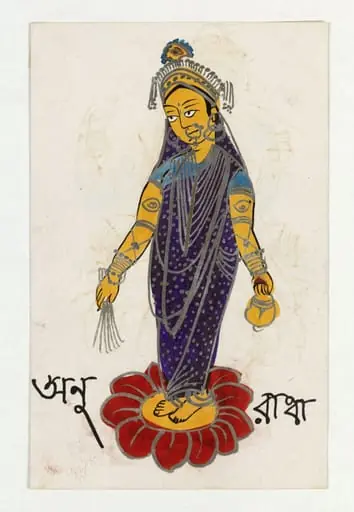 Anuradha
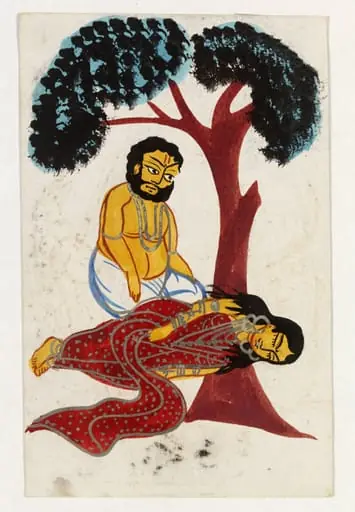 Nala and Damayanti
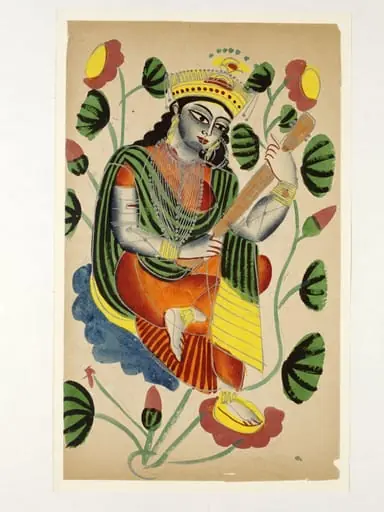 Saraswati
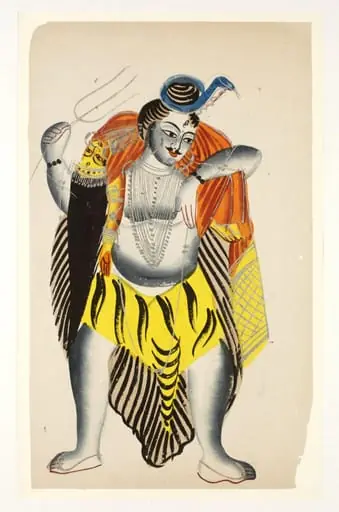 Shiva and Sati
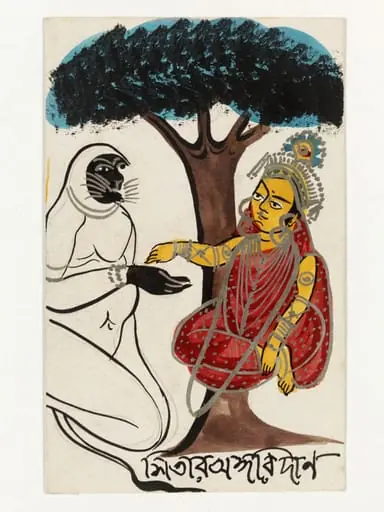 Sita and Hanuman
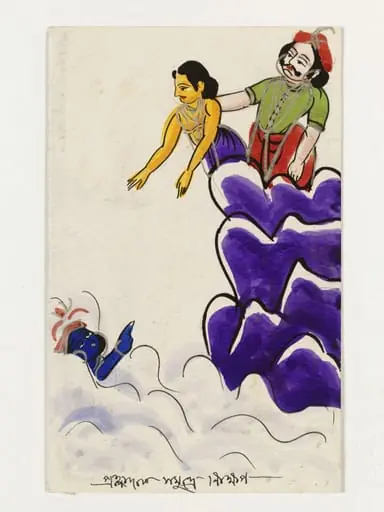 Prahlada
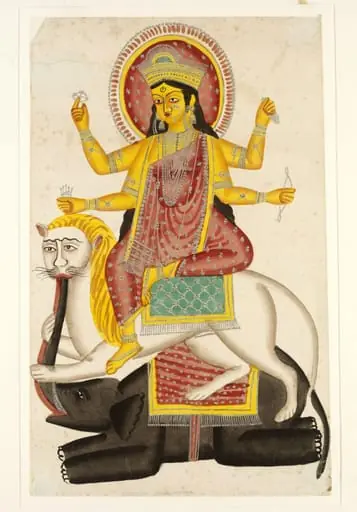 Durga as Jagaddhatri
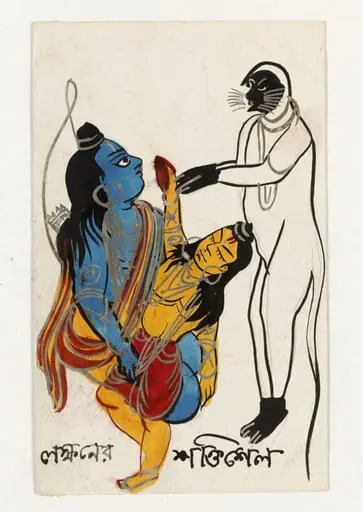 Lakshmana, Rama and Hanuman
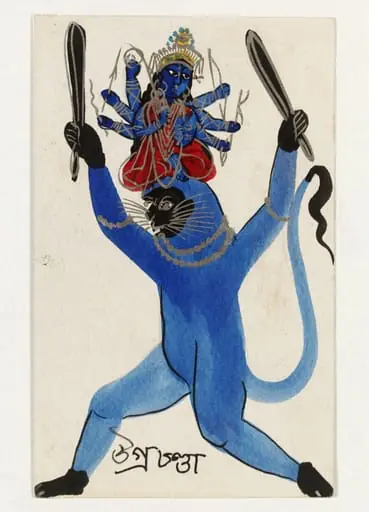 Ugrachandra and Hanuman
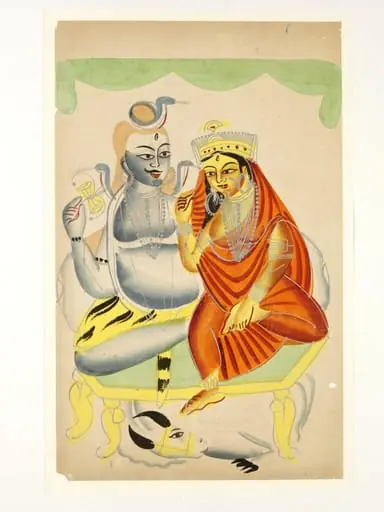 Shiva, Parvati and Nandi
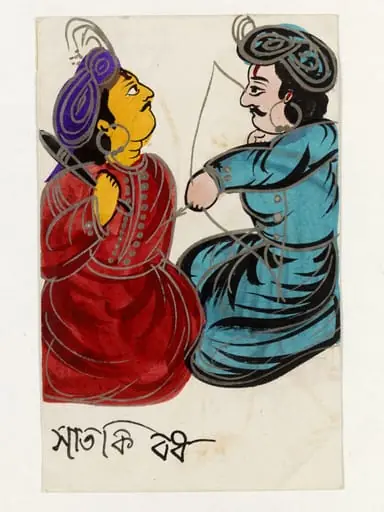 Satyaki
Frequently asked questions
What is Kalighat?
Kalighat is a locality of South Kolkata, in Kolkata district, West Bengal, India.
How many Kalighat works does Artifact World Gallery have?
Artifact World Gallery holds 200 public-domain Kalighat works, all free to view and download.
Who are the key Kalighat artists?
Key Kalighat artists in the collection include Shri Gobinda Chandra Roy, Nibaran Chandra Ghosh and George Keyt.
Where can I see Kalighat works?
Kalighat works in the collection are held by Victoria and Albert Museum, Cleveland Museum of Art and Museum of Modern Art.