
Subject
Domestic Worker
Domestic Worker is a subject in art. The gallery holds 109 works in this subject in art, including works by Titian, Paolo Veronese and Edgar Degas.
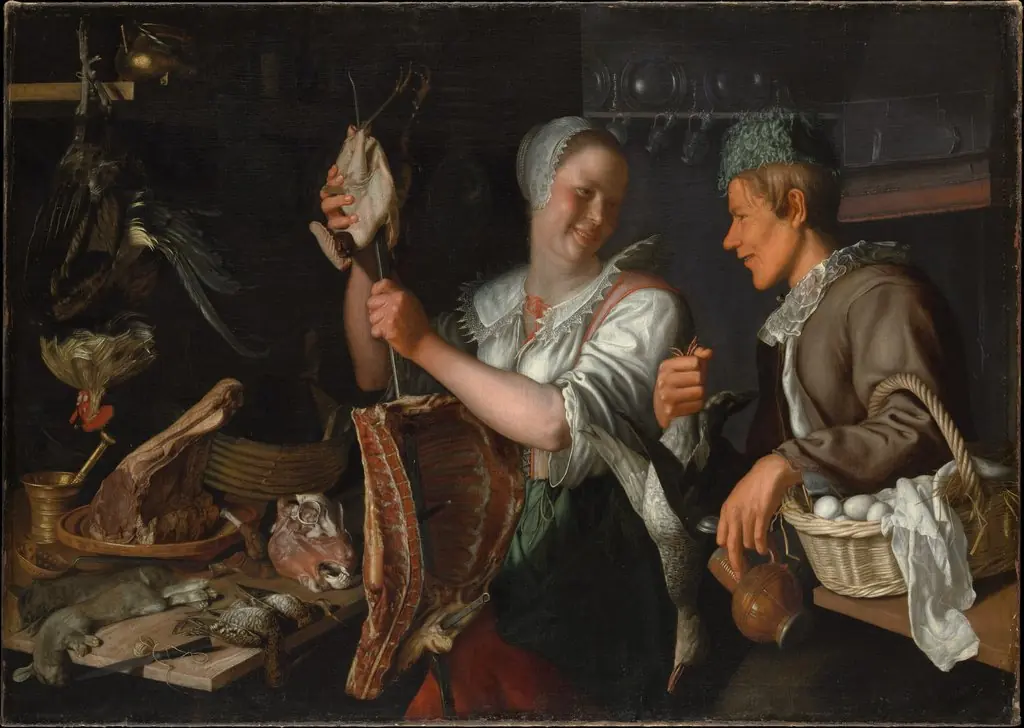
Domestic service has been among the most widespread occupations in human history, yet those who performed it—cooks, kitchen maids, scullions, nurses, laundresses, and indoor servants—rarely commissioned or produced art and seldom left their names. As a subject, the domestic worker emerges most powerfully in the everyday "genre" painting of early modern northern Europe, where artists began treating ordinary household labour as a worthy theme. In the seventeenth-century Dutch Republic, domestic service was a common and vital occupation for women from the lower social strata, and the figure of the maid became a fixture of the new market for cabinet pictures. Because employers often passed cast-off clothing to their help, costume alone is an unreliable guide to status, and art historians frequently struggle to distinguish a housewife from her hired servant.
Visually, domestic workers are typically shown in plain, durable garments in muted blues, browns, and blacks that would not betray dirt, set amid the props of their labour—pots, pails, brooms, and cradles. Early genre scenes often carried a moralizing charge, warning against idleness or the sexual licence imputed to servants. Nicolaes Maes crystallized this in The Idle Servant (1655, National Gallery, London), posing a dozing maid in the traditional attitude of Acedia while her mistress shrugs ruefully amid scattered pans; his celebrated Eavesdropper series likewise dramatizes the charged traffic between upstairs and below-stairs. Johannes Vermeer transformed the type into something monumental and dignified in The Milkmaid (c. 1660), making a lowly kitchen maid the sole, gravely concentrated subject of a single-figure picture.
The theme passed into eighteenth-century France through Jean-Siméon Chardin, whose The Scullery Maid and The Kitchen Maid (both 1738) render the youngest, lowest servants with the same balanced composition, diffused light, and granular impasto he lavished on still life—treating the worker with quiet monumentality rather than satire.
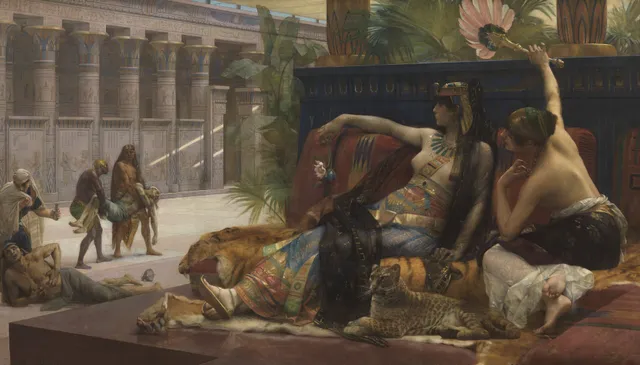
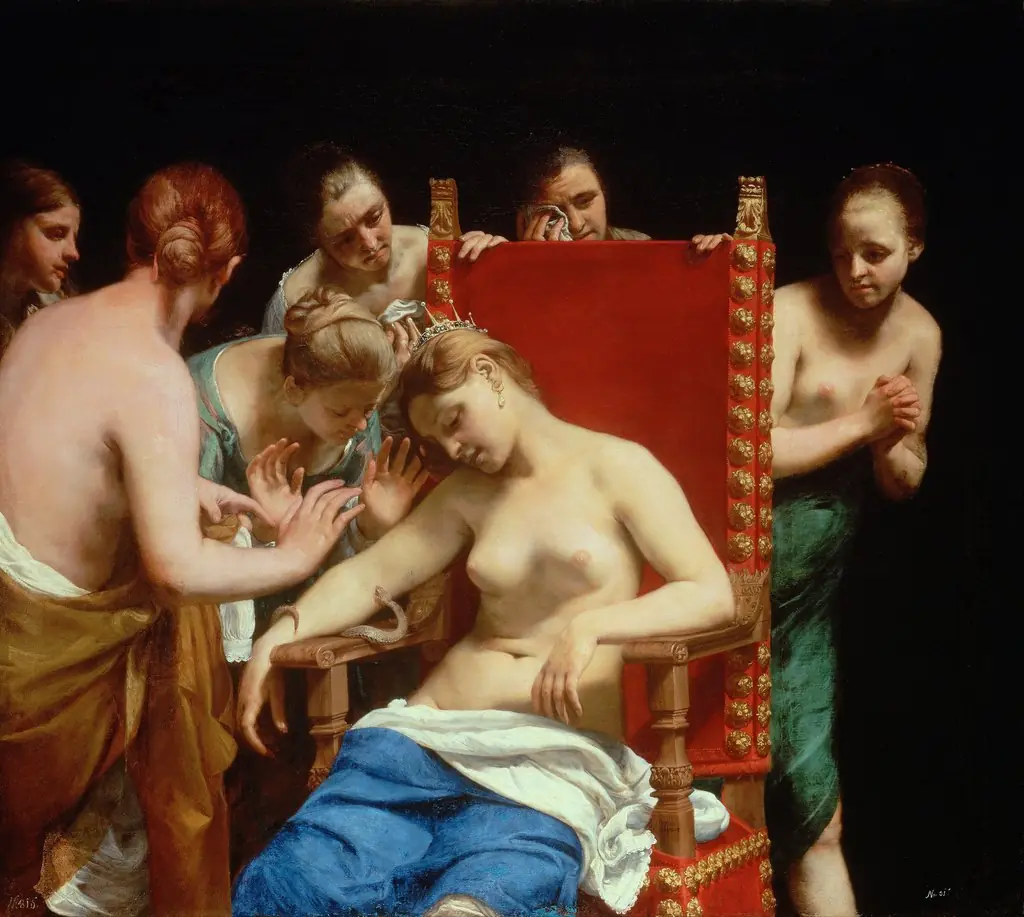
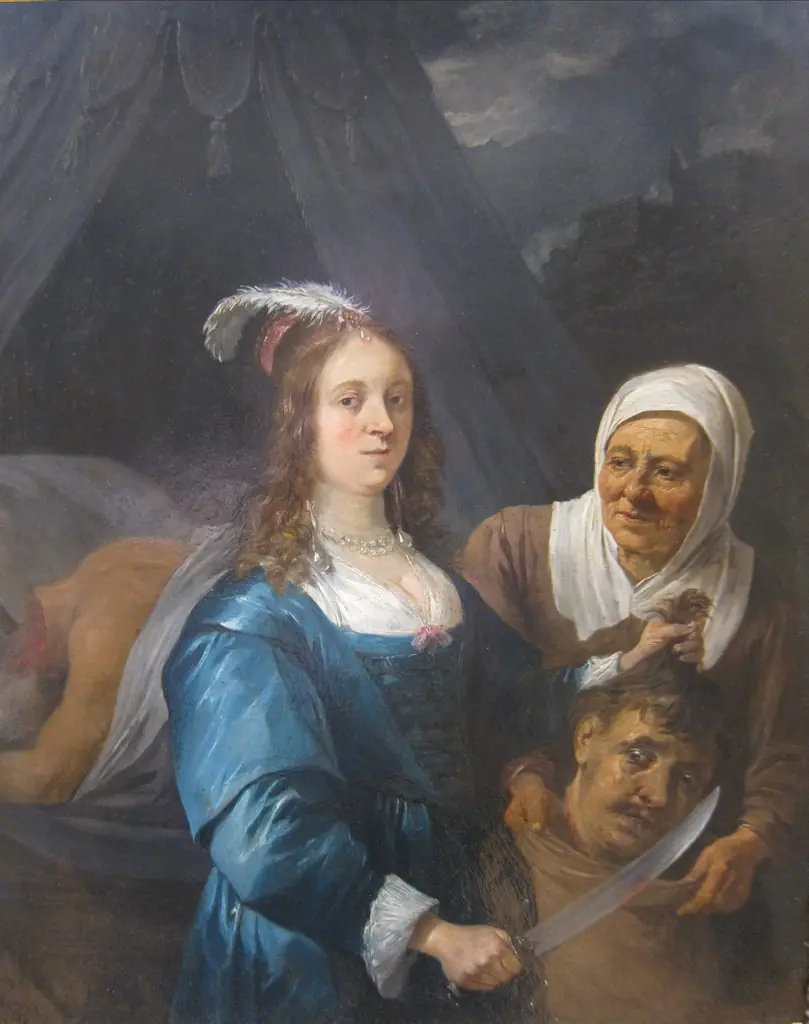
This catalogue holds works in the tradition: Nicolaes Maes's Young Woman Peeling Apples and Vermeer's A Girl Asleep (also called A Maid Asleep), Gabriel Metsu's The Visit to the Nursery, and biblical and history scenes—Jan van Scorel's and Sebastiano Ricci's Bathsheba pictures and Cabanel's Cleopatra Testing Poisons—in which attendants and servants frame the principal action. The genre's legacy runs through Victorian narrative painting to the social realism of the nineteenth and twentieth centuries, where domestic labour became a vehicle for explicit commentary on class.
Key artists



Overview
A domestic worker is a person who works within a residence and performs a variety of household services for an individual, including cleaning, household maintenance, cooking, laundry, ironing, and care for children and elderly dependents. The term domestic service applies to the equivalent occupational category. In traditional English contexts, such a person was said to be in service. The motif recurs in art because domestic labor is foundational to daily life and the functioning of the household, yet historically operates within private, domestic spheres that render the work socially invisible. Because domestic workers live and work within the intimate spaces of the home, their presence provides artists with direct, sustained access to the realities of domesticity, making them essential subjects for exploring the social hierarchies, gender roles, and class structures embedded in private life.
Iconography & meaning
In art, the domestic worker carries complex iconographic weight, simultaneously symbolizing the mundane realities of household maintenance and the social hierarchies of class, race, and gender. The depiction of servants often underscores the status and refinement of the employer, acting as a visual marker of wealth and social standing. However, the iconography also encodes the invisibility and exploitation inherent in the occupation. Scholars have noted that canonical art historical frameworks, such as Panofskian iconography, have frequently imposed religious or elite narratives over domestic scenes, systematically obscuring the servant's active role. When depicted performing labor, such as peeling apples or testing poisons, the servant bridges the gap between the elevated narrative of the employer and the grounded, physical reality of the working class, highlighting the intersection of affection, hierarchy, and subjugation that defines domestic service.
Across movements & periods
The treatment of domestic workers in art shifted significantly alongside the evolution of the occupation itself. In Ancien Regime France, domestic roles were varied and included intellectual positions like secretaries and tutors, reflecting a diverse household hierarchy. During the 19th century, as industrialization prompted urbanization, domestic service became heavily feminized and associated with the rising bourgeoisie. In Britain, the Victorian and Edwardian eras saw the peak of a rigidly structured, hierarchical domestic system, a period when the employment of servants became a widespread marker of middle-class status. Artistic depictions from the 19th and early 20th centuries, including genre paintings, often reflected these rigid class and gender boundaries. By the mid-20th century, a crisis of domesticity took hold as new employment opportunities and household technologies reduced the need for live-in staff. In the United States, the demographic of domestic labor shifted profoundly, with African American women forming the core of the workforce during the Jim Crow era, later replaced by Latin American, Caribbean, and Asian immigrant women in the late 20th century, a transition that modern and contemporary art has increasingly sought to critique and document.
Notable depictions
Notable depictions of domestic workers reveal the evolving social and art historical consciousness surrounding the subject. Edouard Manet's Olympia features a Black maid, Laure, whose reconsideration by scholars has fundamentally altered the interpretation of the painting, shifting focus to the racialized and class-based dynamics of the composition. In sixteenth-century Northern Italy, artists like Parmigianino, who lacked families, relied on their servants as primary models for domestic genre scenes, making those workers crucial to the development of new pictorial modes, even as canonical frameworks later obscured their contributions. In mid-twentieth-century South Africa, Dorothy Kay painted Cookie: Annie Mavata, a portrait that captures the ambivalent intimacy between artist and servant, where the subject's assured stance introduces a quiet counter-presence even as the artist formally suppressed overt markers of her labor. Additionally, the British artist Laura Knight documented women in private, domestic-adjacent spaces, such as the ballet dancer Lubov Tchernecheva at her toilette, exploring the intimate preparation and labor behind public performance.
Legacy
The legacy of the domestic worker as an artistic subject is deeply tied to the ongoing struggle for labor rights and social visibility. Because domestic work occurs within the private home, the struggles of these workers have historically been hidden from public view, a reality mirrored in the art historical erasure of servants' contributions to artistic production. In recent decades, advocacy groups like the National Domestic Workers Alliance have worked to bring this hidden labor to light, successfully passing Domestic Worker Bills of Rights in several US states to secure basic protections like overtime pay. Concurrently, a feminist and postcolonial reassessment within art history has sought to restore the agency of domestic workers, recentering them not merely as passive background figures but as enablers of artistic production whose labor materially shaped the conditions of art making. This dual legacy of cultural marginalization and persistent advocacy underscores the domestic worker's enduring role as a focal point for examining the intersections of race, class, and gender in both society and visual culture.
Works
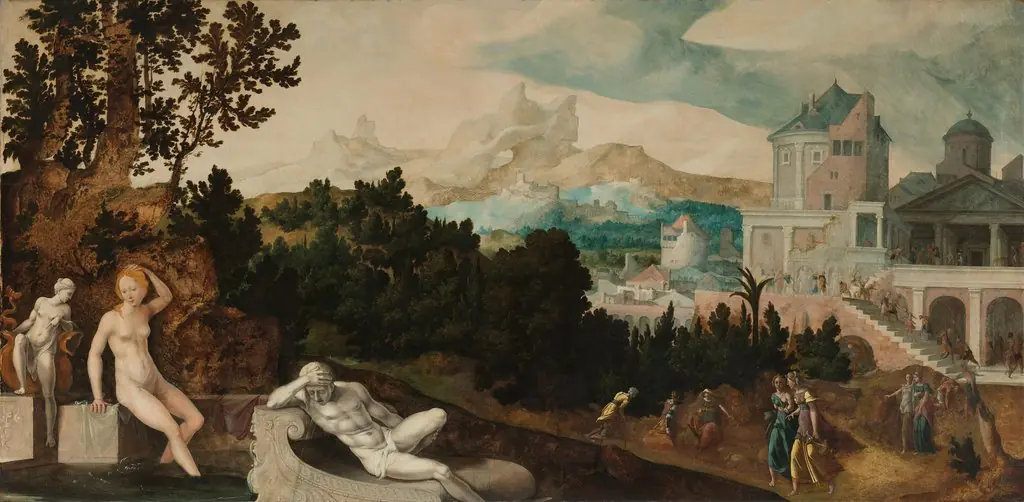 Landscape with Bathsheba
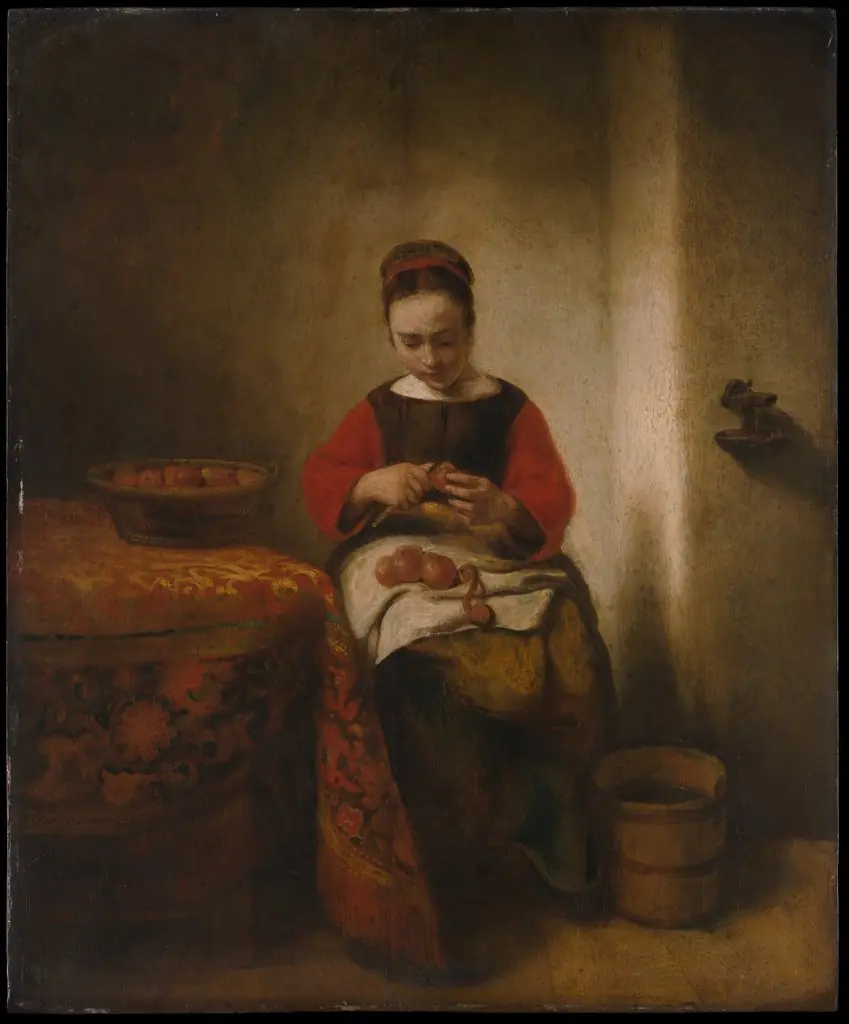 Young Woman Peeling Apples
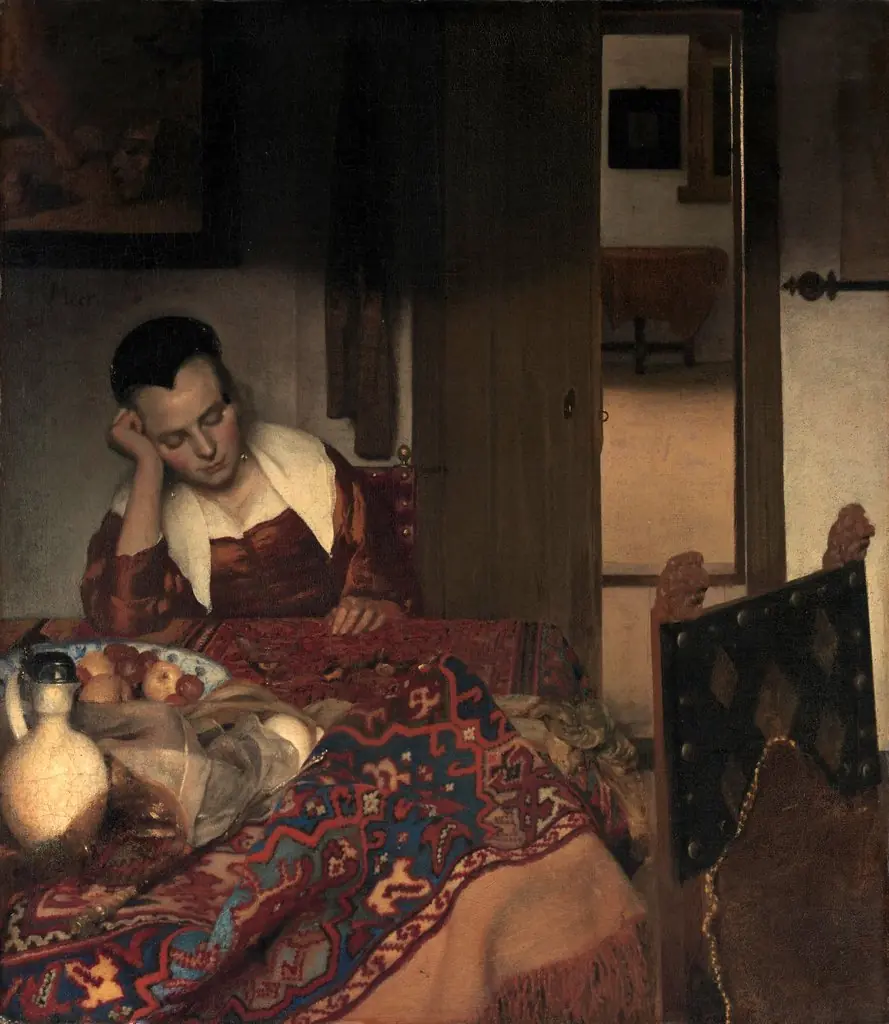 A Girl Asleep
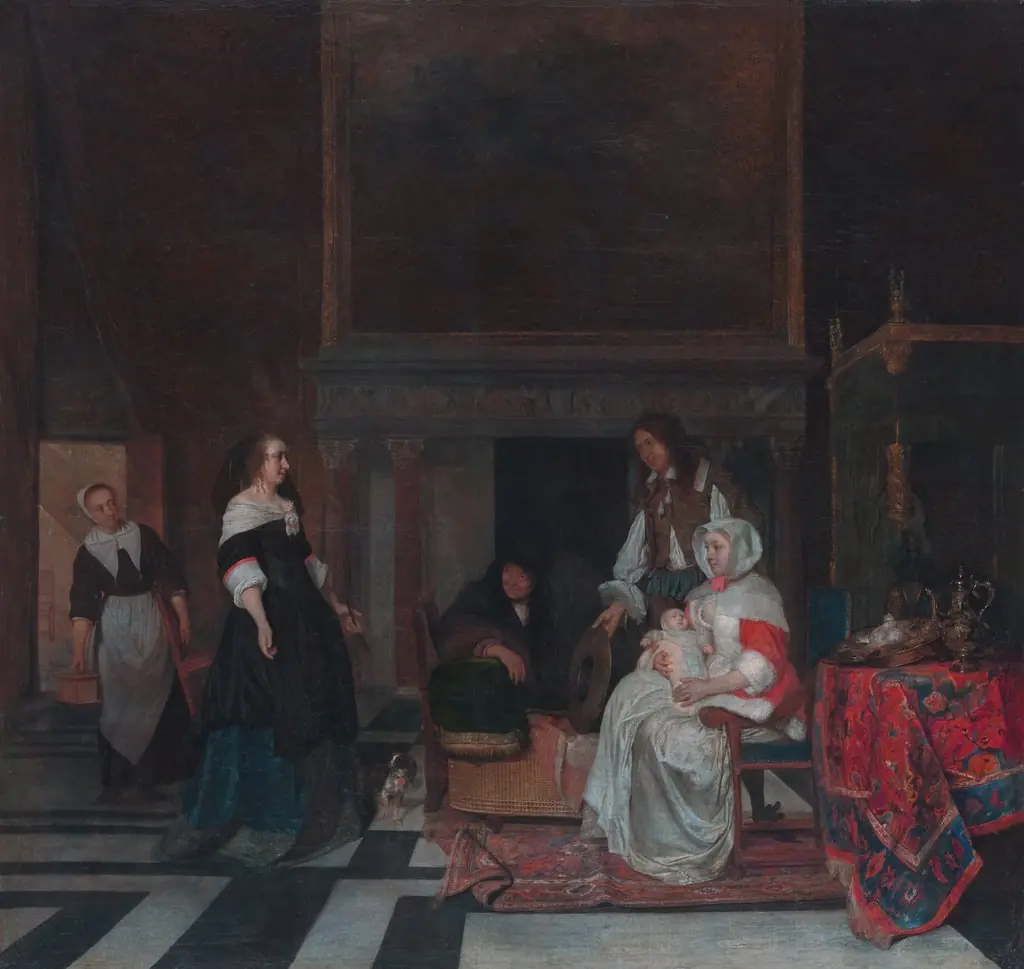 The Visit to the Nursery
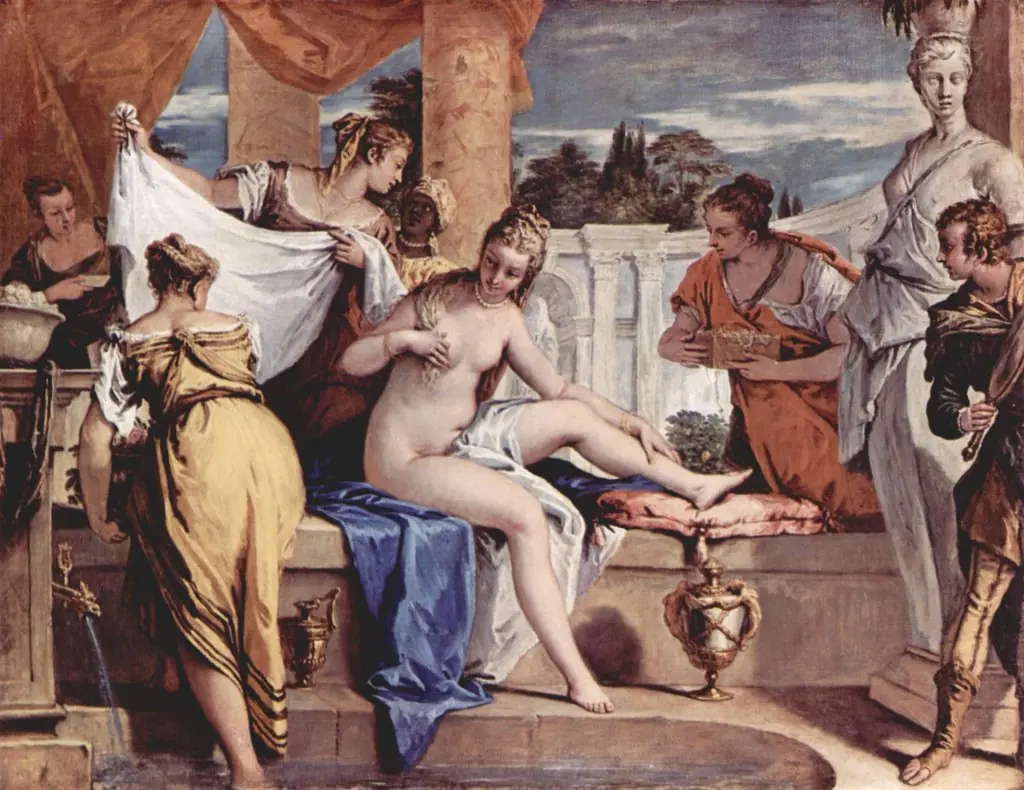 Bathsheba at her bath
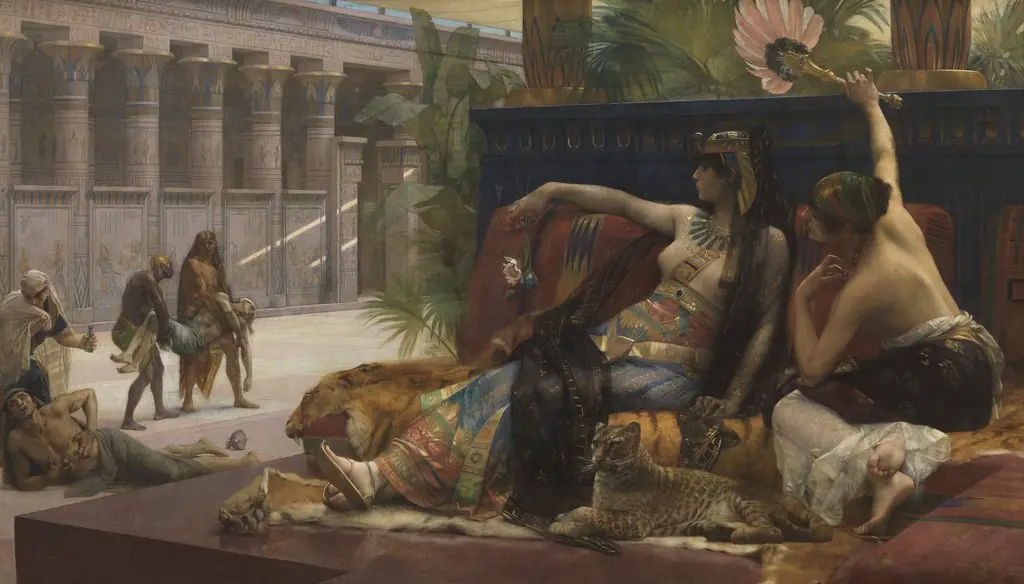 Cleopatra Testing Poisons on Condemned Prisoners
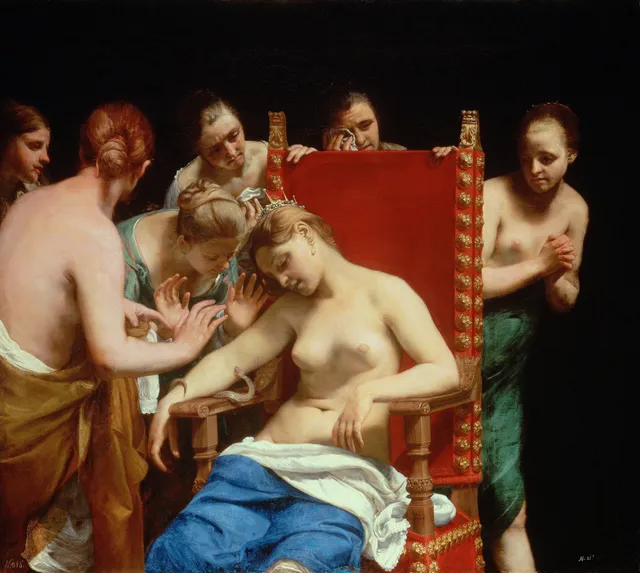
 The Death of Cleopatra
 Kitchen Scene
 Judith with the Head of Holofernes
 Untitled
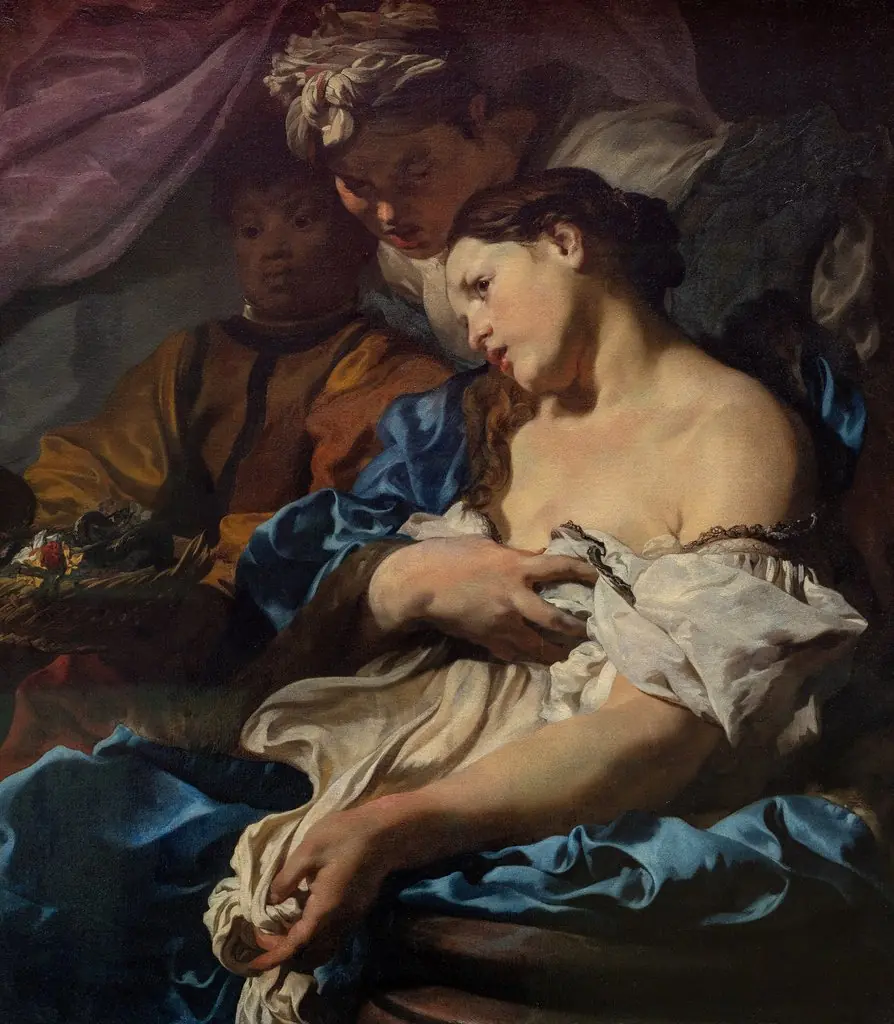 The Death of Cleopatra
 Judith at the Banquet of Holofernes
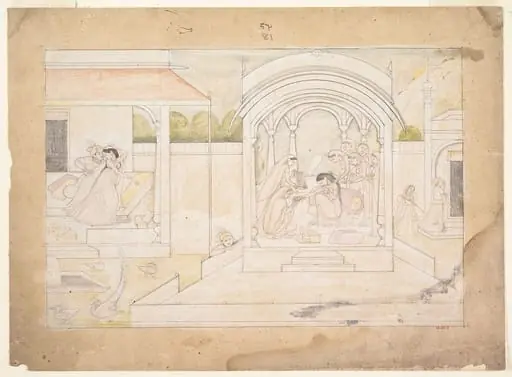 Untitled
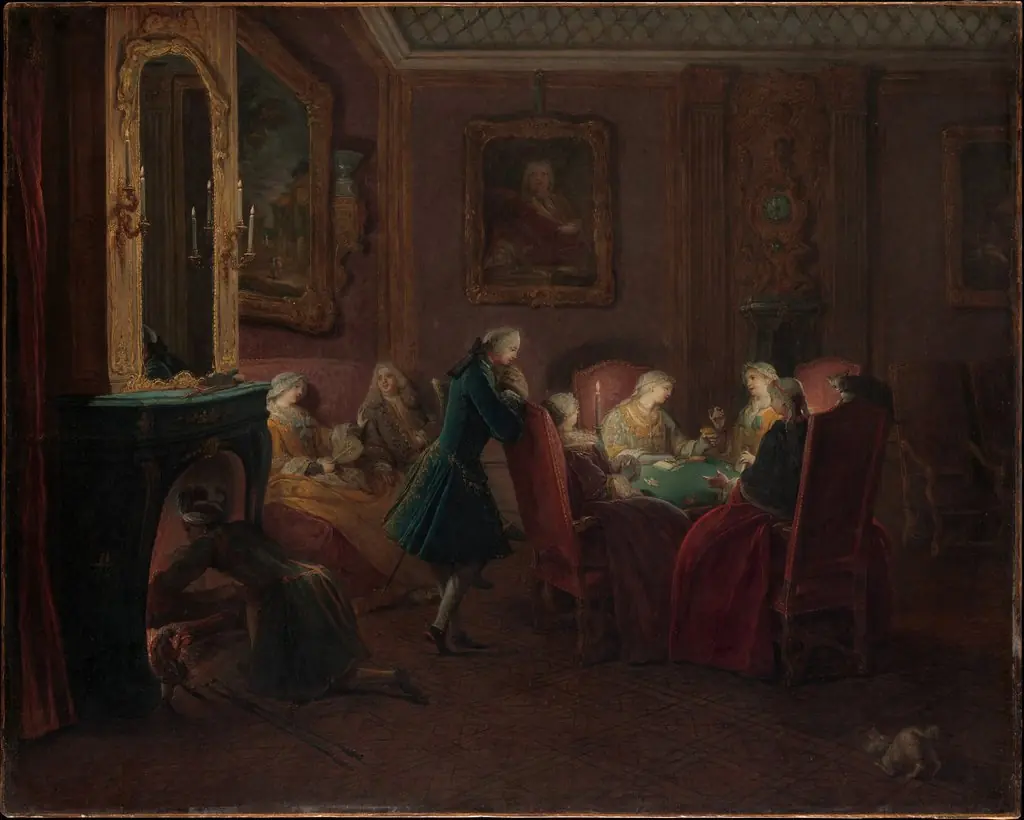 Card Players in a Drawing Room
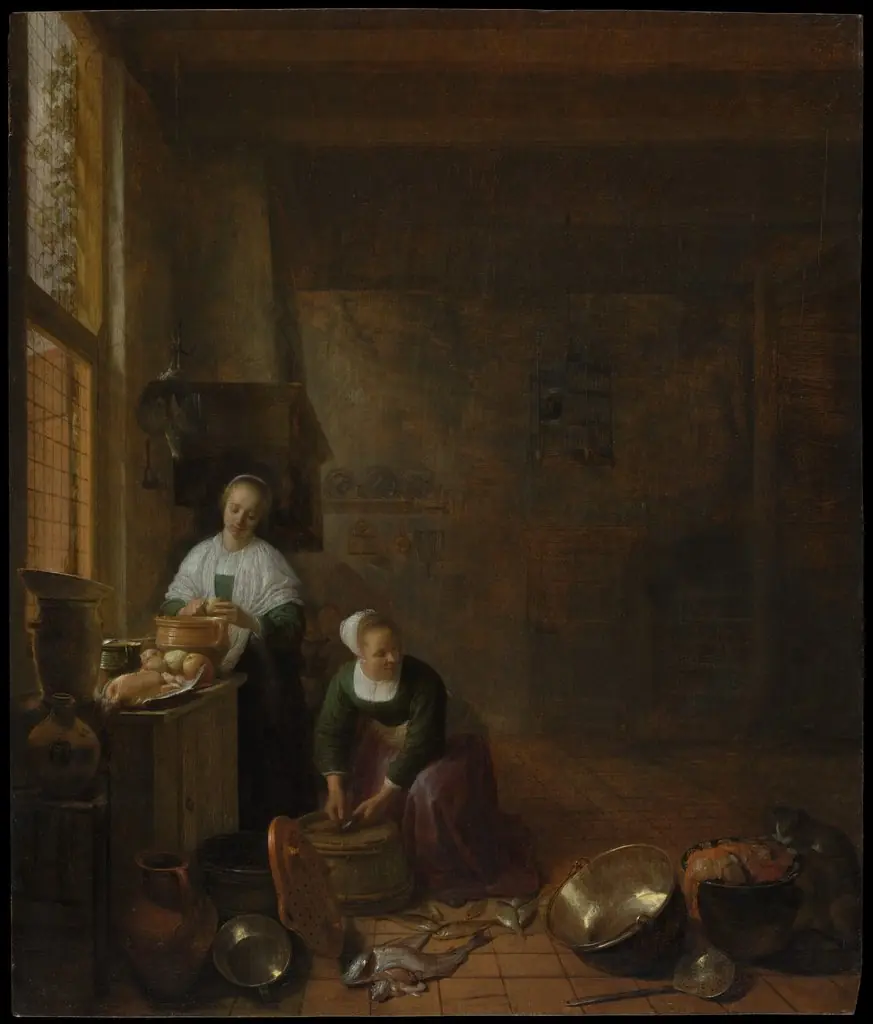 A Kitchen
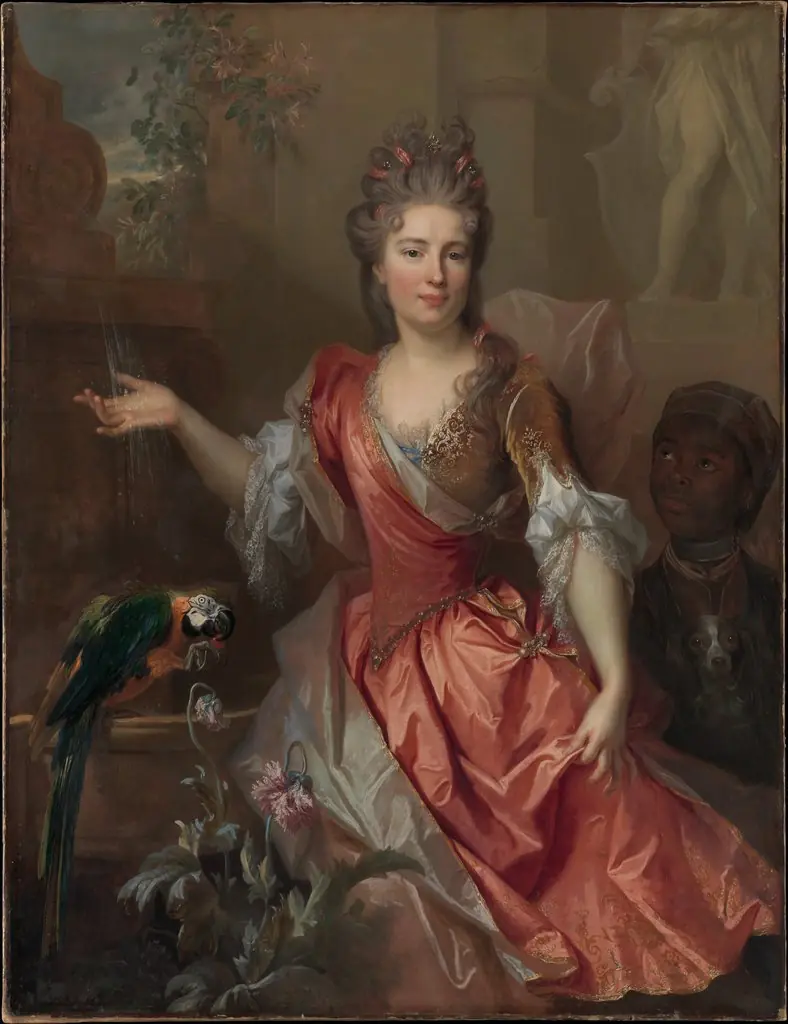 Portrait of a Woman, Possibly Madame Claude Lambert de Thorigny (Marie Marguerite Bontemps, 1668–1701)
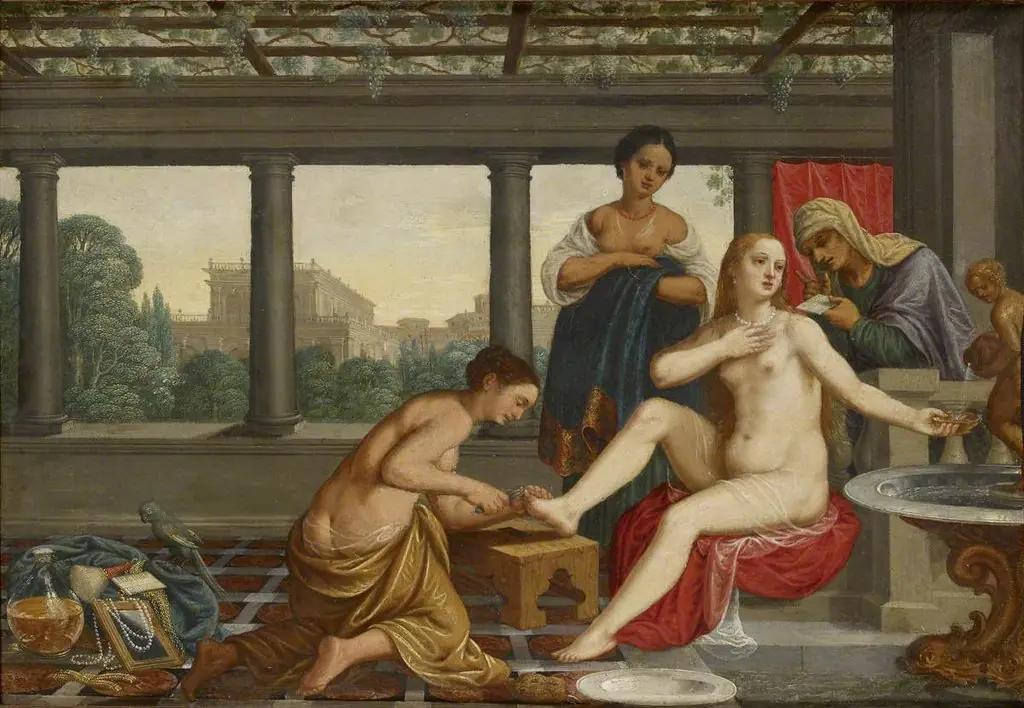 Bathsheba's Bath
 Leda and the Swan
 Untitled
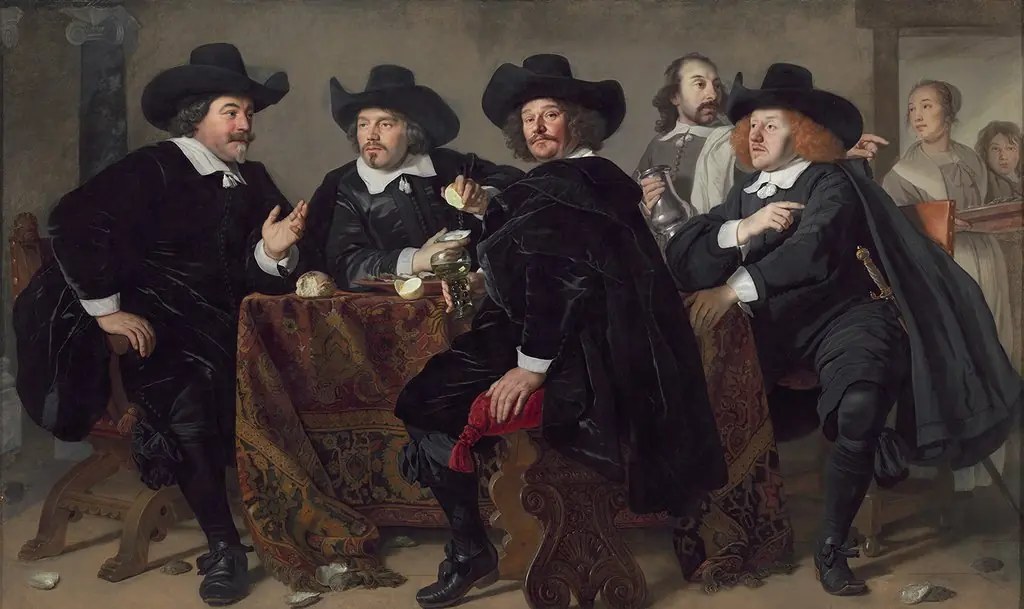 Four directors of the arquebusier's guild, Amsterdam, 1655
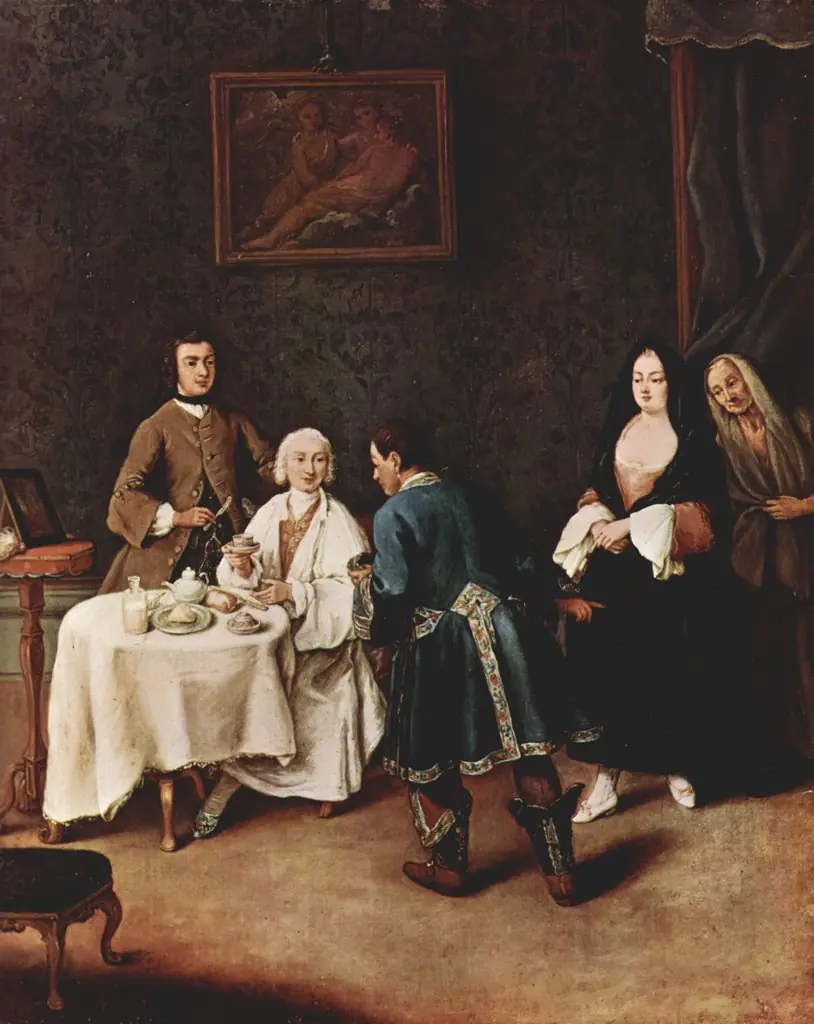 The Temptation
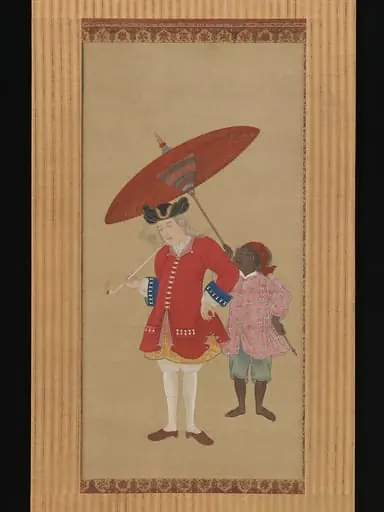 Untitled
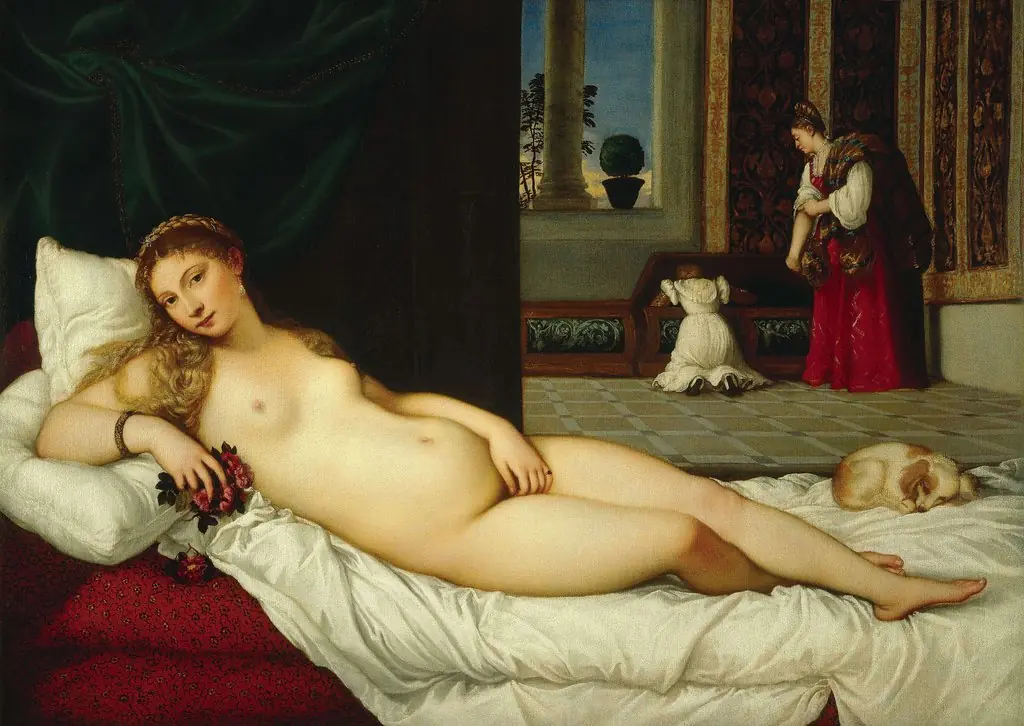 Venus of Urbino
 The Return of the Prodigal Son
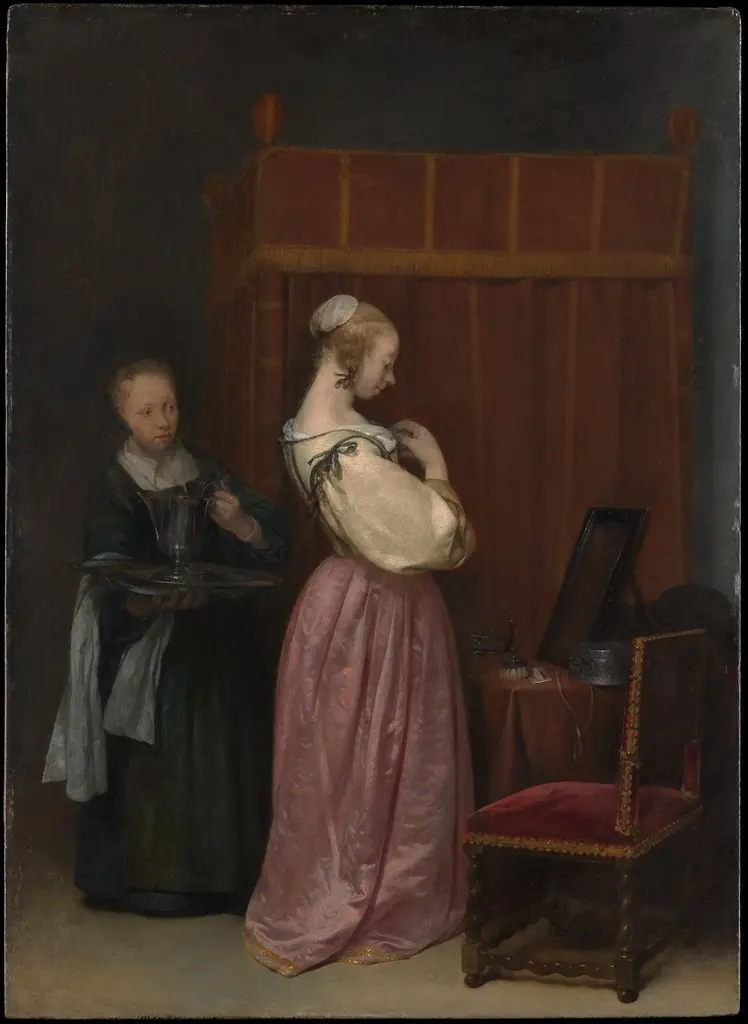 A Young Woman at Her Toilet with a Maid
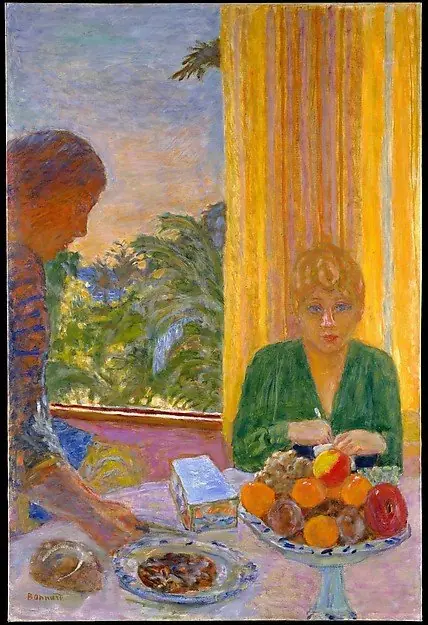 The Green Blouse
 The Distribution of the Eagle Standards
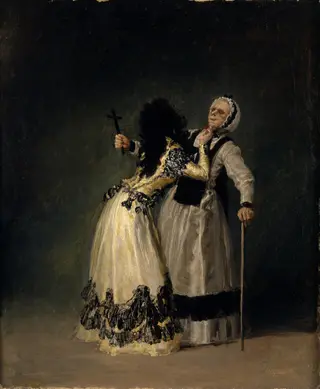 The Duchess of Alba and la Beata
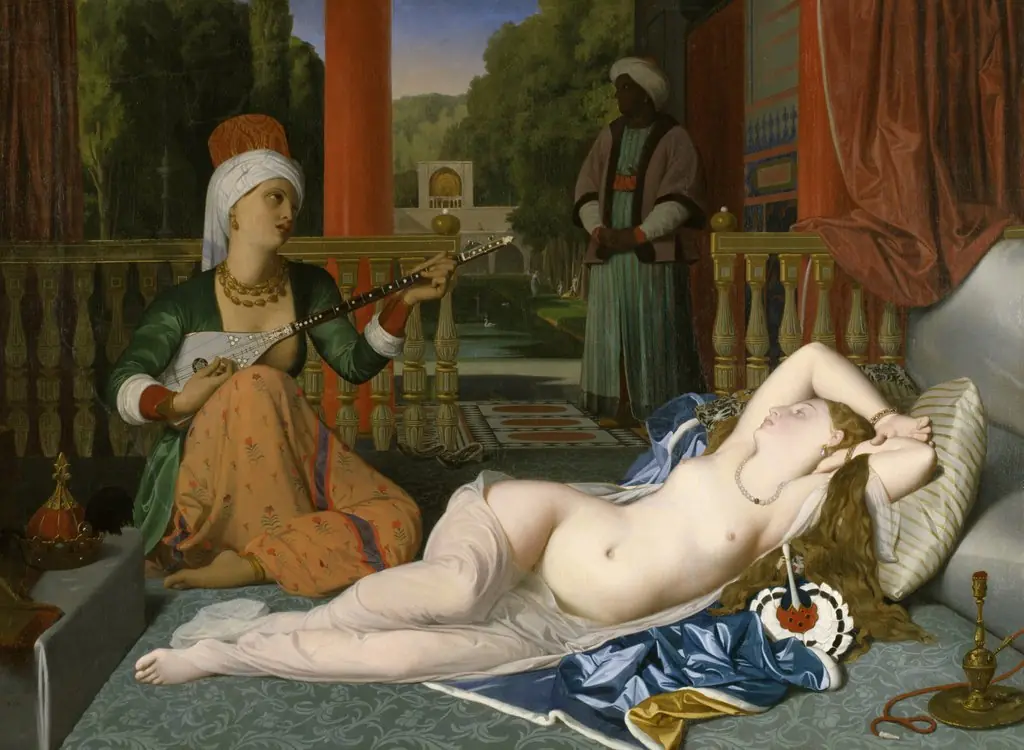 Odalisque with Slave
 A Chief Merchant of the VOC with his Wife and an Enslaved Servant
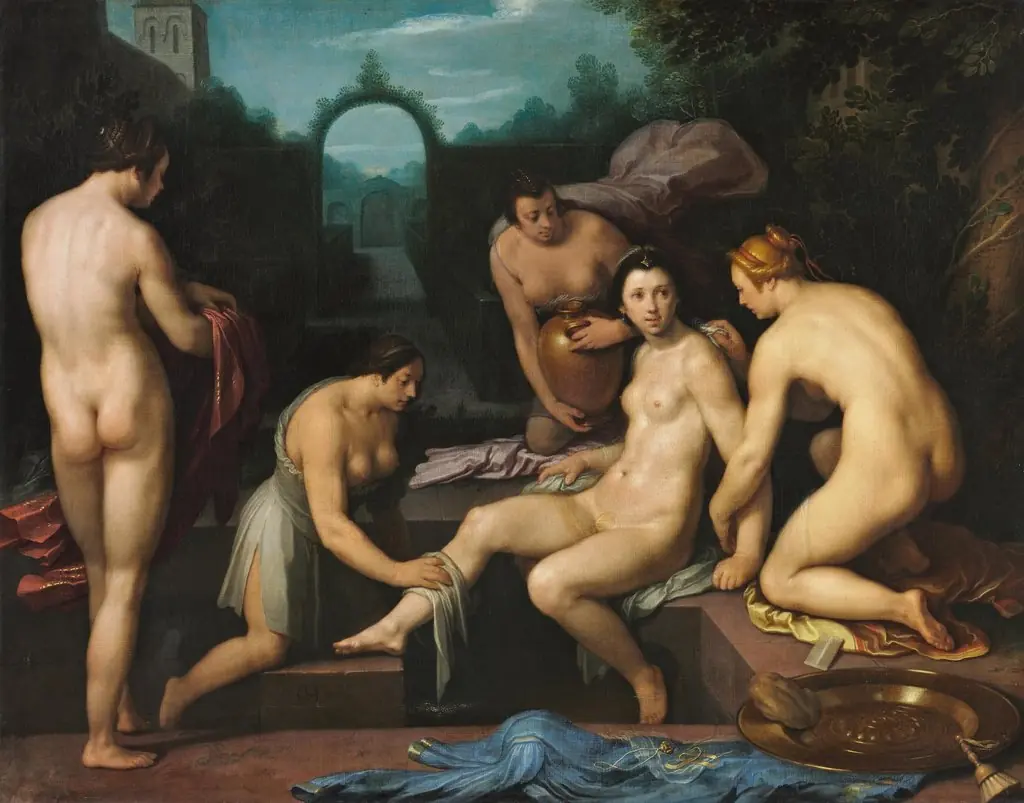 Bathsheba at her toilet
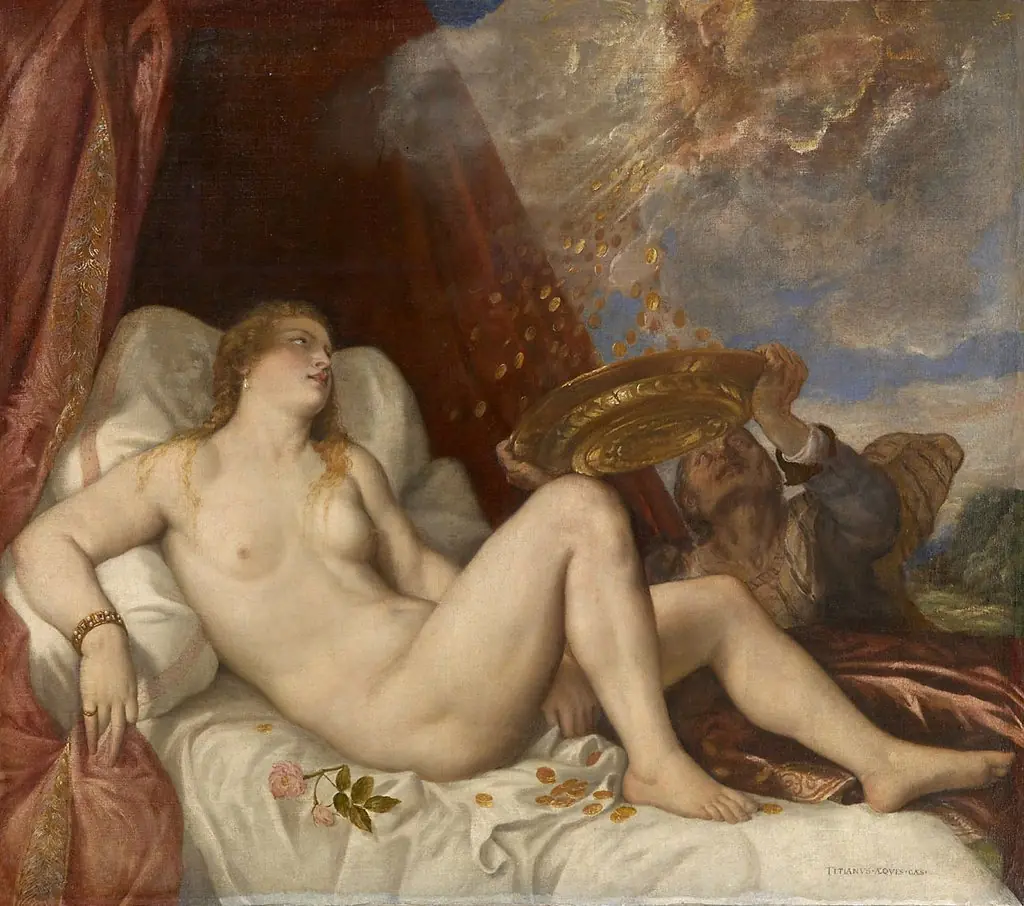 Danaë
Danaë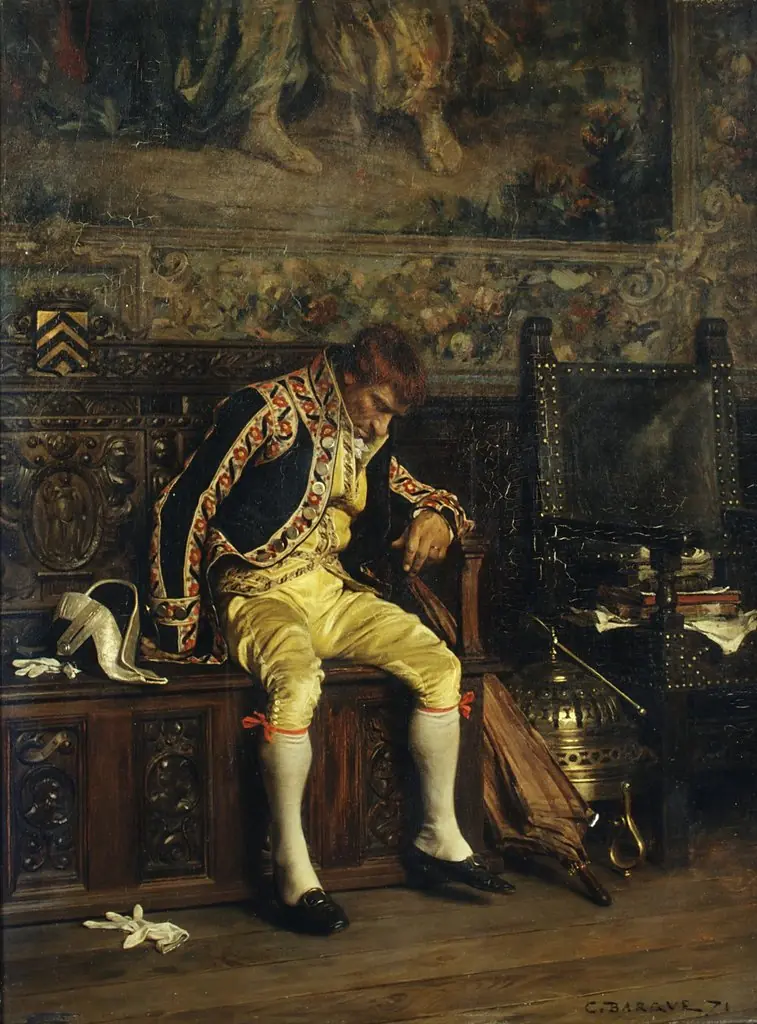 A Footman Sleeping
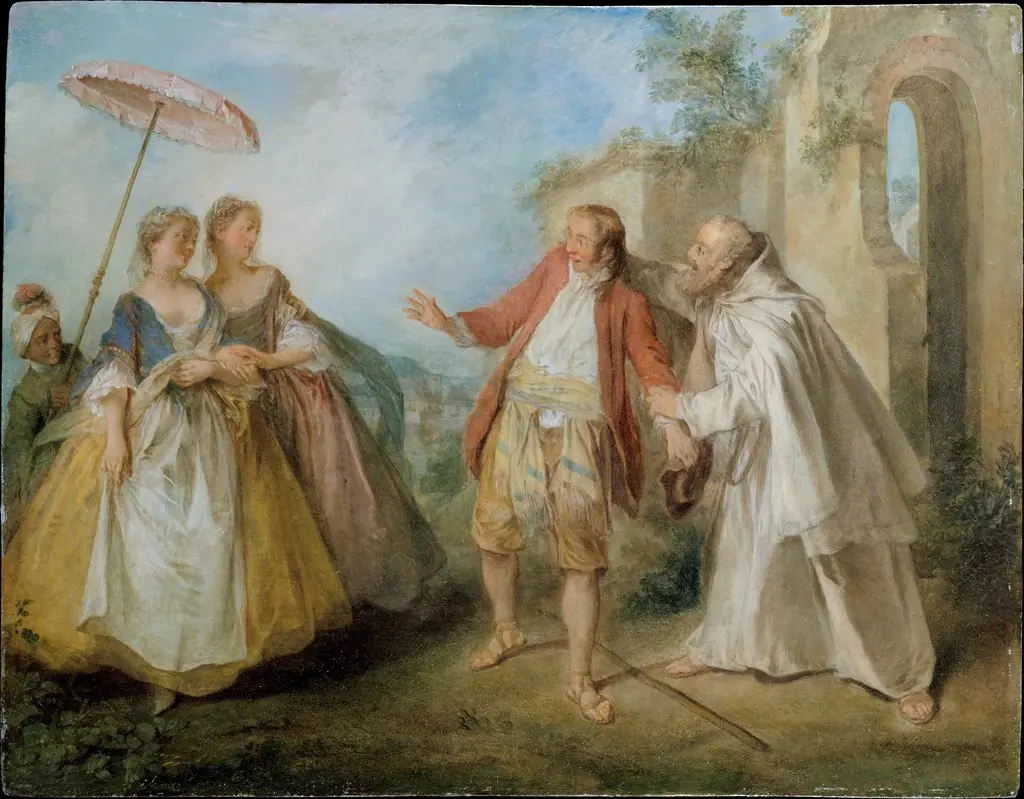 Brother Philippe's Geese
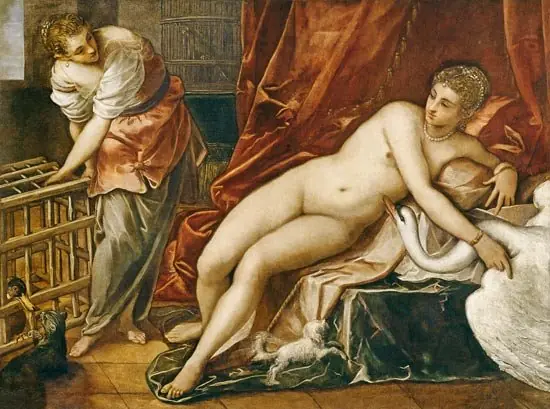 Leda and the Swan
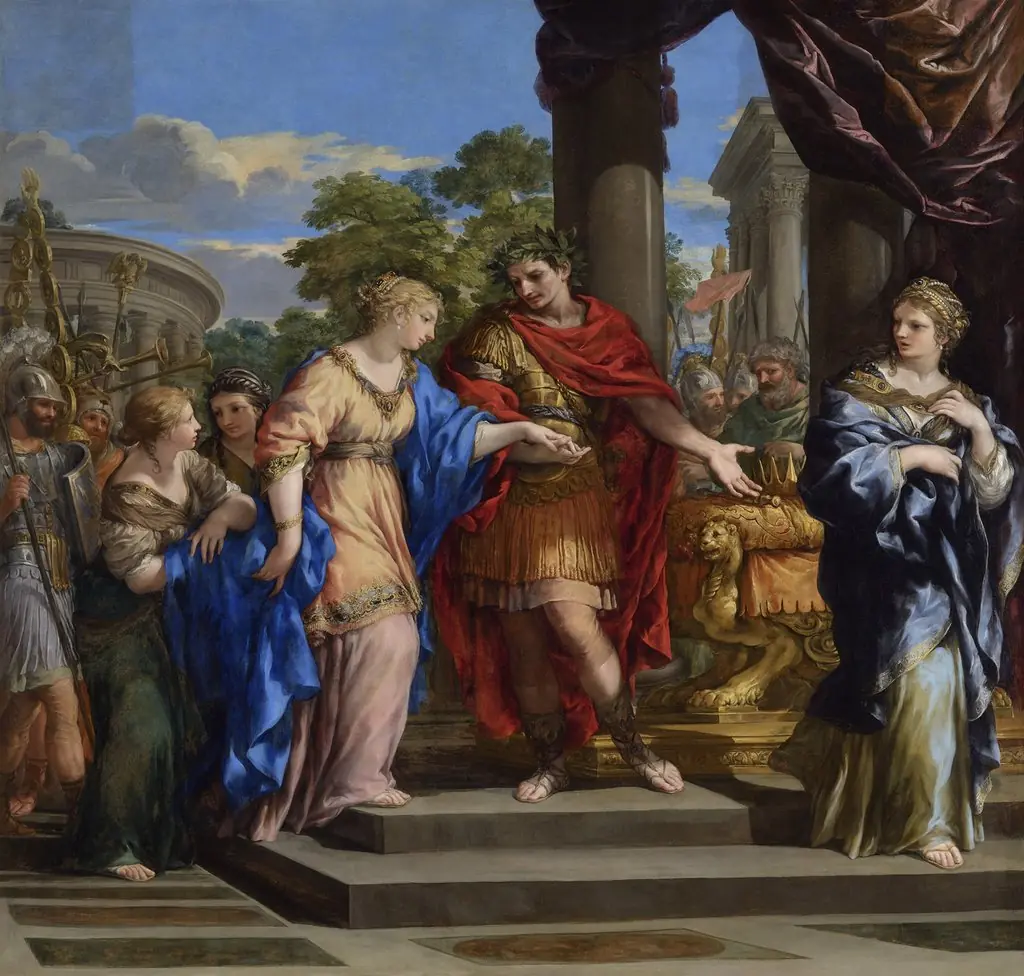 Caesar Giving Cleopatra the Throne of Egypt
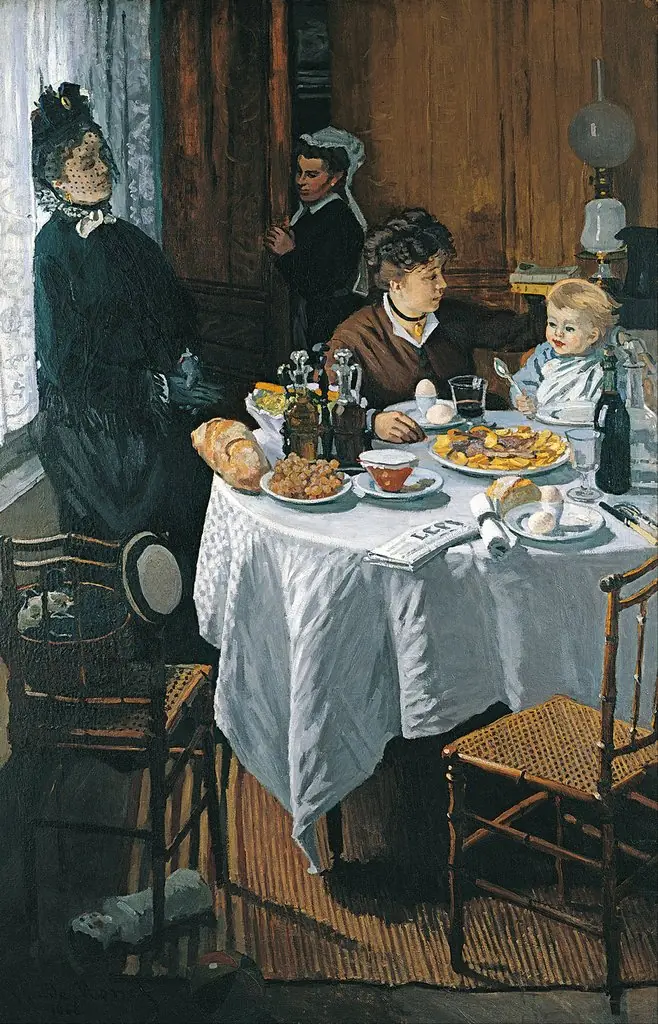 The Luncheon
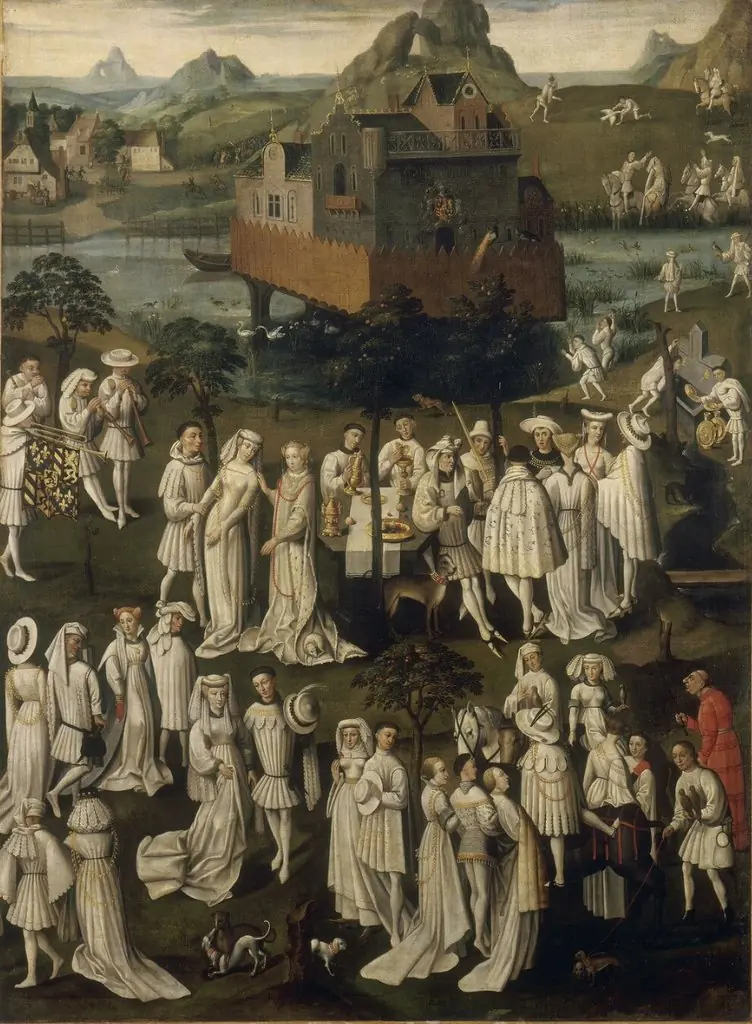 Garden of love at the court of Philippe the Good, Duke of Burgundy
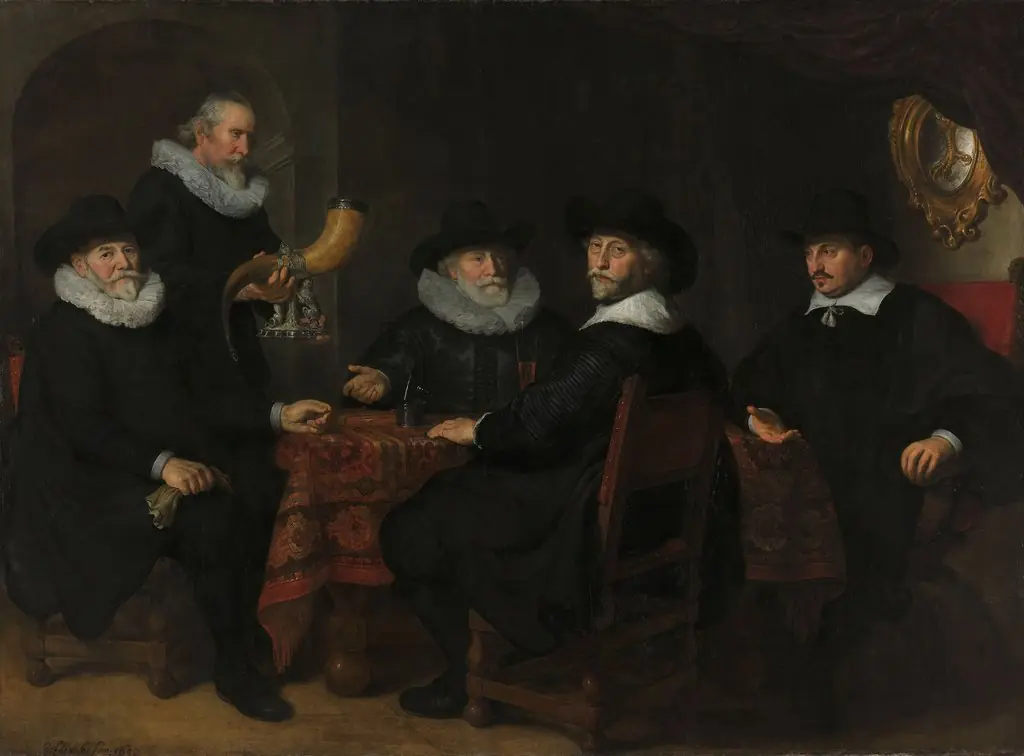 Four directors of the arquebusier's guild, Amsterdam, 1642
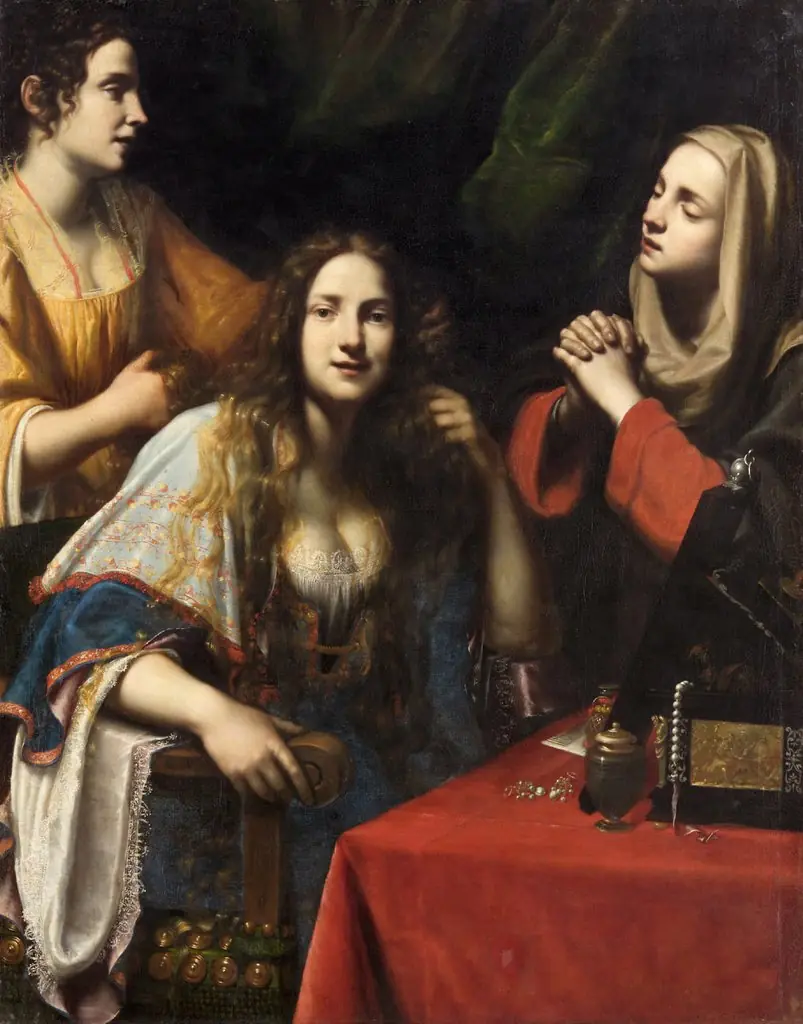 Martha scolding her vain sister Mary Magdalene
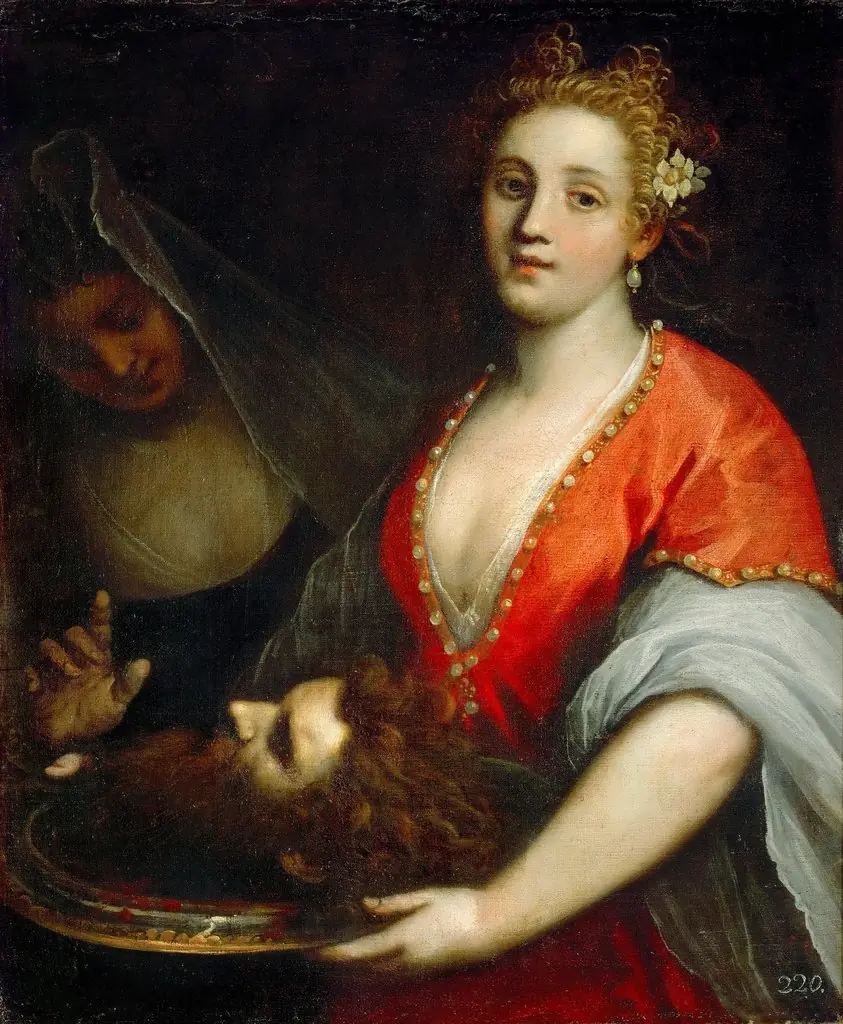 Salomé with the Head of John the Baptist
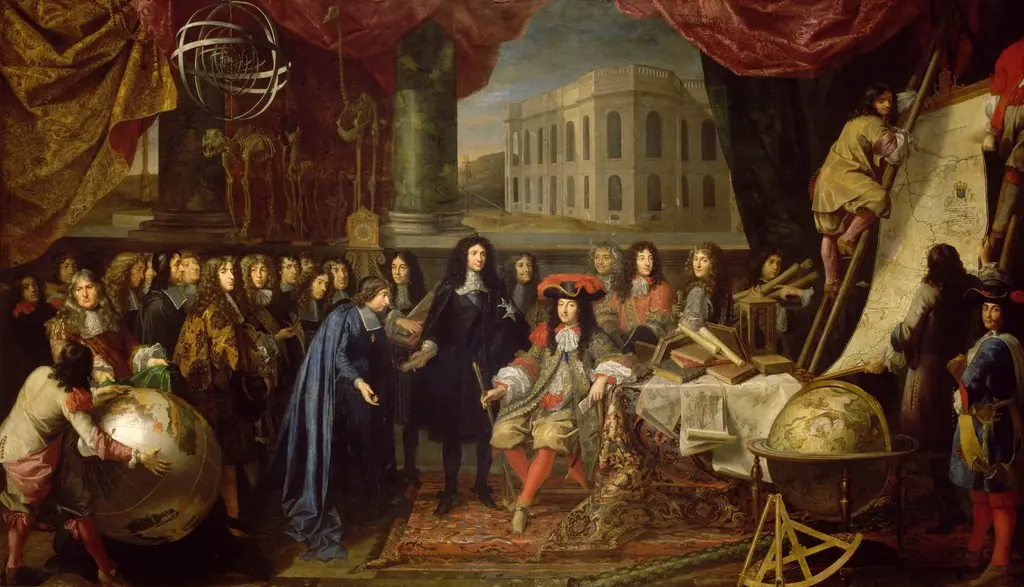 Establishment of the French Academy of Sciences and of Paris Observatory
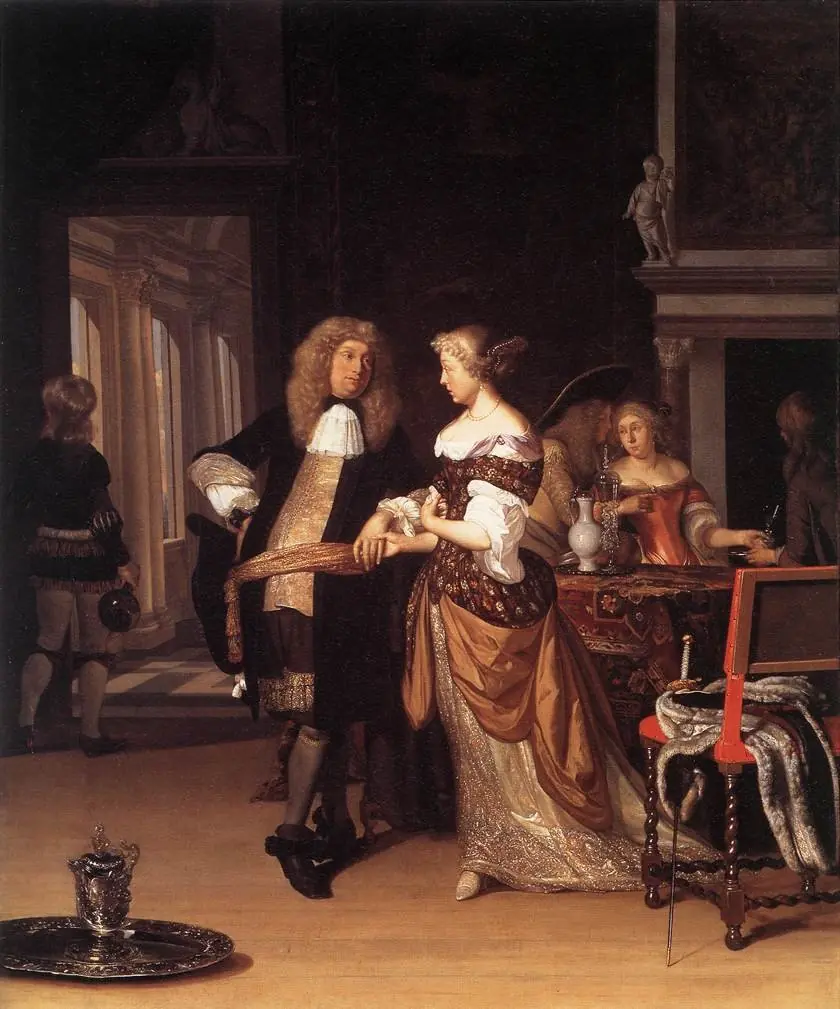 Elegant Couple in an Interior
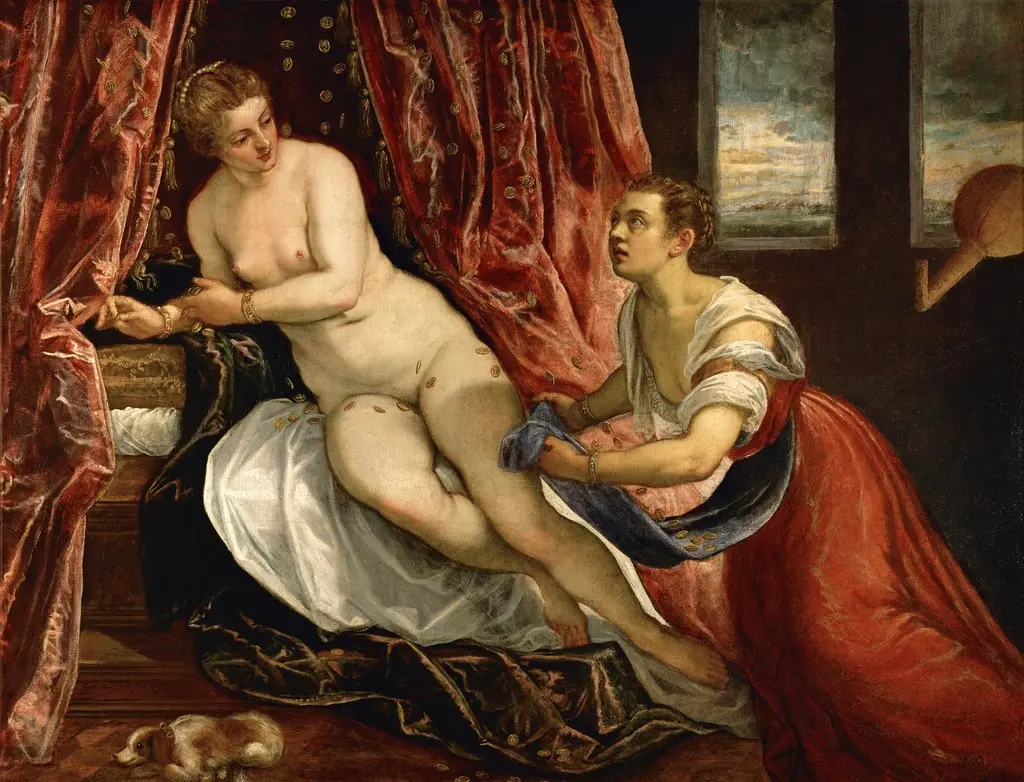 Danae
Danae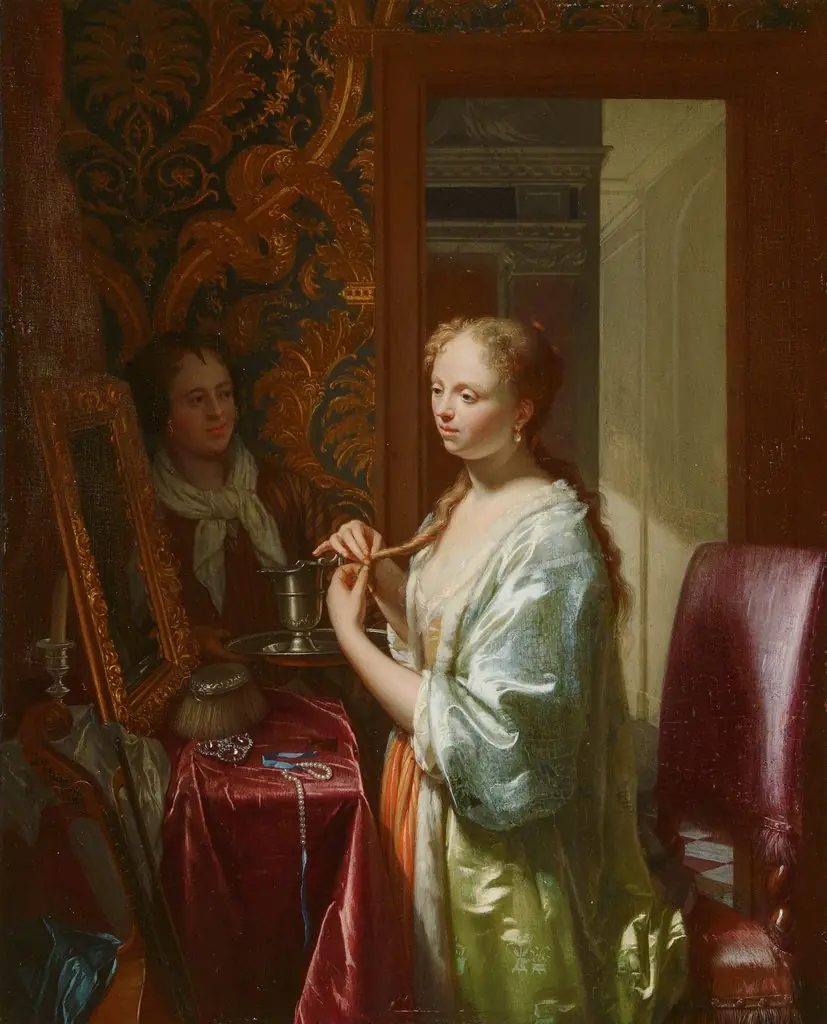 Lady attending to her toilet
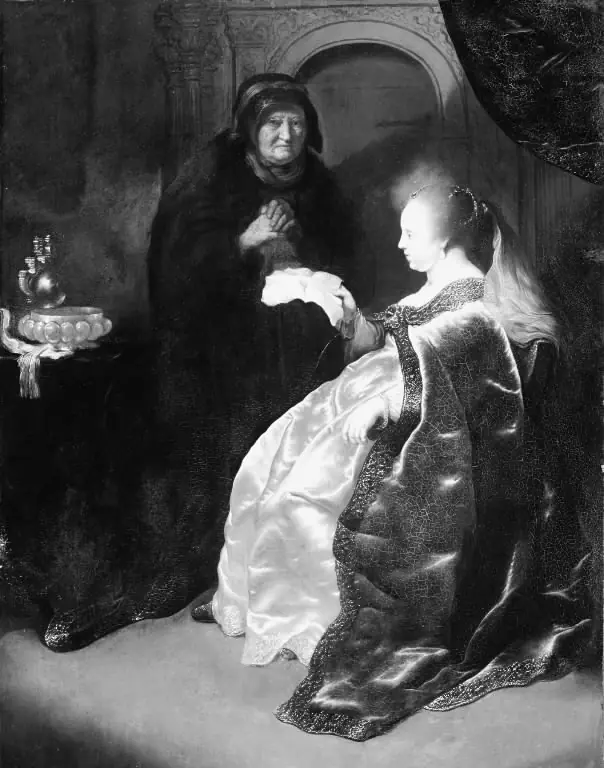 Esther reading Haman's Decree of the Extermination of the Jews
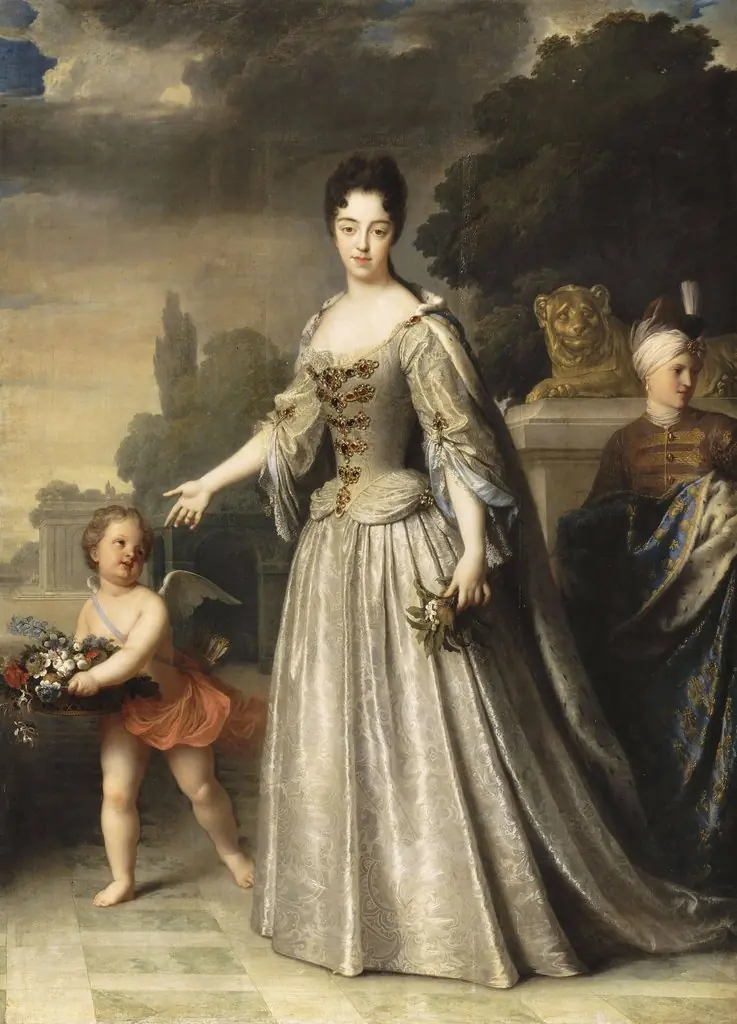 Portrait of Marie Adélaïde of Savoy, Duchess of Burgundy
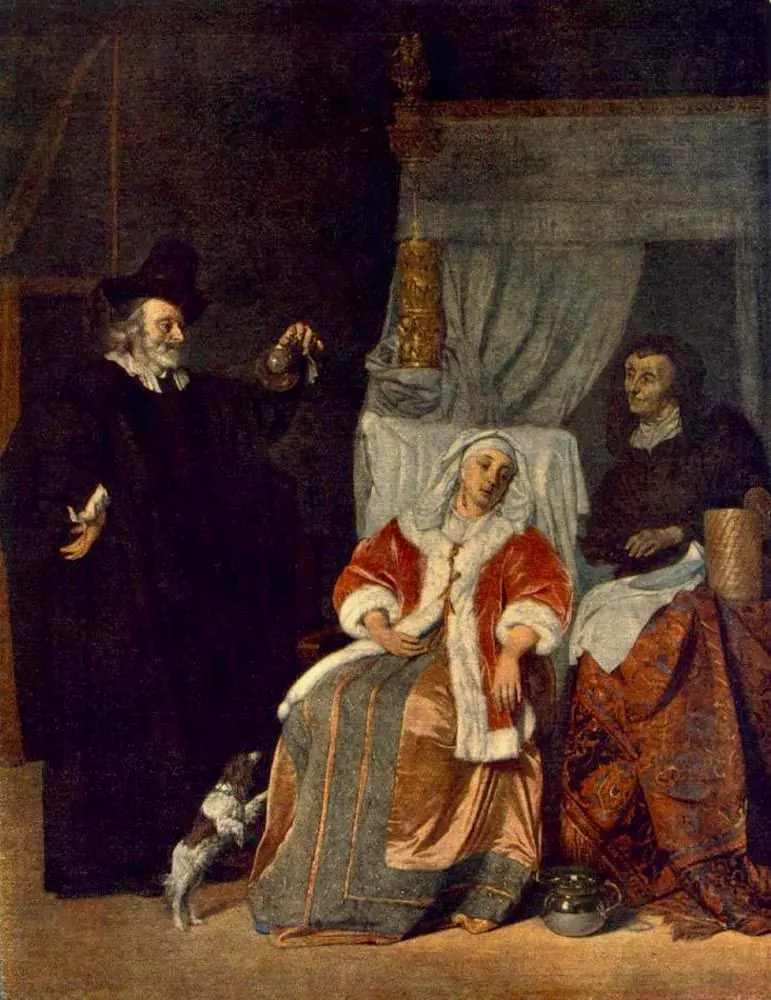 Doctor's Visit
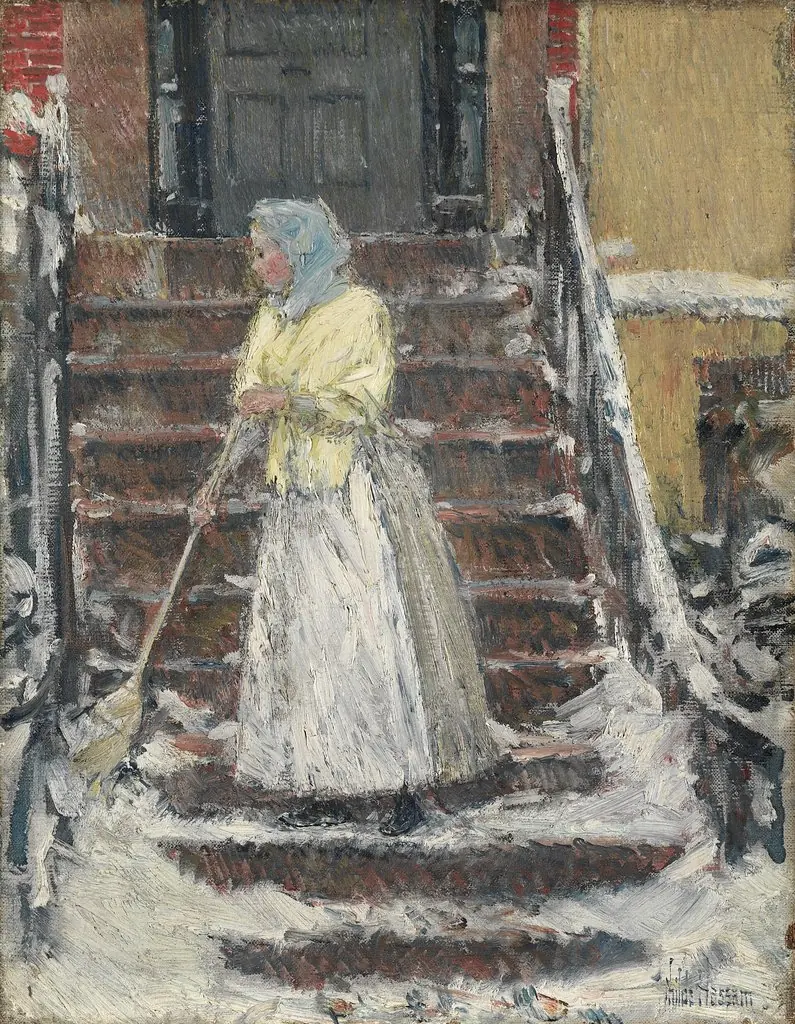 Sweeping Snow
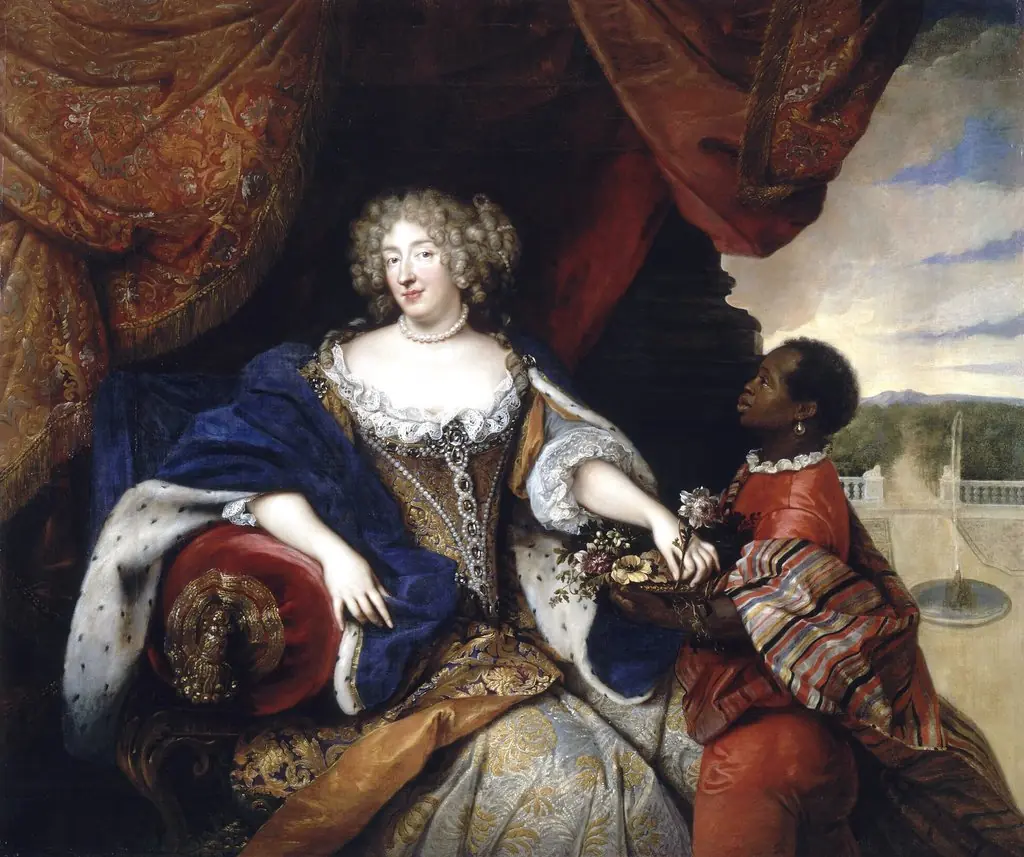 Portrait of Elizabeth Charlotte of the Palatine with her Slave
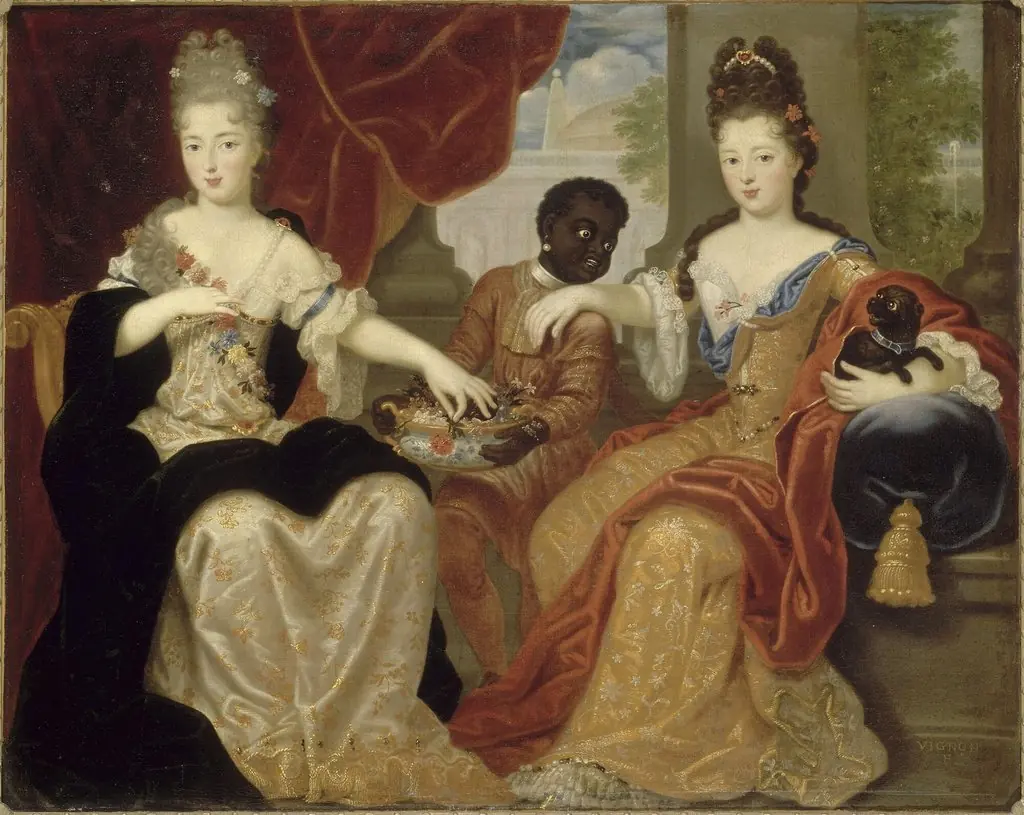 Françoise-Marie de Bourbon known as Mademoiselle de Blois and Louise-Françoise de Bourbon known as Mademoiselle de Nantes
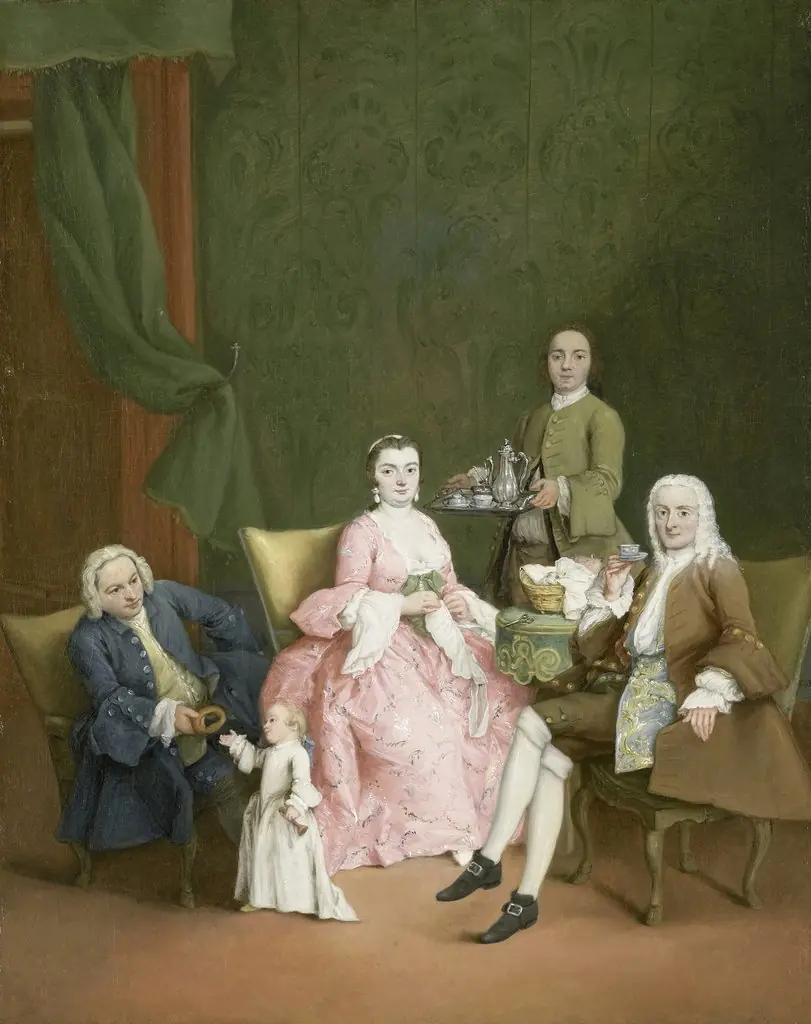 Portrait of a Venetian Family with a Manservant Serving Coffee
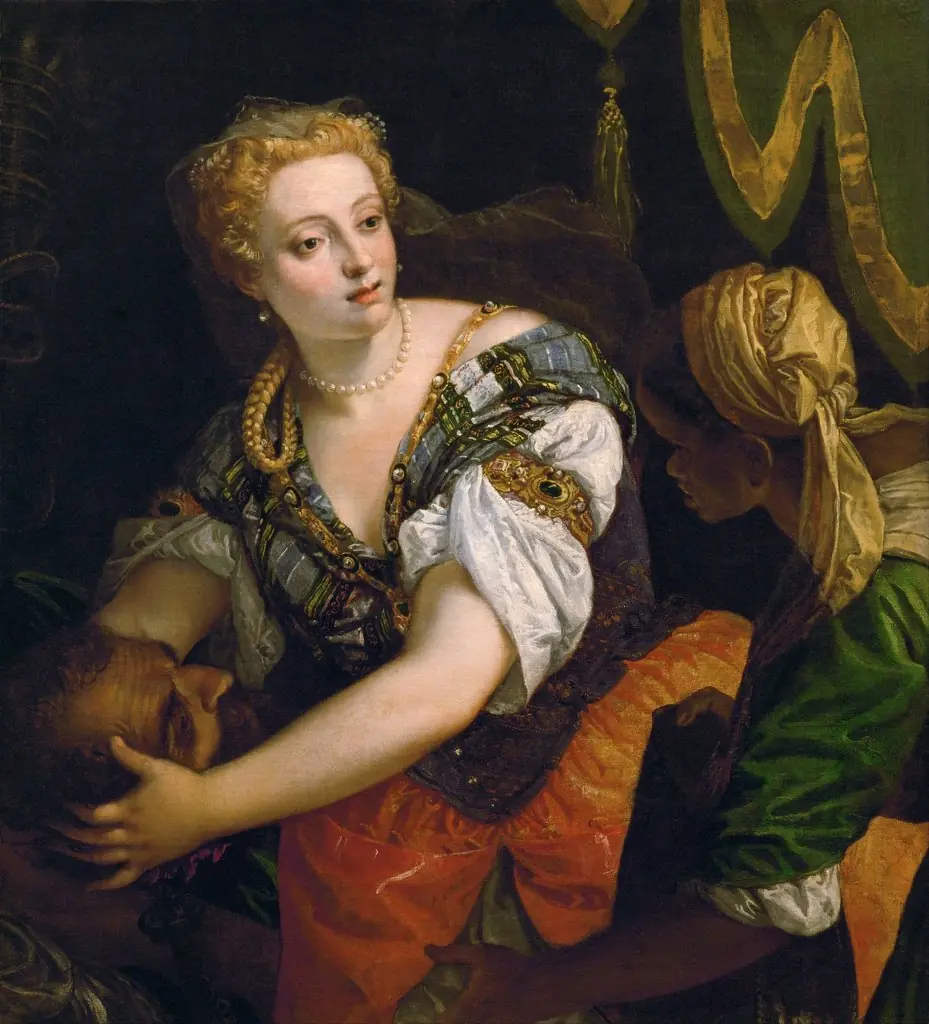 Judith with the Head of Holofernes
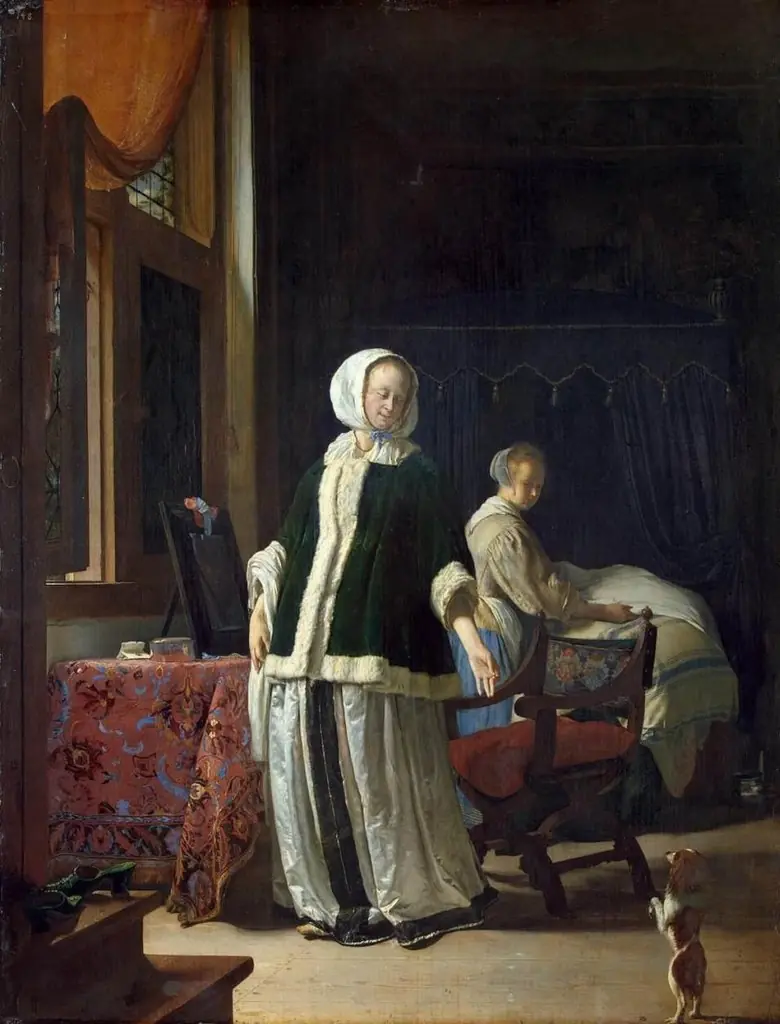 Lady at her Toilet
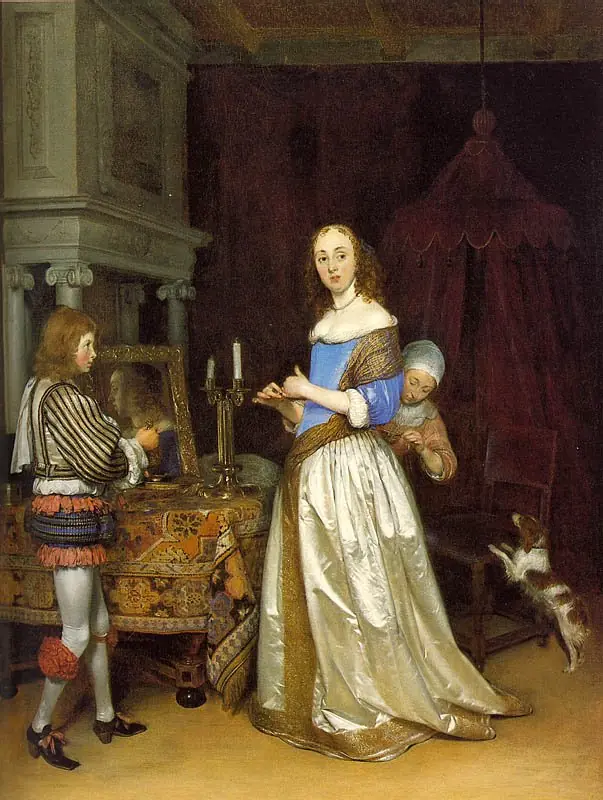 A Lady at Her Toilet
 Choadar, Servant of the Ambassador
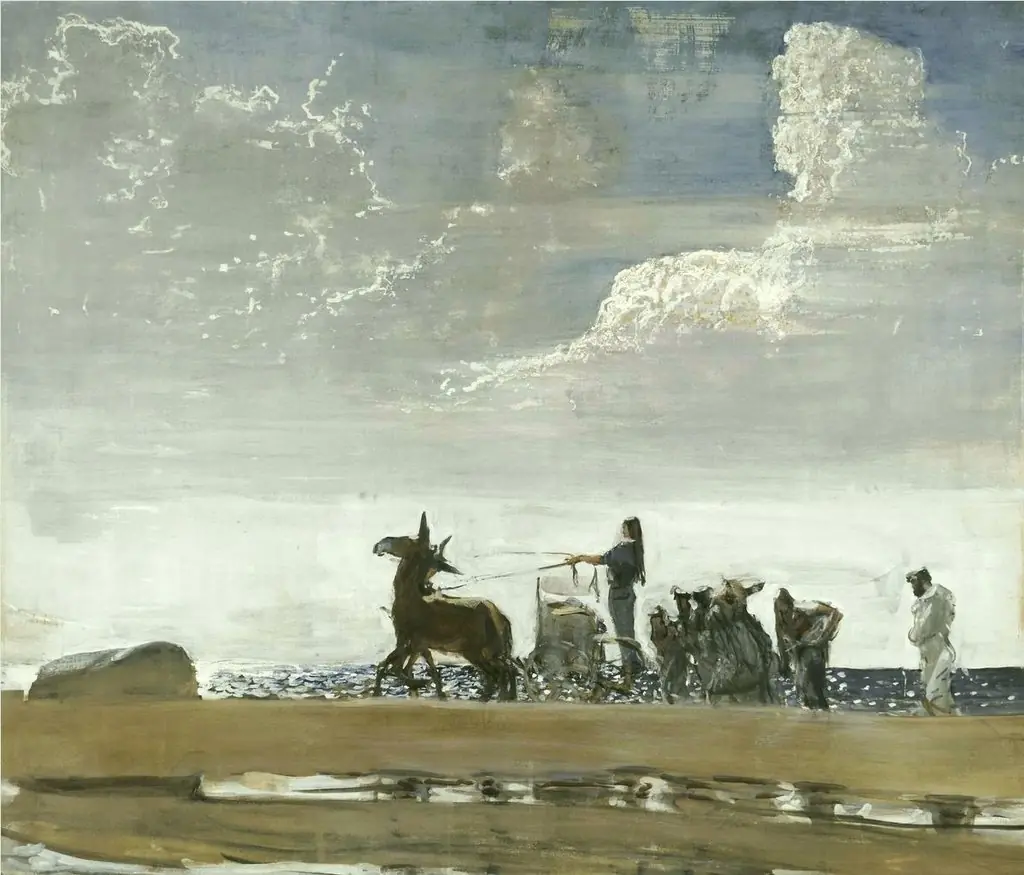 Odysseus and Nausicaa
 Marie Leszczyńska with page boy and putti
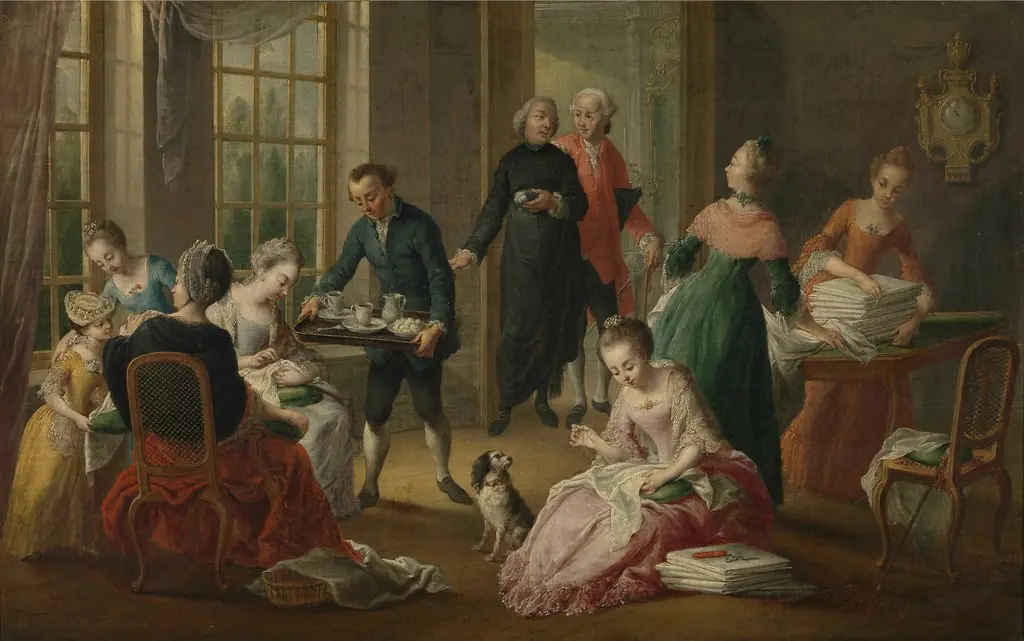 Afternoon Tea
 Untitled
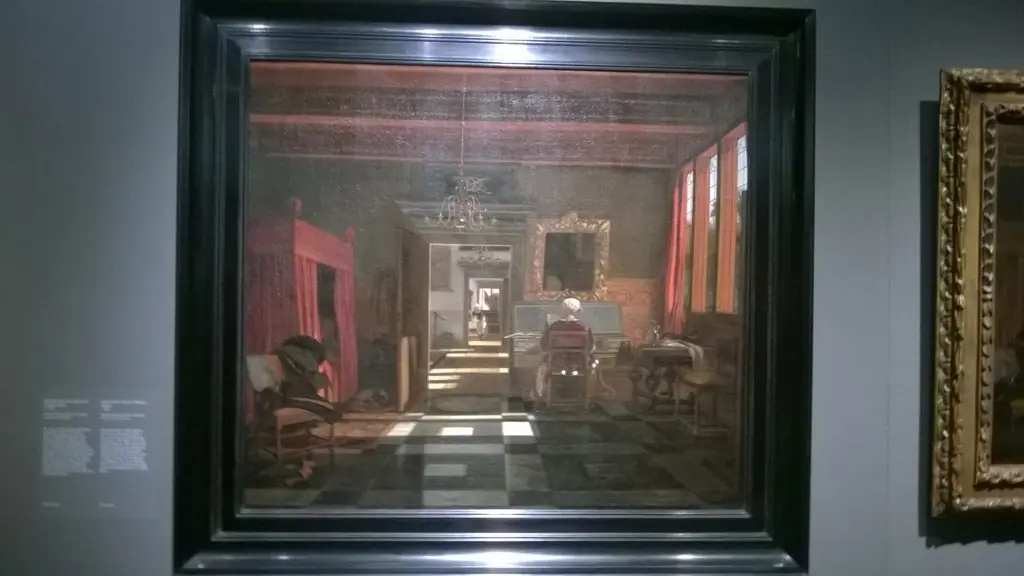 Interior with a Woman playing a Virginal
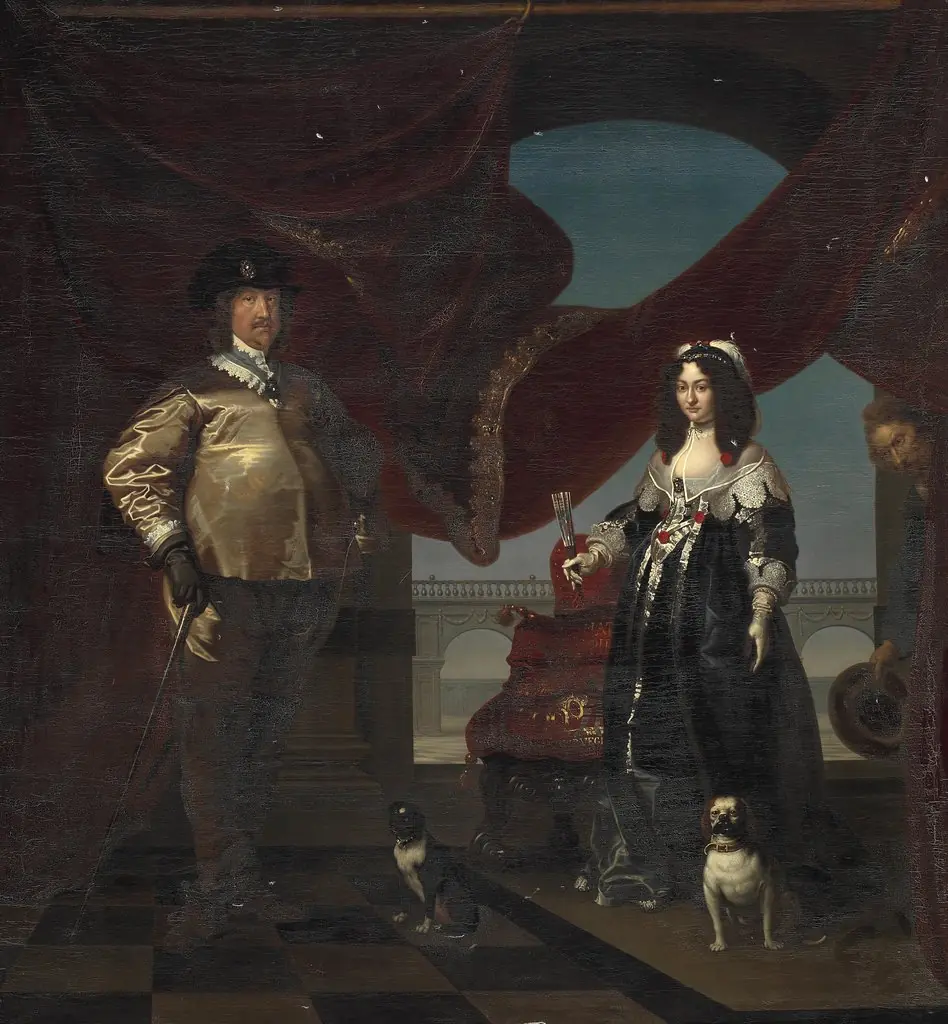 Portrait of Prince Elect Christian (1603-1647) with his consort, Princess Magdalena Sibylla of Saxony (1617-1668)
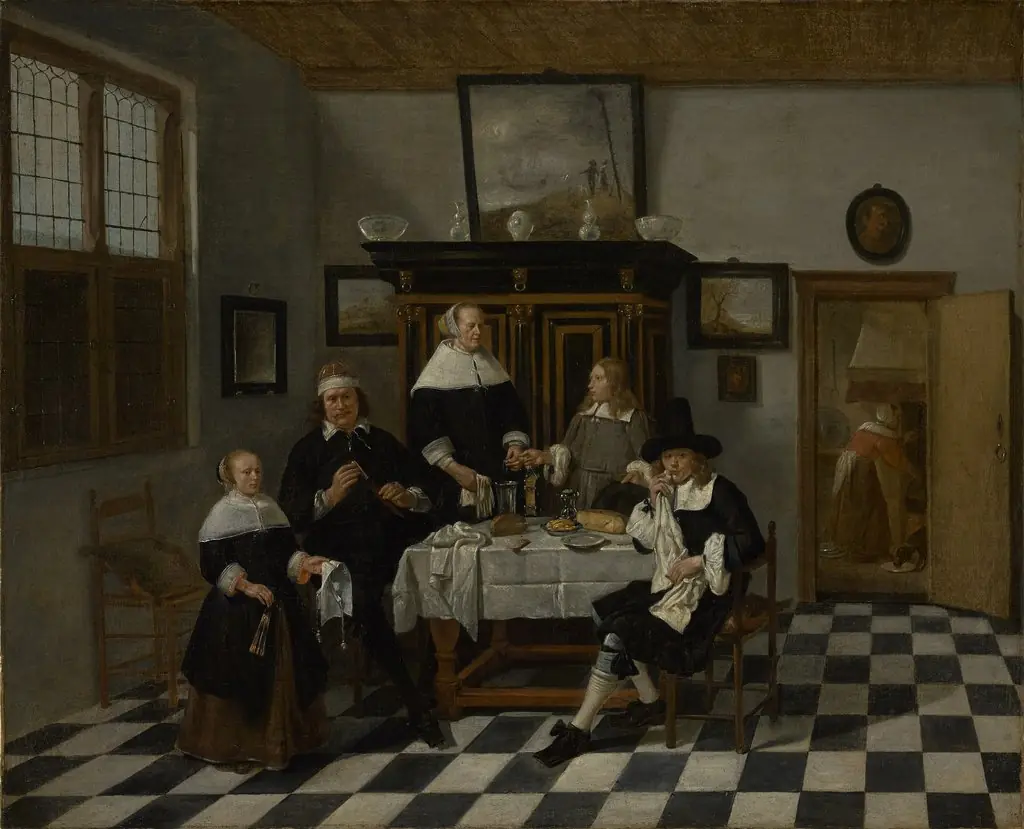 Family Group in an Interior
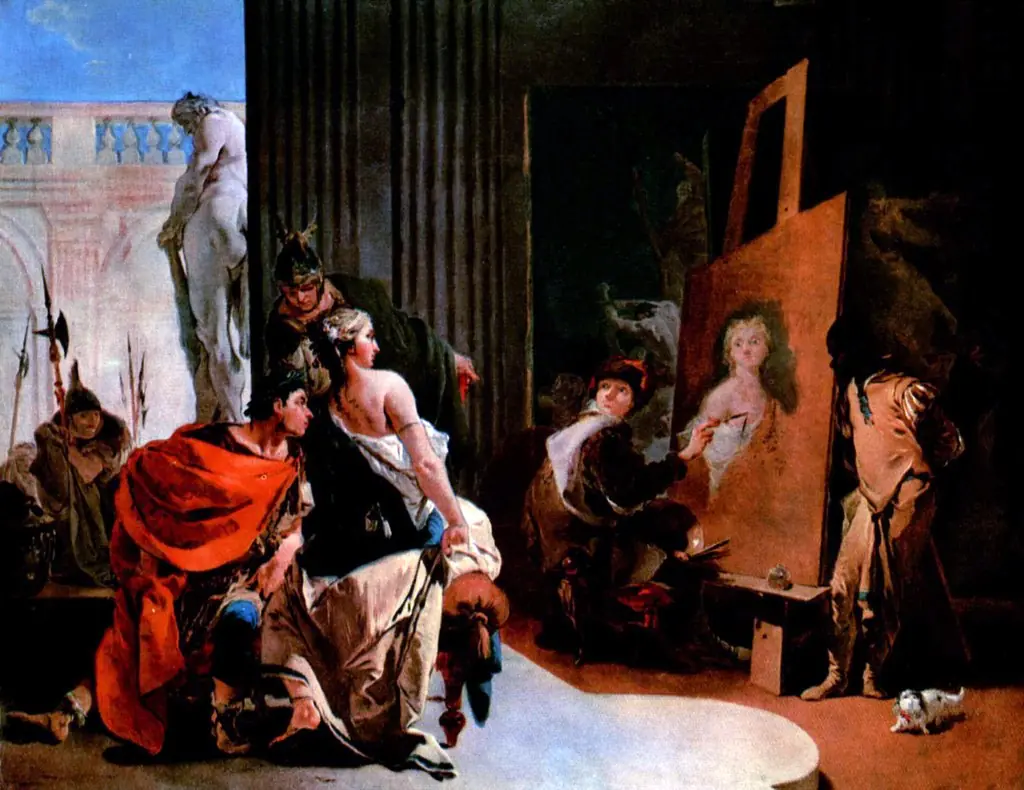 Apelles Painting Campaspe
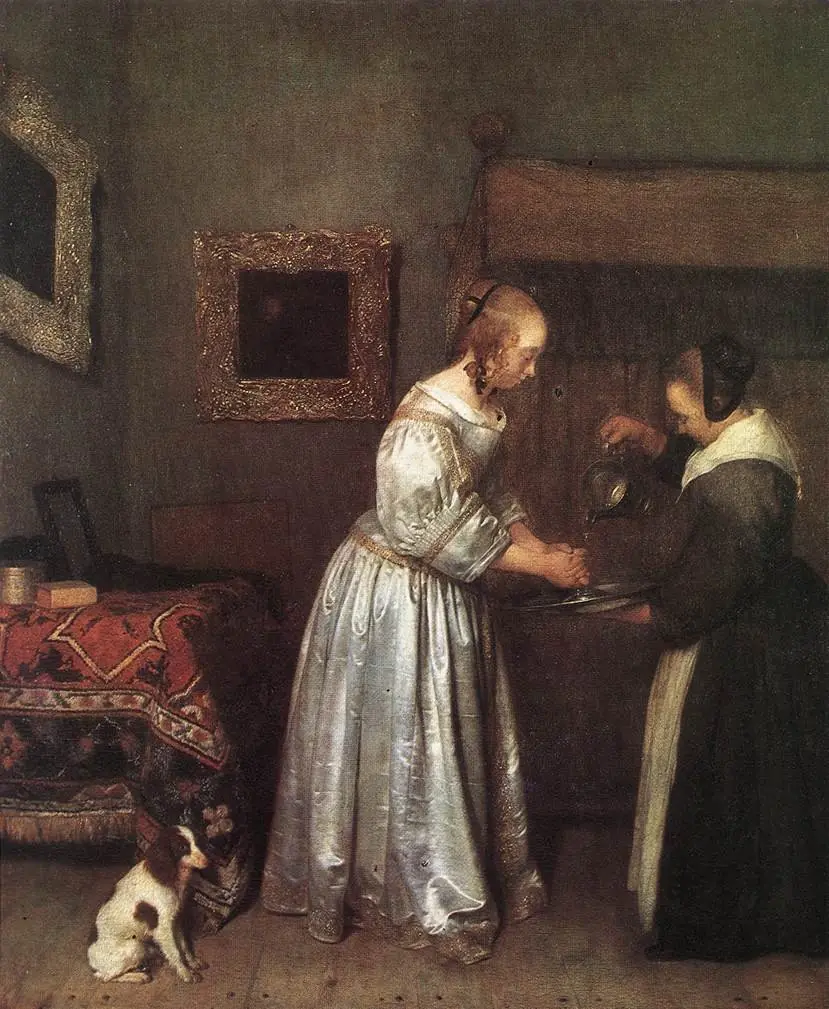 A Woman Washing Her Hands
 Jean-Baptiste Canthaney, known as Cléry, valet de chambre to Louis XVI (1759-1809)
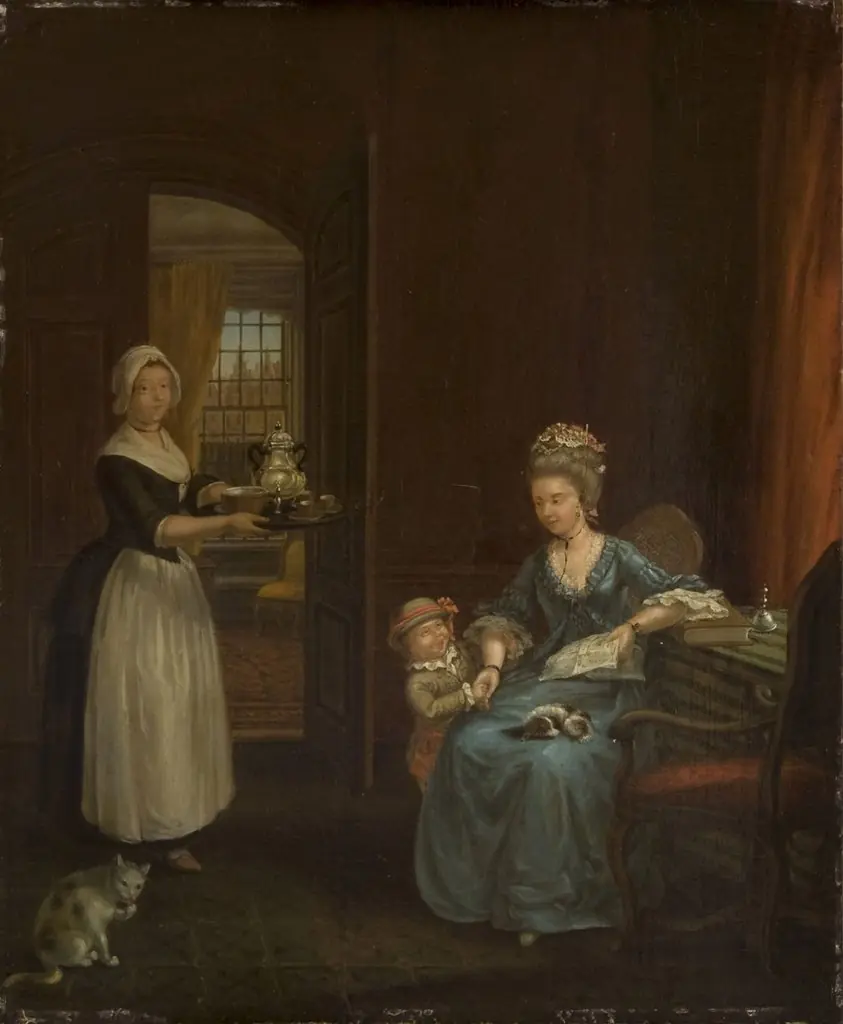 A Lady and a Servant
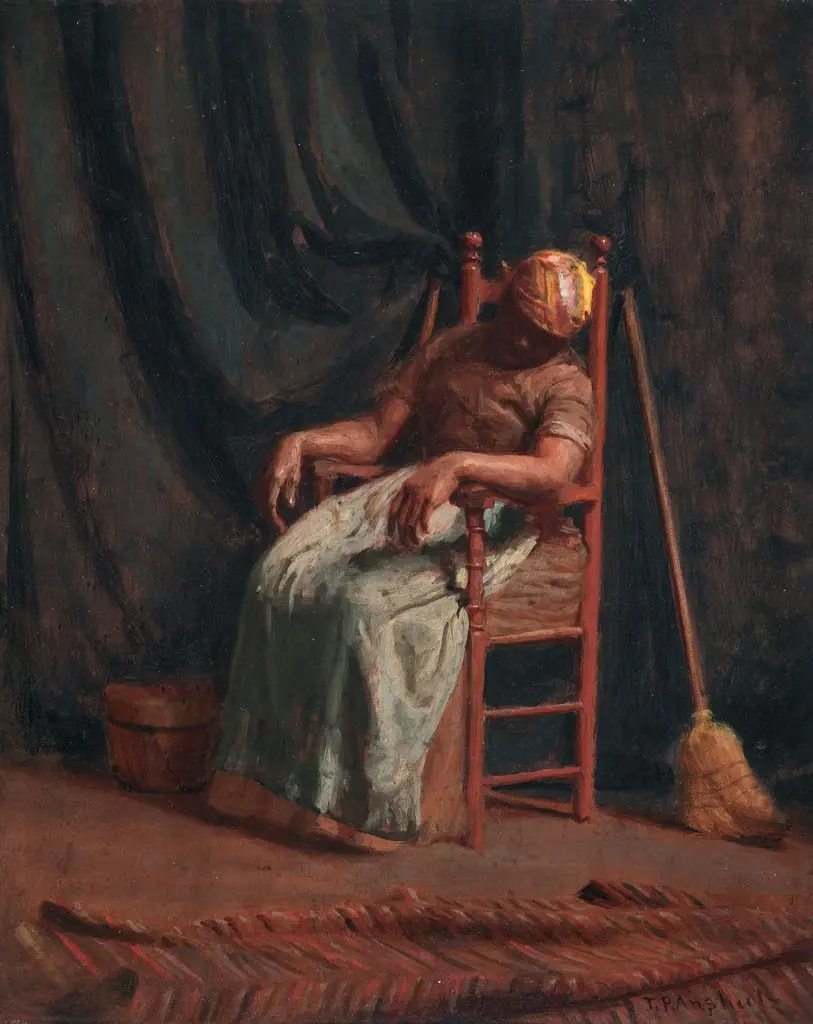 Aunt Hannah
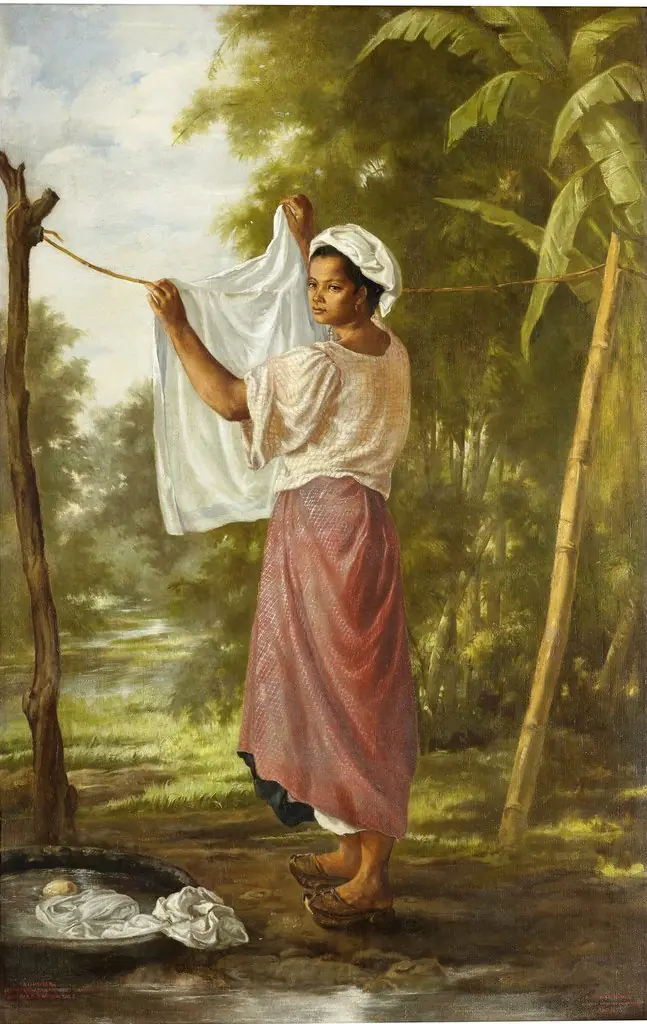 La lavandera
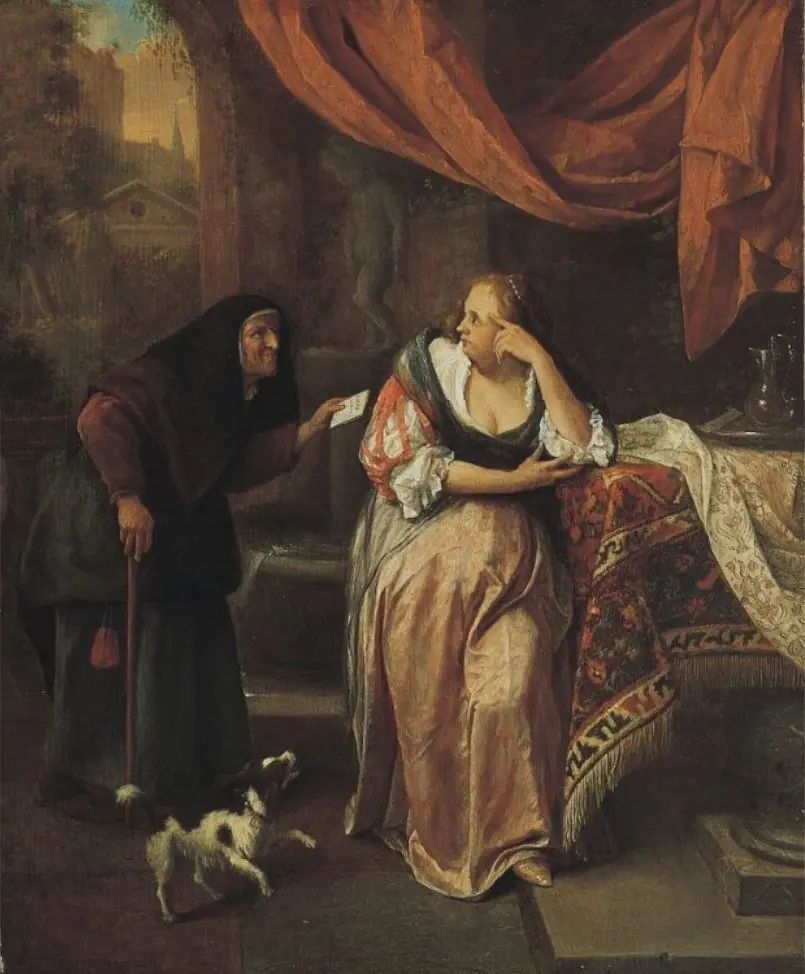 Bathsheba
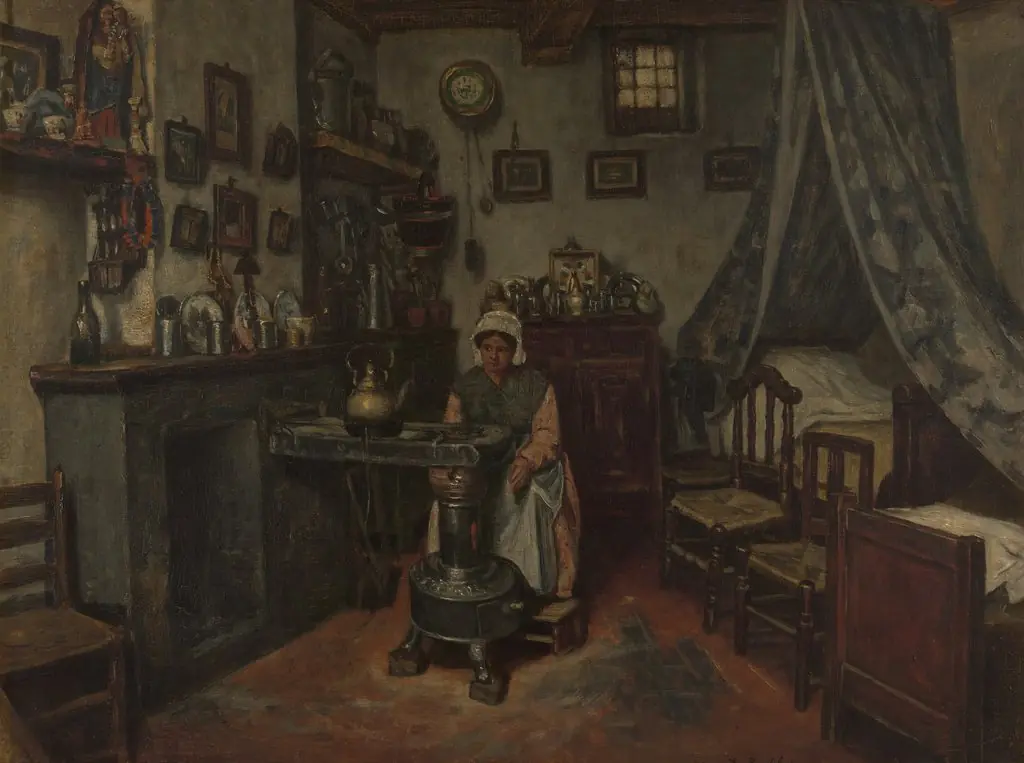 Interior
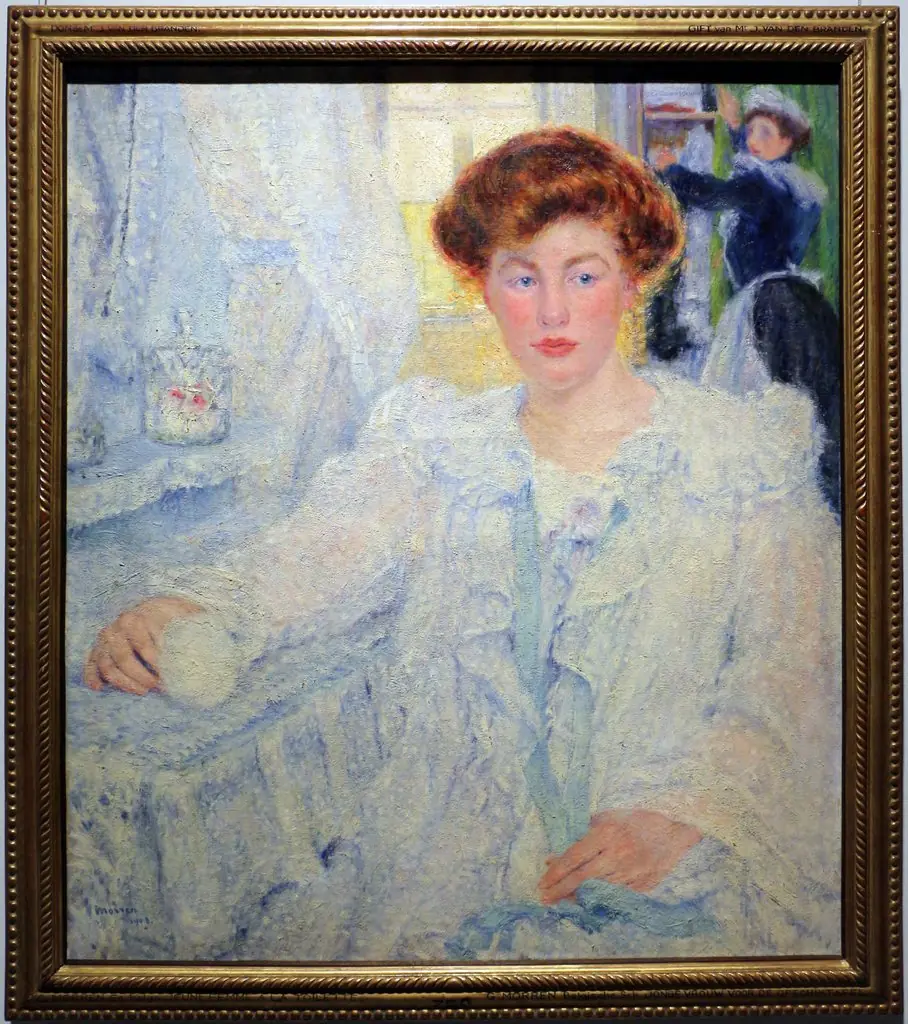 Girl getting ready
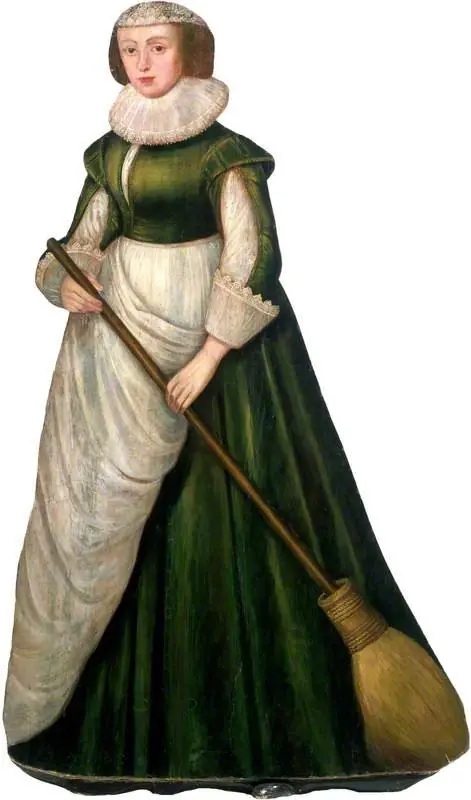 Woman with a Broom (dummy board)
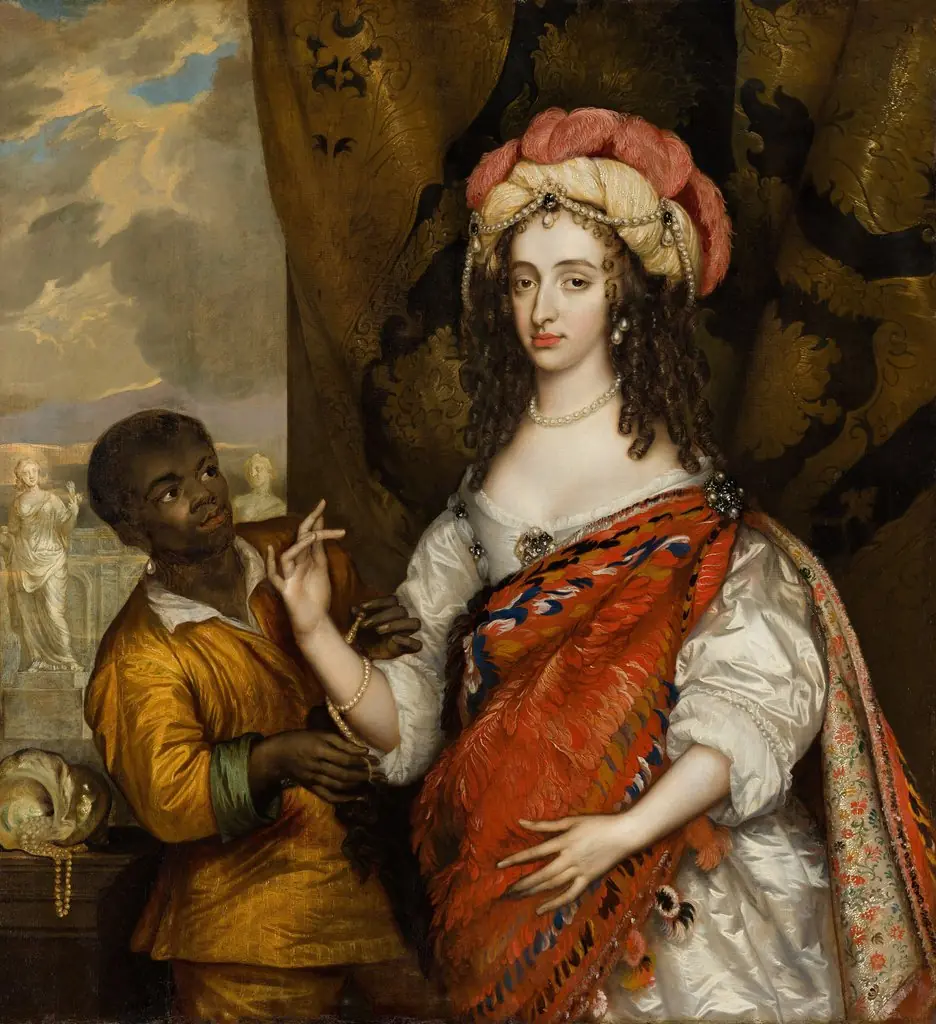 Posthumous Portrait of Mary I Stuart (1631- 1660) with a Servant
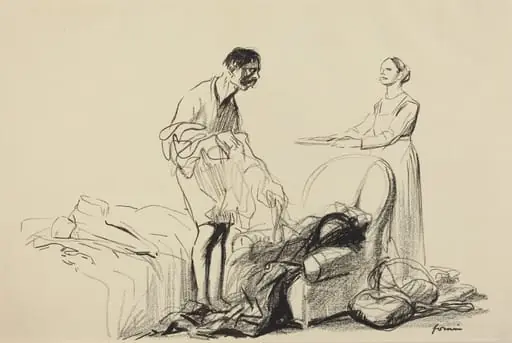 Le démobilisé
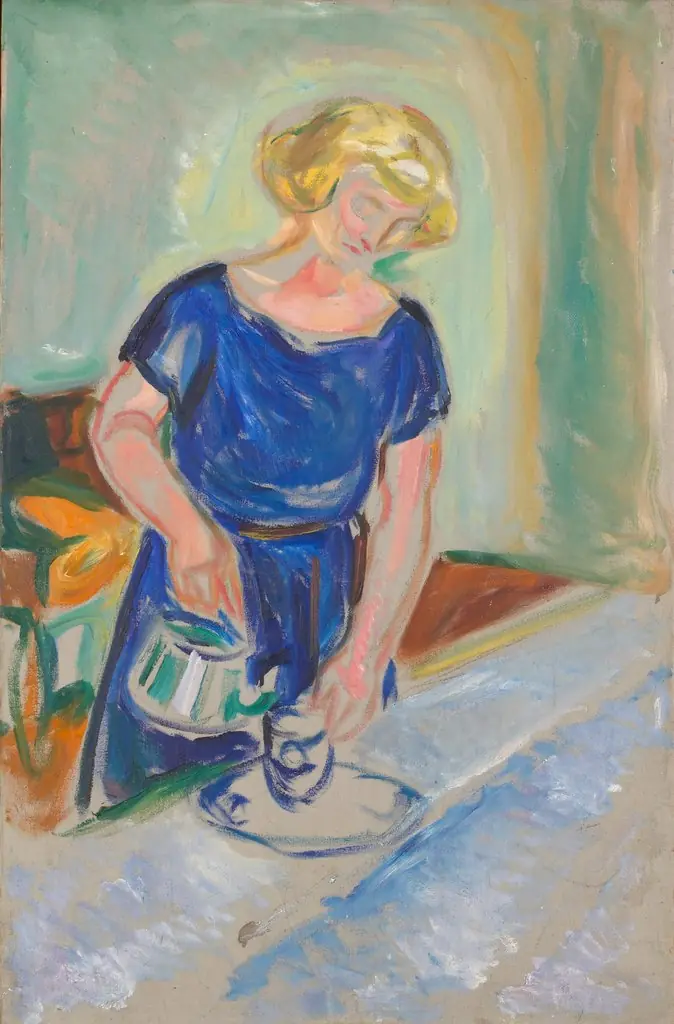 Woman in a Blue Dress Pouring Coffee
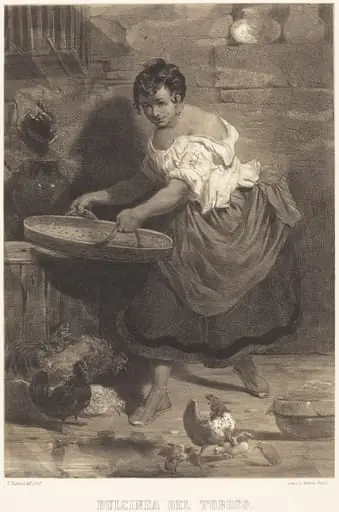 Dulcinea del Toboso
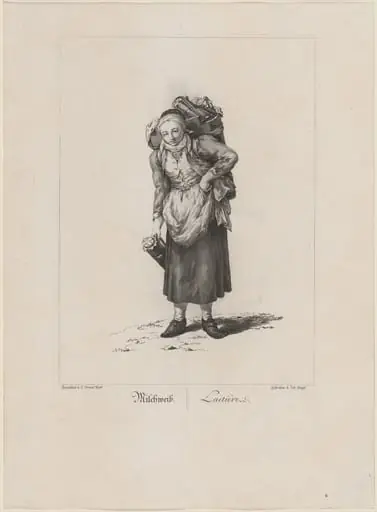 Milchweib (Milk Seller)
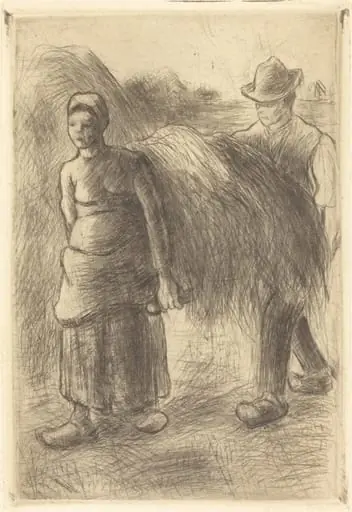 Peasants Carrying Hay (Paysans portant du foin)
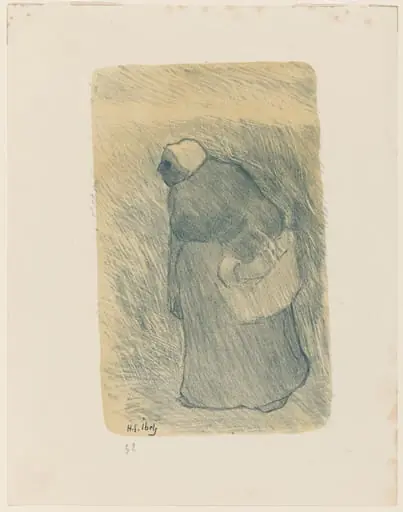 Paysanne avec pannier
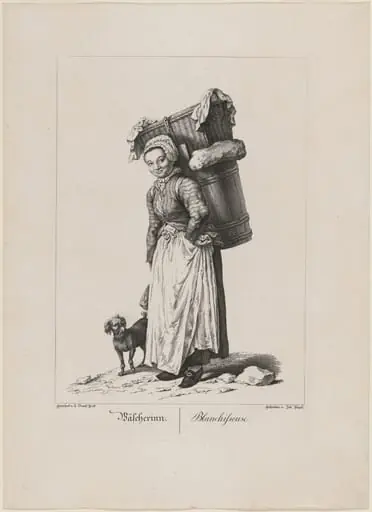 Wäscherinn (Laundress)
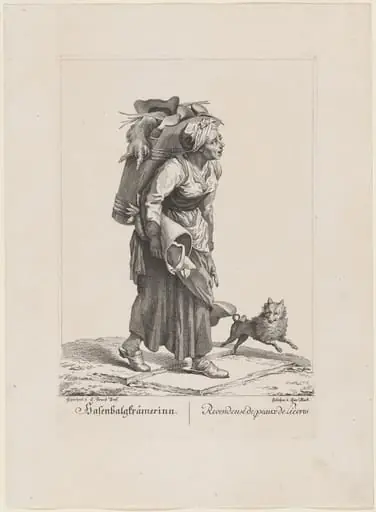 Hasenbalgkrämerinn/Revendeuse de peaux de Lièvres (Seller of Hares' Skins)
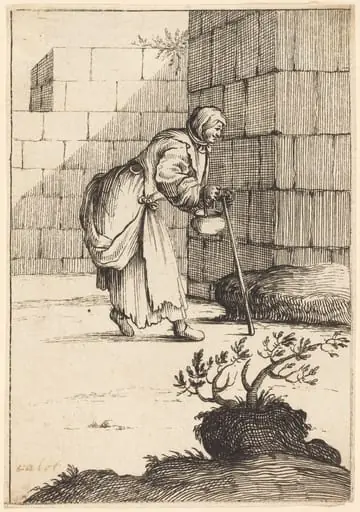 Beggar Woman
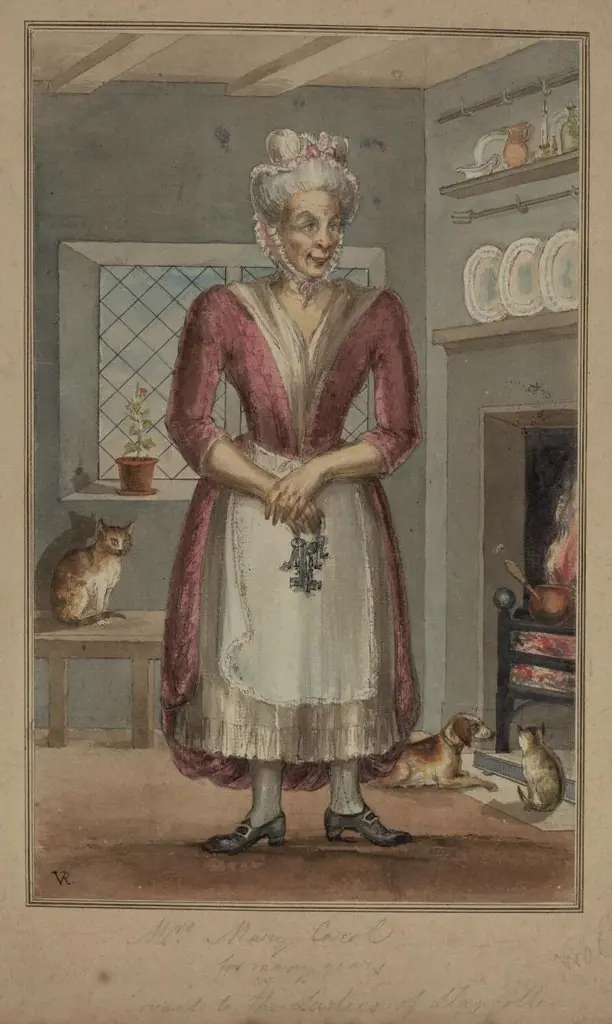 Mrs. Mary Carol
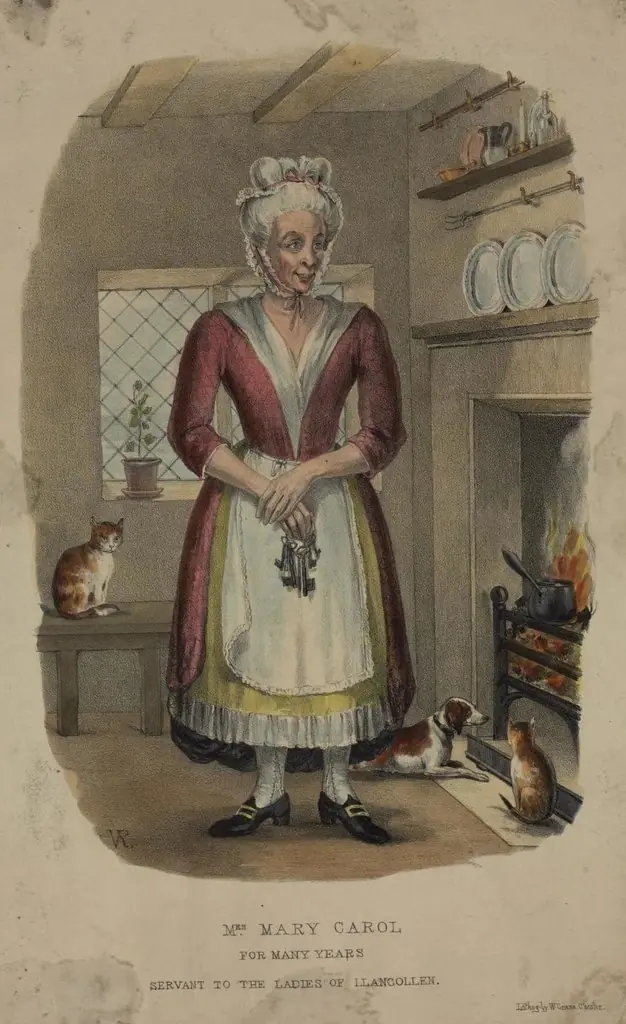 Mrs. Mary Carol
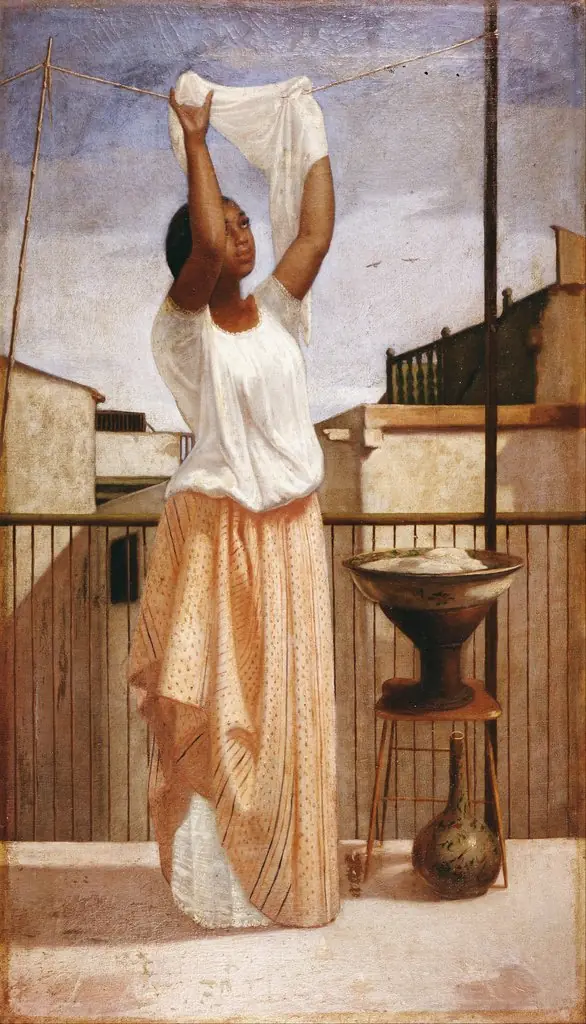 The Laundress
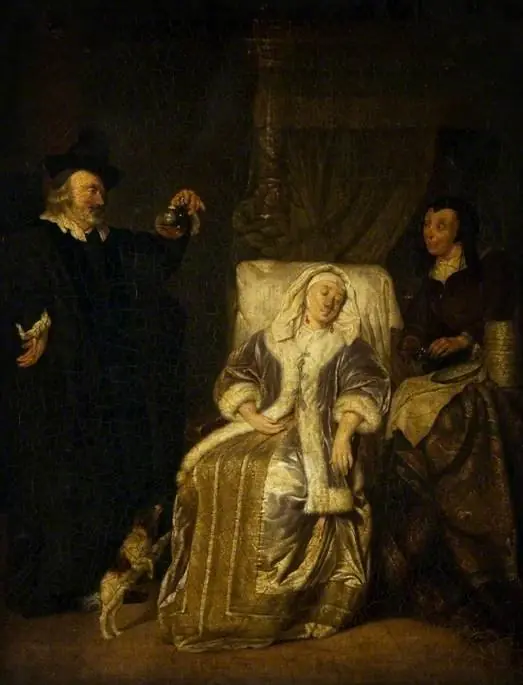 The Doctor's Visit
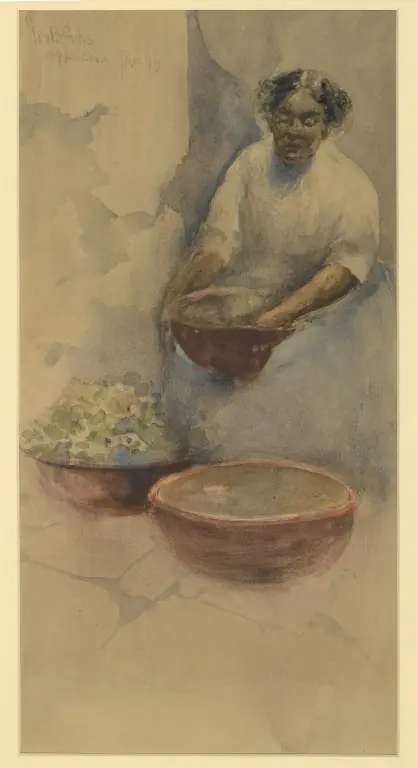 Havana Cuba
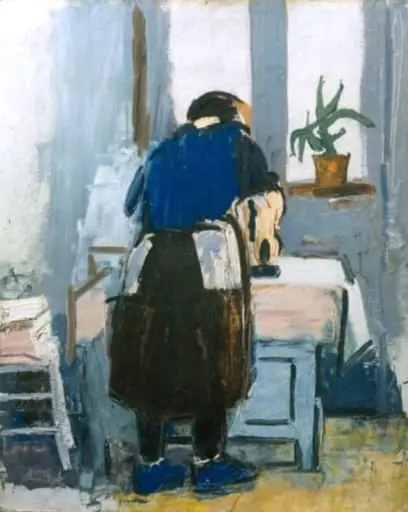 Călcătoreasă
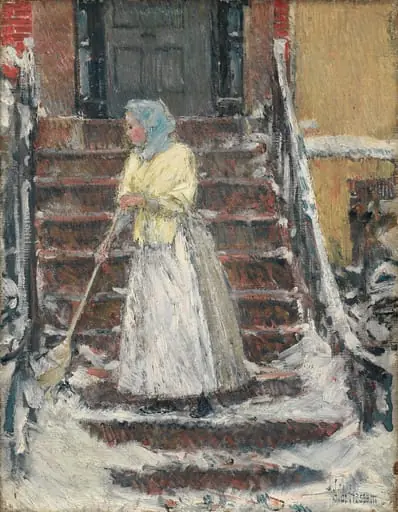 Sweeping Snow
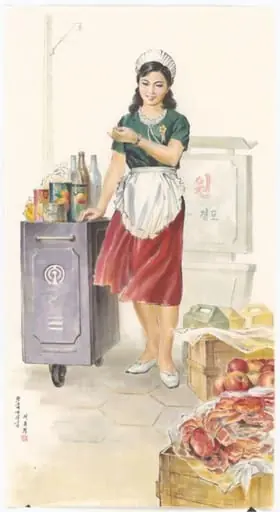 Female train attendant with a trolley
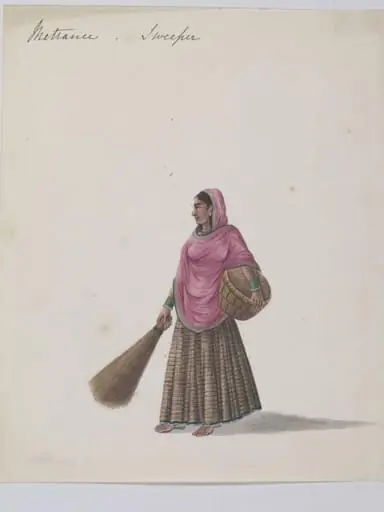 A Woman sweeper
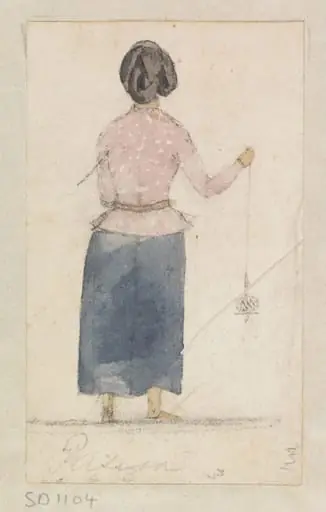 Persian
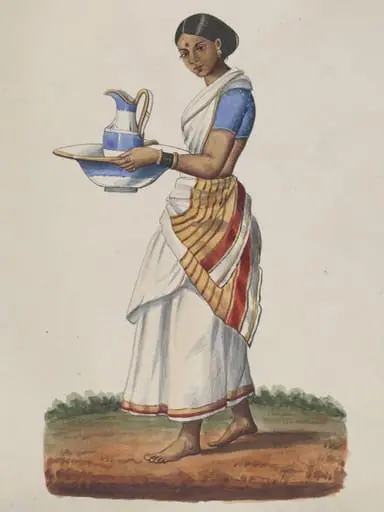 An ayah in a blue choli carrying a china ewer and basin
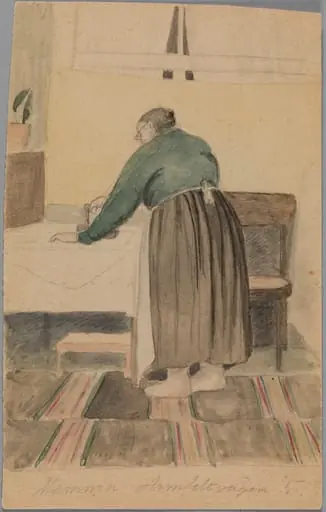 Maria Forslund, o.s. Johansdotter
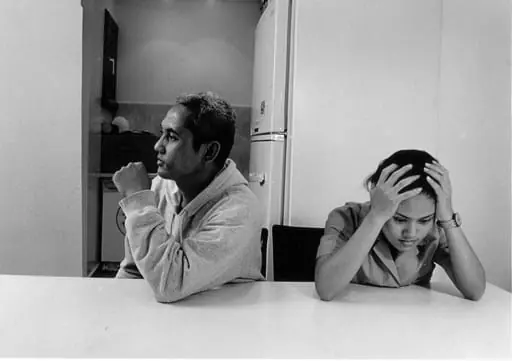 Άτιτλο
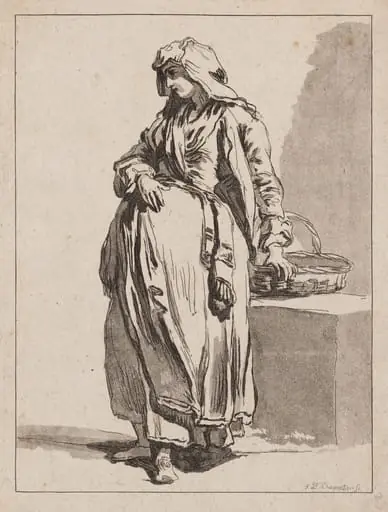 Italian Peasant Woman
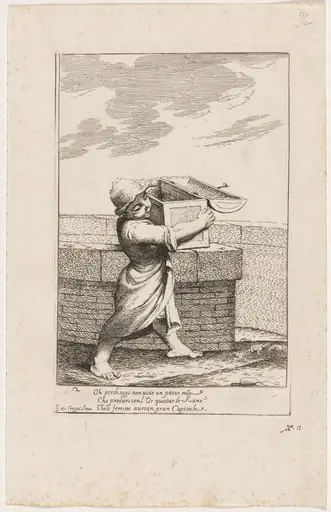 Bertoldino Enraged by the Croaking Frogs
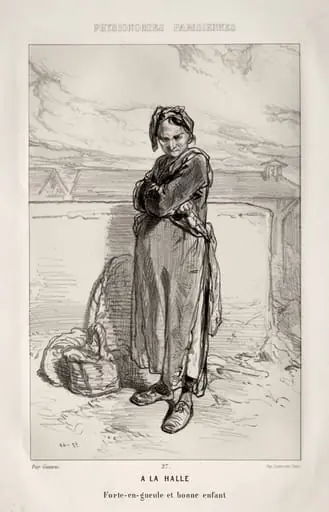 À la Halle
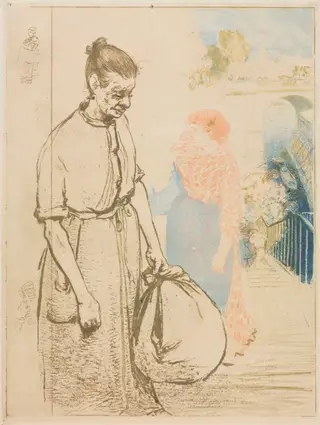 Washerwomen (Les Laveuses)
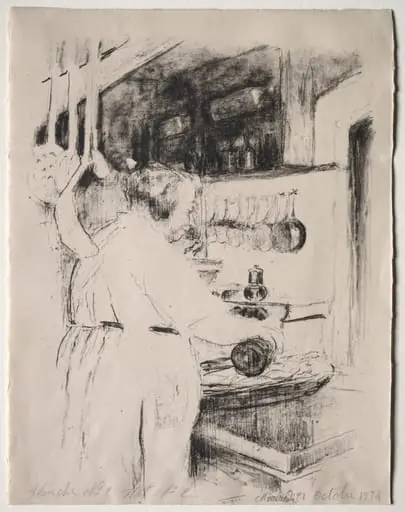 Cooking: The Cook
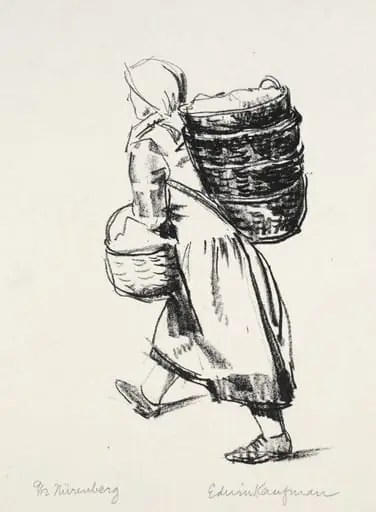 Nürnberg
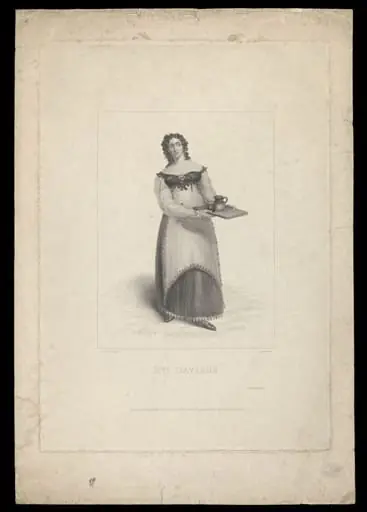 H Beard Print Collection
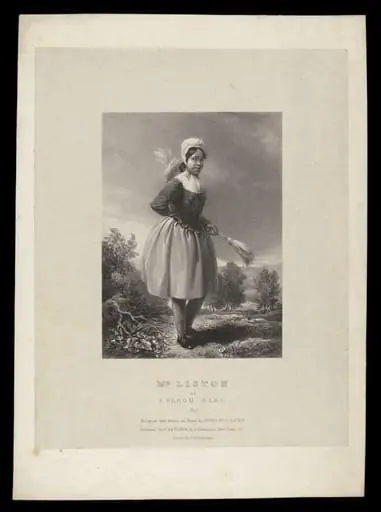 H Beard Print Collection
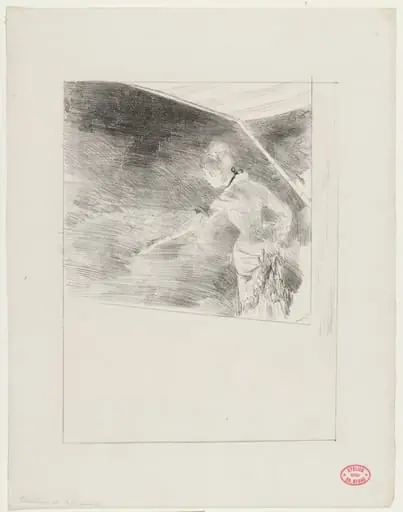 Untitled
 Untitled
 Untitled
 Untitled
 Untitled
Frequently asked questions
What is Domestic Worker?
Domestic Worker is a subject in art. A domestic worker is a person who works within a residence and performs a variety of household services for an individual, from providing cleaning and household maintenance, or cooking, laundry and ironing, or care for children and elderly dependents, and other household errands.
How many Domestic Worker works does Artifact World Gallery have?
Artifact World Gallery holds 109 public-domain Domestic Worker works, all free to view and download.
Who are the key Domestic Worker artists?
Key Domestic Worker artists in the collection include Titian, Paolo Veronese and Edgar Degas.
Where can I see Domestic Worker works?
Domestic Worker works in the collection are held by Metropolitan Museum of Art, National Gallery of Art and Palace of Versailles.